

The DOI matches its Crossref record; 65 of the 66 references it cites were found in a registry or an index.
Decreased mTOR signaling pathway in human idiopathic autism and in rats exposed to valproic acid
Open accessAbstract
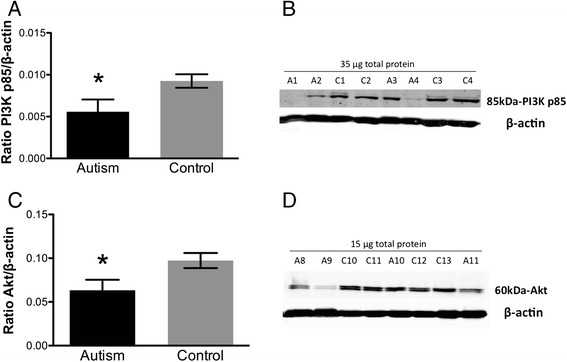
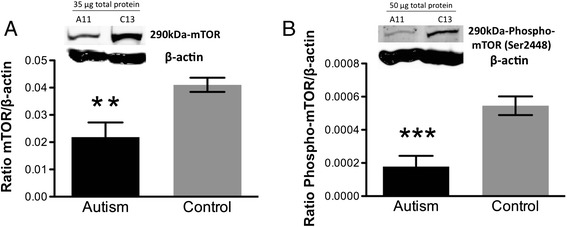
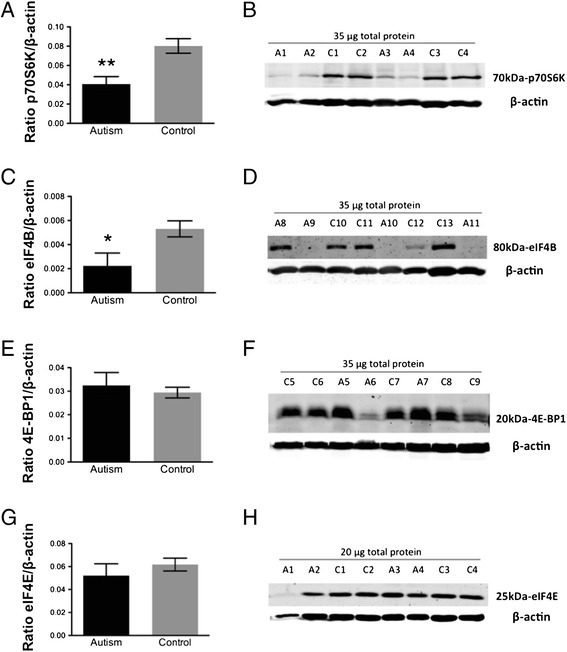
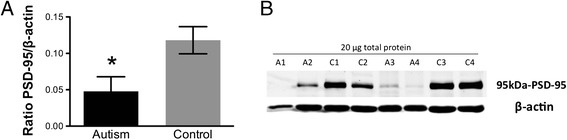
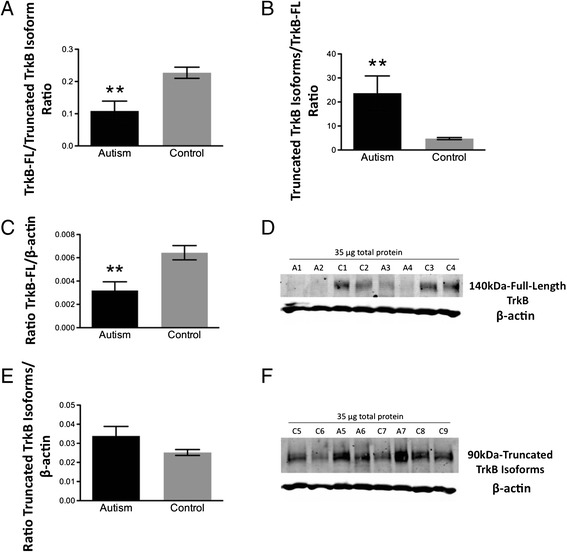
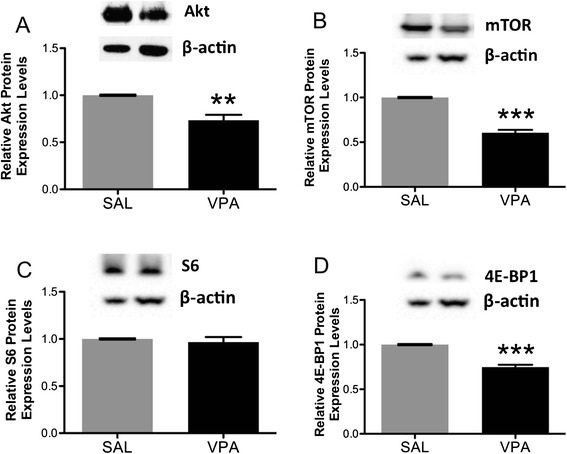
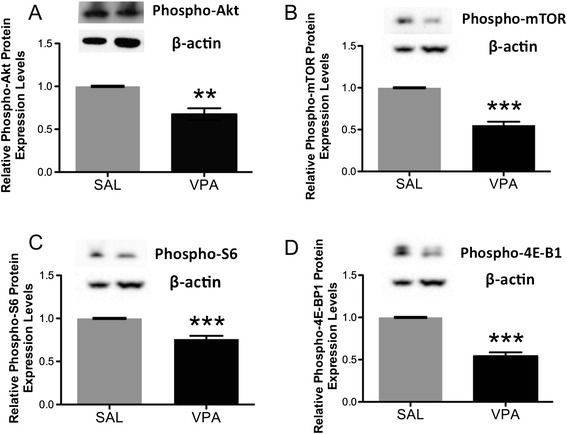
BACKGROUND: The molecular mechanisms underlying autistic behaviors remain to be elucidated. Mutations in genes linked to autism adversely affect molecules regulating dendritic spine formation, function and plasticity, and some increase the mammalian target of rapamycin, mTOR, a regulator of protein synthesis at spines. Here, we investigated whether the Akt/mTOR pathway is disrupted in idiopathic autism and in rats exposed to valproic acid, an animal model exhibiting autistic-like behavior. METHODS: Components of the mTOR pathway were assayed by Western blotting in postmortem fusiform gyrus samples from 11 subjects with idiopathic autism and 13 controls and in valproic acid versus saline-exposed rat neocortex. Additionally, protein levels of brain-derived neurotrophic factor receptor (TrkB) isoforms and the postsynaptic organizing molecule PSD-95 were measured in autistic versus control subjects. RESULTS: Full-length TrkB, PI3K, Akt, phosphorylated and total mTOR, p70S6 kinase, eIF4B and PSD-95 were reduced in autistic versus control fusiform gyrus. Similarly, phosphorylated and total Akt, mTOR and 4E-BP1 and phosphorylated S6 protein were decreased in valproic acid- versus saline-exposed rats. However, no changes in 4E-BP1 or eIF4E were found in autistic brains. CONCLUSIONS: In contrast to some monogenic disorders with high rates of autism, our data demonstrate down-regulation of the Akt/mTOR pathway, specifically via p70S6K/eIF4B, in idiopathic autism. These findings suggest that disruption of this pathway in either direction is widespread in autism and can have adverse consequences for synaptic function. The use of valproic acid, a histone deacetylase inhibitor, in rats successfully modeled these changes, implicating an epigenetic mechanism in these pathway disruptions.
Overview
The claims and statistics of this paper haven’t been checked yet.
Run the check — free, no account needed. It reads the open-access text and checks the sources it cites.
Integrity signals
Registry
Cites
Statistics
Figures
Verification
Claims the paper makes
The claims and statistics of this paper haven’t been checked yet.
Run the check — free, no account needed. It reads the open-access text and checks the sources it cites.
Claims other papers make about this one
Each is checked against this paper’s own text: does it say what the citing paper says it does?
In the citing paper
“Thus, these results further add to the literature supporting the idea that dysregulation of mTOR in either direction is likely important in ASD.104”
From Maternal immune activation dysregulation of the fetal brain transcriptome and relevance to the pathophysiology of autism spectrum disorder (2018) · cites this paper as [104]
Self-check
Percentages, sums and reported differences re-computed from the paper’s own numbers.
The self-check needs the paper’s full text.
Citations
Cites
Diagnostic and Statistical Manual of Mental Disorders
Williams, J. B. W., & First, M. B. (2013) · Oxford University Press eBooks · doi:10.1093/acrefore/9780199975839.013.104 · Cited by 109,845
Lord, C., Rutter, M., & Le Couteur, A. (1994) · Journal of Autism and Developmental Disorders · doi:10.1007/bf02172145 · Cited by 9,065
Upstream and downstream of mTOR
Hay, N., & Sonenberg, N. (2004) · Genes & Development · doi:10.1101/gad.1212704 · Cited by 4,181
Diagnostic and Statistical Manual of Mental Disorders
Raber, G., & Spokas, M. (2024) · doi:10.4135/9781071886229.n145 · Cited by 2,806
Autism Diagnostic Interview-Revised
Rutter, M., LeCouteur, A., & Lord, C. (2016) · PsycTESTS Dataset · doi:10.1037/t18128-000 · Cited by 1,627
Prenatal Valproate Exposure and Risk of Autism Spectrum Disorders and Childhood Autism
Christensen, J., Grønborg, T. K., Sørensen, M. J., Schendel, D., Parner, E. T., Pedersen, L. H., & Vestergaard, M. (2013) · JAMA · doi:10.1001/jama.2013.2270 · Cited by 1,357
mTOR signaling: At the crossroads of plasticity, memory and disease
Hoeffer, C. A., & Klann, E. (2010) · Trends in Neurosciences · doi:10.1016/j.tins.2009.11.003 · Cited by 1,128
Schultz, R. T., Gauthier, I., Klin, A., Fulbright, R. K., Anderson, A. W., Volkmar, F., Skudlarski, P., Lacadie, C., Cohen, D. J., & Gore, J. C. (2000) · Archives of General Psychiatry · doi:10.1001/archpsyc.57.4.331 · Cited by 1,000
Behavioral Alterations in Rats Prenatally Exposed to Valproic Acid: Animal Model of Autism
Schneider, T., & Przewłocki, R. (2005) · Neuropsychopharmacology · doi:10.1038/sj.npp.1300518 · Cited by 959
Klein, R., Nanduri, V., Jing, S., Lamballe, F., Tapley, P., Bryant, S., Cordon-Cardo, C., Jones, K. R., Reichardt, L. F., & Barbacid, M. (1991) · Cell · doi:10.1016/0092-8674(91)90628-c · Cited by 958
Research works printed but not linked: 1
- Ahn Y, Narous M, Tobias R, Hu B, Rho JM (2012) Alterations in social behavior and mTOR signaling in the valproic acid-induced model of autism spectrum disorder, Program No. 861.21. 2012 Neuroscience Meeting Planner. Society for Neuroscience, New Orleans, LA, Online
Cited by
Sorted by citations
Filipello, F., Morini, R., Corradini, I., Zerbi, V., Canzi, A., Michalski, B., Erreni, M., Markicevic, M., Starvaggi-Cucuzza, C., Otero, K., et al. (2018) · Immunity · doi:10.1016/j.immuni.2018.04.016 · Cited by 695
Self-citationThe valproic acid-induced rodent model of autism
Nicolini, C., & Fahnestock, M. L. (2017) · Experimental Neurology · doi:10.1016/j.expneurol.2017.04.017 · Cited by 622
Self-citationWang, X., Wang, B., Wu, C., Wang, J., & Sun, M. (2023) · International Journal of Molecular Sciences · doi:10.3390/ijms24031819 · Cited by 305
Environmental toxicology: Sensitive periods of development and neurodevelopmental disorders
Heyer, D. B., & Meredith, R. M. (2016) · NeuroToxicology · doi:10.1016/j.neuro.2016.10.017 · Cited by 247
Abnormal mTOR Activation in Autism
Winden, K. D., Ebrahimi‐Fakhari, D., & Şahin, M. (2018) · Annual Review of Neuroscience · doi:10.1146/annurev-neuro-080317-061747 · Cited by 232
Lombardo, M. V., Moon, H. M., Su, J., Palmer, T. D., Courchesne, E., & Pramparo, T. (2018) · Molecular Psychiatry · doi:10.1038/mp.2017.15 · Cited by 201
Fetit, R., Hillary, R. F., Price, D. J., & Lawrie, S. M. (2021) · Neuroscience & Biobehavioral Reviews · doi:10.1016/j.neubiorev.2021.07.014 · Cited by 148
Targeting PI3K-AKT/mTOR signaling in the prevention of autism
Sharma, A., & Mehan, S. (2021) · Neurochemistry International · doi:10.1016/j.neuint.2021.105067 · Cited by 134
Valproic acid exposure sequentially activates Wnt and mTOR pathways in rats
Qin, L., Dai, X., & Yin, Y. (2016) · Molecular and Cellular Neuroscience · doi:10.1016/j.mcn.2016.06.004 · Cited by 101
Kabir, Z. D., Che, A., Fischer, D. K., Rice, R. C., Rizzo, B. K., Byrne, M., Glass, M. J., García, N. V. D. M., & Rajadhyaksha, A. M. (2017) · Molecular Psychiatry · doi:10.1038/mp.2017.124 · Cited by 91
Kang, J., & Kim, E. (2015) · Frontiers in Molecular Neuroscience · doi:10.3389/fnmol.2015.00017 · Cited by 82
Zhang, X., He, X., Li, Q., Kong, X., Ou, Z., Zhang, L., Gong, Z., Long, D., Li, J., Zhang, M., et al. (2017) · Stem Cell Reports · doi:10.1016/j.stemcr.2017.04.006 · Cited by 76
Tylee, D. S., Hess, J., Quinn, T. P., Barve, R., Huang, H., Zhang‐James, Y., Chang, J., Stamova, B. S., Sharp, F. R., Hertz‐Picciotto, I., et al. (2016) · American Journal of Medical Genetics Part B Neuropsychiatric Genetics · doi:10.1002/ajmg.b.32511 · Cited by 74
mTOR signalling pathway - A root cause for idiopathic autism?
Ganesan, H., Balasubramanian, V., Iyer, M., Venugopal, A., Subramaniam, M. D., Cho, S.-G., & Vellingiri, B. (2019) · BMB Reports · doi:10.5483/bmbrep.2019.52.7.137 · Cited by 73
Szczurkowska, J., Pischedda, F., Pinto, B., Managò, F., Haas, C. A., Summa, M., Bertorelli, R., Papaleo, F., Schäfer, M. K. E., Piccoli, G., et al. (2018) · Brain · doi:10.1093/brain/awy190 · Cited by 81
Ohja, K., Gozal, E., Fahnestock, M. L., Cai, L., Cai, J., Freedman, J. H., Switala, A., El-Baz, A. S., & Barnes, G. N. (2018) · NeuroMolecular Medicine · doi:10.1007/s12017-018-8488-8 · Cited by 66
Self-citationMagdalon, J., Sánchez-Sánchez, S. M., Griesi‐Oliveira, K., & Sertie, A. L. (2017) · International Journal of Molecular Sciences · doi:10.3390/ijms18030659 · Cited by 60
Neuroimmune and Inflammatory Signals in Complex Disorders of the Central Nervous System
Liberman, A. C., Trías, E., Chagas, L. D. S., Trindade, P., Pereira, M. D. S., Refojo, D., Hedin‐Pereira, C., & Serfaty, C. A. (2018) · NeuroImmunoModulation · doi:10.1159/000494761 · Cited by 62
Kotajima‐Murakami, H., Kobayashi, T., Kashii, H., Sato, A., Hagino, Y., Tanaka, M., Nishito, Y., Takamatsu, Y., Uchino, S., & Ikeda, K. (2019) · Molecular Brain · doi:10.1186/s13041-018-0423-2 · Cited by 57
Three Decades of Valproate: A Current Model for Studying Autism Spectrum Disorder
Zárate-López, D., Torres-Chávez, A. L., Gálvez‐Contreras, A. Y., & González-Pérez, Ó. (2023) · Current Neuropharmacology · doi:10.2174/1570159x22666231003121513 · Cited by 62
Forés-Martos, J., Catalá-López, F., Sánchez-Valle, J., Ibáñez, K., Tejero, H., Palma‐Gudiel, H., Climent, J., Pancaldi, V., Fañanás, L., Arango, C., et al. (2019) · Molecular Autism · doi:10.1186/s13229-019-0262-8 · Cited by 53
Phytochemicals Targeting BDNF Signaling for Treating Neurological Disorders
Singh, A. A., Katiyar, S., & Song, M. (2025) · Brain Sciences · doi:10.3390/brainsci15030252 · Cited by 61
Perinatal Influences of Valproate on Brain and Behaviour: An Animal Model for Autism
Ranger, P., & Ellenbroek, B. A. (2015) · Current topics in behavioral neurosciences · doi:10.1007/7854_2015_404 · Cited by 43
Brown, E., Lautz, J. D., Davis, T. R., Gniffke, E. P., VanSchoiack, A., Neier, S. C., Tashbook, N., Nicolini, C., Fahnestock, M. L., Schrum, A. G., et al. (2018) · Molecular Autism · doi:10.1186/s13229-018-0229-1 · Cited by 42
Self-citationAgam, G., Taylor, Z. V., Vainer, E., & Golan, H. M. (2020) · Translational Psychiatry · doi:10.1038/s41398-020-01002-1 · Cited by 41
Reumann, R., Vierk, R., Zhou, L., Gries, F., Kraus, V., Mienert, J., Romswinkel, E. V., Morellini, F., Ferrer, I., Nicolini, C., et al. (2017) · Learning & Memory · doi:10.1101/lm.045864.117 · Cited by 38
Self-citationLi, Z., You, M., Che, X., Dai, Y., Xu, Y., & Wang, Y. (2021) · Ecotoxicology and Environmental Safety · doi:10.1016/j.ecoenv.2021.112000 · Cited by 35
BDNF, proBDNF and IGF-1 serum levels in naïve and medicated subjects with autism
Robinson‐Agramonte, M. D. L. Á., Michalski, B., Vidal-Martínez, B., Hernández, L. R., Whilby-Santiesteban, M., & Fahnestock, M. L. (2022) · Scientific Reports · doi:10.1038/s41598-022-17503-6 · Cited by 42
Self-citationDecoding microRNAs in autism spectrum disorder
Li, J., Xu, X., Liu, J., Zhang, S., Tan, X., Li, Z., Zhang, J., & Wang, Z. (2022) · Molecular Therapy — Nucleic Acids · doi:10.1016/j.omtn.2022.11.005 · Cited by 40
The ubiquitin proteasome pathway in neuropsychiatric disorders
Cheon, S., Dean, M., & Chahrour, M. H. (2018) · Neurobiology of Learning and Memory · doi:10.1016/j.nlm.2018.01.012 · Cited by 34
Singla, R., Mishra, A., & Cao, R. (2022) · Translational Psychiatry · doi:10.1038/s41398-022-02120-8 · Cited by 35
Rusty Microglia: Trainers of Innate Immunity in Alzheimer's Disease
Sfera, A., Gradini, R., Cummings, M., Diaz, E. L., Price, A. I., & Osorio, C. P. (2018) · Frontiers in Neurology · doi:10.3389/fneur.2018.01062 · Cited by 32
Joseph, T. P., Fang, Z., Sai, L., Chen, H., Lin, S. L., & Schachner, M. (2021) · Autism Research · doi:10.1002/aur.2620 · Cited by 36
Therapeutic modulation of JAK-STAT, mTOR, and PPAR-γ signaling in neurological dysfunctions
Kumar, S., Mehan, S., & Narula, A. S. (2022) · Journal of Molecular Medicine · doi:10.1007/s00109-022-02272-6 · Cited by 33
Mehra, S., Ahsan, A. U., Seth, E., & Chopra, M. (2022) · Journal of Molecular Neuroscience · doi:10.1007/s12031-022-02033-7 · Cited by 28
Luo, T., Chen, S.-S., Ruan, Y., Chen, H., Chen, Y., Li, Y., & Zhou, W. (2022) · Biochemical and Biophysical Research Communications · doi:10.1016/j.bbrc.2022.12.032 · Cited by 25
Can Mouse Imaging Studies Bring Order to Autism Connectivity Chaos?
Liska, A. J., & Gozzi, A. (2016) · Frontiers in Neuroscience · doi:10.3389/fnins.2016.00484 · Cited by 27
Liao, X., Chen, M., & Li, Y. (2023) · Frontiers in Neuroendocrinology · doi:10.1016/j.yfrne.2023.101064 · Cited by 25
Bio-collections in autism research
Reilly, J., Gallagher, L., Chen, J. L., Leader, G., & Shen, S. (2017) · Molecular Autism · doi:10.1186/s13229-017-0154-8 · Cited by 23
Targeting the Neuronal Activity of Prefrontal Cortex: New Directions for the Therapy of Depression
Zhou, X., Bao, W.-D., Liu, D., & Zhu, L. (2019) · Current Neuropharmacology · doi:10.2174/1570159x17666191101124017 · Cited by 22
Zahedi, E., Sadr, S. S., Sanaeierad, A., & Roghani, M. (2023) · Metabolic Brain Disease · doi:10.1007/s11011-023-01227-1 · Cited by 21
Peralta, F. A., Fuentealba, C., Fiedler, J. L., & Aliaga, E. (2016) · Molecular Medicine Reports · doi:10.3892/mmr.2016.5529 · Cited by 21
Update on Atypicalities of Central Nervous System in Autism Spectrum Disorder
Shuid, A. N., Jayusman, P. A., Shuid, N., Ismail, J., Nor, N. K., & Mohamed, I. N. (2020) · Brain Sciences · doi:10.3390/brainsci10050309 · Cited by 23
Miranda‐Lourenço, C., Duarte, S. T., Palminha, C., Gaspar, C., Rodrigues, T. M., Magalhães-Cardoso, M. T., Rei, N., Colino-Oliveira, M., Gomes, R., Ferreira, S. G. F., et al. (2020) · Neurobiology of Disease · doi:10.1016/j.nbd.2020.105043 · Cited by 20
Prem, S., Dev, B., Peng, C., Mehta, M., Alibutud, R., Connacher, R., Thomas, M. S., Zhou, X., Matteson, P. G., Xing, J., et al. (2024) · eLife · doi:10.7554/elife.82809 · Cited by 19
HDAC inhibition as a treatment concept to combat temsirolimus-resistant bladder cancer cells
Juengel, E., Najafi, R., Rutz, J., Maxeiner, S., Makarević, J., Roos, F. C., Tsaur, I., Haferkamp, A., & Blaheta, R. A. (2017) · Oncotarget · doi:10.18632/oncotarget.22454 · Cited by 19
Yadollahi-Farsani, Y., Reisi‐Vanani, V., Lorigooini, Z., Farahzad, A., & Amini-Khoei, H. (2023) · IBRO Neuroscience Reports · doi:10.1016/j.ibneur.2023.11.009 · Cited by 18
Cioana, M., Michalski, B., & Fahnestock, M. L. (2020) · Autism Research · doi:10.1002/aur.2291 · Cited by 16
Self-citationSantos‐Terra, J., Deckmann, I., Schwingel, G. B., Paz, A. V. C., Gama, C. S., Bambini-Júnior, V., Fontes‐Dutra, M., & Gottfried, C. (2021) · Brain Research · doi:10.1016/j.brainres.2021.147593 · Cited by 20
Russo, A. J. (2015) · Biomarker Insights · doi:10.4137/bmi.s21946 · Cited by 15
Tran, L., Kichenadasse, G., & Sykes, P. J. (2018) · Current Cancer Drug Targets · doi:10.2174/1568009618666180724111604 · Cited by 15
Dendritic spines and their role in the pathogenesis of neurodevelopmental and neurological disorders
Akhgari, A., Michel, T. M., & Vafaee, M. S. (2024) · Reviews in the Neurosciences · doi:10.1515/revneuro-2023-0151 · Cited by 14
Protein Phosphorylation Signaling Cascades in Autism: The Role of mTOR Pathway
Бокша, И. С., Prokhorova, T. A., Терешкина, Е. Б., Savushkina, O. K., & Burbaeva, G. S. (2021) · Biochemistry (Moscow) · doi:10.1134/s0006297921050072 · Cited by 13
Zong, W., Lu, X., Dong, G., Zhang, L., & Li, K. (2023) · Frontiers in Psychiatry · doi:10.3389/fpsyt.2023.1096503 · Cited by 19
Robinson‐Agramonte, M. D. L. Á., Michalski, B., Fernández, L. G., Vidal-Martínez, B., Cuesta, H. V., Rizo, C. M., & Fahnestock, M. L. (2021) · Drug Development Research · doi:10.1002/ddr.21808 · Cited by 16
Self-citationChen, L., Li, Z., & Fan, Y. (2025) · Frontiers in Cellular and Infection Microbiology · doi:10.3389/fcimb.2025.1601888 · Cited by 12
The Changes of Amygdala Transcriptome in Autism Rat Model After Arginine Vasopressin Treatment
Zhou, B., Zheng, X., Chen, Y., Yan, X., Peng, J., Liu, Y., Zhang, Y., Tang, L., & Wen, M. (2022) · Frontiers in Neuroscience · doi:10.3389/fnins.2022.838942 · Cited by 12
Weinstein‐Fudim, L., Ergaz, Z., Szyf, M., & Ornoy, A. (2020) · International Journal of Molecular Sciences · doi:10.3390/ijms21082834 · Cited by 11
Ham, A., Chang, A. Y., Li, H., Bain, J., Goldman, J. E., Sulzer, D., Veenstra-VanderWeele, J. M., & Tang, G. (2024) · Molecular Psychiatry · doi:10.1038/s41380-024-02741-z · Cited by 16
Protein Synthesis and Translational Control in Neural Stem Cell Development and Neurogenesis
Mohammad, L., Wiseman, J., Erickson, S. E., & Yang, G. (2019) · Oxford University Press eBooks · doi:10.1093/oxfordhb/9780190686307.013.21 · Cited by 8
Nomura, J., Zuko, A., Kishimoto, K., Mutsumine, H., Maegawa, H., Fukatsu, K., Nomura, Y., Liu, X., Nakai, N., Maeda, C., et al. (2025) · Cell Genomics · doi:10.1016/j.xgen.2025.100877 · Cited by 11
Baskarapantula, S. S., Kumar, V. S., Changdar, P., Chakraborty, D., Nayak, Y., Spada, A. R. L., Bennett, C. L., & Dastidar, S. G. (2025) · Molecular Neurobiology · doi:10.1007/s12035-025-05553-6 · Cited by 8
Regulation of mRNA translation in stem cells; links to brain disorders
Statoulla, E., Chalkiadaki, K., Karozis, D., & Gkogkas, C. G. (2021) · Cellular Signalling · doi:10.1016/j.cellsig.2021.110166 · Cited by 8
The Intricate Relationship of Trk Receptors in Brain Diseases and Disorders
Dahiya, S., Sharma, P. K., Sharma, B., Saroj, P., Kharkwal, H., & Sharma, N. (2025) · Molecular Neurobiology · doi:10.1007/s12035-025-05058-2 · Cited by 9
Abromeit, A., Hooijmans, C. R., LeMaoult, C., Drion, C. M., & Kas, M. J. (2025) · Molecular Psychiatry · doi:10.1038/s41380-025-03028-7 · Cited by 6
Zhang, X., Xue, H., Zhu, C., Ji, C., Li, Y. M., & Liu, W. T. (2026) · Frontiers in Immunology · doi:10.3389/fimmu.2026.1829127 · Cited by 6
Wang, X., Zhang, Y., Luo, S., Zhao, K., Gao, C., Mei, D., Duan, Y., & Hu, S. (2024) · Molecular Neurobiology · doi:10.1007/s12035-024-03997-w · Cited by 6
Darwish, M., Hajj, R. E., Khayat, L., & Alaaeddine, N. (2024) · Stem Cell Reviews and Reports · doi:10.1007/s12015-024-10724-4 · Cited by 8
Doszyn, O., Kedra, M., & Zmorzyńska, J. (2024) · iScience · doi:10.1016/j.isci.2024.110149 · Cited by 6
Samra, A. I., Kamel, A. S. E. D., Abdallah, D. M., Fattah, M. A. A. E., Ahmed, K. A., & El-Abhar, H. S. (2023) · Biomedicines · doi:10.3390/biomedicines11123156 · Cited by 7
KIF2A decreases IL-33 production and attenuates allergic asthmatic inflammation
Wang, Z., Wu, J., Jiang, J., Ma, Q., Song, M., Xu, T., Liu, Y., Chen, Z., Bao, Y., Huang, M., et al. (2022) · Allergy Asthma and Clinical Immunology · doi:10.1186/s13223-022-00697-9 · Cited by 4
Paul, D., & Basavan, D. (2022) · Future Journal of Pharmaceutical Sciences · doi:10.1186/s43094-022-00446-0 · Cited by 5
Wang, M., Zhou, J., Xu, G., & Tang, Y. (2024) · Antioxidants · doi:10.3390/antiox13080986 · Cited by 5
Jain, A., Dhir, N., Prabha, P. K., Raja, A., Sharma, A. R., Kaundal, T., Charan, S., Singh, H., Singla, R., Malik, D., et al. (2025) · ACS Chemical Neuroscience · doi:10.1021/acschemneuro.5c00125 · Cited by 4
Oxytocin enhances oligodendrocyte development and improves social deficits in autistic rats
Wen, M., Zheng, S., Luo, H., Zhang, Y., & Zhou, B. (2025) · Frontiers in Neuroscience · doi:10.3389/fnins.2025.1624932 · Cited by 3
Adeniyi, I. A., & Sa, O. (2026) · Journal of Molecular Neuroscience · doi:10.1007/s12031-026-02475-3 · Cited by 4
Wehle, D. T., Brown, E., Stamenković, V., Kniffen, B., Harsh, F. M., & Smith, S. E. P. (2026) · Journal of Neurochemistry · doi:10.1111/jnc.70353 · Cited by 3
Turkalj, L., Mehta, M., Matteson, P. G., Prem, S., Williams, M., Connacher, R., DiCicco-Bloom, E. M., & Millonig, J. H. (2020) · Advances in neurobiology · doi:10.1007/978-3-030-45493-7_4 · Cited by 3
Zárate-López, D., García-Carrillo, R., Castro‐Sánchez, L., Gálvez‐Contreras, A. Y., & González-Pérez, Ó. (2025) · Archives of Medical Research · doi:10.1016/j.arcmed.2025.103254 · Cited by 2
Nautiyal, H., Roy, K. K., & Dwivedi, S. (2026) · ACS Chemical Neuroscience · doi:10.1021/acschemneuro.5c00574 · Cited by 3
Valproic Acid Accelerates Neural Outgrowth during Dorsal Root Ganglia Neurogenesis In Vitro
Wiens, D. J., Bergan, H. M., Walter, O. S., McGinley, A., & Ahlrichs, B. (2019) · Annals of Behavioral Neuroscience · doi:10.18314/abne.v2i1.1607 · Cited by 1
Neurotrophin biology at NGF 2016: From fundamental science to clinical applications
Plotkin, J. L., & Wu, C. (2016) · International Journal of Developmental Neuroscience · doi:10.1016/j.ijdevneu.2016.11.005 · Cited by 2
The development of animal models for autism: A gene-environment approach
Ranger, P. (2016) · Open Access Victoria University of Wellington | Te Herenga Waka (Figshare) · doi:10.26686/wgtn.17019029.v1 · Cited by 2
Usui, N., Doi, M., Berto, S., Matsuoka, K., Ishida, R., Irie, K., Nakama, N., Miyauchi, H., Fujiwara, Y., Yamauchi, T., et al. (2026) · Science Advances · doi:10.1126/sciadv.adz3398 · Cited by 2
Ali, L. H., Khalaf, H. A., Hamed, S. H., Helaly, A. M., Maghrabia, A. E., Ghorab, D. S., & Bakary, A. A. E. (2026) · Current Issues in Molecular Biology · doi:10.3390/cimb48070714 · Cited by 1
Intracellular Pathways Associated with the Etiology of Autism
Russo, A. J. (2017) · InTech eBooks · doi:10.5772/67206
Salem, F. E. H., Abdel‐Gaber, R., Al‐Megrin, W. A. I., & El‐Khadragy, M. F. (2023) · Indian Journal of Animal Research · doi:10.18805/ijar.bf-1666 · Cited by 1
Caracterização genótipo-fenótipo em novas síndromes associadas ao Transtorno do Espectro Autista
Branco, E. V. (2020) · Digital Library of Theses and Dissertations (Universidade de São Paulo) · doi:10.11606/d.41.2020.tde-20012020-101726 · Cited by 1
Usui, N., Doi, M., Berto, S., Matsuoka, K., Ishida, R., Irie, K., Nakama, N., Miyauchi, H., Fujiwara, Y., Yamauchi, T., et al. (2023) · medRxiv · doi:10.1101/2023.12.16.23300061 · Cited by 1
Fu, J., Dong, M., Chen, L., Du, C., Yu, Z., & Wang, H. (2024) · Research Square · doi:10.21203/rs.3.rs-4270482/v1 · Cited by 1
Raghavan, P. R. (2025) · Preprints.org · doi:10.20944/preprints202504.1573.v1
Morella, I., Hall, J., Butter, C., Goldie, C., Evans, G., Ali, N., Burlinson-Diaz, N., Burkitt‐Wright, E., Caraiscos, I., Morè, L., et al. (2026) · bioRxiv (Cold Spring Harbor Laboratory) · doi:10.64898/2026.02.23.706592 · Cited by 1
Huang, M., Ye, H., Xu, Y., Xie, J., wang, X., Luo, Y., Liu, P., Ma, X., Zhang, S., Jiang, B., et al. (2026) · Molecular Psychiatry · doi:10.1038/s41380-026-03517-3 · Cited by 1
Energy metabolism and autism: the ameliorative potential of carnosine and agmatine
Hipkiss, A. R. (2018) · Neurological Disorders and Therapeutics · doi:10.15761/ndt.1000135
Dysregulated Translation in Autism Spectrum Disorder
Santini, E., & Borgkvist, A. (2020) · Oxford University Press eBooks · doi:10.1093/oxfordhb/9780190686307.013.24
Сигнальные каскады белкового фосфорилирования при аутизме (с акцентом на путь mTOR)
Бокша, И. С., Prokhorova, T. A., Терешкина, Е. Б., Savushkina, O. K., & Бурбаева, Г. Ш. (2021) · Biochemistry (Moscow) · doi:10.31857/s0320972521050031
Fetit, R., Pratt, T., & Price, D. J. (2023) · Springer eBooks · doi:10.1007/978-3-031-42383-3_17
Вальпроат-индуцированная модель расстройств аутистического спектра
Ферешетян, К. C. (2024) · Medical Science of Armenia · doi:10.54503/0514-7484-2024-64.2-56
Metadata
- Authors
- Nicolini, C., Ahn, Y., Michalski, B., Rho, J. M., & Fahnestock, M.
- Affiliations
- McMaster University (CA)
- University of Calgary (CA)
- Corresponding author
- Fahnestock, Margaret
- Venue
- Acta Neuropathologica Communications
- Published
- 2015-01-20
- Volume
- 3
- Issue
- 1
- Pages
- 3-3
- ISSN
- 2051-5960 (ISSN-L)
- PMC
- PMC4307681
- OpenAlex
- W2118513080
- Cited by
- 109
- References
- 66
- Citations by year
- 2026: 13 · 2025: 12 · 2024: 9 · 2023: 10 · 2022: 10 · 2021: 9 · 2020: 8 · 2019: 6 · 2018: 12 · 2017: 9 · 2016: 8 · 2015: 3
- FWCI
- 7.29
- Type
- journal article
- Language
- en
- Open access
- gold
- doi.org
- Locations
- Acta Neuropathologica Communications (publishedVersion, cc-by)
- Europe PMC (PubMed Central) (publishedVersion, cc-by)
- PubMed Central (publishedVersion, cc-by)
- PubMed (publishedVersion)
- eScholarship (California Digital Library) (submittedVersion)
- eScholarship (California Digital Library) (submittedVersion, cc-by)
- Funders
- Autism Speaks
- Alberta Children's Hospital Research Institute
- Canadian Institutes of Health Research
- Topics
- Life Sciences › Biochemistry, Genetics and Molecular Biology › Genetics › Genetics and Neurodevelopmental Disorders
- Life Sciences › Neuroscience › Cognitive Neuroscience › Autism Spectrum Disorder Research
- Life Sciences › Biochemistry, Genetics and Molecular Biology › Molecular Biology › PI3K/AKT/mTOR signaling in cancer
- Keywords
- idiopathic autism, mTOR signaling, Akt/mTOR signaling, valproic acid, animal models of autism, p70 S6 kinase, eIF4B, 4E-BP1, PSD-95, TrkB, phosphatidylinositol 3-kinase, synaptic plasticity, dendritic spines, histone deacetylase inhibition, epigenetics, fusiform gyrus, neocortex
- MeSH terms
- Disks Large Homolog 4 Protein, Adolescent, Adult, Animals, Anticonvulsants, Autistic Disorder, Child, Child, Preschool, Disease Models, Animal, Female, Gene Expression Regulation, Humans, Male, Membrane Proteins, Middle Aged, Postmortem Changes, Pregnancy, Prenatal Exposure Delayed Effects, RNA, Messenger, Temporal Lobe, Valproic Acid, Signal Transduction, Intracellular Signaling Peptides and Proteins, Rats, Young Adult, TOR Serine-Threonine Kinases
About these checks
Registry, retraction, Cites and statistics results are computed, not judged, with one exception: a printed reference that no index lists is read once by a model before it counts as a citation error. Claims are extracted by a model and kept only when their quote appears verbatim in the text; each cited source is then checked, with a model’s help, for whether it says what the claim relies on. Those verdicts can be wrong — read the claim’s quote and the cited source before relying on one.
Statistics and arithmetic are recomputed, not judged.
Confidence bands are shown only for fields calibrated on our annotated test set. None is calibrated yet, so no band is shown.
What counts as a claim ›How we measure confidence ›How we check this ›
Are you an author, or do you see a problem with this page? Request a review
