

The DOI matches its Crossref record; 65 of the 66 references it cites were found in a registry or an index.
Decreased mTOR signaling pathway in human idiopathic autism and in rats exposed to valproic acid
Open accessAbstract
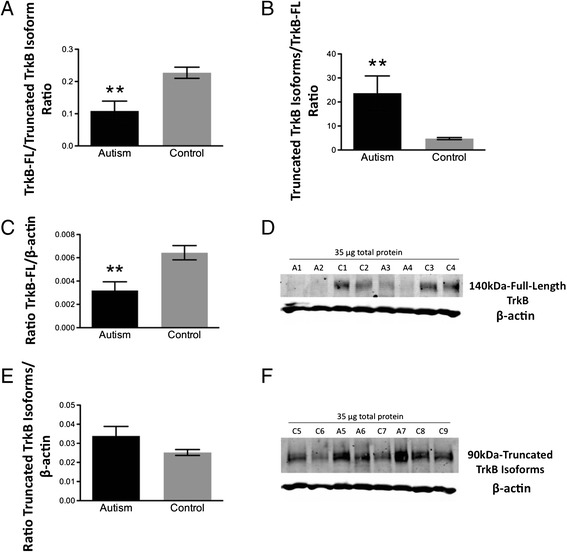
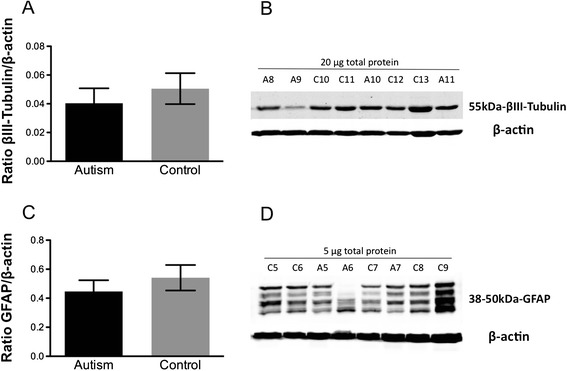
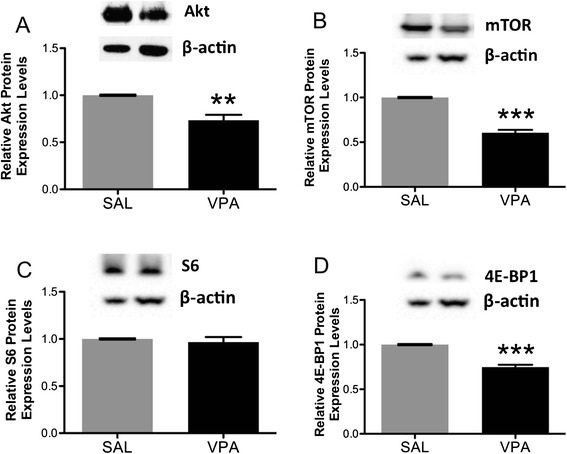
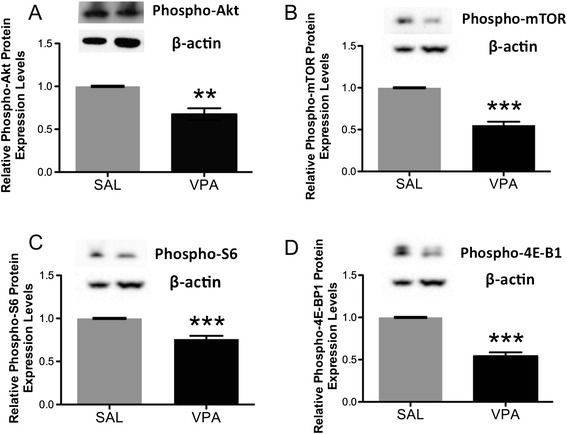
BACKGROUND: The molecular mechanisms underlying autistic behaviors remain to be elucidated. Mutations in genes linked to autism adversely affect molecules regulating dendritic spine formation, function and plasticity, and some increase the mammalian target of rapamycin, mTOR, a regulator of protein synthesis at spines. Here, we investigated whether the Akt/mTOR pathway is disrupted in idiopathic autism and in rats exposed to valproic acid, an animal model exhibiting autistic-like behavior. METHODS: Components of the mTOR pathway were assayed by Western blotting in postmortem fusiform gyrus samples from 11 subjects with idiopathic autism and 13 controls and in valproic acid versus saline-exposed rat neocortex. Additionally, protein levels of brain-derived neurotrophic factor receptor (TrkB) isoforms and the postsynaptic organizing molecule PSD-95 were measured in autistic versus control subjects. RESULTS: Full-length TrkB, PI3K, Akt, phosphorylated and total mTOR, p70S6 kinase, eIF4B and PSD-95 were reduced in autistic versus control fusiform gyrus. Similarly, phosphorylated and total Akt, mTOR and 4E-BP1 and phosphorylated S6 protein were decreased in valproic acid- versus saline-exposed rats. However, no changes in 4E-BP1 or eIF4E were found in autistic brains. CONCLUSIONS: In contrast to some monogenic disorders with high rates of autism, our data demonstrate down-regulation of the Akt/mTOR pathway, specifically via p70S6K/eIF4B, in idiopathic autism. These findings suggest that disruption of this pathway in either direction is widespread in autism and can have adverse consequences for synaptic function. The use of valproic acid, a histone deacetylase inhibitor, in rats successfully modeled these changes, implicating an epigenetic mechanism in these pathway disruptions.
Overview
The claims and statistics of this paper haven’t been checked yet.
Run the check — free, no account needed. It reads the open-access text and checks the sources it cites.
Integrity signals
Registry
Cites
Statistics
Figures
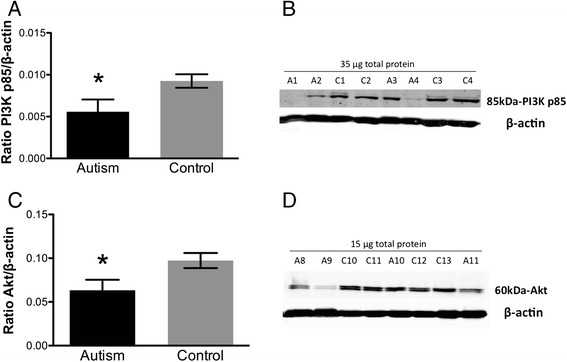
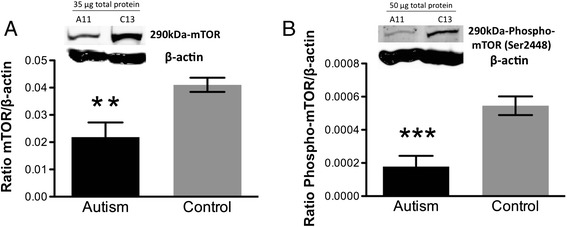
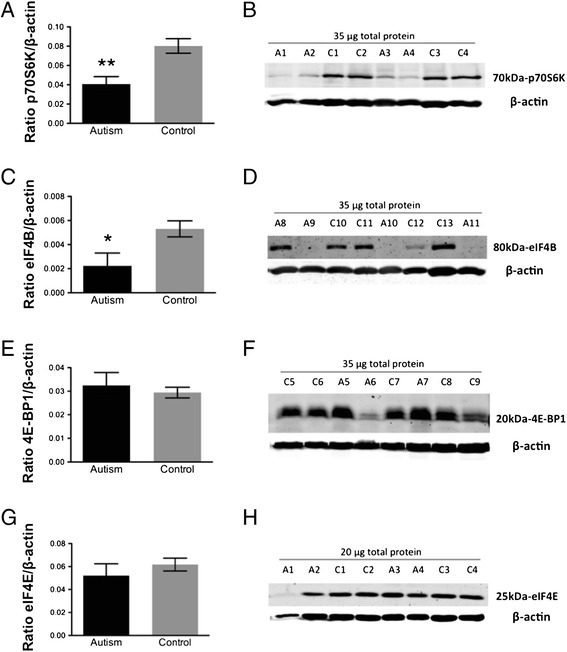
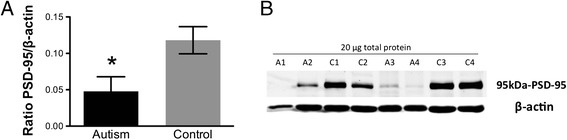
Verification
Claims the paper makes
The claims and statistics of this paper haven’t been checked yet.
Run the check — free, no account needed. It reads the open-access text and checks the sources it cites.
Claims other papers make about this one
Each is checked against this paper’s own text: does it say what the citing paper says it does?
In the citing paper
“Thus, these results further add to the literature supporting the idea that dysregulation of mTOR in either direction is likely important in ASD.104”
From Maternal immune activation dysregulation of the fetal brain transcriptome and relevance to the pathophysiology of autism spectrum disorder (2018) · cites this paper as [104]
Self-check
Percentages, sums and reported differences re-computed from the paper’s own numbers.
The self-check needs the paper’s full text.
Citations
Cites
Diagnostic and Statistical Manual of Mental Disorders
Williams, J. B. W., & First, M. B. (2013) · Oxford University Press eBooks · doi:10.1093/acrefore/9780199975839.013.104 · Cited by 109,845
Lord, C., Rutter, M., & Le Couteur, A. (1994) · Journal of Autism and Developmental Disorders · doi:10.1007/bf02172145 · Cited by 9,065
Upstream and downstream of mTOR
Hay, N., & Sonenberg, N. (2004) · Genes & Development · doi:10.1101/gad.1212704 · Cited by 4,181
Diagnostic and Statistical Manual of Mental Disorders
Raber, G., & Spokas, M. (2024) · doi:10.4135/9781071886229.n145 · Cited by 2,806
Autism Diagnostic Interview-Revised
Rutter, M., LeCouteur, A., & Lord, C. (2016) · PsycTESTS Dataset · doi:10.1037/t18128-000 · Cited by 1,627
Prenatal Valproate Exposure and Risk of Autism Spectrum Disorders and Childhood Autism
Christensen, J., Grønborg, T. K., Sørensen, M. J., Schendel, D., Parner, E. T., Pedersen, L. H., & Vestergaard, M. (2013) · JAMA · doi:10.1001/jama.2013.2270 · Cited by 1,357
mTOR signaling: At the crossroads of plasticity, memory and disease
Hoeffer, C. A., & Klann, E. (2010) · Trends in Neurosciences · doi:10.1016/j.tins.2009.11.003 · Cited by 1,128
Schultz, R. T., Gauthier, I., Klin, A., Fulbright, R. K., Anderson, A. W., Volkmar, F., Skudlarski, P., Lacadie, C., Cohen, D. J., & Gore, J. C. (2000) · Archives of General Psychiatry · doi:10.1001/archpsyc.57.4.331 · Cited by 1,000
Behavioral Alterations in Rats Prenatally Exposed to Valproic Acid: Animal Model of Autism
Schneider, T., & Przewłocki, R. (2005) · Neuropsychopharmacology · doi:10.1038/sj.npp.1300518 · Cited by 959
Klein, R., Nanduri, V., Jing, S., Lamballe, F., Tapley, P., Bryant, S., Cordon-Cardo, C., Jones, K. R., Reichardt, L. F., & Barbacid, M. (1991) · Cell · doi:10.1016/0092-8674(91)90628-c · Cited by 958
Research works printed but not linked: 1
- Ahn Y, Narous M, Tobias R, Hu B, Rho JM (2012) Alterations in social behavior and mTOR signaling in the valproic acid-induced model of autism spectrum disorder, Program No. 861.21. 2012 Neuroscience Meeting Planner. Society for Neuroscience, New Orleans, LA, Online
Cited by
Sorted by citations
Items 101–108 of 108
A CRH2-ACTH theory of autism spectrum disorder
Rappoport, A. (2025) · Elsevier eBooks · doi:10.1016/b978-0-44-345008-2.00007-2
Valproate-Induced Autism and Sexual Hormone Disturbances: A Literature Review and Hypotheses
Nicolet, G., Marchi, N., Perroy, J., Peyre, H., Baghdadli, A., & Picot, M. (2025) · Neurochemical Research · doi:10.1007/s11064-025-04582-w
Additional file 1 of KIF2A decreases IL-33 production and attenuates allergic asthmatic inflammation
Wang, Z., Wu, J., Jiang, J., Ma, Q., Song, M., Xu, T., Liu, Y., Chen, Z., 鲍燕敏, Huang, M., et al. (2022) · Figshare · doi:10.6084/m9.figshare.20099719
miR-495-3p inhibition rescues mTORC1 hyperactivation-driven autistic-like behaviors in micePreprint
Levone, B. R., Schneider, N., Deltuvaite, P., Germain, P., & Schratt, G. M. (2026) · bioRxiv (Cold Spring Harbor Laboratory) · doi:10.64898/2026.03.02.708955
Noori, T., Hosseini, S. Z., Alavi, S. D., Sureda, A., & Shirooie, S. (2026) · Current Neuropharmacology · doi:10.2174/011570159x388575251126041202
Kapłon, K., Napiórkowska-Mastalerz, M., Bredelytė, A., & Ruszkowska-Ciastek, B. (2026) · Nutrition Reviews · doi:10.1093/nutrit/nuag089
Li, J., Haj-Husein, I., Ghafari, N., Khorraminezhad, L., Iskandar, M. M., Zaouter, C., Klein, M., Sleno, L., Patten, S. A., & Kubow, S. J. (2026) · Metabolomics · doi:10.1007/s11306-026-02482-w
Almohawes, Z. N., El‐Khadragy, M. F., Al‐Megrin, W. A. I., Mohamed, N. H., & Salem, F. E. H. (2026) · Arquivo Brasileiro de Medicina Veterinária e Zootecnia · doi:10.1590/1678-4162-13573
Metadata
- Authors
- Nicolini, C., Ahn, Y., Michalski, B., Rho, J. M., & Fahnestock, M.
- Affiliations
- McMaster University (CA)
- University of Calgary (CA)
- Corresponding author
- Fahnestock, Margaret
- Venue
- Acta Neuropathologica Communications
- Published
- 2015-01-20
- Volume
- 3
- Issue
- 1
- Pages
- 3-3
- ISSN
- 2051-5960 (ISSN-L)
- PMC
- PMC4307681
- OpenAlex
- W2118513080
- Cited by
- 109
- References
- 66
- Citations by year
- 2026: 13 · 2025: 12 · 2024: 9 · 2023: 10 · 2022: 10 · 2021: 9 · 2020: 8 · 2019: 6 · 2018: 12 · 2017: 9 · 2016: 8 · 2015: 3
- FWCI
- 7.29
- Type
- journal article
- Language
- en
- Open access
- gold
- doi.org
- Locations
- Acta Neuropathologica Communications (publishedVersion, cc-by)
- Europe PMC (PubMed Central) (publishedVersion, cc-by)
- PubMed Central (publishedVersion, cc-by)
- PubMed (publishedVersion)
- eScholarship (California Digital Library) (submittedVersion)
- eScholarship (California Digital Library) (submittedVersion, cc-by)
- Funders
- Autism Speaks
- Alberta Children's Hospital Research Institute
- Canadian Institutes of Health Research
- Topics
- Life Sciences › Biochemistry, Genetics and Molecular Biology › Genetics › Genetics and Neurodevelopmental Disorders
- Life Sciences › Neuroscience › Cognitive Neuroscience › Autism Spectrum Disorder Research
- Life Sciences › Biochemistry, Genetics and Molecular Biology › Molecular Biology › PI3K/AKT/mTOR signaling in cancer
- Keywords
- idiopathic autism, mTOR signaling, Akt/mTOR signaling, valproic acid, animal models of autism, p70 S6 kinase, eIF4B, 4E-BP1, PSD-95, TrkB, phosphatidylinositol 3-kinase, synaptic plasticity, dendritic spines, histone deacetylase inhibition, epigenetics, fusiform gyrus, neocortex
- MeSH terms
- Disks Large Homolog 4 Protein, Adolescent, Adult, Animals, Anticonvulsants, Autistic Disorder, Child, Child, Preschool, Disease Models, Animal, Female, Gene Expression Regulation, Humans, Male, Membrane Proteins, Middle Aged, Postmortem Changes, Pregnancy, Prenatal Exposure Delayed Effects, RNA, Messenger, Temporal Lobe, Valproic Acid, Signal Transduction, Intracellular Signaling Peptides and Proteins, Rats, Young Adult, TOR Serine-Threonine Kinases
About these checks
Registry, retraction, Cites and statistics results are computed, not judged, with one exception: a printed reference that no index lists is read once by a model before it counts as a citation error. Claims are extracted by a model and kept only when their quote appears verbatim in the text; each cited source is then checked, with a model’s help, for whether it says what the claim relies on. Those verdicts can be wrong — read the claim’s quote and the cited source before relying on one.
Statistics and arithmetic are recomputed, not judged.
Confidence bands are shown only for fields calibrated on our annotated test set. None is calibrated yet, so no band is shown.
What counts as a claim ›How we measure confidence ›How we check this ›
Are you an author, or do you see a problem with this page? Request a review
