

Increased plasma neurofilament light chain concentration correlates with severity of post-mortem neurofibrillary tangle pathology and neurodegeneration
Open accessThe DOI matches its Crossref record; 48 of the 48 references it cites were found in a registry or an index.
Abstract
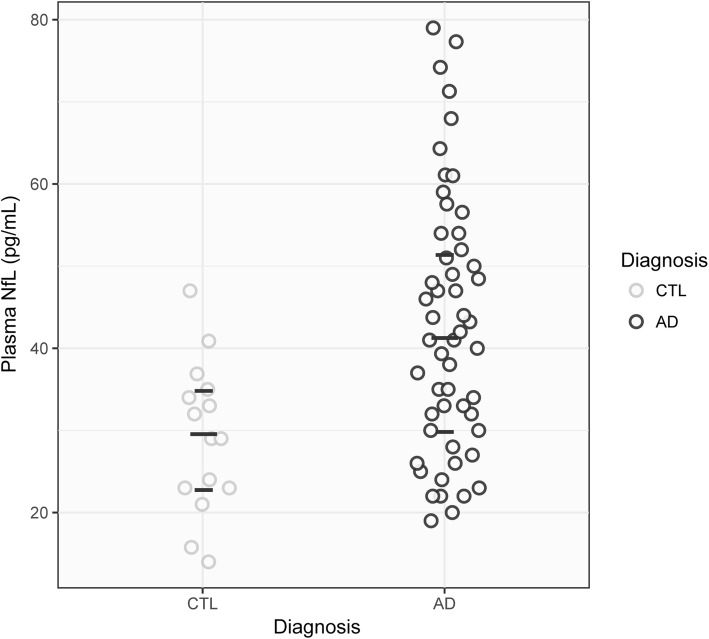
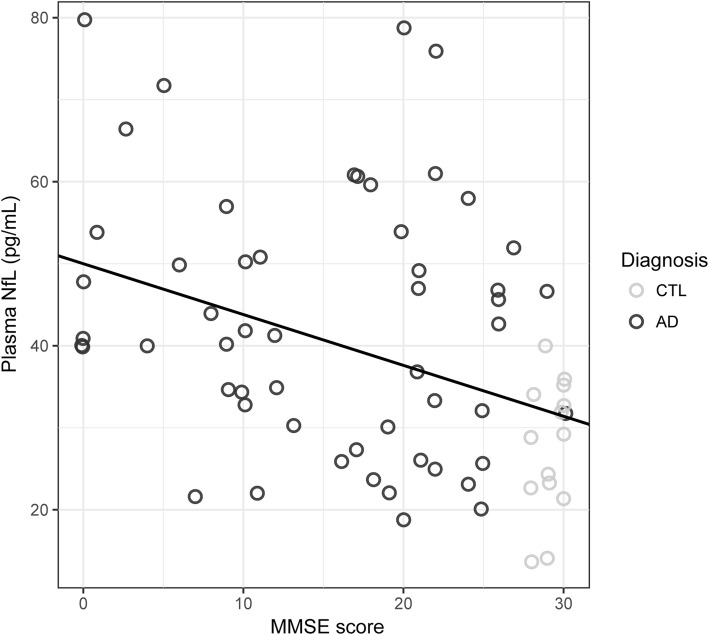
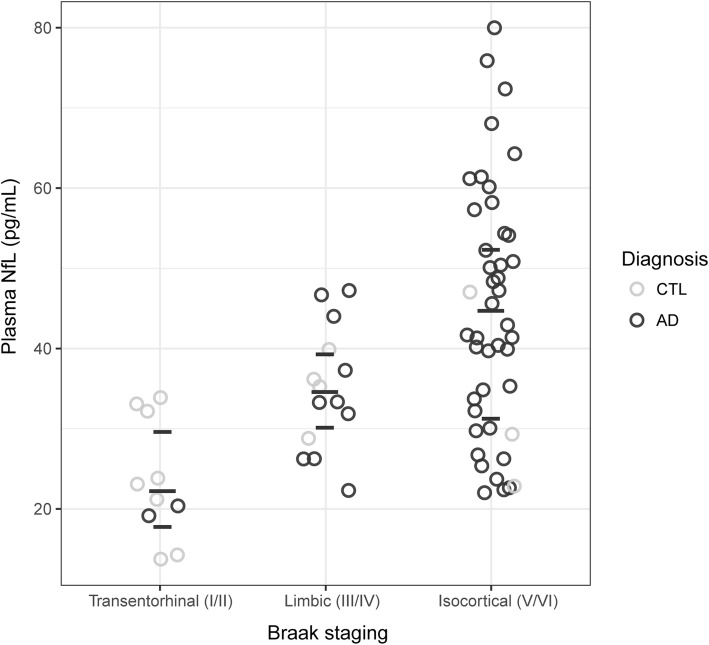
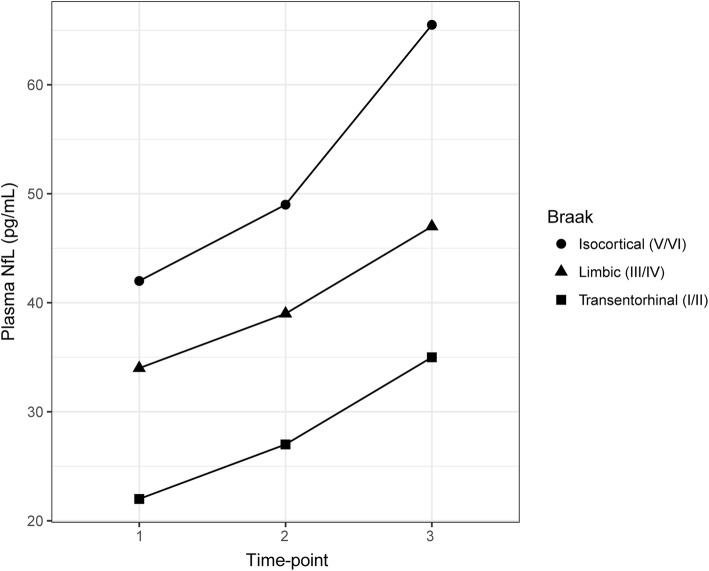
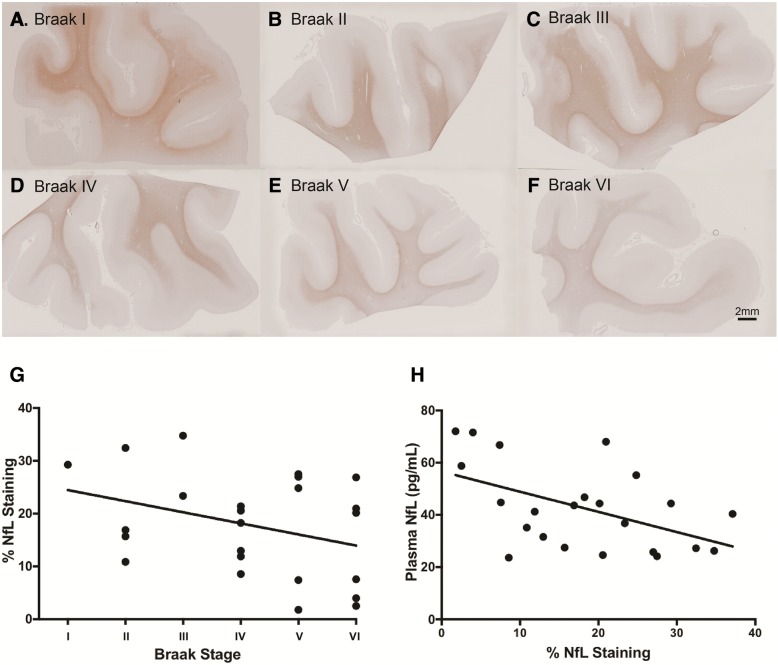
Alzheimer’s disease (AD) is pathologically characterized by the accumulation of amyloid-β (Aβ) plaques, neurofibrillary tangles and widespread neuronal loss in the brain. In recent years, blood biomarkers have emerged as a realistic prospect to highlight accumulating pathology for secondary prevention trials. Neurofilament light chain (NfL), a marker of axonal degeneration, is robustly elevated in the blood of many neurological and neurodegenerative conditions, including AD. A strong relationship with cerebrospinal fluid (CSF) NfL suggests that these biomarker modalities reflect the same pathological process. Yet, the connection between blood NfL and brain tissue pathology has not been directly compared. In this study, longitudinal plasma NfL from cognitively healthy controls ( n = 12) and AD participants ( n = 57) were quantified by the Simoa platform. On reaching post-mortem , neuropathological assessment was performed on all participants, with additional frozen and paraffin-embedded tissue acquired from 26 participants for further biochemical (Aβ 1–42 , Aβ 1–40 , tau) and histological (NfL) evaluation. Plasma NfL concentrations were significantly increased in AD and correlated with cognitive decline, independent of age. Retrospective stratification based on Braak staging revealed that baseline plasma NfL concentrations were associated with higher neurofibrillary tangle pathology at post-mortem . Longitudinal increases in plasma NfL were observed in all Braak groupings; a significant negative association, however, was found between plasma NfL at time point 1 and both its rate of change and annual percentage increase. Immunohistochemical evaluation of NfL in the medial temporal gyrus (MTG) demonstrated an inverse relationship between Braak stages and NfL staining. Importantly, a significant negative correlation was found between the plasma NfL measurement closest to death and the level of NfL staining in the MTG at post-mortem . For the first time, we demonstrate that plasma NfL associates with the severity of neurofibrillary tangle pathology and neurodegeneration in the post-mortem brain.
Overview
The claims and statistics of this paper haven’t been checked yet.
Free: it reads the open-access text and checks the first 5 claims that cite a source we can check. Create a free account to check every claim.
Integrity signals
Registry
Cites
Statistics
Figures
Verification
Claims the paper makes
The claims and statistics of this paper haven’t been checked yet.
Free: it reads the open-access text and checks the first 5 claims that cite a source we can check. Create a free account to check every claim.
Claims other papers make about this one
Each is checked against this paper’s own text: does it say what the citing paper says it does?
The cited source says what the claim attributes to it.
In the citing paper
“Whereas blood t-tau shows no diagnostic potential for AD, 13 NfL in blood shows a clear increase in AD, 4 and also tracks neurofibrillary tangle load and cognitive decline.14,15”
From Plasma Tau and Neurofilament Light in Frontotemporal Lobar Degeneration and Alzheimer Disease (2021) · cites this paper as [14]
The cited source says what the claim attributes to it.
In the citing paper
“This further supports that plasma NfL reflects brain pathophysiology, 14”
From Plasma Tau and Neurofilament Light in Frontotemporal Lobar Degeneration and Alzheimer Disease (2021) · cites this paper as [14]
Self-check
Percentages, sums and reported differences re-computed from the paper’s own numbers.
The self-check needs the paper’s full text.
Citations
Cites
The Alzheimer’s disease neuroimaging initiative (ADNI): MRI methods
Jack, C. R., Bernstein, M. A., Fox, N. C., Thompson, P., Alexander, G., Harvey, D., Borowski, B., Britson, P. J., L. Whitwell, J., Ward, C., et al. (2008) · Journal of Magnetic Resonance Imaging · doi:10.1002/jmri.21049 · Cited by 4,347
Mixed brain pathologies account for most dementia cases in community-dwelling older persons
Schneider, J. A., Arvanitakis, Z., Bang, W., & Bennett, D. A. (2007) · Neurology · doi:10.1212/01.wnl.0000271090.28148.24 · Cited by 1,992
High performance plasma amyloid-β biomarkers for Alzheimer's disease
Nakamura, A., Kaneko, N., Villemagne, V. L., Kato, T., Doecke, J., Doré, V., Fowler, C., Li, Q.-X., Martins, R., Rowe, C., et al. (2018) · Nature · doi:10.1038/nature25456 · Cited by 1,681
Serum neurofilament light: a biomarker of neuronal damage in multiple sclerosis
Disanto, G., Barro, C., Benkert, P., Naegelin, Y., Schädelin, S., Giardiello, A., Zecca, C., Blennow, K., Zetterberg, H., Leppert, D., et al. (2017) · Annals of Neurology · doi:10.1002/ana.24954 · Cited by 1,164
Self-citationAssociation of plasma neurofilament light with neurodegeneration in patients with Alzheimer disease
Mattsson, N., Andreasson, U., Zetterberg, H., Blennow, K., & Initiative, F. T. A. D. N. (2017) · JAMA Neurology · doi:10.1001/jamaneurol.2016.6117 · Cited by 1,070 · cited 3×
“Independent of age, plasma NfL correlates inversely with global cognition (Chatterjee et al. 2018; Lewczuk et al. 2018; Mattsson et al. 2017) and is increased in AD, despite large overlaps with other diagnostic groups (Lewczuk et al. 2018; Mattsson et al. 2017).”
BackgroundResultSelf-citationNeurofilaments and Neurofilament Proteins in Health and Disease
Yuan, A., Rao, M. V., Veeranna, & Nixon, R. A. (2017) · Cold Spring Harbor Perspectives in Biology · doi:10.1101/cshperspect.a018309 · Cited by 731 · cited 1×
“The neurofilaments are critical structural components of the neural cytoskeleton but their interaction with mitochondria, microtubules and other proteins (Yuan et al. 2017) imply their function is far more imperative than simply axonal stability.”
BackgroundAlzheimer' Disease as a Disconnection Syndrome?
Delbeuck, X., Van der Linden, M., & Collette, F. (2003) · Neuropsychology Review · doi:10.1023/a:1023832305702 · Cited by 682 · cited 1×
“In addition to widespread grey matter loss, substantial white matter (WM) atrophy is also reported in AD (Delbeuck et al. 2003).”
BackgroundPlasma β-amyloid in Alzheimer's disease and vascular disease
Janelidze, S., Stomrud, E., Palmqvist, S., Zetterberg, H., van Westen, D., Jeromin, A., Song, L., Hanlon, D., Tan Hehir, C. A., Baker, D., et al. (2016) · Scientific Reports · doi:10.1038/srep26801 · Cited by 626
Self-citationBuerger, K., Ewers, M., Pirttila, T., Zinkowski, R., Alafuzoff, I., Teipel, S. J., DeBernardis, J., Kerkman, D., McCulloch, C., Soininen, H., et al. (2006) · Brain · doi:10.1093/brain/awl269 · Cited by 586 · cited 2×
“However, it remains unclear if CSF P-tau truly reflects NFT burden, with mixed findings having been reported for P-tau181(Buerger et al. 2007; Engelborghs et al. 2007; Seppala et al. 2012), though a positive association has been reported for P-tau231 (Buerger et al. 2006).”
BackgroundResultTau Kinetics in Neurons and the Human Central Nervous System
Sato, C., Barthélemy, N. R., Mawuenyega, K. G., Patterson, B. W., Gordon, B. A., Jockel-Balsarotti, J., Sullivan, M., Crisp, M. J., Kasten, T., Kirmess, K. M., et al. (2018) · Neuron · doi:10.1016/j.neuron.2018.02.015 · Cited by 586
Reiber, H. (1994) · Journal of the Neurological Sciences · doi:10.1016/0022-510x(94)90298-4 · Cited by 529 · cited 1×
“However, in this study, a slowed trajectory of plasma NfL was observed in all groups (including Braak I/II and controls) and therefore the reported aged-related reduction in CSF turnover (Reiber 1994) may be a better explanation of this finding.”
ResultBlood-based NfL: A biomarker for differential diagnosis of parkinsonian disorder
Hansson, O., Janelidze, S., Hall, S., Magdalinou, N., Lees, A. J., Andreasson, U., Norgren, N., Linder, J., Forsgren, L., Constantinescu, R., et al. (2017) · Neurology · doi:10.1212/wnl.0000000000003680 · Cited by 506
Self-citationPlasma tau in Alzheimer disease
Mattsson, N., Zetterberg, H., Janelidze, S., Insel, P. S., Andreasson, U., Stomrud, E., Palmqvist, S., Baker, D., Tan Hehir, C. A., Jeromin, A., et al. (2016) · Neurology · doi:10.1212/wnl.0000000000003246 · Cited by 502
Self-citationZetterberg, H., Skillbäck, T., Mattsson, N., Trojanowski, J. Q., Portelius, E., Shaw, L. M., Weiner, M. W., Blennow, K., & Initiative, F. T. A. D. N. (2016) · JAMA Neurology · doi:10.1001/jamaneurol.2015.3037 · Cited by 487
Self-citationIncreased Neurofilament Light Chain Blood Levels in Neurodegenerative Neurological Diseases
Gaiottino, J., Norgren, N., Dobson, R., Topping, J., Nissim, A., Malaspina, A., Bestwick, J. P., Monsch, A. U., Regeniter, A., Lindberg, R. L., et al. (2013) · PLoS ONE · doi:10.1371/journal.pone.0075091 · Cited by 486
Gisslén, M., Price, R. W., Andreasson, U., Norgren, N., Nilsson, S., Hagberg, L., Fuchs, D., Spudich, S., Blennow, K., & Zetterberg, H. (2016) · EBioMedicine · doi:10.1016/j.ebiom.2015.11.036 · Cited by 481
Self-citationProteome-based plasma biomarkers for Alzheimer's disease
Hye, A., Lynham, S., Thambisetty, M., Causevic, M., Campbell, J., Byers, H. L., Hooper, C., Rijsdijk, F., Tabrizi, S. J., Banner, S., et al. (2006) · Brain · doi:10.1093/brain/awl279 · Cited by 464
Self-citationBacioglu, M., Maia, L. F., Preische, O., Schelle, J., Apel, A., Kaeser, S. A., Schweighauser, M., Eninger, T., Lambert, M., Pilotto, A., et al. (2016) · Neuron · doi:10.1016/j.neuron.2016.05.018 · Cited by 435
Serum neurofilament light chain protein is a measure of disease intensity in frontotemporal dementia
Rohrer, J. D., Woollacott, I. O. C., Dick, K. M., Brotherhood, E., Gordon, E., Fellows, A., Toombs, J., Druyeh, R., Cardoso, M. J., Ourselin, S., et al. (2016) · Neurology · doi:10.1212/wnl.0000000000003154 · Cited by 432
Self-citationMonitoring disease activity in multiple sclerosis using serum neurofilament light protein
Novakova, L., Zetterberg, H., Sundström, P., Axelsson, M., Khademi, M., Gunnarsson, M., Malmeström, C., Svenningsson, A., Olsson, T., Piehl, F., et al. (2017) · Neurology · doi:10.1212/wnl.0000000000004683 · Cited by 426
Self-citationTDP-43 stage, mixed pathologies, and clinical Alzheimer’s-type dementia
James, B. D., Wilson, R. S., Boyle, P. A., Trojanowski, J. Q., Bennett, D. A., & Schneider, J. A. (2016) · Brain · doi:10.1093/brain/aww224 · Cited by 407
Plasma tau levels in Alzheimer's disease
Zetterberg, H., Wilson, D., Andreasson, U., Minthon, L., Blennow, K., Randall, J., & Hansson, O. (2013) · Alzheimer's Research & Therapy · doi:10.1186/alzrt163 · Cited by 387
Self-citationByrne, L. M., Rodrigues, F. B., Blennow, K., Durr, A., Leavitt, B. R., Roos, R. A. C., Scahill, R. I., Tabrizi, S. J., Zetterberg, H., Langbehn, D., et al. (2017) · The Lancet Neurology · doi:10.1016/s1474-4422(17)30124-2 · Cited by 364
Self-citationLewczuk, P., Riederer, P., O’Bryant, S. E., Verbeek, M. M., Dubois, B., Visser, P. J., Jellinger, K. A., Engelborghs, S., Ramirez, A., Parnetti, L., et al. (2018) · The World Journal of Biological Psychiatry · doi:10.1080/15622975.2017.1375556 · Cited by 307 · cited 3×
“Independent of age, plasma NfL correlates inversely with global cognition (Chatterjee et al. 2018; Lewczuk et al. 2018; Mattsson et al. 2017) and is increased in AD, despite large overlaps with other diagnostic groups (Lewczuk et al. 2018; Mattsson et al. 2017).”
BackgroundResultSelf-citationPlasma neurofilament light as a potential biomarker of neurodegeneration in Alzheimer’s disease
Lewczuk, P., Ermann, N., Andreasson, U., Schultheis, C., Podhorna, J., Spitzer, P., Maler, J. M., Kornhuber, J., Blennow, K., & Zetterberg, H. (2018) · Alzheimer's Research & Therapy · doi:10.1186/s13195-018-0404-9 · Cited by 305
Self-citationCSF biomarkers for Alzheimer disease correlate with cortical brain biopsy findings
Seppälä, T. T., Nerg, O., Koivisto, A. M., Rummukainen, J., Puli, L., Zetterberg, H., Pyykkö, O. T., Helisalmi, S., Alafuzoff, I., Hiltunen, M., et al. (2012) · Neurology · doi:10.1212/wnl.0b013e3182563bd0 · Cited by 236
Self-citationMielke, M. M., Hagen, C. E., Wennberg, A. M. V., Airey, D. C., Savica, R., Knopman, D. S., Machulda, M. M., Roberts, R. O., Jack, C. R., Petersen, R. C., et al. (2017) · JAMA Neurology · doi:10.1001/jamaneurol.2017.1359 · Cited by 211
Neurofilament protein in cerebrospinal fluid: A marker of white matter changes
Sjögren, M., Blomberg, M., Jonsson, M., Wahlund, L. ‐., Edman, Å., Lind, K., Rosengren, L., Blennow, K., & Wallin, A. (2001) · Journal of Neuroscience Research · doi:10.1002/jnr.1242 · Cited by 209
Self-citationTrojanowski, J., Walkenstein, N., & Lee, V. (1986) · The Journal of Neuroscience · doi:10.1523/jneurosci.06-03-00650.1986 · Cited by 207
Plasma proteins predict conversion to dementia from prodromal disease
Hye, A., Riddoch‐Contreras, J., Baird, A. L., Ashton, N. J., Bazenet, C., Leung, R., Westman, E., Simmons, A., Dobson, R., Sattlecker, M., et al. (2014) · Alzheimer's & Dementia · doi:10.1016/j.jalz.2014.05.1749 · Cited by 198
Self-citationHigh performance plasma amyloid-beta biomarkers for Alzheimer's disease
Nakamura, A., Kaneko, N., Villemagne, V. L., Kato, T., Doecke, J. D., Doré, V., Fowler, C. J., Li, Q., Martins, R. N., Rowe, C. C., et al. (2018) · Nature · Cited by 196
Cytoskeleton proteins in CSF distinguish frontotemporal dementia from AD
Sjögren, M., Rosengren, L., Minthon, L., Davidsson, P., Blennow, K., & Wallin, A. (2000) · Neurology · doi:10.1212/wnl.54.10.1960 · Cited by 181
Self-citationForgrave, L. M., Ma, M., Best, J. R., & DeMarco, M. L. (2019) · Alzheimer's & Dementia: Diagnosis, Assessment & Disease Monitoring · doi:10.1016/j.dadm.2019.08.009 · Cited by 177
Sutphen, C. L., McCue, L., Herries, E. M., Xiong, C., Ladenson, J. H., Holtzman, D. M., Fagan, A. M., & On behalf of, A. D. N. I. (2018) · Alzheimer's & Dementia · doi:10.1016/j.jalz.2018.01.012 · Cited by 162
Yilmaz, A., Blennow, K., Hagberg, L., Nilsson, S., Price, R. W., Schouten, J., Spudich, S., Underwood, J., Zetterberg, H., & Gisslén, M. (2017) · Expert Review of Molecular Diagnostics · doi:10.1080/14737159.2017.1341313 · Cited by 158
Self-citationEngelborghs, S., Sleegers, K., Cras, P., Brouwers, N., Serneels, S., De Leenheir, E., Martin, J.-J., Vanmechelen, E., Van Broeckhoven, C., & De Deyn, P. P. (2007) · Brain · doi:10.1093/brain/awm136 · Cited by 113
Accuracy of Clinical Diagnosis of Dementia with Lewy Bodies versus Neuropathology
Skogseth, R. E., Hortobágyi, T., Soennesyn, H., Chwiszczuk, L. J., Ffytche, D. H., Rongve, A., Ballard, C. G., & Aarsland, D. (2017) · Journal of Alzheimer s Disease · doi:10.3233/jad-170274 · Cited by 99
Self-citationFrom Cerebrospinal Fluid to Blood: The Third Wave of Fluid Biomarkers for Alzheimer’s Disease
Zetterberg, H., & Blennow, K. (2018) · Journal of Alzheimer's Disease · doi:10.3233/jad-179926 · Cited by 94
Self-citationRelevance of biomarkers across different neurodegenerative diseases
Ehrenberg, A. J., Khatun, A., Coomans, E., Betts, M. J., Capraro, F., Thijssen, E. H., Senkevich, K., Bharucha, T., Jafarpour, M., Young, P. N. E., et al. (2020) · Alzheimer's Research & Therapy · doi:10.1186/s13195-020-00601-w · Cited by 79
Self-citationChatterjee, P., Goozee, K., Sohrabi, H. R., Shen, K., Shah, T., Asih, P. R., Dave, P., ManYan, C., Taddei, K., Chung, R., et al. (2018) · Journal of Alzheimer’s Disease · doi:10.3233/jad-180025 · Cited by 72 · cited 3×
“Independent of age, plasma NfL correlates inversely with global cognition (Chatterjee et al. 2018; Lewczuk et al. 2018; Mattsson et al. 2017) and is increased in AD, despite large overlaps with other diagnostic groups (Lewczuk et al. 2018; Mattsson et al. 2017).”
BackgroundResultSelf-citationClinical practice guidelines for severe Alzheimer's disease
Herrmann, N., Gauthier, S., & Lysy, P. G. (2007) · Alzheimer's & Dementia · doi:10.1016/j.jalz.2007.07.007 · Cited by 65
Obrocki, P., Khatun, A., Ness, D., Senkevich, K. A., Hanrieder, J., Capraro, F., Mattsson, N., Andréasson, U., Portelius, E., Ashton, N. J., et al. (2020) · Alzheimer s Research & Therapy · doi:10.1186/s13195-020-00586-6 · Cited by 58
Self-citationBuerger, K., Alafuzoff, I., Ewers, M., Pirttila, T., Zinkowski, R., & Hampel, H. (2007) · Brain · doi:10.1093/brain/awm140 · Cited by 56
Consensus statement on dementia of Alzheimer type in the severe stage.
Vellas, B. J., Gauthier, S. G., Allain, H., Andrieu, S., Aquino, J. P., Berrut, G., Berthel, M., Blanchard, F., Camus, V., Dartigues, J.-F., et al. (2005) · PubMed · Cited by 37
Parbo, P., Madsen, L. S., Ismail, R., Zetterberg, H., Blennow, K., Eskildsen, S. F., Vorup-Jensen, T., & Brooks, D. J. (2020) · Alzheimer's Research & Therapy · doi:10.1186/s13195-019-0574-0 · Cited by 33
Self-citationEffects of Coriandrum sativum Seed Extract on Aging-Induced Memory Impairment in Samp8 Mice
Mima, Y., Izumo, N., Chen, J., Yang, S., Furukawa, M., & Watanabe, Y. (2020) · Nutrients · doi:10.3390/nu12020455 · Cited by 26
Zetterberg, H. (2015) · Neurobiology of Aging · doi:10.1016/j.neurobiolaging.2015.07.021 · Cited by 19 · cited 1×
“Candidate proteins are influenced by peripheral expression from extra-cerebral tissues and the measurements are confounded by matrix effects from plasma proteins (Zetterberg 2015).”
BackgroundSelf-citationCerebrospinal Fluid Phosphate in Delirium after Hip Fracture
Idland, A., Wyller, T. B., Støen, R., Dahl, G. T., Frihagen, F., Brækhus, A., Hassel, B., & Watne, L. O. (2017) · Dementia and Geriatric Cognitive Disorders Extra · doi:10.1159/000478723 · Cited by 5
Cited by
Alzheimer's disease drug development pipeline: 2019
Cummings, J., Lee, G., Ritter, A., Sabbagh, M., & Zhong, K. (2019) · Alzheimer's & Dementia: Translational Research & Clinical Interventions · doi:10.1016/j.trci.2019.05.008 · Cited by 762
“In addition to the specific biomarkers included in the ATN framework, evidence is accruing that the plasma amyloid 40/42 ratio corresponds to the presence of cerebral amyloidosis [34] and that plasma neurofilament light is indicative of neurodegeneration [35].”
BackgroundPlasma p-tau231: a new biomarker for incipient Alzheimer’s disease pathology.
Ashton, N. J., Pascoal, T. A., Karikari, T. K., Benedet, A. L., Lantero-Rodriguez, J., Brinkmalm, G., Snellman, A., Schöll, M., Troakes, C., Hye, A., et al. (2021) · Acta Neuropathologica · doi:10.1007/s00401-021-02275-6 · Cited by 719
Self-citationA multicentre validation study of the diagnostic value of plasma neurofilament light.
Ashton, N. J., Janelidze, S., Al Khleifat, A., Leuzy, A., van der Ende, E. L., Karikari, T. K., Benedet, A. L., Pascoal, T. A., Lleó, A., Parnetti, L., et al. (2021) · Nature Communications · doi:10.1038/s41467-021-23620-z · Cited by 545
Self-citationLantero Rodriguez, J., Karikari, T. K., Suárez-Calvet, M., Troakes, C., King, A., Emersic, A., Aarsland, D., Hye, A., Zetterberg, H., Blennow, K., et al. (2020) · Acta Neuropathologica · doi:10.1007/s00401-020-02195-x · Cited by 350
Self-citationThe diagnostic and prognostic capabilities of plasma biomarkers in Alzheimer's disease
Simrén, J., Leuzy, A., Karikari, T. K., Hye, A., Benedet, A. L., Lantero‐Rodriguez, J., Mattsson‐Carlgren, N., Schöll, M., Mecocci, P., Vellas, B., et al. (2021) · Alzheimer's & Dementia · doi:10.1002/alz.12283 · Cited by 340
Self-citation
Metadata
- Authors
- Ashton, N. J., Leuzy, A., Lim, Y. M., Troakes, C., Hortobágyi, T., Höglund, K., Aarsland, D., Lovestone, S., Schöll, M., Blennow, K., Zetterberg, H., & Hye, A.
- Affiliations
- King's College London (GB)
- Wallenberg Centre for Molecular and Translational Medicine (SE)
- University of Debrecen (HU)
- University of Gothenburg (SE)
- Warneford Hospital (GB)
- Lund University (SE)
- Sahlgrenska University Hospital (SE)
- Corresponding author
- Hye, Abdul
- ORCID
- Venue
- Acta Neuropathologica Communications
- Published
- 2019-01-09
- Volume
- 7
- Issue
- 1
- Pages
- 5-5
- ISSN
- 2051-5960 (ISSN-L)
- PMC
- PMC6327431
- OpenAlex
- W2917353757
- Cited by
- 172
- References
- 48
- Citations by year
- 2026: 7 · 2025: 8 · 2024: 29 · 2023: 26 · 2022: 19 · 2021: 28 · 2020: 39 · 2019: 16
- FWCI
- 17.49
- Type
- journal article
- Language
- en
- Open access
- gold
- doi.org
- Licence
- cc-by
- creativecommons.org/licenses/by/4.0/ (tdm)
- Locations
- Acta Neuropathologica Communications (publishedVersion, cc-by)
- Europe PMC (PubMed Central) (publishedVersion, cc-by)
- PubMed Central (publishedVersion, cc-by)
- PubMed (publishedVersion)
- Repository of the Academy's Library (Library of the Hungarian Academy of Sciences) (acceptedVersion)
- University of Debrecen Electronic Archive (University of Debrecen) (submittedVersion, cc-by)
- DOAJ (DOAJ: Directory of Open Access Journals) (submittedVersion)
- UCL Discovery (University College London) (submittedVersion)
- Research Portal (King's College London) (submittedVersion, cc-by)
- Lund University Publications (Lund University) (submittedVersion)
- Funders
- Marianne and Marcus Wallenberg Foundation (N/A)
- Topics
- Life Sciences › Neuroscience › Cellular and Molecular Neuroscience › Alzheimer's disease research and treatments
- Health Sciences › Medicine › Psychiatry and Mental health › Dementia and Cognitive Impairment Research
- Life Sciences › Neuroscience › Neurology › Neuroinflammation and Neurodegeneration Mechanisms
- Keywords
- neurofilament light chain, Alzheimer's disease, neurofibrillary tangles, neurodegeneration, blood biomarkers, Braak staging, postmortem neuropathology, medial temporal gyrus, amyloid-beta, tau protein, cognitive decline, axonal degeneration
- MeSH terms
- Aged, Aged, 80 and over, Alzheimer Disease, Brain, Female, Humans, Longitudinal Studies, Male, Neurofibrillary Tangles, Neurofilament Proteins
About these checks
Registry, retraction, Cites and statistics results are computed, not judged, with one exception: a printed reference that no index lists is read once by a model before it counts as a citation error. Claims are extracted by a model and kept only when their quote appears verbatim in the text; each cited source is then checked, with a model’s help, for whether it says what the claim relies on. Those verdicts can be wrong — read the claim’s quote and the cited source before relying on one.
Statistics and arithmetic are recomputed, not judged.
Confidence bands are shown only for fields calibrated on our annotated test set. None is calibrated yet, so no band is shown.
What counts as a claim ›How we measure confidence ›How we check this ›
Are you an author, or do you see a problem with this page? Request a review
Data sources
Bibliographic data: Semantic Scholar, OpenAlex, Crossref.
Contains information from the Semantic Scholar Academic Graph Datasets, made available under the ODC Attribution License (ODC-BY 1.0).
Semantic Scholar’s data is described in: Kinney, R., et al. (2023). The Semantic Scholar Open Data Platform. arXiv:2301.10140.
