

The association between self-esteem and aesthetic component of smile among adolescents
Open accessThe DOI matches its Crossref record; 26 of the 26 references it cites were found in a registry or an index.
Abstract
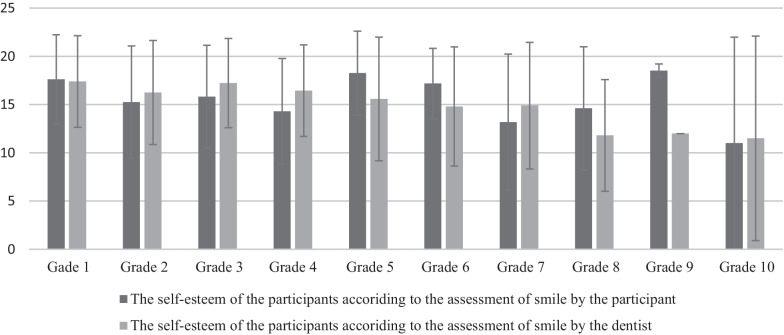
Objectives: Self-esteem plays a crucial role during adolescence in a shaping of an individual’s overall well-being and confidence. The aim of this study was to explore the relationship between the self-esteem in adolescents and their smile aesthetics, as well as to assess the alignment of opinions on this matter between adolescents and dentists. Methods: Sample included 413 students in Split-Dalmatia County, aged 13 to 18 (60% females). Data on demographic issues, orthodontic history, and desire for orthodontic treatment were collected by the self-administrated questionnaire. Coopersmith's Self-Esteem Inventory was also used. Smile aesthetics was assessed by each participant and dentist independently using an Aesthetic Component of the Index of Orthodontic Treatment Need (IOTN AC). Results: Self-esteem was higher in adolescents who rated their smile aesthetics equally to the dentist than in those who considered their aesthetics to be worse than the dentist (18.5 vs. 16; P = 0.011). The multiple linear regression revealed that the self-esteem of adolescents was positively related to undergone previous orthodontic treatment ( β = 1.286, P = 0.020) while negatively related to the female gender ( β = −2.531, P ≤ 0.001) and IOTN AC assessed by dentist ( β = −0.356, P = 0.015). It was not related to educational level or desire for orthodontic treatment. Conclusion: The self-esteem in adolescence is influenced the most by gender, but the orthodontic treatment and better smile aesthetics might also contribute.
Overview
The claims and statistics of this paper haven’t been checked yet.
Free: it reads the open-access text and checks the first 5 claims that cite a source we can check. Create a free account to check every claim.
Integrity signals
Registry
Cites
Statistics
Figures
Verification
Claims the paper makes
The claims and statistics of this paper haven’t been checked yet.
Free: it reads the open-access text and checks the first 5 claims that cite a source we can check. Create a free account to check every claim.
Self-check
Percentages, sums and reported differences re-computed from the paper’s own numbers.
The self-check needs the paper’s full text.
Citations
Cites
At the Threshold: The Developing Adolescent
Feldman, S. S., & Elliott, G. R. (1990) · Cited by 3,227
Blascovich, J., & Tomaka, J. (1991) · Measures of Personality and Social Psychological Attitudes · doi:10.1016/b978-0-12-590241-0.50008-3 · Cited by 1,833 · cited 1×
“Self-esteem refers to the degree to which a person values, appreciates, approves of, and likes themselves [1].”
BackgroundThe development of an index of orthodontic treatment priority
Brook, P. H., & Shaw, W. C. (1989) · European Journal of Orthodontics · doi:10.1093/oxfordjournals.ejo.a035999 · Cited by 1,154 · cited 3×
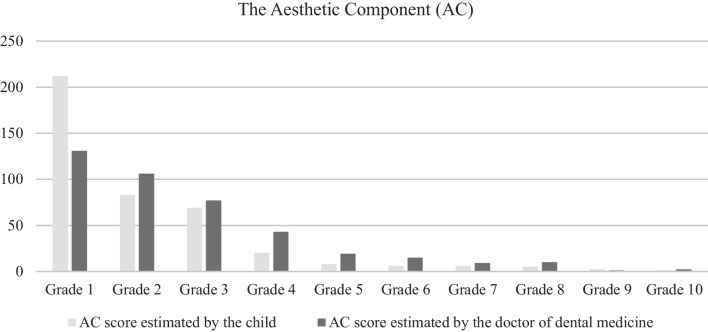
“…into three levels of need for the orthodontic therapy: the first level (Grade 1, 2, 3, 4) means that there is no need for the therapy, the second level (Grade 5, 6, 7) means that there is a moderate need, and the third level (Grade 8, 9, 10) means that there is a great need for therapy [15].”
BackgroundInfluentialLife-span development of self-esteem and its effects on important life outcomes.
Orth, U., Robins, R. W., & Widaman, K. F. (2012) · Journal of Personality and Social Psychology · doi:10.1037/a0025558 · Cited by 860
Self-esteem development from young adulthood to old age: A cohort-sequential longitudinal study.
Orth, U., Trzesniewski, K. H., & Robins, R. W. (2010) · Journal of Personality and Social Psychology · doi:10.1037/a0018769 · Cited by 567 · cited 1×
“In our study, boys demonstrated significantly higher self-esteem than girls, which is in line with numerous studies, where girls exhibited lower self-esteem than boys [24, 25].”
ResultKokich, V. O., Kokich, V. G., & Kiyak, H. A. (2006) · American Journal of Orthodontics and Dentofacial Orthopedics · doi:10.1016/j.ajodo.2006.04.017 · Cited by 521 · cited 2×
“Significant differences exist between the orthodontists’ and patients’ perceptions regarding the need for ortho-dontic treatment [10].”
BackgroundWichstrøm, L. (1999) · Developmental Psychology · doi:10.1037/0012-1649.35.1.232 · Cited by 459 · cited 1×
“Moreover, several studies strongly suggest that the dissatisfaction with one’s body is a significant predictor of lower self-esteem in adolescent girls [23, 26].”
BackgroundVan der Geld, P., Oosterveld, P., Van Heck, G., & Kuijpers-Jagtman, A. M. (2007) · The Angle Orthodontist · doi:10.2319/082606-349 · Cited by 391 · cited 2×
“Patients actively pursue treatment options to achieve improved dentofacial aesthetics and undergo a positive transformation in their smiles [7–9].”
BackgroundSelf-perception of malocclusion among north jordanian school children
Abu Alhaija, E. S. J., Al-Nimri, K. S., & Al-Khateeb, S. N. (2005) · European Journal of Orthodontics · doi:10.1093/ejo/cjh094 · Cited by 194 · cited 2×
“%) rated the aesthetics of their smile as aesthetically acceptable and placed it within the first four levels of the aesthetic component [22].”
BackgroundResultBadran, S. (2010) · European Journal of Orthodontics · doi:10.1093/ejo/cjq014 · Cited by 173 · cited 4×
“…are in accordance with other studies whose findings led to the conclusion that an improvement in self-esteem is among the most noteworthy outcomes of orthodontic treatment [6] and that enhanced physical attractiveness resulting from orthodontic treatment positively impacts self-esteem [17].”
ResultInfluential
Cited by
Dental Aesthetics and Self-Esteem of Patients Seeking Orthodontic Treatment
Bahar, A. D., Sagi, M. S., Zuhairi, F. A. M., & Hassan, W. N. W. (2024) · Healthcare · doi:10.3390/healthcare12161576 · Cited by 33
Nunes, G. P., Alves, R. D. O., Peres, G. R., Ragghianti, M. H. F., de Toledo, P. T. A., Prado, A. H. D. R., Ferreira‐Baptista, C., & Delbem, A. C. B. (2025) · Clinical Oral Investigations · doi:10.1007/s00784-025-06265-w · Cited by 20
“The smile is significantly associated with self-esteem, aesthetics, and social interactions [1, 2].”
Saini, R. S., Kaur, K., Gurumurthy, V., Binduhayyim, R. I. H., Kaushik, A., Kuruniyan, M. S., Alarcón‐Sánchez, M. A., & Heboyan, A. G. (2025) · Digital Health · doi:10.1177/20552076251388392 · Cited by 28
Spirito, F. D., Cannatà, D., Schettino, V., Galdi, M., Bucci, R., & Martina, S. (2024) · Clinics and Practice · doi:10.3390/clinpract14030092 · Cited by 11
“Conversely, an aesthetic occlusion results in a more attractive appearance, promoting increased self-esteem and acceptance by peers [10].”
BackgroundŞivet, E. A., Sezer, B., Karanlık, U., & Kargül, B. (2026) · BMC Medical Education · doi:10.1186/s12909-025-08395-x · Cited by 4
“The IOTN-AC is an internationally recognized scoring system for assessing orthodontic treatment needs from both professional and patient perspectives [30, 31].”
Metadata
- Authors
- Gavic, L., Budimir, M., & Tadin, A.
- Affiliations
- University of Split (HR)
- Venue
- Progress in Orthodontics
- Published
- 2024-03-04
- Volume
- 25
- Issue
- 1
- Pages
- 9-9
- ISSN
- 1723-7785 (ISSN-L)
- 2196-1042
- PMC
- PMC10909780
- OpenAlex
- W4392756345
- Cited by
- 21
- References
- 26
- Citations by year
- 2026: 10 · 2025: 9 · 2024: 2
- FWCI
- 8.79
- Type
- journal article
- Language
- en
- Open access
- gold
- doi.org
- Licence
- cc-by
- creativecommons.org/licenses/by/4.0 (tdm)
- creativecommons.org/licenses/by/4.0 (vor)
- Locations
- Progress in Orthodontics (publishedVersion, cc-by)
- PubMed Central (publishedVersion, cc-by)
- PubMed (publishedVersion)
- DOAJ (DOAJ: Directory of Open Access Journals) (submittedVersion)
- Topics
- Health Sciences › Dentistry › Orthodontics › Orthodontics and Dentofacial Orthopedics
- Social Sciences › Psychology › Clinical Psychology › Body Image and Dysmorphia Studies
- Health Sciences › Dentistry › General Dentistry › Dental Health and Care Utilization
- Keywords
- self-esteem, smile aesthetics, adolescents, orthodontic treatment need, Index of Orthodontic Treatment Need, gender differences
- MeSH terms
- Adolescent, Esthetics, Dental, Female, Humans, Male, Smiling
About these checks
Registry, retraction, Cites and statistics results are computed, not judged, with one exception: a printed reference that no index lists is read once by a model before it counts as a citation error. Claims are extracted by a model and kept only when their quote appears verbatim in the text; each cited source is then checked, with a model’s help, for whether it says what the claim relies on. Those verdicts can be wrong — read the claim’s quote and the cited source before relying on one.
Statistics and arithmetic are recomputed, not judged.
Confidence bands are shown only for fields calibrated on our annotated test set. None is calibrated yet, so no band is shown.
What counts as a claim ›How we measure confidence ›How we check this ›
Are you an author, or do you see a problem with this page? Request a review
How to cite
Cite CoChat for the checks on this page, and the paper for its own findings.
- This page
- CoChat. (2026). Citation check: The association between self-esteem and aesthetic component of smile among adolescents. https://app.cochat.ai/papers/10.1186/s40510-023-00508-w
- The paper
- Gavic, L., Budimir, M., & Tadin, A. (2024). The association between self-esteem and aesthetic component of smile among adolescents. Progress in Orthodontics. https://doi.org/10.1186/s40510-023-00508-w
Data sources
Bibliographic data: Semantic Scholar, OpenAlex, Crossref.
Contains information from the Semantic Scholar Academic Graph Datasets, made available under the ODC Attribution License (ODC-BY 1.0).
Semantic Scholar’s data is described in: Kinney, R., et al. (2023). The Semantic Scholar Open Data Platform. arXiv:2301.10140.
