

Analysis and best parameters selection for person recognition based on gait model using CNN algorithm and image augmentation
Open accessPublished version of a preprint
The DOI matches its Crossref record; 38 of the 39 references it cites were found in a registry or an index.
Abstract
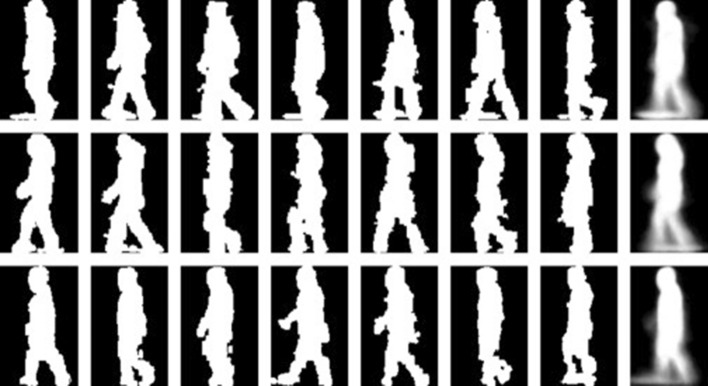
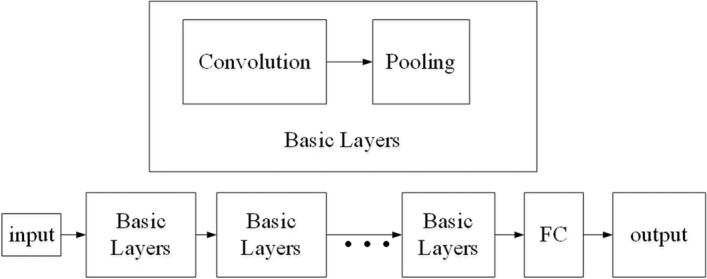
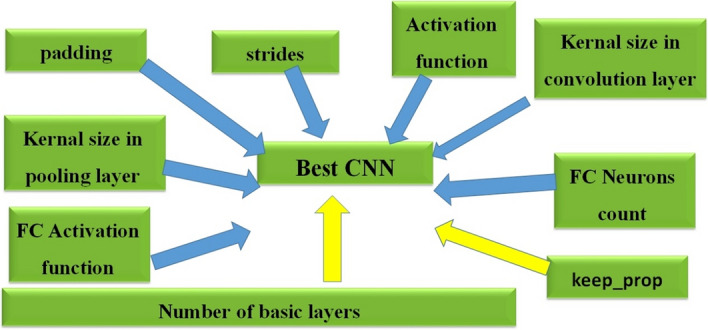
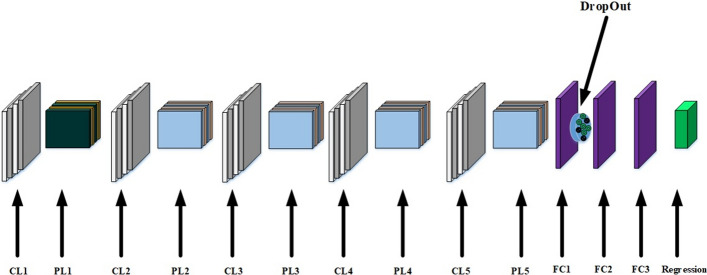
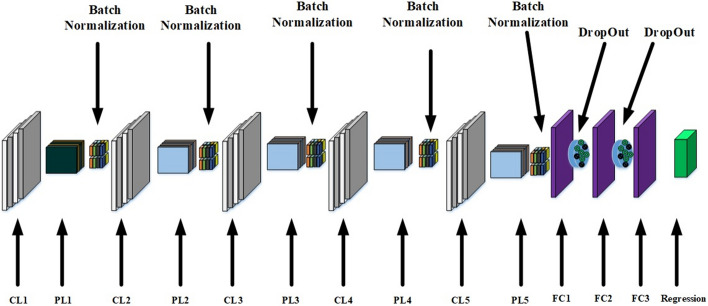
Person Recognition based on Gait Model (PRGM) and motion features is are indeed a challenging and novel task due to their usages and to the critical issues of human pose variation, human body occlusion, camera view variation, etc. In this project, a deep convolution neural network (CNN) was modified and adapted for person recognition with Image Augmentation (IA) technique depending on gait features. Adaptation aims to get best values for CNN parameters to get best CNN model. In Addition to the CNN parameters Adaptation, the design of CNN model itself was adapted to get best model structure; Adaptation in the design was affected the type, the number of layers in CNN and normalization between them. After choosing best parameters and best design, Image augmentation was used to increase the size of train dataset with many copies of the image to boost the number of different images that will be used to train Deep learning algorithms. The tests were achieved using known dataset (Market dataset). The dataset contains sequential pictures of people in different gait status. The image in CNN model as matrix is extracted to many images or matrices by the convolution, so dataset size may be bigger by hundred times to make the problem a big data issue. In this project, results show that adaptation has improved the accuracy of person recognition using gait model comparing to model without adaptation. In addition, dataset contains images of person carrying things. IA technique improved the model to be robust to some variations such as image dimensions (quality and resolution), rotations and carried things by persons. Results for 200 persons recognition, validation accuracy was about 82% without IA and 96.23 with IA. For 800 persons recognition, validation accuracy was 93.62% without IA.
Overview
The claims and statistics of this paper haven’t been checked yet.
Free: it reads the open-access text and checks the first 5 claims that cite a source we can check. Create a free account to check every claim.
Integrity signals
Registry
Cites
Statistics
Figures

Verification
Claims the paper makes
The claims and statistics of this paper haven’t been checked yet.
Free: it reads the open-access text and checks the first 5 claims that cite a source we can check. Create a free account to check every claim.
Claims other papers make about this one
Each is checked against this paper’s own text: does it say what the citing paper says it does?
The cited source says what the claim attributes to it.
In the citing paper
“If the goal is to increase the amount of available data and avoid the overfitting issue, data augmentation techniques are one possible solution [150, 158, 159].”
From Review of deep learning: concepts, CNN architectures, challenges, applications, future directions (2021) · cites this paper as [158]
Self-check
Percentages, sums and reported differences re-computed from the paper’s own numbers.
The self-check needs the paper’s full text.
Citations
Cites
Adam: A Method for Stochastic Optimization
Kingma, D. P., & Ba, J. (2014) · arXiv · doi:10.48550/arxiv.1412.6980 · Cited by 98,946
The Proceedings of the National Academy of Sciences
Richards, J. W. (1915) · Science · doi:10.1126/science.42.1074.161 · Cited by 13,983
A survey on Image Data Augmentation for Deep Learning
Shorten, C., & Khoshgoftaar, T. M. (2019) · Journal of Big Data · doi:10.1186/s40537-019-0197-0 · Cited by 13,203
Dropout as a bayesian approximation: Representing model uncertainty in deep learning
Gal, Y., & Ghahramani, Z. (2015) · arXiv · doi:10.48550/arxiv.1506.02142 · Cited by 7,865
Recent advances in convolutional neural networks
Gu, J., Wang, Z., Kuen, J., Ma, L., Shahroudy, A., Shuai, B., Liu, T., Wang, X., Wang, G., Cai, J., et al. (2018) · Pattern Recognition · doi:10.1016/j.patcog.2017.10.013 · Cited by 6,576
Convolutional neural networks: an overview and application in radiology
Yamashita, R., Nishio, M., Do, R. K. G., & Togashi, K. (2018) · Insights into Imaging · doi:10.1007/s13244-018-0639-9 · Cited by 4,682
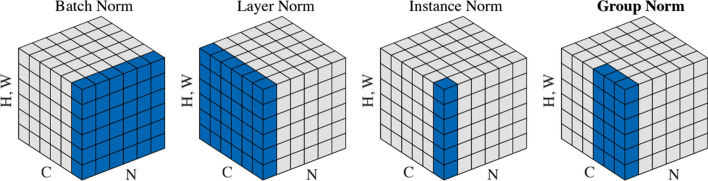
Wu, Y., & He, K. (2020) · International Journal of Computer Vision · doi:10.1007/s11263-019-01198-w · Cited by 3,601 · cited 2×
“layers) with demnsions H:Hight, W:Width [17] There are: 305”
MethodFace recognition: a convolutional neural-network approach
Lawrence, S., Giles, C. L., Tsoi, A. C., & Back, A. D. (1997) · IEEE Transactions on Neural Networks · doi:10.1109/72.554195 · Cited by 3,092
Text Data Augmentation for Deep Learning
Shorten, C., Khoshgoftaar, T. M., & Furht, B. (2021) · Journal of Big Data · doi:10.1186/s40537-021-00492-0 · Cited by 1,740
Computer Vision and Image Understanding
Saideni, W., Courreges, F., Helbert, D., & Cances, J. P. (2022) · SSRN Electronic Journal · doi:10.2139/ssrn.4129906 · Cited by 766
Research works printed but not linked: 2
- Ghalleb AEK Amara NEB Soft and hard biometrics for the authentication of remote people in front and side views Int J Appl Eng Res 2016 11 14 8120 8127
- Terrier P. Gait recognition via deep learning of the center-of-pressure trajectory. 2019; arXiv preprint arXiv:1908.04758 · DOI
Cited by
Items 101–164 of 164
DeepNet-Gait: Human Identification by Gait Using Convolutional Neural Network Model
Rani, V., & Kumar, M. (2023) · International Conference on Signal Processing and Integrated Networks (SPIN) · doi:10.1109/spin57001.2023.10117067 · Cited by 3
Kim, H. S., Min, K.-W., & Kim, J. S. (2023) · Annals of Oncology · doi:10.1016/j.annonc.2023.10.146 · Cited by 3
Mukthar, K. P. J., Sivasubaramanian, K., Reyes, C. A. R., Acosta-Ponce, W., Requejo, C. C. E., & Ramírez-Asís, E. (2024) · Studies in systems, decision and control · doi:10.1007/978-3-031-36895-0_24 · Cited by 3
A Formal Approach to Optimally Configure a Fully Connected Multilayer Hybrid Neural Network
Chakraborty, G., Azhmyakov, V., & Trujillo, L. A. G. (2024) · Mathematics · doi:10.3390/math13010129 · Cited by 3
Rathi, G., Kamble, S. D., & Sharma, N. (2025) · Knowledge and Information Systems · doi:10.1007/s10115-025-02503-5 · Cited by 5
Elghadyry, B., Ouardi, F., Lotfi, Z., & Vérel, S. (2021) · Journal Of Big Data · doi:10.1186/s40537-021-00535-6 · Cited by 3
Wang, W., Cai, J., Xu, J., Wang, Y., & Zou, Y. (2021) · Soft Computing · doi:10.1007/s00500-021-06142-0 · Cited by 3
A high-performance, hardware-based deep learning system for disease diagnosis
Siddique, A., Iqbal, M. A., Aleem, M., & Lin, J. C. (2022) · PeerJ Computer Science · doi:10.7717/peerj-cs.1034 · Cited by 3
A Novel Multi-Scaled Deep Convolutional Structure for Punctilious Human Gait Authentication
Yousef, R. N., Ata, M. M., Rashed, A. E. E., Badawy, M., Elhosseini, M. A., & Bahgat, W. M. (2024) · Biomimetics · doi:10.3390/biomimetics9060364 · Cited by 2
“The model also seeks to expand the scope of gait applications, such as tracking the spread of COVID-19 [15], rather than other widely used biometrics, like fingerprints, faces, iris, and DNA.”
BackgroundMethodSobhy, M., El-Atta, A. H. A., El-Sawy, A., & Nayel, H. (2025) · Neural Computing and Applications · doi:10.1007/s00521-025-11501-1 · Cited by 2
Monolithically Integrated Optical Convolutional Processors on Thin Film Lithium Niobate
Liu, R., Zheng, Y., Ren, Y., Nan, B., Song, Y., Wu, R., Wang, M., & Cheng, Y. (2025) · Chinese Physics Letters · doi:10.1088/0256-307x/43/1/010404 · Cited by 2
Kassim, Y. M., Rosenberg, D. B., Das, S., Huang, Z., Rahman, S. A., Shammaa, I. A., Salim, S., Huang, K., Renero, A., Miller, C. M., et al. (2026) · PLoS Biology · doi:10.1371/journal.pbio.3003591 · Cited by 2
Zou, Y. (2022) · Journal of Physics Conference Series · doi:10.1088/1742-6596/2146/1/012037 · Cited by 2
Systematic Literature Review: Human Gait Cycle Model Using Image-Temporal Feature
Jamal, I. H., Izhar, C. A. A., Fauzilan, A. S., Maruzuki, M. I. F., Hussain, Z., & Rahman, M. F. A. (2021) · IEEE International Conference on Recent Advances and Innovations in Engineering (ICRAIE) · doi:10.1109/icraie52900.2021.9703989 · Cited by 2
Leveraging external resources for offensive content detection in social media
Kovács, G., Alonso, P., Saini, R., & Liwicki, M. (2022) · AI Communications · doi:10.3233/aic-210138 · Cited by 5
Object detection in optical imaging of the Internet of Things based on deep learning
Chen, R., Hei, L., & Lai, Y. (2023) · PeerJ Computer Science · doi:10.7717/peerj-cs.1718 · Cited by 5
“Deep learning (DL), as an emerging field within machine learning, centers its focus on comprehending the underlying patterns within sample data and the creation of multilayer representations ( Shorten, Khoshgoftaar & Furht, 2021 ).”
BackgroundIdentifying Valid User Stories Using BERT Pre-trained Natural Language Models
Scoggin, S. B., & Marques-Neto, H. T. (2024) · Lecture notes in networks and systems · doi:10.1007/978-3-031-45648-0_17 · Cited by 2
Setyawan, A. Y., Jumadi, J., & Nurlatifah, E. (2024) · SMATIKA JURNAL · doi:10.32664/smatika.v14i02.1368 · Cited by 2
A teaching proposal for a short course on biomedical data science
Chicco, D., & Coelho, V. (2025) · PLoS Computational Biology · doi:10.1371/journal.pcbi.1012946 · Cited by 2
Rescale Hinge Loss Support Vector Data Description
Maboudou‐Tchao, E. M., Agbemade, E., & Chung, J. (2025) · Journal of Data Science · doi:10.6339/25-jds1185 · Cited by 2
Cheng, Z., & Li, J. (2022) · Computational Intelligence and Neuroscience · doi:10.1155/2022/9618753 · Cited by 2
“…to the original RGB three channels of each pixel value, and its value represents the distance of the point in the acquired scene from the camera. mainstream methods of obtaining depth information are stereo triangulation, time of flight, and structured light [11, 12]. principles are described below:”
BackgroundRetractedResearch on Digital Media Image Data Tampering Forensics Technology Based on Improved CNN Algorithm
Wang, Y., & Li, Y. (2021) · Asian Conference on Artificial Intelligence Technology (ACAIT) · doi:10.1109/acait53529.2021.9731182 · Cited by 2
Al-Hababi, A. Y. S., & Chin, C. K. (2023) · IAES International Journal of Artificial Intelligence · doi:10.11591/ijai.v12.i4.pp1864-1872 · Cited by 2
Ong, S., Isawasan, P., Gomesh, N., Salleh, K. A., & Yusof, U. K. (2023) · International Conference on Artificial Intelligence and Data Sciences (AiDAS) · doi:10.1109/aidas60501.2023.10284682 · Cited by 2
“This was agreed with previous studies [14-18] that the importance of data-augmentation and hyperparameter in a CNN model performance.”
ResultEvaluating link prediction: new perspectives and recommendations
Kalyani, I. B., Mathi, A. R. P., & Sett, N. (2025) · International Journal of Data Science and Analytics · doi:10.1007/s41060-025-00858-0 · Cited by 1
A Hybrid Quantum–Classical LSTM Approach for Predicting the Stock Market
Arora, S., Kumar, D., & Gupta, S. (2025) · Information systems engineering and management · doi:10.1007/978-3-031-99786-0_4 · Cited by 4
Ning, L., Li, D., Xia, Y., Xiao, E., Han, D., Yan, J., & Dong, X. (2026) · Sensors · doi:10.3390/s26031048 · Cited by 1
“Constructing dependable CNN models often depends on extensive training datasets [103].”
Cuzzocrea, A., Lenac, K., & Mumolo, E. (2021) · Lecture notes in computer science · doi:10.1007/978-3-030-86472-9_32 · Cited by 1
Wang, W., Chen, X., & Yao, T. (2022) · Research on intelligent manufacturing · doi:10.1007/978-981-19-0272-7_1 · Cited by 1
Predicting Cyberattacks with Destination Port Through Various Input Feature Scenario
Zuech, R., Hancock, J., & Khoshgoftaar, T. M. (2022) · International Journal of Reliability Quality and Safety Engineering · doi:10.1142/s0218539322500036 · Cited by 1
Preserving Privacy in Human-Motion Affect Recognition.Preprint
Malek-Podjaski, M., & Deligianni, F. (2021) · arXiv (Cornell University)
Environmental issues on covid-19 medical waste: review from policy perspective
Nugroho, R. A., Kumar, A. W., Kartinawanty, A. T., Prakoso, S. G., Setyowati, K., & Suryawati, R. (2021) · IOP Conference Series Earth and Environmental Science · doi:10.1088/1755-1315/905/1/012108
Detection of COVID-19 from X-Ray Images. (c2021)
Kandalaft, J. (2021) · doi:10.26756/th.2022.247
Khadke, K. (2022) · Advances in intelligent systems and computing · doi:10.1007/978-981-19-4676-9_30
Sea Ice Environmental Load Assessment System Based on Convolution Identification Algorithm
Luo, X., Yang, X., Chun, M., & Xu, S. (2022) · IEEE Advanced Information Technology, Electronic and Automation Control Conference (IAEAC) · doi:10.1109/iaeac54830.2022.9930001
“In the failure zone, sea ice exhibits viscoelastic properties [1].”
BackgroundPREDICTION AND CLASSIFICATION OF GAIT DISORDERS BASED ON HYBRID DEEP LEARNING TECHNIQUE
Gowrishankar, G., Selvakumar, A., & Vasugi, K. (2023) · Zenodo (CERN European Organization for Nuclear Research) · doi:10.5281/zenodo.7753242
Iguma, K., & Murao, K. (2022) · ACM International Joint Conference on Pervasive and Ubiquitous Computing (UbiComp) · doi:10.1145/3544793.3560395
Architecture of Pension Service Platform on Account of Machine Learning and Big Data Analysis
Lv, L., & Chen, Q. (2023) · Lecture notes in electrical engineering · doi:10.1007/978-981-99-1428-9_99
Multilingual Speech Identification Framework (MSIF) A Novel Approach in Language Identification
Sawalkar, S., & Roy, P. (2023) · Lecture notes in computer science · doi:10.1007/978-3-031-45170-6_75
Brahmia, S., Brahmia, Z., Grandi, F., & Bouaziz, R. (2024) · Lecture notes in business information processing · doi:10.1007/978-3-031-51664-1_15 · Cited by 1
Rainfall prediction using Bayesian Lasso and Bayesian Conjugate Regression
Kizhakkekuruppath, S., Manjusha, A., & Nair, A. (2024) · AIP conference proceedings · doi:10.1063/5.0224412
Visual Communication Image Clarity Processing System on the Basis of Deep Learning Algorithms
Sun, D., Ma, C., Guo, L., Guo, X., & Gan, Y. (2024) · International Conference on Networks, Multimedia and Information Technology (NMITCON) · doi:10.1109/nmitcon62075.2024.10698861
Computer vision and artificial intelligence for anomaly detection in photovoltaic panels
Nichida, C., Domingos, J. L., da Silveira, C. R., Gomes, R. A., Alves, R. H. F., Cremon, É. H., & Junior, R. A. (2024) · Revista de Gestão e Secretariado (Management and Administrative Professional Review) · doi:10.7769/gesec.v15i12.4570
Auto-weighted Multi-view Clustering with Unified Binary Representation and Deep Initialization
Houfar, K., Dornaika, F., Samai, D., Benlamoudi, A., Bensid, K., & Ahmed, A. T. (2024) · Springer eBooks · doi:10.1007/978-981-97-7679-5_8
Efficient Human Gait Detection Hybrid Approach With MobileBiLSTM
Jasmine, S., Marichamy, P., Ramalakshmi, K., & Aqil Ahmed, J. (2025) · Advances in computational intelligence and robotics book series · doi:10.4018/979-8-3693-5231-1.ch009
Cuevas, F. G., & Schmid, H. (2025) · Lecture notes in computer science · doi:10.1007/978-981-97-8702-9_32
Modak, A., Karmakar, S., & Mukherjee, K. (2024) · Springer geography · doi:10.1007/978-3-031-77596-3_5
Adaptive data augmentation for salient sentence identification in Indian judicial decisions
Sheik, R., Nair, K., Krishna, S. K. M., & Nirmala, S. J. (2025) · Evolving Systems · doi:10.1007/s12530-025-09671-3
A Deep Learning Framework for the Automatic Classification of Microseisms at Cotopaxi Volcano
Lara-Cueva, R., Iglesias, I., Rosero, A., Benítez, D. S., Pérez, N., & Rojo‐Álvarez, J. L. (2025) · Communications in computer and information science · doi:10.1007/978-3-031-88854-0_1
Using sanity checks in deep neural networks predictions
Alboaridhee, Z. J., Salih, H. S., Al-Augby, S., Ali, M. H., & Ghandour, A. M. (2025) · AIP conference proceedings · doi:10.1063/5.0274103
Salles, S., Brustolini, O. J. B., Ciapina, L. P., & Ocaña, K. (2025) · bioRxiv (Cold Spring Harbor Laboratory) · doi:10.1101/2025.05.06.652387
Research Objectives and Method
Bastos, D. R. M., & Tavares, J. M. R. S. (2025) · Studies in systems, decision and control · doi:10.1007/978-3-031-89560-9_3
Modernizing Risk Management: The Role of Predictive Analytics and AI
Bambhroliya, O., Desai, K., & Shringi, D. K. (2025) · Lecture notes in networks and systems · doi:10.1007/978-981-96-5751-3_22 · Cited by 2
LiteNet-CNN: A novel efficient lightweight image classification network
Manghwani, I., Singh, A. P., Qureshi, M. M., & Deshpande, H. S. (2025) · International Conference on Emerging Trends in Industry 4.0 Technologies (ICETI4T) · doi:10.1109/iceti4t63625.2025.11132218
“While reducing the parameters, it is also imperative to select the best parameters for CNN, which include the number of convolution filters, filter size, strides, padding and activation functions [8].”
Trujillo‐Hernández, G., Rodriguez-Quinonez, J. C., Flores‐Fuentes, W., Sanchez-Castro, J. J., Ortiz‐Villaseñor, D., Raygoza-L., M. E., Orduño-Osuna, J. H., & Murrieta-Rico, F. N. (2025) · Signal Image and Video Processing · doi:10.1007/s11760-025-04808-y
Revolutionizing Homeopathy: Integrating Data Analytics and AI/ML for Precision Remedy
Ghadiyaram, R., Morusu, V., Krishnamoorthy, D., & Eripilla, J. (2025) · Springer eBooks · doi:10.1007/978-3-032-02853-2_40 · Cited by 2
Arjun, B. S., Ravinagarajan, J., Pachiyappan, S., & Thomas, B. (2025) · BENTHAM SCIENCE PUBLISHERS eBooks · doi:10.2174/9798898810818125010013 · Cited by 1
TraceFusion: Precision AI for Missing and Wanted Person Detection
Mathew, L., Joseph, J., Kurias, G. P., Krishna, A. G., & Sharunmon, R. (2025) · International Conference on Smart Computing and Communications (ICSCC) · doi:10.1109/icscc66177.2025.11233272
“[ 16] 8) Comparative Analysis of Face Detection Algorithms: Choosing a face detection algorithm significantly influences the accuracy and speed of recognition systems.”
Additional file 1 of The forecast of COVID-19 spread risk at the county level
Hssayeni, M. D., Chala, A., Dev, R., Xu, L., Shaw, J., Furht, B., & Ghoraani, B. (2021) · Figshare · doi:10.6084/m9.figshare.14927032
GDAnet enables cross-scale prediction of granular flow from static snapshots to dynamic space–time
张, X. 馨. Z., 王, X. 新. W., 刘, Y. 彦. L., & 郑, W. 文. Z. (2025) · Chinese Physics B · doi:10.1088/1674-1056/ae1de8
Derlatka, M. (2025) · Acta Mechanica et Automatica · doi:10.2478/ama-2025-0078 · Cited by 1
“The model was compiled using the well-known Adam optimizer and CNNs were trained using categorical cross-entropy as the loss function [24].”
Analyzing spatiotemporal architectures in video classification: A deep dive into 3DCNNs
Pandya, D., & Rana, K. (2026) · Multimedia Tools and Applications · doi:10.1007/s11042-026-21799-1
Firdaus, T. A., Rais, B., Salim, M. J., Negara, A. R., Zia, M. Q. Z., Thwe, Y., Uda, M. N. A., Hashim, U., & Pamungkas, Y. (2026) · CommIT (Communication and Information Technology) Journal · doi:10.21512/commit.v20i2.14392
Metadata
- Authors
- Saleh, A. M., & Hamoud, T.
- Affiliations
- Syrian Private University (SY)
- Damascus University (SY)
- Corresponding author
- Saleh, Abeer Mohsin
- ORCID
- Saleh, Abeer Mohsin
- Venue
- Journal of Big Data
- Published
- 2021-01-03
- Volume
- 8
- Issue
- 1
- Pages
- 1-1
- ISSN
- 2196-1115 (ISSN-L)
- PMC
- PMC7778727
- OpenAlex
- W3120244865
- Cited by
- 158
- References
- 36
- Citations by year
- 2026: 1 · 2025: 38 · 2024: 35 · 2023: 36 · 2022: 28 · 2021: 20
- FWCI
- 9.04
- Type
- journal article
- Language
- en
- Open access
- gold
- doi.org
- Licence
- cc-by
- creativecommons.org/licenses/by/4.0 (tdm)
- creativecommons.org/licenses/by/4.0 (vor)
- Locations
- Journal Of Big Data (publishedVersion, cc-by)
- Research Square (acceptedVersion, cc-by)
- Europe PMC (PubMed Central) (publishedVersion, other-oa)
- PubMed Central (publishedVersion, cc-by)
- PubMed (publishedVersion)
- DOAJ (DOAJ: Directory of Open Access Journals) (submittedVersion, cc-by-sa)
- Topics
- Physical Sciences › Engineering › Biomedical Engineering › Gait Recognition and Analysis
- Physical Sciences › Computer Science › Computer Vision and Pattern Recognition › Advanced Neural Network Applications
- Physical Sciences › Computer Science › Computer Vision and Pattern Recognition › Video Surveillance and Tracking Methods
- Keywords
- gait model, convolutional neural networks, image augmentation, occlusion robustness, pose variation
About these checks
Registry, retraction, Cites and statistics results are computed, not judged, with one exception: a printed reference that no index lists is read once by a model before it counts as a citation error. Claims are extracted by a model and kept only when their quote appears verbatim in the text; each cited source is then checked, with a model’s help, for whether it says what the claim relies on. Those verdicts can be wrong — read the claim’s quote and the cited source before relying on one.
Statistics and arithmetic are recomputed, not judged.
Confidence bands are shown only for fields calibrated on our annotated test set. None is calibrated yet, so no band is shown.
What counts as a claim ›How we measure confidence ›How we check this ›
Are you an author, or do you see a problem with this page? Request a review
Data sources
Bibliographic data: Semantic Scholar, OpenAlex, Crossref.
Contains information from the Semantic Scholar Academic Graph Datasets, made available under the ODC Attribution License (ODC-BY 1.0).
Semantic Scholar’s data is described in: Kinney, R., et al. (2023). The Semantic Scholar Open Data Platform. arXiv:2301.10140.
