

Analysis and best parameters selection for person recognition based on gait model using CNN algorithm and image augmentation
Open accessPublished version of a preprint
The DOI matches its Crossref record; 38 of the 39 references it cites were found in a registry or an index.
Abstract
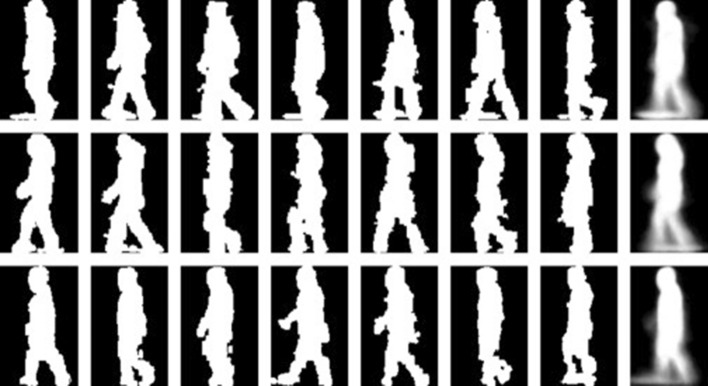
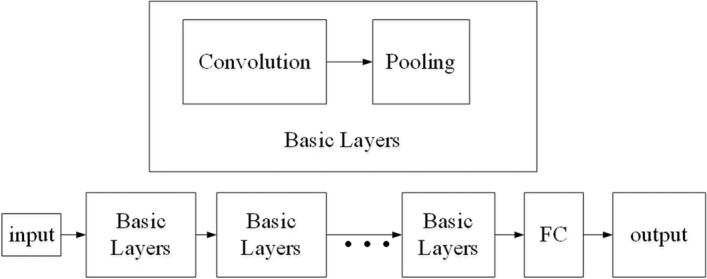
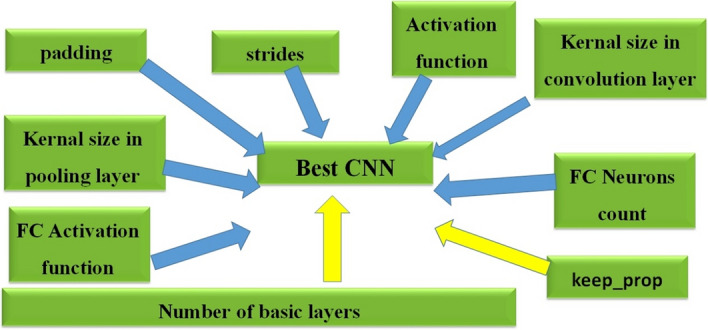
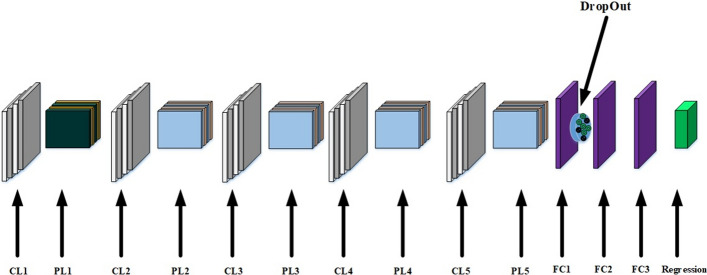
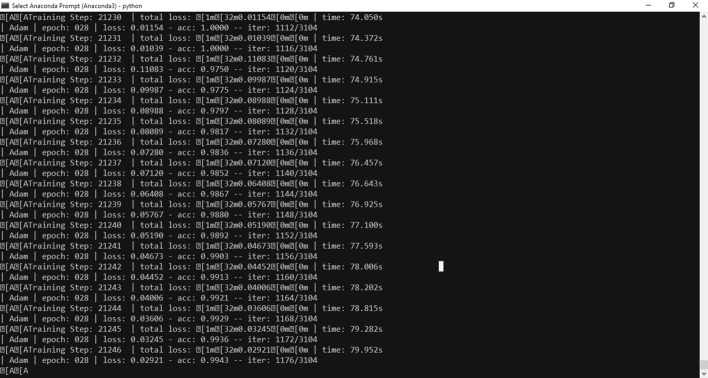
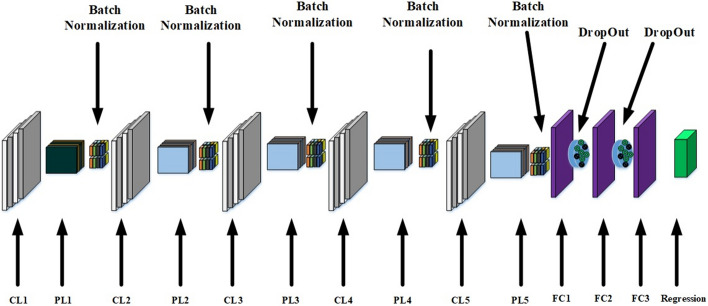
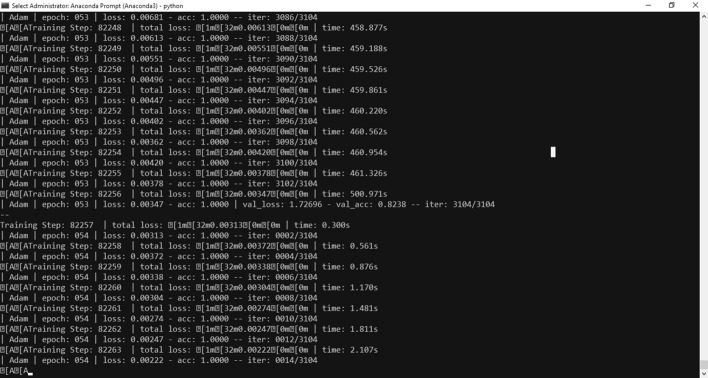
Person Recognition based on Gait Model (PRGM) and motion features is are indeed a challenging and novel task due to their usages and to the critical issues of human pose variation, human body occlusion, camera view variation, etc. In this project, a deep convolution neural network (CNN) was modified and adapted for person recognition with Image Augmentation (IA) technique depending on gait features. Adaptation aims to get best values for CNN parameters to get best CNN model. In Addition to the CNN parameters Adaptation, the design of CNN model itself was adapted to get best model structure; Adaptation in the design was affected the type, the number of layers in CNN and normalization between them. After choosing best parameters and best design, Image augmentation was used to increase the size of train dataset with many copies of the image to boost the number of different images that will be used to train Deep learning algorithms. The tests were achieved using known dataset (Market dataset). The dataset contains sequential pictures of people in different gait status. The image in CNN model as matrix is extracted to many images or matrices by the convolution, so dataset size may be bigger by hundred times to make the problem a big data issue. In this project, results show that adaptation has improved the accuracy of person recognition using gait model comparing to model without adaptation. In addition, dataset contains images of person carrying things. IA technique improved the model to be robust to some variations such as image dimensions (quality and resolution), rotations and carried things by persons. Results for 200 persons recognition, validation accuracy was about 82% without IA and 96.23 with IA. For 800 persons recognition, validation accuracy was 93.62% without IA.
Overview
The claims and statistics of this paper haven’t been checked yet.
Free: it reads the open-access text and checks the first 5 claims that cite a source we can check. Create a free account to check every claim.
Integrity signals
Registry
Cites
Statistics
Figures

Verification
Claims the paper makes
The claims and statistics of this paper haven’t been checked yet.
Free: it reads the open-access text and checks the first 5 claims that cite a source we can check. Create a free account to check every claim.
Claims other papers make about this one
Each is checked against this paper’s own text: does it say what the citing paper says it does?
The cited source says what the claim attributes to it.
In the citing paper
“If the goal is to increase the amount of available data and avoid the overfitting issue, data augmentation techniques are one possible solution [150, 158, 159].”
From Review of deep learning: concepts, CNN architectures, challenges, applications, future directions (2021) · cites this paper as [158]
Self-check
Percentages, sums and reported differences re-computed from the paper’s own numbers.
The self-check needs the paper’s full text.
Citations
Cites
Adam: A Method for Stochastic Optimization
Kingma, D. P., & Ba, J. (2014) · arXiv · doi:10.48550/arxiv.1412.6980 · Cited by 98,946
The Proceedings of the National Academy of Sciences
Richards, J. W. (1915) · Science · doi:10.1126/science.42.1074.161 · Cited by 13,983
A survey on Image Data Augmentation for Deep Learning
Shorten, C., & Khoshgoftaar, T. M. (2019) · Journal of Big Data · doi:10.1186/s40537-019-0197-0 · Cited by 13,203
Dropout as a bayesian approximation: Representing model uncertainty in deep learning
Gal, Y., & Ghahramani, Z. (2015) · arXiv · doi:10.48550/arxiv.1506.02142 · Cited by 7,865
Recent advances in convolutional neural networks
Gu, J., Wang, Z., Kuen, J., Ma, L., Shahroudy, A., Shuai, B., Liu, T., Wang, X., Wang, G., Cai, J., et al. (2018) · Pattern Recognition · doi:10.1016/j.patcog.2017.10.013 · Cited by 6,576
Convolutional neural networks: an overview and application in radiology
Yamashita, R., Nishio, M., Do, R. K. G., & Togashi, K. (2018) · Insights into Imaging · doi:10.1007/s13244-018-0639-9 · Cited by 4,682
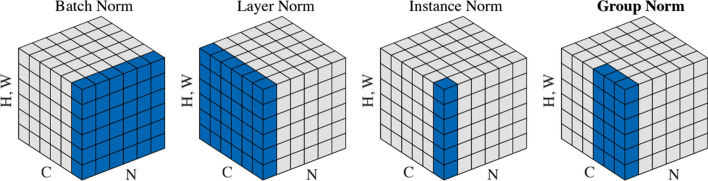
Wu, Y., & He, K. (2020) · International Journal of Computer Vision · doi:10.1007/s11263-019-01198-w · Cited by 3,601 · cited 2×
“layers) with demnsions H:Hight, W:Width [17] There are: 305”
MethodFace recognition: a convolutional neural-network approach
Lawrence, S., Giles, C. L., Tsoi, A. C., & Back, A. D. (1997) · IEEE Transactions on Neural Networks · doi:10.1109/72.554195 · Cited by 3,092
Text Data Augmentation for Deep Learning
Shorten, C., Khoshgoftaar, T. M., & Furht, B. (2021) · Journal of Big Data · doi:10.1186/s40537-021-00492-0 · Cited by 1,740
Computer Vision and Image Understanding
Saideni, W., Courreges, F., Helbert, D., & Cances, J. P. (2022) · SSRN Electronic Journal · doi:10.2139/ssrn.4129906 · Cited by 766
Research works printed but not linked: 2
- Ghalleb AEK Amara NEB Soft and hard biometrics for the authentication of remote people in front and side views Int J Appl Eng Res 2016 11 14 8120 8127
- Terrier P. Gait recognition via deep learning of the center-of-pressure trajectory. 2019; arXiv preprint arXiv:1908.04758 · DOI
Cited by
Review of deep learning: concepts, CNN architectures, challenges, applications, future directions
Alzubaidi, L., Zhang, J., Humaidi, A. J., Al-Dujaili, A., Duan, Y., Al-Shamma, O., Santamaría, J., Fadhel, M. A., Al-Amidie, M., & Farhan, L. (2021) · Journal of Big Data · doi:10.1186/s40537-021-00444-8 · Cited by 7,906
A survey on missing data in machine learning
Emmanuel, T., Maupong, T., Mpoeleng, D., Semong, T., Mphago, B., & Tabona, O. (2021) · Journal of Big Data · doi:10.1186/s40537-021-00516-9 · Cited by 1,067
Ten years of generative adversarial nets (GANs): a survey of the state-of-the-art
Chakraborty, T., Reddy K S, U., Naik, S. M., Panja, M., & Manvitha, B. (2024) · Machine Learning: Science and Technology · doi:10.1088/2632-2153/ad1f77 · Cited by 174
A review on big data based on deep neural network approaches
Rithani, M., Kumar, R. P., & Doss, S. (2023) · Artificial Intelligence Review · doi:10.1007/s10462-023-10512-5 · Cited by 121
Yang, L., Cai, Y., Zhang, L., Mao, G., Li, A., & Zhou, C. (2021) · International Journal of Applied Earth Observation and Geoinformation · doi:10.1016/j.jag.2021.102428 · Cited by 124
A comprehensive survey of link prediction methods
Arrar, D., Kamel, N., & Lakhfif, A. (2023) · The Journal of Supercomputing · doi:10.1007/s11227-023-05591-8 · Cited by 111
Iranpak, S., Shahbahrami, A., & Shakeri, H. (2021) · Journal Of Big Data · doi:10.1186/s40537-021-00507-w · Cited by 110
Lawi, A., Mesra, H., & Amir, S. (2022) · Journal Of Big Data · doi:10.1186/s40537-022-00597-0 · Cited by 104
Samiei, M., Hassani, A., Sarspy, S., Komari, I. E., Trik, M., & Hassanpour, F. (2023) · Journal of Cancer Research and Clinical Oncology · doi:10.1007/s00432-023-04815-x · Cited by 76
Bhulakshmi, D., & Rajput, D. S. (2024) · PeerJ Computer Science · doi:10.7717/peerj-cs.1947 · Cited by 85
“Uppamma & Bhattacharya (2023) , Wasekar & Bathla (2021) , Islam et al. (2020) , Aziz, Charoenlarpnopparut & Mahapakulchai (2023) , Tajudin et al. (2022) , Vij & Arora (2023) .”
Artificial intelligence in health care
Chu, A., Mathews, L. R., & Yu, K. (2023) · Elsevier eBooks · doi:10.1016/b978-0-323-99136-0.00001-5 · Cited by 70
Human gait recognition: A systematic review
Rani, V., & Kumar, M. (2023) · Multimedia Tools and Applications · doi:10.1007/s11042-023-15079-5 · Cited by 77
Albashish, D. (2022) · PeerJ Computer Science · doi:10.7717/peerj-cs.1031 · Cited by 51
“The basic design of this model is to replace the large kernels with smaller kernels, and extending the depth of the CNN model (Alzubaidi et al., 2021).”
MethodWang, S., Hu, Q., Wang, S., Ai, M., & Zhao, P. (2023) · Journal of Cultural Heritage · doi:10.1016/j.culher.2023.11.005 · Cited by 47
Deep Learning Approaches for Enhanced Lower-Limb Exoskeleton Control: A Review
Belal, M., Alsheikh, N., Aljarah, A., & Hussain, I. (2024) · IEEE Access · doi:10.1109/access.2024.3414175 · Cited by 42
“The DNN model is then used to make estimates of the gait parameter based on new input data [46].”
MethodMachine learning approach for predicting production delays: a quarry company case study
Kannan, R., Halim, H. A. B. A., Ramakrishnan, K., Ismail, S., & Wijaya, D. R. (2022) · Journal Of Big Data · doi:10.1186/s40537-022-00644-w · Cited by 41
Person Recognition Based on Deep Gait: A Survey
Khaliluzzaman, M., Uddin, A., Deb, K., & Hasan, M. J. (2023) · Sensors · doi:10.3390/s23104875 · Cited by 44
“In [97], the Gait-Part model shows significant improvement for the CASIA-B dataset with an accuracy of 96.”
BackgroundMethodInfluentialBisandu, D. B., Moulitsas, I., & Filippone, S. (2022) · Neural Computing and Applications · doi:10.1007/s00521-022-06898-y · Cited by 39
Hcini, G., Jdey, I., & Dhahri, H. (2024) · Neural Processing Letters · doi:10.1007/s11063-024-11600-5 · Cited by 38
Ming, R., Abdelrahman, O., Innab, N., & Hanafy, M. (2024) · PeerJ Computer Science · doi:10.7717/peerj-cs.2088 · Cited by 34
“This performance was improved by Benchaji et al. (2021) by merging the capabilities of three sub-methods.”
MethodEnhancing aspect-based sentiment analysis using data augmentation based on back-translation
Taheri, A., Zamanifar, A., & Farhadi, A. (2024) · International Journal of Data Science and Analytics · doi:10.1007/s41060-024-00622-w · Cited by 32
Habib, Z., Mughal, M. A., Khan, M. A., Hamza, A., Alturki, N. M., & Jamel, L. (2024) · Multimedia Tools and Applications · doi:10.1007/s11042-024-18906-5 · Cited by 32
A distributed Content-Based Video Retrieval system for large datasets
Saoudi, E. M., & Andaloussi, S. J. (2021) · Journal Of Big Data · doi:10.1186/s40537-021-00479-x · Cited by 30
A Convolutional Neural Network Algorithm for Pest Detection Using GoogleNet
Yulita, I. N., Rambe, M. F. R., Sholahuddin, A., & Prabuwono, A. S. (2023) · AgriEngineering · doi:10.3390/agriengineering5040145 · Cited by 35
“Image augmentation was only carried out on the training data, because a lot of data were needed for the model training process [39–42].”
MethodIoT information theft prediction using ensemble feature selection
Leevy, J. L., Hancock, J., Khoshgoftaar, T. M., & Peterson, J. M. (2022) · Journal Of Big Data · doi:10.1186/s40537-021-00558-z · Cited by 29
Traffic and road conditions monitoring system using extracted information from Twitter
Putra, P. K., Mahendra, R., & Budi, I. D. (2022) · Journal Of Big Data · doi:10.1186/s40537-022-00621-3 · Cited by 29
Rajagopal, M., Ramkumar, S., Anitha, G., Arunachalam, K. P., Loganathan, K., Abbas, M. A. E., Kalathil, S., & Rao, K. S. (2025) · Scientific Reports · doi:10.1038/s41598-025-10794-5 · Cited by 30
Data curation as anticipatory generification in data infrastructure
Parmiggiani, E., Amagyei, N. K., & Kollerud, S. K. S. (2023) · European Journal of Information Systems · doi:10.1080/0960085x.2023.2232333 · Cited by 37
Adaptive multiple imputations of missing values using the class center
Phiwhorm, K., Saikaew, C., Leung, C. K.-S., Polpinit, P., & Saikaew, K. R. (2022) · Journal Of Big Data · doi:10.1186/s40537-022-00608-0 · Cited by 26
The forecast of COVID-19 spread risk at the county level
Hssayeni, M. D., Chala, A., Dev, R., Xu, L., Shaw, J., Furht, B., & Ghoraani, B. (2021) · Journal Of Big Data · doi:10.1186/s40537-021-00491-1 · Cited by 24
Zhao, X., & Guan, S. (2023) · PeerJ Computer Science · doi:10.7717/peerj-cs.1634 · Cited by 26
“Benchaji et al. (2021) applied the attention mechanism to LSTM recurrent networks.”
BackgroundA two-stage intrusion detection method based on light gradient boosting machine and autoencoder
Zhang, H., Ge, L., Zhang, G., Fan, J., Li, D., & Xu, C. (2023) · Mathematical Biosciences & Engineering · doi:10.3934/mbe.2023301 · Cited by 26
Model-based and model-free deep features fusion for high performed human gait recognition
Yousef, R. N., Khalil, A. T., Samra, A. S., & Ata, M. M. (2023) · The Journal of Supercomputing · doi:10.1007/s11227-023-05156-9 · Cited by 28
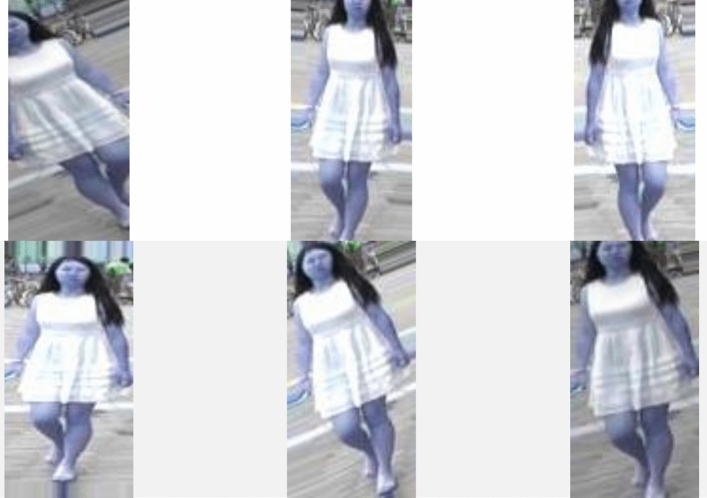
“In [15], Saleh et al. designed a gait recognition algorithm based on deep convolutional neural network (DCNN) and then compared its performance results with it after applying the image augmentation (IA) procedures.”
ResultInterpretable machine learning comprehensive human gait deterioration analysis
Alharthi, A. S. (2024) · Frontiers in Neuroinformatics · doi:10.3389/fninf.2024.1451529 · Cited by 25
Safari, F., & Chalechale, A. (2023) · Artificial Intelligence Review · doi:10.1007/s10462-023-10603-3 · Cited by 23
Image augmentation approaches for small and tiny object detection in aerial images: a review
Nisa, U. (2024) · Multimedia Tools and Applications · doi:10.1007/s11042-024-19768-7 · Cited by 24
Topşir, A., Güler, F., Çetin, E., Burak, M. F., & Ağraz, M. (2025) · BMC Medical Informatics and Decision Making · doi:10.1186/s12911-025-03014-7 · Cited by 21
Raza, A., Rehman, A. U., Sehar, R., Alamri, F. S., Alotaibi, S., Alghofaily, B., & Saba, T. (2024) · PeerJ Computer Science · doi:10.7717/peerj-cs.2150 · Cited by 22
“Bulagang, Mountstephens & Teo (2021) aimed to test if heart rate (HR) signals can be utilized in a virtual reality (VR) environment to classify four different moods using Russell’s emotion model.”
BackgroundGirdhar, N., Raj, A., Sharma, D., Singh, V. K., Doucet, A., & Renz, M. (2025) · Soft Computing · doi:10.1007/s00500-025-10854-y · Cited by 23
Implementasi Convolutional Neural Network (CNN) Untuk Pengenalan Tulisan Tangan Aksara Bima
Handoko, A. A., Rosid, M. A., & Indahyanti, U. (2024) · SMATIKA JURNAL · doi:10.32664/smatika.v14i01.1196 · Cited by 18
“Transformasi umum yang biasanya digunakan adalah flipping , rotating , scaling , and cropping [20].”
BackgroundCOVID-19 advising application development for Apple devices (iOS)
Alshahrani, S. M., & Khan, N. A. (2023) · PeerJ Computer Science · doi:10.7717/peerj-cs.1274 · Cited by 20
A Review of Machine Learning Network in Human Motion Biomechanics
Low, W. S., Chan, C. K., Chuah, J. H., Tee, Y. K., Hum, Y. C., Salim, M. I. M., & Lai, K. W. (2021) · Journal of Grid Computing · doi:10.1007/s10723-021-09595-7 · Cited by 18
Zheng, Q., & Ding, Q. (2022) · PLOS ONE · doi:10.1371/journal.pone.0268007 · Cited by 16
Sayyadi, M. (2024) · Business Information Review · doi:10.1177/02663821241264705 · Cited by 17
Aspect-based sentiment analysis of user-generated content from a microblogging platform
Drašković, D., & Milanović, S. (2025) · Journal Of Big Data · doi:10.1186/s40537-025-01244-0 · Cited by 17
Efficient Detection and Characterization of Targets of Natural Selection Using Transfer Learning
Arnab, S. P., dos Santos, A. L. C., Fumagalli, M., & DeGiorgio, M. (2025) · Molecular Biology and Evolution · doi:10.1093/molbev/msaf094 · Cited by 16
Deeptha, R., Ramkumar, K., Venkateswaran, S., Hassan, M. M., Hassan, M. R., Noori, F. M., & Uddin, M. Z. (2024) · Frontiers in Neuroinformatics · doi:10.3389/fninf.2024.1454583 · Cited by 16
A Demand-Response System for Sustainable Manufacturing Using Linked Data and Machine Learning
Wicaksono, H., Boroukhian, T., & Bashyal, A. (2021) · Springer eBooks · doi:10.1007/978-3-030-88662-2_8 · Cited by 13
Unmanned aerial vehicles in fisheries and aquaculture: a comprehensive overview
Ganie, P. A., Khatei, A., Posti, R., Sidiq, M. J., & Pandey, P. K. (2025) · Environmental Monitoring and Assessment · doi:10.1007/s10661-025-13920-y · Cited by 15
Real-Time Monitoring of COVID-19 SOP in Public Gathering Using Deep Learning Technique
Khel, M. H. K., Kadir, K., Albattah, W., Khan, S., Noor, M., Nasir, H., Habib, S., Islam, M., & Khan, A. (2021) · Emerging Science Journal · doi:10.28991/esj-2021-sper-14 · Cited by 15
“With image augmentation, we are able to train the model for more epochs without the need to address over-fitting [51].”
MethodA fine-tuned YOLOv5 deep learning approach for real-time house number detection
Taşyürek, M., & Öztürk, C. (2023) · PeerJ Computer Science · doi:10.7717/peerj-cs.1453 · Cited by 14
“In recent years, deep learning method has been widely used in image classification, object tracking, pose estimation, text detection and recognition, visual salience detection, action recognition, and scene tagging (Alzubaidi et al., 2021; Bashir et al., 2021; Pal & Pradhan, 2023; Atasever et al., 2022).”
MethodIntelligent reliability assurance methodologies for engineering systems: advances and challenges
Liu, Z., Zhang, Q., Liu, Y., Lei, Y., & Zuo, M. J. (2025) · Journal of Reliability Science and Engineering · doi:10.1088/3050-2454/ae047e · Cited by 13
Gait Image Classification Using Deep Learning Models for Medical Diagnosis
Vasudevan, P., Mattins, R. F., Srivarshan, S., Narayanan, A., Wadhwani, G., Parvathi, R., & Maheswari, R. (2022) · Computers, materials & continua/Computers, materials & continua (Print) · doi:10.32604/cmc.2023.032331 · Cited by 20
Mathew, C., & Adu-Gyamfi, E. (2024) · Corrosion Engineering Science and Technology The International Journal of Corrosion Processes and Corrosion Control · doi:10.1177/1478422x241276727 · Cited by 21
Gait Recognition Using Convolutional Neural Network
Sheth, A. A., Sharath, M., Reddy, A. S. C., & Sindhu, K. (2023) · International Journal of Online and Biomedical Engineering (iJOE) · doi:10.3991/ijoe.v19i01.33823 · Cited by 14
Enhanced Facial Recognition Techniques for Masked Individuals Amid the COVID-19 Pandemic
Al-Nabulsi, J., Turab, N. M., & Owida, H. A. (2023) · Mathematical Modelling and Engineering Problems · doi:10.18280/mmep.100422 · Cited by 10
Liang, N., Yuan, Z., Kang, J. S., Jiang, R., Zhang, J., & Yu, X. (2024) · Measurement Science and Technology · doi:10.1088/1361-6501/ad3f3b · Cited by 10
A new feature popularity framework for detecting cyberattacks using popular features
Zuech, R., Hancock, J., & Khoshgoftaar, T. M. (2022) · Journal Of Big Data · doi:10.1186/s40537-022-00661-9 · Cited by 11
A Deep-Learning Approach for Identifying a Drunk Person Using Gait Recognition
Park, S., Bae, B., Kang, K., Kim, H., Nam, M. S., Um, J., & Heo, Y. J. (2023) · Applied Sciences · doi:10.3390/app13031390 · Cited by 13
“When using existing deep learning models, the number of subjects varies from tens to thousands, and it can be seen that the higher the number of subjects, the higher the accuracy [30].”
MethodTowards Explainable, Privacy-Preserved Human-Motion Affect Recognition
Malek-Podjaski, M., & Deligianni, F. (2021) · IEEE Symposium Series on Computational Intelligence (SSCI) · doi:10.1109/ssci50451.2021.9660129 · Cited by 12
“and gender identification [20]–[22], as well as for the detection of abnormalities in a subject’s gait [23].”
BackgroundLi, H., & Sheu, P. C. ‐. (2022) · Journal Of Big Data · doi:10.1186/s40537-022-00577-4 · Cited by 10
Machine learning for polyphenol-based materials
Jiang, S., Yang, P., Zheng, Y., Lu, X., & Xie, C. (2024) · Smart Materials in Medicine · doi:10.1016/j.smaim.2024.02.001 · Cited by 14
A modern approach to the digitization of agricultural activities
Eshov, M. P., Vafoev, B., & Homidov, H. (2022) · AIP conference proceedings · doi:10.1063/5.0090408 · Cited by 9
Kaur, P., Joshi, J. C., & Aggarwal, P. (2024) · Natural Hazards · doi:10.1007/s11069-024-06406-6 · Cited by 9
Single event effects evaluation on convolution neural network in Xilinx 28 nm system on chip
Zhao, X., Du, X., 熊, X. 旭. X., Ma, C., Yang, W., Zheng, B., & Zhou, C. Y. (2024) · Chinese Physics B · doi:10.1088/1674-1056/ad3b82 · Cited by 8
Jing, H., Yuan, S., Chen, J., & Meng, Y. (2024) · Measurement Science and Technology · doi:10.1088/1361-6501/ad7e3e · Cited by 11
Drill pipe detection and counting based on improved YOLOv11 and Savitzky-Golay
Cheng, C., Cheng, X., Li, D., & Zhang, J. (2025) · Scientific Reports · doi:10.1038/s41598-025-01776-8 · Cited by 8
Fixed-time tracking control of quadrotor UAVs based on disturbance observer and sliding mode
Gai, Y., Chen, M., Wang, H., Wu, L., & Peng, K. (2025) · International Journal of Systems Science · doi:10.1080/00207721.2025.2505714 · Cited by 8
“In recent years, UAVs have become increasingly important in today’s society and are widely utilised in diverse fields such as agriculture, construction, logistics, and rescue operations (Saleh & Hamoud, 2021; Yang et al., 2020).”
BAMCloud: a cloud based Mobile biometric authentication framework
Shakil, K. A., Zareen, F. J., Alam, M., & Jabin, S. (2022) · Multimedia Tools and Applications · doi:10.1007/s11042-022-13514-7 · Cited by 9
Artificial Intelligence in Biometrics: Uncovering Intricacies of Human Body and Mind
Gavrilova, M. L., Luchak, I., Sudhakar, T., & Tumpa, S. N. (2022) · Learning and analytics in intelligent systems · doi:10.1007/978-3-030-93052-3_7 · Cited by 9
Yousef, R. N., Khalil, A. T., Samra, A. S., & Ata, M. M. (2023) · Neural Computing and Applications · doi:10.1007/s00521-023-09154-z · Cited by 9
“Their experimental results were 82% without IA and 96.23% with IA, indicating the effect of picture augmentation [25].”
InfluentialCsa-gru: a hybrid CNN and self attention GRU for human identification using ear biometrics
Mahajan, A., & Singla, S. K. (2023) · Evolving Systems · doi:10.1007/s12530-023-09555-4 · Cited by 8
“CNNs exhibit a high level of efficacy when employed in tasks involving images due to their ability to capture and exploit the inherent spatial relationships within local regions, as well as their notable capacity for translation invariance (Saleh and Hamoud 2021).”
Singh, A., & Dass, S. (2025) · Innovative Infrastructure Solutions · doi:10.1007/s41062-025-02020-y · Cited by 7
Kumar, G. P., & Dwarakish, G. S. (2025) · Water Conservation Science and Engineering · doi:10.1007/s41101-025-00403-x · Cited by 8
Quero, C. A. O., Durini, D., Rangel‐Magdaleno, J., Martínez-Carranza, J., & Ramos-Garcia, R. (2024) · Journal of the Optical Society of America A · doi:10.1364/josaa.499933 · Cited by 9
COVID-19 Disease Classification Model Using Deep Dense Convolutional Neural Networks
Singha, A. K., Pathak, N., Sharma, N., Tiwari, P. K., & Joel, J. P. C. (2022) · Lecture notes in networks and systems · doi:10.1007/978-981-19-4052-1_67 · Cited by 7
Chen, T., Vahab, N., Tyagi, N., Cummins, E., Peleg, A. Y., & Tyagi, S. (2023) · bioRxiv (Cold Spring Harbor Laboratory) · doi:10.1101/2023.05.31.542682 · Cited by 8
Arivalagan, D., Began, K. B., Pushpa, S. E. P., & Rajendran, K. (2023) · Journal of Intelligent & Fuzzy Systems · doi:10.3233/jifs-224284 · Cited by 6
“Therefore, the cost function [43] can be written as,”
Nayak, S., & Khilar, P. M. (2025) · Knowledge and Information Systems · doi:10.1007/s10115-025-02489-0 · Cited by 6
Wang, H., Zeng, W., Huang, X., Liu, Z., Sun, Y., & Zhang, L. (2023) · Mathematical Biosciences & Engineering · doi:10.3934/mbe.2024013 · Cited by 6
Transfer learning for human gait recognition using VGG19: CASIA-A dataset
Rani, V., & Kumar, M. (2024) · Multimedia Tools and Applications · doi:10.1007/s11042-024-20132-y · Cited by 7
Classification of SSVEP-based BCIs using Genetic Algorithm
Soltani, H., Einalou, Z., Dadgostar, M., & Maghooli, K. (2021) · Journal Of Big Data · doi:10.1186/s40537-021-00478-y · Cited by 6
On the Harms of Agnotological Practices and How to Address Them
de Melo‐Martín, I. (2023) · International Studies in the Philosophy of Science · doi:10.1080/02698595.2023.2178838 · Cited by 6
“…— what factors make misinformation more (or less) likely to be believed; how it spreads; how common it is; how it can be combated — has ballooned in the last few years (e.g. Lewandowsky et al. 2012; O ’ Connor and Weatherall 2019; Mercier 2020; Zimdars and McLeod 2020; Gradon et al. 2021).”
BackgroundRobinson, B., & Fassbender, W. J. (2023) · Learning Media and Technology · doi:10.1080/17439884.2023.2234286 · Cited by 6
Bharathi, N. A., Parthasarathi, R., & Vetriselvi, V. (2025) · Journal of Network and Systems Management · doi:10.1007/s10922-025-09919-y · Cited by 5
Systematic Literature Review: Corpus Linguistics in Indonesia
Raharjo, S., Utami, E., Yusa, M., & Sutanta, E. (2022) · Communications in computer and information science · doi:10.1007/978-3-031-06417-3_50 · Cited by 5
Hybrid Optimized GRU-ECNN Models for Gait Recognition with Wearable IOT Devices
Monica, K. M., Parvathi, R., Gayathri, A., Aluvalu, R., Sangeetha, K., & Reddy, C. V. S. (2022) · Computational Intelligence and Neuroscience · doi:10.1155/2022/5422428 · Cited by 6
“Random forest outperformed the other two learning models in terms of classification accuracy while requiring less setup time [28].”
MethodRetractedManley, A., Shen, D., Clift, B. C., Ma, Y., & Zhang, W. (2024) · Space and Polity · doi:10.1080/13562576.2024.2388320 · Cited by 4
Representation learning enables robust single cell phenotyping in whole slide liquid biopsy imaging
Naghdloo, A., Tessone, D., Nagaraju, R. M., Zhang, B., Kang, J., Li, S., Oberai, A. A., Hicks, J. B., & Kühn, P. (2025) · Scientific Reports · doi:10.1038/s41598-025-20514-8 · Cited by 4
Light-Weight Deep Convolutional Neural Network Model for Classification of Potato Leaf Diseases
Sodiq, K., Adeyanju, I., Okomba, N., Taofik, A., & Mohammed, R. (2025) · Asian Journal of Electrical Sciences · doi:10.70112/ajes-2025.14.1.4268 · Cited by 4
Tu, X., Zhang, S., Lai, Z., Xiao, X., & Zhang, L. (2022) · Mobile Information Systems · doi:10.1155/2022/9956753 · Cited by 5
Arokiaraj, S. P., & Viswanathan, N. (2023) · Journal of Intelligent & Fuzzy Systems · doi:10.3233/jifs-221551 · Cited by 7
“Whiledoing thecomparativeanalysis,itwasconcludedthatRF outperformedNBandIB1classifierinregardsofclas-sificationaccuracyandsetuptime[14].”
Yang, W., Wang, L., Zhang, W., & Li, J. (2022) · Metallurgical and Materials Transactions B · doi:10.1007/s11663-022-02592-5 · Cited by 4
A novel framework for remote management of social media big data analytics
Al-Shomar, A. M., Al-Qurish, M., & Aljedaani, W. (2022) · Social Network Analysis and Mining · doi:10.1007/s13278-022-00996-4 · Cited by 4
Xiao, Y., & Liu, Z. (2023) · Soft Computing · doi:10.1007/s00500-023-09002-1 · Cited by 4
RetractedSingh, R. (2023) · Journal of Cultural Economy · doi:10.1080/17530350.2023.2229360 · Cited by 5
Perkgöz, C. (2024) · PeerJ Computer Science · doi:10.7717/peerj-cs.1885 · Cited by 4
“Notably, one of the most prominent algorithms within the realm of deep learning is deep convolutional neural networks (CNN) ( Alzubaidi et al., 2021 ; Yao, Lei & Zhong, 2019 ), which has demonstrated remarkable success and performance in image recognition and classification.”
BackgroundRipeness Grading for Mango Packaging by Fusion of Deep Features
Imran, M., Tahir, S. F., & Fahad, L. G. (2025) · Applied Fruit Science · doi:10.1007/s10341-025-01628-9 · Cited by 3
Cognitive-inspired xLSTM for multi-agent information retrieval
Li, L., Wang, H., & Wang, K. (2025) · Scientific Reports · doi:10.1038/s41598-025-19628-w · Cited by 5
AlKakuri, M., Elkhouly, A., Jaafar, K., & Gouda, H. (2025) · Aerosol and Air Quality Research · doi:10.1007/s44408-025-00068-0 · Cited by 3
Metadata
- Authors
- Saleh, A. M., & Hamoud, T.
- Affiliations
- Syrian Private University (SY)
- Damascus University (SY)
- Corresponding author
- Saleh, Abeer Mohsin
- ORCID
- Saleh, Abeer Mohsin
- Venue
- Journal of Big Data
- Published
- 2021-01-03
- Volume
- 8
- Issue
- 1
- Pages
- 1-1
- ISSN
- 2196-1115 (ISSN-L)
- PMC
- PMC7778727
- OpenAlex
- W3120244865
- Semantic Scholar
- a804abac99553a41823c15539ffd919e4b95101c
- Cited by
- 158
- References
- 36
- Citations by year
- 2026: 1 · 2025: 38 · 2024: 35 · 2023: 36 · 2022: 28 · 2021: 20
- FWCI
- 9.04
- Type
- journal article
- Language
- en
- Open access
- gold
- doi.org
- Licence
- cc-by
- creativecommons.org/licenses/by/4.0 (tdm)
- creativecommons.org/licenses/by/4.0 (vor)
- Locations
- Journal Of Big Data (publishedVersion, cc-by)
- Research Square (acceptedVersion, cc-by)
- Europe PMC (PubMed Central) (publishedVersion, other-oa)
- PubMed Central (publishedVersion, cc-by)
- PubMed (publishedVersion)
- DOAJ (DOAJ: Directory of Open Access Journals) (submittedVersion, cc-by-sa)
- Topics
- Physical Sciences › Engineering › Biomedical Engineering › Gait Recognition and Analysis
- Physical Sciences › Computer Science › Computer Vision and Pattern Recognition › Advanced Neural Network Applications
- Physical Sciences › Computer Science › Computer Vision and Pattern Recognition › Video Surveillance and Tracking Methods
- Keywords
- gait model, convolutional neural networks, image augmentation, occlusion robustness, pose variation
About these checks
Registry, retraction, Cites and statistics results are computed, not judged, with one exception: a printed reference that no index lists is read once by a model before it counts as a citation error. Claims are extracted by a model and kept only when their quote appears verbatim in the text; each cited source is then checked, with a model’s help, for whether it says what the claim relies on. Those verdicts can be wrong — read the claim’s quote and the cited source before relying on one.
Statistics and arithmetic are recomputed, not judged.
Confidence bands are shown only for fields calibrated on our annotated test set. None is calibrated yet, so no band is shown.
What counts as a claim ›How we measure confidence ›How we check this ›
Are you an author, or do you see a problem with this page? Request a review
Data sources
Bibliographic data: Semantic Scholar, OpenAlex, Crossref.
Contains information from the Semantic Scholar Academic Graph Datasets, made available under the ODC Attribution License (ODC-BY 1.0).
Semantic Scholar’s data is described in: Kinney, R., et al. (2023). The Semantic Scholar Open Data Platform. arXiv:2301.10140.
