

Analysis and best parameters selection for person recognition based on gait model using CNN algorithm and image augmentation
Open accessPublished version of a preprint
The DOI matches its Crossref record; 38 of the 39 references it cites were found in a registry or an index.
Abstract
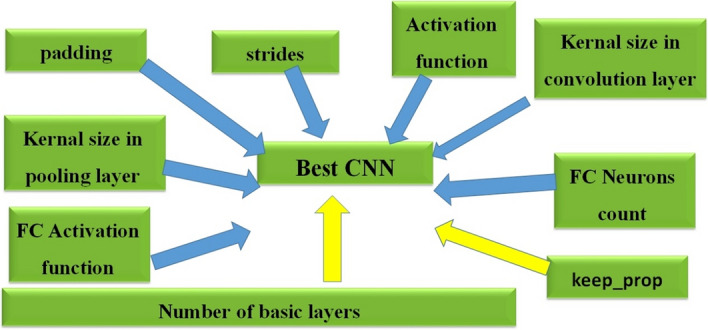
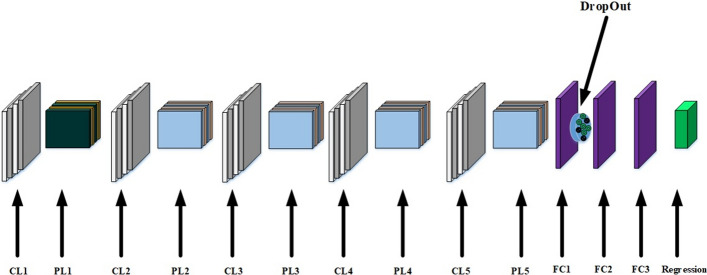
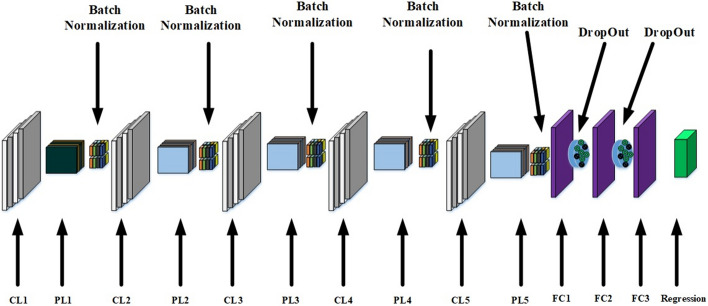
Person Recognition based on Gait Model (PRGM) and motion features is are indeed a challenging and novel task due to their usages and to the critical issues of human pose variation, human body occlusion, camera view variation, etc. In this project, a deep convolution neural network (CNN) was modified and adapted for person recognition with Image Augmentation (IA) technique depending on gait features. Adaptation aims to get best values for CNN parameters to get best CNN model. In Addition to the CNN parameters Adaptation, the design of CNN model itself was adapted to get best model structure; Adaptation in the design was affected the type, the number of layers in CNN and normalization between them. After choosing best parameters and best design, Image augmentation was used to increase the size of train dataset with many copies of the image to boost the number of different images that will be used to train Deep learning algorithms. The tests were achieved using known dataset (Market dataset). The dataset contains sequential pictures of people in different gait status. The image in CNN model as matrix is extracted to many images or matrices by the convolution, so dataset size may be bigger by hundred times to make the problem a big data issue. In this project, results show that adaptation has improved the accuracy of person recognition using gait model comparing to model without adaptation. In addition, dataset contains images of person carrying things. IA technique improved the model to be robust to some variations such as image dimensions (quality and resolution), rotations and carried things by persons. Results for 200 persons recognition, validation accuracy was about 82% without IA and 96.23 with IA. For 800 persons recognition, validation accuracy was 93.62% without IA.
Overview
The claims and statistics of this paper haven’t been checked yet.
Free: it reads the open-access text and checks the first 5 claims that cite a source we can check. Create a free account to check every claim.
Integrity signals
Registry
Cites
Statistics
Figures

Verification
Claims the paper makes
The claims and statistics of this paper haven’t been checked yet.
Free: it reads the open-access text and checks the first 5 claims that cite a source we can check. Create a free account to check every claim.
Claims other papers make about this one
Each is checked against this paper’s own text: does it say what the citing paper says it does?
The cited source says what the claim attributes to it.
In the citing paper
“If the goal is to increase the amount of available data and avoid the overfitting issue, data augmentation techniques are one possible solution [150, 158, 159].”
From Review of deep learning: concepts, CNN architectures, challenges, applications, future directions (2021) · cites this paper as [158]
Self-check
Percentages, sums and reported differences re-computed from the paper’s own numbers.
The self-check needs the paper’s full text.
Citations
Cites
Adam: A Method for Stochastic Optimization
Kingma, D. P., & Ba, J. (2014) · arXiv · doi:10.48550/arxiv.1412.6980 · Cited by 98,946
The Proceedings of the National Academy of Sciences
Richards, J. W. (1915) · Science · doi:10.1126/science.42.1074.161 · Cited by 13,983
A survey on Image Data Augmentation for Deep Learning
Shorten, C., & Khoshgoftaar, T. M. (2019) · Journal of Big Data · doi:10.1186/s40537-019-0197-0 · Cited by 13,203
Dropout as a bayesian approximation: Representing model uncertainty in deep learning
Gal, Y., & Ghahramani, Z. (2015) · arXiv · doi:10.48550/arxiv.1506.02142 · Cited by 7,865
Recent advances in convolutional neural networks
Gu, J., Wang, Z., Kuen, J., Ma, L., Shahroudy, A., Shuai, B., Liu, T., Wang, X., Wang, G., Cai, J., et al. (2018) · Pattern Recognition · doi:10.1016/j.patcog.2017.10.013 · Cited by 6,576
Convolutional neural networks: an overview and application in radiology
Yamashita, R., Nishio, M., Do, R. K. G., & Togashi, K. (2018) · Insights into Imaging · doi:10.1007/s13244-018-0639-9 · Cited by 4,682
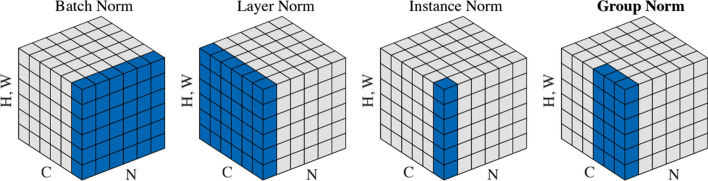
Wu, Y., & He, K. (2020) · International Journal of Computer Vision · doi:10.1007/s11263-019-01198-w · Cited by 3,601 · cited 2×
“layers) with demnsions H:Hight, W:Width [17] There are: 305”
MethodFace recognition: a convolutional neural-network approach
Lawrence, S., Giles, C. L., Tsoi, A. C., & Back, A. D. (1997) · IEEE Transactions on Neural Networks · doi:10.1109/72.554195 · Cited by 3,092
Text Data Augmentation for Deep Learning
Shorten, C., Khoshgoftaar, T. M., & Furht, B. (2021) · Journal of Big Data · doi:10.1186/s40537-021-00492-0 · Cited by 1,740
Computer Vision and Image Understanding
Saideni, W., Courreges, F., Helbert, D., & Cances, J. P. (2022) · SSRN Electronic Journal · doi:10.2139/ssrn.4129906 · Cited by 766
IEEE Transactions on Information Forensics and Security
(2023) · IEEE Transactions on Information Forensics and Security · doi:10.1109/tifs.10206 · Cited by 729
GEINet: View-invariant gait recognition using a convolutional neural network
Shiraga, K., Makihara, Y., Muramatsu, D., Echigo, T., & Yagi, Y. (2016) · 2016 International Conference on Biometrics (ICB) · doi:10.1109/icb.2016.7550060 · Cited by 468 · cited 1×
“The successful use of deep CNNs for the classification of unidimensional or multidimensional time series has been attested [24].”
BackgroundDeep Learning-Based Gait Recognition Using Smartphones in the Wild
Zou, Q., Wang, Y., Wang, Q., Zhao, Y., & Li, Q. (2020) · IEEE Transactions on Information Forensics and Security · doi:10.1109/tifs.2020.2985628 · Cited by 305 · cited 1×
“In this regard, especially important is the problem of recognizing the person using his gait [7].”
BackgroundDeep Learning-Based Gait Recognition Using Smartphones in the Wild
Zou, Q., Wang, Y., Wang, Q., Zhao, Y., & Li, Q. (2018) · arXiv · doi:10.48550/arxiv.1811.00338 · Cited by 305
Gait Recognition via Disentangled Representation Learning
Zhang, Z., Tran, L., Yin, X., Atoum, Y., Liu, X., Wan, J., & Wang, N. (2019) · 2019 IEEE/CVF Conference on Computer Vision and Pattern Recognition (CVPR) · doi:10.1109/cvpr.2019.00484 · Cited by 288 · cited 1×
“29 In [4], The authors have studied recognition performance when handling con30 founding variables, such as clothing, carrying and view angle.”
BackgroundImproved gait recognition based on specialized deep convolutional neural network
Alotaibi, M., & Mahmood, A. (2017) · Computer Vision and Image Understanding · doi:10.1016/j.cviu.2017.10.004 · Cited by 163
Learning a Convolutional Neural Network for Image Compact-Resolution
Li, Y., Liu, D., Li, H., Li, L., Li, Z., & Wu, F. (2018) · IEEE Transactions on Image Processing · doi:10.1109/tip.2018.2872876 · Cited by 160
Automatic Learning of Gait Signatures for People Identification
Castro, F. M., Marín-Jiménez, M. J., Guil, N., & de la Blanca, N. P. (2017) · Lecture notes in computer science · doi:10.1007/978-3-319-59147-6_23 · Cited by 137
A comprehensive study on gait biometrics using a joint CNN-based method
Zhang, Y., Huang, Y., Wang, L., & Yu, S. (2019) · Pattern Recognition · doi:10.1016/j.patcog.2019.04.023 · Cited by 133
Predicting research trends with semantic and neural networks with an application in quantum physics
Krenn, M., & Zeilinger, A. (2020) · Proceedings of the National Academy of Sciences · doi:10.1073/pnas.1914370116 · Cited by 93 · cited 1×
“In quantum physics [9] 59 1 2 3 4 5 6 7 8 9 10 11 12 13 14 15 16 17 18 19 20 21 22 23 24 25 26 27 28 29 30 31 32 33 34 35 36 37 38 39 40 41 42 43 44 45 46 47 48 49 50 51 52 53 54 55 56 57 58 59 60 61 62 63 64 65”
Joint Intensity and Spatial Metric Learning for Robust Gait Recognition
Makihara, Y., Suzuki, A., Muramatsu, D., Li, X., & Yagi, Y. (2017) · IEEE Computer Society Conference on Computer Vision and Pattern Recognition/Proceedings - IEEE Computer Society Conference on Computer Vision and Pattern Recognition/Proceedings · doi:10.1109/cvpr.2017.718 · Cited by 89 · cited 1×
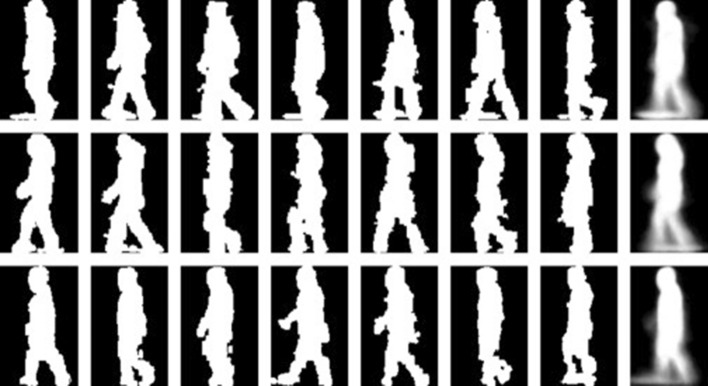
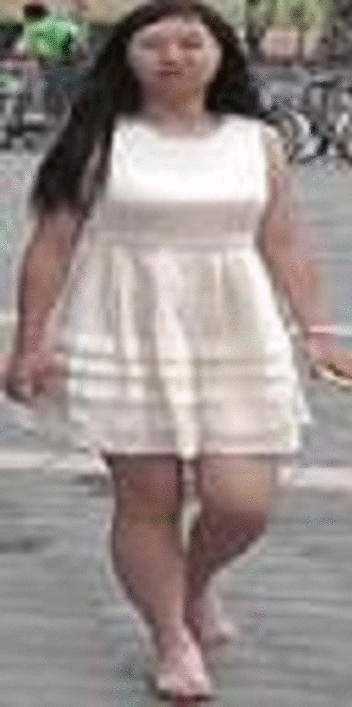
“Gait model might have some carrying objects which is considered as noise in the image [19] as shown in Fig.”
MethodGait recognition for person re-identification
Elharrouss, O., Almaadeed, N., Al-Maadeed, S. A., & Bouridane, A. (2020) · The Journal of Supercomputing · doi:10.1007/s11227-020-03409-5 · Cited by 87
View-invariant gait recognition based on kinect skeleton feature
Sun, J., Wang, Y., Li, J., Wan, W., Cheng, D., & Zhang, H. (2018) · Multimedia Tools and Applications · doi:10.1007/s11042-018-5722-1 · Cited by 81
2018 International Conference on Biometrics (ICB)
(2018) · doi:10.1109/icb42306.2018 · Cited by 73
Person Re-identification: System Design and Evaluation Overview
Wang, X., & Zhao, R. (2014) · Advances in computer vision and pattern recognition · doi:10.1007/978-1-4471-6296-4_17 · Cited by 71 · cited 2×
“1 below [17] In practice, gait model recognition is often used when cameras are installed around the target subjects (persons), which may be unaware of the observation for prisoners or criminals [5].”
BackgroundConvolutional Neural Networks With Dynamic Regularization
Wang, Y., Bian, Z.-P., Hou, J., & Chau, L. (2020) · IEEE Transactions on Neural Networks and Learning Systems · doi:10.1109/tnnls.2020.2997044 · Cited by 52 · cited 1×
“For CNN, regularization methods, such as DropBlock and Shake-Shake, have illustrated the improvement in the generalization performance [29].”
MethodGait Recognition via Deep Learning of the Center-of-Pressure Trajectory
Terrier, P. (2020) · Applied Sciences · doi:10.3390/app10030774 · Cited by 49
Color and texture features for person recognition
Hähnel, M., Kluender, D., & Kraiss, K. (2005) · International Joint Conference on Neural Networks (IJCNN) · doi:10.1109/ijcnn.2004.1379993 · Cited by 44 · cited 1×
“Therefore person recognition techniques with gait models become important [6].”
BackgroundA data augmentation methodology for training machine/deep learning gait recognition algorithms
Charalambous, C., & Bharath, A. (2016) · Procedings of the British Machine Vision Conference 2016 · doi:10.5244/c.30.110 · Cited by 43
Radial basis function Kalman filter for attitude estimation in GPS‐denied environment
Assad, A., Khalaf, W., & Chouaib, I. (2020) · IET Radar Sonar & Navigation · doi:10.1049/iet-rsn.2019.0467 · Cited by 10
Gait analysis for person recognition using principal component analysis and support vector machines
Strukova, O. V., Shiripova, L., & Myasnikov, E. V. (2018) · International Conference on Information Technology and Nanotechnology (ITNT) · doi:10.18287/1613-0073-2018-2210-170-176 · Cited by 8 · cited 1×
“2 Background and Related work 22 In [2],The authors devoted to the problem of the recognition of a person by gait 23 using a video recorded in the optical range depending on detection of a moving 24 person on a video sequence with the subsequent size normalization and dimension 25 reduction using the principal compone…”
MethodGait Recognition: The Wearable Solution
Marsico, M. D., & Mecca, A. (2017) · Elsevier eBooks · doi:10.1016/b978-0-08-100705-1.00008-7 · Cited by 7 · cited 1×
“Gait model is presented in the Figure 1 below [10] 61”
MethodSimhi, N., & Yovel, G. (2020) · Cognition · doi:10.1016/j.cognition.2020.104445 · Cited by 7
Application of Neural Network to predict the workability Parameters of Self-Compacting Concrete
Cường, N. H., Tran, L. H., & Ho, K. N. (2019) · Lecture notes in civil engineering · doi:10.1007/978-981-15-0802-8_186 · Cited by 5 · cited 1×
“In Compacting Concrete as in [14], In navigation fields as in [15].”
MethodAutomatic feature extraction using CNN for robust active one-shot scanning
Sagawa, R., Shiba, Y., Hirukawa, T., Ono, S., Kawasaki, H., & Furukawa, R. (2016) · Proceedings - International Conference on Pattern Recognition/Proceedings/International Conference on Pattern Recognition · doi:10.1109/icpr.2016.7899639 · Cited by 3 · cited 1×
“While if I use a algorithm with pixel vector I lose a lot of spatial interaction between pixels; feature engineering is not required in CNN [26].”
MethodSimhi, N., & Yovel, G. (2019) · PsyArXiv (OSF Preprints) · doi:10.31234/osf.io/63rkj · Cited by 3 · cited 1×
“In [9], the authors used a virtual environment, which enabled them to present the same type of gait across different identities.”
MethodSimhi, N. (2021) · Data Archiving and Networked Services (DANS) · doi:10.17632/fwxr6hvm2r.1 · Cited by 1
A data augmentation methodology for training machine/deep learning gait recognition algorithmsPreprint
Charalambous, C. C., & Bharath, A. A. (2016) · arXiv (Cornell University) · doi:10.48550/arxiv.1610.07570 · Cited by 1 · cited 1×
“In [8], authors introduce a simulation-based methodology and a subject-specific dataset to for generate synthetic video frames and sequences for data augmentation to help in gait recognition.”
MethodSimhi, N. (2021) · Data Archiving and Networked Services (DANS) · doi:10.17632/fwxr6hvm2r · Cited by 1
Research works printed but not linked: 2
- Ghalleb AEK Amara NEB Soft and hard biometrics for the authentication of remote people in front and side views Int J Appl Eng Res 2016 11 14 8120 8127
- Terrier P. Gait recognition via deep learning of the center-of-pressure trajectory. 2019; arXiv preprint arXiv:1908.04758 · DOI
Cited by
Review of deep learning: concepts, CNN architectures, challenges, applications, future directions
Alzubaidi, L., Zhang, J., Humaidi, A. J., Al-Dujaili, A., Duan, Y., Al-Shamma, O., Santamaría, J., Fadhel, M. A., Al-Amidie, M., & Farhan, L. (2021) · Journal of Big Data · doi:10.1186/s40537-021-00444-8 · Cited by 7,906
A survey on missing data in machine learning
Emmanuel, T., Maupong, T., Mpoeleng, D., Semong, T., Mphago, B., & Tabona, O. (2021) · Journal of Big Data · doi:10.1186/s40537-021-00516-9 · Cited by 1,067
Ten years of generative adversarial nets (GANs): a survey of the state-of-the-art
Chakraborty, T., Reddy K S, U., Naik, S. M., Panja, M., & Manvitha, B. (2024) · Machine Learning: Science and Technology · doi:10.1088/2632-2153/ad1f77 · Cited by 174
A review on big data based on deep neural network approaches
Rithani, M., Kumar, R. P., & Doss, S. (2023) · Artificial Intelligence Review · doi:10.1007/s10462-023-10512-5 · Cited by 121
Yang, L., Cai, Y., Zhang, L., Mao, G., Li, A., & Zhou, C. (2021) · International Journal of Applied Earth Observation and Geoinformation · doi:10.1016/j.jag.2021.102428 · Cited by 124
Metadata
- Authors
- Saleh, A. M., & Hamoud, T.
- Affiliations
- Syrian Private University (SY)
- Damascus University (SY)
- Corresponding author
- Saleh, Abeer Mohsin
- ORCID
- Saleh, Abeer Mohsin
- Venue
- Journal of Big Data
- Published
- 2021-01-03
- Volume
- 8
- Issue
- 1
- Pages
- 1-1
- ISSN
- 2196-1115 (ISSN-L)
- PMC
- PMC7778727
- OpenAlex
- W3120244865
- Semantic Scholar
- a804abac99553a41823c15539ffd919e4b95101c
- Cited by
- 158
- References
- 36
- Citations by year
- 2026: 1 · 2025: 38 · 2024: 35 · 2023: 36 · 2022: 28 · 2021: 20
- FWCI
- 9.04
- Type
- journal article
- Language
- en
- Open access
- gold
- doi.org
- Licence
- cc-by
- creativecommons.org/licenses/by/4.0 (tdm)
- creativecommons.org/licenses/by/4.0 (vor)
- Locations
- Journal Of Big Data (publishedVersion, cc-by)
- Research Square (acceptedVersion, cc-by)
- Europe PMC (PubMed Central) (publishedVersion, other-oa)
- PubMed Central (publishedVersion, cc-by)
- PubMed (publishedVersion)
- DOAJ (DOAJ: Directory of Open Access Journals) (submittedVersion, cc-by-sa)
- Topics
- Physical Sciences › Engineering › Biomedical Engineering › Gait Recognition and Analysis
- Physical Sciences › Computer Science › Computer Vision and Pattern Recognition › Advanced Neural Network Applications
- Physical Sciences › Computer Science › Computer Vision and Pattern Recognition › Video Surveillance and Tracking Methods
- Keywords
- gait model, convolutional neural networks, image augmentation, occlusion robustness, pose variation
About these checks
Registry, retraction, Cites and statistics results are computed, not judged, with one exception: a printed reference that no index lists is read once by a model before it counts as a citation error. Claims are extracted by a model and kept only when their quote appears verbatim in the text; each cited source is then checked, with a model’s help, for whether it says what the claim relies on. Those verdicts can be wrong — read the claim’s quote and the cited source before relying on one.
Statistics and arithmetic are recomputed, not judged.
Confidence bands are shown only for fields calibrated on our annotated test set. None is calibrated yet, so no band is shown.
What counts as a claim ›How we measure confidence ›How we check this ›
Are you an author, or do you see a problem with this page? Request a review
Data sources
Bibliographic data: Semantic Scholar, OpenAlex, Crossref.
Contains information from the Semantic Scholar Academic Graph Datasets, made available under the ODC Attribution License (ODC-BY 1.0).
Semantic Scholar’s data is described in: Kinney, R., et al. (2023). The Semantic Scholar Open Data Platform. arXiv:2301.10140.
