

Review of deep learning: concepts, CNN architectures, challenges, applications, future directions
Open accessThe DOI matches its Crossref record; 360 of the 372 references it cites were found in a registry or an index; 138 of the 246 sources its claims cite were checked for support.
Abstract
In the last few years, the deep learning (DL) computing paradigm has been deemed the Gold Standard in the machine learning (ML) community. Moreover, it has gradually become the most widely used computational approach in the field of ML, thus achieving outstanding results on several complex cognitive tasks, matching or even beating those provided by human performance. One of the benefits of DL is the ability to learn massive amounts of data. The DL field has grown fast in the last few years and it has been extensively used to successfully address a wide range of traditional applications. More importantly, DL has outperformed well-known ML techniques in many domains, e.g., cybersecurity, natural language processing, bioinformatics, robotics and control, and medical information processing, among many others. Despite it has been contributed several works reviewing the State-of-the-Art on DL, all of them only tackled one aspect of the DL, which leads to an overall lack of knowledge about it. Therefore, in this contribution, we propose using a more holistic approach in order to provide a more suitable starting point from which to develop a full understanding of DL. Specifically, this review attempts to provide a more comprehensive survey of the most important aspects of DL and including those enhancements recently added to the field. In particular, this paper outlines the importance of DL, presents the types of DL techniques and networks. It then presents convolutional neural networks (CNNs) which the most utilized DL network type and describes the development of CNNs architectures together with their main features, e.g., starting with the AlexNet network and closing with the High-Resolution network (HR.Net). Finally, we further present the challenges and suggested solutions to help researchers understand the existing research gaps. It is followed by a list of the major DL applications. Computational tools including FPGA, GPU, and CPU are summarized along with a description of their influence on DL. The paper ends with the evolution matrix, benchmark datasets, and summary and conclusion.
Overview
CoChat Summary
## TL;DR
This paper is a broad review of deep learning that explains core concepts, classifies DL approaches, and surveys CNN architectures from AlexNet to HRNet. It also summarizes major challenges, applications, and computational platforms, with a heavy emphasis on medical imaging and CNN-based solutions.
## Key findings
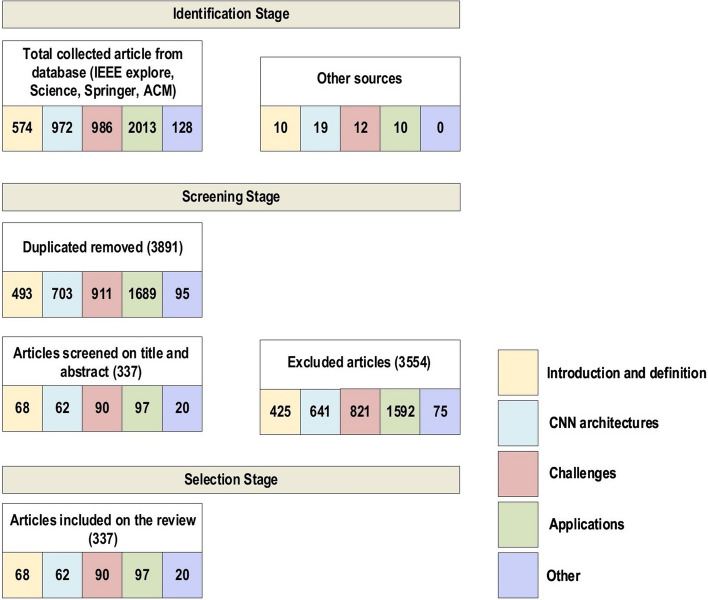
- The authors reviewed more than 300 papers on deep learning topics, with 108 papers from 2020, 76 from 2019, and 48 from 2018.
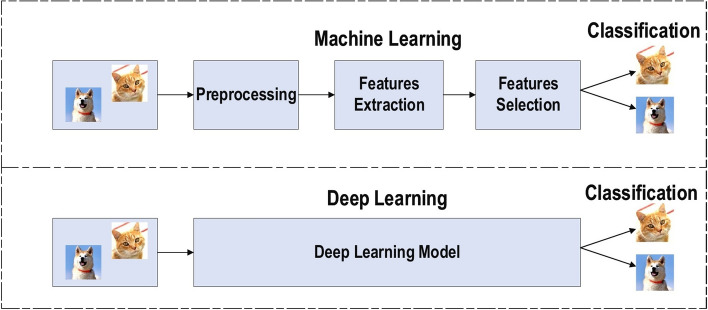
- They argue that DL can reduce manual feature engineering by learning features automatically and that it has already achieved strong results in tasks such as image classification, detection, segmentation, and registration.
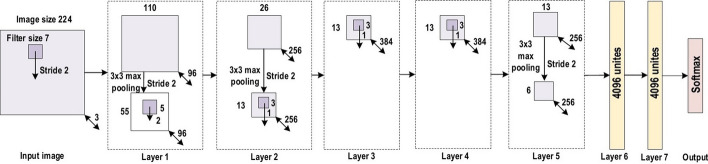
- The paper highlights that CNNs are the most used DL network type and reviews their architectural evolution from AlexNet (2012) to HRNet (2020).
- It identifies major DL challenges including lack of training data, imbalanced data, interpretability, uncertainty scaling, catastrophic forgetting, model compression, overfitting, vanishing/exploding gradients, and underspecification.
## Methods
- This is a survey/review paper, not an experimental study.
- The authors report reviewing literature from 2010–2020 (mainly 2020 and 2019, with some 2021 papers), drawing from publishers including IEEE, Elsevier, MDPI, Nature, ACM, and Springer, plus some arXiv papers.
- Their review was organized to cover DL approaches and network types, CNN architectures, challenges and solutions, applications, and computational approaches.
## Limitations
- The paper itself states that the review is not exhaustive for every topic; for example, in registration it says it is “out of the scope of this work to provide an extensive review of this topic.”
- The text also makes evident that some sections are descriptive rather than systematic: it summarizes many studies and architectures but does not report a formal meta-analysis or quantitative comparison across all included papers. (This is evident from the text.)
- Several sections are labeled only as headings or brief placeholders in the provided text, suggesting the supplied version is fragmentary/incomplete in places. (This is evident from the text.)
Model-written summary. Check it against the paper before relying on it.
Integrity signals
Registry
Cites
Statistics
Figures
Verification
Claims the paper makes
81 Valid · 72 Not valid · 63 Not checked · 158 Own results and interpretations
Some cited sources support this claim and some don’t — read each source’s verdict below.
In the paper
“Increase the depth (or width) of the model.”
§ Review of deep learning: concepts, CNN architectures, challenges, applications, future directions > Types of DL networks > Convolutional neural networks
What the sources say
- Disputedcites [86] Alzubaidi L Fadhel MA Al-Shamma O Zhang J Duan Y Deep learning models for classification of red blood cells in microscopy images to aid in sickle cell anemia diagnosis Electronics 2020 9 3 427 10.3390/electronics9030427 sourceExperimental — accuracy not yet measured
In the paper’s model-comparison discussion (page not available in our copy), the authors say they increased network depth to improve performance, but it did not help; Model 2 performed best. The cited passage therefore does not support recommending greater depth as a way to improve performance, and it gives no corresponding result for greater width. (LLM, conf=0.86)
Checked by a reasoning model — may be wrong.
- Not checked yetcites [87] Alzubaidi L Fadhel MA Al-Shamma O Zhang J Santamaría J Duan Y Oleiwi SR Towards a better understanding of transfer learning for medical imaging: a case study Appl Sci 2020 10 13 4523 10.3390/app10134523 source
Checked before — its earlier verdict is held back until a new check runs.
- Partly supportedcites [88] Alzubaidi L Al-Shamma O Fadhel MA Farhan L Zhang J Duan Y Optimizing the performance of breast cancer classification by employing the same domain transfer learning from hybrid deep convolutional neural network model Electronics 2020 9 3 445 10.3390/electronics9030445 sourceExperimental — accuracy not yet measured
Section 3.5 (Proposed Model; page unavailable) says a deep CNN with improved feature extraction is needed for breast-biopsy classification and describes a multi-branch architecture. It does not establish that simply increasing a model’s depth or width improves CNN performance; the proposed model also uses residual links and other design choices. (LLM, conf=0.78)
plainstates a possible cause- Asserted: passes — The authors put it forward as true.
- Checkable: passes — It can be checked against evidence.
- Load-bearing: unclear — It is unclear whether the paper’s conclusions depend on it.
- Based: passes — The paper gives a reason why it holds.
- Disputed
The cited sources support only part of this claim — read each source’s verdict below.
In the paper
“The main benefit of CNN compared to its predecessors is that it automatically identifies the relevant features without any human supervision [76].”
§ Review of deep learning: concepts, CNN architectures, challenges, applications, future directions > Types of DL networks > Convolutional neural networks
What the sources say
- Partly supportedcites [76] Gu J Wang Z Kuen J Ma L Shahroudy A Shuai B Liu T Wang X Wang G Cai J Recent advances in convolutional neural networks Pattern Recogn 2018 77 354 377 10.1016/j.patcog.2017.10.013 sourceExperimental — accuracy not yet measured
The paper says CNNs learn features automatically rather than relying on handcrafted features (5.3, p. 22), supporting the feature-learning part of the claim. But it does not support “without any human supervision”: the Conclusions (p. 28) say training requires manually collected labeled data and identify unsupervised CNN learning as a goal for further work. (LLM, conf=0.88)
plainstates a cause- Asserted: passes — The authors put it forward as true.
- Checkable: passes — It can be checked against evidence.
- Load-bearing: unclear — It is unclear whether the paper’s conclusions depend on it.
- Based: passes — The paper gives a reason why it holds.
- Partly supported
The cited sources support only part of this claim — read each source’s verdict below.
In the paper
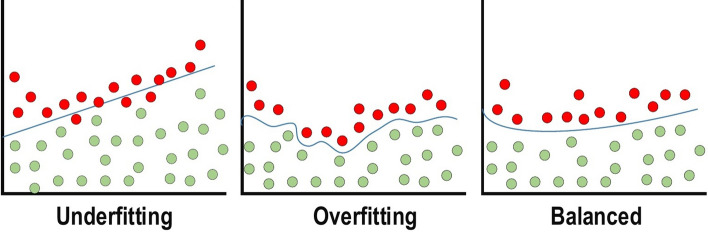
“Add regularization.”
§ Review of deep learning: concepts, CNN architectures, challenges, applications, future directions > Types of DL networks > Convolutional neural networks
What the sources say
- Supportedcites [86] Alzubaidi L Fadhel MA Al-Shamma O Zhang J Duan Y Deep learning models for classification of red blood cells in microscopy images to aid in sickle cell anemia diagnosis Electronics 2020 9 3 427 10.3390/electronics9030427 source
Section 3.2 (p. 8) says data augmentation enhances classification performance and helps prevent CNN overfitting. The paper thus supports the hedged claim that adding an overfitting-control technique may improve CNN performance, specifically in red-blood-cell classification. (LLM, conf=0.82)
- Partly supportedcites [87] Alzubaidi L Fadhel MA Al-Shamma O Zhang J Santamaría J Duan Y Oleiwi SR Towards a better understanding of transfer learning for medical imaging: a case study Appl Sci 2020 10 13 4523 10.3390/app10134523 sourceExperimental — accuracy not yet measured
Our copy places regularization among techniques for limiting overfitting (Sec. 5.2.4 Dropout: 'A limited number of solutions are used to reduce the risk of overfitting... Other techniques involve the use of regularization and enlargement of the training dataset'), and lists 'regularization strategies' among the attributes in which DCNNs advanced (Sec. 2.2). That supports regularization as a performance-related device, but the paper never states that adding regularization improves CNN performance; on the contrary, its only comparative statement favours the alternative: 'Compared to regularization, dropout performs well in accelerating the process of training, as well as reducing the overfitting risk' (Sec. 5.2.4). The claim's asserted benefit of adding regularization is therefore only partly carried by this source. (LLM, conf=0.68)
- Supportedcites [88] Alzubaidi L Al-Shamma O Fadhel MA Farhan L Zhang J Duan Y Optimizing the performance of breast cancer classification by employing the same domain transfer learning from hybrid deep convolutional neural network model Electronics 2020 9 3 445 10.3390/electronics9030445 source
Section 3.5 (Proposed Model; page unavailable) says the authors placed a dropout layer in their CNN to prevent overfitting. Dropout is a form of regularization, so this supports the qualified claim that adding regularization may improve CNN performance. (LLM, conf=0.85)
plainstates a possible cause- Asserted: passes — The authors put it forward as true.
- Checkable: passes — It can be checked against evidence.
- Load-bearing: unclear — It is unclear whether the paper’s conclusions depend on it.
- Based: passes — The paper gives a reason why it holds.
- Supported
Every source the paper cites for this claim was checked and supports it.
In the paper
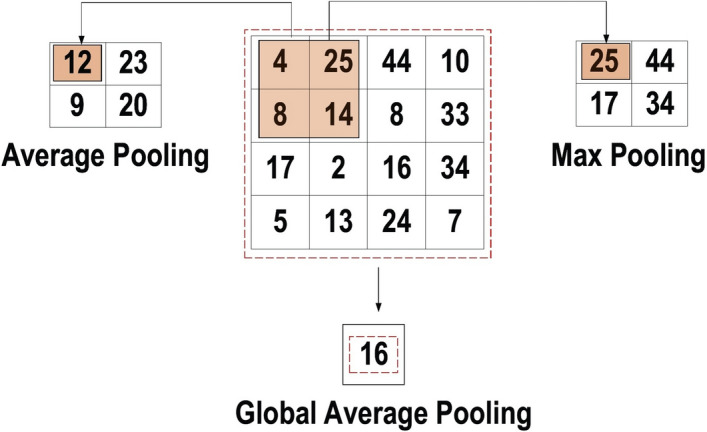
“As a substitution for a FC layer, the GAP is also employed, which represents the second novel concept and enables a significant reduction in the number of model parameters.”
§ Review of deep learning: concepts, CNN architectures, challenges, applications, future directions > CNN architectures > Network-in-network
What the sources say
- Supportedcites [94] Lin M, Chen Q, Yan S. Network in network; 2013. arXiv preprint arXiv:1312.4400. source
Section 3.2 (p. 4) proposes global average pooling as a replacement for fully connected layers and says the pooling layer has no parameters to optimize. Section 4.6 (p. 7) contrasts this with fully connected layers’ trainable dense transformation matrices, supporting the claimed reduction in parameters, though it does not quantify the reduction. (LLM, conf=0.90)
plainstates a cause- Asserted: passes — The authors put it forward as true.
- Checkable: passes — It can be checked against evidence.
- Load-bearing: unclear — It is unclear whether the paper’s conclusions depend on it.
- Based: passes — The paper gives a reason why it holds.
- Supported
Every source the paper cites for this claim was checked and supports it.
In the paper
“In 2015, Srivastava et al. [105] suggested a novel CNN architecture, called Highway Network, to overcome this issue.”
§ Review of deep learning: concepts, CNN architectures, challenges, applications, future directions > CNN architectures > Highway network
What the sources say
- Supportedcites [105] Srivastava RK, Greff K, Schmidhuber J. Highway networks; 2015. arXiv preprint arXiv:1505.00387. source
The Introduction (p. 1) presents highway networks as a novel architecture intended to make very deep networks easier to optimize. Section 2.1 (p. 2) describes convolutional highway layers, supporting the CNN characterization, although the architecture is not limited to CNNs. (LLM, conf=0.93)
plainstates a cause- Asserted: passes — The authors put it forward as true.
- Checkable: passes — It can be checked against evidence.
- Load-bearing: unclear — It is unclear whether the paper’s conclusions depend on it.
- Based: passes — The paper gives a reason why it holds.
- Rests on 2 assumptions not shown here.
- Supported
93 more claims · 31 with their cited sources checked
Create a free account to see all 374 claims and to verify the 24 references still open.
- Probably not a substantial claim. 224
- It may state two separate claims as one. 109
- The quote only partly states this claim. 2
Claims other papers make about this one
Each is checked against this paper’s own text: does it say what the citing paper says it does?
The source backs part of the claim, not all of it — or backs it for a different population, condition or comparison.
In the citing paper
“Previous methodologies, such as, artificial neural networks (NNs), and the more recent DL techniques, have been preferred in SOC estimation because of their applicability to depict more intricate correlation systems of input parameters and SOC [44].”
From Review Paper for SOC Estimation Techniques: Challenges and Future Areas for Improvement (2024) · cites this paper as [44]
Experimental — accuracy not yet measured
Self-check
Percentages, sums and reported differences re-computed from the paper’s own numbers.
Self-check results appear here once an independent check has confirmed them.
Cited works that were retracted
Works this paper cites that were later retracted, from the retraction notices publishers deposit. Major when the notice came out before this paper was published.
Rated major: it would touch a result — a value a result rests on, reported and recomputed p-values on opposite sides of the significance level, two passages that conflict with no sign which is right, or a cited work retracted before this paper was published.
In the paper
“Min Z. Public welfare organization management system based on FPGA and deep learning. Microprocess Microsyst. 2020;80:103333.”
Cited work 10.1016/j.micpro.2020.103333 · retracted 2021-02-01 · notice 10.1016/j.micpro.2020.103333 · this paper published 2021-03-31
Citations
Cites
1 retracted
RETRACTED: Public welfare organization management system based on FPGA and deep learning
Min, Z. (2020) · Microprocessors and Microsystems · doi:10.1016/j.micpro.2020.103333 · Cited by 16
RetractedDeep Residual Learning for Image Recognition
He, K., Zhang, X., Ren, S., & Sun, J. (2016) · 2016 IEEE Conference on Computer Vision and Pattern Recognition (CVPR) · doi:10.1109/cvpr.2016.90 · Cited by 235,474
Very Deep Convolutional Networks for Large-Scale Image Recognition
Simonyan, K., & Zisserman, A. (2014) · arXiv · doi:10.48550/arxiv.1409.1556 · Cited by 114,148
ImageNet classification with deep convolutional neural networks
Krizhevsky, A., Sutskever, I., & Hinton, G. E. (2017) · Communications of the ACM · doi:10.1145/3065386 · Cited by 112,155
U-Net: Convolutional Networks for Biomedical Image Segmentation
Ronneberger, O., Fischer, P., & Brox, T. (2015) · Lecture notes in computer science · doi:10.1007/978-3-319-24574-4_28 · Cited by 99,404
LeCun, Y., Bengio, Y., & Hinton, G. (2015) · Nature · doi:10.1038/nature14539 · Cited by 84,126
ImageNet: A large-scale hierarchical image database
Deng, J., Dong, W., Socher, R., Li, L.-J., Li, K., & Fei-Fei, L. (2009) · 2009 IEEE Conference on Computer Vision and Pattern Recognition · doi:10.1109/cvpr.2009.5206848 · Cited by 65,333
Densely Connected Convolutional Networks
Huang, G., Liu, Z., Van Der Maaten, L., & Weinberger, K. Q. (2017) · 2017 IEEE Conference on Computer Vision and Pattern Recognition (CVPR) · doi:10.1109/cvpr.2017.243 · Cited by 48,566
Going deeper with convolutions
Szegedy, C., Liu, W., Jia, Y., Sermanet, P., Reed, S., Anguelov, D., Erhan, D., Vanhoucke, V., & Rabinovich, A. (2015) · 2015 IEEE Conference on Computer Vision and Pattern Recognition (CVPR) · doi:10.1109/cvpr.2015.7298594 · Cited by 48,562
Squeeze-and-Excitation Networks
Hu, J., Shen, L., & Sun, G. (2018) · 2018 IEEE/CVF Conference on Computer Vision and Pattern Recognition · doi:10.1109/cvpr.2018.00745 · Cited by 35,667
Research works printed but not linked: 4
- Erhan D Bengio Y Courville A Vincent P Visualizing higher-layer features of a deep network Univ Montreal 2009 1341 3 1
- Ribeiro AH, Tiels K, Aguirre LA, Schön T. Beyond exploding and vanishing gradients: analysing RNN training using attractors and smoothness. In: International conference on artificial intelligence and statistics, PMLR; 2020. p. 2370–80.
- Zhao H, Han Z, Yang Z, Zhang Q, Yang F, Zhou L, Yang M, Lau FC, Wang Y, Xiong Y, et al. Hived: sharing a {GPU} cluster for deep learning with guarantees. In: 14th {USENIX} symposium on operating systems design and implementation ({OSDI} 20); 2020. p. 515–32.
- Rakotomamonyj A. Optimizing area under roc with SVMS. In: Proceedings of the European conference on artificial intelligence workshop on ROC curve and artificial intelligence (ROCAI 2004), 2004. p. 71–80.
Cited by
Items 5,801–5,900 of 7,963
Brain Tumors Prediction and Classification Using Automated Models
Haddad, K. E., Bekkari, A., Bouarifi, W., & Jraifi, A. (2026) · Springer proceedings in mathematics & statistics · doi:10.1007/978-3-032-17079-8_11
Network Intrusion Decision Method Based on Dynamic Convolution
Qian, H. (2025) · Symposium on Big Data, Neural Networks, and Deep Learning (BDNNDL) · doi:10.1145/3784013.3784050 · Cited by 1
Spinosa, A., Karisma, K., Eleveld, M. A., Fuentes-Monjaraz, M. A., Mobilia, V., Mallast, U., Peterseil, J., & Serafy, G. Y. E. (2026) · Ecological Informatics · doi:10.1016/j.ecoinf.2026.103820
Osei, B., Osei_Dwomoh, E., Boatemaa, A., & Forkuo, G. O. (2026) · Research Square · doi:10.21203/rs.3.rs-9751106/v1
An Intensive Review Identification and Classification of Eye Diseases Using Vision Transformers
Mathariya, S. K., Kaur, M., Goyal, S., Sandesh, R., Deotale, D., & Jain, M. (2025) · IEEE International Conference on Advances in Computing Research on Science Engineering and Technology (ACROSET) · doi:10.1109/acroset66531.2025.11280906
ResNetKAN1D: Attention-Enhanced Hybrid Architecture for Seismic Signal Classification in STEAD
Di, S. (2025) · Applied and Computational Engineering · doi:10.54254/2755-2721/2025.tj23470 · Cited by 1
Akalın, F., Çavdaroğlu, P. D., & Altindis, M. (2026) · Innovation and Emerging Technologies · doi:10.1142/s2737599426300035
Unsupervised Video Summarization Using Deep Learning Approach with Deep Feature Semantics
Gangwani, V. S., & Ramteke, P. L. (2024) · Algorithms for intelligent systems · doi:10.1007/978-981-97-4496-1_13
Azzah, A., & Nudin, S. R. (2025) · Jurnal Riset Informatika · doi:10.34288/jri.v8i1.417
Testing general relativity and cosmology with gravitational waves
Leyde, K. (2023) · theses.fr (ABES) · doi:10.70675/cdb66cf6zb08dz4605z9d40z32857318a977
Harnessing Deep Learning in Fraud Detection: Advances, Challenges, and Future Perspectives
Yamsani, N., Kumar, D. N. S., & Soumya, B. (2026) · Lecture notes in networks and systems · doi:10.1007/978-3-032-28379-5_8
Mayadunna, M. D. N., Senanayake, W. G. N. S., & Senara, N. B. A. (2025) · Proceedings in Technology Transfer · doi:10.1007/978-981-96-9551-5_18
Structure-Preserving Frequency-Aware Generative Network for Robust Image Super-Resolution
Tivari, G. D., Khara, S. V., Suthar, M., et al. (2026) · doi:10.1109/iccbi68589.2026.11619683
“Although GAN-based approaches provide perceptually more realistic images, they present some additional problems [9].”
Zhang, Q., & Zeng, Y. (2026) · Computers · doi:10.3390/computers15030168
Dogan, F. E., Önal, M. K., Bingöl, H., Yalçın, S., & Yıldırım, M. (2026) · Biomedicines · doi:10.3390/biomedicines14071532
“…(ConvNeXt V2 Base [26], DenseNet 121 [27], EfficientNet B4 [28], Inception V3 [29], MobileNetV3 [30], Resnet50 [31]) and Transformer architectures that can model global information by capturing relationships between locations (ViT B-16 [32], ViT B-32 [33], DeiT B-16 [34], Swin Base [35]) [36–38].”
Iranda, H. P. K., Candra, A., & Harjoko, A. (2024) · AIP conference proceedings · doi:10.1063/5.0207210
Gong, X.-W., Yu, Q.-S., Li, H., Fang, Z.-Q., Guo, J.-X., Li, Z., Wang, H.-F., Pang, Z.-Y., Peng, Y.-H., Sun, X., et al. (2026) · Frontiers in Plant Science · doi:10.3389/fpls.2025.1709473
Lee, J., Lee, S., Chung, E. G., et al. (2026) · Journal of Environmental Management · doi:10.1016/j.jenvman.2026.130206
Kiruba, R., Boobalan, J., Saranya, M., et al. (2026) · International Conference on Smart Systems and Inventive Technology (ICSSIT) · doi:10.1109/icssit69151.2026.11656378
“Deep learning is a subfield of machine learning that has shown promising results in a range of applications in medical imaging, including the identification of cervical cancer [3].”
InfluentialArtificial Intelligence in Functional Genomics of Plants
Sharma, V. K., Singh, S., Roy, B., & Mishra, M. K. (2026) · CABI biotechnology series. · doi:10.1079/9781800628649.0002
Aerial Base Station enabled the Rocket Communication System
Kabore, W. N., Juang, R., Lin, H., Tesfaw, B. A., Jeng, S., & Chen, J. S. (2026) · IEEE Consumer Communications and Networking Conference · doi:10.1109/ccnc65079.2026.11366318
“Machine learning (ML) [5] and deep learning (DL) [6] provide powerful tools for enabling UAV repositioning to maintain high data rate transmission in dynamic communication scenarios.”
Nair, V., & Pareek, J. (2024) · Lecture notes in networks and systems · doi:10.1007/978-981-97-1841-2_18
AI-Driven Ultrasound: Automation, Image Interpretation and Decision Support
Sarkar, N., Stancliff, H., & Srinivasareddy, S. (2026) · IntechOpen eBooks · doi:10.5772/intechopen.1015391
Analisis Sentimen Data Ulasan Pengguna MyPertamina di Twitter dengan Metode Text Mining
Hutabarat, A. W. V., Adnyani, N. L. S. S., & Suryadi, K. (2024) · Jurnal Rekayasa Sistem Industri · doi:10.26593/jrsi.v13i1.6958.145-154
Convolutional neural networks pruning and its application to embedded vision systems
Tessier, H. (2023) · theses.fr (ABES) · doi:10.70675/73a5734fz6c44z4d68zb238z8d30e4e00f1a · Cited by 3
K, H. B., & Nandihal, P. (2026) · International Conference on Emerging Systems and Intelligent Computing (ESIC) · doi:10.1109/esic68176.2026.11496199
A Hybrid AI Framework for CV Screening with CNN-Based Layout Classification and Open-Source LLMs
Yanvrent, E., & Setiawan, J. (2025) · International Conference on New Media Studies (CONMEDIA) · doi:10.1109/conmedia67140.2025.11290559
NeuroMindscape: Deep Learning Unraveling Alzheimer's Stages Through MRI-Based Classification
Barua, S., Dipu, D. D., & Broti, T. (2024) · IEEE International Conference on Power, Electrical, Electronics and Industrial Applications (PEEIACON) · doi:10.1109/peeiacon63629.2024.10800075
Yamamoto, K., Ibuki, T., & Nakazawa, E. (2024) · The American Journal of Bioethics · doi:10.1080/15265161.2024.2388739
Power System Load Forecasting Enhanced by Adaptive Memory-Synthesis NetworkPreprint
Kang, Y., Wang, L., Xuan, Q., Wang, B., & Wang, X. (2025) · Research Square · doi:10.21203/rs.3.rs-7285800/v1 · Cited by 1
Improving Tree-Based Convolutional Neural Network Model for Image Classification
Raees, S., & Agarwal, P. (2023) · Lecture notes in networks and systems · doi:10.1007/978-981-99-6553-3_2
Deep Biased Matrix Factorization for Student Performance Prediction
Huynh-Ly, T.-N., Le, H.-T., & Thai-Nghe, N. (2023) · EAI Endorsed Transactions on Context-aware Systems and Applications · doi:10.4108/eetcasa.v9i1.3147
Estimating Physical Activity Energy Expenditure from Video
Kasturi, G., Shrestha, P., Strath, S. J., & Kate, R. J. (2024) · IEEE-EMBS International Conference on Biomedical and Health Informatics (BHI ...) · doi:10.1109/bhi62660.2024.10913701 · Cited by 2
Leveraging AI/ML for the Identification of Marine Organisms
Sahu, N., Baburajan, R., Vrinda, P. K., Neethu, N., Salu, S. K., & Saravanane, N. (2026) · Earth and environmental sciences library · doi:10.1007/978-3-032-11426-6_7
Zhang, C., Condon, A., & Duc, K. D. (2025) · bioRxiv (Cold Spring Harbor Laboratory) · doi:10.1101/2025.03.02.641021
Clamp Dot Image Classification Using Neural Network
Srikam, K., & Saenthon, A. (2024) · Sensors and Materials · doi:10.18494/sam5000
Sustainable Smart Irrigation in Precision Farming using IoT
Sarjerao, J. S., Sudhagar, G., & Jadhav, R. N. (2025) · International Conference on Emerging Smart Computing and Informatics (ESCI) · doi:10.1109/esci63694.2025.10987956
Ahmed, H., Tantawi, B., Magdy, M., Elsayed, E. K., & Sayed, G. I. (2026) · Springer eBooks · doi:10.1007/978-3-032-07267-2_4
Xiong, J., Fu, X., Qi, J., et al. (2025) · doi:10.1109/icsge68440.2025.11441913
REAL-TIME SPEECH TO TEXT CONVERSION & ANSWER EVALUATION
Prasad, D. V. (2024) · INTERANTIONAL JOURNAL OF SCIENTIFIC RESEARCH IN ENGINEERING AND MANAGEMENT · doi:10.55041/ijsrem30670
StripFusion-Net: Adaptive Spatial Feature Learning for Real-Time VR/AR Scene Analysis
Divya Baliga, B., Santhoshkumar, S. P., Suresh, C., et al. (2026) · International Conference on Sustainable Computing and Smart Systems (ICSCSS) · doi:10.1109/icscss69635.2026.11645724
“Insufficient perception of environment can make it difficult to analyze the interactions between objects and be immersed in dynamic environments [6].”
Predictive Model for Deposition Success in Wire Laser Additive Manufacturing
Khan, A. U., & Madhukar, Y. K. (2025) · Lecture notes in mechanical engineering · doi:10.1007/978-981-96-1509-4_24
Noviyanti, D., Prasetiyowati, S. S., & Sibaroni, Y. (2023) · doi:10.1109/icoict58202.2023.10262700
U-Net as a deep learning-based method for platelets segmentation in microscopic imagesPreprint
de Sousa, E. M. V., Kumar, A., Coupland, C. A., Vaz, T. F., Jones, W., Valcarce-Diñeiro, R., & Calaminus, S. D. J. (2024) · medRxiv · doi:10.1101/2024.08.23.24312502
Deep learning attention-based smart surveillance for automatic exam cheating detection
Sadatcharam, Y., & Muruganadam, D. (2026) · African Journal of Science Technology Innovation and Development · doi:10.1080/20421338.2026.2696943
Deng, H. C., Shu, Z., Chan, P. W., & He, X. H. (2026) · Stochastic Environmental Research and Risk Assessment · doi:10.1007/s00477-026-03322-y
“Recurrent Neural Networks (RNNs) model temporal dependencies through sequential state transitions (Yu et al. 2018; Sherst-insky 2020 ), while Convolutional Neural Networks (CNNs) extract localized temporal or spatiotemporal patterns (Alzubaidi et al. 2021; Zhu et al. 2021 ).”
Rallapalli, S., Dileep, M. R., & Chandana, T. M. (2025) · Communications in computer and information science · doi:10.1007/978-3-032-08260-2_3
Vargas-Bustamante, M., Zapata, M., García-Muñoz, G., & Álvarez-Tello, J. (2026) · Lecture notes in computer science · doi:10.1007/978-3-032-31048-4_10
Variational analysis and AI algorithm implementation of free energy landscapes of molecular system
Du, B., & Tian, P. (2024) · Acta Physica Sinica · doi:10.7498/aps.73.20231800
Zhao, S., Zhang, Q., Yin, Z., Yesibolati, H., Song, Y., Liu, Z., & Wang, B. (2026) · Sensors · doi:10.3390/s26196192
Regulating Artificial Intelligence in Social Networks
Rajpoot, A. K., & Anjum, S. (2025) · BENTHAM SCIENCE PUBLISHERS eBooks · doi:10.2174/9798898810030125040013
GADNN: Gender and Age Detector Neural Network
Khan, Z., Khan, M. A., Wahab, A., & Musharaf, U. (2023) · International Conference on Emerging Technologies · doi:10.1109/icet59753.2023.10374798 · Cited by 1
Priyadharshini, J. M. H., & Jaison, B. (2025) · International Conference on Augmented Intelligence and Sustainable Systems (ICAISS) · doi:10.1109/icaiss61471.2025.11041921
Multi-Strategy Feature Selection for Glioma Grading Using Classical and Deep Models
Rizqi, A. R. M., Nugraha, A., Luthfiarta, A., et al. (2025) · International Seminar on Application for Technology of Information and Communication (iSemantic) · doi:10.1109/isemantic67418.2025.11292231
Classification of Pneumonia and Covid-19 using Convolutional Neural Network
Mishra, A. K., Ghimire, A., Joshi, M., et al. (2023) · International Journal of Health Sciences and Pharmacy · doi:10.47992/ijhsp.2581.6411.0110
Li, C., Na, W., Yao, C., Liu, C., & Chen, Q. (2026) · The Visual Computer · doi:10.1007/s00371-026-04605-9 · Cited by 1
“The enhanced features are used to construct a cost volume, which is processed by a convolutional neural network (CNN) [37] to generate a depth probability distribution and depth map.”
A Deep Learning Approach for Predicting the Architecture of 3d Textile FabricsPreprint
Коптелов, А. А., Thompson, A. J., Hallett, S. R., et al. (2023) · SSRN Electronic Journal · doi:10.2139/ssrn.4625867
Viabilidad Económica del Software de Facturación en la Nube
Carrillo, E. P., & Chávez, D. A. S. (2025) · Investigación Administrativa · doi:10.35426/iav54n136.07
Fajri, F. N., Pratamasunu, G. Q. O., & Malík, K. (2024) · Transactions on Informatics and Data Science · doi:10.24090/tids.v1i2.12281
Artificial Intelligence Models for Age and Sex Estimation from Electrocardiograms
Albornoz, D., Sposato, C. A., Meschino, G. J., et al. (2025) · World Congress on Medical Physics and Biomedical Engineering, September 7 - 12, 2009, Munich, Germany · doi:10.1007/978-3-031-96538-8_15
Deep Convolutional Neural Networks for Diabetic Retinopathy Classification from Retinal Images
S, S. P., Vijayasree, J., Singh, B. P., et al. (2025) · International Conference on Applied Artificial Intelligence and Computing (ICAAIC) · doi:10.1109/icaaic64647.2025.11331092
Surrogate Modeling and Optimization of CO2-WAG Processes in Deepwater Low-Permeability Reservoirs
Pang, S., & Xu, J. (2026) · Lecture notes in civil engineering · doi:10.1007/978-981-95-9773-4_35
Automatic Solid Core Detection Using Faster R-CNN and Yolo11 for Real-Time RQD Estimation
Sebbeh-Newton, S., Frimpong, G. K., Frimpong, K. A., Seidu, J., Nanor, E. S., & Issaka, Y. (2026) · Mining Metallurgy & Exploration · doi:10.1007/s42461-026-01618-9 · Cited by 1
“This is evident in the field of object detection as well as image segmentation [19].”
Brain Tissue Segmentation from MRI Scans using Digital Image Processing
Chauhan, S., Saini, P., & Sofat, S. (2025) · Procedia Computer Science · doi:10.1016/j.procs.2025.03.174 · Cited by 1
An EXplainable Artificial Intelligence Credit Rating System
El-Qadi, A. (2023) · theses.fr (ABES) · doi:10.70675/2d09695dz9d70z4602zb460zfd801584e220 · Cited by 2
Machine learning-based reconstruction of wake flow from surface pressure measurements
Corona, L. J. T., Gutierrez, D. A. E., Shu, F., Groß, A., & Liu, Q. (2026) · Transport Phenomena · doi:10.1515/tp-2026-0098
“CNNs have applications in many different areas, such as computer vision, pattern recognition and classification of medical images [15]–[19].”
Application of MRI-based Deep Learning Models in Gastric Cancer
Yuan, L. (2024) · International Conference on Machine Intelligence and Digital Applications (MIDA) · doi:10.1145/3662739.3670218 · Cited by 1
Multimodal Vehicle Classification Based on Radar and Acoustic Sensors Using Hybrid Shallow CNN
Yazli, A. Y., Shariff, K. K. M., Rahman, S. A. M. A. J. S. A., & Ali, M. A. M. (2024) · IEEE Symposium on Wireless Technology & Applications (ISWTA) · doi:10.1109/iswta62130.2024.10652023 · Cited by 1
COVID-19 Severity based on Deep Convolutional Neural Networks Chest X-Ray Image in Aceh, Indonesia
Yanti, B., Nurdin, Y., & Geumpana, T. A. (2023) · Jurnal Respirasi · doi:10.20473/jr.v9-i.1.2023.30-36
Radiomics and artificial intelligence in pancreatic cyst characterization: future or fiction?
Maino, C., Franco, P. N., Omboni, F., Giovanni, G. D., Inchingolo, R., Zamboni, G. A., & Ippolito, D. (2026) · Abdominal Radiology · doi:10.1007/s00261-026-05515-z
Teaching Humanoid Robots to Assist Humans for Collaborative Tasks
Rodano, J., Obidat, O., Parron, J., Li, R., Zhu, M., & Wang, W. (2023) · IEEE International Conference on Smart Computing · doi:10.1109/smartcomp58114.2023.00083
Jeong, S., Cho, H., Kim, J. S., Lee, S., Song, J. Y., Hong, J. H., Lee, J. K., Kim, S. K., & Cho, H.-W. (2026) · Journal of Gynecologic Oncology · doi:10.3802/jgo.2026.37.e84
Di, D., Liao, B., Qin, S., et al. (2025) · SSRN Electronic Journal · doi:10.2139/ssrn.5354088
FT-Transformer for Intrusion Detection in IoT Environment
Fares, I. A., & Elaziz, M. A. (2025) · Bulletin of Faculty of Science Zagazig University · doi:10.21608/bfszu.2024.297682.1400
Zhang, W., Tan, H., Zhou, P. C., Ma, L., Liu, Z., & He, Q. (2025) · Lecture notes in computer science · doi:10.1007/978-981-96-9872-1_14
DNA-binding domain-aware classification enables systematic annotation of the regulatory genomePreprint
Ickes, C., Timucin, C. H., Harms, B. C., Akgül, U., Vicente-Hernández, Í., Bogeski, I., Beißbarth, T., & Haubrock, M. (2024) · bioRxiv (Cold Spring Harbor Laboratory) · doi:10.1101/2024.12.20.629625 · Cited by 1
Machine Learning and Deep Learning Techniques for Classification of Breast Cancer: A Survey
-, K. M., Nangunuri, B. K., -, S. V., -, G. N., & -, T. V. (2024) · International Journal For Multidisciplinary Research · doi:10.36948/ijfmr.2024.v06i03.22929
Application of the image detection technology on dairy goat management
Yang, W.-Z., Wang, J., & Chen, J.-S. (2023) · International Conference on Awareness Science and Technology (iCAST) · doi:10.1109/icast57874.2023.10359248
Jawad, A. T., Gheni, H. M., Abed, N. J., et al. (2023) · AIP conference proceedings · doi:10.1063/5.0119600
Pinto, L. R., Armas, K. M. G., Barrionuevo, M. L., Gomez, A. I. L., Guerra, E. G., de Sandoval, C. S., & Rodriguez, L. (2026) · Journal of Dental Health and Oral Research · doi:10.46889/jdhor.2026.7132
Lu, Z., Yu, X., Zheng, X., et al. (2026) · Environmental Science and Pollution Research · doi:10.1007/s11356-026-37631-0
Self-citationSpectrum Sensing using Hybrid Model with Attention Mechanism for Low SNR Environments
Sultana, Z., Roy, A., & Sen, S. (2024) · International Conference on Computer and Information Technology (ICCIT) · doi:10.1109/iccit64611.2024.11021750
Deep Reinforcement Learning and Proximal Policy Optimization for Jetbot Automation
Ramesh, G., Shreyas, J., & Sowjanya, N. (2026) · Communications in computer and information science · doi:10.1007/978-3-032-19321-6_8
Resource-Efficient Techniques for Hyperparameter Optimization in Machine Learning
Vaidya, G., Kshirsagar, M., & Ryan, C. (2026) · Lecture notes in computer science · doi:10.1007/978-3-032-25035-3_4
Introduction to intelligent techniques and applications
Jain, P., & Gupta, S. (2024) · Elsevier eBooks · doi:10.1016/b978-0-443-15999-2.00012-8
Lopo, J. A., Prasasti, M. I., Limbong, A. N., Permatasari, A., Afiahayati, A., & Anarossi, E. (2025) · International Conference on Artificial Intelligence Technology (ICoAIT) · doi:10.1109/icoait67446.2025.11309005
Development of a Machine Learning-Based Robotic System for Medical-Targeted Drug Delivery System
Simango, D., Manyanye, T., Aldhaibani, J. A., et al. (2025) · Communications in computer and information science · doi:10.1007/978-3-031-87076-7_3
The global research of artificial intelligence on Alzheimer disease: A 25-year bibliometric analysis
Wu, H., Wang, X.-S., Yang, M., & Cai, J. (2026) · Medicine · doi:10.1097/md.0000000000050370
“[17] In addition, most studies use general models to diagnose and predict AD, overlooking patient-specific differences, and the lack of long-term follow-up data, all of which together limit the application of AI in predicting long-term disease progression and treatment outcomes in patients.”
Remaining Useful Life Prediction of Smart Electric Meters Based on KAN-LSTM Hybrid Network
Huang, X., Chen, X., Li, Y., et al. (2025) · International Conference on Power Engineering (ICPE) · doi:10.1109/icpe68635.2025.11407924
Luo, H., Li, G., & Tang, Y. (2026) · Discover Computing · doi:10.1007/s10791-026-10357-w
“CNNs are effective in extracting local patterns but lack the ability to model long-range dependencies, whereas Transformers are well suited for modeling global context but may overlook fine-grained local features [16, 17].”
Generating Explanations for Molecular Property Predictions in Graph Neural Networks
Malhi, A. K., Matekenya, J. P., & Främling, K. (2025) · Communications in computer and information science · doi:10.1007/978-3-031-89103-8_2
Enhancing Salient Object Detection Through VGG16–VGG19 Architectures
Aljerbi, A., Ghariba, B., Marey, O. I., Masrub, A. A., & Arbi, A. (2026) · Tobruk University Journal of Engineering Sciences · doi:10.64516/tujes.v7i2.78
“This hierarchical feature extraction enables CNNs to recognize complex patterns and achieve state-of-the-art performance in a wide range of Computer Vision (CV) tasks, including image classification, segmentation, and object detection [2, 3].”
Exploration of Machine Learning Methods to Seismic Event Discrimination in the Pacific Northwest
Kharita, A., Denolle, M., Hutko, A. R., Hartog, R., & Malone, S. D. (2026) · Seismica · doi:10.26443/seismica.v5i1.2068 · Cited by 2
Dey, S., & Datta, A. K. (2026) · SSRN Electronic Journal · doi:10.2139/ssrn.6615890
Enhanced CNN-Based Model for Traffic Risk Assessment
Bouhsissin, S., Jannani, A., Sael, N., & Benabbou, F. (2025) · Lecture notes in networks and systems · doi:10.1007/978-3-031-88653-9_42 · Cited by 1
Dong, X., Ye, Y., Yi, S., Cui, L., Yang, R., Zhou, T., Haase, D., & Lausch, A. (2026) · Sustainable Cities and Society · doi:10.1016/j.scs.2026.107909
Off-the-Shelf Neural Network Architectures for Forex Time Series Prediction come at a Cost
Zafeiriou, T., & Kalles, D. (2024) · Hellenic Conference on Artificial Intelligence · doi:10.1145/3688671.3688791
Metadata
- Authors
- Alzubaidi, L., Zhang, J., Humaidi, A. J., Al-Dujaili, A., Duan, Y., Al-Shamma, O., Santamaría, J., Fadhel, M. A., Al-Amidie, M., & Farhan, L.
- Affiliations
- Queensland University of Technology (AU)
- University of Technology - Iraq (IQ)
- Middle Technical University (IQ)
- University of Missouri (US)
- University of Information Technology and Communications (IQ)
- Universidad de Jaén (ES)
- University of Sumer (IQ)
- Manchester Metropolitan University (GB)
- Corresponding author
- Alzubaidi, Laith
- ORCID
- Venue
- Journal of Big Data
- Published
- 2021-03-31
- Volume
- 8
- Issue
- 1
- Pages
- 53-53
- ISSN
- 2196-1115 (ISSN-L)
- PMC
- PMC8010506
- OpenAlex
- W3140854437
- Semantic Scholar
- 0084f3cb0a1754272151c5268a783f24bf5676a0
- Cited by
- 7,906
- References
- 372
- Citations by year
- 2026: 1140 · 2025: 2146 · 2024: 2166 · 2023: 1583 · 2022: 719 · 2021: 152
- FWCI
- 414.94
- Type
- journal article
- Language
- en
- Open access
- gold
- doi.org
- Licence
- cc-by
- creativecommons.org/licenses/by/4.0 (tdm)
- creativecommons.org/licenses/by/4.0 (vor)
- Locations
- Journal Of Big Data (publishedVersion, cc-by)
- PubMed Central (publishedVersion, cc-by)
- PubMed (publishedVersion)
- RUJA. Institutional Repository of Scientific Production of the University of Jaén (University of Jaén) (publishedVersion, cc-by-nc-nd)
- QUT ePrints (Queensland University of Technology) (submittedVersion, cc-by)
- DOAJ (DOAJ: Directory of Open Access Journals) (submittedVersion, cc-by-sa)
- Funders
- Queensland University of Technology
- Topics
- Physical Sciences › Computer Science › Computer Vision and Pattern Recognition › Advanced Neural Network Applications
- Physical Sciences › Computer Science › Artificial Intelligence › Neural Networks and Applications
- Physical Sciences › Computer Science › Artificial Intelligence › Domain Adaptation and Few-Shot Learning
- Keywords
- deep learning, convolutional neural networks, convolutional neural network architecture, AlexNet, HRNet, deep learning applications, FPGA, graphics processing units, CPU, benchmark dataset
About these checks
Registry, retraction, Cites and statistics results are computed, not judged, with one exception: a printed reference that no index lists is read once by a model before it counts as a citation error. Claims are extracted by a model and kept only when their quote appears verbatim in the text; each cited source is then checked, with a model’s help, for whether it says what the claim relies on. Those verdicts can be wrong — read the claim’s quote and the cited source before relying on one.
The claim verdicts this report counts are experimental: their accuracy is not yet measured.
A language model drew the claims from the paper on 2026-09-28, under version 3 of the claim definition (model deepseek-v4.1-flash, prompt extract-v3).
A second model labelled each claim on 2026-09-28 (model jev-1.13-20260917, definition revision gold-guideline-v0.2).
Cited sources are checked with a language model’s help (gpt-6-sol and qwen3.8-omni-flash).
Statistics and arithmetic are recomputed, not judged.
Confidence bands are shown only for fields calibrated on our annotated test set. None is calibrated yet, so no band is shown.
What counts as a claim ›How we measure confidence ›How we check this ›
Are you an author, or do you see a problem with this page? Request a review
Data sources
Bibliographic data: Semantic Scholar, OpenAlex, Crossref.
Contains information from the Semantic Scholar Academic Graph Datasets, made available under the ODC Attribution License (ODC-BY 1.0).
Semantic Scholar’s data is described in: Kinney, R., et al. (2023). The Semantic Scholar Open Data Platform. arXiv:2301.10140.
