

Review of deep learning: concepts, CNN architectures, challenges, applications, future directions
Open accessThe DOI matches its Crossref record; 360 of the 372 references it cites were found in a registry or an index; 138 of the 246 sources its claims cite were checked for support.
Abstract
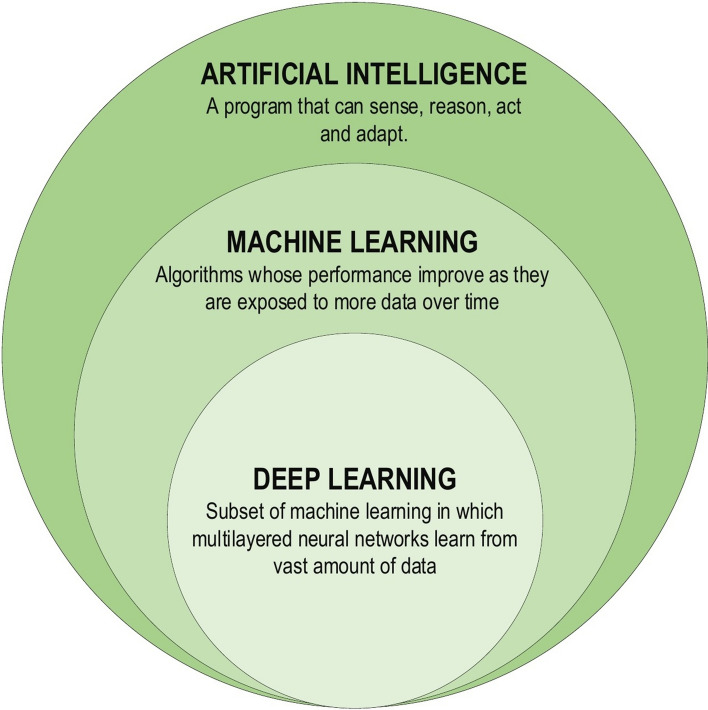
In the last few years, the deep learning (DL) computing paradigm has been deemed the Gold Standard in the machine learning (ML) community. Moreover, it has gradually become the most widely used computational approach in the field of ML, thus achieving outstanding results on several complex cognitive tasks, matching or even beating those provided by human performance. One of the benefits of DL is the ability to learn massive amounts of data. The DL field has grown fast in the last few years and it has been extensively used to successfully address a wide range of traditional applications. More importantly, DL has outperformed well-known ML techniques in many domains, e.g., cybersecurity, natural language processing, bioinformatics, robotics and control, and medical information processing, among many others. Despite it has been contributed several works reviewing the State-of-the-Art on DL, all of them only tackled one aspect of the DL, which leads to an overall lack of knowledge about it. Therefore, in this contribution, we propose using a more holistic approach in order to provide a more suitable starting point from which to develop a full understanding of DL. Specifically, this review attempts to provide a more comprehensive survey of the most important aspects of DL and including those enhancements recently added to the field. In particular, this paper outlines the importance of DL, presents the types of DL techniques and networks. It then presents convolutional neural networks (CNNs) which the most utilized DL network type and describes the development of CNNs architectures together with their main features, e.g., starting with the AlexNet network and closing with the High-Resolution network (HR.Net). Finally, we further present the challenges and suggested solutions to help researchers understand the existing research gaps. It is followed by a list of the major DL applications. Computational tools including FPGA, GPU, and CPU are summarized along with a description of their influence on DL. The paper ends with the evolution matrix, benchmark datasets, and summary and conclusion.
Overview
CoChat Summary
## TL;DR
This paper is a broad review of deep learning that explains core concepts, classifies DL approaches, and surveys CNN architectures from AlexNet to HRNet. It also summarizes major challenges, applications, and computational platforms, with a heavy emphasis on medical imaging and CNN-based solutions.
## Key findings
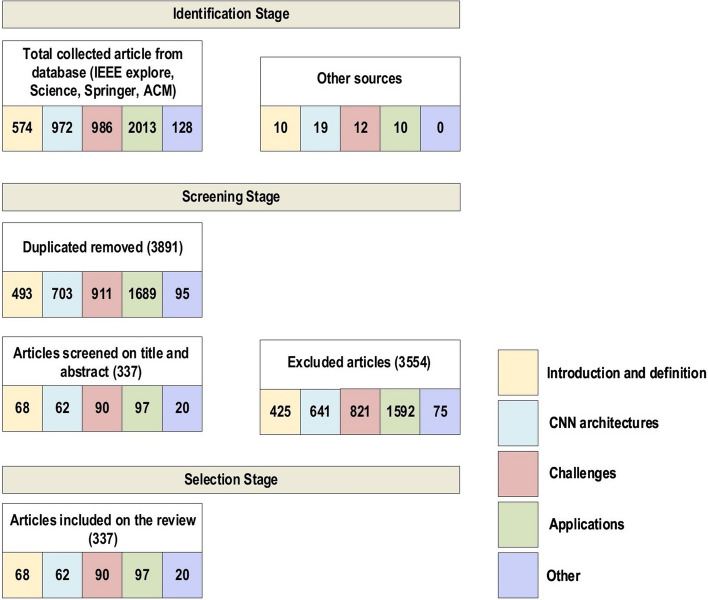
- The authors reviewed more than 300 papers on deep learning topics, with 108 papers from 2020, 76 from 2019, and 48 from 2018.
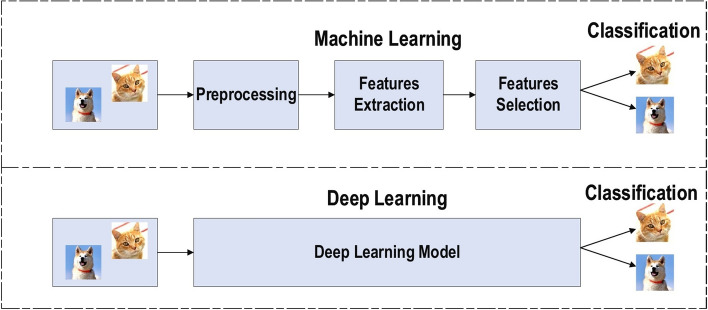
- They argue that DL can reduce manual feature engineering by learning features automatically and that it has already achieved strong results in tasks such as image classification, detection, segmentation, and registration.
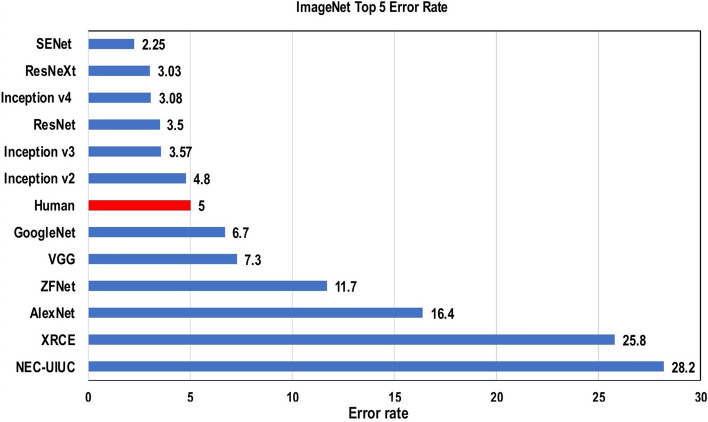
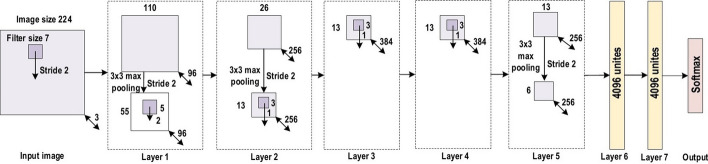
- The paper highlights that CNNs are the most used DL network type and reviews their architectural evolution from AlexNet (2012) to HRNet (2020).
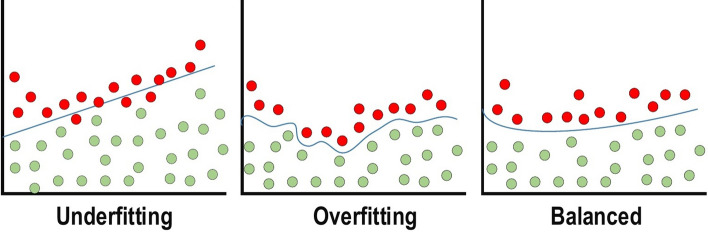
- It identifies major DL challenges including lack of training data, imbalanced data, interpretability, uncertainty scaling, catastrophic forgetting, model compression, overfitting, vanishing/exploding gradients, and underspecification.
## Methods
- This is a survey/review paper, not an experimental study.
- The authors report reviewing literature from 2010–2020 (mainly 2020 and 2019, with some 2021 papers), drawing from publishers including IEEE, Elsevier, MDPI, Nature, ACM, and Springer, plus some arXiv papers.
- Their review was organized to cover DL approaches and network types, CNN architectures, challenges and solutions, applications, and computational approaches.
## Limitations
- The paper itself states that the review is not exhaustive for every topic; for example, in registration it says it is “out of the scope of this work to provide an extensive review of this topic.”
- The text also makes evident that some sections are descriptive rather than systematic: it summarizes many studies and architectures but does not report a formal meta-analysis or quantitative comparison across all included papers. (This is evident from the text.)
- Several sections are labeled only as headings or brief placeholders in the provided text, suggesting the supplied version is fragmentary/incomplete in places. (This is evident from the text.)
Model-written summary. Check it against the paper before relying on it.
Integrity signals
Registry
Cites
Statistics
Figures
Verification
Claims the paper makes
81 Valid · 72 Not valid · 63 Not checked · 158 Own results and interpretations
Some cited sources support this claim and some don’t — read each source’s verdict below.
In the paper
“Increase the depth (or width) of the model.”
§ Review of deep learning: concepts, CNN architectures, challenges, applications, future directions > Types of DL networks > Convolutional neural networks
What the sources say
- Disputedcites [86] Alzubaidi L Fadhel MA Al-Shamma O Zhang J Duan Y Deep learning models for classification of red blood cells in microscopy images to aid in sickle cell anemia diagnosis Electronics 2020 9 3 427 10.3390/electronics9030427 sourceExperimental — accuracy not yet measured
In the paper’s model-comparison discussion (page not available in our copy), the authors say they increased network depth to improve performance, but it did not help; Model 2 performed best. The cited passage therefore does not support recommending greater depth as a way to improve performance, and it gives no corresponding result for greater width. (LLM, conf=0.86)
Checked by a reasoning model — may be wrong.
- Not checked yetcites [87] Alzubaidi L Fadhel MA Al-Shamma O Zhang J Santamaría J Duan Y Oleiwi SR Towards a better understanding of transfer learning for medical imaging: a case study Appl Sci 2020 10 13 4523 10.3390/app10134523 source
Checked before — its earlier verdict is held back until a new check runs.
- Partly supportedcites [88] Alzubaidi L Al-Shamma O Fadhel MA Farhan L Zhang J Duan Y Optimizing the performance of breast cancer classification by employing the same domain transfer learning from hybrid deep convolutional neural network model Electronics 2020 9 3 445 10.3390/electronics9030445 sourceExperimental — accuracy not yet measured
Section 3.5 (Proposed Model; page unavailable) says a deep CNN with improved feature extraction is needed for breast-biopsy classification and describes a multi-branch architecture. It does not establish that simply increasing a model’s depth or width improves CNN performance; the proposed model also uses residual links and other design choices. (LLM, conf=0.78)
plainstates a possible cause- Asserted: passes — The authors put it forward as true.
- Checkable: passes — It can be checked against evidence.
- Load-bearing: unclear — It is unclear whether the paper’s conclusions depend on it.
- Based: passes — The paper gives a reason why it holds.
- Disputed
The cited sources support only part of this claim — read each source’s verdict below.
In the paper
“The main benefit of CNN compared to its predecessors is that it automatically identifies the relevant features without any human supervision [76].”
§ Review of deep learning: concepts, CNN architectures, challenges, applications, future directions > Types of DL networks > Convolutional neural networks
What the sources say
- Partly supportedcites [76] Gu J Wang Z Kuen J Ma L Shahroudy A Shuai B Liu T Wang X Wang G Cai J Recent advances in convolutional neural networks Pattern Recogn 2018 77 354 377 10.1016/j.patcog.2017.10.013 sourceExperimental — accuracy not yet measured
The paper says CNNs learn features automatically rather than relying on handcrafted features (5.3, p. 22), supporting the feature-learning part of the claim. But it does not support “without any human supervision”: the Conclusions (p. 28) say training requires manually collected labeled data and identify unsupervised CNN learning as a goal for further work. (LLM, conf=0.88)
plainstates a cause- Asserted: passes — The authors put it forward as true.
- Checkable: passes — It can be checked against evidence.
- Load-bearing: unclear — It is unclear whether the paper’s conclusions depend on it.
- Based: passes — The paper gives a reason why it holds.
- Partly supported
The cited sources support only part of this claim — read each source’s verdict below.
In the paper
“Add regularization.”
§ Review of deep learning: concepts, CNN architectures, challenges, applications, future directions > Types of DL networks > Convolutional neural networks
What the sources say
- Supportedcites [86] Alzubaidi L Fadhel MA Al-Shamma O Zhang J Duan Y Deep learning models for classification of red blood cells in microscopy images to aid in sickle cell anemia diagnosis Electronics 2020 9 3 427 10.3390/electronics9030427 source
Section 3.2 (p. 8) says data augmentation enhances classification performance and helps prevent CNN overfitting. The paper thus supports the hedged claim that adding an overfitting-control technique may improve CNN performance, specifically in red-blood-cell classification. (LLM, conf=0.82)
- Partly supportedcites [87] Alzubaidi L Fadhel MA Al-Shamma O Zhang J Santamaría J Duan Y Oleiwi SR Towards a better understanding of transfer learning for medical imaging: a case study Appl Sci 2020 10 13 4523 10.3390/app10134523 sourceExperimental — accuracy not yet measured
Our copy places regularization among techniques for limiting overfitting (Sec. 5.2.4 Dropout: 'A limited number of solutions are used to reduce the risk of overfitting... Other techniques involve the use of regularization and enlargement of the training dataset'), and lists 'regularization strategies' among the attributes in which DCNNs advanced (Sec. 2.2). That supports regularization as a performance-related device, but the paper never states that adding regularization improves CNN performance; on the contrary, its only comparative statement favours the alternative: 'Compared to regularization, dropout performs well in accelerating the process of training, as well as reducing the overfitting risk' (Sec. 5.2.4). The claim's asserted benefit of adding regularization is therefore only partly carried by this source. (LLM, conf=0.68)
- Supportedcites [88] Alzubaidi L Al-Shamma O Fadhel MA Farhan L Zhang J Duan Y Optimizing the performance of breast cancer classification by employing the same domain transfer learning from hybrid deep convolutional neural network model Electronics 2020 9 3 445 10.3390/electronics9030445 source
Section 3.5 (Proposed Model; page unavailable) says the authors placed a dropout layer in their CNN to prevent overfitting. Dropout is a form of regularization, so this supports the qualified claim that adding regularization may improve CNN performance. (LLM, conf=0.85)
plainstates a possible cause- Asserted: passes — The authors put it forward as true.
- Checkable: passes — It can be checked against evidence.
- Load-bearing: unclear — It is unclear whether the paper’s conclusions depend on it.
- Based: passes — The paper gives a reason why it holds.
- Supported
Every source the paper cites for this claim was checked and supports it.
In the paper
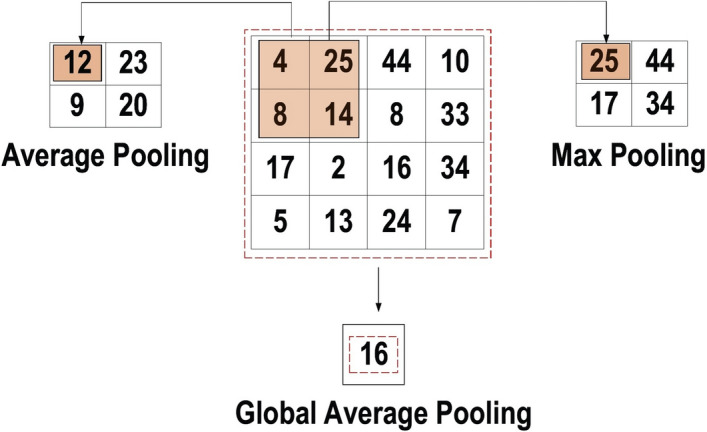
“As a substitution for a FC layer, the GAP is also employed, which represents the second novel concept and enables a significant reduction in the number of model parameters.”
§ Review of deep learning: concepts, CNN architectures, challenges, applications, future directions > CNN architectures > Network-in-network
What the sources say
- Supportedcites [94] Lin M, Chen Q, Yan S. Network in network; 2013. arXiv preprint arXiv:1312.4400. source
Section 3.2 (p. 4) proposes global average pooling as a replacement for fully connected layers and says the pooling layer has no parameters to optimize. Section 4.6 (p. 7) contrasts this with fully connected layers’ trainable dense transformation matrices, supporting the claimed reduction in parameters, though it does not quantify the reduction. (LLM, conf=0.90)
plainstates a cause- Asserted: passes — The authors put it forward as true.
- Checkable: passes — It can be checked against evidence.
- Load-bearing: unclear — It is unclear whether the paper’s conclusions depend on it.
- Based: passes — The paper gives a reason why it holds.
- Supported
Every source the paper cites for this claim was checked and supports it.
In the paper
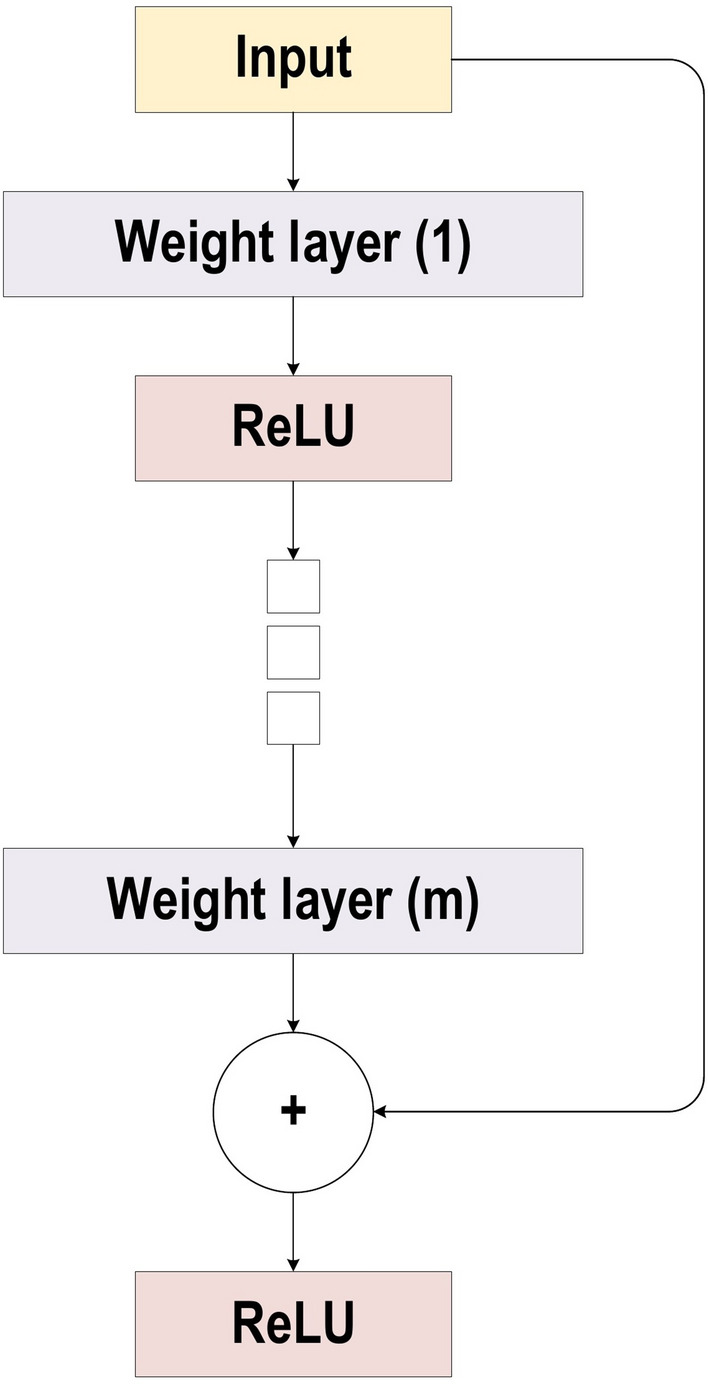
“In 2015, Srivastava et al. [105] suggested a novel CNN architecture, called Highway Network, to overcome this issue.”
§ Review of deep learning: concepts, CNN architectures, challenges, applications, future directions > CNN architectures > Highway network
What the sources say
- Supportedcites [105] Srivastava RK, Greff K, Schmidhuber J. Highway networks; 2015. arXiv preprint arXiv:1505.00387. source
The Introduction (p. 1) presents highway networks as a novel architecture intended to make very deep networks easier to optimize. Section 2.1 (p. 2) describes convolutional highway layers, supporting the CNN characterization, although the architecture is not limited to CNNs. (LLM, conf=0.93)
plainstates a cause- Asserted: passes — The authors put it forward as true.
- Checkable: passes — It can be checked against evidence.
- Load-bearing: unclear — It is unclear whether the paper’s conclusions depend on it.
- Based: passes — The paper gives a reason why it holds.
- Rests on 2 assumptions not shown here.
- Supported
93 more claims · 31 with their cited sources checked
Create a free account to see all 374 claims and to verify the 24 references still open.
- Probably not a substantial claim. 224
- It may state two separate claims as one. 109
- The quote only partly states this claim. 2
Claims other papers make about this one
Each is checked against this paper’s own text: does it say what the citing paper says it does?
The source backs part of the claim, not all of it — or backs it for a different population, condition or comparison.
In the citing paper
“Previous methodologies, such as, artificial neural networks (NNs), and the more recent DL techniques, have been preferred in SOC estimation because of their applicability to depict more intricate correlation systems of input parameters and SOC [44].”
From Review Paper for SOC Estimation Techniques: Challenges and Future Areas for Improvement (2024) · cites this paper as [44]
Experimental — accuracy not yet measured
Self-check
Percentages, sums and reported differences re-computed from the paper’s own numbers.
Self-check results appear here once an independent check has confirmed them.
Cited works that were retracted
Works this paper cites that were later retracted, from the retraction notices publishers deposit. Major when the notice came out before this paper was published.
Rated major: it would touch a result — a value a result rests on, reported and recomputed p-values on opposite sides of the significance level, two passages that conflict with no sign which is right, or a cited work retracted before this paper was published.
In the paper
“Min Z. Public welfare organization management system based on FPGA and deep learning. Microprocess Microsyst. 2020;80:103333.”
Cited work 10.1016/j.micpro.2020.103333 · retracted 2021-02-01 · notice 10.1016/j.micpro.2020.103333 · this paper published 2021-03-31
Citations
Cites
1 retracted
RETRACTED: Public welfare organization management system based on FPGA and deep learning
Min, Z. (2020) · Microprocessors and Microsystems · doi:10.1016/j.micpro.2020.103333 · Cited by 16
RetractedDeep Residual Learning for Image Recognition
He, K., Zhang, X., Ren, S., & Sun, J. (2016) · 2016 IEEE Conference on Computer Vision and Pattern Recognition (CVPR) · doi:10.1109/cvpr.2016.90 · Cited by 235,474
Very Deep Convolutional Networks for Large-Scale Image Recognition
Simonyan, K., & Zisserman, A. (2014) · arXiv · doi:10.48550/arxiv.1409.1556 · Cited by 114,148
ImageNet classification with deep convolutional neural networks
Krizhevsky, A., Sutskever, I., & Hinton, G. E. (2017) · Communications of the ACM · doi:10.1145/3065386 · Cited by 112,155
U-Net: Convolutional Networks for Biomedical Image Segmentation
Ronneberger, O., Fischer, P., & Brox, T. (2015) · Lecture notes in computer science · doi:10.1007/978-3-319-24574-4_28 · Cited by 99,404
LeCun, Y., Bengio, Y., & Hinton, G. (2015) · Nature · doi:10.1038/nature14539 · Cited by 84,126
ImageNet: A large-scale hierarchical image database
Deng, J., Dong, W., Socher, R., Li, L.-J., Li, K., & Fei-Fei, L. (2009) · 2009 IEEE Conference on Computer Vision and Pattern Recognition · doi:10.1109/cvpr.2009.5206848 · Cited by 65,333
Densely Connected Convolutional Networks
Huang, G., Liu, Z., Van Der Maaten, L., & Weinberger, K. Q. (2017) · 2017 IEEE Conference on Computer Vision and Pattern Recognition (CVPR) · doi:10.1109/cvpr.2017.243 · Cited by 48,566
Going deeper with convolutions
Szegedy, C., Liu, W., Jia, Y., Sermanet, P., Reed, S., Anguelov, D., Erhan, D., Vanhoucke, V., & Rabinovich, A. (2015) · 2015 IEEE Conference on Computer Vision and Pattern Recognition (CVPR) · doi:10.1109/cvpr.2015.7298594 · Cited by 48,562
Squeeze-and-Excitation Networks
Hu, J., Shen, L., & Sun, G. (2018) · 2018 IEEE/CVF Conference on Computer Vision and Pattern Recognition · doi:10.1109/cvpr.2018.00745 · Cited by 35,667
Research works printed but not linked: 4
- Erhan D Bengio Y Courville A Vincent P Visualizing higher-layer features of a deep network Univ Montreal 2009 1341 3 1
- Ribeiro AH, Tiels K, Aguirre LA, Schön T. Beyond exploding and vanishing gradients: analysing RNN training using attractors and smoothness. In: International conference on artificial intelligence and statistics, PMLR; 2020. p. 2370–80.
- Zhao H, Han Z, Yang Z, Zhang Q, Yang F, Zhou L, Yang M, Lau FC, Wang Y, Xiong Y, et al. Hived: sharing a {GPU} cluster for deep learning with guarantees. In: 14th {USENIX} symposium on operating systems design and implementation ({OSDI} 20); 2020. p. 515–32.
- Rakotomamonyj A. Optimizing area under roc with SVMS. In: Proceedings of the European conference on artificial intelligence workshop on ROC curve and artificial intelligence (ROCAI 2004), 2004. p. 71–80.
Cited by
Items 6,601–6,700 of 7,963
A Convolutional Transformer Network for Anomaly Detection in Wireless Body Area Networks
Bagadia, G., Bose, S., & Hota, C. (2025) · IEEE Journal of Selected Areas in Sensors · doi:10.1109/jsas.2025.3572860 · Cited by 1
cortecs: A Python package for compressing opacities
Savel, A. B., Bedell, M., & Kempton, E. M.-R. (2024) · The Journal of Open Source Software · doi:10.21105/joss.06104
Wei, Y., Hu, H.-W., Li, R., Li, X., & Wang, F. (2026) · Remote Sensing · doi:10.3390/rs18172859
Badar, M., & Mangoud, M. A.-A. (2024) · SSRN Electronic Journal · doi:10.2139/ssrn.5046655
A Deep Learning Pipeline for Lipid Droplets Analysis in Glioblastoma Spheroids
Alani, M., Beurton‐Aimar, M., Brisson, L., et al. (2026) · Lecture notes in computer science · doi:10.1007/978-3-032-39518-4_41
Distributional refinement network: Distributional forecasting via deep learning
Avanzi, B., Dong, E. T., Laub, P. J., & Wong, B. (2026) · Insurance Mathematics and Economics · doi:10.1016/j.insmatheco.2026.103246 · Cited by 4
A Novel Transfer Learning Based Kidney Stone Detection Using ResNet50
(2024) · International Research Journal of Modernization in Engineering Technology and Science · doi:10.56726/irjmets50452 · Cited by 1
Comparative Study of Deep Learning Models for Document Classification
Sreekumar, A., Reshma, R., & Athira, B. (2023) · International Conference on Smart Computing and Communications (ICSCC) · doi:10.1109/icscc59169.2023.10335027 · Cited by 1
Real-Time Driver Alertness Assessment Using Neural Networks
Yoga, M., Ramyasri, M. M., Lokitha, R., et al. (2025) · doi:10.1109/icmsci62561.2025.10894416
Pal, P., Kataria, B., & Jangid, J. (2026) · Lecture notes in networks and systems · doi:10.1007/978-3-032-30954-9_22 · Cited by 7
Pradeep Kumar, C., Poorniam, S., Lingaraj, S., Mahendran, S., & Gokul, R. (2024) · International Journal of Civil Environmental and Agricultural Engineering · doi:10.34256/ijcci2424
Wang, S., Han, J., Huang, J., et al. (2022) · bioRxiv (Cold Spring Harbor Laboratory) · doi:10.1101/2022.12.19.519644
Machine Learning Model for Classification of Shoulder Implant Manufacturer Using X-Ray Images
Djibo, I., Yakubu, I. Z., Raiyan, M., et al. (2024) · IEEE International Conference on Adaptive Science and Technology (ICAST) · doi:10.1109/icast61769.2024.10856466
Huang, Y., 韩庆邦, Wang, J., Ge, K., Su, N., & Xia, J. (2026) · Sensors · doi:10.3390/s26185848
Altulyan, M. S. (2026) · International Journal on Smart Sensing and Intelligent Systems · doi:10.2478/ijssis-2026-0066
Mobile app for ASD detection in children from static facial features using hybrid Pakistani corpus
Tariq, S., Razi, S. K. A., Shahzadi, F., Shahzadi, Z., Azeem, M., Bibi, A., & ul-Abideen, Z. (2025) · Technology and Disability · doi:10.1177/10554181251395443
A contrastive learning framework with adaptive feature fusion for brain tumor classification
Peng, Y., He, S., & Chang, L. (2026) · Scientific Reports · doi:10.1038/s41598-026-44887-6 · Cited by 2
Sensor fusion with deep neural networks for 3D object detection for autonomous vehicles
Minh, N. A. (2023) · theses.fr (ABES) · doi:10.70675/7e54c100zeaddz4f34zbffczf99c15dae587
Zhu, P., Wang, J., Han, H., Wang, P., & Bao, W. (2026) · Measurement · doi:10.1016/j.measurement.2026.121723
Chen, T., & Wang, Z. (2026) · SSRN Electronic Journal · doi:10.2139/ssrn.6840234
Yang, M., & Phung, B. T. (2025) · IEEE Open Journal of the Industrial Electronics Society · doi:10.1109/ojies.2025.3607636
Perdikaris, P.-T., Makrygiannakis, M. A., Ntokos, A., & Kaklamanos, E. G. (2026) · European Journal of Orthodontics · doi:10.1093/ejo/cjag068 · Cited by 2
“Deep learning, a key AI approach, uses multilayer neural networks to automatically extract relevant features from raw image data with minimal human intervention [51, 52].”
Artificial Intelligence in Imaging of Pelvic Adnexal Masses: A Narrative Review
Baishya, N. K., & Baishya, K. (2025) · Indian Journal of Gynecologic Oncology · doi:10.1007/s40944-025-01014-z
Beghriche, T., Djerioui, M., Brik, Y., Attallah, B., & Shayea, I. A. M. (2026) · Journal of Imaging Informatics in Medicine · doi:10.1007/s10278-026-01939-7
P, A. R. K., & Gowrishankar, S. (2026) · Neural Computing and Applications · doi:10.1007/s00521-026-12507-z
“Overall, this over - view guides researchers toward more robust and efficient CNN development [20].”
Transfer Learning-Based Speed Limit Traffic Sign Recognition with Multilingual Audio Alerts
Aman, T., Khan, A., & Nadeem, M. (2024) · Lecture notes in networks and systems · doi:10.1007/978-981-97-2082-8_14
AI-Driven Cyber Threat Detection Systems: A Survey on Techniques and Applications
Bala, A., Sharma, A. P., Yamsani, N., & Krishna, G. (2026) · International Conference on Advancing Sustainable Solutions through Technologies (ICASST) · doi:10.1109/icasst68917.2026.11484337 · Cited by 1
“1.2Supervised Learning Models Supervised learning models, such as SVMs and DTs, use labelled data to recognise the signatures of known attacks and to produce pattern-based predictors for classification[11].”
Transfer learning with inception V4 for behavioral anomaly detection in CCTV surveillance
Merit, K., & Beladgham, M. (2024) · STUDIES IN ENGINEERING AND EXACT SCIENCES · doi:10.54021/seesv5n3-061
Bhosale, O., Dande, A., Abhyankar, S., & Joshi, S. (2023) · Indian Journal of Computer Science and Engineering · doi:10.21817/indjcse/2023/v14i4/231404048
AI-Driven Real-Time Adaptive Beam Steering for 5G Fixed Wireless Access Antenna Systems
Bendref, M. D., Challal, M., & Mekircha, A. (2026) · Lecture notes in networks and systems · doi:10.1007/978-3-032-32045-2_15
Creation of a SaaS-System for Image Analysis in Agriculture Using Artificial Intelligence Methods
Rogachev, A. F., Belousov, I. S., & Melikhova, E. V. (2023) · Advances in Science, Technology & Innovation/Advances in science, technology & innovation · doi:10.1007/978-3-031-34256-1_77
Chang, M. C., Kang, S. I., & Kim, S. (2025) · Life · doi:10.3390/life15091358
Forkuo, G. O. (2026) · Research Square · doi:10.21203/rs.3.rs-8908445/v1
Ajah, O., Afolayan, A. H., & Akinwonmi, A. E. (2025) · International Journal of Applied Information Systems · doi:10.5120/ijais2025451987
Pretrained CNN Architectures: A Detailed Analysis Using Bell Pepper Image DatasetsPreprint
Mathew, M. P., Elayidom, M. S., Jagathyraj, V. P., & Mahesh, T. Y. (2023) · Research Square · doi:10.21203/rs.3.rs-3146418/v1 · Cited by 2
Shukla, V., Kumar, N. S., Sinha, U., & Padmini, T. N. (2025) · Lecture notes in networks and systems · doi:10.1007/978-981-96-7131-1_20
Abdulhamid, K. A., Manurung, P., & Yunus, S. (2025) · SSRN Electronic Journal · doi:10.2139/ssrn.5234038
A Systematic Review on Learning Based Models for Automatic Classification of Medical Documents
Gothane, S., Sivaneasan, B., Shaik, A., & Chakrabarti, P. (2024) · Studies in systems, decision and control · doi:10.1007/978-3-031-75771-6_1
Multiple Retinal Diseases Prediction for Enhancing the Identification of Diabetic Retinopathy
Haripriya, S., Banumathy, D., A.Jeyamurugan, & Raja, G. M. (2024) · International Journal of Scientific Research in Science and Technology · doi:10.32628/ijsrst24113115
Deformable Convolution Enhanced Cross-Attention Network for Remote Sensing Semantic Segmentation
Chen, C., Du, R., Tang, X., & Ma, J. (2025) · IEEE International Geoscience and Remote Sensing Symposium (IGARSS) · doi:10.1109/igarss55030.2025.11242678 · Cited by 1
Wild Fire Classification using Learning Robust Visual FeaturesPreprint
Fan, X., Zhu, T., Zi, X., et al. (2024) · Research Square · doi:10.21203/rs.3.rs-4268769/v1
Yan, S., Zhang, W., Peng, S., Mao, J., Chen, T., & Yao, Y. (2025) · IEEE Transactions on Consumer Electronics · doi:10.1109/tce.2025.3594094
Liu, X., He, W. P., Xia, Y., Wang, J., & Zhang, H. (2026) · SSRN Electronic Journal · doi:10.2139/ssrn.6175590
MAHF-LIO: Motion-Aware Hierarchical Fusion for Robust LiDAR-Inertial Odometry
Yang, X., Yan, L., Xie, H., Xiaohu, L. I. N., Zhu, L., Ma, A., & Zhang, M. (2026) · IEEE Internet of Things Journal · doi:10.1109/jiot.2026.3701891
“Representative approaches use convolutional neural networks (CNNs) [21] to extract LiDAR features and recurrent neural networks (RNNs) [22] or long short-term memory (LSTM) networks [23] to encode IMU sequences, followed by direct concatenation of the two modalities for pose regression.”
Li, D., Pan, Y., & Shen, H. (2023) · IEEE International Conference on Artificial Intelligence and Computer Applications (ICAICA) · doi:10.1109/icaica58456.2023.10405524
Wei, S., Sun, C., Liu, Y., Kong, H., Wang, Y., Tang, F., Duan, Z., & Li, Z. (2026) · IEEE Robotics and Automation Letters · doi:10.1109/lra.2026.3728324
Natij, Y., Karch, H. E., Belaaribi, A., Lanaya, O., Atik, M. E., Maafiri, A., & Mezouari, A. (2026) · Frontiers in Plant Science · doi:10.3389/fpls.2026.1766704
Wang, L., Sun, H., Huo, S., Yang, X., Li, Y., Malinowski, P., Fang, D. E. N. G., & Fu, H. (2026) · Mechanical Systems and Signal Processing · doi:10.1016/j.ymssp.2026.114627
Agrawal, S., & Agrawal, P. (2023) · International Conference on Secure Cyber Computing and Communication (ICSCCC) · doi:10.1109/icsccc58608.2023.10176853
Ultrasound-Based Breast Cancer Detection Using a Segmentation-Guided Deep Learning Framework
Moturi, S., Valicharla, K. K., Badina, C. P., Bandi, S., Kolisetty, S. V., N, A. D. R., & Aparna, M. (2025) · IEEE International Conference on Innovate for Humanitarian: Tech Solutions for Global Challenge (ICIH) · doi:10.1109/icih67754.2025.11608467
Myoelectric Signal Classification Using Convolutional Neural Networks with Pre-Extracted Features
Cirac, G., Pimenta, T. C., Moreno, R. L., & Leite, J. P. (2022) · International Conference on Information and Communication Systems (ICICS) · doi:10.1109/icics55353.2022.9811218
Agarwal, A., Verma, V., & Arora, M. (2025) · International Conference for Advancement in Technology (ICONAT) · doi:10.1109/iconat66879.2025.11362824
A Robust Intelligent Approach for Phishing URL Detection Using Hybrid Machine Learning
Abdalrazaq, H. A. (2025) · CyberSystem journal. · doi:10.57238/csj.2025.1017 · Cited by 1
Photovoltaic System Fault Diagnosis Using Feature Engineering and Bayesian-Optimized CNN
Ali, Y. S., & Ding, L. (2025) · Asia Conference on Energy and Electrical Engineering (ACEEE) · doi:10.1109/aceee66257.2025.11149038
Toward efficient and resilient power systems: A mathematical and AI-driven optimization framework
Al-Zyoud, K. Y., Al-Taweel, F. M., Alkasassbeh, J. S., Altarawneh, E., Al-Qaisi, A., Al-Thani, M. J., & Takruri, M. (2026) · e-Prime – Nexus of Electrical Electronic and Intelligent Engineering · doi:10.1016/j.eprime.2026.201237
Applying Toroidal k-ary Grids for Optimizing Edge Data Centers
Roig, P. J., Alcaraz, S., Gilly, K., Bernad, C., & Juiz, C. (2023) · Journal of Polytechnic · doi:10.2339/politeknik.1327964
Digital transformation in geotechnical site characterization: trends, methods, and future roadmaps
Hu, Y., Li, Y., Li, H., Wang, J., Han, S., Hong, Z., Yuan, J., & Zhang, M. (2026) · Cogent Engineering · doi:10.1080/23311916.2026.2677996 · Cited by 1
A quick appraisal of Machine learning techniques in different aspects of rice cultivationPreprint
Singh, A. K., & Singh, N. K. (2026) · Research Square · doi:10.21203/rs.3.rs-9948244/v1
Cao, Y., Wang, D. Y., Li, Y., Liu, X., Zhang, Z., Huang, L., Yang, Q., & Liu, B. (2026) · Journal of Lightwave Technology · doi:10.1109/jlt.2026.3710328 · Cited by 1
“Within this paradigm, the conventional N2C framework trains a network f θ to recover the clean signal x from a noisy observation y by minimizing the mean squared error (MSE) with respect to the ground-truth labels [31]: Here y = x + n , n is the system noise.”
Mycelium neural architecture search
Islam, T. (2025) · Evolutionary Intelligence · doi:10.1007/s12065-025-01077-z
Liu, P., Fang, L., Wang, Y., Zhang, L., & Yang, Q. (2026) · Applied Mathematical Modelling · doi:10.1016/j.apm.2026.116931
Yashi, Kumar, N., Kumar, R., & Singh, R. P. (2026) · Functional & Integrative Genomics · doi:10.1007/s10142-026-01932-x · Cited by 1
“The capacity of these neural networks to automatically detect hierarchical levels of features makes them well-suited for tasks like plant phenotyping, stress response detection, and predicting agronomic traits (Alzubaidi et al. 2021; Kumar and Srivastava 2024).”
Identifying Opinion Based Questions in Developer Chat Communication
Subash, K. M. (2022) · Carleton University's Institutional Repository (MacOdrum Library, Carleton University) · doi:10.22215/etd/2022-15204
Waseem, S. S., Shaikh, S., & Hassan, S. R. (2026) · Sensors · doi:10.3390/s26092695
“Deep learning has transformed medical image segmentation, with surveys highlighting CNNs, encoder–decoder topologies, and challenges like domain shift and limited labels [6,8].”
InfluentialChandramohan, A., & Raghukiran, N. (2025) · Machine Learning with Applications · doi:10.1016/j.mlwa.2025.100833
Survey of Deep Learning Models for Image-Based Disease Detection in Plants
Mathur, A., & Shrivastava, S. K. (2024) · Lecture notes in networks and systems · doi:10.1007/978-981-97-2089-7_28
李灿琴, Chen, S., Yin, H., et al. (2026) · Journal of Food Measurement & Characterization · doi:10.1007/s11694-026-04645-8
“…input features directly to deeper layers through identity shortcut connections, enabling the network to learn residual mappings instead of complete mappings and thereby alleviating the degradation and vanishing-gra-dient problems commonly encountered during deep network training [ 38 , 39].”
Sarita, & Dass, R. (2025) · Biomedical Physics & Engineering Express · doi:10.1088/2057-1976/adf8ef · Cited by 2
Khan, S. U. (2026) · KIET Journal of Computing and Information Sciences · doi:10.51153/kjcis.v82.266
Sapna, S., & Mohan, B. R. (2025) · Computational Economics · doi:10.1007/s10614-025-10972-7 · Cited by 1
Challenges and Methodological Insights in Real-Time Multimodal Biosignal Processing
Patakvölgyi, V., Siket, M., & Eigner, G. (2025) · IEEE International Symposium on Computational Intelligence and Informatics (CINTI) · doi:10.1109/cinti67731.2025.11311751
Li, W., xu, H., Cheng, W., & sheng, C. (2025) · SSRN Electronic Journal · doi:10.2139/ssrn.5598033
Shafiee-Nattaj, M., Ghazipoor, K., & Hosseini‐Sarvari, M. (2026) · Biomass and Bioenergy · doi:10.1016/j.biombioe.2026.109802
Deep Learning Potential for Characterization in Ultrasonic Crack in Concrete Structure: A Review
Sharma, A., & Beniwal, S. (2025) · Lecture notes in civil engineering · doi:10.1007/978-981-97-9885-8_16
Yaligar, N. A., Baligar, V. P., & Akki, M. (2025) · Procedia Computer Science · doi:10.1016/j.procs.2025.03.179
Time-plane projection network for efficient time-series image analysis
Park, J., & Shin, S. Y. (2026) · Knowledge-Based Systems · doi:10.1016/j.knosys.2026.116088
Peluso, G., Conversano, F., Bellone, M., Lombardi, F. A., Pisani, P., Epicoco, I., Cafaro, M., & Casciaro, S. (2026) · Computer Methods and Programs in Biomedicine · doi:10.1016/j.cmpb.2026.109655
Harmful Brain Activity Classification Based on Explainable EEG
Kotangale, A., Lohot, P. M., Chothani, A., et al. (2025) · Lecture notes in networks and systems · doi:10.1007/978-3-032-03558-5_12
Agricultural Mobile Robots for Plant Health Assessment and Drought Stress Detection
Behjati, M., Shamshiri, R. R., & Hameed, I. A. (2024) · Agricultural sciences. · doi:10.5772/intechopen.115219
Zhao, J., Vaios, E., Calabrese, E., et al. (2025) · International Journal of Radiation Oncology*Biology*Physics · doi:10.1016/j.ijrobp.2025.11.038
Underwater Interdiction Net's Fine-Grained Defect Identification Algorithm
Wang, C., Hou, J., Xu, S., et al. (2024) · International Conference on Computational Modeling, Simulation and Data Analysis (CMSDA) · doi:10.1145/3727993.3728003
Deep learning in stroke therapeutics: drug repurposing and beyond
Mak, K., & Chelluboina, B. (2026) · Expert Opinion on Drug Discovery · doi:10.1080/17460441.2026.2619641
“DL frameworks mimic neural organization in the brain, and therefore are able to perform tasks such as recognizing intricate data patterns and associations [18].”
Ng, C. Y., & Lee, W. H. H. (2024) · Journal of Advanced Manufacturing Systems · doi:10.1142/s021968672550012x
Industrial Revolution 4.0 With a Focus on Food-Energy-Water Sectors
Ghosh, A., Kamesh, R., Moulik, S., & Roy, A. (2023) · IGI Global eBooks · doi:10.4018/978-1-7998-9220-5.ch131
Research on detection and counting method of wheat ears in the field based on YOLOv11-EDS
Li, J., Wang, Z., Luo, X., Feng, B., Gong, K., Zhang, X., & Jiye, Z. (2025) · Frontiers in Plant Science · doi:10.3389/fpls.2025.1672425 · Cited by 5
A Path Planning Method for A-Uav Based on the CGRUA Model
Qi, J., Xia, X., Guo, J., et al. (2025) · doi:10.1109/icca65672.2025.11129840
MSER: an emotion recognition method based on multi-signal information fusion
Huang, L., Zhang, Y., Qiu, S., & Li, X. (2026) · Health Information Science and Systems · doi:10.1007/s13755-026-00439-w
Deep Learning Based Methods for Breast Cancer Diagnosis
Souli, S., Soltani, A., Amami, R., & Yahia, S. B. (2026) · Lecture notes of the Institute for Computer Sciences, Social Informatics and Telecommunications Engineering · doi:10.1007/978-3-032-16635-7_4
A pilot study of novel multi-filter CNN layer
Aboukhair, M., Koura, A., & Kayed, M. (2024) · Network Computation in Neural Systems · doi:10.1080/0954898x.2024.2434487
Mendes, R. A. R., Damasceno, K. A. D. C., Neto, M. D. S. G., & Sousa, L. (2026) · Revista Eletrônica de Iniciação Científica em Computação · doi:10.5753/reic.2026.7814
Basics of Artificial Intelligence
Saha, G. B. (2025) · Springer eBooks · doi:10.1007/978-1-0716-4816-2_14
Evaluating RUL Predictive Models: A Risk-Based Predictive Maintenance Approach
El‐Thalji, I., Usman, A., & Ali, W. (2026) · AI · doi:10.3390/ai7050169
Accurate Real-World Co-ordinate Finding and the Object Classification for the Robot Manipulator
Sharan, S., Thanh, H. D., Nauth, P. M., et al. (2024) · doi:10.1109/esai62891.2024.10913834
Kriging-Weighted Laplacian KernelsPreprint
Pham, T. (2021) · doi:10.36227/techrxiv.16870858.v1
Pragya, S., Srivastava, V., & Prusty, D. (2024) · Elsevier eBooks · doi:10.1016/b978-0-443-22326-6.00008-0
Six-Dimensional Phase Space Reconstruction with Multimodal CNN
Mukherjee, S., Kuriki, M., Liptak, Z., et al. (2025) · Journal of Physics Conference Series · doi:10.1088/1742-6596/3094/1/012013
Aideyan, B. (2023) · Digital Repository Service (Northeastern University) · doi:10.17760/d20652988
Metadata
- Authors
- Alzubaidi, L., Zhang, J., Humaidi, A. J., Al-Dujaili, A., Duan, Y., Al-Shamma, O., Santamaría, J., Fadhel, M. A., Al-Amidie, M., & Farhan, L.
- Affiliations
- Queensland University of Technology (AU)
- University of Technology - Iraq (IQ)
- Middle Technical University (IQ)
- University of Missouri (US)
- University of Information Technology and Communications (IQ)
- Universidad de Jaén (ES)
- University of Sumer (IQ)
- Manchester Metropolitan University (GB)
- Corresponding author
- Alzubaidi, Laith
- ORCID
- Venue
- Journal of Big Data
- Published
- 2021-03-31
- Volume
- 8
- Issue
- 1
- Pages
- 53-53
- ISSN
- 2196-1115 (ISSN-L)
- PMC
- PMC8010506
- OpenAlex
- W3140854437
- Semantic Scholar
- 0084f3cb0a1754272151c5268a783f24bf5676a0
- Cited by
- 7,906
- References
- 372
- Citations by year
- 2026: 1140 · 2025: 2146 · 2024: 2166 · 2023: 1583 · 2022: 719 · 2021: 152
- FWCI
- 414.94
- Type
- journal article
- Language
- en
- Open access
- gold
- doi.org
- Licence
- cc-by
- creativecommons.org/licenses/by/4.0 (tdm)
- creativecommons.org/licenses/by/4.0 (vor)
- Locations
- Journal Of Big Data (publishedVersion, cc-by)
- PubMed Central (publishedVersion, cc-by)
- PubMed (publishedVersion)
- RUJA. Institutional Repository of Scientific Production of the University of Jaén (University of Jaén) (publishedVersion, cc-by-nc-nd)
- QUT ePrints (Queensland University of Technology) (submittedVersion, cc-by)
- DOAJ (DOAJ: Directory of Open Access Journals) (submittedVersion, cc-by-sa)
- Funders
- Queensland University of Technology
- Topics
- Physical Sciences › Computer Science › Computer Vision and Pattern Recognition › Advanced Neural Network Applications
- Physical Sciences › Computer Science › Artificial Intelligence › Neural Networks and Applications
- Physical Sciences › Computer Science › Artificial Intelligence › Domain Adaptation and Few-Shot Learning
- Keywords
- deep learning, convolutional neural networks, convolutional neural network architecture, AlexNet, HRNet, deep learning applications, FPGA, graphics processing units, CPU, benchmark dataset
About these checks
Registry, retraction, Cites and statistics results are computed, not judged, with one exception: a printed reference that no index lists is read once by a model before it counts as a citation error. Claims are extracted by a model and kept only when their quote appears verbatim in the text; each cited source is then checked, with a model’s help, for whether it says what the claim relies on. Those verdicts can be wrong — read the claim’s quote and the cited source before relying on one.
The claim verdicts this report counts are experimental: their accuracy is not yet measured.
A language model drew the claims from the paper on 2026-09-28, under version 3 of the claim definition (model deepseek-v4.1-flash, prompt extract-v3).
A second model labelled each claim on 2026-09-28 (model jev-1.13-20260917, definition revision gold-guideline-v0.2).
Cited sources are checked with a language model’s help (gpt-6-sol and qwen3.8-omni-flash).
Statistics and arithmetic are recomputed, not judged.
Confidence bands are shown only for fields calibrated on our annotated test set. None is calibrated yet, so no band is shown.
What counts as a claim ›How we measure confidence ›How we check this ›
Are you an author, or do you see a problem with this page? Request a review
Data sources
Bibliographic data: Semantic Scholar, OpenAlex, Crossref.
Contains information from the Semantic Scholar Academic Graph Datasets, made available under the ODC Attribution License (ODC-BY 1.0).
Semantic Scholar’s data is described in: Kinney, R., et al. (2023). The Semantic Scholar Open Data Platform. arXiv:2301.10140.
