

Increased glucocorticoid receptor expression in sepsis is related to heat shock proteins, cytokines, and cortisol and is associated with increased mortality
Open accessThe DOI matches its Crossref record; 41 of the 41 references it cites were found in a registry or an index.
Abstract
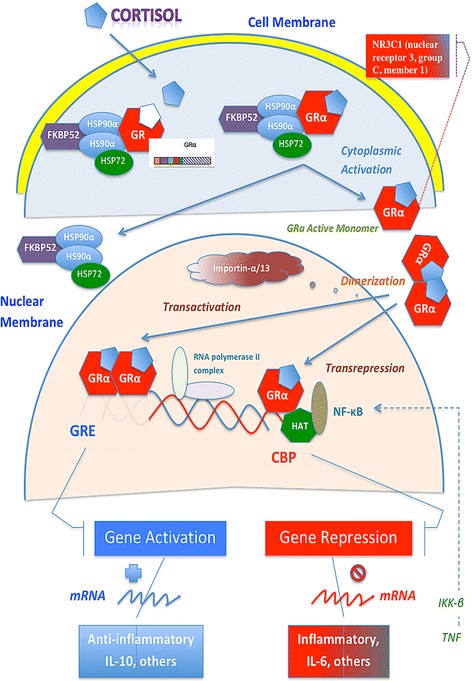
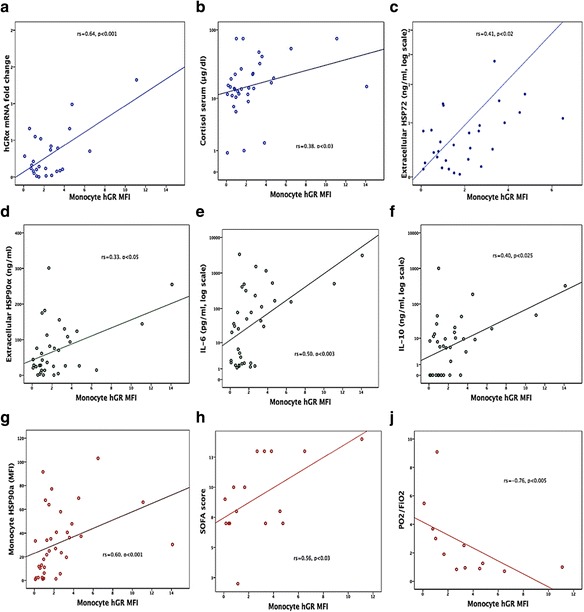
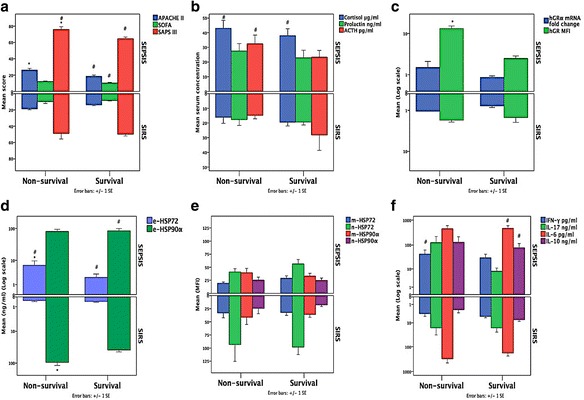
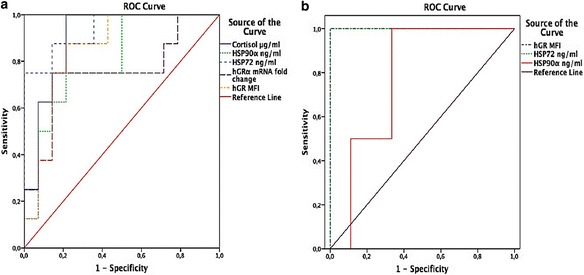
BACKGROUND: The purposes of this study are to examine if the human glucocorticoid receptor (hGR) isoform-α mRNA and hGR protein expressions are deficient in the acute phase of sepsis (S) compared to systemic inflammatory response syndrome (SIRS) and healthy subjects (H) and to evaluate if the hGRα and hGR alterations are associated with cortisol changes and if they are related to (1) extracellular and intracellular heat shock proteins (HSP) 72 and 90α; (2) ACTH, prolactin, and interleukins (ILs); and (3) outcome. METHODS: Patients consecutively admitted to a university hospital intensive care unit (ICU) with S (n = 48) or SIRS (n = 40) were enrolled in the study. Thirty-five H were also included. Total mRNA was isolated from peripheral blood samples and cDNA was prepared. RT-PCR was performed. Intracellular hGR and HSP expression in monocytes and/or neutrophils was evaluated using four-colour flow cytometry. Serum prolactin, ACTH, and cortisol concentrations were also measured. ELISA was used to evaluate serum ILs and extracellular (e) HSPs (eHSP72, eHSP90α). RESULTS: = 0.64, p < 0.001). Monocyte hGR protein expression was positively correlated with extracellular and intracellular HSPs, cortisol, and ILs and negatively to organ dysfunction (p < 0.05). HSPs, hGR, and cortisol were able to discriminate sepsis from SIRS (AUROC > 0.85, p < 0.05). In sepsis, monocyte-hGR protein and eHSP72 were strong predictors of mortality (AUROC > 0.95, p < 0.04). CONCLUSIONS: Acute-phase sepsis is associated with increased hGR expression and cortisol concentrations, possibly implying no need for exogenous steroids. At this stage, hGR is able to predict sepsis and outcome and is related to stress-activated bio-molecules and organ dysfunction.
Overview
The claims and statistics of this paper haven’t been checked yet.
Free: it reads the open-access text and checks the first 5 claims that cite a source we can check. Create a free account to check every claim.
Integrity signals
Registry
Cites
Statistics
Figures
Verification
Claims the paper makes
The claims and statistics of this paper haven’t been checked yet.
Free: it reads the open-access text and checks the first 5 claims that cite a source we can check. Create a free account to check every claim.
Claims other papers make about this one
Each is checked against this paper’s own text: does it say what the citing paper says it does?
The source backs part of the claim, not all of it — or backs it for a different population, condition or comparison.
In the citing paper
“Clinical studies in patients with septic shock [79,80] and ARDS [7] have provided evidence of an association between the degree of intracellular glucocorticoid resistance, disease severity, and mortality.”
From Critical illness-related corticosteroid insufficiency (CIRCI): a narrative review from a multispecialty task force of the society of critical care medicine (SCCM) and the European society of intensive care medicine (ESICM) (2017) · cites this paper as [79]
Experimental — accuracy not yet measured
Self-check
Percentages, sums and reported differences re-computed from the paper’s own numbers.
The self-check needs the paper’s full text.
Citations
Cites
The third international consensus definitions for sepsis and septic shock (Sepsis-3).
Singer, M., Deutschman, C. S., Seymour, C. W., Shankar-Hari, M., Annane, D., Bauer, M., Bellomo, R., Bernard, G. R., Chiche, J.-D., Coopersmith, C. M., et al. (2016) · JAMA · doi:10.1001/jama.2016.0287 · Cited by 28,250
APACHE II: A severity of disease classification system
KNAUS, W. A., DRAPER, E. A., WAGNER, D. P., & ZIMMERMAN, J. E. (1985) · Critical Care Medicine · doi:10.1097/00003246-198510000-00009 · Cited by 13,664
APACHE II-A Severity of Disease Classification System: Reply
Knaus, W. A., Draper, E. A., Wagner, D. P., & Zimmerman, J. E. (1986) · Critical Care Medicine · doi:10.1097/00003246-198608000-00028 · Cited by 13,376 · cited 1×
“Acute Physiology and Chronic Evaluation-II (APACHE II) [14], multiple organ dysfunction (MODS) [15], Simplified Acute Physiology Score-III (SAPS III) [16], and SOFA scores were recorded on admission.”
MethodVincent, J. L., Moreno, R., Takala, J., Willatts, S., De Mendonça, A., Bruining, H., Reinhart, C. K., Suter, P. M., & Thijs, L. G. (1996) · Intensive Care Medicine · doi:10.1007/bf01709751 · Cited by 11,674 · cited 9×
“Vincent JL, Moreno R, Takala J et al (1996) The SOFA (Sepsis-related Organ Failure Assessment) score to describe organ dysfunction/failure.”
MethodInfluentialAPACHE II: a severity of disease classification system.
Knaus, W. A., Draper, E. S., Wagner, D. P., & Zimmerman, J. E. (1985) · PubMed · Cited by 6,034
Insights into the regulation of protein abundance from proteomic and transcriptomic analyses
Vogel, C., & Marcotte, E. M. (2012) · Nature Reviews Genetics · doi:10.1038/nrg3185 · Cited by 4,195 · cited 1×
“hGRα mRNA is produced much more slowly compared to corresponding hGR protein expression, translated at the same time [23].”
BackgroundMultiple Organ Dysfunction Score: A reliable descriptor of a complex clinical outcome
Marshall, J. C., Cook, D. J., Christou, N. V., Bernard, G. R., Sprung, C. L., & Sibbald, W. J. (1995) · Critical Care Medicine · doi:10.1097/00003246-199510000-00007 · Cited by 2,532 · cited 3×
“Acute Physiology and Chronic Evaluation-II (APACHE II) [14], multiple organ dysfunction (MODS) [15], Simplified Acute Physiology Score-III (SAPS III) [16], and SOFA scores were recorded on admission.”
MethodInfluentialShankar-Hari, M., Phillips, G. S., Levy, M. L., Seymour, C. W., Liu, V. X., Deutschman, C. S., Angus, D. C., Rubenfeld, G. D., Singer, M., & for the Sepsis Definitions Task Force (2016) · JAMA · doi:10.1001/jama.2016.0289 · Cited by 2,424 · cited 1×
“Background Sepsis is a life-threatening organ dysfunction caused by a dysregulated host response to infection [1].”
BackgroundSystemic Inflammatory Response Syndrome Criteria in Defining Severe Sepsis
Kaukonen, K.-M., Bailey, M., Pilcher, D., Cooper, D. J., & Bellomo, R. (2015) · New England Journal of Medicine · doi:10.1056/nejmoa1415236 · Cited by 1,166 · cited 1×
“The non-infectious SIRS group included trauma patients (n = 40) who met at least two of the four conventional criteria for SIRS [13] and represented the first control group (ICU control).”
MethodSliwa, K., Hilfiker-Kleiner, D., Petrie, M. C., Mebazaa, A., Pieske, B., Buchmann, E., Regitz-Zagrosek, V., Schaufelberger, M., Tavazzi, L., van Veldhuisen, D. J., et al. (2010) · European Journal of Heart Failure · doi:10.1093/eurjhf/hfq120 · Cited by 1,093 · cited 1×
“Generation of cardiotoxic subfragments of prolactin caused by oxidative stress has been implicated in peripartum cardiomyopathy in women [35].”
Background
Cited by
The C-Reactive Protein/Albumin Ratio as a Predictor of Mortality in Critically Ill Patients
Park, J. E., Chung, K. S., Song, J. H., Kim, S. Y., Kim, E. Y., Jung, J. Y., Kang, Y. A., Park, M. S., Kim, Y. S., Chang, J., et al. (2018) · Journal of Clinical Medicine · doi:10.3390/jcm7100333 · Cited by 230
Annane, D., Pastores, S. M., Arlt, W., Balk, R. A., Beishuizen, A., Briegel, J., Carcillo, J., Christ-Crain, M., Cooper, M. S., Marik, P. E., et al. (2017) · Intensive Care Medicine · doi:10.1007/s00134-017-4914-x · Cited by 220
“Clinical studies in patients with septic shock [79, 80] and ARDS [7] have provided evidence of an association between the degree of intracellular glucocorticoid resistance, disease severity, and mortality.”
BackgroundAdrenal function and dysfunction in critically ill patients
Téblick, A., Peeters, B., Langouche, L., & den Berghe, G. V. (2019) · Nature Reviews Endocrinology · doi:10.1038/s41574-019-0185-7 · Cited by 173
Glucocorticoids in Sepsis: To Be or Not to Be
Vandewalle, J., & Libert, C. (2020) · Frontiers in Immunology · doi:10.3389/fimmu.2020.01318 · Cited by 134
Annane, D., Pastores, S. M., Arlt, W., Balk, R. A., Beishuizen, A., Briegel, J., Carcillo, J., Christ-Crain, M., Cooper, M. S., Marik, P. E., et al. (2017) · Critical Care Medicine · doi:10.1097/ccm.0000000000002724 · Cited by 117
Angurana, S. K., Bansal, A., Singhi, S. C., Aggarwal, R., Jayashree, M., Salaria, M., & Mangat, N. K. (2018) · Critical Care Medicine · doi:10.1097/ccm.0000000000003279 · Cited by 81
Xenobiotic receptors in mediating the effect of sepsis on drug metabolism
Lv, C., & Huang, L. (2019) · Acta Pharmaceutica Sinica B · doi:10.1016/j.apsb.2019.12.003 · Cited by 62
Impact of prenatal cold stress on placental physiology, inflammatory response, and apoptosis in rats
Lian, S., Guo, J., Wang, L., Li, W., Wang, J., Ji, H. L., Kong, F., Xu, B., Li, S., & Yang, H. (2017) · Oncotarget · doi:10.18632/oncotarget.23257 · Cited by 72
“Supplementary Figure 1: Impact of prenatal cold stress on the activation of the HSP70/TLR4/NF-κB signaling pathway in placenta.”
BackgroundNatural and synthetic compounds as dissociated agonists of glucocorticoid receptor
Zhang, T., Liang, Y., & Zhang, J. (2020) · Pharmacological Research · doi:10.1016/j.phrs.2020.104802 · Cited by 53
Sepsis as a Pan-Endocrine Illness—Endocrine Disorders in Septic Patients
Wasyluk, W., Wasyluk, M., & Zwolak, A. (2021) · Journal of Clinical Medicine · doi:10.3390/jcm10102075 · Cited by 51
Angurana, S. K., Bansal, A., Jayashree, M., Aggarwal, R., & Singhi, S. C. (2020) · Journal of Intensive Care Medicine · doi:10.1177/0885066620912989 · Cited by 46
“00 VIS, median (IQR) 30 (10-80) 10 (0-30) 100 (28-135) .”
BackgroundInfluentialLipid oxidation dysregulation: an emerging player in the pathophysiology of sepsis
Muniz‐Santos, R., Costa, G. L. A., de Almeida, M. A. P., Moraes-de-Souza, I., Brito, M. A. D. S. M., Silva, A. R., & Gonçalves-de-Albuquerque, C. F. (2023) · Frontiers in Immunology · doi:10.3389/fimmu.2023.1224335 · Cited by 44
“Proinflammatory cytokines, such as TNF-a, IL-1-b, and IL-6, activate the hypothalamic–pituitary–adrenal (HPA) and sympathetic–adrenal–medullar axes (SAM) (77, 78).”
BackgroundMiliaraki, M., Briassoulis, P., Ilia, S., Michalakakou, K., Karakonstantakis, T., Polonifi, A., Bastaki, K., Briassouli, E., Vardas, K., Pistiki, A. C., et al. (2022) · Antioxidants · doi:10.3390/antiox11020231 · Cited by 42
“It has previously been shown that septic patients with pronounced oxidative damage had increased Hsp72 serum levels, associated with an acute hormonal response by cortisol, prolactin, the human glucocorticoid receptor, and mortality [14,57,58].”
BackgroundSelf-citationLangouche, L., Téblick, A., Gunst, J., & den Berghe, G. V. (2023) · Endocrine Reviews · doi:10.1210/endrev/bnad021 · Cited by 47
Spanaki, A., Tavladaki, T., Dimitriou, H., Kozlov, A. V., Duvigneau, J. C., Meleti, E., Weidinger, A., Papakonstantinou, E., & Briassoulis, G. C. (2018) · Journal of Parenteral and Enteral Nutrition · doi:10.1002/jpen.1050 · Cited by 35
Self-citationTavladaki, T., Spanaki, A., Dimitriou, H., Kondili, E., Choulaki, C., Georgopoulos, D., & Briassoulis, G. C. (2017) · Pediatric Critical Care Medicine · doi:10.1097/pcc.0000000000001300 · Cited by 34
Self-citationDecreased glucocorticoid receptor expression during critical illness
Vassiliou, A. G., Floros, G., Jahaj, E., Stamogiannos, G., Gennimata, S., Vassiliadi, D. A., Tsagarakis, S., Tzanela, M., Ilias, Ι., Orfanos, S. E., et al. (2019) · European Journal of Clinical Investigation · doi:10.1111/eci.13073 · Cited by 29
“A very recent study also showed increased glucocorticoid receptor alpha expression in the acute phase of sepsis.(45) In critical illness, only one study has demonstrated down‐regulation of cortisol binding in ventilated patients.”
BackgroundSelf-citationSurvivin and caspases serum protein levels and survivin variants mRNA expression in sepsis
Miliaraki, M., Briassoulis, P., Ilia, S., Polonifi, A., Mantzourani, M., Briassouli, E., Vardas, K., Nanas, S., Pistiki, A. C., Θεοδωρακοπούλου, Μ., et al. (2021) · Scientific Reports · doi:10.1038/s41598-020-78208-2 · Cited by 32
Self-citationMerz, T., Denoix, N., Wigger, D., Waller, C., Wepler, M., Vettorazzi, S., Tuckermann, J. P., Radermacher, P., & McCook, O. (2020) · Frontiers in Endocrinology · doi:10.3389/fendo.2020.00299 · Cited by 26
“Results for GR expression in peripheral blood cells in sepsis are ambivalent (20, 21).”
BackgroundResultHuman DNA methylation signatures differentiate persistent from resolving MRSA bacteremia
Chang, Y., Rossetti, M. M., Gjertson, D. W., Rubbi, L., Thompson, M. J., Montoya, D. J., Morselli, M., Ruffin, F., Hoffmann, A., Pellegrini, M. A., et al. (2021) · Proceedings of the National Academy of Sciences · doi:10.1073/pnas.2000663118 · Cited by 25
“Previous studies suggest that distinct GR expression levels in septic patients may contribute to treatment responsiveness (46, 47).”
BackgroundZhang, X., Hao, X., Ma, W., Zhu, T., Zhang, Z., Wang, Q., Liu, K., Shao, C., & Wang, H. (2022) · Animals · doi:10.3390/ani12091144 · Cited by 23
“Furthermore, the heat shock protein (HSP) interacts with GCs to regulate proinflammatory and anti-inflammatory cytokine expression [50].”
BackgroundA single dose of eHSP72 attenuates sepsis severity in mice
Sulzbacher, M. M., Sulzbacher, L. M., Passos, F. R., Bilibio, B. L. E., Althaus, W. F., Weizenmann, L., de Oliveira, K., Frizzo, M. N., Ludwig, M. S., & Heck, T. G. (2020) · Scientific Reports · doi:10.1038/s41598-020-66011-y · Cited by 21
Vassiliou, A. G., Stamogiannos, G., Jahaj, E., Botoula, E., Floros, G., Vassiliadi, D. A., Ilias, Ι., Tsagarakis, S., Tzanela, M., Orfanos, S. E., et al. (2019) · Molecular and Cellular Endocrinology · doi:10.1016/j.mce.2019.110656 · Cited by 22
Self-citationMicroglial Activation Modulates Neuroendocrine Secretion During Experimental Sepsis
da Costa, L. H. A., Santos-Júnior, N. N., Catalão, C. H. R., & Rocha, M. J. A. (2021) · Molecular Neurobiology · doi:10.1007/s12035-020-02241-5 · Cited by 18
Serum Prolactin Levels and Mortality in Adults Without Prolactinoma: A Meta-Analysis
Papazoglou, Α. S., Leite, A. R., Moysidis, D. V., Anastasiou, V., Daios, S., Borges‐Canha, M., Γιαννόπουλος, Γ., Neves, J. S., Ziakas, A., & Giannakoulas, G. A. (2024) · The Journal of Clinical Endocrinology & Metabolism · doi:10.1210/clinem/dgae087 · Cited by 16
Glucocorticoid and mineralocorticoid receptor expression in critical illness: A narrative review
Vassiliou, A. G., Athanasiou, N., Vassiliadi, D. A., Jahaj, E., Keskinidou, C., Kotanidou, Α., & Dimopoulou, I. (2021) · World Journal of Critical Care Medicine · doi:10.5492/wjccm.v10.i4.102 · Cited by 21
Long-term heat stress at final gestation: physiological and heat shock responses of Saanen goats
Hooper, H. B., Silva, P. D. S., de Oliveira, S. A., Merighe, G. K. F., Titto, C. G., & Negrão, J. A. (2021) · International Journal of Biometeorology · doi:10.1007/s00484-021-02175-0 · Cited by 22
“In this context, cortisol, glucocorticoid receptor gene,HSP70, andHSP90 are part of the process that can induce or block several pathways related to phosphorylation and translocations into the nucleus (Damjanovic et al. 2012; Vardas et al. 2017).”
BackgroundVassiliadi, D. A., Vassiliou, A. G., Ilias, Ι., Tsagarakis, S., Kotanidou, Α., & Dimopoulou, I. (2021) · International Journal of Molecular Sciences · doi:10.3390/ijms222111473 · Cited by 19
“Increased GCR-α mRNA expression has been shown in the acute phase of sepsis, questioning the need for exogenous steroids at this phase [78].”
BackgroundSelf-citationZhou, L., Fang, L., Tamm, M., Stolz, D., & Roth, M. (2023) · International Journal of Molecular Sciences · doi:10.3390/ijms241411700 · Cited by 20
“Earlier, it was reported that eHSP72 upregulated GR expression during the acute phase of sepsis [29].”
BackgroundGriffiths, S. G., Ezrin, A. M., Jackson, E., Dewey, L., & Doucette, A. A. (2019) · Cell Stress and Chaperones · doi:10.1007/s12192-019-01041-8 · Cited by 15
Fu, W., Chen, M., Ou, L., Li, T., Chang, X., Huang, R., Zhang, J., & Zhang, Z. (2019) · PubMed · Cited by 13
Ilias, Ι., Vassiliou, A. G., Keskinidou, C., Vrettou, C. S., Orfanos, S. E., Kotanidou, Α., & Dimopoulou, I. (2023) · Biomedicines · doi:10.3390/biomedicines11071801 · Cited by 19
“Increased GCR-α mRNA and protein expression were shown in the acute phase of sepsis compared to systemic inflammatory response syndrome (SIRS) and healthy subjects, implying no requirement for exogenous steroid administration at this stage [72].”
BackgroundChen, Y., & Yu, T. (2017) · Acta Physiologica · doi:10.1111/apha.13015 · Cited by 11
“Total GR content in white blood cells is reportedly correlated positively with both blood pro- and anti-inflammatory ILs in patients with severe sepsis (exogenous pyrogen-induced fever).(25) Heat shockinduced febrile reaction primarily involves endogenous pyrogens.”
BackgroundAssociation between circulating levels of heat-shock protein 27 and aggressive periodontitis
Kaiser, F., Donos, N., Henderson, B. E., Alagarswamy, R., Pelekos, G., Boniface, D. R., & Nibali, L. (2018) · Cell Stress and Chaperones · doi:10.1007/s12192-018-0891-4 · Cited by 12
Neuroendocrine Modulation of the Immune Response after Trauma and Sepsis: Does It Influence Outcome?
Kobbe, P., Bläsius, F., Lichte, P., Oberbeck, R., & Hildebrand, F. (2020) · Journal of Clinical Medicine · doi:10.3390/jcm9072287 · Cited by 12
Sepsis is change and flows ever onwards
Ilia, S., & Briassoulis, G. C. (2017) · Expert Review of Anti-infective Therapy · doi:10.1080/14787210.2017.1309975 · Cited by 8
Self-citationHe, D., Li, N., Lu, X., Li, W., Chen, Y., Sun, Z., Zhang, L., Guo, L., Cui, X., Song, G., et al. (2022) · BMC Infectious Diseases · doi:10.1186/s12879-021-07014-6 · Cited by 5
Wang, Q., Hu, J., Chen, C., Ma, T., Yang, J. Y., & Kang, P. (2025) · Journal of Bone and Joint Surgery · doi:10.2106/jbjs.24.00679 · Cited by 4
HDL-Associated Lipoproteins: Potential Prognostic Biomarkers for Gram-Negative Sepsis
Zou, G., Zhu, Q., Ren, B., Guo, Q., Wu, Y., He, J., Wu, Y., & Luo, Z. (2022) · Journal of Inflammation Research · doi:10.2147/jir.s350737 · Cited by 4
“In recent years, extracellular heat shock protein 72 (eHSP72), extracellular heat shock protein 90α (eHSP90α), cortisol, and human glucocorticoid receptor (hGR) were used to identify early-onset sepsis from the system inflammatory reaction syndrome (SIRS) (<24 h).(6) A multicenter prospective study suggested that solu…”
MethodLotsios, N. S., Vrettou, C. S., Poupouzas, G. I., Chalioti, A., Keskinidou, C., Pratikaki, M. E., Giannopoulou, V., Kotanidou, Α., Vassiliadi, D. A., Dimopoulou, I., et al. (2024) · Frontiers in Endocrinology · doi:10.3389/fendo.2024.1414785 · Cited by 6
Endocrine interventions in the intensive care unit
Téblick, A., Langouche, L., & den Berghe, G. V. (2021) · Handbook of clinical neurology · doi:10.1016/b978-0-12-819973-2.00028-9 · Cited by 4
Loi, M. V., Sultana, R., Nguyen, T. M., Tia, S. T., Lee, J. H., & O’Connor, D. (2025) · Critical Care Explorations · doi:10.1097/cce.0000000000001212 · Cited by 3
Sombetzki, C., Palmowski, L., Ziehe, D., Nowak, H., Rahmel, T., Ehrentraut, S., Thon, P., Orlowski, J., Bergmann, L., Adamzik, M., et al. (2025) · Scientific Reports · doi:10.1038/s41598-025-07398-4 · Cited by 4
“However, the literature shows heterogeneous results regarding GR isoforms, particularly in studies involving critically ill children 5,21–23 .”
InfluentialPellegrin, M. C., Penco, A., Amadio, L., Naviglio, S., Leo, L. D., Radillo, O., Biolo, G., Fiotti, N., Mearelli, F., Rabusin, M., et al. (2022) · Children · doi:10.3390/children9050682 · Cited by 4
Kállai, B. M., Csöndes, J., Kiss, G., Bodrogi, L., Rónai, Z., & Mészáros, T. (2021) · Scientific Reports · doi:10.1038/s41598-021-03451-0 · Cited by 3
Mai, C., Zhong, X., Huang, X., Cheng, H., Wang, H., Qi, X., Cui, Y., Xu, Y., Lan, H., Bai, X., et al. (2025) · IEEE Transactions on Medical Imaging · doi:10.1109/tmi.2025.3637090 · Cited by 2
“SIBD is driven by a metabolic crisis involving acute hormonal dysregulation [7], impaired mitochondrial oxidative phosphorylation [8], and disrupted substrate utilization [9].”
Heat Shock Protein 90 in Severe Trauma
Zhao, Y., & Zhou, Y.-G. (2019) · Heat shock proteins · doi:10.1007/978-3-030-23158-3_24 · Cited by 2
Briassoulis, G. C., Briassoulis, P., Miliaraki, M., & Ilia, S. (2020) · Intensive Care Medicine · doi:10.1007/s00134-020-05982-y · Cited by 2
Self-citationHan, X., Li, C., Qin, G., Zhang, B., Wang, X., & Lin, Q. (2019) · Journal of the World Aquaculture Society · doi:10.1111/jwas.12590 · Cited by 1
Briassouli, E., Tzanoudaki, M., Goukos, D., Vardas, K., Briassoulis, P., Ilia, S., Kanariou, M. G., Routsi, C., Nanas, S., Daikos, G. L., et al. (2023) · Nutrients · doi:10.3390/nu15010252 · Cited by 3
Self-citationEfremov, D. O., & Борисович, Б. В. (2021) · Terapevticheskii arkhiv · doi:10.26442/00403660.2021.11.201184 · Cited by 1
“После отсоединения лиганда ГР-α из ядра возвращается в цитоплазму, где снова переходит в комплексную форму и приобретает способность к связыванию с лигандом для запуска следующего цикла [30].”
Heat Shock Protein Responses in Septic Patients
Miliaraki, M., Briassouli, E., Ilia, S., & Briassoulis, G. C. (2018) · Heat shock proteins · doi:10.1007/978-3-319-74715-6_15
Self-citationParticipação da ativação microglial nas alterações endócrinas, neurológicas e imunes durante a sepse
da Costa, L. H. A. (2020) · Digital Library of Theses and Dissertations (Universidade de São Paulo) · doi:10.11606/t.17.2020.tde-20082020-110847 · Cited by 2
He, D., Li, N., Lu, X., Li, W., Chen, Y., Sun, Z., Zhang, L., Guo, L., 崔小岱, Song, G., et al. (2022) · Figshare · doi:10.6084/m9.figshare.17982091
He, D., Li, N., Lu, X., Li, W., Chen, Y., Sun, Z., Zhang, L., Guo, L., 崔小岱, Song, G., et al. (2022) · Figshare · doi:10.6084/m9.figshare.17982088
Sun, A., Gao, X., Gao, Z., Zhang, Q., & He, W. (2026) · Frontiers in Medicine · doi:10.3389/fmed.2026.1755626
“Although many relevant studies (11–14) have been conducted, whether gluco-corticoids can improve outcomes or prevent progression to septic shock in seriously ill patients remains inconclusive to date.”
Briassouli, E., & Briassoulis, G. C. (2026) · Children · doi:10.3390/children13050622
Self-citationJia, Z., Zhao, X., Liu, X., & 李小丽 (2026) · Frontiers in Pharmacology · doi:10.3389/fphar.2026.1962609
“Together, these findings argue against a universal model of GR downregulation or a single systemic corticosteroid-resistance phenotype (Guerrero et al., 2013; Vardas et al., 2017; Teblick et al., 2022).”
Influential
Metadata
- Authors
- Vardas, K., Ilia, S., Sertedaki, A., Charmandari, E., Briassouli, E., Goukos, D., Apostolou, K., Psarra, K., Botoula, E., Tsagarakis, S., Magira, E., Routsi, C., Stratakis, C. A., Nanas, S., & Briassoulis, G.
- Affiliations
- University of Crete (GR)
- National and Kapodistrian University of Athens (GR)
- Evangelismos Hospital (GR)
- National Institutes of Health (US)
- Corresponding author
- Briassoulis, George
- ORCID
- Venue
- Intensive Care Medicine Experimental
- Published
- 2017-02-21
- Volume
- 5
- Issue
- 1
- Pages
- 10-10
- ISSN
- 2197-425X (ISSN-L)
- PMC
- PMC5319939
- OpenAlex
- W2590131942
- Cited by
- 58
- References
- 41
- Citations by year
- 2026: 3 · 2025: 4 · 2024: 2 · 2023: 5 · 2022: 7 · 2021: 10 · 2020: 8 · 2019: 8 · 2018: 5 · 2017: 6
- FWCI
- 5.78
- Type
- journal article
- Language
- en
- Open access
- gold
- doi.org
- Locations
- Intensive Care Medicine Experimental (publishedVersion, cc-by)
- PubMed Central (publishedVersion, cc-by)
- PubMed (publishedVersion)
- Funders
- European Commission
- Fonds National de la Recherche Luxembourg
- European Social Fund
- Topics
- Health Sciences › Medicine › Critical Care and Intensive Care Medicine › Sepsis Diagnosis and Treatment
- Health Sciences › Medicine › Endocrinology, Diabetes and Metabolism › Adrenal Hormones and Disorders
- Life Sciences › Neuroscience › Behavioral Neuroscience › Stress Responses and Cortisol
- Keywords
- sepsis, glucocorticoid receptor, glucocorticoid receptor alpha, HSP72, heat shock protein 90 alpha, cortisol, systemic inflammatory response syndrome, monocytes, neutrophils, interleukins, ACTH, prolactin, mortality prediction, organ dysfunction, stress response
About these checks
Registry, retraction, Cites and statistics results are computed, not judged, with one exception: a printed reference that no index lists is read once by a model before it counts as a citation error. Claims are extracted by a model and kept only when their quote appears verbatim in the text; each cited source is then checked, with a model’s help, for whether it says what the claim relies on. Those verdicts can be wrong — read the claim’s quote and the cited source before relying on one.
Statistics and arithmetic are recomputed, not judged.
Confidence bands are shown only for fields calibrated on our annotated test set. None is calibrated yet, so no band is shown.
What counts as a claim ›How we measure confidence ›How we check this ›
Are you an author, or do you see a problem with this page? Request a review
Data sources
Bibliographic data: Semantic Scholar, OpenAlex, Crossref.
Contains information from the Semantic Scholar Academic Graph Datasets, made available under the ODC Attribution License (ODC-BY 1.0).
Semantic Scholar’s data is described in: Kinney, R., et al. (2023). The Semantic Scholar Open Data Platform. arXiv:2301.10140.
