

Increased glucocorticoid receptor expression in sepsis is related to heat shock proteins, cytokines, and cortisol and is associated with increased mortality
Open accessThe DOI matches its Crossref record; 41 of the 41 references it cites were found in a registry or an index.
Abstract
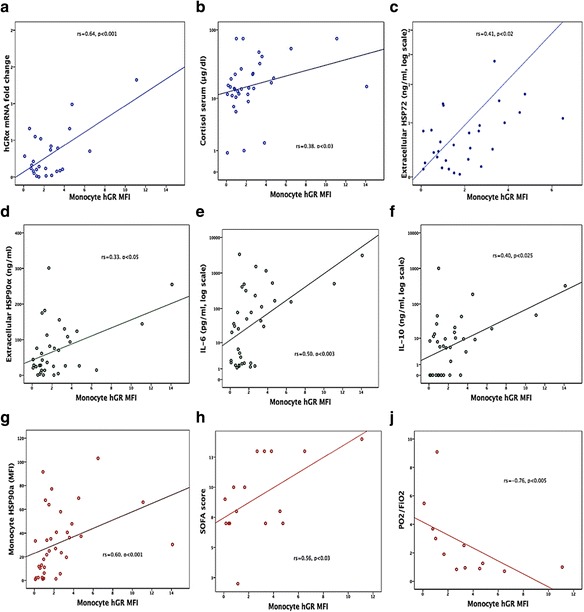
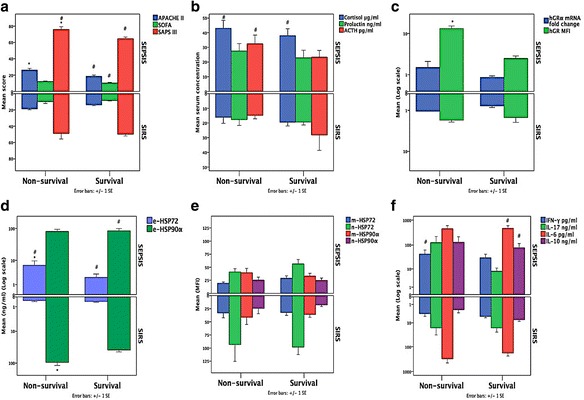
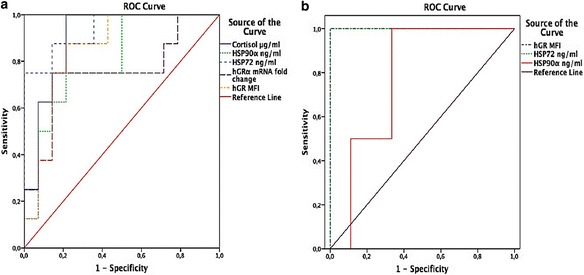
BACKGROUND: The purposes of this study are to examine if the human glucocorticoid receptor (hGR) isoform-α mRNA and hGR protein expressions are deficient in the acute phase of sepsis (S) compared to systemic inflammatory response syndrome (SIRS) and healthy subjects (H) and to evaluate if the hGRα and hGR alterations are associated with cortisol changes and if they are related to (1) extracellular and intracellular heat shock proteins (HSP) 72 and 90α; (2) ACTH, prolactin, and interleukins (ILs); and (3) outcome. METHODS: Patients consecutively admitted to a university hospital intensive care unit (ICU) with S (n = 48) or SIRS (n = 40) were enrolled in the study. Thirty-five H were also included. Total mRNA was isolated from peripheral blood samples and cDNA was prepared. RT-PCR was performed. Intracellular hGR and HSP expression in monocytes and/or neutrophils was evaluated using four-colour flow cytometry. Serum prolactin, ACTH, and cortisol concentrations were also measured. ELISA was used to evaluate serum ILs and extracellular (e) HSPs (eHSP72, eHSP90α). RESULTS: = 0.64, p < 0.001). Monocyte hGR protein expression was positively correlated with extracellular and intracellular HSPs, cortisol, and ILs and negatively to organ dysfunction (p < 0.05). HSPs, hGR, and cortisol were able to discriminate sepsis from SIRS (AUROC > 0.85, p < 0.05). In sepsis, monocyte-hGR protein and eHSP72 were strong predictors of mortality (AUROC > 0.95, p < 0.04). CONCLUSIONS: Acute-phase sepsis is associated with increased hGR expression and cortisol concentrations, possibly implying no need for exogenous steroids. At this stage, hGR is able to predict sepsis and outcome and is related to stress-activated bio-molecules and organ dysfunction.
Overview
The claims and statistics of this paper haven’t been checked yet.
Free: it reads the open-access text and checks the first 5 claims that cite a source we can check. Create a free account to check every claim.
Integrity signals
Registry
Cites
Statistics
Figures
Verification
Claims the paper makes
The claims and statistics of this paper haven’t been checked yet.
Free: it reads the open-access text and checks the first 5 claims that cite a source we can check. Create a free account to check every claim.
Claims other papers make about this one
Each is checked against this paper’s own text: does it say what the citing paper says it does?
The source backs part of the claim, not all of it — or backs it for a different population, condition or comparison.
In the citing paper
“Clinical studies in patients with septic shock [79,80] and ARDS [7] have provided evidence of an association between the degree of intracellular glucocorticoid resistance, disease severity, and mortality.”
From Critical illness-related corticosteroid insufficiency (CIRCI): a narrative review from a multispecialty task force of the society of critical care medicine (SCCM) and the European society of intensive care medicine (ESICM) (2017) · cites this paper as [79]
Experimental — accuracy not yet measured
Self-check
Percentages, sums and reported differences re-computed from the paper’s own numbers.
The self-check needs the paper’s full text.
Citations
Cites
The third international consensus definitions for sepsis and septic shock (Sepsis-3).
Singer, M., Deutschman, C. S., Seymour, C. W., Shankar-Hari, M., Annane, D., Bauer, M., Bellomo, R., Bernard, G. R., Chiche, J.-D., Coopersmith, C. M., et al. (2016) · JAMA · doi:10.1001/jama.2016.0287 · Cited by 28,250
APACHE II: A severity of disease classification system
KNAUS, W. A., DRAPER, E. A., WAGNER, D. P., & ZIMMERMAN, J. E. (1985) · Critical Care Medicine · doi:10.1097/00003246-198510000-00009 · Cited by 13,664
APACHE II-A Severity of Disease Classification System: Reply
Knaus, W. A., Draper, E. A., Wagner, D. P., & Zimmerman, J. E. (1986) · Critical Care Medicine · doi:10.1097/00003246-198608000-00028 · Cited by 13,376 · cited 1×
“Acute Physiology and Chronic Evaluation-II (APACHE II) [14], multiple organ dysfunction (MODS) [15], Simplified Acute Physiology Score-III (SAPS III) [16], and SOFA scores were recorded on admission.”
MethodVincent, J. L., Moreno, R., Takala, J., Willatts, S., De Mendonça, A., Bruining, H., Reinhart, C. K., Suter, P. M., & Thijs, L. G. (1996) · Intensive Care Medicine · doi:10.1007/bf01709751 · Cited by 11,674 · cited 9×
“Vincent JL, Moreno R, Takala J et al (1996) The SOFA (Sepsis-related Organ Failure Assessment) score to describe organ dysfunction/failure.”
MethodInfluentialAPACHE II: a severity of disease classification system.
Knaus, W. A., Draper, E. S., Wagner, D. P., & Zimmerman, J. E. (1985) · PubMed · Cited by 6,034
Insights into the regulation of protein abundance from proteomic and transcriptomic analyses
Vogel, C., & Marcotte, E. M. (2012) · Nature Reviews Genetics · doi:10.1038/nrg3185 · Cited by 4,195 · cited 1×
“hGRα mRNA is produced much more slowly compared to corresponding hGR protein expression, translated at the same time [23].”
BackgroundMultiple Organ Dysfunction Score: A reliable descriptor of a complex clinical outcome
Marshall, J. C., Cook, D. J., Christou, N. V., Bernard, G. R., Sprung, C. L., & Sibbald, W. J. (1995) · Critical Care Medicine · doi:10.1097/00003246-199510000-00007 · Cited by 2,532 · cited 3×
“Acute Physiology and Chronic Evaluation-II (APACHE II) [14], multiple organ dysfunction (MODS) [15], Simplified Acute Physiology Score-III (SAPS III) [16], and SOFA scores were recorded on admission.”
MethodInfluentialShankar-Hari, M., Phillips, G. S., Levy, M. L., Seymour, C. W., Liu, V. X., Deutschman, C. S., Angus, D. C., Rubenfeld, G. D., Singer, M., & for the Sepsis Definitions Task Force (2016) · JAMA · doi:10.1001/jama.2016.0289 · Cited by 2,424 · cited 1×
“Background Sepsis is a life-threatening organ dysfunction caused by a dysregulated host response to infection [1].”
BackgroundSystemic Inflammatory Response Syndrome Criteria in Defining Severe Sepsis
Kaukonen, K.-M., Bailey, M., Pilcher, D., Cooper, D. J., & Bellomo, R. (2015) · New England Journal of Medicine · doi:10.1056/nejmoa1415236 · Cited by 1,166 · cited 1×
“The non-infectious SIRS group included trauma patients (n = 40) who met at least two of the four conventional criteria for SIRS [13] and represented the first control group (ICU control).”
MethodSliwa, K., Hilfiker-Kleiner, D., Petrie, M. C., Mebazaa, A., Pieske, B., Buchmann, E., Regitz-Zagrosek, V., Schaufelberger, M., Tavazzi, L., van Veldhuisen, D. J., et al. (2010) · European Journal of Heart Failure · doi:10.1093/eurjhf/hfq120 · Cited by 1,093 · cited 1×
“Generation of cardiotoxic subfragments of prolactin caused by oxidative stress has been implicated in peripartum cardiomyopathy in women [35].”
BackgroundThe Dominant Negative Activity of the Human Glucocorticoid Receptor β Isoform
Oakley, R. H., Jewell, C. M., Yudt, M. R., Bofetiado, D. M., & Cidlowski, J. A. (1999) · Journal of Biological Chemistry · doi:10.1074/jbc.274.39.27857 · Cited by 453 · cited 1×
“The hGRβ does not bind glucocorticoid agonists and exerts a dominant negative effect on the transcriptional activity of hGRα [5].”
BackgroundThe human glucocorticoid receptor: molecular basis of biologic function
Nicolaides, N. C., Galata, Z., Kino, T., Chrousos, G. P., & Charmandari, E. (2010) · Steroids · doi:10.1016/j.steroids.2009.09.002 · Cited by 436 · cited 4×
“HSP90 regulates ligand binding, as well as cytoplasmic retention of hGRα by exposing the ligand-binding site and masking the two nuclear localization sequences [4].”
BackgroundInfluentialSelf-citationKirschke, E., Goswami, D., Southworth, D., Griffin, P. R., & Agard, D. A. (2014) · Cell · doi:10.1016/j.cell.2014.04.038 · Cited by 399
Schmidt, S., Rainer, J., Ploner, C., Presul, E., Riml, S., & Kofler, R. (2004) · Cell Death & Differentiation · doi:10.1038/sj.cdd.4401456 · Cited by 360
Expression of glucocorticoid receptor α- and β-isoforms in human cells and tissues
Pujols, L., Mullol, J., Roca-Ferrer, J., Torrego, A., Xaubet, A., Cidlowski, J. A., & Picado, C. (2002) · American Journal of Physiology-Cell Physiology · doi:10.1152/ajpcell.00363.2001 · Cited by 219 · cited 1×
“Our finding, showing a good correlation of hGR protein in monocytes with hGRα mRNA, is consistent with reports in other human cells and tissues showing that hGR protein in most cells matches up well with hGRα mRNA levels [24].”
ResultSelective glucocorticoid receptor modulation: New directions with non-steroidal scaffolds
Sundahl, N., Bridelance, J., Libert, C., De Bosscher, K., & Beck, I. M. (2015) · Pharmacology & Therapeutics · doi:10.1016/j.pharmthera.2015.05.001 · Cited by 216
Webster, J., & Sternberg, E. (2004) · Journal of Endocrinology · doi:10.1677/joe.0.1810207 · Cited by 195 · cited 2×
“Accordingly, the use of GCs in septic shock may be dependent on the stage of the sepsis, the reactivity of the HPA axis, and the sensitivity of hGR to the ligand [36].”
BackgroundDuma, D., Collins, J. B., Chou, J. W., & Cidlowski, J. A. (2010) · Science Signaling · doi:10.1126/scisignal.2001077 · Cited by 178 · cited 1×
“Although the anti-inflammatory GC actions have been suggested to be more effective in males than in females [22], we did not find any sex-specific influence on hGRα mRNA and hGR-protein expressions, or on serum cortisol, HSP, and ILs concentrations.”
BackgroundEndothelial glucocorticoid receptor is required for protection against sepsis
Goodwin, J. E., Feng, Y., Velazquez, H., & Sessa, W. C. (2013) · Proceedings of the National Academy of Sciences · doi:10.1073/pnas.1210200110 · Cited by 142 · cited 1×
“The importance of GRα functioning is clearly shown in septic mice lacking endothelial GRα demonstrating increased mortality, hemodynamic instability, pro-inflammatory cytokine production [37], and inability to downregulate IL-1β [18].”
BackgroundCharmandari, E., Chrousos, G. P., Lambrou, G. I., Pavlaki, A., Koide, H., Ng, S. S. M., & Kino, T. (2011) · PLoS ONE · doi:10.1371/journal.pone.0025612 · Cited by 139 · cited 1×
“Blood samples were obtained at 8 am because of a peripheral CLOCKmediated circadian acetylation of the human GR counter-regulating the actions of diurnally fluctuating cortisol [17].”
BackgroundSelf-citationLedderose, C., Möhnle, P., Limbeck, E., Schütz, S., Weis, F., Rink, J., Briegel, J., & Kreth, S. (2012) · Critical Care Medicine · doi:10.1097/ccm.0b013e31825b8ebc · Cited by 130
Molijn, G. J. (1995) · Journal of Clinical Endocrinology & Metabolism · doi:10.1210/jc.80.6.1799 · Cited by 125 · cited 1×
“Additionally, elevated hGRα mRNA levels correlate with the number of hormone binding sites in septic rats [25] and human lymphocytes [26], leading to increased hGRα binding activity and GC sensitivity [27].”
BackgroundRegulation of glucocorticoid receptor expression
Okret, S., Dong, Y., Brönnegård, M., & Gustafsson, J.-Å. (1991) · Biochimie · doi:10.1016/0300-9084(91)90074-b · Cited by 94 · cited 1×
“GCs downregulate the expression of their receptor through transcriptional, posttranscriptional, and posttranslational mechanisms [7].”
BackgroundMolijn, G. J., Koper, J. W., van Uffelen, C. J. C., de Jong, F. H., Brinkmann, A. O., Bruinlng, H. A., & Lamberts, S. W. J. (1995) · Clinical Endocrinology · doi:10.1111/j.1365-2265.1995.tb01915.x · Cited by 89 · cited 1×
“Although a negative correlation between hyperthermia and the number of receptors has been previously suggested [30], we could not find any relation between hGRα and temperature, lactate, glucose, LDH, IL-17, or PCT.”
BackgroundGlucocorticoid receptor mRNA levels are selectively decreased in neutrophils of children with sepsis
van den Akker, E. L. T., Koper, J. W., Joosten, K., de Jong, F. H., Hazelzet, J. A., Lamberts, S. W. J., & Hokken-Koelega, A. C. S. (2009) · Intensive Care Medicine · doi:10.1007/s00134-009-1468-6 · Cited by 81 · cited 6×
“Similar to our results, others have also observed that there is no correlation between hGRα mRNA levels and admission severity of illness [10].”
BackgroundResultInfluentialClinical review: Sepsis and septic shock - the potential of gene arrays
Wong, H. R. (2012) · Critical Care · doi:10.1186/cc10537 · Cited by 73 · cited 1×
“By adopting a whole-blood mRNA approach, we were able to provide a more comprehensive picture without missing hGR expression signatures from subpopulations that would potentially have been excluded from the experimental approach [29].”
MethodGuerrero, J., Gatica, H. A., Rodríguez, M., Estay, R., & Goecke, I. A. (2013) · Critical Care · doi:10.1186/cc12774 · Cited by 71 · cited 1×
“Septic serum induces the expression of not only hGRα but also of hGRβ in both T and B cells in culture, supporting a possible GC resistance of specific cell subpopulations in sepsis [9].”
BackgroundConway-Campbell, B. L., George, C. L., Pooley, J. R., Knight, D. M., Norman, M. R., Hager, G. L., & Lightman, S. L. (2011) · Molecular Endocrinology · doi:10.1210/me.2010-0073 · Cited by 65 · cited 1×
“The hGRα-cortisol or ACTH relations and the HSP90α time-regulation by the pattern of the pulsatile hormones, further support such a possibility [33].”
BackgroundInhibition of glucocorticoid receptor binding by nitric oxide in endotoxemic rats*
Duma, D., Silva-Santos, J. E., & Assreuy, J. (2004) · Critical Care Medicine · doi:10.1097/01.ccm.0000145996.57901.d7 · Cited by 54 · cited 1×
“Downregulated hGRα in the liver, lung, and spleen but upregulated hGRα mRNA and binding activity have been reported in muscle in endotoxemic rats [21].”
BackgroundCortisol metabolism in critical illness: implications for clinical care
Boonen, E., & den Berghe, G. V. (2014) · Current Opinion in Endocrinology Diabetes and Obesity · doi:10.1097/med.0000000000000066 · Cited by 47 · cited 1×
“Also, decreased activity of the cortisol metabolizing enzymes impairs cortisol clearance, enhances hypercortisolism, and suppresses ACTH secretion by feedback inhibition [3].”
BackgroundGoecke, I. A., Alvarez, C., Henríquez, J. P., Salas, K., Molina, M. L., Ferreira, A., & Gatica, H. (2006) · Molecular Immunology · doi:10.1016/j.molimm.2006.07.303 · Cited by 43 · cited 1×
“Additionally, elevated hGRα mRNA levels correlate with the number of hormone binding sites in septic rats [25] and human lymphocytes [26], leading to increased hGRα binding activity and GC sensitivity [27].”
BackgroundExpression and binding activity of the glucocorticoid receptor are upregulated in septic muscle
Sun, X., Fischer, D. R., Pritts, T. A., Wray, C. J., & Hasselgren, P.-O. (2002) · American Journal of Physiology-Regulatory, Integrative and Comparative Physiology · doi:10.1152/ajpregu.00509.2001 · Cited by 42 · cited 1×
“Additionally, elevated hGRα mRNA levels correlate with the number of hormone binding sites in septic rats [25] and human lymphocytes [26], leading to increased hGRα binding activity and GC sensitivity [27].”
BackgroundVardas, K., Apostolou, K., Briassouli, E., Goukos, D., Psarra, K., Botoula, E., Tsagarakis, S., Magira, E. E., Routsi, C., Nanas, S., et al. (2014) · BioMed Research International · doi:10.1155/2014/803561 · Cited by 42 · cited 2×
“Our findings are in agreement with those of a recent study showing that in sepsis extracellular HSP72 and HSP90α are increased, while intracellular HSPs are repressed [32].”
BackgroundResultSelf-citationReduced Glucocorticoid Receptor Protein Expression in Children with Critical Illness
Indyk, J. A., Candido-Vitto, C., Wolf, I. M., Venkataraman, S., Munoz, R., Saladino, R. A., Witchel, S. F., & DeFranco, D. B. (2013) · Hormone Research in Paediatrics · doi:10.1159/000348290 · Cited by 41 · cited 1×
“Importantly, total and cytoplasmic, but not nuclear, hGR protein levels were lower in PBMCs from small groups (n = 6–7) of children with sepsis or trauma compared to controls [20].”
BackgroundPeeters, R. P., Hagendorf, A., Vanhorebeek, I., Visser, T. J., Klootwijk, W., Mesotten, D., Wouters, P. J., Koper, J. W., De Jong, F. H., Feelders, R. A., et al. (2009) · Clinical Endocrinology · doi:10.1111/j.1365-2265.2008.03443.x · Cited by 36 · cited 10×
“The positive relations of the hGR to the inflammatory biomarkers further support this, along with the simultaneous enhanced ACTH and prolactin, and the organ dysfunction or failure development, when the cell defending itself represses its bioenergetics.”
BackgroundInfluentialProlactin modulates survival and cellular immune functions in septic mice
Oberbeck, R., Schmitz, D., Wilsenack, K., Schuler, M. H. H., Biskup, C., Schedlowski, M., Nast-Kolb, D. C., & Exton, M. S. (2003) · Journal of Surgical Research · doi:10.1016/s0022-4804(03)00214-2 · Cited by 33 · cited 1×
“The increased prolactin concentrations in our septic patients, have been previously shown to inhibit cellular immune functions in septic mice, decreasing survival [34], and to play a role in the acute stress response in sepsis [32].”
BackgroundGlucocorticoid receptor function is decreased in neutrophils during endotoxic shock
Bergquist, M., Jirholt, P., Nurkkala, M., Rylander, C. C., Hedenstierna, G., & Lindholm, C. (2014) · Journal of Infection · doi:10.1016/j.jinf.2014.03.011 · Cited by 31 · cited 12×
“Although a negative correlation between hyperthermia and the number of receptors has been previously suggested [30], we could not find any relation between hGRα and temperature, lactate, glucose, LDH, IL-17, or PCT.”
BackgroundResultInfluentialDecreased Cytosolic Glucocorticoid Receptor Levels in Critically Ill Patients
Siebig, S., Meinel, A., Rogler, G., Klebl, F., Wrede, C. E., Gelbmann, C., Froh, S., Rockmann, F., Bruennler, T., Schoelmerich, J., et al. (2010) · Anaesthesia and Intensive Care · doi:10.1177/0310057x1003800122 · Cited by 31
Briassouli, E., Tzanoudaki, M., Goukos, D., Routsi, C., Nanas, S., Vardas, K., Apostolou, K., Kanariou, M. G., Daikos, G. L., & Briassoulis, G. C. (2015) · BioMed Research International · doi:10.1155/2015/806042 · Cited by 23 · cited 1×
“In vitro, only heat shock induced mHSP72 and HSP72 mRNA but not lipopolysaccharide [31].”
BackgroundSelf-citationBergquist, M., Lindholm, C., Strinnholm, M., Hedenstierna, G., & Rylander, C. C. (2015) · Intensive Care Medicine Experimental · doi:10.1186/s40635-015-0059-9 · Cited by 20 · cited 3×
“Expanding results of previous studies, showing an inverse hGR correlation to noradrenaline and lactate [28], we found that the hGR was also related with CRP, WBC, low PO2/FiO2, MODS, and SOFA scores.”
BackgroundResultModeling in-hospital patient survival during the first 28 days after intensive care unit admission
Moreno, R. P., Metnitz, P., Metnitz, B., Bauer, P., de Carvalho, S. A., & Höchtl, A. (2008) · Journal of Critical Care · doi:10.1016/j.jcrc.2007.11.004 · Cited by 16 · cited 10×
“No significant associations were found between hGRα and APACHE II, SAPS III, temperature, PCT, IL-17, lactate, LDH, or glucose.”
MethodInfluential
Cited by
The C-Reactive Protein/Albumin Ratio as a Predictor of Mortality in Critically Ill Patients
Park, J. E., Chung, K. S., Song, J. H., Kim, S. Y., Kim, E. Y., Jung, J. Y., Kang, Y. A., Park, M. S., Kim, Y. S., Chang, J., et al. (2018) · Journal of Clinical Medicine · doi:10.3390/jcm7100333 · Cited by 230
Annane, D., Pastores, S. M., Arlt, W., Balk, R. A., Beishuizen, A., Briegel, J., Carcillo, J., Christ-Crain, M., Cooper, M. S., Marik, P. E., et al. (2017) · Intensive Care Medicine · doi:10.1007/s00134-017-4914-x · Cited by 220
“Clinical studies in patients with septic shock [79, 80] and ARDS [7] have provided evidence of an association between the degree of intracellular glucocorticoid resistance, disease severity, and mortality.”
BackgroundAdrenal function and dysfunction in critically ill patients
Téblick, A., Peeters, B., Langouche, L., & den Berghe, G. V. (2019) · Nature Reviews Endocrinology · doi:10.1038/s41574-019-0185-7 · Cited by 173
Glucocorticoids in Sepsis: To Be or Not to Be
Vandewalle, J., & Libert, C. (2020) · Frontiers in Immunology · doi:10.3389/fimmu.2020.01318 · Cited by 134
Annane, D., Pastores, S. M., Arlt, W., Balk, R. A., Beishuizen, A., Briegel, J., Carcillo, J., Christ-Crain, M., Cooper, M. S., Marik, P. E., et al. (2017) · Critical Care Medicine · doi:10.1097/ccm.0000000000002724 · Cited by 117
Metadata
- Authors
- Vardas, K., Ilia, S., Sertedaki, A., Charmandari, E., Briassouli, E., Goukos, D., Apostolou, K., Psarra, K., Botoula, E., Tsagarakis, S., Magira, E., Routsi, C., Stratakis, C. A., Nanas, S., & Briassoulis, G.
- Affiliations
- University of Crete (GR)
- National and Kapodistrian University of Athens (GR)
- Evangelismos Hospital (GR)
- National Institutes of Health (US)
- Corresponding author
- Briassoulis, George
- ORCID
- Venue
- Intensive Care Medicine Experimental
- Published
- 2017-02-21
- Volume
- 5
- Issue
- 1
- Pages
- 10-10
- ISSN
- 2197-425X (ISSN-L)
- PMC
- PMC5319939
- OpenAlex
- W2590131942
- Cited by
- 58
- References
- 41
- Citations by year
- 2026: 3 · 2025: 4 · 2024: 2 · 2023: 5 · 2022: 7 · 2021: 10 · 2020: 8 · 2019: 8 · 2018: 5 · 2017: 6
- FWCI
- 5.78
- Type
- journal article
- Language
- en
- Open access
- gold
- doi.org
- Locations
- Intensive Care Medicine Experimental (publishedVersion, cc-by)
- PubMed Central (publishedVersion, cc-by)
- PubMed (publishedVersion)
- Funders
- European Commission
- Fonds National de la Recherche Luxembourg
- European Social Fund
- Topics
- Health Sciences › Medicine › Critical Care and Intensive Care Medicine › Sepsis Diagnosis and Treatment
- Health Sciences › Medicine › Endocrinology, Diabetes and Metabolism › Adrenal Hormones and Disorders
- Life Sciences › Neuroscience › Behavioral Neuroscience › Stress Responses and Cortisol
- Keywords
- sepsis, glucocorticoid receptor, glucocorticoid receptor alpha, HSP72, heat shock protein 90 alpha, cortisol, systemic inflammatory response syndrome, monocytes, neutrophils, interleukins, ACTH, prolactin, mortality prediction, organ dysfunction, stress response
About these checks
Registry, retraction, Cites and statistics results are computed, not judged, with one exception: a printed reference that no index lists is read once by a model before it counts as a citation error. Claims are extracted by a model and kept only when their quote appears verbatim in the text; each cited source is then checked, with a model’s help, for whether it says what the claim relies on. Those verdicts can be wrong — read the claim’s quote and the cited source before relying on one.
Statistics and arithmetic are recomputed, not judged.
Confidence bands are shown only for fields calibrated on our annotated test set. None is calibrated yet, so no band is shown.
What counts as a claim ›How we measure confidence ›How we check this ›
Are you an author, or do you see a problem with this page? Request a review
Data sources
Bibliographic data: Semantic Scholar, OpenAlex, Crossref.
Contains information from the Semantic Scholar Academic Graph Datasets, made available under the ODC Attribution License (ODC-BY 1.0).
Semantic Scholar’s data is described in: Kinney, R., et al. (2023). The Semantic Scholar Open Data Platform. arXiv:2301.10140.
