

Preterm feeding recommendations are achievable in large-scale research studies
Open accessThe DOI matches its Crossref record; 24 of the 24 references it cites were found in a registry or an index.
Abstract
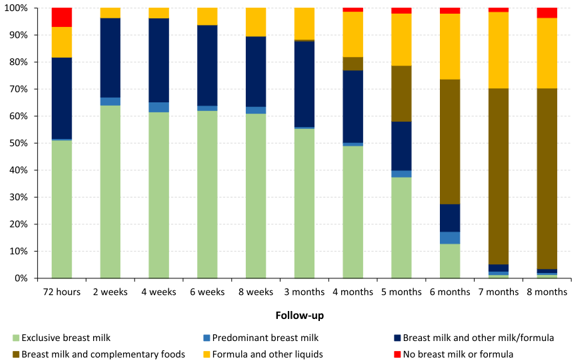
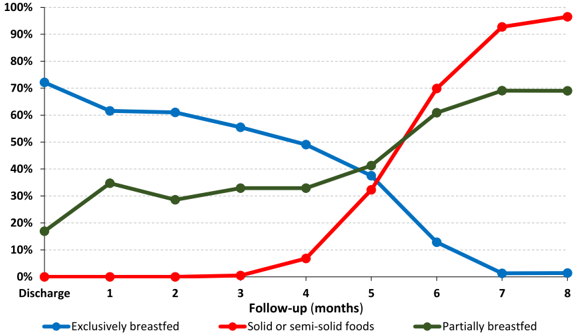
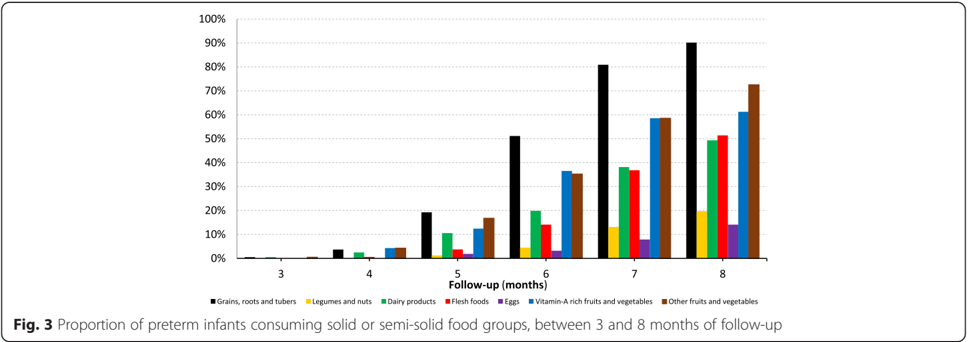
The INTERGROWTH-21 st Project aimed to produce international, prescriptive, postnatal growth standards for preterm infants born to healthy, well-nourished mothers receiving adequate antenatal care. There is little information available regarding optimal postnatal growth among uncomplicated preterm newborns. We describe how the preterm infants contributing to the standards followed evidence-based feeding recommendations. In the Fetal Growth Longitudinal Study (FGLS), a component of the INTERGROWTH-21 st Project, fetal growth was monitored by ultrasound from <14 weeks’ gestation until birth in pregnancies at low risk of adverse outcomes. All preterms (≥26 +0 and <37 +0 weeks’ gestation) were followed up during infancy. Internationally-accepted feeding recommendations for preterms, agreed by the INTERGROWTH-21 st Neonatal Group, were implemented at each study site. Standardised questionnaires served to record information on their feeding practices. Feeding data were collected from 201 eligible preterms. The median (interquartile range, IQR) gestational age at birth was 36.0 (35.0 – 36.6) weeks. The prevalence of any breastfeeding was 82 % within 72 h of birth, 96 % at 2 weeks, 82 % at 4 months and 70 % at 8 months postnatal age. The figures for exclusive breastfeeding were 51 % within 72 h of birth, 72 % at hospital discharge, 49 % at 4 months, 38 % at 5 months and 12 % at 6 months. Complementary foods were introduced at a median (IQR) postnatal age of 6.0 (5.1 – 6.8) months. Most preterms were exclusively breastfed upon hospital discharge, and breastfeeding remained a substantial source of nutrition throughout the study. Recommendations, centred on breastfeeding, were adequately followed within the expected variation of such diverse settings.
Overview
The claims and statistics of this paper haven’t been checked yet.
Free: it reads the open-access text and checks the first 5 claims that cite a source we can check. Create a free account to check every claim.
Integrity signals
Registry
Cites
Statistics
Figures
Verification
Claims the paper makes
The claims and statistics of this paper haven’t been checked yet.
Free: it reads the open-access text and checks the first 5 claims that cite a source we can check. Create a free account to check every claim.
Claims other papers make about this one
Each is checked against this paper’s own text: does it say what the citing paper says it does?
In the citing paper
“Routine interventions can be provided within special care baby units (SCBU, i.e., without intensive neonatal care) and include the promotion of early and exclusive breastfeeding; adequate thermal care; hygienic cord care; early diagnosis of infections and early detection of respiratory distress syndrome (6, 9–11).”
Self-check
Percentages, sums and reported differences re-computed from the paper’s own numbers.
The self-check needs the paper’s full text.
Citations
Cites
Agostoni, C., Buonocore, G., Carnielli, V., De Curtis, M., Darmaun, D., Decsi, T., Domellöf, M., Embleton, N., Fusch, C., Genzel‐Boroviczeny, O., et al. (2010) · Journal of Pediatric Gastroenterology and Nutrition · doi:10.1097/mpg.0b013e3181adaee0 · Cited by 1,489
Baker, R. D., Greer, F. R., & The Committee on Nutrition (2010) · Pediatrics · doi:10.1542/peds.2010-2576 · Cited by 1,033
Extrauterine Growth Restriction Remains a Serious Problem in Prematurely Born Neonates
Clark, R. H., Thomas, P., & Peabody, J. (2003) · Pediatrics · doi:10.1542/peds.111.5.986 · Cited by 609 · cited 1×
“However, such a pattern is seldom attained in preterm neonates, who almost always show a postnatal cumulative nutritional deficit and so-called ‘extrauterine growth restriction’ [10].”
BackgroundMembers of the who Multicentre Growth Reference Study Group
(2004) · Food and Nutrition Bulletin · doi:10.1177/15648265040251s103 · Cited by 598
de Onis, M., & Onyango, A. W. (2008) · The Lancet · doi:10.1016/s0140-6736(08)60131-2 · Cited by 573
Nutrition of the Preterm Infant
Tsang, R. C., Uauy, R. D., Koletzko, B., & Zlotkin, S. H. (2005) · LSHTM Research Online (London School of Hygiene and Tropical Medicine) · Cited by 448
Human Milk for the Premature Infant
Underwood, M. A. (2013) · Pediatric Clinics of North America · doi:10.1016/j.pcl.2012.09.008 · Cited by 417 · cited 2×
“However, their nutritional needs are different from those of term infants and should be evaluated carefully, especially bearing in mind the need to fortify human milk [11].”
BackgroundVillar, J., Giuliani, F., Bhutta, Z. A., Bertino, E., Ohuma, E. O., Ismail, L. C., Barros, F. C., Altman, D. G., Victora, C., Noble, J. A., et al. (2015) · The Lancet Global Health · doi:10.1016/s2214-109x(15)00163-1 · Cited by 357 · cited 2×
“The patterns of longitudinal growth in this cohort for length were very similar to those of the WHO Child Growth Standards for term neonates [2] during the first months of life, but weight and head circumference differed from the WHO standards until 64 weeks’ postmenstrual age [18].”
ResultSelf-citationThe objectives, design and implementation of the INTERGROWTH‐21st Project
Villar, J., Altman, D., Purwar, M., Noble, J., Knight, H., Ruyan, P., Cheikh Ismail, L., Barros, F., Lambert, A., Papageorghiou, A., et al. (2013) · BJOG: An International Journal of Obstetrics & Gynaecology · doi:10.1111/1471-0528.12047 · Cited by 287
Self-citationWard Platt, M., & Deshpande, S. (2005) · Seminars in Fetal and Neonatal Medicine · doi:10.1016/j.siny.2005.04.001 · Cited by 215 · cited 1×
“Some of the comorbidities are also probably associated with immature gastrointestinal function, resulting in an imbalance between rapid growth, nutrient supply and the adequacy of the metabolic response, occurring during the unplanned transition from trans-placental nutrition to oral feeding [7, 8].”
BackgroundLate preterm birth is a risk factor for growth faltering in early childhood: a cohort study
Santos, I. S., Matijasevich, A., Domingues, M. R., Barros, A. J. D., Victora, C. G., & Barros, F. C. (2009) · BMC Pediatrics · doi:10.1186/1471-2431-9-71 · Cited by 165 · cited 1×
“Preterm infants are a heterogeneous group, varying by gestational age at birth and the severity of their comorbidities, many of which are associated with being born at a very early gestational age and growth restricted [6].”
BackgroundLapillonne, A., O’Connor, D. L., Wang, D., & Rigo, J. (2013) · The Journal of Pediatrics · doi:10.1016/j.jpeds.2012.11.058 · Cited by 141 · cited 1×
“There is controversy, both conceptually and at a practical level, about how best to feed preterms; hence, feeding practices vary among and within countries [9].”
BackgroundManagement of Breastfeeding During and After the Maternity Hospitalization for Late Preterm Infants
Meier, P. P., Patel, A. L., Wright, K., & Engstrom, J. L. (2013) · Clinics in Perinatology · doi:10.1016/j.clp.2013.07.014 · Cited by 130 · cited 1×
“These results are not unexpected as breastfeeding rates are generally lower in preterm compared to term infants [9, 20–22], and establishing and maintaining breastfeeding in preterms requires considerable support.”
ResultFactors Associated with Breastfeeding Duration: A 30-Month Cohort Study in Northwest China
Liu, P., Qiao, L., Xu, F., Zhang, M., Wang, Y., & Binns, C. W. (2013) · Journal of Human Lactation · doi:10.1177/0890334413477240 · Cited by 92
Breastfeeding in the WHO Multicentre Growth Reference Study
de Onís, M. (2006) · Acta Paediatrica · doi:10.1111/j.1651-2227.2006.tb02372.x · Cited by 90
Nutritional Needs of the Micropreterm Infant
Tudehope, D., Fewtrell, M. S., Kashyap, S., & Udaeta, E. (2013) · The Journal of Pediatrics · doi:10.1016/j.jpeds.2012.11.056 · Cited by 65 · cited 1×
“Some of the comorbidities are also probably associated with immature gastrointestinal function, resulting in an imbalance between rapid growth, nutrient supply and the adequacy of the metabolic response, occurring during the unplanned transition from trans-placental nutrition to oral feeding [7, 8].”
BackgroundCheikh Ismail, L., Knight, H., Ohuma, E., Hoch, L., Chumlea, W., & for the International Fetal and Newborn Growth Consortium for the 21 Century (INTERGROWTH‐21) (2013) · BJOG: An International Journal of Obstetrics & Gynaecology · doi:10.1111/1471-0528.12127 · Cited by 63
Self-citationComplementary feeding in the WHO Multicentre Growth Reference Study
de Onís, M. (2006) · Acta Paediatrica · doi:10.1111/j.1651-2227.2006.tb02373.x · Cited by 60
Villar, J., Knight, H. E., de Onis, M., Bertino, E., Gilli, G., Papageorghiou, A. T., Ismail, L. C., Barros, F. C., Bhutta, Z. A., & for the International Fetal and Newborn Growth Consortium (INTERGROWTH-21st) (2010) · Archives of Disease in Childhood · doi:10.1136/adc.2009.175067 · Cited by 60
Self-citationAn evidence based guide to weaning preterm infants
King, C. A. (2009) · Paediatrics and Child Health · doi:10.1016/j.paed.2009.06.005 · Cited by 48 · cited 1×
“It has been suggested that, wherever possible, preterm infants should be introduced to solid foods between 5 and 8 months of age to ensure that the appropriate transition period is not missed, and to encourage the development of feeding skills [23].”
BackgroundNagulesapillai, T., McDonald, S., Fenton, T. R., Mercader, H. F. G., & Tough, S. (2013) · Canadian Journal of Public Health · doi:10.17269/cjph.104.3803 · Cited by 43 · cited 1×
“These results are not unexpected as breastfeeding rates are generally lower in preterm compared to term infants [9, 20–22], and establishing and maintaining breastfeeding in preterms requires considerable support.”
ResultEskenazi, B., Bradman, A., Finkton, D., Purwar, M., Noble, J., Pang, R., Burnham, O., Cheikh Ismail, L., Farhi, F., Barros, F., et al. (2013) · BJOG: An International Journal of Obstetrics & Gynaecology · doi:10.1111/1471-0528.12430 · Cited by 31
Self-citationStandardisation of neonatal clinical practice
Bhutta, Z., Giuliani, F., Haroon, A., Knight, H., Albernaz, E., Batra, M., Bhat, B., Bertino, E., McCormick, K., Ochieng, R., et al. (2013) · BJOG: An International Journal of Obstetrics & Gynaecology · doi:10.1111/1471-0528.12312 · Cited by 25
Self-citation
Research works printed but not linked: 3
- WHO, UNICEF. Global Strategy on Infant and Young Child Feeding. Geneva: WHO Press; 2003.
- Edmond K, Bahl R. World Health Organization Technical Review: Optimal feeding of low-birth-weight infants. Geneva: WHO Press; 2006.
- WHO. Indicators for assessing infant and young child feeding practices - Part I: Definitions. Geneva: WHO Press; 2008.
Cited by
Monitoring the Postnatal Growth of Preterm Infants: A Paradigm Change
Villar, J., Giuliani, F., Barros, F., Roggero, P., Coronado Zarco, I. A., Rego, M. A. S., Ochieng, R., Gianni, M. L., Rao, S., Lambert, A., et al. (2018) · Pediatrics · doi:10.1542/peds.2017-2467 · Cited by 212
Self-citationVillar, J., Restrepo–Méndez, M. C., McGready, R. M., Barros, F. C., Victora, C. G., Munim, S., Papageorghiou, A. T., Ochieng, R., Craik, R., Barsosio, H. C., et al. (2021) · Archives of Pediatrics and Adolescent Medicine · doi:10.1001/jamapediatrics.2020.6087 · Cited by 83
Self-citationKostecka, M., Jackowska, I., & Kostecka, J. (2020) · Nutrients · doi:10.3390/nu13010061 · Cited by 90
“This is consistent with nutritional recommendations, which state that complementary feeding should begin with low energy and/or low protein-dense foods such as vegetables [50,51].”
BackgroundVillar, J., Ismail, L. C., Urias, E. S., Giuliani, F., Ohuma, E. O., Victora, C. G., Papageorghiou, A. T., Altman, D. G., Garza, C., Barros, F. C., et al. (2017) · American Journal of Obstetrics and Gynecology · doi:10.1016/j.ajog.2017.11.564 · Cited by 68
Self-citationLima, A. P. E., Castral, T. C., Leal, L. P., Javorski, M., Sette, G. C. S., Scochi, C. G. S., & de Vasconcelos, M. G. L. (2019) · Revista gaúcha de enfermagem · doi:10.1590/1983-1447.2019.20180406 · Cited by 129
Metadata
- Authors
- for the International Fetal and Newborn Growth Consortium for the 21st Century (INTERGROWTH-21st), Cheikh Ismail, L., Giuliani, F., Bhat, B. A., Bishop, D., Papageorghiou, A. T., Ochieng, R., Puglia, F., Altman, D. G., Maia-Schlüssel, M., Noble, J. A., Bertino, E., Gravett, M. G., Purwar, M., Yajing, L., Mota, D., Ohuma, E., Lambert, A., Kennedy, S. H., Bhutta, Z. A., & Villar, J.
- Affiliations
- University of Turin (IT)
- Royal Hospital (OM)
- University of Oxford (GB)
- Aga Khan University Nairobi (KE)
- Global Alliance to Prevent Prematurity and Stillbirth (US)
- Universidade Federal de Pelotas (BR)
- Aga Khan University (PK)
- ORCID
- Venue
- BMC Nutrition
- Published
- 2016-02-05
- Volume
- 2
- Issue
- 1
- ISSN
- 2055-0928 (ISSN-L)
- OpenAlex
- W2291857200
- Cited by
- 19
- References
- 24
- Citations by year
- 2026: 3 · 2024: 1 · 2023: 1 · 2022: 2 · 2021: 3 · 2020: 3 · 2019: 2 · 2018: 3 · 2017: 1
- FWCI
- 1.87
- Type
- journal article
- Language
- en
- Open access
- gold
- doi.org
- Licence
- Locations
- BMC Nutrition (publishedVersion, cc-by)
- Bristol Research (University of Bristol) (publishedVersion, other-oa)
- Informationszentrum Lebenswissenschaften (ZB MED) (submittedVersion, cc-by)
- Funders
- Bill and Melinda Gates Foundation
- University of Washington
- Universidade Federal de Pelotas
- University of Oxford
- Topics
- Health Sciences › Medicine › Epidemiology › Breastfeeding Practices and Influences
- Health Sciences › Nursing › Nutrition and Dietetics › Infant Nutrition and Health
- Health Sciences › Medicine › Pediatrics, Perinatology and Child Health › Infant Development and Preterm Care
- Keywords
- preterm infants, feeding recommendations, breastfeeding, exclusive breastfeeding, complementary feeding, postnatal growth, growth standards
About these checks
Registry, retraction, Cites and statistics results are computed, not judged, with one exception: a printed reference that no index lists is read once by a model before it counts as a citation error. Claims are extracted by a model and kept only when their quote appears verbatim in the text; each cited source is then checked, with a model’s help, for whether it says what the claim relies on. Those verdicts can be wrong — read the claim’s quote and the cited source before relying on one.
Statistics and arithmetic are recomputed, not judged.
Confidence bands are shown only for fields calibrated on our annotated test set. None is calibrated yet, so no band is shown.
What counts as a claim ›How we measure confidence ›How we check this ›
Are you an author, or do you see a problem with this page? Request a review
Data sources
Bibliographic data: Semantic Scholar, OpenAlex, Crossref.
Contains information from the Semantic Scholar Academic Graph Datasets, made available under the ODC Attribution License (ODC-BY 1.0).
Semantic Scholar’s data is described in: Kinney, R., et al. (2023). The Semantic Scholar Open Data Platform. arXiv:2301.10140.
