

Reducing dementia risk by targeting modifiable risk factors in mid-life: study protocol for the Innovative Midlife Intervention for Dementia Deterrence (In-MINDD) randomised controlled feasibility trial
Open accessThe DOI matches its Crossref record; 57 of the 57 references it cites were found in a registry or an index.
Abstract
BACKGROUND: Dementia prevalence is increasing as populations live longer, with no cure and the costs of caring exceeding many other conditions. There is increasing evidence for modifiable risk factors which, if addressed in mid-life, can reduce the risk of developing dementia in later life. These include physical inactivity, low cognitive activity, mid-life obesity, high blood pressure, and high cholesterol. This study aims to assess the acceptability and feasibility and impact of giving those in mid-life, aged between 40 and 60 years, an individualised dementia risk modification score and profile and access to personalised on-line health information and goal setting in order to support the behaviour change required to reduce such dementia risk. A secondary aim is to understand participants' and practitioners' views of dementia prevention and explore the acceptability and integration of the Innovative Midlife Intervention for Dementia Deterrence (In-MINDD) intervention into daily life and routine practice. METHODS/DESIGN: In-MINDD is a multi-centre, primary care-based, single-blinded randomised controlled feasibility trial currently being conducted in four European countries (France, Ireland, the Netherlands and the UK). Participants are being recruited from participating general practices. Inclusion criteria will include age between 40 and 60 years; at least one modifiable risk factor for dementia risk (including diabetes, hypertension, obesity, renal dysfunction, current smoker, raised cholesterol, coronary heart disease, current or previous history of depression, self-reported sedentary lifestyle, and self-reported low cognitive activity) access to the Internet. Primary outcome measure will be a change in dementia risk modification score over the timescale of the trial (6 months). A qualitative process evaluation will interview a sample of participants and practitioners about their views on the acceptability and feasibility of the trial and the links between modifiable risk factors and dementia prevention. This work will be underpinned by Normalisation Process Theory. DISCUSSION: This study will explore the feasibility and acceptability of a risk profiler and on-line support environment to help individuals in mid-life assess their risk of developing dementia in later life and to take steps to alleviate that risk by tackling health-related behaviour change. Testing the intervention in a robust and theoretically informed manner will inform the development of a future, full-scale randomised controlled trial. TRIAL REGISTRATION: ISRCTN Registry: ISRCTN 98553005 (DOI: 10.1186/ISRCTN98553005).
Overview
The claims and statistics of this paper haven’t been checked yet.
Free: it reads the open-access text and checks the first 5 claims that cite a source we can check. Create a free account to check every claim.
Integrity signals
Registry
Cites
Statistics
Figures
Verification
Claims the paper makes
The claims and statistics of this paper haven’t been checked yet.
Free: it reads the open-access text and checks the first 5 claims that cite a source we can check. Create a free account to check every claim.
Claims other papers make about this one
Each is checked against this paper’s own text: does it say what the citing paper says it does?
In the citing paper
“Primary care- based interventions have increased to target at-risk populations and promote healthier lifestyles.23,24”
From Dementia prevention and the GP’s role: a qualitative interview study (2024) · cites this paper as [23]
Self-check
Percentages, sums and reported differences re-computed from the paper’s own numbers.
The self-check needs the paper’s full text.
Citations
Cites
The CES-D Scale: A Self-Report Depression Scale for Research in the General Population
Radloff, L. S. (1977) · Applied Psychological Measurement · doi:10.1177/014662167700100306 · Cited by 53,267
Developing and evaluating complex interventions: the new Medical Research Council guidance
Craig, P., Dieppe, P., Macintyre, S., Michie, S., Nazareth, I., & Petticrew, M. (2008) · BMJ · doi:10.1136/bmj.a1655 · Cited by 10,995
SPIRIT 2013 explanation and elaboration: guidance for protocols of clinical trials
Chan, A.-W., Tetzlaff, J. M., Gotzsche, P. C., Altman, D. G., Mann, H., Berlin, J. A., Dickersin, K., Hrobjartsson, A., Schulz, K. F., Parulekar, W. R., et al. (2013) · BMJ · doi:10.1136/bmj.e7586 · Cited by 6,251 · cited 1×
“The design of this protocol has followed the recommendations of the SPIRIT guidelines [51, 52].”
MethodGlobal prevalence of dementia: a Delphi consensus study
Ferri, C. P., Prince, M., Brayne, C., Brodaty, H., Fratiglioni, L., Ganguli, M., Hall, K., Hasegawa, K., Hendrie, H., Huang, Y., et al. (2005) · The Lancet · doi:10.1016/s0140-6736(05)67889-0 · Cited by 5,332 · cited 1×
“4 million in 2050 [2, 3].”
Qualitative data analysis for applied policy research
(2002) · Analyzing Qualitative Data · doi:10.4324/9780203413081-14 · Cited by 4,964 · cited 1×
“Data analysis will use recognised methods of qualitative analysis [57], underpinned by Normalisation Process Theory [46, 49, 50].”
MethodThe global prevalence of dementia: a systematic review and metaanalysis.
Prince, M., Bryce, R., Albanese, E., Wimo, A., Ribeiro, W., & Ferri, C. P. (2013) · Alzheimer's & Dementia · doi:10.1016/j.jalz.2012.11.007 · Cited by 4,941 · cited 1×
“4 million in 2050 [2, 3].”
Qualitative data analysis for applied policy research
Ritchie, J., & Spencer, L. (2010) · Analyzing qualitative data · doi:10.4324/9780203413081_chapter_9 · Cited by 4,800
The projected effect of risk factor reduction on Alzheimer's disease prevalence
Barnes, D. E., & Yaffe, K. (2011) · The Lancet Neurology · doi:10.1016/s1474-4422(11)70072-2 · Cited by 2,666
Design and analysis of pilot studies: recommendations for good practice
Lancaster, G. A., Dodd, S., & Williamson, P. R. (2004) · Journal of Evaluation in Clinical Practice · doi:10.1111/j..2002.384.doc.x · Cited by 2,572 · cited 1×
“A feasibility study is designed, not to measure effectiveness, but to assess the various components of a trial in order to ensure that it is acceptable and feasible when scaled up [40–42].”
BackgroundWebb, T. L., Joseph, J., Yardley, L., & Michie, S. (2010) · Journal of Medical Internet Research · doi:10.2196/jmir.1376 · Cited by 2,517 · cited 1×
“This variability in the findings may be due, in part, to the quality of the underlying evidence base [31] or to a lack of consideration of what components of the intervention are the “active ingredients” [24].”
Background
Research works printed but not linked: 1
- Luengo-Fernández R Leal J Gray A Dementia 2010. The economic burden of dementia and associated research funding in the United Kingdom 2010 Cambridge Alzheimer’s Research Trust
Cited by
Lifestyle interventions to prevent cognitive impairment, dementia and Alzheimer disease
Kivipelto, M., Mangialasche, F., & Ngandu, T. (2018) · Nature Reviews Neurology · doi:10.1038/s41582-018-0070-3 · Cited by 1,173
McEvoy, R., Ballini, L., Maltoni, S., O’Donnell, C. A., Mair, F. S., & MacFarlane, A. (2014) · Implementation Science · doi:10.1186/1748-5908-9-2 · Cited by 413
Self-citationHeger, I., Deckers, K., van Boxtel, M., de Vugt, M., Hajema, K., Verhey, F., & Köhler, S. (2019) · BMC Public Health · doi:10.1186/s12889-019-7010-z · Cited by 140
Long-term dementia risk prediction by the LIBRA score: a 30-year follow-up of the CAIDE study
Deckers, K., Barbera, M., Köhler, S., Ngandu, T., van Boxtel, M., Rusanen, M., Laatikainen, T., Verhey, F., Soininen, H., Kivipelto, M., et al. (2020) · International Journal of Geriatric Psychiatry · doi:10.1002/gps.5235 · Cited by 99
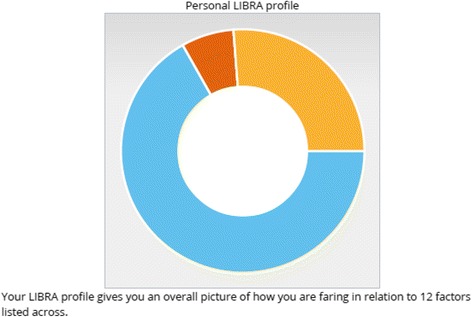
“LIBRA can give people insight and feedback on their personal risk profile and identify areas of already healthy behaviors (to facilitate maintenance), areas of unhealthy behaviors (to facilitate change), and chronic vascular/metabolic conditions (to facilitate appropriate management).(21) This personal LIBRA profile i…”
BackgroundMethodSelf-citationPrevention of Alzheimer's Disease: Lessons Learned and Applied
Galvin, J. E. (2017) · Journal of the American Geriatrics Society · doi:10.1111/jgs.14997 · Cited by 92
“Because there appear to be multiple pathways to developing AD, there may also be multiple ways to prevent or delay the onset of AD.”
BackgroundInfluentialSolomon, A., Stephen, R., Altomare, D., Carrera, E., Frisoni, G. B., Kulmala, J., Molinuevo, J. L., Nilsson, P. M., Ngandu, T., Ribaldi, F., et al. (2021) · Alzheimer s Research & Therapy · doi:10.1186/s13195-021-00875-8 · Cited by 97
“Two smaller and shorterterm trials with younger individuals, Body Brain Life [23] and the In-MINDD feasibility trial [39], have used a dementia risk score as the primary outcome.”
BackgroundResultDementia Risk Scores and Their Role in the Implementation of Risk Reduction Guidelines
Anstey, K. J., Zheng, L., Peters, R., Kootar, S., Barbera, M., Stephen, R., Dua, T., Chowdhary, N., Solomon, A., & Kivipelto, M. (2022) · Frontiers in Neurology · doi:10.3389/fneur.2021.765454 · Cited by 97
“The LIBRA index was used as the primary outcome in the Innovative Midlife Intervention for Dementia Deterrence (In-MINDD) randomized controlled feasibility trial (84).”
MethodDeckers, K., Köhler, S., van Boxtel, M., Verhey, F., Brayne, C., & Fleming, J. (2018) · Aging & Mental Health · doi:10.1080/13607863.2017.1280767 · Cited by 64
“, 2015), as part of the European (FP7) INnovative, Midlife INtervention for Dementia Deterrence (In-MINDD) project (O’Donnell et al., 2015).”
BackgroundMethodSelf-citationDeckers, K., Nooyens, A., van Boxtel, M., Verhey, F., Verschuren, M., & Köhler, S. (2019) · Journal of Alzheimer’s Disease · doi:10.3233/jad-180492 · Cited by 62
“LIBRA was developed after triangulation of results from a systematic literature review on risk and protective factors for dementia and an expert consensus study [19], as part of the European (FP7) INnovative, Midlife INtervention for Dementia Deterrence (In-MINDD) project [20].”
MethodWeb-Based Multidomain Lifestyle Programs for Brain Health: Comprehensive Overview and Meta-Analysis
Wesselman, L. M., Hooghiemstra, A. M., Schoonmade, L. J., de Wit, M. C., van der Flier, W. M., & Sikkes, S. A. (2019) · JMIR Mental Health · doi:10.2196/12104 · Cited by 61
Coley, N., Hoevenaar‐Blom, M. P., van Dalen, J., Moll van Charante, E. P., Kivipelto, M., Soininen, H., Andrieu, S., Richard, E., & PRODEMOS consortium, T. P. S. G. (2020) · Alzheimer's & Dementia · doi:10.1002/alz.12169 · Cited by 45
Utility of the LIBRA Index in Relation to Cognitive Functioning in a Clinical Health Seeking Sample
Pons, A., LaMonica, H. M., Mowszowski, L., Köhler, S., Deckers, K., & Naismith, S. L. (2018) · Journal of Alzheimer’s Disease · doi:10.3233/jad-170731 · Cited by 45
“O’Donnell et al. are currently conducting the In-MINDD study, a multi-center trial exploring the feasibility and acceptability of an online LIBRA global risk profile and an online support environment to help individuals assess and possibly reduce their risk of developing dementia [55].”
Self-citationd’Orsi, E., Xavier, A. J., Rafnsson, S. B., Steptoe, A., Hogervorst, E., & Orrell, M. W. (2017) · Aging & Mental Health · doi:10.1080/13607863.2017.1360840 · Cited by 58
Parial, L. L., Lam, S. C., Ho, J. Y. S., Suen, L. K. P., & Leung, A. Y. M. (2021) · Aging & Mental Health · doi:10.1080/13607863.2020.1786801 · Cited by 43
“It is also critical to note that tobacco use at midlife is associated with late-life cognitive impairment (Ohara et al., 2015), which could have been specified in the reviewed studies as participants may have varying interpretations of smoking activity.”
BackgroundPrevalence of dementia in long-term care institutions: a meta-analysis
Fagundes, D. F., Costa, M. T. S., Alves, B. B. D. S., Benício, M. M. S., Vieira, L. P., Carneiro, L. S. R. D. S. F., Nascimento, O. J. M., & Monteiro-Júnior, R. S. (2021) · Jornal Brasileiro de Psiquiatria · doi:10.1590/0047-2085000000298 · Cited by 54
Primary Prevention of Dementia: An Ethical Review
Horstkötter, D., Deckers, K., & Köhler, S. (2020) · Journal of Alzheimer s Disease · doi:10.3233/jad-201104 · Cited by 42
Metabolic Syndrome and Cognitive Function in Midlife
Foret, J. T., Oleson, S., Hickson, B., Valek, S. A., Tanaka, H., & Haley, A. P. (2020) · Archives of Clinical Neuropsychology · doi:10.1093/arclin/acaa112 · Cited by 36
“Examining modifiable cardiovascular risk factors at early stages can be advantageous for developing interventions to support overall physical well-being and brain health (Barnes & Yaffe, 2011; Kivipelto, Mangialasche, & Ngandu, 2018; O’Donnell et al., 2015; Plassman, Williams, Burke, Holsinger, & Benjamin, 2010).”
BackgroundGalvin, J. E., Tolea, M. I., & Chrisphonte, S. (2021) · Alzheimer s & Dementia Translational Research & Clinical Interventions · doi:10.1002/trc2.12134 · Cited by 45
Bott, N. T., Kumar, S., Krebs, C., Glenn, J. M., Madero, E. N., & Juusola, J. L. (2018) · JMIR Research Protocols · doi:10.2196/11368 · Cited by 34
“Epidemiologic studies estimate that modifiable risk factors, such as diabetes, hypertension, obesity, smoking, depression, physical inactivity, and low educational attainment, account for as many as 30% of dementia cases [5-7].”
BackgroundGalvin, J. E., Kleiman, M. J., Chrisphonte, S., Cohen, I., Disla, S., Galvin, C. B., Greenfield, K. K., Moore, C., Rawn, S., Riccio, M. L., et al. (2021) · Journal of Alzheimer s Disease · doi:10.3233/jad-215077 · Cited by 33
Dementia prevention and the GP’s role: a qualitative interview study
Jones, D., Drewery, R., Windle, K., Humphrey, S., & de Paiva, A. F. (2024) · British Journal of General Practice · doi:10.3399/bjgp.2023.0103 · Cited by 27
Wishes and preferences for an online lifestyle program for brain health—A mixed methods study
Wesselman, L. M. P., Schild, A., Coll‐Padrós, N., van der Borg, W. E., Meurs, J. H. P., Hooghiemstra, A. M., Slot, R. E. R., Sannemann, L., Rami, L., Molinuevo, J. L., et al. (2018) · Alzheimer s & Dementia Translational Research & Clinical Interventions · doi:10.1016/j.trci.2018.03.003 · Cited by 23
Mori, S., Onda, K., Fujita, S., Suzuki, T., Ikeda, M., Myint, K. Z. Y., Hikage, J., Abe, O., Tomimoto, H., Oishi, K., et al. (2022) · Brain Communications · doi:10.1093/braincomms/fcac211 · Cited by 17
“Interventions that target individuals at midlife to address health-related behavioural changes around modifiable risk factors may reduce individuals’ risk of developing dementia in later life and, as a consequence, the prevalence of dementia.(5,8,63) The prevention of dementia through the early detection of population…”
BackgroundSiette, J., Dodds, L., Dawes, P., Richards, D., Savage, G. R., Strutt, P. A., Ijaz, K., Johnco, C. J., Wuthrich, V. M., Heger, I., et al. (2022) · PLoS ONE · doi:10.1371/journal.pone.0272517 · Cited by 10
Sociodemographic Associations of Dementia Literacy in Older Australians
Siette, J., & Dodds, L. (2022) · Journal of Ageing and Longevity · doi:10.3390/jal2040021 · Cited by 7
“, physical inactivity, poor mental health, presence of chronic health conditions such as diabetes and hypertension) on late-life dementia development and risk [11,12].”
BackgroundVariable interactions in risk factors for dementia
O’Donoghue, J., Roantree, M., & McCarren, A. L. (2016) · International Conference on Research Challenges in Information Science (RCIS) · doi:10.1109/rcis.2016.7549314 · Cited by 5
“…In-MINDD Profiler, a sociotechnical information system which requires multi-disciplinary collaboration between experts in the field of dementia, IT researchers and support staff in order to provision members of society most at risk with state-of-the-art tools for dementia prediction and mitigation.”
BackgroundThe role of lifestyle factors in primary prevention of dementia: an epidemiological perspective
Deckers (2017) · Research Publications (Maastricht University) · doi:10.26481/dis.20170511kd · Cited by 9
Prevention of Age-Related Cognitive Impairment, Alzheimer’s Disease, and Dementia
Mangialasche, F., Kivipelto, M., Mecocci, P., & Ngandu, T. (2021) · Springer eBooks · doi:10.1007/978-3-030-22009-9_538 · Cited by 1
Prevention of Age-Related Cognitive Impairment, Alzheimer’s Disease, and Dementia
Mangialasche, F., Kivipelto, M., Mecocci, P., & Ngandu, T. (2020) · Springer eBooks · doi:10.1007/978-3-319-69892-2_538-1 · Cited by 1
Ayandeyi, K., Shaha, S., & Chilaka, M. A. (2024) · Journal of Family Medicine and Health Care · doi:10.11648/j.jfmhc.20241003.14
Kemp, A. M. (2026) · Innovation in Aging · doi:10.1093/geroni/igag060
“…cognitive and language performance remained largely within functional limits for most participants, suggesting that BRAIN-FIT is successfully engaging adults during a potentially preventive window rather than after substantial impairment has emerged (O’Donnell et al., 2015; Ritchie et al., 2024).”
Metadata
- Authors
- In-MINDD Team, O’Donnell, C. A., Browne, S., Pierce, M., McConnachie, A., Deckers, K., van Boxtel, M. P. J., Manera, V., Köhler, S., Redmond, M., Verhey, F. R. J., van den Akker, M., Power, K., & Irving, K.
- Affiliations
- University of Glasgow (GB)
- Dublin City University (IE)
- Maastricht University (NL)
- Corresponding author
- O’Donnell, Catherine A.
- ORCID
- Venue
- Pilot and Feasibility Studies
- Published
- 2015-11-17
- Volume
- 1
- Issue
- 1
- Pages
- 40-40
- ISSN
- 2055-5784 (ISSN-L)
- PMC
- PMC5154057
- OpenAlex
- W2178580270
- Semantic Scholar
- 007253aad4f7244713749d30e825cc4c5d6d809d
- Cited by
- 31
- References
- 56
- Citations by year
- 2026: 1 · 2024: 1 · 2023: 1 · 2022: 4 · 2021: 5 · 2020: 5 · 2019: 3 · 2018: 5 · 2017: 4 · 2016: 1
- FWCI
- 2.71
- Type
- journal article
- Language
- en
- Open access
- gold
- doi.org
- Licence
- Locations
- Pilot and Feasibility Studies (publishedVersion, cc-by)
- PubMed Central (publishedVersion, cc-by)
- PubMed (publishedVersion)
- Strathprints: The University of Strathclyde institutional repository (University of Strathclyde) (acceptedVersion)
- ENLIGHTEN (Jurnal Bimbingan dan Konseling Islam) (acceptedVersion)
- Lirias (submittedVersion, other-oa)
- Research Publications (Maastricht University) (submittedVersion, cc-by)
- Research Explorer (The University of Manchester) (submittedVersion)
- Research Publications (Maastricht University) (submittedVersion, other-oa)
- Funders
- European Commission (304979)
- Topics
- Health Sciences › Medicine › Psychiatry and Mental health › Dementia and Cognitive Impairment Research
- Health Sciences › Medicine › Public Health, Environmental and Occupational Health › Health Promotion and Cardiovascular Prevention
- Health Sciences › Medicine › Public Health, Environmental and Occupational Health › Down syndrome and intellectual disability research
- Keywords
- dementia prevention, modifiable risk factors, midlife, online health support, behavior change, primary care, feasibility and acceptability, Normalisation Process Theory, physical inactivity, obesity, hypertension, cholesterol, cognitive activity
About these checks
Registry, retraction, Cites and statistics results are computed, not judged, with one exception: a printed reference that no index lists is read once by a model before it counts as a citation error. Claims are extracted by a model and kept only when their quote appears verbatim in the text; each cited source is then checked, with a model’s help, for whether it says what the claim relies on. Those verdicts can be wrong — read the claim’s quote and the cited source before relying on one.
Statistics and arithmetic are recomputed, not judged.
Confidence bands are shown only for fields calibrated on our annotated test set. None is calibrated yet, so no band is shown.
What counts as a claim ›How we measure confidence ›How we check this ›
Are you an author, or do you see a problem with this page? Request a review
Data sources
Bibliographic data: Semantic Scholar, OpenAlex, Crossref.
Contains information from the Semantic Scholar Academic Graph Datasets, made available under the ODC Attribution License (ODC-BY 1.0).
Semantic Scholar’s data is described in: Kinney, R., et al. (2023). The Semantic Scholar Open Data Platform. arXiv:2301.10140.
