

Feasibility of a randomised trial of Teaching Recovery Techniques (TRT) with refugee youth: results from a pilot of the Swedish UnaccomPanied yOuth Refugee Trial (SUPpORT)
Open accessThe DOI matches its Crossref record; 47 of the 47 references it cites were found in a registry or an index.
Abstract
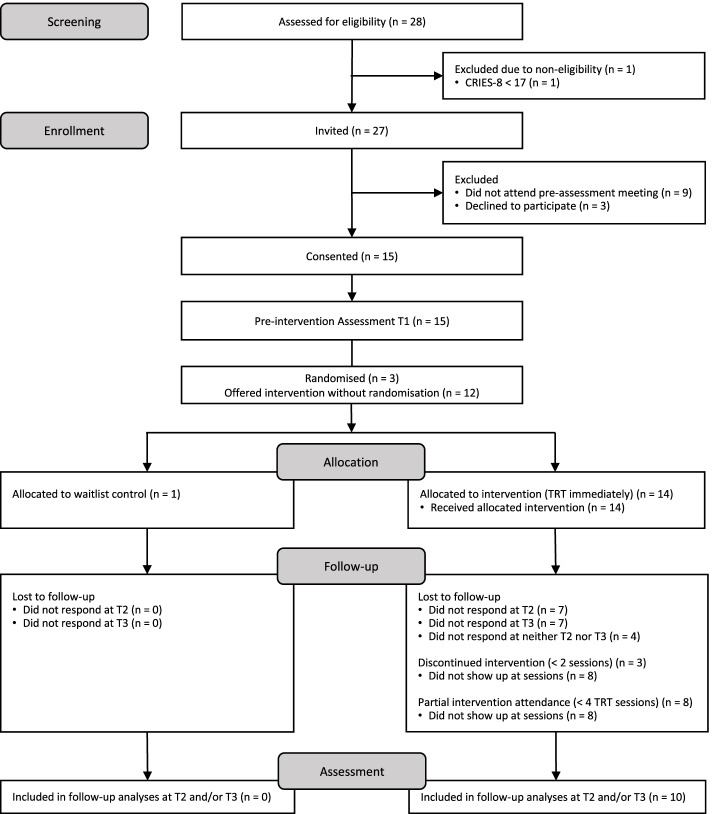
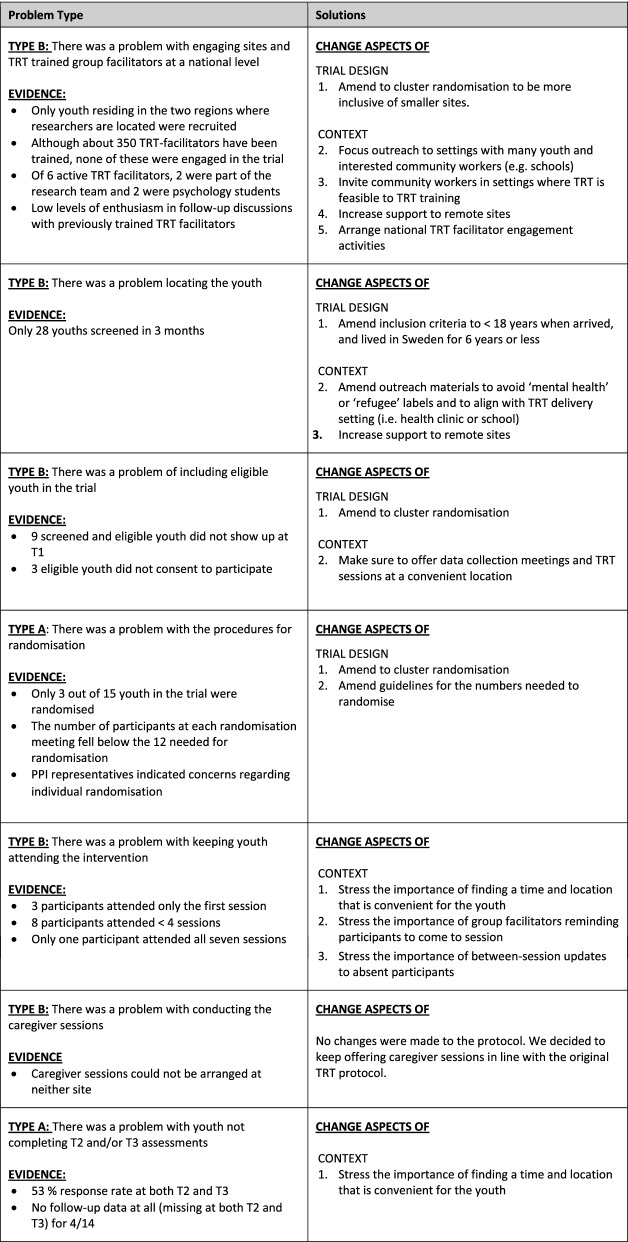
Background: Although post-traumatic stress is prevalent among unaccompanied refugee minors (URM), there are few evidence-based psychological interventions for this group. Teaching Recovery Techniques (TRT) is a brief, manualised intervention for trauma-exposed youth, which has shown promising results in exploratory studies. The aim of the present study was to assess the feasibility of conducting a randomised controlled trial (RCT) evaluating the use of TRT among URM by investigating key uncertainties relating to recruitment, randomisation, intervention delivery and data collection. Methods: A 3-month long non-blinded internal randomised pilot trial with a parallel-group design assessed the feasibility of a planned nationwide multi-site RCT. URM with or without granted asylum were eligible if they were 14 to 20 years old, had arrived in Sweden within the last 5 years and had screened positive for symptoms of post-traumatic stress disorder (PTSD). Quantitative data were collected pre- and post-intervention, and 18 weeks after randomisation. On-site individual randomisation (1:1) followed directly after pre-intervention assessment. Participants allocated to the intervention were offered seven weekly group-based TRT sessions. Quantitative pilot outcomes were analysed using descriptive statistics. Qualitative information was gathered through on-site observations and follow-up dialogue with group facilitators. A process for Decision-making after Pilot and feasibility Trials (ADePT) was used to support systematic decision-making in moving forward with the trial. Results: Fifteen URM (mean age 17.73 years) with PTSD symptoms were recruited at two sites. Three of the youths were successfully randomised to either TRT or waitlist control (TRT n = 2, waitlist n = 1). Fourteen participants were offered TRT for ethical reasons, despite not being randomised. Six (43%) attended ≥ 4 of the seven sessions. Seventy-three percent of the participants completed at least two assessments, with a response rate of 53% at both post-intervention and follow-up. Conclusions: The findings demonstrated a need for amendments to the protocol, especially with regard to the procedures for recruitment and randomisation. Upon refinement of the study protocol and strategies, an adequately powered RCT was pursued, with data from this pilot study excluded. Trial registration: ISRCTN47820795, prospectively registered on 20 December 2018
Overview
The claims and statistics of this paper haven’t been checked yet.
Free: it reads the open-access text and checks the first 5 claims that cite a source we can check. Create a free account to check every claim.
Integrity signals
Registry
Cites
Statistics
Figures
Verification
Claims the paper makes
The claims and statistics of this paper haven’t been checked yet.
Free: it reads the open-access text and checks the first 5 claims that cite a source we can check. Create a free account to check every claim.
Claims other papers make about this one
Each is checked against this paper’s own text: does it say what the citing paper says it does?
The cited source says what the claim attributes to it.
In the citing paper
“Nonetheless, the authors reported improvement in mean scores on the Cantril Ladder following TRT, at post-intervention and at 18-weeks follow up [60].”
From Examining cognitive behavioral therapy interventions for unaccompanied minors: a systematic review and qualitative research synthesis. (2025) · cites this paper as [60]
The cited source says what the claim attributes to it.
In the citing paper
“From the studies included, only two utilized quantitative measures of QoL [60, 61].”
From Examining cognitive behavioral therapy interventions for unaccompanied minors: a systematic review and qualitative research synthesis. (2025) · cites this paper as [60]
The cited source says what the claim attributes to it.
In the citing paper
“In addition, only seven studies (38.9%) included follow-up assessments in their study designs limiting the evidence regarding long-term benefits of the interventions [60, 61, 63, 67, 68, 73, 78].”
From Examining cognitive behavioral therapy interventions for unaccompanied minors: a systematic review and qualitative research synthesis. (2025) · cites this paper as [60]
Self-check
Percentages, sums and reported differences re-computed from the paper’s own numbers.
The self-check needs the paper’s full text.
Citations
Cites
The PHQ-9: Validity of a brief depression severity measure
Kroenke, K., Spitzer, R. L., & Williams, J. B. W. (2001) · Journal of General Internal Medicine · doi:10.1046/j.1525-1497.2001.016009606.x · Cited by 44,910 · cited 4×
“The PHQ-9.”
MethodInfluentialA Brief Measure for Assessing Generalized Anxiety Disorder: The GAD-7
Spitzer, R. L., Kroenke, K., Williams, J. B. W., & Löwe, B. (2006) · Archives of Internal Medicine · doi:10.1001/archinte.166.10.1092 · Cited by 31,765 · cited 3×
“Abbreviations ADePT: A process for Decision-making after Pilot and feasibility Trials; BRIS: Barnens Rätt I Samhället (Children’s Rights in Society); CHAP: Child Health and Parenting (research group); CHU-9D: Child Health Utility 9D; CI: Confidence interval; CONSORT: Consolidated Standards of Reporting Trials; CRIES:…”
MethodPosner, K., Brown, G. K., Stanley, B., Brent, D. A., Yershova, K. V., Oquendo, M. A., Currier, G. W., Melvin, G. A., Greenhill, L., Shen, S., et al. (2011) · American Journal of Psychiatry · doi:10.1176/appi.ajp.2011.10111704 · Cited by 5,157 · cited 2×
“A suicidality screening tool (Columbia-Suicide Severity Rating Scale (C-SSRS) Screen Version [43]) was utilised as part of a safety protocol for participants who indicated they have had thoughts they would be better off dead (scoring 1 or above, i.”
MethodSekhon, M., Cartwright, M., & Francis, J. J. (2017) · BMC Health Services Research · doi:10.1186/s12913-017-2031-8 · Cited by 3,938 · cited 1×
“As suggested in the theoretical framework of acceptability [45], there might be a reason to differentiate between prospective and retrospective acceptability.”
BackgroundCONSORT 2010 statement: extension to randomised pilot and feasibility trials.
Eldridge, S. M., Chan, C. L., Campbell, M. J., Bond, C. M., Hopewell, S., Thabane, L., & Lancaster, G. A. (2016) · BMJ · doi:10.1136/bmj.i5239 · Cited by 3,404
CONSORT 2010 statement: extension to randomised pilot and feasibility trials
on behalf of the PAFS consensus group, Eldridge, S. M., Chan, C. L., Campbell, M. J., Bond, C. M., Hopewell, S., Thabane, L., & Lancaster, G. A. (2016) · Pilot and Feasibility Studies · doi:10.1186/s40814-016-0105-8 · Cited by 2,843
Social cognitive theory of posttraumatic recovery: the role of perceived self-efficacy
Benight, C. C., & Bandura, A. (2004) · Behaviour Research and Therapy · doi:10.1016/j.brat.2003.08.008 · Cited by 1,565
Zubaida, S. D., & Cantril, H. (1967) · The British Journal of Sociology · doi:10.2307/588624 · Cited by 1,496 · cited 3×
“Secondary assessments included measures of self-efficacy (General Self-Efficacy Scale; GSE [38]) and wellbeing (Cantril Ladder [39]), both of which relate to the TRT programme theory of change.”
BackgroundThe Children's Revised Impact of Event Scale (CRIES): Validity as a Screening Instrument for PTSD
Perrin, S., Meiser-Stedman, R., & Smith, P. (2005) · Behavioural and Cognitive Psychotherapy · doi:10.1017/s1352465805002419 · Cited by 567 · cited 8×
“All of the youth screened for eligibility during the pilot study period met the age and arrival status inclusion criteria, and 27 out of 28 met the PTSD symptom severity inclusion criteria (i.e. ≥ 17 on the CRIES-8).”
MethodInfluentialSatinsky, E., Fuhr, D. C., Woodward, A., Sondorp, E., & Roberts, B. (2019) · Health Policy · doi:10.1016/j.healthpol.2019.02.007 · Cited by 539
Bean, T., Derluyn, I., Eurelings-Bontekoe, E., Broekaert, E., & Spinhoven, P. (2007) · Journal of Nervous & Mental Disease · doi:10.1097/01.nmd.0000243751.49499.93 · Cited by 401
Bouwmans, C., De Jong, K., Timman, R., Zijlstra-Vlasveld, M., Van der Feltz-Cornelis, C., Tan, S. S., & Hakkaart-van Roijen, L. (2013) · BMC Health Services Research · doi:10.1186/1472-6963-13-217 · Cited by 401 · cited 1×
“Health-related quality of life (Child Health Utility 9D; CHU-9D [41]) and service consumption (Treatment Inventory of Costs in Patients with psychiatric disorders; TiC-P) Child and adolescent version [42]) were measured to inform an economic evaluation.”
MethodStevens, K. (2009) · Quality of Life Research · doi:10.1007/s11136-009-9524-9 · Cited by 330 · cited 2×
“Abbreviations ADePT: A process for Decision-making after Pilot and feasibility Trials; BRIS: Barnens Rätt I Samhället (Children’s Rights in Society); CHAP: Child Health and Parenting (research group); CHU-9D: Child Health Utility 9D; CI: Confidence interval; CONSORT: Consolidated Standards of Reporting Trials; CRIES:…”
MethodLongitudinal follow-up of the mental health of unaccompanied refugee minors
Vervliet, M., Lammertyn, J., Broekaert, E., & Derluyn, I. (2014) · European Child & Adolescent Psychiatry · doi:10.1007/s00787-013-0463-1 · Cited by 323
Oppedal, B., & Idsoe, T. (2015) · Scandinavian Journal of Psychology · doi:10.1111/sjop.12194 · Cited by 222
Self-citationAlmqvist, K., & Brandell-Forsberg, M. (1997) · Child Abuse & Neglect · doi:10.1016/s0145-2134(96)00176-7 · Cited by 220
Validation of the Swedish translation of the general self-efficacy scale
Löve, J., Moore, C. D., & Hensing, G. (2012) · Quality of Life Research · doi:10.1007/s11136-011-0030-5 · Cited by 186 · cited 2×
“In line with our expectations, the current pilot data indicated relatively low levels of self-efficacy at preintervention compared with a Swedish cohort study [49].”
MethodResultLong-term mental health in unaccompanied refugee minors: pre- and post-flight predictors
Jensen, T. K., Skar, A. S., Andersson, E. S., & Birkeland, M. S. (2019) · European Child & Adolescent Psychiatry · doi:10.1007/s00787-019-01340-6 · Cited by 178
Bugge, C., Williams, B., Hagen, S., Logan, J., Glazener, C., Pringle, S., & Sinclair, L. (2013) · Trials · doi:10.1186/1745-6215-14-353 · Cited by 175 · cited 2×
“In order to do so, A process for Decision-making after Pilot and feasibility Trials (ADePT) [32] was used.”
MethodMüller, L. R. F., Büter, K. P., Rosner, R., & Unterhitzenberger, J. (2019) · Child and Adolescent Psychiatry and Mental Health · doi:10.1186/s13034-019-0268-1 · Cited by 157
Randomized Control Trial of a CBT Trauma Recovery Program in Palestinian Schools
Barron, I. G., Abdallah, G., & Smith, P. (2013) · Journal of Loss and Trauma · doi:10.1080/15325024.2012.688712 · Cited by 130 · cited 1×
“High acceptability and large effect sizes for PTSD and depression symptom reduction have been reported in studies from Gaza [26] and after the tsunami in Thailand [27].”
BackgroundSarkadi, A., Ådahl, K., Stenvall, E., Ssegonja, R., Batti, H., Gavra, P., Fängström, K., & Salari, R. (2018) · European Child & Adolescent Psychiatry · doi:10.1007/s00787-017-1093-9 · Cited by 94 · cited 5×
“A previous study of TRT with a sample similar to ours has, however, reported a high level of acceptability and appreciation for the groups [17].”
BackgroundMethodResultInfluentialSelf-citationWeinberger, M., Oddone, E. Z., Henderson, W. G., Smith, D. M., Huey, J., Giobbie-Hurder, A., & Feussner, J. R. (2001) · Medical Care · doi:10.1097/00005650-200106000-00010 · Cited by 93 · cited 1×
“[52] as operational challenges specific to multi-site trials, will be of central importance.”
BackgroundThe mental health and wellbeing of Unaccompanied Refugee Minors (URMs)
von Werthern, M., Grigorakis, G., & Vizard, E. (2019) · Child Abuse & Neglect · doi:10.1016/j.chiabu.2019.104146 · Cited by 90
Pfeiffer, E., Sachser, C., Rohlmann, F., & Goldbeck, L. (2018) · Journal of Child Psychology and Psychiatry · doi:10.1111/jcpp.12908 · Cited by 89
Mitra, R., & Hodes, M. (2019) · Child Care Health and Development · doi:10.1111/cch.12640 · Cited by 89
Unemployment in Iraqi refugees: The interaction of pre and post‐displacement trauma
Wright, A. M., Dhalimi, A., Lumley, M. A., Jamil, H. J., Pole, N., Arnetz, J. E., & Arnetz, B. B. (2016) · Scandinavian Journal of Psychology · doi:10.1111/sjop.12320 · Cited by 76 · cited 1×
“Research indicates that these symptoms persist over time [7–9] and could adversely affect URM integration into a new society by affecting their academic and employment prospects [10, 11].”
BackgroundPityaratstian, N., Piyasil, V., Ketumarn, P., Sitdhiraksa, N., Ularntinon, S., & Pariwatcharakul, P. (2015) · Behavioural and Cognitive Psychotherapy · doi:10.1017/s1352465813001197 · Cited by 75 · cited 2×
“High acceptability and large effect sizes for PTSD and depression symptom reduction have been reported in studies from Gaza [26] and after the tsunami in Thailand [27].”
BackgroundUnterhitzenberger, J., Wintersohl, S., Lang, M., König, J., & Rosner, R. (2019) · Child and Adolescent Psychiatry and Mental Health · doi:10.1186/s13034-019-0282-3 · Cited by 70
Children and war: the work of the Children and War Foundation
Yule, W., Dyregrov, A., Raundalen, M., & Smith, P. (2013) · European Journal of Psychotraumatology · doi:10.3402/ejpt.v4i0.18424 · Cited by 69 · cited 3×
“4 Division of Mental Health, Norwegian Institute of Public Health, Oslo, Norway.”
MethodBöge, K., Karnouk, C., Hahn, E. W., Schneider, F. W., Habel, U., Banaschewski, T., Meyer‐Lindenberg, A., Salize, H. J., Kamp‐Becker, I., Padberg, F., et al. (2019) · European Archives of Psychiatry and Clinical Neuroscience · doi:10.1007/s00406-019-00991-5 · Cited by 64 · cited 1×
“In Germany, several initiatives in this direction have taken place, such as in the MEHIRA project [22] and BETTER CARE [23].”
BackgroundEvaluation of a Trauma‐Focused Group Intervention for Unaccompanied Young Refugees: A Pilot Study
Pfeiffer, E., & Goldbeck, L. (2017) · Journal of Traumatic Stress · doi:10.1002/jts.22218 · Cited by 56 · cited 2×
“Since there are only a few high-quality research studies evaluating interventions for newly arrived adolescent refugees [13, 15, 16, 30] a randomised controlled trial (RCT) was planned.”
BackgroundWong, C. W. S., & Schweitzer, R. (2017) · Transcultural Psychiatry · doi:10.1177/1363461517737015 · Cited by 54 · cited 1×
“Research indicates that these symptoms persist over time [7–9] and could adversely affect URM integration into a new society by affecting their academic and employment prospects [10, 11].”
BackgroundSalari, R., Malekian, C., Linck, L., Kristiansson, R., & Sarkadi, A. (2017) · Scandinavian Journal of Public Health · doi:10.1177/1403494817715516 · Cited by 52
Self-citationSigvardsdotter, E., Nilsson, H., Malm, A., Tinghög, P., Gottvall, M., Vaez, M., & Saboonchi, F. (2017) · International Journal of Environmental Research and Public Health · doi:10.3390/ijerph14101175 · Cited by 47 · cited 3×
“Abbreviations ADePT: A process for Decision-making after Pilot and feasibility Trials; BRIS: Barnens Rätt I Samhället (Children’s Rights in Society); CHAP: Child Health and Parenting (research group); CHU-9D: Child Health Utility 9D; CI: Confidence interval; CONSORT: Consolidated Standards of Reporting Trials; CRIES:…”
BackgroundResearch with unaccompanied children seeking asylum
Thomas, S. L., & Byford, S. (2003) · BMJ · doi:10.1136/bmj.327.7428.1400 · Cited by 45
Psychosocial Interventions for Newly Arrived Adolescent Refugees: A Systematic Review
Hettich, N., Seidel, F. A., & Stuhrmann, L. Y. (2020) · Adolescent Research Review · doi:10.1007/s40894-020-00134-1 · Cited by 42 · cited 1×
“Since there are only a few high-quality research studies evaluating interventions for newly arrived adolescent refugees [13, 15, 16, 30] a randomised controlled trial (RCT) was planned.”
BackgroundRosner, R., Sachser, C., Hornfeck, F., Kilian, R., Kindler, H., Muche, R., Müller, L. R. F., Thielemann, J., Waldmann, T., Ziegenhain, U., et al. (2020) · Trials · doi:10.1186/s13063-020-04922-x · Cited by 40
Rafieifar, M., & Macgowan, M. J. (2021) · Research on Social Work Practice · doi:10.1177/10497315211022812 · Cited by 40 · cited 1×
“Although the number of TRT sessions is relatively low compared with other group interventions for trauma among refugee youth [46], weekly attendance can be challenging for youth experiencing trauma-related symptoms.”
BackgroundLawton, K., & Spencer, A. (2021) · Journal of Immigrant and Minority Health · doi:10.1007/s10903-021-01151-5 · Cited by 39 · cited 5×
“The meta-analysis by Lawton and Spencer [13] covers some feasibility aspects of delivering mental health interventions to refugee youth and children, such as the benefits of providing interventions at schools and of training lay personnel.”
BackgroundMethodInfluentialWarner, G., Baghdasaryan, Z., Osman, F., Lampa, E., & Sarkadi, A. (2019) · Health Expectations · doi:10.1111/hex.12990 · Cited by 37
Self-citationUnderutilisation of psychiatric care among refugee adolescents in Stockholm
Berg, L., Ljunggren, G., & Hjern, A. (2020) · Acta Paediatrica · doi:10.1111/apa.15520 · Cited by 31 · cited 1×
“However, despite the obvious need for mental health intervention in this group, and the positive impact of CBT demonstrated by Lawton and Spencer [13], refugees and asylum seekers in Europe commonly lack access to mental health services [18, 19].”
BackgroundŁuszczyńska, A., Benight, C. C., Cieślak, R., KISSINGER, P. J., Reilly, K. H., & Clark, R. A. (2009) · Applied Psychology Health and Well-Being · doi:10.1111/j.1758-0854.2008.01005.x · Cited by 28 · cited 1×
“Given general self-efficacy has previously been identified as a powerful predictor of posttraumatic recovery and still might mediate the effect of the intervention [50, 51], we chose to keep the variable for formal analysis in the fullscale trial.”
MethodSarkadi, A., Warner, G., Salari, R., Fängström, K., Durbeej, N., Lampa, E., Baghdasaryan, Z., Osman, F., Löfving, S. G., Aronsson, A., et al. (2020) · Trials · doi:10.1186/s13063-019-3814-5 · Cited by 27 · cited 7×
“This was documented beforehand in the trial protocol [29].”
BackgroundMethodResultInfluentialSelf-citationLampa, E., Sarkadi, A., & Warner, G. (2020) · International Journal of Environmental Research and Public Health · doi:10.3390/ijerph18010043 · Cited by 11 · cited 1×
“Qualitative evaluation of the factors that have aided the implementation and maintenance of TRT delivery revealed that group facilitators should go to where the youth are, rather than expect them to come to where TRT is offered [47].”
BackgroundSelf-citationWarner, G., Keeshin, B. R., & Sarkadi, A. (2020) · European Child & Adolescent Psychiatry · doi:10.1007/s00787-020-01592-7 · Cited by 5 · cited 3×
“However, our experiences during the pilot period also opened our eyes to the possibility of delivering TRT online, a direction we later elaborated further as a response to the COVID-19 pandemic [44].”
BackgroundInfluentialSelf-citationWarner, G., Baghdasaryan, Z., Osman, F. A., Lampa, E., & Sarkadi, A. (2020) · European Journal of Public Health · doi:10.1093/eurpub/ckaa165.1308 · Cited by 5 · cited 1×
“The study protocol was developed by an interdisciplinary research team, with patient and public involvement (PPI) from a group of refugee advisors [34].”
BackgroundSelf-citation
Research works printed but not linked: 5
- Smith P Perrin S Dyregrov A Yule W Gupta L Gjestad R Children and disaster: teaching recovery techniques 1999 Bergen Children and War Foundation
- Ali NS Al-Joudi TW Snell T Teaching recovery techniques to adolescents exposed to multiple trauma following war and ongoing violence in Baghdad. Arab J Psychiatry 2019 30 1 25 33
- Schwarzer R Jerusalem M Weinman J Wright S Johnston M Generalized self-efficacy scale Measures in health psychology: a user’s portfolio causal and control beliefs 1995 Windsor NFER-NELSON 35 37
- (1) [cited 2020 Jun 3]. Available from: https://bmchealthservres.biomedcentral.com/articles/10.1186/1472-6963-13-217. · DOI · Paper page
- Oppedal B Solhaug AK Friborg O Biele G Implementering og evaluering av teaching recovery techniques i asylmottak og bosettingskommuner i Norge 2019
Cited by
Oberg, C. N., & Sharma, H. (2023) · Children · doi:10.3390/children10060941 · Cited by 44
“Upon revision, an adequately powered randomized clinical trial is presently underway [63].”
BackgroundVelu, M. E., Kuiper, R. M., Schok, M., Sleijpen, M., de Roos, C., & Mooren, T. T. M. (2025) · European Journal of Psychotraumatology · doi:10.1080/20008066.2025.2494362 · Cited by 25
“…2005; Ooi et al., 2016; Panter-Brick et al., 2018; Peltonen & Kangaslampi, 2019; Perilli et al., 2019; Pfei ff er et al., 2018; Pfei ff er & Goldbeck, 2017; Rondung et al., 2022; Sarkadi et al., 2018; Unterhitzen-berger, Wintersohl, et al., 2019; van Es et al., 2021; van Es et al., 2023),…”
InfluentialMolendijk, M. L., Baart, C., Schaffeld, J., Akçakaya, Z., Rönnau, C., Kooistra, M. J., de Kleine, R. A., Strater, C., & Mooshammer, L. (2024) · Clinical Psychology & Psychotherapy · doi:10.1002/cpp.3042 · Cited by 28
Morroni, D., Konstantinou, P., Gkleka, C., Kassianos, A. P., & Karekla, M. (2025) · European Child & Adolescent Psychiatry · doi:10.1007/s00787-024-02500-z · Cited by 9
“Nonetheless, the authors reported improvement in mean scores on the Cantril Ladder following TRT, at post-intervention and at 18-weeks follow up [60 ].”
InfluentialPsychotherapeutic and Psychosocial Interventions with Unaccompanied Minors: A Scoping Review
Moutsou, I., Georgaca, E., & Varaklis, T. (2023) · Healthcare · doi:10.3390/healthcare11060918 · Cited by 10
“Significant findings were concerned with the decrease in PTSS, PTSD and traumarelated symptoms [37–40,44,45,47,51,54–57] as well as the improvement of depression [37,39,40,44,47,49,55], behavioural problems [37,44,53], negative affect [38,49], mental distress [41,46], anxiety [53,55] and physical complaints [44].”
BackgroundResult
Metadata
- Authors
- Rondung, E., Leiler, A., Sarkadi, A., Bjärtå, A., Lampa, E., Löfving, S. G., Calam, R., Oppedal, B., Keeshin, B., & Warner, G.
- Affiliations
- Mid Sweden University (SE)
- Uppsala University (SE)
- University of Manchester (GB)
- Norwegian Institute of Public Health (NO)
- University of Utah (US)
- Corresponding author
- Rondung, Elisabet
- ORCID
- Venue
- Pilot and Feasibility Studies
- Published
- 2022-02-14
- Volume
- 8
- Issue
- 1
- Pages
- 40-40
- ISSN
- 2055-5784 (ISSN-L)
- PMC
- PMC8843024
- OpenAlex
- W4213352079
- Cited by
- 18
- References
- 47
- Citations by year
- 2026: 8 · 2025: 2 · 2024: 4 · 2023: 4
- FWCI
- 2.28
- Type
- journal article
- Language
- en
- Open access
- gold
- doi.org
- Licence
- cc-by
- creativecommons.org/licenses/by/4.0 (tdm)
- creativecommons.org/licenses/by/4.0 (vor)
- Locations
- Pilot and Feasibility Studies (publishedVersion, cc-by)
- PubMed Central (publishedVersion, cc-by)
- PubMed (publishedVersion)
- Uppsala University Publications (Uppsala University) (submittedVersion, other-oa)
- DOAJ (DOAJ: Directory of Open Access Journals) (submittedVersion, cc-by-sa)
- NORA - Norwegian Open Research Archives (submittedVersion, other-oa)
- Funders
- Kavli Trust (A-321629)
- Mid Sweden University
- Topics
- Social Sciences › Psychology › Clinical Psychology › Migration, Health and Trauma
- Social Sciences › Psychology › Clinical Psychology › Posttraumatic Stress Disorder Research
- Social Sciences › Psychology › Clinical Psychology › Psychotherapy Techniques and Applications
- Keywords
- Teaching Recovery Techniques, unaccompanied refugee children, post-traumatic stress disorder, trauma-exposed youth, psychological intervention, group intervention, trial feasibility, recruitment (clinical trials), randomization, intervention delivery, asylum seekers, refugee youth
About these checks
Registry, retraction, Cites and statistics results are computed, not judged, with one exception: a printed reference that no index lists is read once by a model before it counts as a citation error. Claims are extracted by a model and kept only when their quote appears verbatim in the text; each cited source is then checked, with a model’s help, for whether it says what the claim relies on. Those verdicts can be wrong — read the claim’s quote and the cited source before relying on one.
Statistics and arithmetic are recomputed, not judged.
Confidence bands are shown only for fields calibrated on our annotated test set. None is calibrated yet, so no band is shown.
What counts as a claim ›How we measure confidence ›How we check this ›
Are you an author, or do you see a problem with this page? Request a review
Data sources
Bibliographic data: Semantic Scholar, OpenAlex, Crossref.
Contains information from the Semantic Scholar Academic Graph Datasets, made available under the ODC Attribution License (ODC-BY 1.0).
Semantic Scholar’s data is described in: Kinney, R., et al. (2023). The Semantic Scholar Open Data Platform. arXiv:2301.10140.
