

Comparing quality of reporting between preprints and peer-reviewed articles in the biomedical literature
Open accessPublished version of a preprint
The DOI matches its Crossref record; 47 of the 47 references it cites were found in a registry or an index; 15 of the 32 sources its claims cite were checked for support.
Abstract
Background: Preprint usage is growing rapidly in the life sciences; however, questions remain on the relative quality of preprints when compared to published articles. An objective dimension of quality that is readily measurable is completeness of reporting, as transparency can improve the reader’s ability to independently interpret data and reproduce findings. Methods: In this observational study, we initially compared independent samples of articles published in bioRxiv and in PubMed-indexed journals in 2016 using a quality of reporting questionnaire. After that, we performed paired comparisons between preprints from bioRxiv to their own peer-reviewed versions in journals. Results: Peer-reviewed articles had, on average, higher quality of reporting than preprints, although the difference was small, with absolute differences of 5.0% [95% CI 1.4, 8.6] and 4.7% [95% CI 2.4, 7.0] of reported items in the independent samples and paired sample comparison, respectively. There were larger differences favoring peer-reviewed articles in subjective ratings of how clearly titles and abstracts presented the main findings and how easy it was to locate relevant reporting information. Changes in reporting from preprints to peer-reviewed versions did not correlate with the impact factor of the publication venue or with the time lag from bioRxiv to journal publication. Conclusions: Our results suggest that, on average, publication in a peer-reviewed journal is associated with improvement in quality of reporting. They also show that quality of reporting in preprints in the life sciences is within a similar range as that of peer-reviewed articles, albeit slightly lower on average, supporting the idea that preprints should be considered valid scientific contributions.
Overview
CoChat Summary
TL;DR
In this observational study, peer-reviewed biomedical articles had slightly higher completeness of reporting than bioRxiv preprints, both in independent samples and in paired preprint-to-publication comparisons. The differences were small, and changes from preprint to peer-reviewed version did not correlate with journal impact factor or time to publication.
Key findings
Peer-reviewed articles scored higher than preprints by 5.0% [95% CI 1.4, 8.6] in independent samples (bioRxiv 66.9 ± 12.2 vs. PubMed 71.9 ± 10.1) and by 4.7% [95% CI 2.4, 7.0] in paired comparisons (preprint 67.6 ± 10.8 vs. peer-reviewed 72.3 ± 10.1).
- In the paired sample, 27% of pairs (15/56) showed a decrease in reporting score from preprint to peer-reviewed version.
- The largest paired item difference was conflict of interest statements (46.4% vs. 83.9%, p = 1.9 × 10⁻⁵); removing this item reduced the paired difference from 4.7 to 3.3 percentage points.
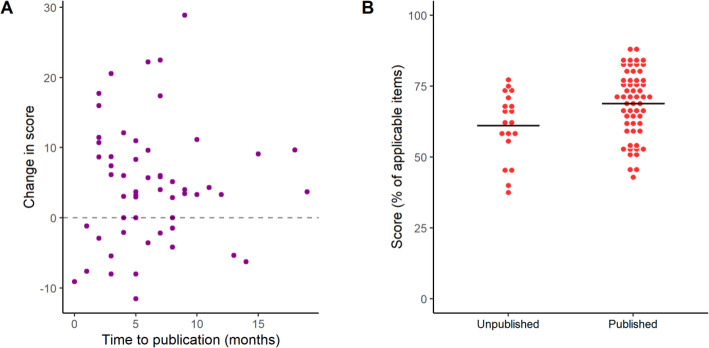
- Changes in reporting score did not correlate with journal impact factor (ρ = 0.16, p = 0.25) or time from bioRxiv to journal publication (r = 0.03, p = 0.81). Preprints later published had higher reporting scores than unpublished preprints (68.8 ± 11.8 vs. 61.1 ± 11.9, p = 0.02).
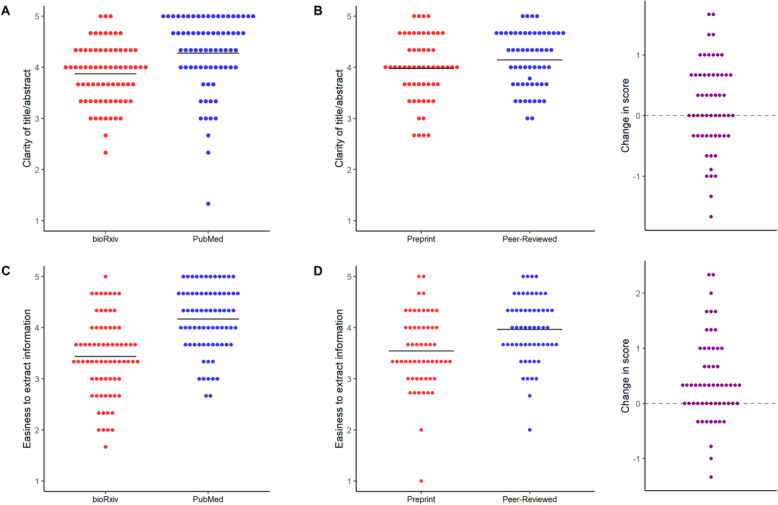
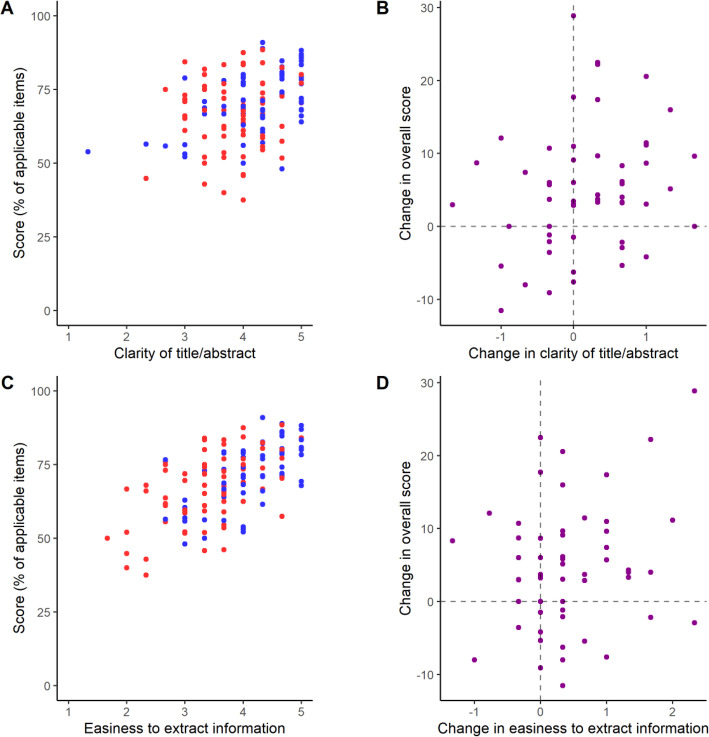
- Subjective ratings favored peer-reviewed articles for title/abstract clarity (independent difference 0.4 [95% CI 0.2, 0.6]) and ease of extracting information (independent difference 0.7 [95% CI 0.5, 1.0]; paired difference 0.4 [95% CI 0.2, 0.6]).
Methods
Observational study with preregistered protocols: independent random samples of bioRxiv preprints and PubMed-indexed articles from 2016, matched by biological model, with 76 articles per group; paired comparison of 56 bioRxiv preprints to their own peer-reviewed journal versions.
- Quality of reporting was assessed with an online questionnaire based on existing reporting guidelines; each article was evaluated by three evaluators, with the most prevalent answer used for objective items and the mean used for subjective items. Overall score was the percentage of applicable reporting items reported.
- Analyses used Student’s t-tests, paired t-tests, ANOVA, Fisher’s exact or McNemar’s exact tests, and Spearman or Pearson correlations; primary outcomes used α = 0.05, with Sidak correction for secondary outcomes.
Limitations
The paper states that generalizability is limited by inclusion criteria requiring primary data and statistical comparisons, use of a single preprint platform, analysis of the first table/figure rather than necessarily the main finding, evaluators not blinded to article group origin, and limited power for individual-question and journal-feature analyses.
- The paper notes that independent-sample differences may reflect field, region, and practice differences between bioRxiv and PubMed rather than peer review alone, and that paired changes may stem from other editorial or submission requirements, not only reviewer feedback.
- Evident from the text: the paired sample used only the first preprint version, so changes from other feedback sources cannot be excluded; peer-review model comparisons were not performed because most articles were in single-blind journals.
Model-written summary. Check it against the paper before relying on it.
Integrity signals
Registry
Cites
Statistics
Figures
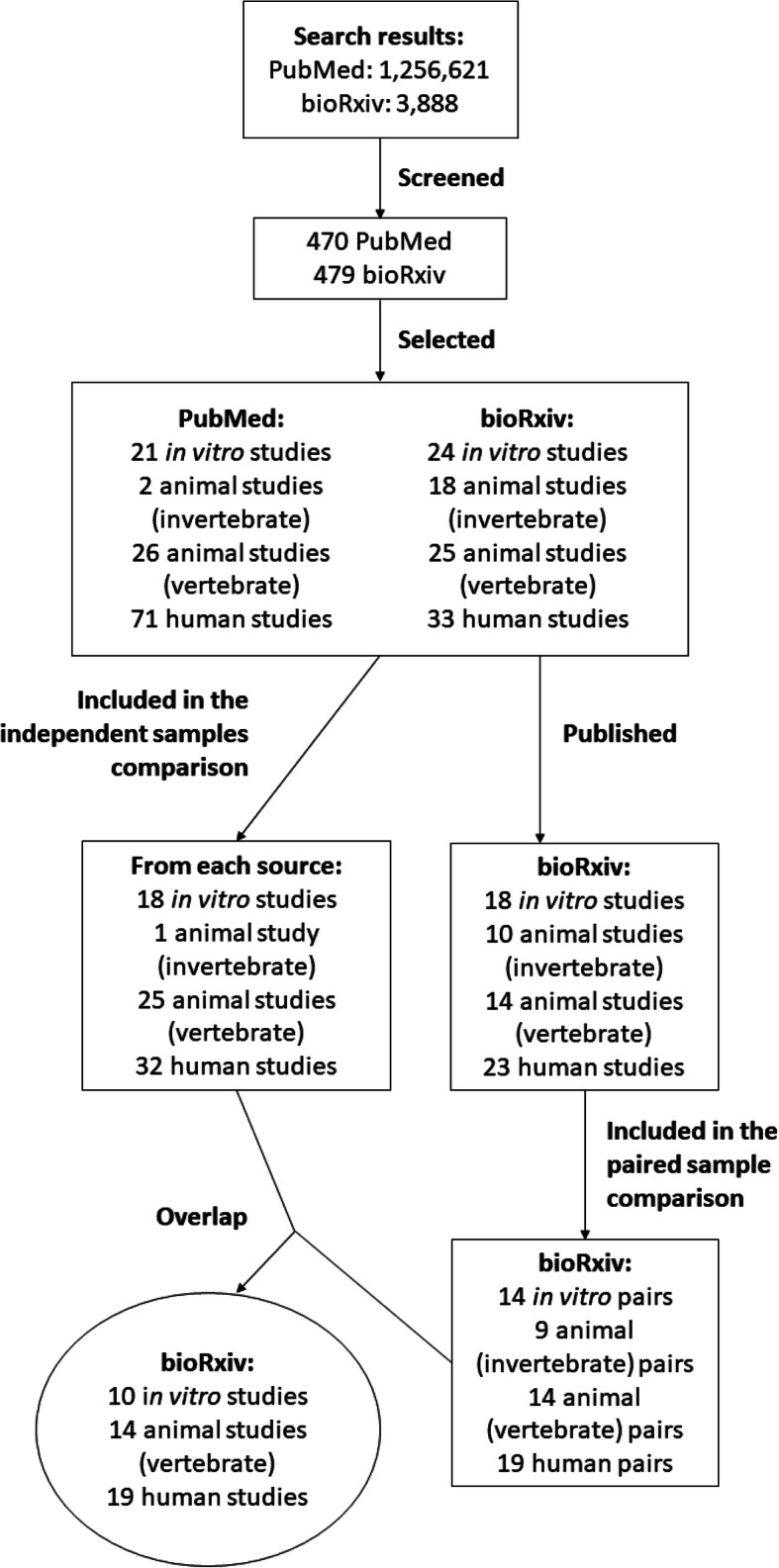
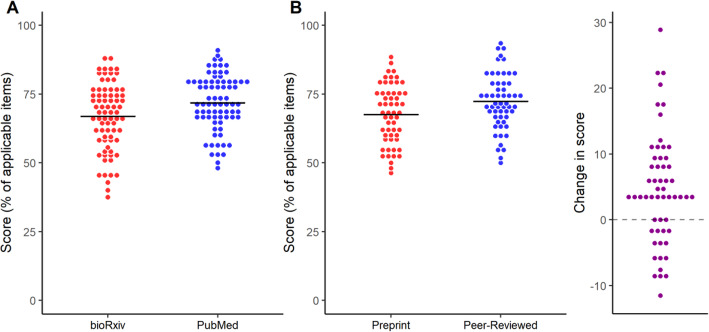
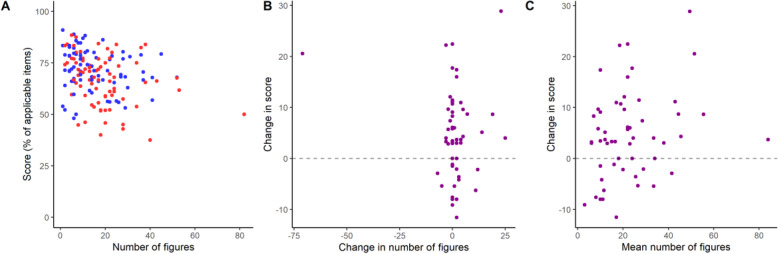
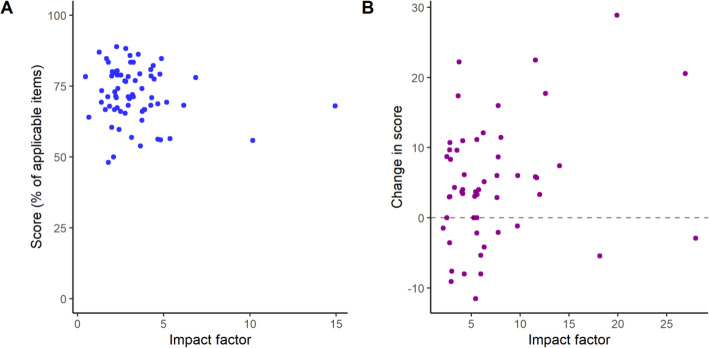
Verification
Claims the paper makes
3 Valid · 1 Not valid · 12 Not checked · 151 Own results and interpretations
Some cited sources support this claim and some don’t — read each source’s verdict below.
In the paper
“Reporting guidelines and checklists provided to authors during the review or manuscript preparation processes have been reported to cause modest improvements limited to a few items in in vivo animal studies [19, 20, 28, 40].”
§ Comparing quality of reporting between preprints and peer-reviewed articles in the biomedical literature > Discussion
What the sources say
- Supportedcites [19] Hair K, Macleod MR, Sena ES. A randomised controlled trial of an intervention to improve compliance with the ARRIVE guidelines (IICARus). Res Integrity Peer Rev. 2019;4(1). 10.1186/s41073-019-0069-3. PMC6560728 31205756 source
The Discussion reports that requiring authors to complete an ARRIVE checklist at manuscript submission increased compliance with only one reporting subitem and did not improve full adherence. This supports the claim of a limited improvement in reporting for in vivo animal studies; this trial tested a submission-stage request, not a peer-review intervention. (LLM, conf=0.88)
- Partly supportedcites [20] Han S A checklist is associated with increased quality of reporting preclinical biomedical research: a systematic review PLOS ONE 2017 12 9 e0183591 10.1371/journal.pone.0183591 28902887 PMC5597130 sourceExperimental — accuracy not yet measured
The Results (Differences between Cell and Nature; page not available) report improved reporting of three items—randomization, blinding, and sample-size estimation—in in vivo animal studies after a checklist was required at submission. But the gains were large (for example, randomization reporting rose from 15% to 85%), not modest. The Abstract describes the checklist as associated with improvement and says it was likely responsible, so the claim’s unqualified causal wording also exceeds that evidence. (LLM, conf=0.88)
- Partly supportedcites [28] Leung V ARRIVE has not ARRIVEd: support for the ARRIVE (animal research: reporting of in vivo experiments) guidelines does not improve the reporting quality of papers in animal welfare, analgesia or anesthesia PLOS ONE 2018 13 5 e0197882 10.1371/journal.pone.0197882 29795636 PMC5967836 sourceExperimental — accuracy not yet measured
The Results (Sub-items; page unavailable) report improvements in a small number of reporting items, and the Discussion describes limited increases without a significant difference between journals supporting ARRIVE and those not supporting it. The Discussion also reports improved reporting after a mandatory manuscript checklist, but attributes that finding to another study and describes a substantial increase for sample-size calculation. This source therefore does not establish that guidelines or checklists provided during review or preparation caused only modest improvements. (LLM, conf=0.85)
- Disputedcites [40] The NPQIP Collaborative group Did a change in Nature journals’ editorial policy for life sciences research improve reporting? BMJ Open Sci 2019 3 1 e000035 10.1136/bmjos-2017-000035 PMC8647608 35047682 sourceExperimental — accuracy not yet measured
The Background and Intervention passages confirm that Nature journals required a checklist during manuscript revision. But the Results (Reporting of the Landis 4 items; page unavailable) report large increases in reporting of several in vivo items, and the Conclusions describe the improvements as substantial—not modest improvements limited to a few items. (LLM, conf=0.88)
Checked by a reasoning model — may be wrong.
plainstates a possible cause- Asserted: passes — The authors put it forward as true.
- Checkable: passes — It can be checked against evidence.
- Load-bearing: passes — The paper’s conclusions depend on it.
- Based: passes — The paper gives a reason why it holds.
- Supported
A result the paper reports from its own data — it cites no other source for it, so there is none to check. The quote shows it is in the paper.
In the paper
“There were larger differences favoring peer-reviewed articles in subjective ratings of how clearly titles and abstracts presented the main findings and how easy it was to locate relevant reporting information.”
§ Comparing quality of reporting between preprints and peer-reviewed articles in the biomedical literature > Abstract > Results
plainstates an association- Asserted: passes — The authors put it forward as true.
- Checkable: passes — It can be checked against evidence.
- Load-bearing: unclear — It is unclear whether the paper’s conclusions depend on it.
- Based: passes — The paper gives a reason why it holds.
A result the paper reports from its own data — it cites no other source for it, so there is none to check. The quote shows it is in the paper.
In the paper
“Though there was no clear evidence that individual evaluators changed their scoring over time”
§ Comparing quality of reporting between preprints and peer-reviewed articles in the biomedical literature > Methods > Data collection
hedged- Asserted: passes — The authors put it forward as true.
- Checkable: passes — It can be checked against evidence.
- Load-bearing: passes — The paper’s conclusions depend on it.
- Based: passes — The paper gives a reason why it holds.
A result the paper reports from its own data — it cites no other source for it, so there is none to check. The quote shows it is in the paper.
In the paper
“Changes in reporting from preprints to peer-reviewed versions did not correlate with the impact factor of the publication venue or with the time lag from bioRxiv to journal publication.”
§ Comparing quality of reporting between preprints and peer-reviewed articles in the biomedical literature > Abstract > Results
plain- Asserted: passes — The authors put it forward as true.
- Checkable: passes — It can be checked against evidence.
- Load-bearing: unclear — It is unclear whether the paper’s conclusions depend on it.
- Based: passes — The paper gives a reason why it holds.
A result the paper reports from its own data — it cites no other source for it, so there is none to check. The quote shows it is in the paper.
In the paper
“the equivalence test (with an estimated power of 90% to detect equivalence at ±5% with α = 0.05) failed to provide statistical evidence for equivalence at the ±5% bound”
§ Comparing quality of reporting between preprints and peer-reviewed articles in the biomedical literature > Methods > Data collection
plain- Asserted: passes — The authors put it forward as true.
- Checkable: passes — It can be checked against evidence.
- Load-bearing: passes — The paper’s conclusions depend on it.
- Based: passes — The paper gives a reason why it holds.
89 more claims
Create a free account to see all 167 claims and to verify the 17 references still open.
- Probably not a substantial claim. 48
- It may state two separate claims as one. 41
- The quote only partly states this claim. 1
Claims other papers make about this one
Each is checked against this paper’s own text: does it say what the citing paper says it does?
In the citing paper
“Furthermore, living reviews of evolving topics may be less reliable than traditional SRs.”
From A narrative review of recent tools and innovations toward automating living systematic reviews and evidence syntheses (2023) · cites this paper as [6]
In the citing paper
“Readers of articles from pre-print servers will need to be aware that a pre-print may not follow high standards in terms of clarity, quality of reporting or availability of data, due to a lack of quality-control from an established publisher [6,38].”
From A narrative review of recent tools and innovations toward automating living systematic reviews and evidence syntheses (2023) · cites this paper as [6]
Self-check
Percentages, sums and reported differences re-computed from the paper’s own numbers.
Each contradiction between two passages listed here was confirmed by an independent check.
Rated minor: it would not touch a result — a value no result rests on, a p-value that stays on the same side of the significance level, or a conflict that is clerical, resolved elsewhere in the paper, or outside its own findings.
In the paper
§ Comparing quality of reporting between preprints and peer-reviewed articles in the biomedical literature > Results > Subjective assessment
“For clarity of abstract, we found a difference of 0.4, 95% C.I. [0.2–0.6] (t = 3.61, p = 4.2 × 10− 3, Student’s t-test)”
§ Comparing quality of reporting between preprints and peer-reviewed articles in the biomedical literature > Results > Subjective assessment
“Student’s t-test: t = 3.61, p = 0.0004.”
Rated minor: it would not touch a result — a value no result rests on, a p-value that stays on the same side of the significance level, or a conflict that is clerical, resolved elsewhere in the paper, or outside its own findings.
In the paper
§ Comparing quality of reporting between preprints and peer-reviewed articles in the biomedical literature > Results > Correlations between formatting and reporting score
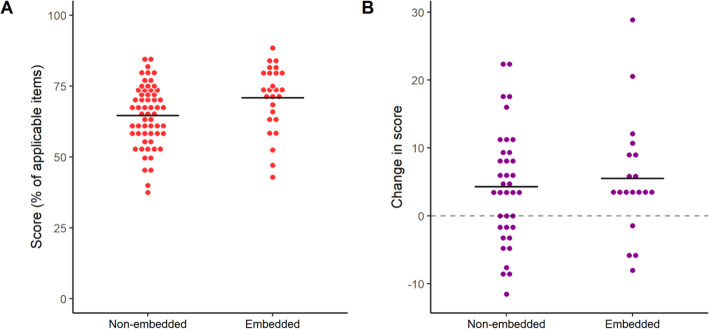
“Preprints assessed in both stages of the study were included only once for this analysis, with the mean of reporting scores from both assessments. Mean ± S.D.: Non-embedded = 64.6 ± 10.9, n = 59; Embedded = 70.8 ± 11.6, n = 26.”
§ Comparing quality of reporting between preprints and peer-reviewed articles in the biomedical literature > Results > Evaluation of articles
“Of the 76 preprints analyzed in the first stage, 49 had been published by Dec. 31st, 2018. Of these, 43 were included in the paired comparison. Additionally, 13 preprints that met inclusion criteria but were not included in the independent samples comparison (due to lack of articles in the same category in the PubMed sample) were included in the paired comparison.”
Rated minor: it would not touch a result — a value no result rests on, a p-value that stays on the same side of the significance level, or a conflict that is clerical, resolved elsewhere in the paper, or outside its own findings.
In the paper
“| Paired sample | Title and abstract | 1 ± 0 | 85.7 ± 35.3 | 83.9 ± 37.1 | 1.8 [−8.0, 4.4] | 0.57 | 56 |”
§ Comparing quality of reporting between preprints and peer-reviewed articles in the biomedical literature > Results > Reporting scores by category of articles
Reported 1.8 · recomputed -1.8
Rated minor: it would not touch a result — a value no result rests on, a p-value that stays on the same side of the significance level, or a conflict that is clerical, resolved elsewhere in the paper, or outside its own findings.
In the paper
§ Comparing quality of reporting between preprints and peer-reviewed articles in the biomedical literature > Results > Subjective assessment
“Fig. 6d; 0.4, 95% C.I. [0.2, 0.6]; t = 4.11, p = 1.3 × 10− 3, paired t-test”
§ Comparing quality of reporting between preprints and peer-reviewed articles in the biomedical literature > Results > Subjective assessment
“Paired t-test: t = 4.12, p = 0.0001.”
Rated minor: it would not touch a result — a value no result rests on, a p-value that stays on the same side of the significance level, or a conflict that is clerical, resolved elsewhere in the paper, or outside its own findings.
In the paper
§ Comparing quality of reporting between preprints and peer-reviewed articles in the biomedical literature > Results > Subjective assessment
“Fig. 7b; r = 0.25, 95% C.I. [− 0.01, 0.48], p = 0.06, Pearson’s correlation”
§ Comparing quality of reporting between preprints and peer-reviewed articles in the biomedical literature > Results > Subjective assessment
“r = 0.25, 95% C.I. [− 0.01, 0.68], p = 0.06, n = 56.”
Citations
Cites
von Elm, E., Altman, D. G., Egger, M., Pocock, S. J., Gøtzsche, P. C., Vandenbroucke, J. P., & Initiative, F. T. S. (2007) · PLoS Medicine · doi:10.1371/journal.pmed.0040296 · Cited by 23,020 · cited 2×
“Questions were based on existing reporting guidelines (Moher et al., 2001; von Elm et al., 2007; Kilkenny et al., 2010; Bossuyt et al., 2015), journal checklists (Nature, 2013) and previous studies on quality of reporting (Hair, Macleod and Sena, 2019; The NPQIP Collaborative group, 2019), and are…”
BackgroundMethodImproving Bioscience Research Reporting: The ARRIVE Guidelines for Reporting Animal Research
Kilkenny, C., Browne, W. J., Cuthill, I. C., Emerson, M., & Altman, D. G. (2010) · PLoS Biology · doi:10.1371/journal.pbio.1000412 · Cited by 7,300
The ASA Statement on p -Values: Context, Process, and Purpose
Wasserstein, R. L., & Lazar, N. A. (2016) · The American Statistician · doi:10.1080/00031305.2016.1154108 · Cited by 6,306
Improving bioscience research reporting: The ARRIVE guidelines for reporting animal research
Kilkenny, C., Browne, W. J., Cuthill, I. C., Emerson, M., & Altman, D. G. (2010) · Journal of Pharmacology and Pharmacotherapeutics · doi:10.4103/0976-500x.72351 · Cited by 6,277
Moher, D., Schulz, K. F., & Altman, D. G. (2001) · The Lancet · doi:10.1016/s0140-6736(00)04337-3 · Cited by 5,373
STARD 2015: an updated list of essential items for reporting diagnostic accuracy studies
Bossuyt, P. M., Reitsma, J. B., Bruns, D. E., Gatsonis, C. A., Glasziou, P. P., Irwig, L., Lijmer, J. G., Moher, D., Rennie, D., de Vet, H. C. W., et al. (2015) · BMJ · doi:10.1136/bmj.h5527 · Cited by 3,660
Moher, D., Schulz, K. F., & Altman, D. G. (2001) · BMC Medical Research Methodology · doi:10.1186/1471-2288-1-2 · Cited by 2,755 · cited 3×
“Questions were based on existing reporting guidelines (Moher et al., 2001; von Elm et al., 2007; Kilkenny et al., 2010; Bossuyt et al., 2015), journal checklists (Nature, 2013) and previous studies on quality of reporting (Macleod et al., 2017; Hair et al., 2018), and are presented along with their…”
MethodMoher, D. (2001) · JAMA · doi:10.1001/jama.285.15.1987 · Cited by 2,545
Publication prejudices: An experimental study of confirmatory bias in the peer review system
Mahoney, M. J. (1977) · Cognitive Therapy and Research · doi:10.1007/bf01173636 · Cited by 1,013 · cited 2×
“Additionally, traditional peer review has various drawbacks (Walker and da Silva, 2015), including reviewer bias (Mahoney, 1977; Murray et al., 2018), lack of agreement among reviewers (Rothwell and Martyn, 2000; Pier et al., 2018) and vulnerability to various forms of system gaming such as…”
BackgroundBohannon, J. (2013) · Science · doi:10.1126/science.342.6154.60 · Cited by 934 · cited 2×
“…et al., 2018), lack of agreement among reviewers (Rothwell and Martyn, 2000; Pier et al., 2018) and vulnerability to various forms of system gaming such as ‘lottery behavior’ by authors (Ioannidis et al., 2010), predatory journals (Bohannon, 2013) and self-peer-review scams (Ferguson et al., 2014).”
Research works printed but not linked: 2
- Anaya, J. (2016) ‘bioRxiv vs. PeerJ preprints’, Medium. Available at: https://medium.com/@OmnesRes/biorxiv-vs-peerj-preprints-f7589141c532 (Accessed: 14 Jan 2019).
- Inglis, J. R. and Sever, R. (2016) ‘bioRxiv: a progress report’, ASAPbio blog. Available at: http://asapbio.org/biorxiv (Accessed: 14 Jan 2019).
Cited by
Fraser, N., Brierley, L., Dey, G., Polka, J. K., Pálfy, M., Nanni, F., & Coates, J. A. (2021) · PLOS Biology · doi:10.1371/journal.pbio.3000959 · Cited by 555
“Recent studies have suggested that the quality of reporting in preprints differs little from their later peer-reviewed articles [49], and we ourselves are currently undertaking a more detailed analysis.”
BackgroundThe limitations to our understanding of peer review
Tennant, J. P., & Ross-Hellauer, T. (2020) · Research Integrity and Peer Review · doi:10.1186/s41073-020-00092-1 · Cited by 384
Medical Education During the COVID-19 Pandemic
Kaul, V., Gallo de Moraes, A., Khateeb, D., Greenstein, Y., Winter, G., Chae, J., Stewart, N. H., Qadir, N., & Dangayach, N. S. (2021) · Chest · doi:10.1016/j.chest.2020.12.026 · Cited by 220
Correlates of turnover intention among nursing staff in the COVID-19 pandemic: a systematic review
Tolksdorf, K. H., Tischler, U., & Heinrichs, K. (2022) · BMC Nursing · doi:10.1186/s12912-022-00949-4 · Cited by 174
Sunjaya, A. P., Allida, S. M., Tanna, G. L. D., & Jenkins, C. R. (2021) · Journal of Asthma · doi:10.1080/02770903.2021.1888116 · Cited by 137
Systematic examination of preprint platforms for use in the medical and biomedical sciences setting
Kirkham, J. J., Penfold, N. C., Murphy, F., Boutron, I., Ioannidis, J. P., Polka, J., & Moher, D. (2020) · BMJ Open · doi:10.1136/bmjopen-2020-041849 · Cited by 112
Interleukin-6 receptor blockade in patients with COVID-19: placing clinical trials into context
Angriman, F., Ferreyro, B. L., Burry, L. D., Fan, E., Ferguson, N. D., Husain, S., Keshavjee, S. H., Lupia, E., Munshi, L., Renzi, S., et al. (2021) · The Lancet Respiratory Medicine · doi:10.1016/s2213-2600(21)00139-9 · Cited by 127
Tracking changes between preprint posting and journal publication during a pandemic
Brierley, L., Nanni, F., Polka, J., Dey, G., Pálfy, M., Fraser, N., & Coates, J. A. (2022) · PLoS Biology · doi:10.1371/journal.pbio.3001285 · Cited by 108
“, by increasing sample sizes or statistics or by making author language more conservative) [13,15].”
BackgroundMethodMalicki, M., Jeroncic, A., ter Riet, G., Bouter, L. M., Ioannidis, J. P. A., Goodman, S. N., & Aalbersberg, I. J. (2020) · JAMA · doi:10.1001/jama.2020.17195 · Cited by 78
Chiarelli, A., Johnson, R., Pinfield, S., & Richens, E. (2019) · F1000Research · doi:10.12688/f1000research.19619.2 · Cited by 79
Comprehensive Approach to Open Access Publishing: Platforms and Tools
Gasparyan, A. Y., Yessirkepov, M., Voronov, A. A., Am, K., & Kitas, G. D. (2019) · Journal of Korean Medical Science · doi:10.3346/jkms.2019.34.e184 · Cited by 75
Stop the peer-review treadmill. I want to get off
Dance, A. (2023) · Nature · doi:10.1038/d41586-023-00403-8 · Cited by 71
Vuong, Q., & Nguyen, M. (2024) · Learned Publishing · doi:10.1002/leap.1636 · Cited by 81
“…platforms, and research increasingly shows little difference between journals and other information dissemination platforms (e.g., preprints) (Carneiro et al., 2020; Janda et al., 2022), the scienti fi c community ’ s consensus on the value of the conventional publishing system might shift.”
Kodvanj, I., Homolak, J., Virag, D., & Trkulja, V. (2022) · Scientometrics · doi:10.1007/s11192-021-04249-7 · Cited by 61
“Concerns have been expressed that preprinted manuscripts are generally of lower quality than journal-published articles due to the lack of peer-review (although, evidence of the effectiveness of the peerreview process is scarce) (Carneiro et al., 2020; Jefferson et al., 2002; Nabavi Nouri et al., 2020; Smith, 2006; Ve…”
BackgroundBero, L., Lawrence, R., Leslie, L., Chiu, K., McDonald, S., Page, M. J., Grundy, Q., Parker, L., Boughton, S., Kirkham, J. J., et al. (2021) · BMJ Open · doi:10.1136/bmjopen-2021-051821 · Cited by 50
Reproducibility: expect less of the scientific paper
Amaral, O. B., & Neves, K. (2021) · Nature · doi:10.1038/d41586-021-02486-7 · Cited by 49
Self-citationDesigning, conducting, and reporting reproducible animal experiments
Wilson, E., Ramage, F. J., Wever, K. E., Sena, E. S., Macleod, M. R., & Currie, G. L. (2023) · Journal of Endocrinology · doi:10.1530/joe-22-0330 · Cited by 46
Wilfully submitting to and publishing in predatory journals - a covert form of research misconduct?
Yeo-Teh, N. S. L., & Tang, B. L. (2021) · Biochemia Medica · doi:10.11613/bm.2021.030201 · Cited by 48
“Without (stringent) peer review, there is essentially no quality control over the content disseminated and this has indeed been proven when publications in a peer reviewed journal were found to have, in general, a higher quality of reporting compared to articles in preprint journals (13).”
ResultZeraatkar, D., Pitre, T., Leung, G., Cusano, E., Agarwal, A., Khalid, F., Escamilla, Z., Cooper, M. A., Ghadimi, M., Wang, Y., et al. (2022) · BMJ Medicine · doi:10.1136/bmjmed-2022-000309 · Cited by 44
Robustness of evidence reported in preprints during peer review
Nelson, L., Ye, H., Schwenn, A., Lee, S., Arabi, S., & Hutchins, B. I. (2022) · The Lancet Global Health · doi:10.1016/s2214-109x(22)00368-0 · Cited by 54
“Studies suggest that the discrepancy between the preprints and peer-reviewed articles is minor and the quality of reporting is within comparable range, advocating in favor of sharing research findings in preprints (19, 21).”
BackgroundResultA tale of two 'opens': intersections between Free and Open Source Software and Open ScholarshipPreprint
Tennant, J., Agarwal, R., Baždarić, K., Brassard, D., Crick, T., Dunleavy, D. J., Evans, T. R., Gardner, N., González-Márquez, M., Graziotin, D., et al. (2020) · SocArXiv (OSF Preprints) · doi:10.31235/osf.io/2kxq8 · Cited by 59
“Some research has even shown that peer review barely changes the quality and content of research between the preprint and final published versions of articles (Klein et al. 2018; Carneiro et al. 2019); and yet, it remains almost universally highly regarded as the process which assigns most”
BackgroundColombo, S. L., Chiarella, S. G., Lefrançois, C., Fradin, J., Simione, L., & Raffone, A. (2023) · Journal of Environmental Psychology · doi:10.1016/j.jenvp.2023.102153 · Cited by 48
Preprints: Their Evolving Role in Science Communication
Puebla, I., Polka, J., & Rieger, O. Y. (2022) · doi:10.3998/mpub.12412508 · Cited by 49
Wingen, T., Berkessel, J. B., & Dohle, S. (2022) · Advances in Methods and Practices in Psychological Science · doi:10.1177/25152459211070559 · Cited by 44
“Indeed, there is empirical evidence that peer-reviewed manuscripts have a higher quality of reporting compared with their non-peer-reviewed version (Carneiro et al., 2019; Cobo et al., 2011; Goodman et al., 1994).”
BackgroundNapolitano, F., Xu, X., & Gao, X. (2021) · Briefings in Bioinformatics · doi:10.1093/bib/bbab456 · Cited by 43
Analysis of single comments left for bioRxiv preprints till September 2019
Malički, M., Costello, J., Alperin, J. P., & Maggio, L. A. (2021) · Biochemia medica · doi:10.11613/bm.2021.020201 · Cited by 35
“Non-author’s comment 1366 (69) 38 (17-83) 23 (3-117)”
InfluentialMalički, M., Costello, J., Alperin, J. P., & Maggio, L. A. (2020) · doi:10.1101/2020.10.14.340083 · Cited by 35
“Non-author’s comment (n, total %) 1,366 (69) 38 (17 to 83) 23 (3 to 117) Praise 577 (42) 36 (17 to 70) 13 (2 to 93) Suggestion 399 (29) 46 (26 to 80) 14 (2 to 90) Criticism 226 (17) 78 (41 to 148) 21 (3 to 104) Asking for clarification 213 (16) 41 (22 to 73) 31 (4 to 134) Full peer review report 168 (12) 397 (78 to 78…”
BackgroundWill COVID-19 result in a giant step backwards for women in academic science?
Shamseer, L., Bourgeault, I. L., Grunfeld, E., Moore, A. E., Peer, N., Straus, S. E., & Tricco, A. C. (2021) · Journal of Clinical Epidemiology · doi:10.1016/j.jclinepi.2021.03.004 · Cited by 34
“Emerging data show that preprints undergo minimal, nonsubstantive changes during peer review indicating they may be representative of their eventual journal publications [48 , 49] .”
BackgroundUsing preprints in evidence synthesis: Commentary on experience during the COVID-19 pandemic
Clyne, B., Walsh, K. A., Murchú, É. Ó., Sharp, M. K., Comber, L., O’Brien, K. K., Smith, S. M., Harrington, P., O’Neill, M., Teljeur, C., et al. (2021) · Journal of Clinical Epidemiology · doi:10.1016/j.jclinepi.2021.05.010 · Cited by 34
The academic impact of Open Science: a scoping review
Klebel, T., Traag, V., Grypari, I., Stoy, L., & Ross‐Hellauer, T. (2025) · Royal Society Open Science · doi:10.1098/rsos.241248 · Cited by 53
“Although preprinting has been common in disciplines like Physics (via the arXiv preprint server, established in 1991), rates have expanded rapidly across disciplines in recent years, especially during the COVID-19 pandemic [93,269,270].”
Schmidt, L., Sinyor, M., Webb, R. T., Marshall, C., Knipe, D., Eyles, E. C., John, A., Gunnell, D., & Higgins, J. P. T. (2023) · Zeitschrift für Evidenz, Fortbildung und Qualität im Gesundheitswesen · doi:10.1016/j.zefq.2023.06.007 · Cited by 31
A guide to open science practices for animal research
Diederich, K., Schmitt, K. D., Schwedhelm, P., Bert, B., & Heinl, C. (2022) · PLoS Biology · doi:10.1371/journal.pbio.3001810 · Cited by 35
Preprints: Their Evolving Role in Science CommunicationPreprint
Puebla, I., Polka, J., & Rieger, O. Y. (2021) · MetArXiv (OSF Preprints) · doi:10.31222/osf.io/ezfsk · Cited by 36
Perspectives on scientific error
van Ravenzwaaij, D., Bakker, M., Heesen, R., Romero, F., van Dongen, N. N. N., Crüwell, S., Field, S. M., Held, L., Munafo, M. R., Pittelkow, M.-M., et al. (2023) · Royal Society Open Science · doi:10.1098/rsos.230448 · Cited by 33
“Indeed, differences in quality between preprints and published works seem to be small [82].”
BackgroundA study of referencing changes in preprint-publication pairs across multiple fields
Akbaritabar, A., Stephen, D. M., & Squazzoni, F. (2022) · Journal of Informetrics · doi:10.1016/j.joi.2022.101258 · Cited by 36
“5 review have focused on the social and medical sciences (Carneiro et al., 2020; Goodman et al., 1994; Hopewell et al., 2014; Roberts et al., 1994; Strang & Siler, 2015; Teplitskiy, 2016).”
BackgroundWiehn, E., Ricci, C., Álvarez‐Perea, A., Perkin, M. R., Jones, C. J., Akdiş, C. A., Bousquet, J. J., Eigenmann, P., Grattan, C. E. H., Apfelbacher, C., et al. (2021) · Allergy · doi:10.1111/all.14951 · Cited by 27
Characterization of Comments About bioRxiv and medRxiv Preprints
Carneiro, C. F. D., da Costa, G. G., Neves, K., de Abreu, M. B., Tan, P. B., Rayêe, D., Boos, F. Z., Andrejew, R., Lubiana, T., Malički, M., et al. (2023) · JAMA Network Open · doi:10.1001/jamanetworkopen.2023.31410 · Cited by 29
Self-citationThe use and acceptability of preprints in health and social care settings: A scoping review
Blatch-Jones, A., Recio‐Saucedo, A., & Giddins, B. (2023) · PLoS ONE · doi:10.1371/journal.pone.0291627 · Cited by 29
SuperMat: construction of a linked annotated dataset from superconductors-related publications
Foppiano, L., Dieb, S., Suzuki, A., de Castro, P. B., Iwasaki, S., Uzuki, A., Echevarría, M. G. E., Meng, Y., Terashima, K., Romary, L., et al. (2021) · Science and Technology of Advanced Materials Methods · doi:10.1080/27660400.2021.1918396 · Cited by 32
“Although the published version may be different from the pre-print version of a document, the differences measured by comparing pre-print and peer-reviewed articles in biology [32] measured objective differences to be around 5%.”
BackgroundStephen, D. (2022) · Scientometrics · doi:10.1007/s11192-022-04357-y · Cited by 20
Pattinson, D., & Currie, G. (2025) · Learned Publishing · doi:10.1002/leap.2012 · Cited by 22
Brierley, L., Nanni, F., Polka, J., Dey, G., Pálfy, M., Fraser, N., & Coates, J. A. (2021) · bioRxiv (Cold Spring Harbor Laboratory) · doi:10.1101/2021.02.20.432090 · Cited by 21
“entire publication pipeline is having a minimal but beneficial effect upon preprints (for example by 344 increasing sample sizes or statistics or by making author language more conservative) [13,15].”
BackgroundMethodPredicting substantive biomedical citations without full text
Hoppe, T. A., Arabi, S., & Hutchins, B. I. (2023) · Proceedings of the National Academy of Sciences · doi:10.1073/pnas.2213697120 · Cited by 17
“One (53) manually compared the quality of reporting of both independent and paired preprint and peer-reviewed samples from bioRxiv and PubMed.”
Rzayeva, N., Henriques, S. O., Pinfield, S., & Waltman, L. (2023) · PeerJ · doi:10.7717/peerj.15864 · Cited by 24
Lourenco, M. V., Borelli, W. V., Duran-Aniotz, C. A., Zimmer, E. R., & de Castro, S. S. (2023) · Alzheimer s & Dementia Translational Research & Clinical Interventions · doi:10.1002/trc2.12378 · Cited by 19
Preprints in Chemistry: An Exploratory Analysis of Differences with Journal Articles
Pagliaro, M. (2021) · Publications · doi:10.3390/publications9010005 · Cited by 15
Sevryugina, Y. V., & Dicks, A. J. (2021) · bioRxiv (Cold Spring Harbor Laboratory) · doi:10.1101/2021.01.21.427563 · Cited by 15
“Certainly, the peer-review 37 process improves the drafted manuscript, but previous studies showed that its positive effect on 38 the overall quality of the final report is minor [1].”
BackgroundShould systematic reviews and meta-analyses include data from preprints?
Brietzke, E. M., Gomes, F. A., Gerchman, F., & Freire, R. C. R. (2023) · Trends in Psychiatry and Psychotherapy · doi:10.47626/2237-6089-2021-0324 · Cited by 17
Key Influences on Students' Academic Success: Insights from Scholarly Research
Vitoria, L., Ramli, M., Johar, R., & Mawarpury, M. (2024) · Journal of Educational Management and Learning · doi:10.60084/jeml.v2i1.164 · Cited by 22
Mapping strategies towards improved external validity in preclinical translational research
Carneiro, C. F. D., Drude, N., Hülsemann, M., Collazo, A., & Toelch, U. (2023) · Expert Opinion on Drug Discovery · doi:10.1080/17460441.2023.2251886 · Cited by 18
“In addition, the quality of reporting of preclinical experiments needs to be improved to allow further understanding of the variability and usefulness of experimental models [92,93,120,121].”
BackgroundSelf-citationA guide to preprinting for early-career researchers
Ettinger, C. L., Sadanandappa, M. K., Görgülü, K., Coghlan, K., Hallenbeck, K. K., & Puebla, I. (2022) · Biology Open · doi:10.1242/bio.059310 · Cited by 15
“…and their associated journal publications found that the reporting quality in preprints is within a similar range as that of peer-reviewed articles (Carneiro et al., 2020) and that the main content and conclusions changed little between the preprint and the journal publication for the same work…”
The Efficient Provision of Information Resources in Academic Libraries: Theory and Practice
Lewis, D. W., Baich, T., Palmer, K. L., & Miller, W. M. (2022) · Library trends · doi:10.1353/lib.2022.0007 · Cited by 11
“It is worth noting that while the peer review and editorial process improves preprints, these gains are not large (Carneiro et al. 2020).”
BackgroundKavanagh, C. M., & Kapitány, R. (2021) · Journal for the Cognitive Science of Religion · doi:10.1558/jcsr.38713 · Cited by 11
Davidson, M., Evrenoglou, T., Graña, C., Chaimani, A., & Boutron, I. (2024) · BMC Medical Research Methodology · doi:10.1186/s12874-023-02136-8 · Cited by 9
“In non-COVID-19-related studies, Carneiro et al. [43] determined that preprints were lacking in reporting quality but, on average, the quality of reporting between preprints and subsequent journal articles was comparable.”
Itani, D., Lababidi, G. H., Itani, R., Ghoul, T. E., Hamade, L., Hijazi, A. R. A., Khabsa, J., & Akl, E. A. (2022) · Journal of Clinical Epidemiology · doi:10.1016/j.jclinepi.2022.06.008 · Cited by 10
Wingen, T., Berkessel, J. B., & Dohle, S. (2021) · OSF Preprints (OSF Preprints) · doi:10.31219/osf.io/7n3mj · Cited by 9
Utility of Routine Laboratory Biomarkers to Detect COVID-19: A Systematic Review and Meta-Analysis
Suklan, J., Cheaveau, J., Hill, S., Urwin, S., Green, K., Winter, A., Hicks, T., Boath, A., Kernohan, A., Price, D., et al. (2021) · Viruses · doi:10.3390/v13050803 · Cited by 10
“However, by including pre-prints in our meta-analysis we are also aware that: (1) pre-prints might change considerably after revisions, (2) there could be mistakes in the data and in the analysis, (3) the reporting quality of these papers are generally lower compared to the peer-reviewed papers [46] and (4) some paper…”
ResultForecasting the publication and citation outcomes of COVID-19 preprints
Gordon, M., Bishop, M., Chen, Y., Dreber, A., Goldfedder, B., Holzmeister, F., Johannesson, M., Liu, Y., Tran, L., Twardy, C. R., et al. (2022) · Royal Society Open Science · doi:10.1098/rsos.220440 · Cited by 9
An international, cross-sectional survey of preprint attitudes among biomedical researchers
Ng, J. Y., Chow, V., Santoro, L. J., Armond, A. C. V., Ebrahimzadeh, S., Cobey, K. D., & Moher, D. (2024) · F1000Research · doi:10.12688/f1000research.143013.1 · Cited by 14
Funk, K., Zayas‐Cabán, T., & Beck, J. D. (2022) · bioRxiv (Cold Spring Harbor Laboratory) · doi:10.1101/2022.12.12.520156 · Cited by 10
Gender Differences in Adverse Childhood Experiences and Mental Health Outcomes: A Systematic Review
Lee, J. Y., Chung, I., & Nam, Y. J. (2025) · Child Indicators Research · doi:10.1007/s12187-025-10286-y · Cited by 11
Peer review: the imprimatur of scientific publication
Berg, R. M. G., Hamilton, K. L., Murray, J. F., & Fong, P. (2024) · Experimental Physiology · doi:10.1113/ep092108 · Cited by 7
“The main differences reported between the preprint and thefinalpublicationinascientificjournaloftenrelatetoimprovements in transparency and clarity in the presentation of methods and results (Carneiro et al., 2020), which thus seem to be specifically enhanced by the peer review process.”
Students’ Perceptions of Preprints Discovered in Google: A Window into Recognition And Evaluation
Cataldo, T. T., Faniel, I. M., Buhler, A., Brannon, B., Connaway, L. S., & Putnam, S. R. (2023) · College & Research Libraries · doi:10.5860/crl.84.1.137 · Cited by 7
Sommer, I., Sunder-Plassmann, V., Ratajczak, P., Emprechtinger, R., Dobrescu, A. I., Griebler, U., & Gartlehner, G. (2023) · Scientific Reports · doi:10.1038/s41598-023-44291-4 · Cited by 10
Life scientists’ experience with posting preprints during the COVID-19 pandemic
Biesenbender, K., Toepfer, R., & Peters, I. (2024) · Scientometrics · doi:10.1007/s11192-024-04982-9 · Cited by 11
“However, there are also concerns that preprints are of lower quality than journal articles exactly because of the lack of peer review (Carneiro et al., 2020; Kodvanj et al., 2022; Nabavi Nouri et al., 2021).”
Peer review: the imprimatur of scientific publication
Berg, R. M. G., Hamilton, K. L., Murray, J. F., & Fong, P. (2024) · The Journal of Physiology · doi:10.1113/jp286273 · Cited by 6
“The main differences reported between the pre-print and the final publication in a scientific journal often relate to improvements in transparency and clarity in the presentation of methods and results (Carneiro et al., 2020), which thus seem to be specifically enhanced by the peer review process.”
The future of research dissemination: Innovation in publishing formats
Trial, H., & Einsiedler, J. (2024) · MIT Science Policy Review · doi:10.38105/spr.ex3016cqt0 · Cited by 6
Bannach‐Brown, A., Rackoll, T., Macleod, M. R., & McCann, S. (2025) · BMC Medical Research Methodology · doi:10.1186/s12874-025-02524-2 · Cited by 8
“…several versions of a publication exist (e.g., preprint, author’s own copy, and ePub ahead of print), it can be difficult to establish whether these versions are identical or if, for instance, experiments have been added (or removed) in the transition through peer review to published paper [16].”
Hudda, M. T., Archer, L., van Smeden, M., Moons, K. G. M., Collins, G. S., Steyerberg, E. W., Wahlich, C., Reitsma, J. B., Riley, R. D., CALSTER, B. V., et al. (2022) · Journal of Clinical Epidemiology · doi:10.1016/j.jclinepi.2022.12.005 · Cited by 7
“7pp was observed between preprints and published articles in 2016 [26], it is in contrast to findings from other prepandemic studies which concluded substantially improved quality of reporting in the published manuscript [27,28].”
Resultvan Aert, R. C. M., Nuijten, M. B., Olsson-Collentine, A., Stoevenbelt, A. H., van den Akker, O. R., Klein, R. A., & Wicherts, J. M. (2023) · Royal Society Open Science · doi:10.1098/rsos.202326 · Cited by 6
“[31], who found a small improvement in reporting quality in peer-reviewed papers compared with the corresponding preprints).”
ResultRajendran, L., Khandelwal, N., Feine, J. S., & Ioannidou, E. (2021) · PLoS ONE · doi:10.1371/journal.pone.0260791 · Cited by 7
Undertaking peer review for academic journals: The implications for critical care nursing
McEvoy, N. L., & Tume, L. N. (2023) · Nursing in Critical Care · doi:10.1111/nicc.12986 · Cited by 6
Cannabinoids for obstructive sleep apnea: A systematic review
Boylan, P. M., Santibañez, M., Thomas, J. E., Weeda, E. R., Noel, Z. R., & Caballero, J. (2024) · Pharmacotherapy The Journal of Human Pharmacology and Drug Therapy · doi:10.1002/phar.4622 · Cited by 5
“52 All seven experimental studies evaluated the synthetic cannabinoid, dronabinol (Marinol; North Chicago, IL, USA: AbbVie Inc.); no studies were identified investigating other prescription can-nabinoids including nabilone (Cesamet; Costa Mesa, CA, USA: Valeant Pharmaceuticals International),…”
Oermann, M. H., & Nicoll, L. H. (2020) · Nurse author & editor · doi:10.1111/j.1750-4910.2020.tb00564.x · Cited by 5
On the Potential of Preprints in Geochemistry: The Good, the Bad, and the Ugly
Pourret, O., Irawan, D. E., & Tennant, J. (2020) · Sustainability · doi:10.3390/su12083360 · Cited by 5
Accelerated acceptance time for preprint submissions: a comparative analysis based on PubMed
Tian, D., Liu, X., & Li, J. (2024) · Scientometrics · doi:10.1007/s11192-024-05056-6 · Cited by 5
“Previous studies have shown minimal disparities between preprints and formally published papers (Brierley et al., 2022; Carneiro et al., 2020).”
Clarivate, ProQuest, and our Resistance to Commercializing Knowledge
Stein, G. (2021) · Commonplace · doi:10.21428/6ffd8432.fb0245ff · Cited by 4
Kazi, S., Frank, R. A., Salameh, J., Fabiano, N., Absi, M., Pozdnyakov, A., Islam, N., Korevaar, D. A., Cohen, J. F., Bossuyt, P. M., et al. (2022) · Journal of Magnetic Resonance Imaging · doi:10.1002/jmri.28116 · Cited by 5
Ciencia Abierta: desafíos y oportunidades para Uruguay y el Sur Global
Prieto, D. (2022) · Informatio · doi:10.35643/info.27.1.5 · Cited by 11
Revision and academic impact: A case study of bioRxiv preprint papers
Peng, W., Yue, M., Sun, M., & Ma, T. (2023) · Journal of Informetrics · doi:10.1016/j.joi.2023.101484 · Cited by 6
The scientific periphery and new flows of knowledge: the case of regional preprint servers
Schalkwyk, F. B. V. (2024) · Online Information Review · doi:10.1108/oir-04-2023-0153 · Cited by 5
Biomedical researchers use preprints for speed, but hesitate to credit them in evaluationPreprint
Hong, X., Hutchins, B. I., & Ni, C. (2026) · bioRxiv (Cold Spring Harbor Laboratory) · doi:10.64898/2026.03.02.709147 · Cited by 4
Yin, H. R., Ahn, W., Forster, P. M., & Rust, R. (2026) · bioRxiv (Cold Spring Harbor Laboratory) · doi:10.64898/2026.06.30.735556 · Cited by 5
“2f ).”
InfluentialStoll, M., Lindner, S., Marquardt, B., Salholz‐Hillel, M., DeVito, N., Klemperer, D., & Lieb, K. (2023) · BMC Medical Research Methodology · doi:10.1186/s12874-023-01991-9 · Cited by 4
Впровадження європейських принципів відкритої науки в Національній академії наук України
Zagorodny, A. G., Хіміч, О. М., Андон, П. І., Dubrovina, L., Радченко, А. І., Zhuk, О. М., Didenko, Y. V., Svistunov, S., Шадура, В. М., Тульчинський, В. Г., et al. (2025) · Visnik Nacional noi academii nauk Ukrai ni · doi:10.15407/visn2025.01.011 · Cited by 3
Preprints Are Here to Stay: Is That Good for Science?
Stojanovski, J., & Marušić, A. (2023) · Springer eBooks · doi:10.1007/978-981-287-079-7_145-1 · Cited by 3
Divulgação científica em CSP: importância, avanços e desafios
de Lima, L. D., Guimarães, C., Ribeiro, C., Alves, L. C., & Carvalho, M. S. (2024) · Cadernos de Saúde Pública · doi:10.1590/0102-311xpt206824 · Cited by 3
Beyond the paywall: the role of preprints in overcoming publication bias
Kang, H. (2025) · Journal of Evidence-Based Practice · doi:10.63528/jebp.2025.00002 · Cited by 3
The Predictive Validity of Peer Review for Article Impact: A Systematic Review and Meta-Analysis
Tqemaladze, J. (2026) · Longevity Horizon · doi:10.65649/fbvt7hkx · Cited by 2
How the pandemic affected psychological research
Gollwitzer, M., Nuding, S., Schramm, L. F. F., Glöckner, A., Gruber, R., Hajek, K. V., Häusser, J. A., Imhoff, R., & Rudert, S. C. (2024) · Royal Society Open Science · doi:10.1098/rsos.241311 · Cited by 2
“While this represents a general concern with preprint servers, it may have even worse consequences during a global pandemic [3–5].”
Stephen, D. M. (2025) · Journal of Informetrics · doi:10.1016/j.joi.2025.101640 · Cited by 2
Turoman, N., Heyard, R., Schwab, S., Furrer, E., Vergauwe, E., & Held, L. (2023) · F1000Research · doi:10.12688/f1000research.129814.1 · Cited by 3
Preprint as a type of scientific publication
Косычева, М. А., & Тихонова, Е. В. (2021) · Health Food & Biotechnology · doi:10.36107/hfb.2020.i3.s100 · Cited by 2
Preprints Are Here to Stay: Is That Good for Science?
Stojanovski, J., & Marušić, A. (2023) · Springer eBooks · doi:10.1007/978-3-031-39989-3_145 · Cited by 2
Tsunoda, H., Sun, Y., Nishizawa, M., Liu, X., Amano, K., & Kominami, R. (2024) · Proceedings of the Association for Information Science and Technology · doi:10.1002/pra2.1202 · Cited by 2
“…is within a similar range as that of peer-reviewed papers, albeit slightly lower on average, supporting the idea that preprints should be considered valid scientific contributions (Carneiro, et al., 2020; Davidson, et al., 2024; Janda, et al., 2022; Sarkis-Onofre, Girotto, & Agostini, 2023).”
Diversidade, equidade e inclusão na ciência
Rode, S. D. M., & Fontes, I. (2022) · Associação Brasileira de Editores Científicos (ABEC Brasil) eBooks · doi:10.21452/abec.2022.isbn.978-65-993452-2-7.cap3 · Cited by 2
Scientific dissemination in CSP: importance, advances, and challenges
de Lima, L. D., Guimarães, C., Ribeiro, C., Alves, L. C., & Carvalho, M. S. (2024) · Cadernos de Saúde Pública · doi:10.1590/0102-311xen206824 · Cited by 2
Synthetic Participants Generated by Large Language Models: A Systematic Literature Review
Kuric, E., Demcak, P., & Krajcovic, M. (2026) · doi:10.21203/rs.3.rs-9057643/v1 · Cited by 2
Peer replication: A new tier of science built on reproducibility
Lord, S. J., Charles‐Orszag, A., Skruber, K., Mullins, R. D., & Rehfeld, A. (2026) · EMBO Reports · doi:10.1038/s44319-026-00705-8 · Cited by 2
“While peer review usually increases the quality of manuscripts, the process is onerous and has limited bene fi t: often, there is little difference in the core elements of a preprint and its fi nal published form (Carneiro et al, 2020).”
The enhanced research impact of self‐archiving platforms: Evidence from bioRxiv
Liu, H., Hu, G., & Li, Y. (2024) · Journal of the Association for Information Science and Technology · doi:10.1002/asi.24932 · Cited by 1
“Earlier bibliometrics studies compare preprints on self-archiving platforms and their peer-reviewed versions, and they found little variation in titles, abstracts and the body of the text (Carneiro et al., 2020; Klein et al., 2016, 2019).”
Metadata
- Authors
- Carneiro, C. F. D., Queiroz, V. G. S., Moulin, T. C., Carvalho, C. A. M., Haas, C. B., Rayêe, D., Henshall, D. E., De-Souza, E. A., Amorim, F. E., Boos, F. Z., Guercio, G. D., Costa, I. R., Hajdu, K. L., van Egmond, L., Modrák, M., Tan, P. B., Abdill, R. J., Burgess, S. J., Guerra, S. F. S., Bortoluzzi, V. T., & Amaral, O. B.
- Affiliations
- Universidade Federal do Rio de Janeiro (BR)
- Universidade do Estado do Pará (BR)
- Universidade Federal do Rio Grande do Sul (BR)
- University of Edinburgh (GB)
- Universidade Federal de São Paulo (BR)
- University of Minnesota (US)
- Czech Academy of Sciences, Institute of Microbiology (CZ)
- University of Illinois Urbana-Champaign (US)
- Corresponding author
- Carneiro, Clarissa F. D.
- ORCID
- Venue
- Research Integrity and Peer Review
- Published
- 2020-12
- Volume
- 5
- Issue
- 1
- Pages
- 16-16
- ISSN
- 2058-8615 (ISSN-L)
- PMC
- PMC7706207
- OpenAlex
- W3110179196
- Semantic Scholar
- 1d16e6a08e34f7862485bfef99c64b403543736a
- Cited by
- 146
- References
- 47
- Citations by year
- 2026: 7 · 2025: 12 · 2024: 30 · 2023: 31 · 2022: 34 · 2021: 25 · 2020: 4
- FWCI
- 23.31
- Type
- journal article
- Language
- en
- Open access
- gold
- doi.org
- Licence
- cc-by
- creativecommons.org/licenses/by/4.0/ (tdm)
- creativecommons.org/licenses/by/4.0/ (vor)
- Locations
- Research Integrity and Peer Review (publishedVersion, cc-by)
- PubMed Central (publishedVersion, cc-by)
- PubMed (publishedVersion)
- Uppsala University Publications (Uppsala University) (acceptedVersion, other-oa)
- DOAJ (DOAJ: Directory of Open Access Journals) (submittedVersion, cc-by-sa)
- Funders
- Fundação Carlos Chagas Filho de Amparo à Pesquisa do Estado do Rio de Janeiro
- Conselho Nacional de Desenvolvimento Científico e Tecnológico
- Programa Institucional de Bolsas de Iniciação Científica - UFRJ
- Topics
- Social Sciences › Library and Information Sciences › Academic Publishing and Open Access
- Social Sciences › Decision Sciences › Statistics, Probability and Uncertainty › Meta-analysis and systematic reviews
- Social Sciences › Library and Information Sciences › Academic Writing and Publishing
- Keywords
- preprints, bioRxiv, peer-reviewed articles, reporting quality, reporting completeness, transparency, reproducibility, biomedical literature
About these checks
Registry, retraction, Cites and statistics results are computed, not judged, with one exception: a printed reference that no index lists is read once by a model before it counts as a citation error. Claims are extracted by a model and kept only when their quote appears verbatim in the text; each cited source is then checked, with a model’s help, for whether it says what the claim relies on. Those verdicts can be wrong — read the claim’s quote and the cited source before relying on one.
The claim verdicts this report counts are experimental: their accuracy is not yet measured.
A language model drew the claims from the paper on 2026-10-05, under version 3 of the claim definition (model deepseek-v4.1-flash, prompt extract-v3).
A second model labelled each claim on 2026-10-05 (model jev-1.13-20260917, definition revision gold-guideline-v0.2).
Cited sources are checked with a language model’s help (gpt-6-sol).
Statistics and arithmetic are recomputed, not judged.
Confidence bands are shown only for fields calibrated on our annotated test set. None is calibrated yet, so no band is shown.
What counts as a claim ›How we measure confidence ›How we check this ›
Are you an author, or do you see a problem with this page? Request a review
Data sources
Bibliographic data: Semantic Scholar, OpenAlex, Crossref.
Contains information from the Semantic Scholar Academic Graph Datasets, made available under the ODC Attribution License (ODC-BY 1.0).
Semantic Scholar’s data is described in: Kinney, R., et al. (2023). The Semantic Scholar Open Data Platform. arXiv:2301.10140.
