

Overview: an iPS cell stock at CiRA
Open accessThe DOI matches its Crossref record; 26 of the 26 references it cites were found in a registry or an index.
Abstract
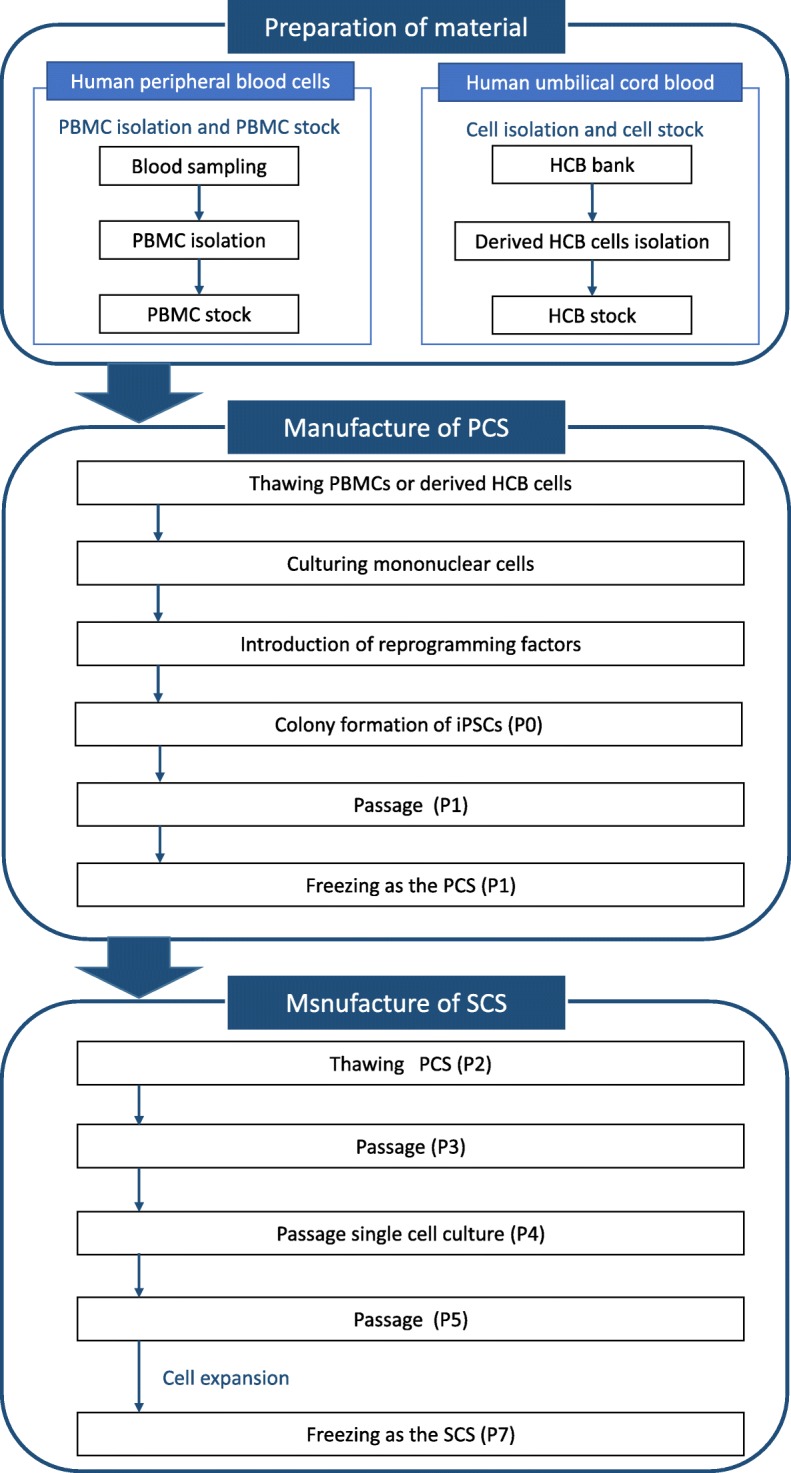
Induced pluripotent stem cells (iPSCs) can be produced from various somatic cells and have the ability to differentiate into various cells and tissues of the body. Regenerative medicine using iPSCs is expected to manage diseases lacking effective treatments at present. We are establishing a safe and effective iPSC stock that can be used for regenerative medicine. Our iPSC stock is recruited from healthy, consenting HLA-type homozygous donors and is made with peripheral blood-derived mononuclear cells or umbilical cord blood. We hope to minimize the influence of immune rejection by preparing HLA homozygous iPSCs. Our stock is made at the Cell Processing Center (CPC), Center for iPS Cell Research and Application (CiRA). We are preparing iPS cells that maximize matching of the Japanese population at the major HLA loci. This iPSC stock is intended to be offered not only to Japanese centers but also overseas medical institutions and companies. In August 2015, we began offering the iPSC stock for regenerative medicine and now offer 21 clones made from 5 donors.
Overview
The claims and statistics of this paper haven’t been checked yet.
Free: it reads the open-access text and checks the first 5 claims that cite a source we can check. Create a free account to check every claim.
Integrity signals
Registry
Cites
Statistics
Figures
Verification
Claims the paper makes
The claims and statistics of this paper haven’t been checked yet.
Free: it reads the open-access text and checks the first 5 claims that cite a source we can check. Create a free account to check every claim.
Claims other papers make about this one
Each is checked against this paper’s own text: does it say what the citing paper says it does?
The cited source says what the claim attributes to it.
In the citing paper
“The Center for iPS Cell Research and Application (CiRA) has reported the establishment of three clinical grade HLA iPSCs, homozygous at the allele level of HLA-A, HLA-B and HLA-DR, which can cover 32% of the Japanese population [109].”
From Utility of iPSC-Derived Cells for Disease Modeling, Drug Development, and Cell Therapy (2022) · cites this paper as [109]
Self-check
Percentages, sums and reported differences re-computed from the paper’s own numbers.
The self-check needs the paper’s full text.
Citations
Cites
Takahashi, K., & Yamanaka, S. (2006) · Cell · doi:10.1016/j.cell.2006.07.024 · Cited by 26,673
Induction of Pluripotent Stem Cells from Adult Human Fibroblasts by Defined Factors
Takahashi, K., Tanabe, K., Ohnuki, M., Narita, M., Ichisaka, T., Tomoda, K., & Yamanaka, S. (2007) · Cell · doi:10.1016/j.cell.2007.11.019 · Cited by 20,221
VarScan 2: Somatic mutation and copy number alteration discovery in cancer by exome sequencing
Koboldt, D. C., Zhang, Q., Larson, D. E., Shen, D., McLellan, M. D., Lin, L., Miller, C. A., Mardis, E. R., Ding, L., & Wilson, R. K. (2012) · Genome Research · doi:10.1101/gr.129684.111 · Cited by 4,905
DELLY: structural variant discovery by integrated paired-end and split-read analysis
Rausch, T., Zichner, T., Schlattl, A., Stütz, A. M., Benes, V., & Korbel, J. O. (2012) · Bioinformatics · doi:10.1093/bioinformatics/bts378 · Cited by 2,459
Human induced pluripotent stem cells free of vector and transgene sequences
Yu, J., Hu, K., Smuga-Otto, K., Tian, S., Stewart, R., Slukvin, I. I., & Thomson, J. A. (2009) · Science · doi:10.1126/science.1172482 · Cited by 2,386
A more efficient method to generate integration-free human iPS cells
Okita, K., Matsumura, Y., Sato, Y., Okada, A., Morizane, A., Okamoto, S., Hong, H., Nakagawa, M., Tanabe, K., Tezuka, K.-I., et al. (2011) · Nature Methods · doi:10.1038/nmeth.1591 · Cited by 2,061
Self-citationFrequent pathway mutations of splicing machinery in myelodysplasia
Yoshida, K., Sanada, M., Shiraishi, Y., Nowak, D., Nagata, Y., Yamamoto, R., Sato, Y., Sato-Otsubo, A., Kon, A., Nagasaki, M., et al. (2011) · Nature · doi:10.1038/nature10496 · Cited by 2,029
Self-citationWang, K., Li, M., Hadley, D., Liu, R., Glessner, J., Grant, S. F. A., Hakonarson, H., & Bucan, M. (2007) · Genome Research · doi:10.1101/gr.6861907 · Cited by 1,792
Autologous Induced Stem-Cell–Derived Retinal Cells for Macular Degeneration
Mandai, M., Watanabe, A., Kurimoto, Y., Hirami, Y., Morinaga, C., Daimon, T., Fujihara, M., Akimaru, H., Sakai, N., Shibata, Y., et al. (2017) · New England Journal of Medicine · doi:10.1056/nejmoa1608368 · Cited by 1,509
Self-citationImmunogenicity of induced pluripotent stem cells
Zhao, T., Zhang, Z.-N., Rong, Z., & Xu, Y. (2011) · Nature · doi:10.1038/nature10135 · Cited by 1,444
Cited by
Items 101–121 of 121
Clinical Application of iPSC-Derived Cardiomyocytes in Patients with Advanced Heart Failure
Fujita, J., Tohyama, S., Kanazawa, H., Kishino, Y., Okada, M., Tanosaki, S., Someya, S., & Fukuda, K. (2022) · Springer eBooks · doi:10.1007/978-3-030-86140-7_16 · Cited by 1
Application of iPS Cell Technology for OPLL
Toguchida, J. (2020) · Springer eBooks · doi:10.1007/978-981-15-3855-1_10
Induced Pluripotent Stem Cells: Progress toward Clinical Translation from Bench to Bedside
Fakoya, A. O. J., Omole, A. E., Satyadev, N., & Haider, K. H. (2022) · Springer eBooks · doi:10.1007/978-981-19-2655-6_40
Murata, T., Otsuka, R., Sasaki, A., Kamatani, T., Wada, H., Yamakawa, H., Hasegawa, Y., & Seino, K.-I. (2023) · International Immunology · doi:10.1093/intimm/dxad008
Nakashima, Y., & Tsukahara, M. (2023) · Research Square · doi:10.21203/rs.3.rs-2811612/v1
He, X., Mi, L., Ji, Y., Zhao, M., Hu, Y., Gao, Y., Qiu, L., & Xu, K. (2023) · Research Square · doi:10.21203/rs.3.rs-2971839/v1
Follin, B., Caluori, G., Dobrolińska, M. M., Stachura, J., Muzzamil, H., Wojakowski, W., Qayyum, A. A., & Jadczyk, T. (2023) · Springer eBooks · doi:10.1007/978-981-99-0722-9_3
Induzierte pluripotente Stammzellen in der pädiatrischen Forschung und klinischen Umsetzung
Uçkan, D., & Haider, K. H. (2023) · Springer eBooks · doi:10.1007/978-3-031-25378-2_13
Stem Cell-Derived Extracellular Vesicles and Their Potential Role in Medical Applications
El-Sayed, M. M., Kim, K. H., Machiraju, S., & Fábián, Z. (2024) · Elsevier eBooks · doi:10.1016/b978-0-443-15717-2.00091-3
Introduction to stem cell biology and its role in treating neurologic disorders
Parmar, M., & Perrier, A. L. (2024) · Handbook of clinical neurology · doi:10.1016/b978-0-323-90120-8.00005-8
Álvarez-Palomo, B., Iris Garcia-martinez, A., Gayoso, J., Raya, A., Veiga, A., Abad, M. L., Eiras, A., Guzmán-Fulgencio, M., Luis-Hidalgo, M., Eguizabal, C., et al. (2021) · Figshare · doi:10.6084/m9.figshare.14411209
Álvarez-Palomo, B., Iris Garcia-martinez, A., Gayoso, J., Raya, A., Veiga, A., Abad, M. L., Eiras, A., Guzmán-Fulgencio, M., Luis-Hidalgo, M., Eguizabal, C., et al. (2021) · Figshare · doi:10.6084/m9.figshare.14411212
Álvarez-Palomo, B., Veiga, A., Raya, A., Codinach, M., Torrents, S., Verdugo, L. P., Rodriguez-Aierbe, C., Cuellar, L., Alenda, R., Arbona, C., et al. (2022) · Figshare · doi:10.6084/m9.figshare.20484711
Álvarez-Palomo, B., Iris Garcia-martinez, A., Gayoso, J., Raya, A., Veiga, A., Abad, M. L., Eiras, A., Guzmán-Fulgencio, M., Luis-Hidalgo, M., Eguizabal, C., et al. (2021) · Figshare · doi:10.6084/m9.figshare.14411206
Comparative Analysis of Induced Pancreatic Stem Cells Generated with Different Factors
Noguchi, H., Miyagi‐Shiohira, C., Sadahira, T., Watanabe, M., & Saitoh, I. (2026) · Human Gene Therapy · doi:10.1177/10430342251414882
“As with the iPS cell stock strategy, 38 by stocking dozens of HLA-homozygous clones, it would be possible to perform transplantation using cells with a lower risk of rejection.”
Lee, M., Kim, Y.-E., Choi, W., Kim, B.-S., Lee, M. J., Lee, E., Nakanishi, M., Hyun, K. D., & Song, J. (2026) · Stem Cell Research · doi:10.1016/j.scr.2026.103963
The evolution of iPSC-based cell therapy across autologous and allogeneic pathways
Wang, A., Zhang, Y., Deng, H., & Gu, M. (2026) · Cell Reports Medicine · doi:10.1016/j.xcrm.2026.102992
“19,53 More importantly, each cycle required independent quality control, including whole-genome sequencing, without the ability to carry forward characterization data from one patient to the next.”
InfluentialHarnessing stem cells for regenerative medicine: Current applications and future prospects
Shamlou, S., Rostami, H., Hassanzadeh, A., Rajaeian, S., Goudarzi, S. T., Arab, M., Shojaeian, A., Verdi, J., & Vousooghi, N. (2026) · Journal of Clinical and Translational Research · doi:10.36922/jctr026080013
Banno, S., Sanosaka, T., Tomooka, R., Mizota, N., Tokunaga, A., Okano, H., & Kohyama, J. (2026) · iScience · doi:10.1016/j.isci.2026.117332
“86 No new hiPSC lines were established in this study.”
Yamamoto, Y., Ohno, R., Shoda, K., Suzuki, T., Momoi, K., Fujii, S., Kenmochi, Y., Yoshikawa, T., Shimomura, M., Tsukamoto, N., et al. (2026) · iScience · doi:10.1016/j.isci.2026.117933
“31 Because of the extremely wide variety of HLA worldwide, it would be applicable to a limited number of patients.”
Cell Transplantation for Skeletal Muscle Regeneration: Current Strategies and Clinical Translation
Cinemre, D. A., Cinemre, G. C., Rozmukhamedova, S., Arunchander, T., Gharaibeh, B., & Deasy, B. M. (2026) · Biochemistry · doi:10.5772/intechopen.1016937
Metadata
- Authors
- Umekage, M., Sato, Y., & Takasu, N.
- Affiliations
- Kyoto University (JP)
- Corresponding author
- Umekage, Masafumi
- ORCID
- Sato, Yoshiko
- Venue
- Inflammation and Regeneration
- Published
- 2019-09-02
- Volume
- 39
- Issue
- 1
- Pages
- 17-17
- ISSN
- 1346-8022 (ISSN-L)
- 1880-8190
- PMC
- PMC6717959
- OpenAlex
- W2970240057
- Cited by
- 122
- References
- 26
- Citations by year
- 2026: 8 · 2025: 6 · 2024: 14 · 2023: 19 · 2022: 23 · 2021: 29 · 2020: 21 · 2019: 2
- FWCI
- 6.20
- Type
- journal article
- Language
- en
- Open access
- gold
- doi.org
- Licence
- cc-by
- creativecommons.org/licenses/by/4.0/ (tdm)
- creativecommons.org/licenses/by/4.0/ (vor)
- Locations
- Inflammation and Regeneration (publishedVersion, cc-by)
- PubMed Central (publishedVersion, cc-by)
- PubMed (publishedVersion)
- DOAJ (DOAJ: Directory of Open Access Journals) (submittedVersion, cc-by-sa)
- Funders
- Japan Agency for Medical Research and Development (18bm0104001h0006)
- Topics
- Life Sciences › Biochemistry, Genetics and Molecular Biology › Molecular Biology › Pluripotent Stem Cells Research
- Life Sciences › Biochemistry, Genetics and Molecular Biology › Cell Biology › Mesenchymal stem cell research
- Life Sciences › Biochemistry, Genetics and Molecular Biology › Genetics › Animal Genetics and Reproduction
- Keywords
- induced pluripotent stem cells, HLA homozygosity, immune rejection, umbilical cord blood, regenerative medicine
About these checks
Registry, retraction, Cites and statistics results are computed, not judged, with one exception: a printed reference that no index lists is read once by a model before it counts as a citation error. Claims are extracted by a model and kept only when their quote appears verbatim in the text; each cited source is then checked, with a model’s help, for whether it says what the claim relies on. Those verdicts can be wrong — read the claim’s quote and the cited source before relying on one.
Statistics and arithmetic are recomputed, not judged.
Confidence bands are shown only for fields calibrated on our annotated test set. None is calibrated yet, so no band is shown.
What counts as a claim ›How we measure confidence ›How we check this ›
Are you an author, or do you see a problem with this page? Request a review
Data sources
Bibliographic data: Semantic Scholar, OpenAlex, Crossref.
Contains information from the Semantic Scholar Academic Graph Datasets, made available under the ODC Attribution License (ODC-BY 1.0).
Semantic Scholar’s data is described in: Kinney, R., et al. (2023). The Semantic Scholar Open Data Platform. arXiv:2301.10140.
