

The DOI matches its Crossref record; 61 of the 61 references it cites were found in a registry or an index.
Effects of using mobile instant messaging on student behavioral, emotional, and cognitive engagement: a quasi-experimental study
Open accessAbstract
Mobile instant messaging (MIM) has become the most popular means for young people to communicate. MIM apps typically come with a myriad of features that educators may leverage to increase student learning. However, it remains poorly understood to what extent and in what aspect MIM can facilitate student engagement. We address the gap by comparing the effects of using MIM and asynchronous online discussion (AOD) on student online engagement, using a quasi-experimental study involving a historical cohort control group. Understanding which communication mode can better promote student online engagement is particularly important during the current widespread use of online learning. Specifically, we examined engagement from the behavioral, emotional, and cognitive dimensions. The results showed that the MIM group was more behaviorally engaged in discussion activities, producing more messages, more words, and higher rates of participation, task completion, and interaction. Emotionally, no statistically significant difference was found in students’ affective evaluation of course interaction and satisfaction between the two groups. However, MIM appeared to help students with improved intimacy and interpersonal relationships. Cognitively, the MIM group was more engaged than the AOD group. In particular, MIM seemed to facilitate interactive idea exchange and thus contributing to more “creating” activities. We conclude by providing suggestions for future instructional practice and research directions.
Overview
The claims and statistics of this paper haven’t been checked yet.
Run the check — free, no account needed. It reads the open-access text and checks the sources it cites.
Integrity signals
Registry
Cites
Statistics
Figures
Verification
Claims the paper makes
The claims and statistics of this paper haven’t been checked yet.
Run the check — free, no account needed. It reads the open-access text and checks the sources it cites.
Claims other papers make about this one
Each is checked against this paper’s own text: does it say what the citing paper says it does?
The source backs part of the claim, not all of it — or backs it for a different population, condition or comparison.
In the citing paper
“Similarly, Tang and Hew (2022) showed that sending notifications via mobile push messages increased behavioral and cognitive engagement, while no significant difference was observed in the affective evaluation.”
From You have a notification: the role of push notifications in shaping students’ engagement, self-regulation and academic procrastination (2025) · cites this paper as Tang and Hew (2022)
Experimental — accuracy not yet measuredThe source backs part of the claim, not all of it — or backs it for a different population, condition or comparison.
In the citing paper
“On the other hand, since participation in online learning refers to students' engagement with the learning platform across all its dimensions (Peng, 2017), the results of subcomponents in the study by Tang and Hew (2022), which calculated participation behaviors based on push notifications, were comparable to the behavior indicators used in the current study.”
From You have a notification: the role of push notifications in shaping students’ engagement, self-regulation and academic procrastination (2025) · cites this paper as Tang and Hew (2022)
Experimental — accuracy not yet measuredThe cited source says what the claim attributes to it.
In the citing paper
“Similarly, Tang and Hew (2022) showed that sending notifications via mobile push messages increased behavioral and cognitive engagement, while no significant difference was observed in the affective evaluation.”
From You have a notification: the role of push notifications in shaping students’ engagement, self-regulation and academic procrastination (2025) · cites this paper as Tang and Hew (2022)
Self-check
Percentages, sums and reported differences re-computed from the paper’s own numbers.
The self-check needs the paper’s full text.
Citations
Cites
Lincoln, Y. S., Guba, E. G., & Pilotta, J. J. (1985) · International Journal of Intercultural Relations · doi:10.1016/0147-1767(85)90062-8 · Cited by 45,787
The Discovery of Grounded Theory; Strategies for Qualitative Research
Glaser, B. G., Strauss, A. L., & Strutzel, E. (1968) · Nursing Research · doi:10.1097/00006199-196807000-00014 · Cited by 39,449
(1998) · Medical Entomology and Zoology · Cited by 18,397
(1963) · Medical Entomology and Zoology · Cited by 15,085
School Engagement: Potential of the Concept, State of the Evidence
Fredricks, J. A., Blumenfeld, P. C., & Paris, A. H. (2004) · Review of Educational Research · doi:10.3102/00346543074001059 · Cited by 12,581 · cited 4×
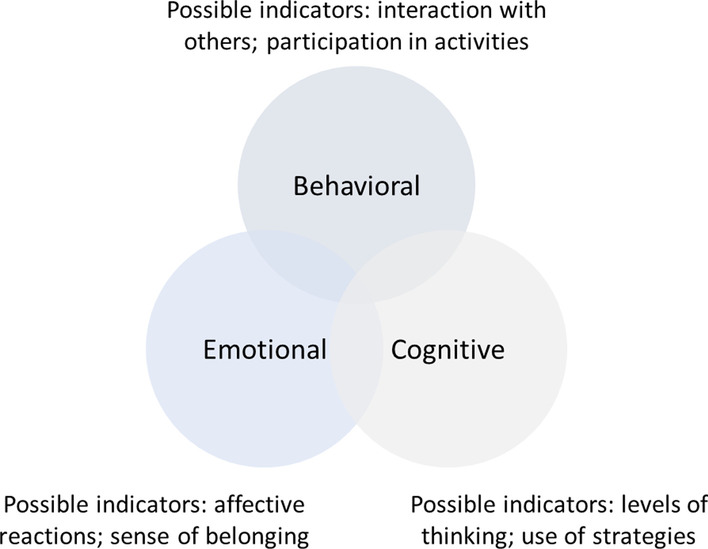
“Behavioral engagement refers to participation in academic, social, or extracurricular activities (Fredricks et al., 2004).”
BackgroundInfluentialMotivational and self-regulated learning components of classroom academic performance.
Pintrich, P. R., & De Groot, E. V. (1990) · Journal of Educational Psychology · doi:10.1037/0022-0663.82.1.33 · Cited by 8,332 · cited 2×
“Cognitive engagement can be assessed either subjectively with self-reported questionnaire surveys or objectively with test scores and choices of task difficulty levels (Hew et al., 2016; Pintrich & De Groot, 1990).”
BackgroundCritical Inquiry in a Text-Based Environment: Computer Conferencing in Higher Education
Garrison, D. R., Anderson, T., & Archer, W. (1999) · The Internet and Higher Education · doi:10.1016/s1096-7516(00)00016-6 · Cited by 6,619
Halford, G. S., & Andrews, G. (2007) · Wiley eBooks · doi:10.1002/9780470147658 · Cited by 4,912
The four-phase model of interest development
Hidi, S., & Renninger, K. A. (2006) · Educational Psychologist · doi:10.1207/s15326985ep4102_4 · Cited by 4,702
Content Analysis for the Social Sciences and Humanities.
Parker, E. B., & Holsti, O. R. (1970) · American Sociological Review · doi:10.2307/2093233 · Cited by 4,553
Research works printed but not linked: 3
- Bailey, K. D. (2002). The effects of learning strategies on student interaction and student satisfaction [doctoral dissertation]. The Pennsylvania State University. Retrieved from https://etda.libraries.psu.edu/catalog/5922
- Csikszentmihalyi, M. (1990). The domain of creativity. In M. A. Rum & R. S. Albert (Eds.), Theories of creativity (pp. 190–212). Sage.
- Tinto, V. (1987). Leaving college: Rethinking the causes and cures of college attrition. University of Chicago Press.
Cited by
Sorted by citations
Items 101–101 of 101
Штепура, А. (2026) · Research Notes · doi:10.31654/2663-4902-2026-pp-3-220-228
Metadata
- Authors
- Tang, Y., & Hew, K. F.
- Affiliations
- Southwest University (CN)
- Corresponding author
- Tang, Ying
- Venue
- International Journal of Educational Technology in Higher Education
- Published
- 2022-01-11
- Volume
- 19
- Issue
- 1
- Pages
- 3-3
- ISSN
- 2365-9440 (ISSN-L)
- PMC
- PMC8747857
- OpenAlex
- W4206298561
- Cited by
- 102
- References
- 61
- Citations by year
- 2026: 13 · 2025: 25 · 2024: 34 · 2023: 21 · 2022: 9
- FWCI
- 48.01
- Type
- journal article
- Language
- en
- Open access
- diamond
- doi.org
- Locations
- International Journal of Educational Technology in Higher Education (publishedVersion, cc-by)
- PubMed Central (publishedVersion, cc-by)
- PubMed (publishedVersion)
- DOAJ (DOAJ: Directory of Open Access Journals) (submittedVersion, cc-by-sa)
- Topics
- Social Sciences › Education › Online and Blended Learning
- Physical Sciences › Computer Science › Information Systems › Mobile Learning in Education
- Social Sciences › Linguistics and Language › Digital Communication and Language
- Keywords
- mobile instant messaging, asynchronous online discussion, student engagement, behavioral engagement, emotional engagement, cognitive engagement, online learning, student satisfaction, interpersonal relationships, idea sharing, university students
About these checks
Registry, retraction, Cites and statistics results are computed, not judged, with one exception: a printed reference that no index lists is read once by a model before it counts as a citation error. Claims are extracted by a model and kept only when their quote appears verbatim in the text; each cited source is then checked, with a model’s help, for whether it says what the claim relies on. Those verdicts can be wrong — read the claim’s quote and the cited source before relying on one.
Statistics and arithmetic are recomputed, not judged.
Confidence bands are shown only for fields calibrated on our annotated test set. None is calibrated yet, so no band is shown.
What counts as a claim ›How we measure confidence ›How we check this ›
Are you an author, or do you see a problem with this page? Request a review
