

Logistic regression has similar performance to optimised machine learning algorithms in a clinical setting: application to the discrimination between type 1 and type 2 diabetes in young adults
Open accessThe DOI matches its Crossref record; 67 of the 67 references it cites were found in a registry or an index.
Abstract
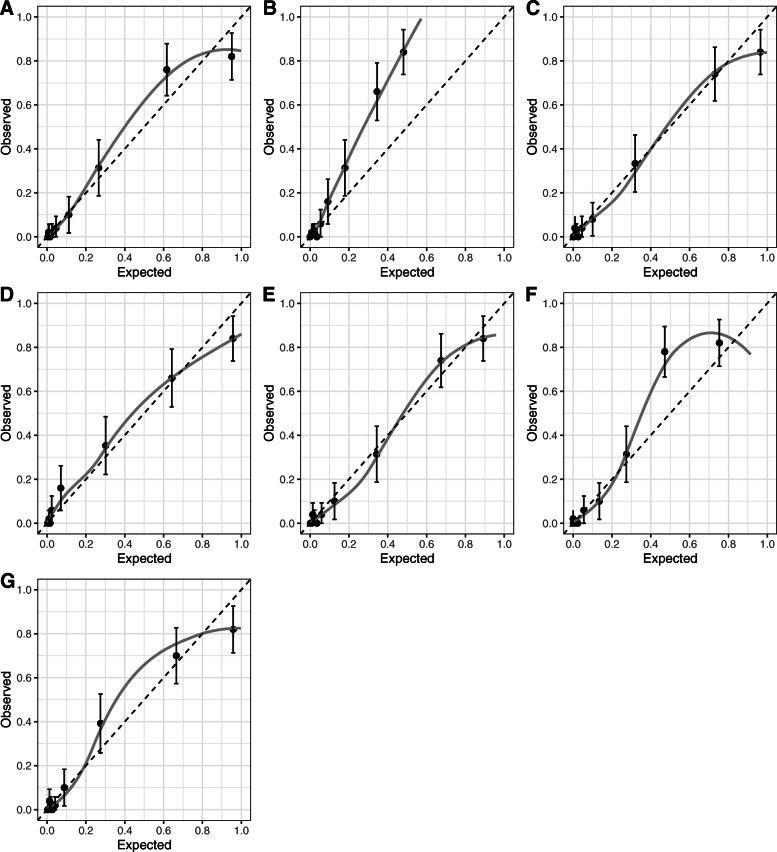
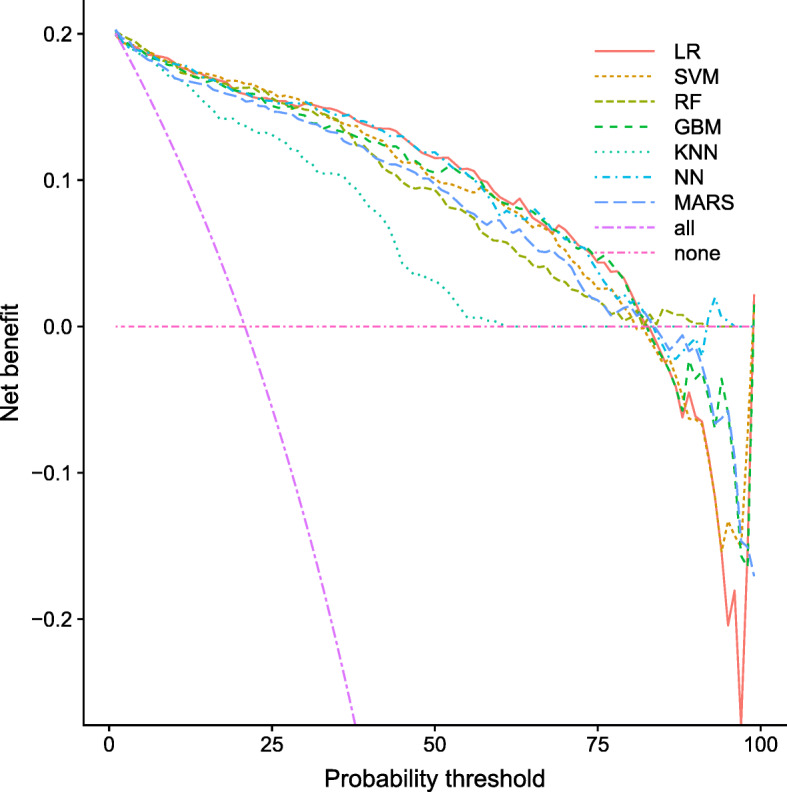
Background: There is much interest in the use of prognostic and diagnostic prediction models in all areas of clinical medicine. The use of machine learning to improve prognostic and diagnostic accuracy in this area has been increasing at the expense of classic statistical models. Previous studies have compared performance between these two approaches but their findings are inconsistent and many have limitations. We aimed to compare the discrimination and calibration of seven models built using logistic regression and optimised machine learning algorithms in a clinical setting, where the number of potential predictors is often limited, and externally validate the models. Methods: We trained models using logistic regression and six commonly used machine learning algorithms to predict if a patient diagnosed with diabetes has type 1 diabetes (versus type 2 diabetes). We used seven predictor variables (age, BMI, GADA islet-autoantibodies, sex, total cholesterol, HDL cholesterol and triglyceride) using a UK cohort of adult participants (aged 18–50 years) with clinically diagnosed diabetes recruited from primary and secondary care ( n = 960, 14% with type 1 diabetes). Discrimination performance (ROC AUC), calibration and decision curve analysis of each approach was compared in a separate external validation dataset ( n = 504, 21% with type 1 diabetes). Results: Average performance obtained in internal validation was similar in all models (ROC AUC ≥ 0.94). In external validation, there were very modest reductions in discrimination with AUC ROC remaining ≥ 0.93 for all methods. Logistic regression had the numerically highest value in external validation (ROC AUC 0.95). Logistic regression had good performance in terms of calibration and decision curve analysis. Neural network and gradient boosting machine had the best calibration performance. Both logistic regression and support vector machine had good decision curve analysis for clinical useful threshold probabilities. Conclusion: Logistic regression performed as well as optimised machine algorithms to classify patients with type 1 and type 2 diabetes. This study highlights the utility of comparing traditional regression modelling to machine learning, particularly when using a small number of well understood, strong predictor variables.
Overview
The claims and statistics of this paper haven’t been checked yet.
Free: it reads the open-access text and checks the first 5 claims that cite a source we can check. Create a free account to check every claim.
Integrity signals
Registry
Cites
Statistics
Figures
Verification
Claims the paper makes
The claims and statistics of this paper haven’t been checked yet.
Free: it reads the open-access text and checks the first 5 claims that cite a source we can check. Create a free account to check every claim.
Claims other papers make about this one
Each is checked against this paper’s own text: does it say what the citing paper says it does?
The cited source says what the claim attributes to it.
In the citing paper
“For example, logistic regression performed similarly to optimised machine learning models for discriminating between type 1 and type 2 diabetes in young adults.103”
From Developing clinical prediction models: a step-by-step guide (2024) · cites this paper as [103]
Self-check
Percentages, sums and reported differences re-computed from the paper’s own numbers.
The self-check needs the paper’s full text.
Citations
Cites
Breiman, L. (2001) · Machine Learning · doi:10.1023/a:1010933404324 · Cited by 133,538 · cited 1×
“[41, 47, 48] Gradient boosting machine An ensemble learning technique similar to random forest in the sense they average a large number of decision trees to make prediction.”
The Nature of Statistical Learning Theory
Vapnik, V. N. (1995) · doi:10.1007/978-1-4757-2440-0 · Cited by 39,138
Greedy function approximation: A gradient boosting machine
Friedman, J. H. (2001) · The Annals of Statistics · doi:10.1214/aos/1013203451 · Cited by 30,731 · cited 1×
“[41, 49, 50] Multivariate adaptive regression spline MARS and logistic regression share similarities.”
BackgroundModern Applied Statistics with S
Venables, W. N., & Ripley, B. D. (2002) · Statistics and Computing · doi:10.1007/978-0-387-21706-2 · Cited by 24,305
The Elements of Statistical Learning
Hastie, T., Friedman, J., & Tibshirani, R. (2001) · Springer Series in Statistics · doi:10.1007/978-0-387-21606-5 · Cited by 24,162
Classification and Regression by randomForest
Liaw, A. I., & Wiener, M. C. (2007) · Cited by 18,594
Neural networks for pattern recognition
(1994) · Choice Reviews Online · doi:10.5860/choice.31-5500 · Cited by 18,538
No free lunch theorems for optimization
Wolpert, D. H., & Macready, W. G. (1997) · IEEE Transactions on Evolutionary Computation · doi:10.1109/4235.585893 · Cited by 14,237 · cited 1×
“As previously described [71], each database is unique and there is no ‘ free lunch ’ , i.e. if an algorithm performs well on a certain class of problems, then it necessarily pays for that with degraded performance on the set of other problems [35, 72].”
BackgroundNeural Networks for Pattern Recognition
Bishop, C. M. (1995) · doi:10.1093/oso/9780198538493.001.0001 · Cited by 12,287
Building Predictive Models in R Using the caret Package
Kuhn, M. (2008) · Journal of Statistical Software · doi:10.18637/jss.v028.i05 · Cited by 8,863 · cited 1×
“Model training was performed using the Caret R package [64 – 68].”
Method
Research works printed but not linked: 3
- Goodfellow I, Bengio Y, Courville A. Deep learning: the MIT press; 2016. p. 800.
- Dasarathy B. Nearest neighbor: pattern classification techniques. Los Alamitos: IEEE Computer Society Press; 1991.
- Fernandez-Delgado M, Cernadas E, Barro S, Amorim D. Do we need hundreds of classifiers to solve real world classification problems? J Mach Learn Res. 2014;15(1):3133-81.
Cited by
Items 101–142 of 142
Thomas, N. J. M., McGovern, A. P., Young, K., Sharp, S. A., Weedon, M. N., Hattersley, A. T., Dennis, J., & Jones, A. G. (2022) · SSRN Electronic Journal · doi:10.2139/ssrn.4125231
Self-citationInfluence of Safety Climate on Trucking Accidents: A Machine Learning ApproachPreprint
Lan, T., Goh, Y. M., Safiena, S., Lytle, B., He, Y., & Huang, Y.-H. (2022) · SSRN Electronic Journal · doi:10.2139/ssrn.4088440
Marmolejo‐Ramos, F., Ospina, R., Garcia-Ceja, E., & Correa, J. C. (2022) · Journal of Statistical Theory and Applications · doi:10.1007/s44199-022-00048-y · Cited by 2
“A logistic regression algorithm could also be considered as it has been shown this method is more interpretable than, yet similarly accurate to, more complex ML algorithms [19, 54, 57, 64].”
MethodSadeghi, P., Bastin-Decoste, D., & Robar, J. L. (2023) · Biomedical Physics & Engineering Express · doi:10.1088/2057-1976/acb6ef · Cited by 1
Developing Prediction Model for Hospital Appointment No-Shows Using Logistic Regression
Joseph, J., Senith, S., Kirubaraj, A. A., & Ramson, S. R. J. (2023) · Lecture notes in networks and systems · doi:10.1007/978-981-19-9379-4_14
Jones, A. G., Shields, B. M., Oram, R. A., Dabelea, D., Hagopian, W., Lustigova, E., SHAH, A. S., Knupp, J., Mottl, A. K., D’Agostino, R. B., et al. (2023) · medRxiv · doi:10.1101/2023.09.27.23296128 · Cited by 1
“Our findings are consistent with the high performance of models developed in adult-onset diabetes for classifying diabetes subtype based on a combination of early insulin treatment and retained c-peptide, or pancreatic histology, in a European/American population, and on a combination of isletautoantibodies and c-pept…”
ResultSelf-citationRusyaeva, N. V., Иванович, Г. И., Кононенко, И. В., Nikonova, T. V., & Shestakova, M. V. (2023) · Diabetes Mellitus · doi:10.14341/dm13070 · Cited by 2
Análise do componente genético do Diabetes Mellitus tipo 2
Mota, D. M. D. (2024) · Digital Library of Theses and Dissertations (Universidade de São Paulo) · doi:10.11606/t.76.2024.tde-20032024-084845
Kumar, M., Kumar, A. K., Bhargava, M., Singh, R. P., Shukla, A., & Shukla, V. (2024) · Lecture notes in networks and systems · doi:10.1007/978-981-97-0641-9_58
Szkoa, J., Pkala, B., & Dyczkowski, K. (2025) · Lecture notes in networks and systems · doi:10.1007/978-3-031-73997-2_20
Miscellaneous drug combinations in diabetes mellitus
Agarwal, S., Devi, M., Mani, D. N., & Gupta, A. K. (2025) · Elsevier eBooks · doi:10.1016/b978-0-443-29129-6.00005-1
Tasnim, S. S., Mohtasim, S. A., Priya, S. A., Nahar, R., Ferdous, J., & Elma, S. A. (2024) · International Conference on Computer and Information Technology (ICCIT) · doi:10.1109/iccit64611.2024.11021794
“Maonan Wang et al. [4] introduce a machine learning framework for cybersecurity, while Yi-Wei Ma et al. [5] focus on explainable learning in early Parkinson’s diagnosis.”
Wybranska, J., Pieper, L., Wybranski, C., Genseke, P., Wuestemann, J., Varghese, J., Kreissl, M. C., & Mitura, J. (2025) · Cancers · doi:10.3390/cancers17142285
“The LR model was chosen to provide a comparative benchmark for the performance of our PGM due to its well-established calibration properties and strong theoretical foundation, particularly when dealing with moderate-sized datasets [26].”
Nan, C., Zhang, N., Wu, H., Chen, Y., Huang, P., Zheng, C., Jin, N., Wang, S., Zhang, X., Zheng, X., et al. (2025) · Fundamental Research · doi:10.1016/j.fmre.2025.04.016
Deng, B., Bai, C., Xu, H., Zhang, X., & Deng, Y. (2025) · Frontiers in Physiology · doi:10.3389/fphys.2025.1687860 · Cited by 1
Liu, Y., Liu, J., Yan, Z., Chen, Y., & Han, L. (2025) · X-Disciplinarity · doi:10.63174/xdi.dbxs5758
Machine learning models for risk prediction of age-related macular degeneration in Fujian eye study
Li, Y., Wang, B., Luo, X., Zhang, M., Hu, Q., & Li, X. (2025) · PLoS ONE · doi:10.1371/journal.pone.0335620
“This finding is consistent not only with AMD risk prediction but also with similar models in other medical domains [10–15].”
Classifying polyneuropathy and myopathy patients on Electronic Health RecordsPreprint
Ahmed, M. M., Truong, N. D. K., Nyoungui, E. F., Zhao, J., Wedemeyer, H., Mayer, R. L., Schuster, V., Zschüntzsch, J., & Röttger, R. (2025) · medRxiv · doi:10.64898/2025.12.11.25342051
Larsson, A., Berg, J., Gellerfors, M., & GerdinWärnberg, M. (2021) · Figshare · doi:10.6084/m9.figshare.14813733
Venkatasubramaniam, A., Mateen, B. A., Shields, B. M., Hattersley, A. T., Jones, A. G., Vollmer, S. J., & Dennis, J. M. (2023) · Figshare · doi:10.6084/m9.figshare.23536129
Self-citationHarrison, C. J., & Sidey-Gibbons, C. J. (2021) · Figshare · doi:10.6084/m9.figshare.15087562
Maaz, M., Yasir, M., Siddique, A., Qammar, B., & Hadi, N. (2026) · BMC Family Practice · doi:10.1186/s12875-025-03167-4
“Moreover, most participants rated their own competence as average or basic, a perception that aligned with their modest knowledge scores [23].”
Akinwumi, P. O., Qian, M., Babatope, O. A., Olorunsogbon, T. A., & Ogunleye, R. O. (2026) · Research Square · doi:10.21203/rs.3.rs-8627838/v1
Comparative Analysis of Boosting Algorithms for Multiclass Typhoid Prediction
Hauw, M. R. C., Tendeas, T., Sandria, K. H., Fantario, G. J., Alam, A. P., & Yanfi, Y. (2025) · International Conference on Intelligent Cybernetics Technology & Applications (ICICyTA) · doi:10.1109/icicyta68677.2025.11362895
“These findings emphasize that in structured clinical datasets, model simplicity can still achieve a reliable classification performance to deploy in hospital decision-support systems, consistent with prior studies [24-25].”
Probabilities Feature Enrichment for Improved Early Diabetes Prediction
Altartouri, H., Qaadan, S., Qawqzeh, Y., & Hamdoun, M. (2026) · Algorithms · doi:10.3390/a19020122 · Cited by 2
Rizal, R., Renaldi, M., Andriyani, W., Rahmatulloh, A., Haerani, E., & Darmawan, I. (2025) · International Seminar on Research of Information Technology and Intelligent Systems (ISRITI) · doi:10.1109/isriti68345.2025.11393307
“…it has advantages in inference, estimation, interpretation, and prediction, but it has the disadvantage of being sensitive to multicollinearity, which can result in unstable and difficult-to-interpret coefficients and is less suitable for large datasets with many features or complex patterns [14].”
Carecast: Predictive Modeling For Two Chronic Diseases Using Machine Learning
Urmila, N., Srinivasa Harshavardhana, N., & Srividya, M. S. (2025) · Global AI Summit - International Conference on Artificial Intelligence and Emerging Technology (AI Summit) · doi:10.1109/aisummit66170.2025.11411584
“LR [11] estimates the diabetes probability for each record using dataset features such as HighBP, HighChol, CholCheck, BMI, lifestyle factors, health indicators, and demographics: (2) coefficients indicating the impact of each feature on the prediction.”
Tayal, C. (2025) · International Conference on Data Science and Geoinformatics (ICDSG) · doi:10.1109/icdsg67714.2025.11381305
“Logistic Regression has been recognised as a supervised machine learning model which tends to statistically represent data in terms of its portability to generate binary outcomes [10].”
Chadha, A., & Garg, N. (2026) · Springer eBooks · doi:10.1007/978-981-95-7490-2_16
Yamashita, K., Kwiatkowski, E. K., Sewastjanow‐Silva, M., Rogers, J. E., Yoshimura, K., Pizzi, M. P., Gan, Q., LI, J. J., Waters, R. M., Murphy, M. B., et al. (2026) · Annals of Surgical Oncology · doi:10.1245/s10434-026-19557-6 · Cited by 1
Siwingwa, M., Mutale, W., Munsaka, S. M., Kayamba, V., Heimburger, D. C., Hazelhurst, S., Sivile, S., Mweemba, A., Mbewe, N., Mulenga, L., et al. (2026) · BMC Medical Informatics and Decision Making · doi:10.1186/s12911-026-03589-9
“This aligns with previous studies showing that logistic regression often performs competitively in clinical prediction tasks, particularly when sample sizes are moderate and predictor structures are well defined [25, 26].”
Gan, L., Qin, X., Zhang, X., XingXin, X., Zhang, C., & Zhao, E. (2026) · European journal of medical research · doi:10.1186/s40001-026-04607-2
“This finding is consistent with well-established statistical principles governing model behavior in small clinical datasets [36, 37].”
Gorosito, M. A., Yazidi, A., Hermansen, Å., Berg, B., Øiestad, B. E., Grotle, M., Richardsen, K. R., & Haugerud, H. (2026) · International Journal of Medical Informatics · doi:10.1016/j.ijmedinf.2026.106551
Kitrou, K., Mandrakis, G., Tsirogiannis, G., Theocharis, S., Halkiopoulos, C., & Stamatiou, Y. C. (2026) · Diagnostics · doi:10.3390/diagnostics16132118
“The practical implication is the same in both cases, as LR coefficients map directly to log-odds ratios, making the model something a clinician can inspect, interrogate, and if necessary, dispute [35].”
Zhuo, L., Zou, X., Yang, W., Chen, L., Ji, L., Zhou, L., & Han, X. (2026) · Scientific Reports · doi:10.1038/s41598-026-68183-5 · Cited by 1
“Traditional regression models are proved to be as well as optimized machine algorithms when using a small number of well understood, strong predictor variables 15 .”
Yue, Y., & Zhang, C. (2026) · Research Square · doi:10.21203/rs.3.rs-10135331/v1
Mulyawan, Y. S., & Rachmatullah, M. I. C. (2026) · International Conference on Smart Computing, IoT and Machine Learning (SIML) · doi:10.1109/siml69834.2026.11621106 · Cited by 1
“The superiority of LR is consistent with the findings of Mun et al. [7] that linear models can perform competitively against ensemble methods when inter-variable relationships are approximately linear—a condition satisfied in structured, normalized academic data.”
Chen, W., & Zhang, L. (2021) · Journal of Health Informatics and Digital Systems · doi:10.68159/q702272227
Zhang, H., Zhao, L., Yang, W., Li, B., 林, 婉., Chen, X., Mo, L., Dai, S., Chen, W., Fan, Y., et al. (2026) · Annals of Medicine · doi:10.1080/07853890.2026.2737005
“Accordingly, the model may be more suitable for exploratory probability stratification than for ruling out achievement of the target state or guiding clinical dosing [31].”
Alemi, F., Lin, Y., Elyazori, H. R. A., Cardenas, V. F., Ramezani, N., & Lybarger, K. (2026) · Journal of Biomedical Informatics · doi:10.1016/j.jbi.2026.105111 · Cited by 1
Shields, B. M., Young, K., Geen, M., Hill, A., Lee, C., Humphreys, R., Timblin, C., Colclough, K., Campbell, J., Hamilton, W., et al. (2026) · medRxiv · doi:10.64898/2026.10.20.26366000
Self-citation
Metadata
- Authors
- Lynam, A. L., Dennis, J. M., Owen, K. R., Oram, R. A., Jones, A. G., Shields, B. M., & Ferrat, L. A.
- Affiliations
- University of Exeter (GB)
- Churchill Hospital (GB)
- Corresponding author
- Ferrat, Lauric A.
- ORCID
- Venue
- Diagnostic and Prognostic Research
- Published
- 2020-06-04
- Volume
- 4
- Issue
- 1
- Pages
- 6-6
- ISSN
- 2397-7523 (ISSN-L)
- PMC
- PMC7318367
- OpenAlex
- W3034154128
- Cited by
- 142
- References
- 67
- Citations by year
- 2026: 15 · 2025: 27 · 2024: 27 · 2023: 19 · 2022: 23 · 2021: 29 · 2020: 2
- FWCI
- 16.03
- Type
- journal article
- Language
- en
- Open access
- gold
- doi.org
- Licence
- cc-by
- creativecommons.org/licenses/by/4.0 (tdm)
- creativecommons.org/licenses/by/4.0 (vor)
- Locations
- Diagnostic and Prognostic Research (publishedVersion, cc-by)
- PubMed Central (publishedVersion, cc-by)
- PubMed (publishedVersion)
- DOAJ (DOAJ: Directory of Open Access Journals) (submittedVersion, cc-by-sa)
- Figshare (submittedVersion, cc-by)
- Open Research Exeter (University of Exeter) (submittedVersion, cc-by)
- Royal Devon and Exeter Research Repository (Royal Devon and Exeter) (submittedVersion, cc-by)
- Zenodo (CERN European Organization for Nuclear Research) (submittedVersion, cc-by)
- Funders
- NIHR Clinician Scientist award (CS-2015-15-018)
- European Community FP7 programme CEED3 (HEALTH-F2-2008-223211)
- UK Medical Research Council (MR/N00633X/)
- National Institute for Health Research (DRF-2010-03-72)
- Diabetes UK Harry Keen Fellowship (16/0005529)
- Topics
- Health Sciences › Health Professions › Health Information Management › Artificial Intelligence in Healthcare
- Physical Sciences › Mathematics › Statistics and Probability › Statistical Methods in Epidemiology
- Life Sciences › Biochemistry, Genetics and Molecular Biology › Genetics › Diabetes and associated disorders
- Keywords
- type 1 diabetes, type 2 diabetes, diabetes classification, logistic regression, machine learning, external validation, model discrimination, model calibration, decision curve analysis, young adults, gradient boosting, artificial neural networks, support vector machine
About these checks
Registry, retraction, Cites and statistics results are computed, not judged, with one exception: a printed reference that no index lists is read once by a model before it counts as a citation error. Claims are extracted by a model and kept only when their quote appears verbatim in the text; each cited source is then checked, with a model’s help, for whether it says what the claim relies on. Those verdicts can be wrong — read the claim’s quote and the cited source before relying on one.
Statistics and arithmetic are recomputed, not judged.
Confidence bands are shown only for fields calibrated on our annotated test set. None is calibrated yet, so no band is shown.
What counts as a claim ›How we measure confidence ›How we check this ›
Are you an author, or do you see a problem with this page? Request a review
Data sources
Bibliographic data: Semantic Scholar, OpenAlex, Crossref.
Contains information from the Semantic Scholar Academic Graph Datasets, made available under the ODC Attribution License (ODC-BY 1.0).
Semantic Scholar’s data is described in: Kinney, R., et al. (2023). The Semantic Scholar Open Data Platform. arXiv:2301.10140.
