

Logistic regression has similar performance to optimised machine learning algorithms in a clinical setting: application to the discrimination between type 1 and type 2 diabetes in young adults
Open accessThe DOI matches its Crossref record; 67 of the 67 references it cites were found in a registry or an index.
Abstract
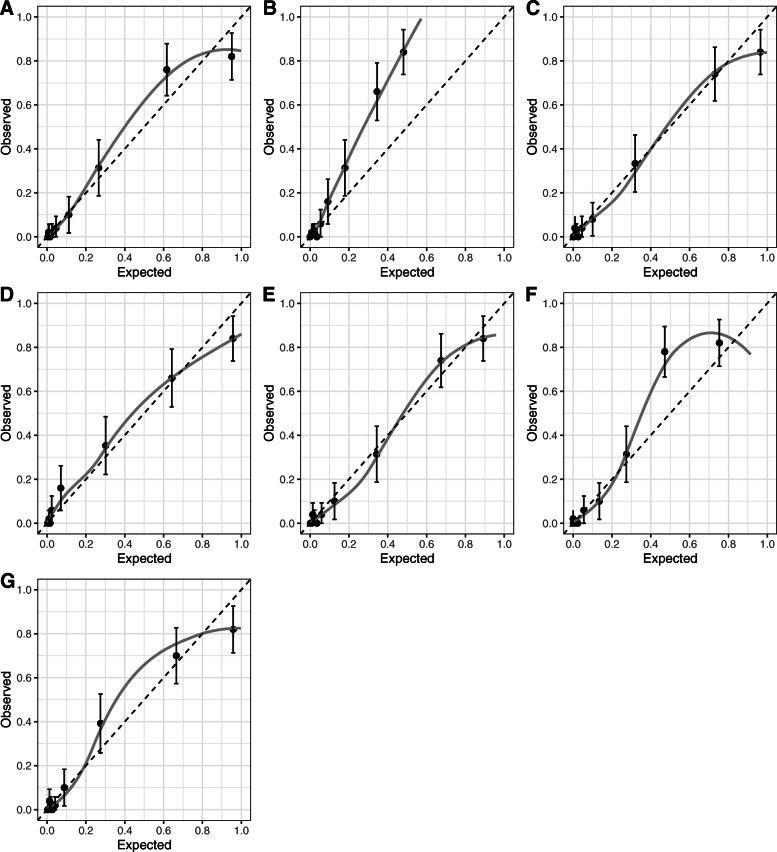
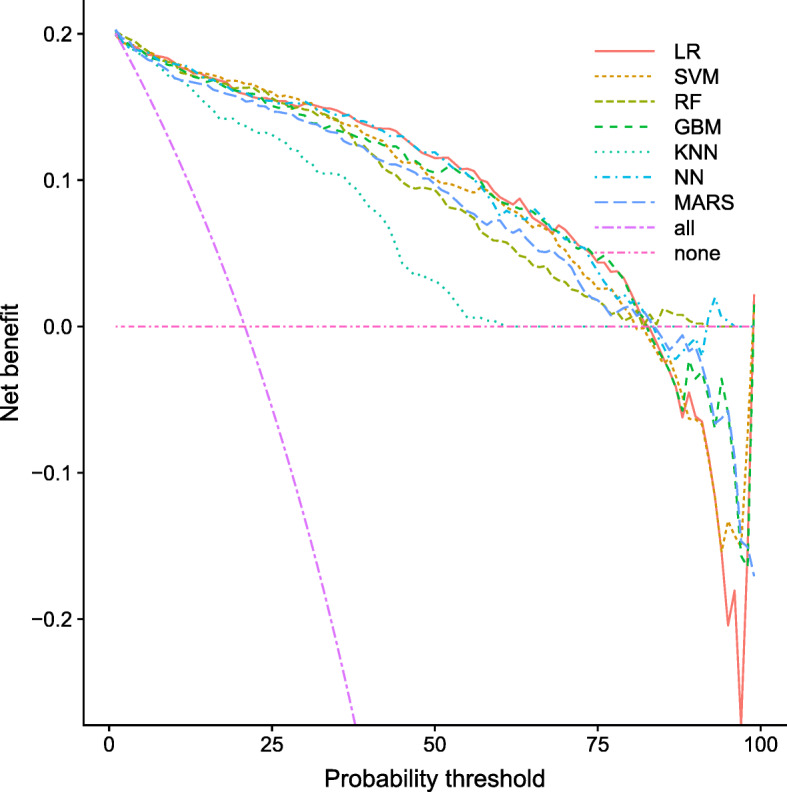
Background: There is much interest in the use of prognostic and diagnostic prediction models in all areas of clinical medicine. The use of machine learning to improve prognostic and diagnostic accuracy in this area has been increasing at the expense of classic statistical models. Previous studies have compared performance between these two approaches but their findings are inconsistent and many have limitations. We aimed to compare the discrimination and calibration of seven models built using logistic regression and optimised machine learning algorithms in a clinical setting, where the number of potential predictors is often limited, and externally validate the models. Methods: We trained models using logistic regression and six commonly used machine learning algorithms to predict if a patient diagnosed with diabetes has type 1 diabetes (versus type 2 diabetes). We used seven predictor variables (age, BMI, GADA islet-autoantibodies, sex, total cholesterol, HDL cholesterol and triglyceride) using a UK cohort of adult participants (aged 18–50 years) with clinically diagnosed diabetes recruited from primary and secondary care ( n = 960, 14% with type 1 diabetes). Discrimination performance (ROC AUC), calibration and decision curve analysis of each approach was compared in a separate external validation dataset ( n = 504, 21% with type 1 diabetes). Results: Average performance obtained in internal validation was similar in all models (ROC AUC ≥ 0.94). In external validation, there were very modest reductions in discrimination with AUC ROC remaining ≥ 0.93 for all methods. Logistic regression had the numerically highest value in external validation (ROC AUC 0.95). Logistic regression had good performance in terms of calibration and decision curve analysis. Neural network and gradient boosting machine had the best calibration performance. Both logistic regression and support vector machine had good decision curve analysis for clinical useful threshold probabilities. Conclusion: Logistic regression performed as well as optimised machine algorithms to classify patients with type 1 and type 2 diabetes. This study highlights the utility of comparing traditional regression modelling to machine learning, particularly when using a small number of well understood, strong predictor variables.
Overview
The claims and statistics of this paper haven’t been checked yet.
Free: it reads the open-access text and checks the first 5 claims that cite a source we can check. Create a free account to check every claim.
Integrity signals
Registry
Cites
Statistics
Figures
Verification
Claims the paper makes
The claims and statistics of this paper haven’t been checked yet.
Free: it reads the open-access text and checks the first 5 claims that cite a source we can check. Create a free account to check every claim.
Claims other papers make about this one
Each is checked against this paper’s own text: does it say what the citing paper says it does?
The cited source says what the claim attributes to it.
In the citing paper
“For example, logistic regression performed similarly to optimised machine learning models for discriminating between type 1 and type 2 diabetes in young adults.103”
From Developing clinical prediction models: a step-by-step guide (2024) · cites this paper as [103]
Self-check
Percentages, sums and reported differences re-computed from the paper’s own numbers.
The self-check needs the paper’s full text.
Citations
Cites
Breiman, L. (2001) · Machine Learning · doi:10.1023/a:1010933404324 · Cited by 133,538 · cited 1×
“[41, 47, 48] Gradient boosting machine An ensemble learning technique similar to random forest in the sense they average a large number of decision trees to make prediction.”
The Nature of Statistical Learning Theory
Vapnik, V. N. (1995) · doi:10.1007/978-1-4757-2440-0 · Cited by 39,138
Greedy function approximation: A gradient boosting machine
Friedman, J. H. (2001) · The Annals of Statistics · doi:10.1214/aos/1013203451 · Cited by 30,731 · cited 1×
“[41, 49, 50] Multivariate adaptive regression spline MARS and logistic regression share similarities.”
BackgroundModern Applied Statistics with S
Venables, W. N., & Ripley, B. D. (2002) · Statistics and Computing · doi:10.1007/978-0-387-21706-2 · Cited by 24,305
The Elements of Statistical Learning
Hastie, T., Friedman, J., & Tibshirani, R. (2001) · Springer Series in Statistics · doi:10.1007/978-0-387-21606-5 · Cited by 24,162
Classification and Regression by randomForest
Liaw, A. I., & Wiener, M. C. (2007) · Cited by 18,594
Neural networks for pattern recognition
(1994) · Choice Reviews Online · doi:10.5860/choice.31-5500 · Cited by 18,538
No free lunch theorems for optimization
Wolpert, D. H., & Macready, W. G. (1997) · IEEE Transactions on Evolutionary Computation · doi:10.1109/4235.585893 · Cited by 14,237 · cited 1×
“As previously described [71], each database is unique and there is no ‘ free lunch ’ , i.e. if an algorithm performs well on a certain class of problems, then it necessarily pays for that with degraded performance on the set of other problems [35, 72].”
BackgroundNeural Networks for Pattern Recognition
Bishop, C. M. (1995) · doi:10.1093/oso/9780198538493.001.0001 · Cited by 12,287
Building Predictive Models in R Using the caret Package
Kuhn, M. (2008) · Journal of Statistical Software · doi:10.18637/jss.v028.i05 · Cited by 8,863 · cited 1×
“Model training was performed using the Caret R package [64 – 68].”
MethodMultivariate Adaptive Regression Splines
Friedman, J. H. (1991) · The Annals of Statistics · doi:10.1214/aos/1176347963 · Cited by 8,000 · cited 1×
“[51] Neural network A method using an adaptive and non-sequential approach to learning that mimics a biological neural network.”
MethodGeneral Cardiovascular Risk Profile for Use in Primary Care: The Framingham Heart Study
D’Agostino, R. B., Vasan, R. S., Pencina, M. J., Wolf, P. A., Cobain, M., Massaro, J. M., & Kannel, W. B. (2008) · Circulation · doi:10.1161/circulationaha.107.699579 · Cited by 7,491 · cited 1×
“These models are increasingly being used as web-calculators [7 – 9] and medical apps for smartphones [10 – 12], and many have been incorporated into clinical guidelines [13 – 17].”
MethodThe use of the area under the ROC curve in the evaluation of machine learning algorithms
Bradley, A. P. (1997) · Pattern Recognition · doi:10.1016/s0031-3203(96)00142-2 · Cited by 7,217 · cited 1×
“We used ROC AUC [61] as the summary metrics to evaluate model discrimination.”
MethodLip, G. Y. H., Nieuwlaat, R., Pisters, R., Lane, D. A., & Crijns, H. J. G. M. (2010) · Chest · doi:10.1378/chest.09-1584 · Cited by 6,879 · cited 1×
“These models are increasingly being used as web-calculators [7 – 9] and medical apps for smartphones [10 – 12], and many have been incorporated into clinical guidelines [13 – 17].”
MethodKuhn, M., & Johnson, K. (2013) · doi:10.1007/978-1-4614-6849-3 · Cited by 6,788 · cited 2×
“Strengths of our study include the use of a systematic approach to model comparison dealing with limitations from previous studies [35, 70] including (1) use of different datasets to train and test models, (2) optimisation of tuning parameters [24, 30], (3) calibration [18] and (4) decision curve…”
MethodPattern Recognition and Neural Networks
Ripley, B. D. (1996) · Cambridge University Press eBooks · doi:10.1017/cbo9780511812651 · Cited by 6,459 · cited 1×
“[41, 53, Support vector machine It is a quadratic optimisation problem involving minimising penalties and maximising margin width, and the two classes are separated by constructing nonlinear decision boundaries (hyperplanes) using a kernel trick that maximises the margin between them.”
Introduction to the theory of neural computation
(1994) · Neural Networks · doi:10.1016/0893-6080(94)90014-0 · Cited by 6,401
Decision curve analysis: a novel method for evaluating prediction models
Vickers, A. J., & Elkin, E. B. (2006) · Medical Decision Making · doi:10.1177/0272989x06295361 · Cited by 6,341 · cited 1×
“We compared the performance of the model to support decision-making with decision curve analysis [62].”
ResultSupervised Machine Learning: A Review of Classification Techniques
Kotsiantis, S. B. (2007) · Informatica · Cited by 6,169
Ho, T. K. (2002) · Proceedings of 3rd International Conference on Document Analysis and Recognition · doi:10.1109/icdar.1995.598994 · Cited by 5,054
Applied Logistic Regression Analysis
(1996) · Technometrics · doi:10.1080/00401706.1996.10484485 · Cited by 3,598
Machine Learning Applications in Cancer Prognosis and Prediction
Kourou, K., Exarchos, T. P., Exarchos, K. P., Karamouzis, M. V., & Fotiadis, D. I. (2015) · Computational and Structural Biotechnology Journal · doi:10.1016/j.csbj.2014.11.005 · Cited by 3,338 · cited 1×
“Classic statistical models such as logistic regression are commonly applied but there is increasing interest in the application of machine learning to improve prognostic and diagnostic accuracy in clinical research ([18 – 21] with many examples of their use [22].”
MethodBig Data and Machine Learning in Health Care
Beam, A. L., & Kohane, I. S. (2018) · JAMA · doi:10.1001/jama.2017.18391 · Cited by 2,506
Christodoulou, E., Ma, J., Collins, G. S., Steyerberg, E. W., Verbakel, J. Y., & Van Calster, B. (2019) · Journal of Clinical Epidemiology · doi:10.1016/j.jclinepi.2019.02.004 · Cited by 2,119 · cited 5×
“As previously described [71], each database is unique and there is no ‘ free lunch ’ , i.e. if an algorithm performs well on a certain class of problems, then it necessarily pays for that with degraded performance on the set of other problems [35, 72].”
BackgroundMethodInfluentialIntroduction to the Theory of Neural Computation
Hertz, J., Krogh, A., & Palmer, R. G. (2018) · CRC Press eBooks · doi:10.1201/9780429499661 · Cited by 1,772
Graph-based approach for airborne light detection and ranging segmentation
Vilariño, D. L., Cabaleiro, J. C., Martínez, J., Rivera, F. F., & Pena, T. F. (2017) · Journal of Applied Remote Sensing · doi:10.1117/1.jrs.11.015020 · Cited by 1,721 · cited 1×
“As previously described [71], each database is unique and there is no ‘ free lunch ’ , i.e. if an algorithm performs well on a certain class of problems, then it necessarily pays for that with degraded performance on the set of other problems [35, 72].”
BackgroundFox, K. A. A., Dabbous, O. H., Goldberg, R. J., Pieper, K. S., Eagle, K. A., Van de Werf, F., Avezum, Á., Goodman, S. G., Flather, M. D., Anderson, F. A., et al. (2006) · BMJ · doi:10.1136/bmj.38985.646481.55 · Cited by 1,693
Machine learning and data mining methods in diabetes research
Kavakiotis, I., Tsave, O., Salifoglou, A., Maglaveras, N., Vlahavas, I., & Chouvarda, I. (2017) · Computational and Structural Biotechnology Journal · doi:10.1016/j.csbj.2016.12.005 · Cited by 1,445
Johnston, S. C., Rothwell, P. M., Nguyen-Huynh, M. N., Giles, M. F., Elkins, J. S., Bernstein, A. L., & Sidney, S. (2007) · The Lancet · doi:10.1016/s0140-6736(07)60150-0 · Cited by 1,338
Applied Logistic Regression Analysis.
Jessen, H. C., & Menard, S. (1996) · The Statistician · doi:10.2307/2988559 · Cited by 1,110
Generalized Boosted Models: A guide to the gbm package
Ridgeway, G. K. (2006) · Cited by 940
Prediction models for cardiovascular disease risk in the general population: systematic review
Damen, J. A. A. G., Hooft, L., Schuit, E., Debray, T. P. A., Collins, G. S., Tzoulaki, I., Lassale, C. M., Siontis, G. C. M., Chiocchia, V., Roberts, C., et al. (2016) · BMJ · doi:10.1136/bmj.i2416 · Cited by 935 · cited 1×
“There is much interest in the use of prognostic and diagnostic prediction models in all areas of clinical medicine including cancers [1, 2], cardiovascular disease [3, 4] and diabetes [5, 6].”
BackgroundModern modelling techniques are data hungry: a simulation study for predicting dichotomous endpoints
van der Ploeg, T., Austin, P. C., & Steyerberg, E. W. (2014) · BMC Medical Research Methodology · doi:10.1186/1471-2288-14-137 · Cited by 809 · cited 1×
“The use of only seven predictor variables means that we have a very low risk of over-fitting; for machine learning algorithms, it has been suggested that over ten times as many events per variable is required to achieve stable results compared to traditional statistical modelling [69].”
ResultAn introduction to multivariate adaptive regression splines
Friedman, J. H., & Roosen, C. B. (1995) · Statistical Methods in Medical Research · doi:10.1177/096228029500400303 · Cited by 588
Risk models and scores for type 2 diabetes: systematic review
Noble, D., Mathur, R., Dent, T., Meads, C., & Greenhalgh, T. (2011) · BMJ · doi:10.1136/bmj.d7163 · Cited by 551
Steyerberg, E. W., Eijkemans, M. J. C., Harrell, F. E., & Habbema, J. D. F. (2001) · Medical Decision Making · doi:10.1177/0272989x0102100106 · Cited by 550 · cited 1×
“The average (mean) performance ROC AUC for the optimal models obtained in the resampling was high in all [41, 44 – 46] Random forest An algorithm that grows a large ensemble of classification trees on bootstrapped samples using a random selection of the predictor variables and performs bagging for…”
MethodAssessing Women at High Risk of Breast Cancer: A Review of Risk Assessment Models
Amir, E., Freedman, O. C., Seruga, B., & Evans, D. G. (2010) · JNCI Journal of the National Cancer Institute · doi:10.1093/jnci/djq088 · Cited by 464 · cited 1×
“There is much interest in the use of prognostic and diagnostic prediction models in all areas of clinical medicine including cancers [1, 2], cardiovascular disease [3, 4] and diabetes [5, 6].”
BackgroundHippisley-Cox, J., Coupland, C., Robson, J., & Brindle, P. (2010) · BMJ · doi:10.1136/bmj.c6624 · Cited by 364 · cited 1×
“These models are increasingly being used as web-calculators [7 – 9] and medical apps for smartphones [10 – 12], and many have been incorporated into clinical guidelines [13 – 17].”
MethodFrizzell, J. D., Liang, L., Schulte, P. J., Yancy, C. W., Heidenreich, P. A., Hernandez, A. F., Bhatt, D. L., Fonarow, G. C., & Laskey, W. K. (2017) · JAMA Cardiology · doi:10.1001/jamacardio.2016.3956 · Cited by 361 · cited 1×
“There are many applied studies comparing the performance of classic models to different machine learning algorithms [23 – 34] but their findings are inconsistent.”
MethodShields, B. M., McDonald, T. J., Ellard, S., Campbell, M. J., Hyde, C., & Hattersley, A. T. (2012) · Diabetologia · doi:10.1007/s00125-011-2418-8 · Cited by 335
Self-citationHyperparameter Search in Machine Learning
Claesen, M., & Moor, B. D. (2015) · arXiv (Cornell University) · doi:10.48550/arxiv.1502.02127 · Cited by 333
Abbasi, A., Peelen, L. M., Corpeleijn, E., van der Schouw, Y. T., Stolk, R. P., Spijkerman, A. M. W., van der A, D. L., Moons, K. G. M., Navis, G., Bakker, S. J. L., et al. (2012) · BMJ · doi:10.1136/bmj.e5900 · Cited by 321 · cited 1×
“There is much interest in the use of prognostic and diagnostic prediction models in all areas of clinical medicine including cancers [1, 2], cardiovascular disease [3, 4] and diabetes [5, 6].”
BackgroundSupport Vector Machines with Applications
Moguerza, J. M., & Muñoz, A. (2006) · Statistical Science · doi:10.1214/088342306000000493 · Cited by 292 · cited 1×
“[41, 58, 59] models (ROC AUC ≥ 0.93) (Table 2) small difference in performance between models.”
BackgroundInfluentialA Comparison of Machine Learning Methods for the Diagnosis of Pigmented Skin Lesions
Dreiseitl, S., Ohno-Machado, L., Kittler, H., Vinterbo, S., Billhardt, H., & Binder, M. (2001) · Journal of Biomedical Informatics · doi:10.1006/jbin.2001.1004 · Cited by 266
An updated catalog of prostate cancer predictive tools
Shariat, S. F., Karakiewicz, P. I., Roehrborn, C. G., & Kattan, M. W. (2008) · Cancer · doi:10.1002/cncr.23908 · Cited by 264 · cited 1×
“There is much interest in the use of prognostic and diagnostic prediction models in all areas of clinical medicine including cancers [1, 2], cardiovascular disease [3, 4] and diabetes [5, 6].”
BackgroundDecision curve analysis: a technical note
written on behalf of AME Big-Data Clinical Trial Collaborative Group, Zhang, Z., Rousson, V., Lee, W.-C., Ferdynus, C., Chen, M., Qian, X., & Guo, Y. (2018) · Annals of Translational Medicine · doi:10.21037/atm.2018.07.02 · Cited by 252 · cited 1×
“In decision curve analysis, a clinical judgement of the relative value of benefits (treating a true-positive case) and harms (treating a false-positive case) associated with prediction models is made for different threshold probability [63].”
BackgroundUse of machine learning to analyse routinely collected intensive care unit data: a systematic review
Shillan, D., Sterne, J. A. C., Champneys, A., & Gibbison, B. (2019) · Critical Care · doi:10.1186/s13054-019-2564-9 · Cited by 251 · cited 1×
“Classic statistical models such as logistic regression are commonly applied but there is increasing interest in the application of machine learning to improve prognostic and diagnostic accuracy in clinical research ([18 – 21] with many examples of their use [22].”
MethodBig Data and Predictive Analytics: Recalibrating Expectations
Shah, N. D., Steyerberg, E. W., & Kent, D. M. (2018) · JAMA · doi:10.1001/jama.2018.5602 · Cited by 241 · cited 2×
“…of our study include the use of a systematic approach to model comparison dealing with limitations from previous studies [35, 70] including (1) use of different datasets to train and test models, (2) optimisation of tuning parameters [24, 30], (3) calibration [18] and (4) decision curve analysis.”
MethodLo-Ciganic, W.-H., Huang, J. L., Zhang, H. H., Weiss, J. C., Wu, Y., Kwoh, C. K., Donohue, J. M., Cochran, G., Gordon, A. J., Malone, D. C., et al. (2019) · JAMA Network Open · doi:10.1001/jamanetworkopen.2019.0968 · Cited by 229
Thanabalasingham, G., Pal, A., Selwood, M. P., Dudley, C., Fisher, K., Bingley, P. J., Ellard, S., Farmer, A. J., McCarthy, M. I., & Owen, K. R. (2012) · Diabetes Care · doi:10.2337/dc11-1243 · Cited by 201 · cited 1×
“Five hundred sixty-six participants were identified from the Young Diabetes in Oxford (YDX) study [40].”
BackgroundSelf-citationUse of a quasi-Newton method in a feedforward neural network construction algorithm
Setiono, R., & Hui, L. C. K. (1995) · IEEE Transactions on Neural Networks · doi:10.1109/72.363426 · Cited by 199 · cited 1×
“For SVM, we used the radial basis function kernel parameter [41], and for NN, we used the most commonly used single-hidden-layer neural network [41] trained using quasi-Newton back propagation (BFGS) [43] optimisation method.”
MethodGray, L. J., Taub, N. A., Khunti, K., Gardiner, E., Hiles, S., Webb, D. R., Srinivasan, B. T., & Davies, M. J. (2010) · Diabetic Medicine · doi:10.1111/j.1464-5491.2010.03037.x · Cited by 196
Application of Random Forests Methods to Diabetic Retinopathy Classification Analyses
Casanova, R., Saldana, S., Chew, E. Y., Danis, R. P., Greven, C. M., & Ambrosius, W. T. (2014) · PLoS ONE · doi:10.1371/journal.pone.0098587 · Cited by 177
Hippisley-Cox, J., & Coupland, C. (2015) · BMJ Open · doi:10.1136/bmjopen-2015-007825 · Cited by 175 · cited 1×
“These models are increasingly being used as web-calculators [7 – 9] and medical apps for smartphones [10 – 12], and many have been incorporated into clinical guidelines [13 – 17].”
MethodWong, A., Young, A. T., Liang, A. S., Gonzales, R., Douglas, V. C., & Hadley, D. (2018) · JAMA Network Open · doi:10.1001/jamanetworkopen.2018.1018 · Cited by 152
Harrison, R. F., & Kennedy, R. L. (2005) · Annals of Emergency Medicine · doi:10.1016/j.annemergmed.2004.09.012 · Cited by 121 · cited 1×
“…of our study include the use of a systematic approach to model comparison dealing with limitations from previous studies [35, 70] including (1) use of different datasets to train and test models, (2) optimisation of tuning parameters [24, 30], (3) calibration [18] and (4) decision curve analysis.”
MethodWessler, B. S., Lai YH, L., Kramer, W., Cangelosi, M., Raman, G., Lutz, J. S., & Kent, D. M. (2015) · Circulation: Cardiovascular Quality and Outcomes · doi:10.1161/circoutcomes.115.001693 · Cited by 105 · cited 1×
“There is much interest in the use of prognostic and diagnostic prediction models in all areas of clinical medicine including cancers [1, 2], cardiovascular disease [3, 4] and diabetes [5, 6].”
BackgroundThe QUiPP App: a safe alternative to a treat‐all strategy for threatened preterm labor
Watson, H. A., Carter, J., Seed, P. T., Tribe, R. M., & Shennan, A. H. (2017) · Ultrasound in Obstetrics and Gynecology · doi:10.1002/uog.17499 · Cited by 85 · cited 1×
“These models are increasingly being used as web-calculators [7 – 9] and medical apps for smartphones [10 – 12], and many have been incorporated into clinical guidelines [13 – 17].”
MethodHsieh, M. H., Sun, L.-M., Lin, C.-L., Hsieh, M.-J., Hsu, C.-Y., & Kao, C.-H. (2018) · Cancer Management and Research · doi:10.2147/cmar.s180791 · Cited by 71
Rabin, B. A., Gaglio, B., Sanders, T., Nekhlyudov, L., Dearing, J. W., Bull, S. S., Glasgow, R. E., & Marcus, A. C. (2013) · Cancer Epidemiology Biomarkers & Prevention · doi:10.1158/1055-9965.epi-13-0513 · Cited by 69
Fong, Y., Evans, J., Brook, D., Kenkre, J., Jarvis, P., & Gower-Thomas, K. (2015) · The Annals of The Royal College of Surgeons of England · doi:10.1308/003588414x14055925060514 · Cited by 66
Prediction of Incident Diabetes in the Jackson Heart Study Using High-Dimensional Machine Learning
Casanova, R., Saldana, S., Simpson, S. L., Lacy, M. E., Subauste, A. R., Blackshear, C., Wagenknecht, L., & Bertoni, A. G. (2016) · PLOS ONE · doi:10.1371/journal.pone.0163942 · Cited by 53
Talaei-Khoei, A., & Wilson, J. M. (2018) · International Journal of Medical Informatics · doi:10.1016/j.ijmedinf.2018.08.008 · Cited by 48 · cited 1×
“There are many applied studies comparing the performance of classic models to different machine learning algorithms [23 – 34] but their findings are inconsistent.”
MethodFaisal, M., Scally, A., Howes, R., Beatson, K., Richardson, D., & Mohammed, M. A. (2018) · Health Informatics Journal · doi:10.1177/1460458218813600 · Cited by 42
van Houwelingen, H. C., & le Cessie, S. (1988) · Statistica Neerlandica · doi:10.1111/j.1467-9574.1988.tb01237.x · Cited by 27
Prediction of intracranial findings on CT-scans by alternative modelling techniques
van der Ploeg, T., Smits, M., Dippel, D. W. J., Hunink, M. G. M., & Steyerberg, E. W. (2011) · BMC Medical Research Methodology · doi:10.1186/1471-2288-11-143 · Cited by 17 · cited 1×
“Strengths of our study include the use of a systematic approach to model comparison dealing with limitations from previous studies [35, 70] including (1) use of different datasets to train and test models, (2) optimisation of tuning parameters [24, 30], (3) calibration [18] and (4) decision curve analysis.”
MethodEnnis (1998) · doi:10.1002/(sici)1097-0258(19981115)17:21<2501::aid-sim938>3.0.co;2-m
Research works printed but not linked: 3
- Goodfellow I, Bengio Y, Courville A. Deep learning: the MIT press; 2016. p. 800.
- Dasarathy B. Nearest neighbor: pattern classification techniques. Los Alamitos: IEEE Computer Society Press; 1991.
- Fernandez-Delgado M, Cernadas E, Barro S, Amorim D. Do we need hundreds of classifiers to solve real world classification problems? J Mach Learn Res. 2014;15(1):3133-81.
Cited by
2. Classification and Diagnosis of Diabetes: Standards of Medical Care in Diabetes—2022
American Diabetes Association Professional Practice Committee (2022) · Diabetes Care · doi:10.2337/dc22-s002 · Cited by 4,792
2. Classification and Diagnosis of Diabetes: Standards of Medical Care in Diabetes—2021
American Diabetes Association (2021) · Diabetes Care · doi:10.2337/dc21-s002 · Cited by 3,116
“porated into the diabetes classification system (9).”
2. Classification and Diagnosis of Diabetes:Standards of Care in Diabetes—2023
ElSayed, N. A., Aleppo, G., Aroda, V. R., Bannuru, R. R., Brown, F. M., Bruemmer, D., Collins, B. S., Gaglia, J. L., Hilliard, M. E., Isaacs, D., et al. (2023) · Diabetes Care · doi:10.2337/dc23-s002 · Cited by 2,433
2. Diagnosis and Classification of Diabetes: Standards of Care in Diabetes—2024
American Diabetes Association Professional Practice Committee, ElSayed, N. A., Aleppo, G., Bannuru, R. R., Bruemmer, D., Collins, B. S., Ekhlaspour, L., Gaglia, J. L., Hilliard, M. E., Johnson, E. L., et al. (2024) · Diabetes Care · doi:10.2337/dc24-s002 · Cited by 2,086
2. Diagnosis and classification of diabetes: standards of care in diabetes-2025
American Diabetes Association Professional Practice Committee, ElSayed, N. A., McCoy, R. G., Aleppo, G., Balapattabi, K., Beverly, E. A., Briggs Early, K., Bruemmer, D., Ebekozien, O., Echouffo-Tcheugui, J. B., et al. (2025) · Diabetes Care · doi:10.2337/dc25-s002 · Cited by 1,393
Metadata
- Authors
- Lynam, A. L., Dennis, J. M., Owen, K. R., Oram, R. A., Jones, A. G., Shields, B. M., & Ferrat, L. A.
- Affiliations
- University of Exeter (GB)
- Churchill Hospital (GB)
- Corresponding author
- Ferrat, Lauric A.
- ORCID
- Venue
- Diagnostic and Prognostic Research
- Published
- 2020-06-04
- Volume
- 4
- Issue
- 1
- Pages
- 6-6
- ISSN
- 2397-7523 (ISSN-L)
- PMC
- PMC7318367
- OpenAlex
- W3034154128
- Cited by
- 142
- References
- 67
- Citations by year
- 2026: 15 · 2025: 27 · 2024: 27 · 2023: 19 · 2022: 23 · 2021: 29 · 2020: 2
- FWCI
- 16.03
- Type
- journal article
- Language
- en
- Open access
- gold
- doi.org
- Licence
- cc-by
- creativecommons.org/licenses/by/4.0 (tdm)
- creativecommons.org/licenses/by/4.0 (vor)
- Locations
- Diagnostic and Prognostic Research (publishedVersion, cc-by)
- PubMed Central (publishedVersion, cc-by)
- PubMed (publishedVersion)
- DOAJ (DOAJ: Directory of Open Access Journals) (submittedVersion, cc-by-sa)
- Figshare (submittedVersion, cc-by)
- Open Research Exeter (University of Exeter) (submittedVersion, cc-by)
- Royal Devon and Exeter Research Repository (Royal Devon and Exeter) (submittedVersion, cc-by)
- Zenodo (CERN European Organization for Nuclear Research) (submittedVersion, cc-by)
- Funders
- NIHR Clinician Scientist award (CS-2015-15-018)
- European Community FP7 programme CEED3 (HEALTH-F2-2008-223211)
- UK Medical Research Council (MR/N00633X/)
- National Institute for Health Research (DRF-2010-03-72)
- Diabetes UK Harry Keen Fellowship (16/0005529)
- Topics
- Health Sciences › Health Professions › Health Information Management › Artificial Intelligence in Healthcare
- Physical Sciences › Mathematics › Statistics and Probability › Statistical Methods in Epidemiology
- Life Sciences › Biochemistry, Genetics and Molecular Biology › Genetics › Diabetes and associated disorders
- Keywords
- type 1 diabetes, type 2 diabetes, diabetes classification, logistic regression, machine learning, external validation, model discrimination, model calibration, decision curve analysis, young adults, gradient boosting, artificial neural networks, support vector machine
About these checks
Registry, retraction, Cites and statistics results are computed, not judged, with one exception: a printed reference that no index lists is read once by a model before it counts as a citation error. Claims are extracted by a model and kept only when their quote appears verbatim in the text; each cited source is then checked, with a model’s help, for whether it says what the claim relies on. Those verdicts can be wrong — read the claim’s quote and the cited source before relying on one.
Statistics and arithmetic are recomputed, not judged.
Confidence bands are shown only for fields calibrated on our annotated test set. None is calibrated yet, so no band is shown.
What counts as a claim ›How we measure confidence ›How we check this ›
Are you an author, or do you see a problem with this page? Request a review
Data sources
Bibliographic data: Semantic Scholar, OpenAlex, Crossref.
Contains information from the Semantic Scholar Academic Graph Datasets, made available under the ODC Attribution License (ODC-BY 1.0).
Semantic Scholar’s data is described in: Kinney, R., et al. (2023). The Semantic Scholar Open Data Platform. arXiv:2301.10140.
