

The DOI matches its Crossref record; 54 of the 62 references it cites were found in a registry or an index.
Processing and extraction methods of medicinal cannabis: a narrative review
Open accessAbstract
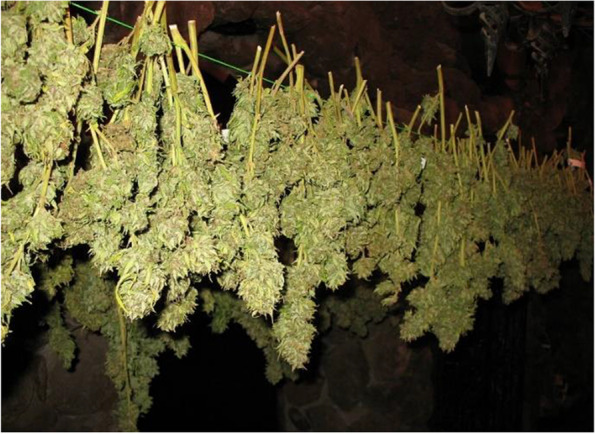
Introduction: As the cannabis industry transitions from a black market to a legal market, product development, and methods of extraction have become a focal point. To date, more than thousands of chemical constituents have been identified from the cannabis plant, all of which possess different chemical properties that require different conditions for preservation during drying and extraction. However, scientific publications that explore these areas for the cannabis plant are currently lacking. Method: This is a narrative review paper which focuses on critiquing drying and extraction methods of Cannabis sativa L. plant. Relevant keywords such as medicinal cannabis, extraction, solvent, cannabinoids, and terpenes have been searched in PubMed, EMBASE, MEDLINE, Google Scholar, and Cochrane Library (Wiley) databases. Result: To find relevant papers for this narrative review, 93 papers have been reviewed. Among them, 12 irrelevant papers were discarded. The excluded papers were either about hemp seed oil or hemp fiber and protein. Based on this review, solvent extraction is the most common method for cannabis plants. Although solventless and hydrodynamic extraction are known for their high yield and feasibility, more investigation is needed in these areas. Regarding the drying process, hang-drying is the most convenient method; however, it may be substituted by freeze-drying in the near future. Discussion: This review analyses various drying and extraction processes to guide the selection of suitable methods for various types of cannabis products and applications. This is done by outlining traditional and modern methods of drying techniques, exploring the importance of solvents for extraction, visiting solventless extraction procedures, and finally comparing conventional and alternative methods of extraction. Conclusion: In conclusion, based on the current knowledge, using organic solvents is the most convenient method for medicinal cannabis extraction. However, more research is needed for some of the drying and extraction methods. Also, developing a green and sustainable cannabis extraction method should be considered for future studies.
Overview
The claims and statistics of this paper haven’t been checked yet.
Run the check — free, no account needed. It reads the open-access text and checks the sources it cites.
Integrity signals
Registry
Cites
Statistics
Figures
Verification
Claims the paper makes
The claims and statistics of this paper haven’t been checked yet.
Run the check — free, no account needed. It reads the open-access text and checks the sources it cites.
Claims other papers make about this one
Each is checked against this paper’s own text: does it say what the citing paper says it does?
The source backs part of the claim, not all of it — or backs it for a different population, condition or comparison.
In the citing paper
“However, as a rule, the development of products that exploit these compounds’ bioactive or technological potential is based on separation processes classified as solid-liquid extraction, which is a critical processing step with a broad spectrum of exploitation [39].”
From Supercritical Carbon Dioxide Technology for Recovering Valuable Phytochemicals from Cannabis sativa L. and Valorization of Its Biomass for Food Applications (2023) · cites this paper as [39]
Experimental — accuracy not yet measured
Self-check
Percentages, sums and reported differences re-computed from the paper’s own numbers.
The self-check needs the paper’s full text.
Citations
Cites
van der Togt, H. (2003) · Journal of Network and Computer Applications · doi:10.1016/s1084-8045(02)00061-9 · Cited by 302,642
Techniques for extraction of bioactive compounds from plant materials: A review
Azmir, J., Zaidul, I. S. M., Rahman, M. M., Sharif, K. M., Mohamed, A., Sahena, F., Jahurul, M. H. A., Ghafoor, K., Norulaini, N. A. N., & Omar, A. K. M. (2013) · Journal of Food Engineering · doi:10.1016/j.jfoodeng.2013.01.014 · Cited by 2,870
Soxhlet extraction of solid materials: an outdated technique with a promising innovative future
de Castro, M. L. D., & Ayuso, L. E. G. (1998) · Analytica Chimica Acta · doi:10.1016/s0003-2670(98)00233-5 · Cited by 699 · cited 1×
“As commonly witnessed by other conventional processes, the long-running time and the large amount of solvent required are limitations that not only increase the cost of operation but also cause environmental complications (Luque de Castro and Garcı́a-Ayuso 1998).”
BackgroundSolvents and Solvent Effects in Organic Chemistry: REICHARDT:SOLV.EFF. 4ED O-BK
Reichardt, C., & Welton, T. (2010) · Wiley eBooks · doi:10.1002/9783527632220 · Cited by 690
Before the injection—Modern methods of sample preparation for separation techniques
Smith, R. M. (2003) · Journal of Chromatography A · doi:10.1016/s0021-9673(03)00511-9 · Cited by 503 · cited 2×
“This creates a gap in the literature that should be explored more extensively (Smith 2003).”
BackgroundVatai, T., Škerget, M., & Knez, Ž. (2009) · Journal of Food Engineering · doi:10.1016/j.jfoodeng.2008.06.028 · Cited by 324
Brighenti, V., Pellati, F., Steinbach, M., Maran, D., & Benvenuti, S. (2017) · Journal of Pharmaceutical and Biomedical Analysis · doi:10.1016/j.jpba.2017.05.049 · Cited by 272
Yara-Varón, E., Li, Y., Balcells, M., Canela, R., Fabiano‐Tixier, A., & Chemat, F. (2017) · Molecules · doi:10.3390/molecules22091474 · Cited by 227
Raventos, M., Duarte, S., & Alarcón, R. (2002) · Food Science and Technology International · doi:10.1106/108201302029451 · Cited by 211
Raber, J., Elzinga, S., & Kaplan, C. (2015) · Journal of Toxicological Sciences · doi:10.2131/jts.40.797 · Cited by 189
Research works printed but not linked: 5
- Coffman C, Gentner W. Cannabis sativa L.: effect of drying time and temperature on cannabinoid profile of stored leaf tissue. Bull Narc. 1974;26(1):68–70.
- Duarte K, Justino C, Gomes A, Rocha-Santos T, Duarte A. Chapter 4—Green analytical methodologies for preparation of extracts and analysis of bioactive compounds. In: Teresa RS, Armando CD, editors. Comprehensive analytical chemistry, vol. 65. Amsterdam: Elsevier; 2014. p. 59–78.
- Green G, et al. The cannabis grow bible, Greg Green. 2001.
- Jin S, Chen J. Cannabis indoor growing conditions, management practices, and post-harvest treatment: a review. Am J Plant Sci. 2019;10(06):925. · DOI
- Romano LL, Hazekamp A. Cannabis oil: chemical evaluation of an upcoming cannabis-based medicine. Cannabinoids. 2013;1(1):1–11.
Cited by
Sorted by citations
Items 101–118 of 118
Cvetanov, A., Bogevski, K., Maksimova, V., & Janevik-Ivanovska, E. (2026) · Journal of Agriculture and Plant Sciences · doi:10.46763/japs2624123c
From Plant to Extract: Different Factors in the Extraction of Cannabis sativa L. Inflorescences.
Lima, S. N. A., de Souza, M. L., de Andrade, M. A. N., Lima, K. R. D. S., Rolim, P., & Rolim, L. (2026) · Cannabis and Cannabinoid Research · doi:10.1177/25785125261454834
Siddiqua, A., Raza, A., Shah, S. S., Kanwal, H., Zaheer, M. S., Ikram, K., Ali, H. H., Kashif, M., Riaz, M. W., Manzoor, M. A., et al. (2026) · Journal of Basic and Applied Zoology · doi:10.1186/s41936-026-00588-0
“When sufficiently dried, crushed using an electric blender (Lazarjani et al. 2021).”
Sapkota, B., Dhakal, K., Sapkota, P., & Poudel, P. (2026) · Natural Product Communications · doi:10.1177/1934578x261451344
“73 The preferred product in the cannabis industry historically been dried cannabis flowers, but as the market grows, so does the desire for other products with different qualities.”
de Sousa, J. O., de Lima, C. F., de Miranda, J. E. M., Almeida, J. M. R. C., Netto, M. C. L., Torres, F. G. F., Resendes, F. C. M. F., Cesar, R. L., & Maslinkiewicz, A. (2026) · RECIMA21 - Revista Científica Multidisciplinar · doi:10.47820/recima21.v7i4.7813
Silva, M. S. D. L., Evangelista, R., Pereira, K. A. B., da Silva, C. M. G., Fernandes, A. A. F., de Lira, V. E. D. L. C., Góes, A. J. D. S., & de Castro, A. G. (2026) · Scientific Electronic Archives · doi:10.36560/19320262203
“Essentially, the extraction is classified as solid-liquid extraction, as the inflorescences are the solid part and the extract consists of the extraction solvent (Lazarjani et al., 2021).”
Rahimah, S., Yuliyanto, F., Djunaedi, D., Soeroto, A., & Bisri, T. (2026) · Tropical Journal of Natural Product Research · doi:10.26538/tjnpr/v10i2.41
Natural and synthetic cannabinoids. Mechanism of action, drug addiction and associated risk factors
Ураков, А. Л., Samorodov, A. V., Ловцова, Л. В., Moiseeva, I. Y., & Rudrapal, M. (2026) · Reviews on Clinical Pharmacology and Drug Therapy · doi:10.17816/rcf691622
Bahmani, M., Kazemnezhad, M., Karimi, E., & Ghaneialvar, H. (2026) · Plant Biotechnology Persa · doi:10.66224/pbp.8.3.8
“In contrast, secondary metabolites, such as alkaloids, flavonoids, glycosides, mucilage, and tannins, play crucial roles in plant defense mechanisms and exhibit a variety of biological activities [5, 6].”
Cannabinoids in Cannabis sativa l. and oil: Method validation and analysis by LC-MS/MS
Drobnjak, P. D. S. M., Zacca, J. J., & Caldas, E. D. (2025) · Forensic Science International · doi:10.1016/j.forsciint.2025.112781
Noysang, C., Khuanekkaphan, M., Pummarin, T., Buranasukhon, W., & Chaiprateep, E.-O. (2025) · Journal of Advanced Pharmaceutical Technology & Research · doi:10.4103/japtr.japtr_148_25
Pheophytins as bioenhancers: Improving cannabidiol bioavailability and efficacy in cannabis extracts
Uziel, A., Procaccia, S., Shapira, A., Gelfand, A., Cohen, J., Meiri, D., & Lewitus, D. Y. (2025) · International Journal of Pharmaceutics · doi:10.1016/j.ijpharm.2025.126194
Chouikh, A., Ali, A. B., & Chenguel, A. (2025) · Uchenye Zapiski Kazanskogo Universiteta Seriya Estestvennye Nauki · doi:10.26907/2542-064x.2025.2.242-253
Pike, B., Kozik, A., & Terán, W. (2025) · bioRxiv · doi:10.1101/2025.05.04.652121
“It may be the case that panic attacks, which are increasingly common with newly widespread use of high-THC cannabis products 144–147 , are encouraged with solvent-based processing tactics that retain most cannabinoids, but tend to lose terpenes upon solvent removal 148–150 .”
Demircan, B., Mcclements, D., & Velioğlu, Y. (2025) · Food Chemistry · doi:10.1016/j.foodchem.2025.144362
Core, J. D., Jure, I., Sofrás, F. M. S., Pietranera, L., Ronchetti, S., Roig, P., Desimone, M. F., Nicola, A. F. D., & Labombarda, F. (2025) · Neuroscience · doi:10.1016/j.neuroscience.2025.03.055
Perea-Salazar, L. F., Cuenca, M., & López‐Padilla, A. (2025) · ENTRAMADO · doi:10.18041/1900-3803/entramado.1.12100 · Cited by 1
Enhancing Cannabis Extraction Efficiency and Sustainability through Quantum Computing: A Review
M, M. R., A, T. C., Hassan, S., Zubaer, M. A., Awang, M. B., & Hasan, M. (2023) · Oriental Journal Of Chemistry · doi:10.13005/ojc/390604
Metadata
- Authors
- Lazarjani, M. P., Young, O., Kebede, L., & Seyfoddin, A.
- Affiliations
- Auckland University of Technology (NZ)
- Corresponding author
- Seyfoddin, Ali
- Venue
- Journal of Cannabis Research
- Published
- 2021-07-19
- Volume
- 3
- Issue
- 1
- Pages
- 32-32
- ISSN
- 2522-5782 (ISSN-L)
- PMC
- PMC8290527
- OpenAlex
- W3184094075
- Cited by
- 144
- References
- 62
- Citations by year
- 2026: 23 · 2025: 47 · 2024: 29 · 2023: 25 · 2022: 19
- FWCI
- 2.31
- Type
- journal article
- Language
- en
- Open access
- gold
- doi.org
- Locations
- Journal of Cannabis Research (publishedVersion, cc-by)
- PubMed Central (publishedVersion, cc-by)
- PubMed (publishedVersion)
- Tuwhera (Auckland University of Technology) (submittedVersion, cc-by)
- DOAJ (DOAJ: Directory of Open Access Journals) (submittedVersion, cc-by-sa)
- Topics
- Health Sciences › Medicine › Pharmacology (medical) › Cannabis and Cannabinoid Research
- Life Sciences › Agricultural and Biological Sciences › Food Science › Agricultural and Biological Research
- Life Sciences › Agricultural and Biological Sciences › Plant Science › Phytochemistry Medicinal Plant Applications
- Keywords
- medical cannabis, Cannabis sativa, drying methods, solvent extraction, solvent-free extraction, cannabinoids, terpenes, freeze-drying, green extraction
About these checks
Registry, retraction, Cites and statistics results are computed, not judged, with one exception: a printed reference that no index lists is read once by a model before it counts as a citation error. Claims are extracted by a model and kept only when their quote appears verbatim in the text; each cited source is then checked, with a model’s help, for whether it says what the claim relies on. Those verdicts can be wrong — read the claim’s quote and the cited source before relying on one.
Statistics and arithmetic are recomputed, not judged.
Confidence bands are shown only for fields calibrated on our annotated test set. None is calibrated yet, so no band is shown.
What counts as a claim ›How we measure confidence ›How we check this ›
Are you an author, or do you see a problem with this page? Request a review
