

The DOI matches its Crossref record; 54 of the 62 references it cites were found in a registry or an index.
Processing and extraction methods of medicinal cannabis: a narrative review
Open accessAbstract
Introduction: As the cannabis industry transitions from a black market to a legal market, product development, and methods of extraction have become a focal point. To date, more than thousands of chemical constituents have been identified from the cannabis plant, all of which possess different chemical properties that require different conditions for preservation during drying and extraction. However, scientific publications that explore these areas for the cannabis plant are currently lacking. Method: This is a narrative review paper which focuses on critiquing drying and extraction methods of Cannabis sativa L. plant. Relevant keywords such as medicinal cannabis, extraction, solvent, cannabinoids, and terpenes have been searched in PubMed, EMBASE, MEDLINE, Google Scholar, and Cochrane Library (Wiley) databases. Result: To find relevant papers for this narrative review, 93 papers have been reviewed. Among them, 12 irrelevant papers were discarded. The excluded papers were either about hemp seed oil or hemp fiber and protein. Based on this review, solvent extraction is the most common method for cannabis plants. Although solventless and hydrodynamic extraction are known for their high yield and feasibility, more investigation is needed in these areas. Regarding the drying process, hang-drying is the most convenient method; however, it may be substituted by freeze-drying in the near future. Discussion: This review analyses various drying and extraction processes to guide the selection of suitable methods for various types of cannabis products and applications. This is done by outlining traditional and modern methods of drying techniques, exploring the importance of solvents for extraction, visiting solventless extraction procedures, and finally comparing conventional and alternative methods of extraction. Conclusion: In conclusion, based on the current knowledge, using organic solvents is the most convenient method for medicinal cannabis extraction. However, more research is needed for some of the drying and extraction methods. Also, developing a green and sustainable cannabis extraction method should be considered for future studies.
Overview
The claims and statistics of this paper haven’t been checked yet.
Run the check — free, no account needed. It reads the open-access text and checks the sources it cites.
Integrity signals
Registry
Cites
Statistics
Figures
Verification
Claims the paper makes
The claims and statistics of this paper haven’t been checked yet.
Run the check — free, no account needed. It reads the open-access text and checks the sources it cites.
Claims other papers make about this one
Each is checked against this paper’s own text: does it say what the citing paper says it does?
The source backs part of the claim, not all of it — or backs it for a different population, condition or comparison.
In the citing paper
“However, as a rule, the development of products that exploit these compounds’ bioactive or technological potential is based on separation processes classified as solid-liquid extraction, which is a critical processing step with a broad spectrum of exploitation [39].”
From Supercritical Carbon Dioxide Technology for Recovering Valuable Phytochemicals from Cannabis sativa L. and Valorization of Its Biomass for Food Applications (2023) · cites this paper as [39]
Experimental — accuracy not yet measured
Self-check
Percentages, sums and reported differences re-computed from the paper’s own numbers.
The self-check needs the paper’s full text.
Citations
Cites
van der Togt, H. (2003) · Journal of Network and Computer Applications · doi:10.1016/s1084-8045(02)00061-9 · Cited by 302,642
Techniques for extraction of bioactive compounds from plant materials: A review
Azmir, J., Zaidul, I. S. M., Rahman, M. M., Sharif, K. M., Mohamed, A., Sahena, F., Jahurul, M. H. A., Ghafoor, K., Norulaini, N. A. N., & Omar, A. K. M. (2013) · Journal of Food Engineering · doi:10.1016/j.jfoodeng.2013.01.014 · Cited by 2,870
Soxhlet extraction of solid materials: an outdated technique with a promising innovative future
de Castro, M. L. D., & Ayuso, L. E. G. (1998) · Analytica Chimica Acta · doi:10.1016/s0003-2670(98)00233-5 · Cited by 699 · cited 1×
“As commonly witnessed by other conventional processes, the long-running time and the large amount of solvent required are limitations that not only increase the cost of operation but also cause environmental complications (Luque de Castro and Garcı́a-Ayuso 1998).”
BackgroundSolvents and Solvent Effects in Organic Chemistry: REICHARDT:SOLV.EFF. 4ED O-BK
Reichardt, C., & Welton, T. (2010) · Wiley eBooks · doi:10.1002/9783527632220 · Cited by 690
Before the injection—Modern methods of sample preparation for separation techniques
Smith, R. M. (2003) · Journal of Chromatography A · doi:10.1016/s0021-9673(03)00511-9 · Cited by 503 · cited 2×
“This creates a gap in the literature that should be explored more extensively (Smith 2003).”
BackgroundVatai, T., Škerget, M., & Knez, Ž. (2009) · Journal of Food Engineering · doi:10.1016/j.jfoodeng.2008.06.028 · Cited by 324
Brighenti, V., Pellati, F., Steinbach, M., Maran, D., & Benvenuti, S. (2017) · Journal of Pharmaceutical and Biomedical Analysis · doi:10.1016/j.jpba.2017.05.049 · Cited by 272
Yara-Varón, E., Li, Y., Balcells, M., Canela, R., Fabiano‐Tixier, A., & Chemat, F. (2017) · Molecules · doi:10.3390/molecules22091474 · Cited by 227
Raventos, M., Duarte, S., & Alarcón, R. (2002) · Food Science and Technology International · doi:10.1106/108201302029451 · Cited by 211
Raber, J., Elzinga, S., & Kaplan, C. (2015) · Journal of Toxicological Sciences · doi:10.2131/jts.40.797 · Cited by 189
Dussy, F. E., Hamberg, C., Luginbühl, M., Schwerzmann, T., & Briellmann, T. (2005) · Forensic Science International · doi:10.1016/j.forsciint.2004.05.015 · Cited by 187
Liu, M., Fernando, D., Daniel, G., Madsen, B., Meyer, A., Ale, M., & Thygesen, A. (2015) · Industrial Crops and Products · doi:10.1016/j.indcrop.2015.02.010 · Cited by 180
Principles, Classification, and Selection of Dryers
Mujumdar, A. (2006) · doi:10.1201/9781420017618-11 · Cited by 180 · cited 4×
“This procedure requires an intense amount of energy to maintain such temperatures, vacuum, and long-running time (Mujumdar 2006).”
BackgroundMethodInfluentialSupercritical CO2 extraction of hemp (Cannabis sativa L.) seed oil
Aladić, K., Jarni, K., Barbir, T., Vidović, S., Vladić, J., Bilić, M., & Jokić, S. (2015) · Industrial Crops and Products · doi:10.1016/j.indcrop.2015.07.016 · Cited by 172
Herrera, M., & de Castro, M. L. D. (2005) · Journal of Chromatography A · doi:10.1016/j.chroma.2005.09.021 · Cited by 169
Supercritical carbon dioxide extraction of cannabinoids from Cannabis sativa L
Rovetto, L. J., & Aieta, N. V. (2017) · The Journal of Supercritical Fluids · doi:10.1016/j.supflu.2017.03.014 · Cited by 166
The Volatile Oil Composition of Fresh and Air-Dried Buds of Cannabis sativa
Ross, S. A., & ElSohly, M. A. (1996) · Journal of Natural Products · doi:10.1021/np960004a · Cited by 158
Bernstein, N., Gorelick, J., Zerahia, R., & Koch, S. (2019) · Frontiers in Plant Science · doi:10.3389/fpls.2019.00736 · Cited by 155
Supercritical CO2 Extraction and Fractionation of Lavender Essential Oil and Waxes
Reverchon, E., Porta, G. D., & Senatore, F. (1995) · Journal of Agricultural and Food Chemistry · doi:10.1021/jf00054a045 · Cited by 155
Nitrogen supply affects cannabinoid and terpenoid profile in medical cannabis (Cannabis sativa L.)
Saloner, A., & Bernstein, N. (2021) · Industrial Crops and Products · doi:10.1016/j.indcrop.2021.113516 · Cited by 152
Citti, C., Ciccarella, G., Braghiroli, D., Parenti, C., Vandelli, M., & Cannazza, G. (2016) · Journal of Pharmaceutical and Biomedical Analysis · doi:10.1016/j.jpba.2016.05.033 · Cited by 139
Agarwal, C., Máthé, K., Hofmann, T., & Csóka, L. (2018) · Journal of Food Science · doi:10.1111/1750-3841.14075 · Cited by 139
Ultrasound-Assisted Extraction in Food Analysis
Chemat, F., Tomao, V., & Virot, M. (2008) · Handbook of Food Analysis Instruments · doi:10.1201/9781420045673.ch5 · Cited by 138
Namdar, D., Mazuz, M., Ion, A., & Koltai, H. (2018) · Industrial Crops and Products · doi:10.1016/j.indcrop.2018.01.060 · Cited by 135
Danziger, N., & Bernstein, N. (2021) · Industrial crops and products (Print) · doi:10.1016/j.indcrop.2021.113351 · Cited by 129
Extraction of Cannabinoids from Cannabis sativa L. (Hemp)—Review
Valizadehderakhshan, M., Shahbazi, A., Kazem‐Rostami, M., Todd, M. S., Bhowmik, A., & Wang, L. (2021) · Agriculture · doi:10.3390/agriculture11050384 · Cited by 127
Fathordoobady, F., Singh, A., Kitts, D. D., & Singh, A. P. (2019) · Food Reviews International · doi:10.1080/87559129.2019.1600539 · Cited by 117
Preparative Isolation of Cannabinoids from Cannabis sativa by Centrifugal Partition Chromatography
Hazekamp, A., Simons, R., Peltenburg-Looman, A. M. G., Sengers, M., van Zweden, R., & Verpoorte, R. (2004) · Journal of Liquid Chromatography & Related Technologies · doi:10.1081/jlc-200028170 · Cited by 108
Grijó, D. R., Osorio, I. A. V., & Cardozo-Filho, L. (2018) · Journal of CO2 Utilization · doi:10.1016/j.jcou.2018.09.022 · Cited by 101
Cannabis smoke condensate III: The cannabinoid content of vaporised Cannabis sativa
Pomahačová, B., van der Kooy, F., & Verpoorte, R. (2009) · Inhalation Toxicology · doi:10.3109/08958370902748559 · Cited by 90
Omar, J., Olivares, M., Alzaga, M. V., & Etxebarría, N. (2013) · Journal of Separation Science · doi:10.1002/jssc.201201103 · Cited by 88
Lewis‐Bakker, M. M., Yang, Y., Vyawahare, R., & Kotra, L. P. (2019) · Cannabis and Cannabinoid Research · doi:10.1089/can.2018.0067 · Cited by 87
Association of Cannabinoid Administration With Experimental Pain in Healthy Adults
Víta, M., Moskal, D., Maisto, S. A., & Ansell, E. B. (2018) · JAMA Psychiatry · doi:10.1001/jamapsychiatry.2018.2503 · Cited by 86
Solid-Phase Extraction (SPE): Principles and Applications in Food Samples.
Ötleş, S., & Kartal, C. (2016) · Acta scientiarum polonorum. Technologia alimentaria · doi:10.17306/j.afs.2016.1.1 · Cited by 79
Danziger, N., & Bernstein, N. (2021) · Industrial Crops and Products · doi:10.1016/j.indcrop.2021.113528 · Cited by 79
Chan, G. C. K., Hall, W., Freeman, T., Ferris, J., Kelly, A., & Winstock, A. (2017) · Drug and Alcohol Dependence · doi:10.1016/j.drugalcdep.2017.04.014 · Cited by 77
Cannabis Indoor Growing Conditions, Management Practices, and Post-Harvest Treatment: A Review
Jin, D., Jin, S., & Chen, J. (2019) · American Journal of Plant Sciences · doi:10.4236/ajps.2019.106067 · Cited by 75
Commercial cannabis consumer products part 1: GC-MS qualitative analysis of cannabis cannabinoids.
Ciolino, L. A., Ranieri, T. L., & Taylor, A. M. (2018) · Forensic Science International · doi:10.1016/j.forsciint.2018.05.032 · Cited by 74
Namdar, D., Charuvi, D., Ajjampura, V., Mazuz, M., Ion, A., Kamara, I., & Koltai, H. (2019) · Industrial crops and products (Print) · doi:10.1016/j.indcrop.2019.02.016 · Cited by 71
Long term stability of cannabis resin and cannabis extracts
Lindholst, C. (2010) · doi:10.1080/00450610903258144 · Cited by 68 · cited 2×
“A 4-year study by Lindholst (2010) found that cannabinoid stability is affected by temperature, light, and air.”
BackgroundResultThe evolving landscape of cannabis edibles
Blake, A., & Nahtigal, I. G. (2019) · Current Opinion in Food Science · doi:10.1016/j.cofs.2019.03.009 · Cited by 66 · cited 5×
“Different methods of extraction will yield varying degrees of extract quality and composition depending on the procedure and substances used (Blake and Nahtigal 2019).”
BackgroundMethodInfluentialAn Overview of Products and Bias in Research
Gloss, D. (2015) · Neurotherapeutics · doi:10.1007/s13311-015-0370-x · Cited by 60 · cited 1×
“Cannabis sativa and Cannabis indica are generally well known, while subspecies Cannabis ruderalis is often overlooked due to its limited ability in producing active compounds (Gloss 2015).”
BackgroundComparison of different methods for the extraction of cannabinoids from cannabis
De Vita, D., Madia, V. N., Tudino, V., Saccoliti, F., De Leo, A., Messore, A., Roscilli, P., Botto, A., Pindinello, I., Santilli, G., et al. (2020) · Natural Product Research · doi:10.1080/14786419.2019.1601194 · Cited by 50
FREEZE DRYING CHARACTERISTICS OF MEDICINAL HERBS
Tambunan, A., Yudistira, Kisdiyani, & Hernani (2001) · doi:10.1081/drt-100102907 · Cited by 46
Wianowska, D., Dawidowicz, A., & Kowalczyk, M. (2015) · Journal of Analytical Chemistry · doi:10.1134/s1061934815080183 · Cited by 32
Krishnan, R. Y., & Rajan, K. S. (2017) · Brazilian Journal of Chemical Engineering · doi:10.1590/0104-6632.20170343s20150628 · Cited by 31
Lamy, F. R., Daniulaityte, R., Zatreh, M. Y., Nahhas, R. W., Sheth, A., Martins, S. S., Boyer, E. W., & Carlson, R. G. (2017) · Drug and Alcohol Dependence · doi:10.1016/j.drugalcdep.2017.10.039 · Cited by 29
A new chromatographic method for the isolation of (−)‐Δ9‐(trans)‐tetrahydrocannabinolic acid A
Lehmann, T., & Brenneisen, R. (1992) · Phytochemical Analysis · doi:10.1002/pca.2800030210 · Cited by 28
Honey Oil Burns: A Growing Problem
Jensen, G., Bertelotti, R., Greenhalgh, D., Palmieri, T., & Maguiña, P. (2015) · Journal of Burn Care & Research · doi:10.1097/bcr.0000000000000067 · Cited by 23
Al-Ani, R. A., Adhab, M., & Nawar, H. H. (2012) · Journal of Medicinal Plants Research · doi:10.5897/jmpr11.1272 · Cited by 15
Effects of a hydrodynamic process on extraction of carotenoids from tomato.
Ishida, B. K., & Chapman, M. H. (2012) · Food Chemistry · doi:10.1016/j.foodchem.2011.11.036 · Cited by 9 · cited 1×
“Ishida and Chapman (2012) used this technique to extract carotenoids from tomatoes and found that the extractable lycopene, other carotenoids, and accessibility of carotenoids significantly improved (Ishida and Chapman 2012).”
MethodSantos, D., & Meireles, M. Â. D. A. (2015) · Food Science and Technology · doi:10.1590/1678-457x.6786 · Cited by 7
Rose, A. (2019) · doi:10.33915/etd.3944 · Cited by 4 · cited 1×
“The highest fat yield was achieved with a chloroform– methanol mixture (Rose 2019).”
BackgroundCommercial cultivation of cannabis
Vogel, A. (2018) · doi:10.1201/9780203730591-20 · Cited by 1 · cited 1×
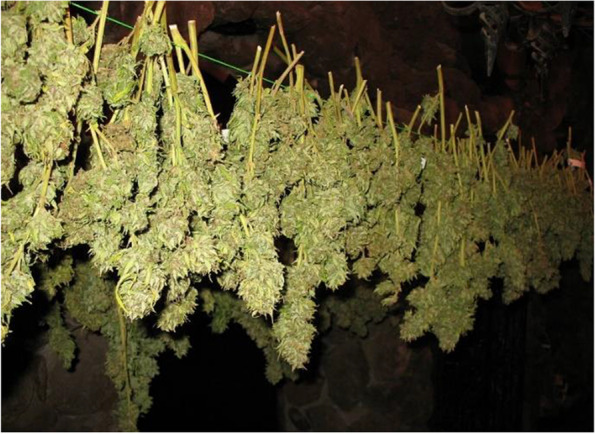
“Curing is the final post-harvest procedure that allows for the development of the maximum flavor in the cannabis plant (Vogel 2018).”
Background
Research works printed but not linked: 5
- Coffman C, Gentner W. Cannabis sativa L.: effect of drying time and temperature on cannabinoid profile of stored leaf tissue. Bull Narc. 1974;26(1):68–70.
- Duarte K, Justino C, Gomes A, Rocha-Santos T, Duarte A. Chapter 4—Green analytical methodologies for preparation of extracts and analysis of bioactive compounds. In: Teresa RS, Armando CD, editors. Comprehensive analytical chemistry, vol. 65. Amsterdam: Elsevier; 2014. p. 59–78.
- Green G, et al. The cannabis grow bible, Greg Green. 2001.
- Jin S, Chen J. Cannabis indoor growing conditions, management practices, and post-harvest treatment: a review. Am J Plant Sci. 2019;10(06):925. · DOI
- Romano LL, Hazekamp A. Cannabis oil: chemical evaluation of an upcoming cannabis-based medicine. Cannabinoids. 2013;1(1):1–11.
Cited by
Sorted by citations
Siddiqui, T., Khan, M. U., Sharma, V., & Gupta, K. (2024) · Phytomedicine Plus · doi:10.1016/j.phyplu.2024.100549 · Cited by 248
Ubeed, H. M. S. A., Bhuyan, D. J., Alsherbiny, M. A., Basu, A., & Vuong, Q. V. (2022) · Molecules · doi:10.3390/molecules27030604 · Cited by 153
Extraction techniques for bioactive compounds of cannabis
Martinez, A. S., Lanaridi, O., Stágel, K., Halbwirth, H., Schnürch, M., & Bica, K. (2023) · Natural Product Reports · doi:10.1039/d2np00059h · Cited by 87
de Aguiar, A. C., Vardanega, R., Viganó, J., & Silva, E. K. (2023) · Molecules · doi:10.3390/molecules28093849 · Cited by 51
Postharvest Operations of Cannabis and Their Effect on Cannabinoid Content: A Review
Das, P. C., Vista, A. R., Tabil, L. G., & Baik, O. (2022) · Bioengineering · doi:10.3390/bioengineering9080364 · Cited by 45
Metadata
- Authors
- Lazarjani, M. P., Young, O., Kebede, L., & Seyfoddin, A.
- Affiliations
- Auckland University of Technology (NZ)
- Corresponding author
- Seyfoddin, Ali
- Venue
- Journal of Cannabis Research
- Published
- 2021-07-19
- Volume
- 3
- Issue
- 1
- Pages
- 32-32
- ISSN
- 2522-5782 (ISSN-L)
- PMC
- PMC8290527
- OpenAlex
- W3184094075
- Cited by
- 144
- References
- 62
- Citations by year
- 2026: 23 · 2025: 47 · 2024: 29 · 2023: 25 · 2022: 19
- FWCI
- 2.31
- Type
- journal article
- Language
- en
- Open access
- gold
- doi.org
- Locations
- Journal of Cannabis Research (publishedVersion, cc-by)
- PubMed Central (publishedVersion, cc-by)
- PubMed (publishedVersion)
- Tuwhera (Auckland University of Technology) (submittedVersion, cc-by)
- DOAJ (DOAJ: Directory of Open Access Journals) (submittedVersion, cc-by-sa)
- Topics
- Health Sciences › Medicine › Pharmacology (medical) › Cannabis and Cannabinoid Research
- Life Sciences › Agricultural and Biological Sciences › Food Science › Agricultural and Biological Research
- Life Sciences › Agricultural and Biological Sciences › Plant Science › Phytochemistry Medicinal Plant Applications
- Keywords
- medical cannabis, Cannabis sativa, drying methods, solvent extraction, solvent-free extraction, cannabinoids, terpenes, freeze-drying, green extraction
About these checks
Registry, retraction, Cites and statistics results are computed, not judged, with one exception: a printed reference that no index lists is read once by a model before it counts as a citation error. Claims are extracted by a model and kept only when their quote appears verbatim in the text; each cited source is then checked, with a model’s help, for whether it says what the claim relies on. Those verdicts can be wrong — read the claim’s quote and the cited source before relying on one.
Statistics and arithmetic are recomputed, not judged.
Confidence bands are shown only for fields calibrated on our annotated test set. None is calibrated yet, so no band is shown.
What counts as a claim ›How we measure confidence ›How we check this ›
Are you an author, or do you see a problem with this page? Request a review
