

A Social Capital Perspective on the Mentoring of Undergraduate Life Science Researchers: An Empirical Study of Undergraduate–Postgraduate–Faculty Triads
Open accessThe DOI matches its Crossref record; 59 of the 60 references it cites were found in a registry or an index.
Abstract
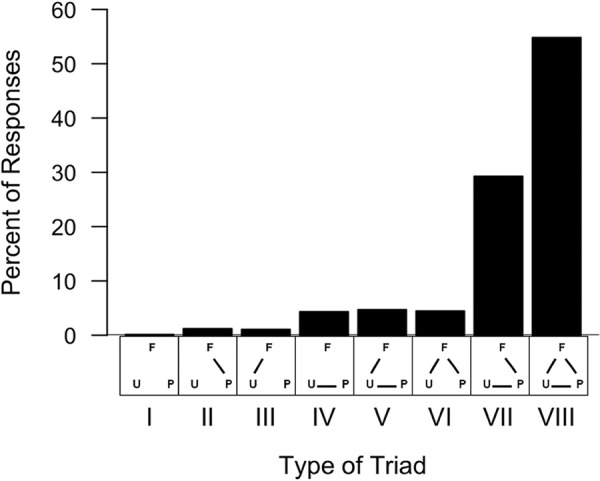
Undergraduate researchers at research universities are often mentored by graduate students or postdoctoral researchers (referred to collectively as "postgraduates") and faculty, creating a mentoring triad structure. Triads differ based on whether the undergraduate, postgraduate, and faculty member interact with one another about the undergraduate's research. Using a social capital theory framework, we hypothesized that different triad structures provide undergraduates with varying resources (e.g., information, advice, psychosocial support) from the postgraduates and/or faculty, which would affect the undergraduates' research outcomes. To test this, we collected data from a national sample of undergraduate life science researchers about their mentoring triad structure and a range of outcomes associated with research experiences, such as perceived gains in their abilities to think and work like scientists, science identity, and intentions to enroll in a PhD program. Undergraduates mentored by postgraduates alone reported positive outcomes, indicating that postgraduates can be effective mentors. However, undergraduates who interacted directly with faculty realized greater outcomes, suggesting that faculty interaction is important for undergraduates to realize the full benefits of research. The "closed triad," in which undergraduates, postgraduates, and faculty all interact directly, appeared to be uniquely beneficial; these undergraduates reported the highest gains in thinking and working like a scientist.
Overview
The claims and statistics of this paper haven’t been checked yet.
Free: it reads the open-access text and checks the first 5 claims that cite a source we can check. Create a free account to check every claim.
Integrity signals
Registry
Cites
Statistics
Figures

Verification
Claims the paper makes
The claims and statistics of this paper haven’t been checked yet.
Free: it reads the open-access text and checks the first 5 claims that cite a source we can check. Create a free account to check every claim.
Claims other papers make about this one
Each is checked against this paper’s own text: does it say what the citing paper says it does?
The source backs part of the claim, not all of it — or backs it for a different population, condition or comparison.
In the citing paper
“In fact, undergraduate researchers in closed triads consistently report more positive cognitive, affective, and behavioral outcomes than undergraduate researchers in open triads (Aikens et al., 2016).”
From Race and Gender Differences in Undergraduate Research Mentoring Structures and Research Outcomes (2017) · cites this paper as Aikens et al., 2016
Experimental — accuracy not yet measuredThe source backs part of the claim, not all of it — or backs it for a different population, condition or comparison.
In the citing paper
“This means that, even though URM and white students reported similar levels of rapport with their faculty mentors, URM students interacted more frequently with their faculty mentors than white students, which increased URM students’ odds of being in the more beneficial closed triad (Aikens et al., 2016).”
From Race and Gender Differences in Undergraduate Research Mentoring Structures and Research Outcomes (2017) · cites this paper as Aikens et al., 2016
Experimental — accuracy not yet measuredThe source backs part of the claim, not all of it — or backs it for a different population, condition or comparison.
In the citing paper
“since these triads are the most commonly observed, accounting for 83% of all responses (n = 699; Aikens et al., 2016).”
From Race and Gender Differences in Undergraduate Research Mentoring Structures and Research Outcomes (2017) · cites this paper as Aikens et al., 2016
Experimental — accuracy not yet measuredThe source backs part of the claim, not all of it — or backs it for a different population, condition or comparison.
In the citing paper
“This indicates that, even though female undergraduate researchers reported similar levels of rapport with their faculty mentors as their male counterparts, they were more likely than men to participate in an open triad than the more beneficial closed triad (Aikens et al., 2016), due in part to interacting less frequently with faculty than did men.”
From Race and Gender Differences in Undergraduate Research Mentoring Structures and Research Outcomes (2017) · cites this paper as Aikens et al., 2016
Experimental — accuracy not yet measuredThe cited source says what the claim attributes to it.
In the citing paper
“This creates a mentoring triad structure, of which there are two common forms (Figure 1): an open triad with undergraduate–postgraduate and postgraduate–faculty relationships, or ties, but no undergraduate–faculty tie, and a closed triad with ties among all three members (Aikens et al., 2016).”
From Race and Gender Differences in Undergraduate Research Mentoring Structures and Research Outcomes (2017) · cites this paper as Aikens et al., 2016
3 more claims about this paper
Create a free account to see every claim other papers make about this one.
Self-check
Percentages, sums and reported differences re-computed from the paper’s own numbers.
The self-check needs the paper’s full text.
Citations
Cites
R: A Language and Environment for Statistical Computing
R Core Team (2025) · doi:10.32614/r.manuals · Cited by 352,181
Statistical Power Analysis for the Behavioral Sciences
Muller, K. (1989) · Technometrics · doi:10.1080/00401706.1989.10488618 · Cited by 99,167
Faul, F., Erdfelder, E., Lang, A.-G., & Buchner, A. (2007) · Behavior Research Methods · doi:10.3758/bf03193146 · Cited by 65,971 · cited 3×
“A post hoc power analysis, using G*Power (Faul et al., 2007) indicated that, to achieve an 80% chance of correctly rejecting the null hypothesis with an α = 0.”
MethodInfluentialGranovetter, M. S. (1973) · American Journal of Sociology · doi:10.1086/225469 · Cited by 40,491
Economic Action and Social Structure: The Problem of Embeddedness
Granovetter, M. (1985) · American Journal of Sociology · doi:10.1086/228311 · Cited by 28,745 · cited 2×
“, athletic teams) demonstrates that closure facilitates trust (Granovetter, 1985; Coleman, 1988; Burt, 2000, 2001) and norm setting (Coleman, 1990).”
BackgroundSocial Capital in the Creation of Human Capital
Coleman, J. S. (1988) · American Journal of Sociology · doi:10.1086/228943 · Cited by 26,975
Modern Applied Statistics with S
Venables, W. N., & Ripley, B. D. (2002) · Statistics and Computing · doi:10.1007/978-0-387-21706-2 · Cited by 24,305
Simultaneous Inference in General Parametric Models
Hothorn, T., Bretz, F., & Westfall, P. (2008) · Biometrical Journal · doi:10.1002/bimj.200810425 · Cited by 13,847 · cited 2×
“05 by using a single-step p-value adjustment (Hothorn et al., 2008).”
MethodGamst, F. C. (1991) · Anthropology of Work Review · doi:10.1525/awr.1991.12.3.19 · Cited by 7,932
Social Capital: A Theory of Social Structure and Action
Lin, N. (2001) · doi:10.1017/cbo9780511815447 · Cited by 4,535 · cited 2×
“A person’s social ties are considered assets, because they may provide access to helpful resources, such as information about a job opening or influence through a letter of recommendation (Lin, 2001).”
Background
Research works printed but not linked: 7
- Adedokun OA Zhang D Carleton Parker L Bessenbacher A Childress A Daniels Burgess W Understanding how undergraduate research experiences influence student aspirations for research careers and graduate education J Coll Sci Teach 2012 42 82 90
- American Association for the Advancement of Science Vision and Change in Undergraduate Biology Education. A Call to Action 2011 Washington, DC
- Fox J Weisberg S An R Companion to Applied Regression 2011 2nd ed. Thousand Oaks, CA Sage
- Hunter A-B Weston TJ Laursen SL Thiry H URSSA: evaluating student gains from undergraduate research in the sciences Counc Undergrad Res Q 2009 29 15 19
- Pascarella ET Terenzini PT How College Affects Students, vol. 2 2005 San Francisco, CA Jossey-Bass
- President’s Council of Advisors on Science and Technology Engage to Excel: Producing One Million Additional College Graduates with Degrees in Science, Technology, Engineering, and Mathematics 2012 Washington, DC U.S. Government Office of Science and Technology
- Whiteside U Pantelone DW Hunter-Reel D Eland J Kleiber B Larimer M Initial suggestions for supervising and mentoring undergraduate research assistants at large research universities Int J Teach Learn High Educ 2007 19 325 330
Cited by
Atkins, K., Dougan, B. M., Dromgold-Sermen, M. S., Potter, H., Sathy, V., & Panter, A. T. (2020) · International Journal of STEM Education · doi:10.1186/s40594-020-00242-3 · Cited by 227
“…life sciences researchers found that students with a direct relationship to a faculty mentor, compared to those whose relationships to faculty were mediated by postgraduate researchers (graduate students or postdoctoral scholars), had increased scientific identity (Aikens et al., 2016).”
BackgroundRace and Gender Differences in Undergraduate Research Mentoring Structures and Research Outcomes
Aikens, M. L., Robertson, M. M., Sadselia, S., Watkins, K., Evans, M., Runyon, C. R., Eby, L. T., & Dolan, E. L. (2017) · CBE—Life Sciences Education · doi:10.1187/cbe.16-07-0211 · Cited by 126
“DISCUSSION Previous research on mentoring triads demonstrated that undergraduate researchers in different types of mentoring triads realized different outcomes (Aikens et al., 2016).”
BackgroundMethodResultInfluentialSelf-citationFactors that predict life sciences student persistence in undergraduate research experiences
Cooper, K. M., Gin, L. E., Akeeh, B., Clark, C. E., Hunter, J., Roderick, T. B., Elliott, D. B., Gutierrez, L. A., Mello, R. M., Pfeiffer, L. D., et al. (2019) · PLoS ONE · doi:10.1371/journal.pone.0220186 · Cited by 134
Academic reform and sustainability of Islamic higher education in Indonesia
Suyadi, S., Nuryana, Z., Sutrisno, & Baidi (2021) · International Journal of Educational Development · doi:10.1016/j.ijedudev.2021.102534 · Cited by 258
Limeri, L. B., Asif, M. Z., Bridges, B. H. T., Esparza, D., Tuma, T. T., Sanders, D., Morrison, A. J., Rao, P., Harsh, J. A., Maltese, A. V., et al. (2019) · CBE—Life Sciences Education · doi:10.1187/cbe.19-02-0036 · Cited by 129
“…from this study and our prior research indicate that it is important that faculty mentors remain engaged in mentoring undergraduate researchers to provide high-level direction, feedback, and support and to maximize undergraduate researchers’ outcomes (Aikens et al., 2016, 2017; Joshi et al., 2019).”
BackgroundResultSelf-citationNabi, G., Walmsley, A., Mir, M., & Osman, S. (2024) · Studies in Higher Education · doi:10.1080/03075079.2024.2354894 · Cited by 183
“Only two studies attempt a direct comparison, albeit in a limited way (e.g. peer vs non-peer mentoring, Aikens et al. 2016; face-to-face vs e-mentoring, Spitzmuller et al. 2008).”
Culturally Relevant Pedagogy: A Model To Guide Cultural Transformation in STEM Departments
Johnson, A. C., & Elliott, S. (2020) · Journal of Microbiology and Biology Education · doi:10.1128/jmbe.v21i1.2097 · Cited by 126
An Exploratory Study of Students with Depression in Undergraduate Research Experiences
Cooper, K. M., Gin, L. E., Barnes, M. E., & Brownell, S. E. (2020) · CBE—Life Sciences Education · doi:10.1187/cbe.19-11-0217 · Cited by 99
“…science community, scholarly productivity, and science identity, as well as providing many other benefits Depression in Undergraduate Research (Thiry and Laursen, 2011; Prunuske et al. , 2013; Byars-Winston et al. , 2015; Aikens et al. , 2016, 2017; Thompson et al. , 2016; Estrada et al. , 2018).”
BackgroundBraun, D. C., Gormally, C., & Clark, M. D. (2017) · CBE—Life Sciences Education · doi:10.1187/cbe.15-07-0155 · Cited by 68
“One strategy to better capture the successes and failures of a mentoring relationship is to include cultural capital (Bourdieu, 1986; Thompson et al., 2015; Aikens et al., 2016).”
BackgroundWelcoming Deaf Students into STEM: Recommendations for University Science Education
Braun, D. C., Clark, M. D., Marchut, A. E., Solomon, C. M., Majocha, M., Davenport, Z., Kushalnagar, R., Listman, J. D., Hauser, P. C., & Gormally, C. L. (2018) · CBE—Life Sciences Education · doi:10.1187/cbe.17-05-0081 · Cited by 82
“Mentoring creates a sense of belonging and science identity, particularly among women and minorities (Astin, 1977; McGee and Keller, 2007; Eagan et al., 2011; Gasiewski et al., 2012; Eby and Dolan, 2015; Aikens et al., 2016).”
BackgroundDirect Ties to a Faculty Mentor Related to Positive Outcomes for Undergraduate Researchers
Joshi, M., Aikens, M. L., & Dolan, E. L. (2019) · BioScience · doi:10.1093/biosci/biz039 · Cited by 78
Self-citationCooper, K. M., Cala, J. M., & Brownell, S. E. (2021) · International Journal of STEM Education · doi:10.1186/s40594-020-00265-w · Cited by 75
Cooper, K. M., Gin, L. E., & Brownell, S. E. (2020) · International Journal of STEM Education · doi:10.1186/s40594-020-00216-5 · Cited by 63
Understanding what STEM mentoring ecosystems need to thrive: A STEM-ME framework
Mondisa, J., Packard, B. W., & Montgomery, B. L. (2021) · Mentoring & Tutoring Partnership in Learning · doi:10.1080/13611267.2021.1899588 · Cited by 72
“Undergraduate mentoring often occurs in dyads or, even more frequently in large laboratory settings, in triads involving a senior researcher, one postgraduate mentor, and the mentee (Aikens et al., 2016; Packard et al., 2014).”
BackgroundLiang, W., Liu, S., & Zhao, C. (2021) · Higher Education · doi:10.1007/s10734-020-00644-w · Cited by 70
“Discussion and conclusions The SSR is believed to be closely related to postgraduate students’ subjective well-being in universities (Aikens et al. 2016; Eagan et al. 2013), especially in China, where the supervisor responsibility system is extensively practised (Lin and Chao 2019).”
BackgroundImpostor phenomenon in STEM: occurrence, attribution, and identity
Chakraverty, D. (2019) · Studies in Graduate and Postdoctoral Education · doi:10.1108/sgpe-d-18-00014 · Cited by 53
Leveraging Social Capital to Broaden Participation in STEM
Saw, G. K. (2020) · Policy Insights from the Behavioral and Brain Sciences · doi:10.1177/2372732219895997 · Cited by 67
“For a national sample of undergraduate life science researchers, both receiving mentorship from postgraduates and interactions with faculty positively associated with science identity, self-efficacy, and perceptions of career readiness (Aikens et al., 2016).”
BackgroundStudent Success: A Literature Review of Faculty to Student Mentoring
Law, D. D., Hales, K., & Busenbark, D. (2020) · Digital Commons - USU (Utah State University) · doi:10.15142/38x2-n847 · Cited by 96
Daniels, H. A., Grineski, S. E., Collins, T. W., & Frederick, A. (2019) · CBE—Life Sciences Education · doi:10.1187/cbe.18-08-0150 · Cited by 60
“They often provide lines of communication between undergraduate research trainees and faculty research mentors and help students acquire technical and conceptual skills while contributing to their professional development (Dolan and Johnson, 2009, 2010; Aikens et al. , 2016).”
Morales, D. X., Grineski, S. E., & Collins, T. W. (2018) · Science Education · doi:10.1002/sce.21455 · Cited by 46
Mentoring relationships between doctoral students and postdocs in the lab sciences
Blaney, J. M., Kang, J., Wofford, A. M., & Feldon, D. F. (2020) · Studies in Graduate and Postdoctoral Education · doi:10.1108/sgpe-08-2019-0071 · Cited by 46
Exploring reasons for MD-PhD trainees’ experiences of impostor phenomenon
Chakraverty, D., Cavazos, J. E., & Jeffe, D. B. (2022) · BMC Medical Education · doi:10.1186/s12909-022-03396-6 · Cited by 54
“When URiM mentors are not available, purposefully designed closed-mentoring triads [73] could be beneficial; closedmentoring triads would include an MD-PhD student, an MD-PhD graduate, and a faculty mentor working together and interacting closely.”
BackgroundThe Impostor Phenomenon Among Black Doctoral and Postdoctoral Scholars in STEM
Chakraverty, D. (2020) · International journal of doctoral studies · doi:10.28945/4613 · Cited by 52
Frederick, A., Grineski, S. E., Collins, T. W., Daniels, H. A., & Morales, D. X. (2021) · CBE—Life Sciences Education · doi:10.1187/cbe.20-08-0191 · Cited by 46
“Through direct interaction with faculty in research settings outside of the classroom, students experience increased social capital as faculty mentor them in professional skills, career goals, and psychosocial development (Aikens et al., 2016).”
BackgroundTransition Experiences in MD–PhD Programs
Chakraverty, D., Jeffe, D. B., & Tai, R. H. (2018) · CBE—Life Sciences Education · doi:10.1187/cbe.17-08-0187 · Cited by 36
“…was beneficial, a closed-mentorship triad of undergraduates, graduate students/postdoctoral researchers, and faculty interacting directly with one another was considered most beneficial in terms of the undergraduates being able to think and work like scientists (Aikens et al., 2016, 2017).”
BackgroundHernandez, P. R., Agocha, V. B., Carney, L. M., Estrada, M., Lee, S. Y., Loomis, D., Williams, M., & Park, C. L. (2020) · PLoS ONE · doi:10.1371/journal.pone.0238250 · Cited by 39
“Specifically, recent research has shown unique benefits associated with having peer mentors, as well as being involved in an undergraduate– postgraduate–faculty triadic mentoring relationship [49, 66, 67, 115].”
Participation in Undergraduate Research Reduces Equity Gaps in STEM Graduation Rates
Haeger, H. A., Bueno, E. H., & Sedlacek, Q. C. (2024) · CBE—Life Sciences Education · doi:10.1187/cbe.22-03-0061 · Cited by 56
“Students who participate in UR build important connections within their major (Aikens et al. , 2016), develop resiliency and problem-solving strategies (Cartrette and Melroe-Lehrman 2012), and feel more prepared for graduate education (Hathaway et al. , 2002).”
BackgroundLimeri, L. B., Asif, M. Z., & Dolan, E. L. (2019) · CBE—Life Sciences Education · doi:10.1187/cbe.18-10-0219 · Cited by 40
“At research-intensive universities, undergraduate research mentors are most commonly graduate students or postdoctoral researchers (i.e., postgraduates; Thiry and Laursen, 2011; Aikens et al., 2016).”
BackgroundSelf-citationUndergraduate STEM Majors on and off the Pre-Med/Health Track: A STEM Identity Perspective
Dou, R., Cian, H., & Suarez, V. E. (2021) · CBE—Life Sciences Education · doi:10.1187/cbe.20-12-0281 · Cited by 42
“Working with life science undergraduates, postgradu-ates, and faculty, Aikens et al. (2016) provide complementary evidence supporting the important role of faculty, finding that undergraduate students who worked closely with faculty and postgraduates on academic research reported higher scientific…”
Effects of mentoring relationship heterogeneity on student outcomes in summer undergraduate research
Morales, D. X., Grineski, S. E., & Collins, T. W. (2019) · Studies in Higher Education · doi:10.1080/03075079.2019.1639041 · Cited by 33
Davis, S. N., Jones, R. M., Mahatmya, D., & Garner, P. W. (2020) · Frontiers in Education · doi:10.3389/feduc.2020.00114 · Cited by 36
“However, more recent investigations have begun to identify the factors that shape faculty participation as research mentors (Eagan et al., 2011; Jones and Davis, 2014; Jenkins and Healey, 2015; Aikens et al., 2016; Brew and Mantai, 2017).”
BackgroundClement, L., Leung, K., Lewis, J. B., & Saul, N. M. (2020) · Journal of Microbiology and Biology Education · doi:10.1128/jmbe.v21i1.1911 · Cited by 27
“However, the responsibilities of research faculty towards their trainees are often shared or passed on to graduate students and postdoctoral scholars, resulting in varied outcomes for different HU groups (44, 49, 50).”
BackgroundPfeifer, M. A., Zajic, C. J., Isaacs, J. M., Erickson, O. A., & Dolan, E. L. (2024) · International Journal of STEM Education · doi:10.1186/s40594-024-00479-2 · Cited by 31
“For example, undergraduate researchers who are mentored by both a faculty member and a graduate or post-doctoral researcher identify more strongly as a scientist than those with only one mentor (Aikens et al., 2016), but the mechanism of this effect has not been delineated.”
Self-citationChou, A. F., Hammon, D., & Akins, D. R. (2019) · Journal of Microbiology and Biology Education · doi:10.1128/jmbe.v20i3.1815 · Cited by 21
“Additionally, studies have shown that summer research programs can dramatically affect students’ commitment to research careers, self-reported knowledge of research skills, time engaged in research activity, and understanding of and attitudes toward pursuing graduate study (11, 19, 20).”
BackgroundMentoring Structures and the Types of Support Provided to Early-Year Undergraduate Researchers
Ceyhan, G. D., & Tillotson, J. W. (2020) · CBE—Life Sciences Education · doi:10.1187/cbe.19-09-0183 · Cited by 29
“In these cases, graduate students or postdoctoral associates (together referred to as “postgraduates”) take on or share the mentorship role for undergraduate students in the UR experience, which creates a mentoring triad (Aikens et al. , 2016; Bradley et al. , 2017).”
InfluentialHow Mentors Contribute to Latinx Adolescents’ Social Capital in the Sciences
Sánchez, B., Mroczkowski, A. L., Flores, L. Y., Reyes, W. D. L., Ruiz, J., & Rasgado-Flores, H. (2021) · Journal of Adolescent Research · doi:10.1177/0743558420985454 · Cited by 21
“Some of these resources may consist of helping students navigate the sciences or their respective disciplines (Aikens et al., 2016; Crisp & Cruz, 2009; Stanton-Salazar, 2011).”
BackgroundResultGin, L. E., Clark, C. E., Elliott, D. B., Roderick, T. B., Scott, R. A., Arellano, D., Ramirez, D., Vargas, C., Velarde, K., Aeschliman, A., et al. (2021) · CBE—Life Sciences Education · doi:10.1187/cbe.21-04-0108 · Cited by 26
“…institutions are likely to have both a faculty mentor and a postdoc or graduate student mentor, which gives them multiple levels of mentorship in what have been called mentoring triads (Dolan and Johnson, 2009, 2010; Aikens et al. , 2016; Bradley et al. , 2017; Joshi et al. , 2019).”
Assessing Undergraduate Research Experiences: An Annotative Bibliography
Crowe, M., & Brakke, D. (2020) · Council on Undergraduate Research Quarterly · doi:10.18833/spur/3/2/3 · Cited by 27
“A number of studies have focused on the mentoring aspect of the URE (Aikens et al. 2016; Bhattacharyya, Chan, and Waraczynski 2018; Hall et al. 2018; Vandermass-Peeler, Miller, and Moore 2018) and the impact of URE on underrepresented minority students Although all students reported lack of…”
BackgroundA Course-Based Undergraduate Research Experience Improves Outcomes in Mentored Research
Fendos, J., Cai, L., Yang, X., Ren, G., Li, L., Yan, Z., Lu, B., ., Y. P., Ma, J., Guo, B., et al. (2022) · CBE—Life Sciences Education · doi:10.1187/cbe.21-03-0065 · Cited by 25
“Although a sizable body of work has investigated the learning challenges associated with MR in Western contexts (Dolan and Johnson, 2009, 2010; Wei and Woodin, 2011; Aikens et al., 2016), no work has yet conducted a similar investigation in an Asian setting or one with MR graduation requirements.”
BackgroundVenturing into Qualitative Research: A Practical Guide to Getting Started
Pfeifer, M. A., & Dolan, E. L. (2023) · Scholarship and Practice of Undergraduate Research · doi:10.18833/spur/7/1/2 · Cited by 17
Self-citationCreating More Inclusive Research Environments for Undergraduates
Haeger, H. A., White, C. V., Martinez, S., & Velasquez, S. (2021) · Journal of the Scholarship of Teaching and Learning · doi:10.14434/josotl.v21i1.30101 · Cited by 21
“For example, faculty reaching out to students in class about participating in research likely favors students who are more outgoing, who resemble or are otherwise more relatable to faculty, and who participate more actively in class (Aikens et al., 2016; Haeger & Fresquez, 2016).”
Du, W., Hernandez, P. R., Adams, A. S., Clinton, S. M., Barnes, R. T., Burt, M., Pollack, I. B., & Fischer, E. V. (2023) · Mentoring & Tutoring Partnership in Learning · doi:10.1080/13611267.2023.2225395 · Cited by 17
“Consistent theory and prior research (Aikens et al., 2016; Thoman, Arizaga, Smith, Story, & Soncuya, 2014), diversity of mentor networks (Wave 6) exerted a positive indirect influence on deeper levels of geoscience interest (Wave 8) through its positive influence on university belonging (Wave 7; hypotheses 1–3 support…”
BackgroundResultInfluentialWebs of science: mentor networks influence women's integration into STEM fields
Hernandez, P. R., Patterson, M. S., Nyanamba, J. M., Adams, A. S., Barnes, R. T., Bloodhart, B., Burt, M., Clinton, S. M., Pollack, I. B., & Fischer, E. V. (2023) · Frontiers in Ecology and the Environment · doi:10.1002/fee.2666 · Cited by 19
Development of a Framework for the Culture of Scientific Research
Dewey, J. L., Roehrig, G., & Schuchardt, A. M. (2021) · CBE—Life Sciences Education · doi:10.1187/cbe.21-02-0029 · Cited by 21
“Mentorship does represent an important expectation of scientific researchers and has been shown to be important for helping students integrate into and persist in science (Aikens et al., 2016, 2017; Joshi et al., 2019; Limeri et al., 2019).”
BackgroundMethodVirtually the Same? Evaluating the Effectiveness of Remote Undergraduate Research Experiences
Hess, R. A., Erickson, O. A., Cole, R. B., Isaacs, J. M., Álvarez-Clare, S., Arnold, J., Augustus‐Wallace, A., Ayoob, J. C., Berkowitz, A. R., Branchaw, J. L., et al. (2023) · CBE—Life Sciences Education · doi:10.1187/cbe.22-01-0001 · Cited by 17
“Undergraduates are guided in their research by a more experienced researcher, such as a graduate student, postdoctoral associate, or faculty member, who is typically called their “research mentor” (Aikens et al., 2016; Joshi et al., 2019).”
BackgroundSelf-citationBhatt, R., West, B. M., & Chaudhary, S. (2020) · PLoS ONE · doi:10.1371/journal.pone.0228934 · Cited by 15
“While prior studies document powerful influence of mentors on research career intent of students [23, 25, 34, 54], mentors and graduate students served as a surprisingly discouraging source for advice and guidance for students in our study.”
BackgroundIntentional mentoring should increase inclusivity in ecology
Stuchiner, E. R., Hunter, D. E. L., Neuwald, J. L., Webb, C. T., & Balgopal, M. M. (2022) · Ecosphere · doi:10.1002/ecs2.3902 · Cited by 15
Developing Undergraduate Scientists by Scaffolding the Entry into Mentored Research
McIntee, F. L., Evans, K. R., Andreoli, J. M., Fusaro, A. J., Hwalek, M. A., Mathur, A., & Feig, A. L. (2018) · Council on Undergraduate Research Quarterly · doi:10.18833/spur/2/1/5 · Cited by 15
“Students with high levels of social capital effectively navigate this process, whereas other students, especially first-generation college students or those from underrepresented backgrounds, may fare less well (Aikens et al. 2016; Morales, Grineski, and Collins 2017).”
BackgroundPapendieck, A. S., & Clarke, J. A. (2024) · Journal of the Learning Sciences · doi:10.1080/10508406.2024.2347597 · Cited by 17
“…field contexts supports affective, embodied learning and skills development (Mogk & Goodwin, 2012), disciplined and professional ways of seeing the world (Goodwin, 1994; Stevens & Hall, 1998) and social relations and capital that facilitate transfer to post-academic careers (Aikens et al., 2016).”
BackgroundThe Structure of Mentoring in Undergraduate Research: Multi-Mentor Models
BRADLEY, E. D., Bata, M., Gibbon, H. M. F., Ketcham, C. J., Nicholson, B. A., & Pollock, M. (2017) · Council on Undergraduate Research Quarterly · doi:10.18833/spur/1/2/12 · Cited by 20
Aloisio, J. M., Johnson, B., Lewis, J. D., Clark, J. A., Munshi‐South, J., Roberts, S., Wasserman, D. L., Heimlich, J. E., & Tingley, K. (2018) · Journal of Urban Ecology · doi:10.1093/jue/juy023 · Cited by 13
Ceyhan, G. D., Thompson, A. N., Sloane, J. D., Wiles, J. R., & Tillotson, J. W. (2019) · International Journal of Higher Education · doi:10.5430/ijhe.v8n6p249 · Cited by 17
“Published by Sciedu Press 259 ISSN 1927-6044 E-ISSN 1927-6052 ethical considerations associated with STEM research (Aikens et al., 2016; 2017; Schneider, et al., 2016).”
BackgroundNelson, K., & Cutucache, C. E. (2017) · The Qualitative Report · doi:10.46743/2160-3715/2017.2991 · Cited by 15
Undergraduate researchers’ graduate school intentions during COVID‐19
Morales, D. X., Grineski, S. E., & Collins, T. W. (2021) · Annals of the New York Academy of Sciences · doi:10.1111/nyas.14698 · Cited by 14
Investigating Prior Mentoring Experiences of Medical Students and Its Perceived Benefits
Wekam, V., & Vance-Chalcraft, H. D. (2022) · Journal of Microbiology & Biology Education · doi:10.1128/jmbe.00209-21 · Cited by 10
“Both formal and informal mentorship can happen through a variety of configurations, including one-on-one or group mentorship (17, 18).”
BackgroundMabrouk, P. A., & Remijan, M. G. (2023) · Mentoring & Tutoring Partnership in Learning · doi:10.1080/13611267.2023.2164988 · Cited by 13
“Aikens et al. (2016, 2010, 2019) demonstrated that the relationship between the undergraduate researcher, graduate or postgraduate mentor, and the faculty member is important for the undergraduates to receive the full benefits of the undergraduate research experience.”
BackgroundA Graduate Student’s Mentorship Pedagogy for Undergraduate Mentees
Fallon, M. E. (2023) · Biomedical Engineering Education · doi:10.1007/s43683-023-00121-7 · Cited by 12
“The most common is the closed triad, where the undergraduate has direct relationships with both the graduate student and faculty member [11].”
InfluentialPedersen, R. M., Woodcock, A., Schultz, P. W., & Hernandez, P. R. (2024) · International Journal of STEM Education · doi:10.1186/s40594-024-00480-9 · Cited by 15
“Mentoring research in college contexts have only recently begun to shift from a dyadic focus to a broader perspective examining how networks of mentors provide support (Aikens et al., 2016, 2017; Dobrow et al., 2012; Haggard et al., 2011; Hernan-dez et al., 2023b; Joshi et al., 2019).”
BackgroundZuckerman, A. L., & Lo, S. M. (2022) · CBE—Life Sciences Education · doi:10.1187/cbe.21-10-0295 · Cited by 15
“…research that highlights variations in the quality and nature of undergraduates’ research experiences (Dolan and Johnson, 2010; Thiry et al. , 2012; Aikens et al. , 2016), future work could also investigate how the research environment that students work in can influence their conceptions about…”
Shortlidge, E. E., Kern, A. M., Goodwin, E. C., & Olimpo, J. T. (2023) · CBE—Life Sciences Education · doi:10.1187/cbe.22-09-0183 · Cited by 13
“While graduate students can be effective mentors to undergraduate researchers in individual lab settings (e.g., Aikens et al. , 2016), to our knowledge, their capacity to serve as CURE research mentors has only recently begun to be investigated (Goodwin et al. 2021b; Santillan et al. , 2022).”
BackgroundA Guide for Graduate Students Interested in Postdoctoral Positions in Biology Education Research
Aikens, M. L., Corwin, L. A., Andrews, T. C., Couch, B. A., Eddy, S. L., McDonnell, L., & Trujillo, G. (2016) · CBE—Life Sciences Education · doi:10.1187/cbe.16-03-0130 · Cited by 9
“…may rely on quantitative (e.g., statistical analyses of achievement data or Likert-type scale survey responses; for examples, see Haak et al., 2011; Aikens et al., 2016) or qualitative (e.g., open coding of verbal responses to interview questions or written responses to open-ended questions; for…”
MethodSelf-citationSuswaram, S., Perelmutter, B., Keuwo, R., & Gillispie, M. (2022) · Perspectives of the ASHA Special Interest Groups · doi:10.1044/2022_persp-21-00273 · Cited by 10
Development of the Mentoring in Undergraduate Research Survey
Limeri, L. B., Carter, N. T., Hess, R. A., Tuma, T. T., Koscik, I., Morrison, A. J., Outlaw, B., Royston, K. S., Bridges, B. H. T., & Dolan, E. L. (2024) · CBE—Life Sciences Education · doi:10.1187/cbe.23-07-0141 · Cited by 12
“Multiple qualitative and quantitative studies have shown that mentoring plays a critical role in STEM undergraduate researchers’ personal and professional development (Thiry and Laursen, 2011; Aikens et al. , 2016; Estrada et al. , 2018; Hernandez, Hopkins et al. , 2018; Joshi et al. , 2019).”
BackgroundSelf-citationMeasurement of student STEM identity: A systematic literature review
Tripp, J. N., & Liu, X. L. (2026) · Educational Research Review · doi:10.1016/j.edurev.2026.100778 · Cited by 9
Esparza, D., & Smith, M. K. (2023) · Ecosphere · doi:10.1002/ecs2.4662 · Cited by 13
Du, W., Lee, H., Broderick, N. A., Aldana, C. C., Estrada, M., Handelsman, J., Maldonado, N., Miller, S., Patterson, M. S., Sandoval, P. J., et al. (2023) · Frontiers in Education · doi:10.3389/feduc.2023.1293885 · Cited by 11
“…to a CURE mentor and effective mentoring from CURE instructors not only deepens undergraduates’ scientific understanding but also guides them in developing a distinct scientific identity and sustaining their persistence in research careers (Lopatto, 2004; Aikens et al., 2016; Joshi et al., 2019).”
da Costa, W. P., Melo, A. F., Venâncio, P. E. M., Bernardo, M. A. D. S., Noll, P. R. E. S., & Noll, M. A. (2024) · Innovations in Education and Teaching International · doi:10.1080/14703297.2024.2339312 · Cited by 15
“Various factors associated with the advisor’s role, including leadership skills, effective communication, feedback provision, ethical conduct, commitment, and ability to motivate and inspire students, among others, significantly influence on students’ research experience (Aikens et al., 2016).”
Cooper, A. C., & Bolger, M. S. (2023) · Science Education · doi:10.1002/sce.21835 · Cited by 13
The Making of Future Scientists: Faculty Mentor Cultural Awareness and Inclusive Science Labs
Hernandez, I. A., Segura, O. M., Gonzalez, R. A. R., Flores, L., Villodas, M. T., Sohl, C. D., Smith, J. L., & Thoman, D. B. (2024) · CBE—Life Sciences Education · doi:10.1187/cbe.24-01-0032 · Cited by 10
“…STEM learning environments, including faculty-led research labs, the information about whose culture and identity are valued is often transmitted by STEM faculty and lab directors who are a primary source of social influence (Aikens et al. , 2016; Thompson et al. , 2016; Thoman et al. , 2019).”
BackgroundMethodChanging the Shape of the River: (Re)privileging STEM Research for Latinx Community College Student
Romero, L. S., Polhemus, J., & Saubolle-Camacho, B. M. (2023) · Journal of Latinos and Education · doi:10.1080/15348431.2023.2180371 · Cited by 13
Advancing understanding of discordant mentoring relationships in STEMM: A method and framework
Morales, D. X., Grineski, S. E., & Collins, T. W. (2023) · Annals of the New York Academy of Sciences · doi:10.1111/nyas.15035 · Cited by 8
Strategies to Strengthen Nursing PhD Enrollment: An Ecological Systems Perspective
Wood, R. E., Matthews, E. E., Bourgault, A. M., Rice, M. H., Hershberger, P. E., Voss, J. G., Loerzel, V. W., Henderson, W. A., Talsma, A., & Kinser, P. A. (2023) · Journal of Nursing Education · doi:10.3928/01484834-20231006-05 · Cited by 7
Morales, D. X., Wagler, A. E., & Monárrez, A. (2020) · PubMed · Cited by 10
Interventions to boost enrollment in nursing doctor of philosophy (PhD) programs
Muñoz, L. R. (2021) · Nursing Outlook · doi:10.1016/j.outlook.2021.07.007 · Cited by 7
Postgraduate perspectives on mentoring undergraduate researchers for talent development
Asif, M. Z., Edison, A. S., & Dolan, E. L. (2023) · Annals of the New York Academy of Sciences · doi:10.1111/nyas.14966 · Cited by 11
“(3) What did you do to help the undergraduate researcher? (4)Whatdid theundergraduate researcher do to help you? (5) How, if at all, was working with the undergraduate researcher a hindrance to you? (6) How, if at all, was working with the undergraduate researcher beneficial to you? Interviews were conducted using a s…”
BackgroundMethodSelf-citationMalachowski, M. R. (2020) · Council on Undergraduate Research Quarterly · doi:10.18833/spur/3/2/5 · Cited by 9
Giuliano, T. A., Kimbell, I. E., Olson, E. S., & Howell, J. L. (2022) · PLoS ONE · doi:10.1371/journal.pone.0265074 · Cited by 7
“In our study, neither the number of graduate students (consistent with [14]) nor the level of involvement and mentoring by graduate students was related to publishing with undergraduates, despite indirect evidence [43, 44] and theoretical arguments [45, 46] to the contrary.”
ResultBusch, C. A., Nadile, E. M., Mohammed, T. F., Gin, L. E., Brownell, S. E., & Cooper, K. M. (2024) · Journal of Research in Science Teaching · doi:10.1002/tea.21965 · Cited by 9
Inadequate mentoring in undergraduate research experiences: Exploring protective factors
Morales, D. X., Grineski, S. E., & Collins, T. W. (2024) · Annals of the New York Academy of Sciences · doi:10.1111/nyas.15186 · Cited by 11
“41 Undergraduates may also participate in mentoring networks, where they are mentored by multiple faculty members.”
Undergraduate Research Science Capital: Measuring capacity to engage in research
Boyd, E. A., & Lazar, K. B. (2024) · PLoS ONE · doi:10.1371/journal.pone.0310053 · Cited by 6
Confronting Failure: Building Confidence and Resilience in Undergraduate Researchers
(2022) · Council on Undergraduate Research eBooks · doi:10.18833/cf/20 · Cited by 9
Zuckerman, A. L., Juavinett, A., Macagno, E. R., Bloodgood, B. L., Gaasterland, T., Artis, D., & Lo, S. M. (2022) · Disciplinary and Interdisciplinary Science Education Research · doi:10.1186/s43031-022-00067-w · Cited by 5
“Faculty also provide psychosocial support by offering students’ encouragement in the face of failure and recounting their own struggles, which can be applicable to both training in the scientific process as they are enculturated into the research community and reflecting on how to persevere through general academic an…”
BackgroundTuma, T. T. (2025) · bioRxiv (Cold Spring Harbor Laboratory) · doi:10.1101/2025.01.22.633242 · Cited by 8
“At the college level, the provision of mentorship support (e.g., career and psychosocial support) from a post-251 graduate or faculty mentor can promote students' career intentions (Aikens et al., 2016; Estrada et al., 2018) and motivation (Hernandez et al., 2017, 2020).”
Santillan, K. A., Rediske, A. M., & Olimpo, J. T. (2024) · Journal of Microbiology and Biology Education · doi:10.1128/jmbe.00150-24 · Cited by 6
Schmid, K. M., & Wiles, J. R. (2022) · The American Biology Teacher · doi:10.1525/abt.2022.84.5.273 · Cited by 5
“Undergraduates who are interacting with both the faculty member and postgraduate report higher gains in thinking like a scientist (Aikens et al., 2016, 2017).”
BackgroundEthical issues related to the undergraduate-graduate-faculty mentoring triad in psychology
Margherio, S. M. (2020) · Ethics & Behavior · doi:10.1080/10508422.2019.1707677 · Cited by 4
The Development of Student Autonomy in the Undergraduate Research Lab
Criswell, H., & Pleasants, J. (2025) · The Journal of Higher Education · doi:10.1080/00221546.2025.2581334 · Cited by 3
Mentoring Undergraduate Researchers Through Entrepreneurial Mindset
Rynearson, A. M., & Pantoia, C. A. (2023) · IEEE Frontiers in Education Conference (FIE) · doi:10.1109/fie58773.2023.10343323 · Cited by 3
“While reviewing the research mentoring literature, the authors have become more familiar with various mentoring models [18], [25].”
BackgroundNaqvi, W. M., Gabr, M., Arora, S. P., Mishra, G., Pashine, A. A., & Zahiruddin, Q. S. (2024) · Cureus · doi:10.7759/cureus.55827 · Cited by 8
“There may be gaps in the empirical evidence [24] regarding the effectiveness of preventive interventions, such as vaccinations, screening programs, or lifestyle modifications, in reducing the incidence or progression of diseases.”
BackgroundDahlman, J. J. (2022) · Nursing Education Perspectives · doi:10.1097/01.nep.0000000000001032 · Cited by 3
The Graduate Student Role in Undergraduate Research Mentoring: A Systematic Literature Review
Asbill, H., Letchworth, M., Rynearson, A. M., & Pantoja, C. A. (2024) · ASEE Annual Conference & Exposition · doi:10.18260/1-2--48101 · Cited by 3
Summer REU Program Integrating Deaf and Hearing Participants in Chemistry Research
MacDonald, G. M., Caran, K. L., Hughey, C. A., & Bradley, J. J. (2018) · ACS symposium series · doi:10.1021/bk-2018-1295.ch004 · Cited by 3
Monárrez, A., Echegoyen, L. E., Morales, D. X., Seira, D., Ramirez, M. A., & Wagler, A. E. (2024) · PLoS ONE · doi:10.1371/journal.pone.0289386 · Cited by 3
Mentorship among healthcare researchers: a social network analysis
Kim, B., Pleasants, E. A., Sullivan, J. L., & Linsky, A. M. (2025) · Frontiers in Health Services · doi:10.3389/frhs.2025.1514379 · Cited by 2
Tuma, T. T., Fedesco, H. N., Rosenzweig, E. Q., Chen, X., & Dolan, E. L. (2025) · CBE—Life Sciences Education · doi:10.1187/cbe.25-05-0099 · Cited by 4
“Thus, it is not surprising that prior research shows a connection between students’ mentoring relationships and their scientific self-efficacy (Chemers et al. , 2011; Aikens et al. , 2016; Estrada et al. , 2018; Joshi et al. , 2019; Limeri et al. , 2024).”
Self-citationMéndez, Y. C. M., Listyg, B. S., Mardones-Segovia, C., Bowers, B., Cotto, K. M. C., Hilton, L., Koscik, I., Outlaw, B., Portner, S., Barekzi, N. A., et al. (2025) · CBE—Life Sciences Education · doi:10.1187/cbe.24-11-0271 · Cited by 3
“In many studies of UREs, students report learning (Hunter et al. , 2007; Laursen et al. , 2010; Aikens et al. , 2016; Joshi et al. , 2019); however, they may not perceive their day-to-day activities as learning tasks because the tasks do not resemble standard coursework.”
Self-citationCBE—Life Sciences Education: the story of a “great journal scientists might be caught reading”
Dolan, E. L. (2018) · Molecular Biology of the Cell · doi:10.1091/mbc.e18-06-0410 · Cited by 3
Self-citationImpacts of a Near-Peer Urban Ecology Research Mentoring Program on Undergraduate Mentors
Aloisio, J. M., Roberts, S., Becker-Klein, R., Dunifon, S. M., Lewis, J. D., Clark, J. A., Munshi‐South, J., & Tingley, K. (2022) · Frontiers in Ecology and Evolution · doi:10.3389/fevo.2022.803210 · Cited by 4
“…provide students with an opportunity to conduct authentic research under the supervision of an experienced scientist, typically a graduate student, postdoctoral researcher, or university faculty member (Gonzalez, 2001; Wood, 2003; Dooley et al., 2004; Dolan and Johnson, 2009; Aikens et al., 2016).”
BackgroundTen simple rules for running a summer research program
Ayoob, J. C., & Ramírez-Lugo, J. S. (2022) · PLoS Computational Biology · doi:10.1371/journal.pcbi.1010588 · Cited by 3
“Incorporating more senior trainees in the training and mentorship of undergraduates not only reduces the work burden of already stretched PIs, but also yields many other positive student outcomes, which are even greater in closed mentoring triads that involve undergraduates, senior trainees, and faculty all interactin…”
BackgroundGeary, C., Artiles, M. S., Blackowski, S., & Matusovich, H. (2024) · Journal of Women and Minorities in Science and Engineering · doi:10.1615/jwomenminorscieneng.2024045408 · Cited by 2
Metadata
- Authors
- Aikens, M. L., Sadselia, S., Watkins, K., Evans, M., Eby, L. T., & Dolan, E. L.
- Affiliations
- University of New Hampshire (US)
- University of Georgia (US)
- University of North Carolina at Chapel Hill (US)
- The University of Texas at Austin (US)
- Corresponding author
- Aikens, Melissa L.
- Venue
- CBE—Life Sciences Education
- Published
- 2016-06
- Volume
- 15
- Issue
- 2
- Pages
- ar16
- ISSN
- 1931-7913 (ISSN-L)
- PMC
- PMC4909338
- OpenAlex
- W2352905392
- Cited by
- 139
- References
- 60
- Citations by year
- 2026: 12 · 2025: 13 · 2024: 26 · 2023: 16 · 2022: 16 · 2021: 13 · 2020: 18 · 2019: 11 · 2018: 9 · 2017: 4 · 2016: 1
- FWCI
- 13.10
- Type
- journal article
- Language
- en
- Open access
- hybrid
- doi.org
- Licence
- cc-by-nc-sa
- Locations
- CBE—Life Sciences Education (publishedVersion, cc-by-nc-sa)
- PubMed Central (publishedVersion, cc-by-nc-sa)
- PubMed (publishedVersion)
- Carolina Digital Repository (University of North Carolina at Chapel Hill) (submittedVersion)
- UNC Libraries
- Funders
- National Science Foundation (1250917)
- Topics
- Social Sciences › Education › Mentoring and Academic Development
- Social Sciences › Psychology › Applied Psychology › Career Development and Diversity
- Social Sciences › Education › Doctoral Education Challenges and Solutions
- Keywords
- undergraduate research mentoring, social capital theory, faculty mentoring, science identity, psychosocial support, research universities
- MeSH terms
- Mentoring, Biological Science Disciplines, Educational Measurement, Faculty, Female, Humans, Male, Research Personnel, Students, Universities, Models, Educational, Empirical Research, Social Capital
About these checks
Registry, retraction, Cites and statistics results are computed, not judged, with one exception: a printed reference that no index lists is read once by a model before it counts as a citation error. Claims are extracted by a model and kept only when their quote appears verbatim in the text; each cited source is then checked, with a model’s help, for whether it says what the claim relies on. Those verdicts can be wrong — read the claim’s quote and the cited source before relying on one.
Statistics and arithmetic are recomputed, not judged.
Confidence bands are shown only for fields calibrated on our annotated test set. None is calibrated yet, so no band is shown.
What counts as a claim ›How we measure confidence ›How we check this ›
Are you an author, or do you see a problem with this page? Request a review
Data sources
Bibliographic data: Semantic Scholar, OpenAlex, Crossref.
Contains information from the Semantic Scholar Academic Graph Datasets, made available under the ODC Attribution License (ODC-BY 1.0).
Semantic Scholar’s data is described in: Kinney, R., et al. (2023). The Semantic Scholar Open Data Platform. arXiv:2301.10140.
