

A Social Capital Perspective on the Mentoring of Undergraduate Life Science Researchers: An Empirical Study of Undergraduate–Postgraduate–Faculty Triads
Open accessThe DOI matches its Crossref record; 59 of the 60 references it cites were found in a registry or an index.
Abstract
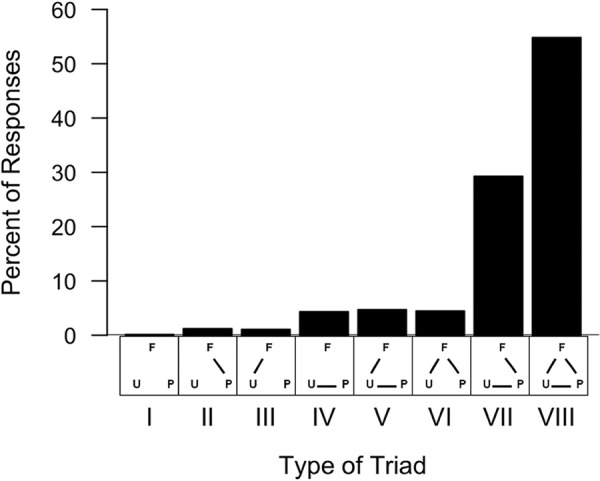
Undergraduate researchers at research universities are often mentored by graduate students or postdoctoral researchers (referred to collectively as "postgraduates") and faculty, creating a mentoring triad structure. Triads differ based on whether the undergraduate, postgraduate, and faculty member interact with one another about the undergraduate's research. Using a social capital theory framework, we hypothesized that different triad structures provide undergraduates with varying resources (e.g., information, advice, psychosocial support) from the postgraduates and/or faculty, which would affect the undergraduates' research outcomes. To test this, we collected data from a national sample of undergraduate life science researchers about their mentoring triad structure and a range of outcomes associated with research experiences, such as perceived gains in their abilities to think and work like scientists, science identity, and intentions to enroll in a PhD program. Undergraduates mentored by postgraduates alone reported positive outcomes, indicating that postgraduates can be effective mentors. However, undergraduates who interacted directly with faculty realized greater outcomes, suggesting that faculty interaction is important for undergraduates to realize the full benefits of research. The "closed triad," in which undergraduates, postgraduates, and faculty all interact directly, appeared to be uniquely beneficial; these undergraduates reported the highest gains in thinking and working like a scientist.
Overview
The claims and statistics of this paper haven’t been checked yet.
Free: it reads the open-access text and checks the first 5 claims that cite a source we can check. Create a free account to check every claim.
Integrity signals
Registry
Cites
Statistics
Figures

Verification
Claims the paper makes
The claims and statistics of this paper haven’t been checked yet.
Free: it reads the open-access text and checks the first 5 claims that cite a source we can check. Create a free account to check every claim.
Claims other papers make about this one
Each is checked against this paper’s own text: does it say what the citing paper says it does?
The source backs part of the claim, not all of it — or backs it for a different population, condition or comparison.
In the citing paper
“In fact, undergraduate researchers in closed triads consistently report more positive cognitive, affective, and behavioral outcomes than undergraduate researchers in open triads (Aikens et al., 2016).”
From Race and Gender Differences in Undergraduate Research Mentoring Structures and Research Outcomes (2017) · cites this paper as Aikens et al., 2016
Experimental — accuracy not yet measuredThe source backs part of the claim, not all of it — or backs it for a different population, condition or comparison.
In the citing paper
“This means that, even though URM and white students reported similar levels of rapport with their faculty mentors, URM students interacted more frequently with their faculty mentors than white students, which increased URM students’ odds of being in the more beneficial closed triad (Aikens et al., 2016).”
From Race and Gender Differences in Undergraduate Research Mentoring Structures and Research Outcomes (2017) · cites this paper as Aikens et al., 2016
Experimental — accuracy not yet measuredThe source backs part of the claim, not all of it — or backs it for a different population, condition or comparison.
In the citing paper
“since these triads are the most commonly observed, accounting for 83% of all responses (n = 699; Aikens et al., 2016).”
From Race and Gender Differences in Undergraduate Research Mentoring Structures and Research Outcomes (2017) · cites this paper as Aikens et al., 2016
Experimental — accuracy not yet measuredThe source backs part of the claim, not all of it — or backs it for a different population, condition or comparison.
In the citing paper
“This indicates that, even though female undergraduate researchers reported similar levels of rapport with their faculty mentors as their male counterparts, they were more likely than men to participate in an open triad than the more beneficial closed triad (Aikens et al., 2016), due in part to interacting less frequently with faculty than did men.”
From Race and Gender Differences in Undergraduate Research Mentoring Structures and Research Outcomes (2017) · cites this paper as Aikens et al., 2016
Experimental — accuracy not yet measuredThe cited source says what the claim attributes to it.
In the citing paper
“This creates a mentoring triad structure, of which there are two common forms (Figure 1): an open triad with undergraduate–postgraduate and postgraduate–faculty relationships, or ties, but no undergraduate–faculty tie, and a closed triad with ties among all three members (Aikens et al., 2016).”
From Race and Gender Differences in Undergraduate Research Mentoring Structures and Research Outcomes (2017) · cites this paper as Aikens et al., 2016
3 more claims about this paper
Create a free account to see every claim other papers make about this one.
Self-check
Percentages, sums and reported differences re-computed from the paper’s own numbers.
The self-check needs the paper’s full text.
Citations
Cites
R: A Language and Environment for Statistical Computing
R Core Team (2025) · doi:10.32614/r.manuals · Cited by 352,181
Statistical Power Analysis for the Behavioral Sciences
Muller, K. (1989) · Technometrics · doi:10.1080/00401706.1989.10488618 · Cited by 99,167
Faul, F., Erdfelder, E., Lang, A.-G., & Buchner, A. (2007) · Behavior Research Methods · doi:10.3758/bf03193146 · Cited by 65,971 · cited 3×
“A post hoc power analysis, using G*Power (Faul et al., 2007) indicated that, to achieve an 80% chance of correctly rejecting the null hypothesis with an α = 0.”
MethodInfluentialGranovetter, M. S. (1973) · American Journal of Sociology · doi:10.1086/225469 · Cited by 40,491
Economic Action and Social Structure: The Problem of Embeddedness
Granovetter, M. (1985) · American Journal of Sociology · doi:10.1086/228311 · Cited by 28,745 · cited 2×
“, athletic teams) demonstrates that closure facilitates trust (Granovetter, 1985; Coleman, 1988; Burt, 2000, 2001) and norm setting (Coleman, 1990).”
BackgroundSocial Capital in the Creation of Human Capital
Coleman, J. S. (1988) · American Journal of Sociology · doi:10.1086/228943 · Cited by 26,975
Modern Applied Statistics with S
Venables, W. N., & Ripley, B. D. (2002) · Statistics and Computing · doi:10.1007/978-0-387-21706-2 · Cited by 24,305
Simultaneous Inference in General Parametric Models
Hothorn, T., Bretz, F., & Westfall, P. (2008) · Biometrical Journal · doi:10.1002/bimj.200810425 · Cited by 13,847 · cited 2×
“05 by using a single-step p-value adjustment (Hothorn et al., 2008).”
MethodGamst, F. C. (1991) · Anthropology of Work Review · doi:10.1525/awr.1991.12.3.19 · Cited by 7,932
Social Capital: A Theory of Social Structure and Action
Lin, N. (2001) · doi:10.1017/cbo9780511815447 · Cited by 4,535 · cited 2×
“A person’s social ties are considered assets, because they may provide access to helpful resources, such as information about a job opening or influence through a letter of recommendation (Lin, 2001).”
BackgroundThe Network Structure Of Social Capital
Burt, R. S. (2000) · Research in Organizational Behavior · doi:10.1016/s0191-3085(00)22009-1 · Cited by 4,104
From the Achievement Gap to the Education Debt: Understanding Achievement in U.S. Schools
Ladson-Billings, G. (2006) · Educational Researcher · doi:10.3102/0013189x035007003 · Cited by 3,211 · cited 1×
“These student populations have been historically underserved by institutions of higher education (Ladson-Billings, 2006).”
BackgroundCarlone, H. B., & Johnson, A. (2007) · Journal of Research in Science Teaching · doi:10.1002/tea.20237 · Cited by 2,433 · cited 2×
“…linked to the socialization of students into science (Hunter et al., 2007; Thiry and Laursen, 2011) and the development of a scientific identity (Carlone and Johnson, 2007), which is an important predictor of students’ intentions to pursue science research–related careers (Chemers et al.,…”
BackgroundSocial Capital: Theory and Research
Lounsbury, M., Lin, N., Cook, K., & Burt, R. S. (2002) · Contemporary Sociology · doi:10.2307/3089402 · Cited by 2,268
The experience and evolution of trust: Implications for cooperation and teamwork
Jones, G. R., & George, J. M. (1998) · The Academy of Management Review · doi:10.2307/259293 · Cited by 2,135 · cited 2×
“This leads to greater cooperation (Jones and George, 1998) and common thinking, knowledge, and values (Sundstrom et al.”
BackgroundGeneralized Collinearity Diagnostics
Fox, J., & Monette, G. (1992) · Journal of the American Statistical Association · doi:10.1080/01621459.1992.10475190 · Cited by 1,881 · cited 1×
“We checked for multicollinearity among the independent variables in each final model by calculating the generalized variance-inflation factor (Fox and Monette, 1992) for each variable, but we found no problems with multicollinearity.”
MethodMacKinnon, J. G., & White, H. (1985) · Journal of Econometrics · doi:10.1016/0304-4076(85)90158-7 · Cited by 1,879 · cited 1×
“Therefore, we used heteroskedastic-consistent SEs, calculated using the HC3 estimator (MacKinnon and White, 1985), to test for the significance of variables in the regression.”
MethodMarsden, P. V., & Campbell, K. E. (1984) · Social Forces · doi:10.1093/sf/63.2.482 · Cited by 1,731
Using Heteroscedasticity Consistent Standard Errors in the Linear Regression Model
Long, J. S., & Ervin, L. H. (2000) · The American Statistician · doi:10.1080/00031305.2000.10474549 · Cited by 1,701 · cited 1×
“Although heteroskedasticity does not result in biased parameter estimates, it does result in biased SEs, upon which tests of significance are based (Long and Ervin, 2000).”
BackgroundWork teams: Applications and effectiveness.
Sundstrom, E. D., Meuse, K. P. D., & Futrell, D. (1990) · American Psychologist · doi:10.1037//0003-066x.45.2.120 · Cited by 1,593 · cited 1×
“This leads to greater cooperation (Jones and George, 1998) and common thinking, knowledge, and values (Sundstrom et al., 1990) that can result in improved team performance (Erdem et al.”
BackgroundBenefits of Undergraduate Research Experiences
Russell, S. H., Hancock, M. P., & McCullough, J. (2007) · Science · doi:10.1126/science.1140384 · Cited by 1,380 · cited 2×
“Undergraduates who participate in research realize a variety of cognitive, behavioral, and affective outcomes, including the development of research and communication skills (Kardash, 2000; Zydney et al., 2002; Bauer and Bennett, 2003; Lopatto, 2004; Russell et al., 2007), increased ability to think and work like a sc…”
BackgroundSeymour, E., Hunter, A., Laursen, S. L., & DeAntoni, T. (2004) · Science Education · doi:10.1002/sce.10131 · Cited by 1,332 · cited 2×
“, 2007), increased ability to think and work like a scientist (Seymour et al., 2004; Hunter et al., 2007), the development of a scientific identity (Hunter et al.”
BackgroundHunter, A., Laursen, S. L., & Seymour, E. (2007) · Science Education · doi:10.1002/sce.20173 · Cited by 1,324 · cited 3×
“For STEM undergraduate researchers, interactions with faculty have been linked to the socialization of students into science (Hunter et al., 2007; Thiry and Laursen, 2011) and the development of a scientific identity (Carlone and Johnson, 2007), which is an important predictor of students’ intentions to pursue science…”
BackgroundA Practical Guide to Calculating Cohen’s f2, a Measure of Local Effect Size, from PROC MIXED
Selya, A. S., Rose, J. S., Dierker, L. C., Hedeker, D., & Mermelstein, R. J. (2012) · Frontiers in Psychology · doi:10.3389/fpsyg.2012.00111 · Cited by 1,297 · cited 1×
“R2 from regression models with (full) and without (nested) triad in the model were used to calculate Cohen’s f2: (R2full − R 2 nested)/(1 − R 2 full) (Cohen, 1988; Selya et al., 2012).”
MethodA survey of the nature and extent of bullying in junior/middle and secondary schools
Whitney, I., & Smith, P. K. (1993) · Educational Research · doi:10.1080/0013188930350101 · Cited by 1,286
Mentoring College Students: A Critical Review of the Literature Between 1990 and 2007
Crisp, G., & Cruz, I. (2009) · Research in Higher Education · doi:10.1007/s11162-009-9130-2 · Cited by 1,087 · cited 3×
“Faculty also provide psychosocial support, such as encouragement and sharing personal stories of struggle, which is thought to be important for encouraging students to persist in the face of difficulty (Crisp and Cruz, 2009).”
BackgroundAssessment of Course-Based Undergraduate Research Experiences: A Meeting Report
Auchincloss, L. C., Laursen, S. L., Branchaw, J. L., Eagan, K., Graham, M., Hanauer, D. I., Lawrie, G., McLinn, C. M., Pelaez, N., Rowland, S., et al. (2014) · CBE—Life Sciences Education · doi:10.1187/cbe.14-01-0004 · Cited by 1,043
Self-citationSurvey of undergraduate research experiences (SURE): First findings
Lopatto, D. (2004) · Cell Biology Education · doi:10.1187/cbe.04-07-0045 · Cited by 969 · cited 6×
“Zydney AL, Bennett JS, Shahid A, Bauer KW (2002).”
BackgroundInfluentialStanton-Salazar, R. D. (2011) · Youth & Society · doi:10.1177/0044118x10382877 · Cited by 861 · cited 1×
“Stanton-Salazar RD (2011).”
BIO2010 : Transforming Undergraduate Education for Future Research Biologists
Earth, D. O. (2003) · Cited by 855
The Social Structure of a National Securities Market
Baker, W. E. (1984) · American Journal of Sociology · doi:10.1086/227944 · Cited by 835 · cited 3×
“Approximately 86% of the institutions in the data set are public institutions, to deteriorate as they are passed from one person to the next (Baker, 1984; Baker and Iyer, 1992).”
BackgroundChemers, M. M., Zurbriggen, E. L., Syed, M., Goza, B. K., & Bearman, S. (2011) · Journal of Social Issues · doi:10.1111/j.1540-4560.2011.01710.x · Cited by 757
Eby, L. T. D. T., Allen, T. D., Hoffman, B. J., Baranik, L. E., Sauer, J. B., Baldwin, S., Morrison, M. A., Kinkade, K. M., Maher, C. P., Curtis, S., et al. (2013) · Psychological Bulletin · doi:10.1037/a0029279 · Cited by 604
Self-citationKardash, C. M. (2000) · Journal of Educational Psychology · doi:10.1037/0022-0663.92.1.191 · Cited by 563
Making a Difference in Science Education: The Impact of Undergraduate Research Programs
Eagan, M. K., Hurtado, S., Chang, M. J., Garcia, G. A., Herrera, F. A., & Garibay, J. C. (2013) · American Educational Research Journal · doi:10.3102/0002831213482038 · Cited by 551 · cited 3×
“Faculty serve as institutional agents, helping students find resources and make important connections within their institutions and disciplines (Crisp and Cruz, 2009; Stanton-Salazar, 2011; Eagan et al., 2013).”
BackgroundEstrada, M., Woodcock, A., Hernandez, P. R., & Schultz, P. W. (2011) · Journal of Educational Psychology · doi:10.1037/a0020743 · Cited by 546 · cited 11×
“It is important to note that undergraduates in our study reported average outcomes that were very similar to average outcomes reported by other national samples of undergraduate researchers (e.g., T. Weston, personal communication concerning unpublished data from URSSA; Estrada et al., 2011).”
BackgroundMethodResultInfluentialAlumni perceptions used to assess undergraduate research experience
Bauer, K. W., & Bennett, J. S. (2003) · The Journal of Higher Education · doi:10.1353/jhe.2003.0011 · Cited by 535 · cited 4×
“Undergraduates who participate in research realize a variety of cognitive, behavioral, and affective outcomes, including the development of research and communication skills (Kardash, 2000; Zydney et al., 2002; Bauer and Bennett, 2003; Lopatto, 2004; Russell et al., 2007), increased ability to think and work like a sc…”
BackgroundInfluentialStudent Self-Assessment in Higher Education: A Meta-Analysis
Falchikov, N., & Boud, D. (1989) · Review of Educational Research · doi:10.3102/00346543059004395 · Cited by 496 · cited 2×
“Concerns have been raised by us and others about the validity of self-reported learning gains, since correlations vary widely between self-reported measures of learning and more direct measures such as tests or expert judgments (Falchikov and Boud, 1989; Corwin Auchincloss et al., 2014).”
BackgroundStudent Self-Assessment in Higher Education: A Meta-Analysis
Falchikov, N., & Boud, D. (1989) · Review of Educational Research · doi:10.2307/1170205 · Cited by 461
The Number of Members as Determining the Sociological Form of the Group. I
Simmel, G. (1902) · American Journal of Sociology · doi:10.1086/211115 · Cited by 356 · cited 1×
“Indirect relationships may serve to strengthen direct relationships (Simmel, 1902).”
BackgroundRiegle-Crumb, C., & King, B. (2010) · Educational Researcher · doi:10.3102/0013189x10391657 · Cited by 307
Impact of Undergraduate Research Experience in Engineering
ZYDNEY, A. L., BENNETT, J. S., SHAHID, A., & BAUER, K. W. (2002) · Journal of Engineering Education · doi:10.1002/j.2168-9830.2002.tb00687.x · Cited by 292 · cited 2×
“Undergraduates who participate in research realize a variety of cognitive, behavioral, and affective outcomes, including the development of research and communication skills (Kardash, 2000; Zydney et al., 2002; Bauer and Bennett, 2003; Lopatto, 2004; Russell et al., 2007), increased ability to think and work like a sc…”
BackgroundHurtado, S., Eagan, M. K., Tran, M. C., Newman, C. B., Chang, M. J., & Velasco, P. (2011) · Journal of Social Issues · doi:10.1111/j.1540-4560.2011.01714.x · Cited by 278
Longitudinal associations among undergraduates' research experience, self-efficacy, and identity
Robnett, R. D., Chemers, M. M., & Zurbriggen, E. L. (2015) · Journal of Research in Science Teaching · doi:10.1002/tea.21221 · Cited by 272 · cited 2×
“…of a scientific identity (Hunter et al., 2007; Adedokun et al., 2012; Robnett et al., 2015), increased scientific self-efficacy (Chemers et al., 2011; Robnett et al., 2015), and sustained or increased interest in graduate education in science (Zydney et al., 2002; Bauer and Bennett, 2003;…”
BackgroundThiry, H., & Laursen, S. L. (2011) · Journal of Science Education and Technology · doi:10.1007/s10956-010-9271-2 · Cited by 270 · cited 11×
“Postgraduates, who are themselves mentored by faculty members, commonly serve as mentors to undergraduate life science researchers at research universities (Whiteside et al., 2007; Thiry and Laursen, 2011).”
BackgroundInfluentialSchultz, P. W., Hernandez, P. R., Woodcock, A., Estrada, M., Chance, R. C., Aguilar, M., & Serpe, R. T. (2011) · Educational Evaluation and Policy Analysis · doi:10.3102/0162373710392371 · Cited by 254 · cited 1×
“, 2015), and sustained or increased interest in graduate education in science (Zydney et al., 2002; Bauer and Bennett, 2003; Lopatto, 2004; Russell et al., 2007; Schultz et al., 2011; Eagan et al., 2013).”
Riegle‐Crumb, C. (2006) · American Journal of Education · doi:10.1086/506495 · Cited by 216 · cited 2×
“For example, gender and race/ethnicity interact to influence the highest math course taken in high school (Riegle-Crumb, 2006), the likelihood of majoring in a STEM field (Riegle-Crumb and King, 15:ar16, 8 CBE—Life Sciences Education In general, students reported high gains in being able to think…”
BackgroundOrbe, M. P. (2004) · Communication Education · doi:10.1080/03634520410001682401 · Cited by 212 · cited 1×
“Additionally, race/ethnicity and first-generation college status interact to influence the saliency of a student’s identity as a first-generation college student (Orbe, 2004).”
BackgroundUndergraduate Research Experiences in Biology: Alternatives to the Apprenticeship Model
Wei, C. A., & Woodin, T. (2011) · CBE—Life Sciences Education · doi:10.1187/cbe.11-03-0028 · Cited by 207 · cited 1×
“However, the number of faculty available to mentor undergraduates limits the number of undergraduates who can participate in internship-style research experiences (Wei and Woodin, 2011).”
BackgroundLitzler, E., Samuelson, C. C., & Lorah, J. A. (2014) · Research in Higher Education · doi:10.1007/s11162-014-9333-z · Cited by 191 · cited 1×
“, 2015), and levels of STEM self-confidence (Litzler et al., 2014).”
BackgroundThe Undergraduate Research Student Self-Assessment (URSSA): Validation for Use in Program Evaluation
Weston, T. J., & Laursen, S. L. (2015) · CBE—Life Sciences Education · doi:10.1187/cbe.14-11-0206 · Cited by 159 · cited 13×
“It is important to note that undergraduates in our study reported average outcomes that were very similar to average outcomes reported by other national samples of undergraduate researchers (e.g., T. Weston, personal communication concerning unpublished data from URSSA; Estrada et al., 2011).”
BackgroundMethodInfluentialEthnic variation in gender-STEM stereotypes and STEM participation: An intersectional approach.
O'Brien, L. T., Blodorn, A., Adams, G., Garcia, D. M., & Hammer, E. (2015) · Cultural Diversity & Ethnic Minority Psychology · doi:10.1037/a0037944 · Cited by 157 · cited 1×
“Vol. 15, Summer 2016 15:ar16, 9 aContrast estimates (± SE) based on differences in the regression coefficients for the named triads are shown.”
BackgroundThe relationship between trust and team performance
Erdem, F., Ozen, J., & Atsan, N. (2003) · International Journal of Productivity and Performance Management · doi:10.1108/00438020310502633 · Cited by 127 · cited 1×
“, 1990) that can result in improved team performance (Erdem et al., 2003; Lusher et al., 2014).”
BackgroundThe Impact of Departmental Research and Teaching Climates on Undergraduate Growth and Satisfaction
Volkwein, J. F., & Carbone, D. A. (1994) · The Journal of Higher Education · doi:10.1080/00221546.1994.11778487 · Cited by 123 · cited 2×
“We measured undergraduates’ satisfaction with their research experience using a modified measure of an academic satisfaction scale (Volkwein and Carbone, 1994), which asked students to indicate their level of agreement (from 1 = strongly disagree to 5 = strongly agree) with these three items: “I am satisfied with my r…”
MethodDolan, E. L., & Johnson, D. (2010) · CBE—Life Sciences Education · doi:10.1187/cbe.10-03-0052 · Cited by 117 · cited 10×
“…in this area suggests that postgraduates provide important forms of technical, psychosocial, and informational support to undergraduate researchers (Dolan and Johnson, 2010; Thiry and Laursen, 2011) but also can influence undergraduates negatively by increasing pressure to work long hours,…”
BackgroundInfluentialSelf-citationAcademic factors that affect undergraduate research experiences.
Taraban, R., & Logue, E. M. (2012) · Journal of Educational Psychology · doi:10.1037/a0026851 · Cited by 114 · cited 2×
“Mentoring is an integral element of the undergraduate research experience, and faculty mentorship has been proposed as an important factor for students to maximize the benefits of participating in research (e.g., Zydney et al., 2002; Taraban and Logue, 2012).”
BackgroundCooperative and Competitive Structures of Trust Relations in Teams
Lusher, D., Kremer, P. J., & Robins, G. L. (2013) · Small Group Research · doi:10.1177/1046496413510362 · Cited by 67 · cited 1×
“, 1990) that can result in improved team performance (Erdem et al., 2003; Lusher et al., 2014).”
BackgroundInformation networks and market behavior
Baker, W. E., & Iyer, A. V. (1992) · Journal of Mathematical Sociology · doi:10.1080/0022250x.1992.9990093 · Cited by 50 · cited 3×
“Approximately 86% of the institutions in the data set are public institutions, to deteriorate as they are passed from one person to the next (Baker, 1984; Baker and Iyer, 1992).”
BackgroundHareesha, M. K., & Rani, M. (2009) · Artha - Journal of Social Sciences · doi:10.12724/ajss.14.1 · Cited by 33
Research works printed but not linked: 7
- Adedokun OA Zhang D Carleton Parker L Bessenbacher A Childress A Daniels Burgess W Understanding how undergraduate research experiences influence student aspirations for research careers and graduate education J Coll Sci Teach 2012 42 82 90
- American Association for the Advancement of Science Vision and Change in Undergraduate Biology Education. A Call to Action 2011 Washington, DC
- Fox J Weisberg S An R Companion to Applied Regression 2011 2nd ed. Thousand Oaks, CA Sage
- Hunter A-B Weston TJ Laursen SL Thiry H URSSA: evaluating student gains from undergraduate research in the sciences Counc Undergrad Res Q 2009 29 15 19
- Pascarella ET Terenzini PT How College Affects Students, vol. 2 2005 San Francisco, CA Jossey-Bass
- President’s Council of Advisors on Science and Technology Engage to Excel: Producing One Million Additional College Graduates with Degrees in Science, Technology, Engineering, and Mathematics 2012 Washington, DC U.S. Government Office of Science and Technology
- Whiteside U Pantelone DW Hunter-Reel D Eland J Kleiber B Larimer M Initial suggestions for supervising and mentoring undergraduate research assistants at large research universities Int J Teach Learn High Educ 2007 19 325 330
Cited by
Atkins, K., Dougan, B. M., Dromgold-Sermen, M. S., Potter, H., Sathy, V., & Panter, A. T. (2020) · International Journal of STEM Education · doi:10.1186/s40594-020-00242-3 · Cited by 227
“…life sciences researchers found that students with a direct relationship to a faculty mentor, compared to those whose relationships to faculty were mediated by postgraduate researchers (graduate students or postdoctoral scholars), had increased scientific identity (Aikens et al., 2016).”
BackgroundRace and Gender Differences in Undergraduate Research Mentoring Structures and Research Outcomes
Aikens, M. L., Robertson, M. M., Sadselia, S., Watkins, K., Evans, M., Runyon, C. R., Eby, L. T., & Dolan, E. L. (2017) · CBE—Life Sciences Education · doi:10.1187/cbe.16-07-0211 · Cited by 126
“DISCUSSION Previous research on mentoring triads demonstrated that undergraduate researchers in different types of mentoring triads realized different outcomes (Aikens et al., 2016).”
BackgroundMethodResultInfluentialSelf-citationFactors that predict life sciences student persistence in undergraduate research experiences
Cooper, K. M., Gin, L. E., Akeeh, B., Clark, C. E., Hunter, J., Roderick, T. B., Elliott, D. B., Gutierrez, L. A., Mello, R. M., Pfeiffer, L. D., et al. (2019) · PLoS ONE · doi:10.1371/journal.pone.0220186 · Cited by 134
Academic reform and sustainability of Islamic higher education in Indonesia
Suyadi, S., Nuryana, Z., Sutrisno, & Baidi (2021) · International Journal of Educational Development · doi:10.1016/j.ijedudev.2021.102534 · Cited by 258
Limeri, L. B., Asif, M. Z., Bridges, B. H. T., Esparza, D., Tuma, T. T., Sanders, D., Morrison, A. J., Rao, P., Harsh, J. A., Maltese, A. V., et al. (2019) · CBE—Life Sciences Education · doi:10.1187/cbe.19-02-0036 · Cited by 129
“…from this study and our prior research indicate that it is important that faculty mentors remain engaged in mentoring undergraduate researchers to provide high-level direction, feedback, and support and to maximize undergraduate researchers’ outcomes (Aikens et al., 2016, 2017; Joshi et al., 2019).”
BackgroundResultSelf-citation
Metadata
- Authors
- Aikens, M. L., Sadselia, S., Watkins, K., Evans, M., Eby, L. T., & Dolan, E. L.
- Affiliations
- University of New Hampshire (US)
- University of Georgia (US)
- University of North Carolina at Chapel Hill (US)
- The University of Texas at Austin (US)
- Corresponding author
- Aikens, Melissa L.
- Venue
- CBE—Life Sciences Education
- Published
- 2016-06
- Volume
- 15
- Issue
- 2
- Pages
- ar16
- ISSN
- 1931-7913 (ISSN-L)
- PMC
- PMC4909338
- OpenAlex
- W2352905392
- Semantic Scholar
- 590ce56b0c21197ccc048a9cb51efc8614173fd0
- Cited by
- 139
- References
- 60
- Citations by year
- 2026: 12 · 2025: 13 · 2024: 26 · 2023: 16 · 2022: 16 · 2021: 13 · 2020: 18 · 2019: 11 · 2018: 9 · 2017: 4 · 2016: 1
- FWCI
- 13.10
- Type
- journal article
- Language
- en
- Open access
- hybrid
- doi.org
- Licence
- cc-by-nc-sa
- Locations
- CBE—Life Sciences Education (publishedVersion, cc-by-nc-sa)
- PubMed Central (publishedVersion, cc-by-nc-sa)
- PubMed (publishedVersion)
- Carolina Digital Repository (University of North Carolina at Chapel Hill) (submittedVersion)
- UNC Libraries
- Funders
- National Science Foundation (1250917)
- Topics
- Social Sciences › Education › Mentoring and Academic Development
- Social Sciences › Psychology › Applied Psychology › Career Development and Diversity
- Social Sciences › Education › Doctoral Education Challenges and Solutions
- Keywords
- undergraduate research mentoring, social capital theory, faculty mentoring, science identity, psychosocial support, research universities
- MeSH terms
- Mentoring, Biological Science Disciplines, Educational Measurement, Faculty, Female, Humans, Male, Research Personnel, Students, Universities, Models, Educational, Empirical Research, Social Capital
About these checks
Registry, retraction, Cites and statistics results are computed, not judged, with one exception: a printed reference that no index lists is read once by a model before it counts as a citation error. Claims are extracted by a model and kept only when their quote appears verbatim in the text; each cited source is then checked, with a model’s help, for whether it says what the claim relies on. Those verdicts can be wrong — read the claim’s quote and the cited source before relying on one.
Statistics and arithmetic are recomputed, not judged.
Confidence bands are shown only for fields calibrated on our annotated test set. None is calibrated yet, so no band is shown.
What counts as a claim ›How we measure confidence ›How we check this ›
Are you an author, or do you see a problem with this page? Request a review
Data sources
Bibliographic data: Semantic Scholar, OpenAlex, Crossref.
Contains information from the Semantic Scholar Academic Graph Datasets, made available under the ODC Attribution License (ODC-BY 1.0).
Semantic Scholar’s data is described in: Kinney, R., et al. (2023). The Semantic Scholar Open Data Platform. arXiv:2301.10140.
