

The DOI matches its Crossref record; 9 of the 9 references it cites were found in a registry or an index.
Burnout and Mental Health Problems in Biomedical Doctoral Students
Abstract
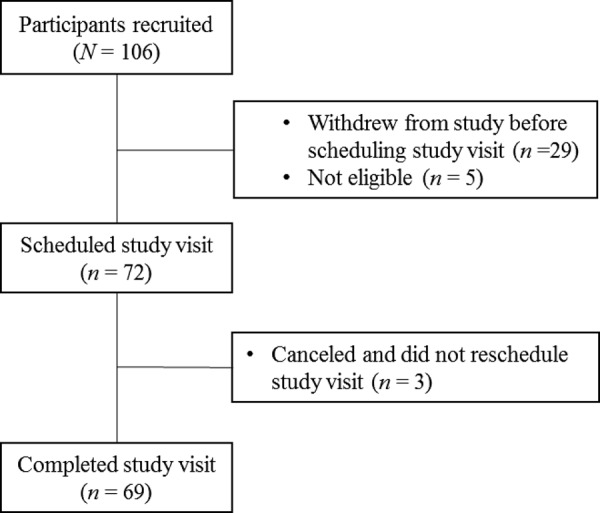
Although burnout and mental health problems may adversely impact quality of scientific research, academic productivity, and attrition in biomedical doctoral training programs, very little research has been done on this topic. Recent studies have used brief survey methods to begin to explore burnout and mental health problems in biomedical doctoral students. In this pilot study, biomedical doctoral students ( N = 69; 12% of enrolled biomedical doctoral students at a large research institution’s school of medicine in the United States) were administered standardized psychiatric interviews and self-report questionnaires focused on dimensions of burnout, mental health symptoms, and academic outcomes. We discovered high levels of burnout, depression, and anxiety. Additionally, we identified that burnout was significantly associated with thoughts related to dropping out, subjective appraisal of employment opportunities, functional impairment due to a mental health problem, and having at least one current psychiatric disorder. These findings extend prior research indicating the presence of significant emotional health challenges doctoral students in biomedical graduate programs face involving high burnout and difficulties with the training environment. We outline several recommendations and next steps to programmatically understand and address these emerging emotional wellness concerns in biomedical doctoral students.
Overview
The claims and statistics of this paper haven’t been checked yet.
Run the check — free, no account needed. It reads the open-access text and checks the sources it cites.
Integrity signals
Registry
Cites
Statistics
Figures
Verification
Claims the paper makes
The claims and statistics of this paper haven’t been checked yet.
Run the check — free, no account needed. It reads the open-access text and checks the sources it cites.
Claims other papers make about this one
Each is checked against this paper’s own text: does it say what the citing paper says it does?
In the citing paper
“Only one study used external assessments to measure psychological distress49”
From Prevalence and severity of mental health problems in early-career researchers: a systematic review and meta-analysis (2026) · cites this paper as [49]
In the citing paper
“For example, only one of the studies conducted an external assessment via clinical-diagnostic interviews to establish diagnoses, rather than relying on self-rating scales49.”
From Prevalence and severity of mental health problems in early-career researchers: a systematic review and meta-analysis (2026) · cites this paper as [49]
Self-check
Percentages, sums and reported differences re-computed from the paper’s own numbers.
The self-check needs the paper’s full text.
Citations
Cites
The PHQ-9: Validity of a brief depression severity measure
Kroenke, K., Spitzer, R. L., & Williams, J. B. W. (2001) · Journal of General Internal Medicine · doi:10.1046/j.1525-1497.2001.016009606.x · Cited by 44,910
The Work and Social Adjustment Scale: a simple measure of impairment in functioning
Mundt, J. C., Marks, I. M., Shear, M. K., & Greist, J. M. (2002) · British Journal of Psychiatry · doi:10.1192/bjp.180.5.461 · Cited by 2,515
Evidence for a mental health crisis in graduate education
Evans, T. M., Bira, L., Gastelum, J. B., Weiss, L. T., & Vanderford, N. L. (2018) · Nature Biotechnology · doi:10.1038/nbt.4089 · Cited by 1,441
Controlled Interventions to Reduce Burnout in Physicians: A Systematic Review and Meta-analysis
Panagioti, M., Panagopoulou, E., Bower, P., Lewith, G., Kontopantelis, E., Chew-Graham, C., Dawson, S., van Marwijk, H., Geraghty, K., & Esmail, A. (2017) · JAMA Internal Medicine · doi:10.1001/jamainternmed.2016.7674 · Cited by 1,395 · cited 2×
“…and program-level changes (e.g., duty-hour limitations, structural reform) as being more effective than individual-level changes (e.g., mindfulness training; Williams et al., 2015; Wasson et al., 2016; Busireddy et al., 2017; Panagioti et al., 2017; Daya and Hearn, 2018; West et al., 2018).”
BackgroundMata, D. A., Ramos, M. A., Bansal, N., Khan, R., Guille, C., Di Angelantonio, E., & Sen, S. (2015) · JAMA · doi:10.1001/jama.2015.15845 · Cited by 1,255
Work organization and mental health problems in PhD students
Levecque, K., Anseel, F., De Beuckelaer, A., Van der Heyden, J., & Gisle, L. (2017) · Research Policy · doi:10.1016/j.respol.2017.02.008 · Cited by 1,182
Rescuing US biomedical research from its systemic flaws
Alberts, B., Kirschner, M. W., Tilghman, S., & Varmus, H. (2014) · Proceedings of the National Academy of Sciences · doi:10.1073/pnas.1404402111 · Cited by 817
The causal links between stress and burnout in a longitudinal study of UK doctors
McManus, I., Winder, B., & Gordon, D. (2002) · The Lancet · doi:10.1016/s0140-6736(02)08915-8 · Cited by 376
Daya, Z., & Hearn, J. H. (2018) · Medical Teacher · doi:10.1080/0142159x.2017.1394999 · Cited by 224
Research works printed but not linked: 48
- Bair C. R., 2004, Higher education: Handbook of theory and research, 481
- Biron C., 2008, Work, 30, 511
- Bulmer M. G., 1979, Principles of statistics, 165
- Busireddy K. R., 2017, Journal of Graduate Medical Education, 9, 294, 10.4300/JGME-D-16-00372.1 · DOI · Paper page
- Cornér S., 2017, International Journal of Doctoral Studies, 12, 91, 10.28945/3754 · DOI · Paper page
- Eisenberg D., 2009, BE Journal of Economic Analysis & Policy, 9
- Ferreira M., 2003, International Journal of Science Education, 25, 969, 10.1080/09500690305026 · DOI
- First M. B., 2016, Structured clinical interview for DSM-5 personality disorders: SCID-5-PD
- First M. B., 2015, Structured clinical interview for DSM-5—Research version: SCID-5-RV
- 10.1187/cbe.11-02-0013 · DOI
- Furr S. R., 2001, Professional Psychology: Research and Practice, 32, 97, 10.1037/0735-7028.32.1.97 · DOI
- Galobardes B., 2006, Journal of Epidemiology & Community Health, 60, 7, 10.1136/jech.2004.023531 · DOI
- Gardner S. K., 2009, Higher Education, 58, 97, 10.1007/s10734-008-9184-7 · DOI
- Gelso C. J., 1996, Counseling Psychologist, 24, 304, 10.1177/0011000096242010 · DOI
- Geven K., 2018, Research in Higher Education, 59, 529, 10.1007/s11162-017-9481-z · DOI
- Ghaffarzadegan N., 2015, Systems Research and Behavioral Science, 32, 402, 10.1002/sres.2324 · DOI
- Gold J. A., 2015, Academic Psychiatry, 39, 37, 10.1007/s40596-014-0202-z · DOI
- Golde C. M., 2005, Journal of Higher Education, 76, 669, 10.1353/jhe.2005.0039 · DOI · Paper page
- Griffeth R. W., 2005, Journal of Applied Psychology, 90, 335, 10.1037/0021-9010.90.2.335 · DOI
- Groenvynck H., 2013, Research Evaluation, 22, 199, 10.1093/reseval/rvt010 · DOI
- Hovdhaugen E., 2011, Irish Educational Studies, 30, 237, 10.1080/03323315.2011.569143 · DOI
- Hunt J., 2010, Psychiatric Services, 61, 399, 10.1176/ps.2010.61.4.399 · DOI
- Hysenbegasi A., 2005, Journal of Mental Health Policy and Economics, 8, 145
- Hyun J. K., 2006, Journal of College Student Development, 47, 247, 10.1353/csd.2006.0030 · DOI · Paper page
- Kessler R. C., 2005, Archives of General Psychiatry, 62, 593, 10.1001/archpsyc.62.6.593 · DOI · Paper page
- Kessler R. C., 2005, Archives of General Psychiatry, 62, 617, 10.1001/archpsyc.62.6.617 · DOI · Paper page
- Kinman G., 2001, Educational Psychology, 21, 473, 10.1080/01443410120090849 · DOI · Paper page
- 2017, Nature, 550, 429
- Nature [Editorial]. (2018, March 29). Time to talk about why so many postgrads have poor mental health.Nature,556(5). Retrieved January 2, 2019, from www.nature.com/articles/d41586-018-04023-5 · DOI
- Panagioti M., 2017, Journal of the American Medical Association Internal Medicine, 177, 195
- Paulhus D. L., 2007, Handbook of research methods in personality psychology, 1, 224
- Petersen A. M., 2012, Proceedings of the National Academy of Sciences USA, 109, 5213, 10.1073/pnas.1121429109 · DOI · Paper page
- Phillips S., 2014, Impact of Social Sciences Blog
- Rotenstein L. S., 2016, Journal of the American Medical Association, 316, 2214, 10.1001/jama.2016.17324 · DOI · Paper page
- Salmela-Aro K., 2009, European Journal of Psychological Assessment, 25, 48, 10.1027/1015-5759.25.1.48 · DOI
- Schillebeeckx M., 2013, Nature Biotechnology, 31, 938, 10.1038/nbt.2706 · DOI · Paper page
- Shaw C., 2014, The Guardian
- Toews J. A., 1997, Academic Medicine, 72, 997, 10.1097/00001888-199711000-00019 · DOI
- Tompkins K. A., 2016, Training and Education in Professional Psychology, 10, 102, 10.1037/tep0000115 · DOI
- Turner A. L., 2000, Journal of College Student Development, 41, 627
- Van Der Haert M., 2014, Studies in Higher Education, 39, 1885, 10.1080/03075079.2013.806458 · DOI
- Veilleux J. C., 2012, Training and Education in Professional Psychology, 6, 211, 10.1037/a0030303 · DOI
- Viđak M., 2017, BMC Medical Education, 17, 144, 10.1186/s12909-017-0985-1 · DOI
- Walsh J. P., 2015, Research Policy, 44, 1584, 10.1016/j.respol.2015.04.010 · DOI
- Wasson L. T., 2016, Journal of the American Medical Association, 316, 2237, 10.1001/jama.2016.17573 · DOI
- West C. P., 2018, Journal of Internal Medicine, 283, 516, 10.1111/joim.12752 · DOI · Paper page
- Williams D., 2015, Academic Psychiatry, 39, 47, 10.1007/s40596-014-0197-5 · DOI
- Wilson S. B., 1997, Journal of Counseling Psychology, 44, 316, 10.1037/0022-0167.44.3.316 · DOI
Cited by
Sorted by citations
Sifri, R. J., McLoughlin, E. A., Fors, B. P., & Salehi, S. (2022) · Journal of Chemical Education · doi:10.1021/acs.jchemed.2c00412 · Cited by 13
Dreisoerner, A., Goetz, V., Frohnmayer, D., Tran, U. S., Voracek, M., & Nater, U. M. (2026) · Nature Human Behaviour · doi:10.1038/s41562-026-02505-5 · Cited by 2
Metadata
- Authors
- Nagy, G. A., Fang, C. M., Hish, A. J., Kelly, L., Nicchitta, C. V., Dzirasa, K., & Rosenthal, M. Z.
- Venue
- CBE—Life Sciences Education
- Published
- 2019-06
- Volume
- 18
- Issue
- 2
- Pages
- ar27
- ISSN
- 1931-7913
- PMC
- PMC6755223
- Cited by
- 106
- References
- 9
- Language
- en
About these checks
Registry, retraction, Cites and statistics results are computed, not judged, with one exception: a printed reference that no index lists is read once by a model before it counts as a citation error. Claims are extracted by a model and kept only when their quote appears verbatim in the text; each cited source is then checked, with a model’s help, for whether it says what the claim relies on. Those verdicts can be wrong — read the claim’s quote and the cited source before relying on one.
Statistics and arithmetic are recomputed, not judged.
Confidence bands are shown only for fields calibrated on our annotated test set. None is calibrated yet, so no band is shown.
What counts as a claim ›How we measure confidence ›How we check this ›
Are you an author, or do you see a problem with this page? Request a review
