

Altered Expression of Aromatase and Estrogen Receptors in Adipose Tissue From Men With Obesity or Type 2 Diabetes
Open accessThe DOI matches its Crossref record; 49 of the 49 references it cites were found in a registry or an index.
Abstract
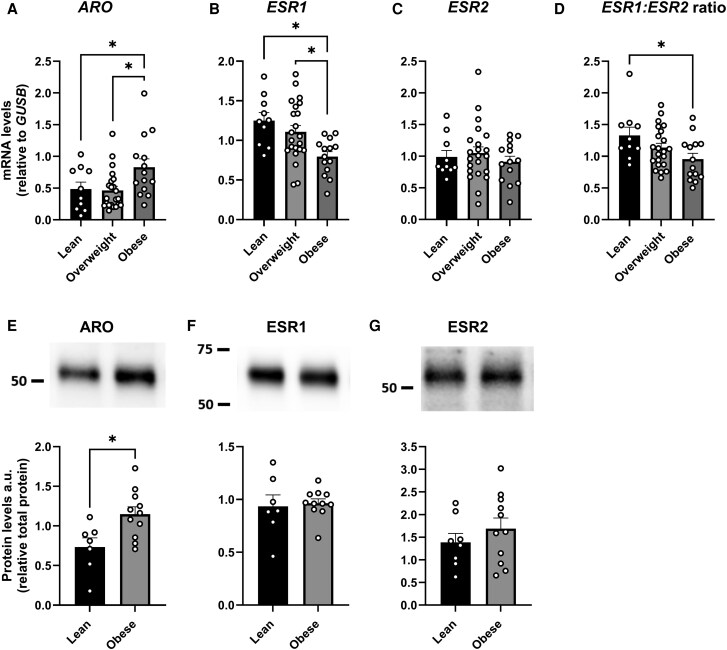
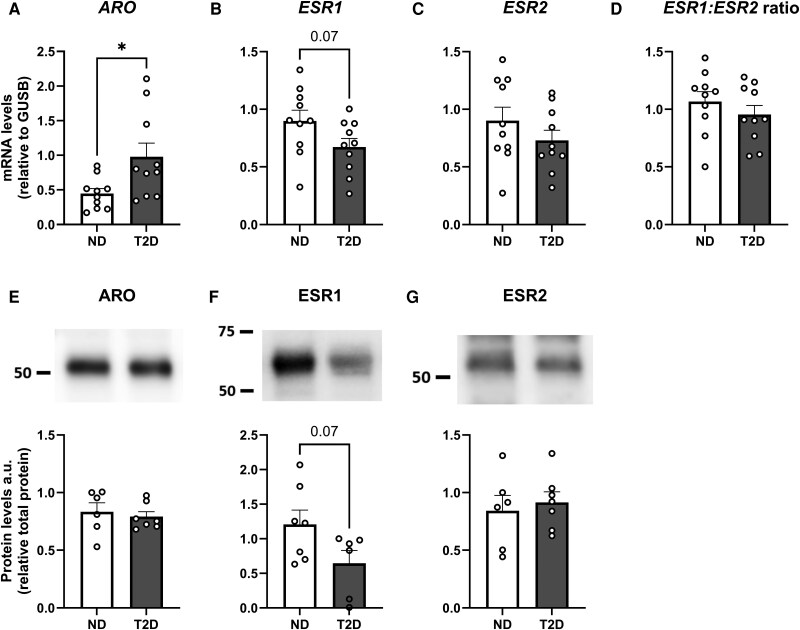
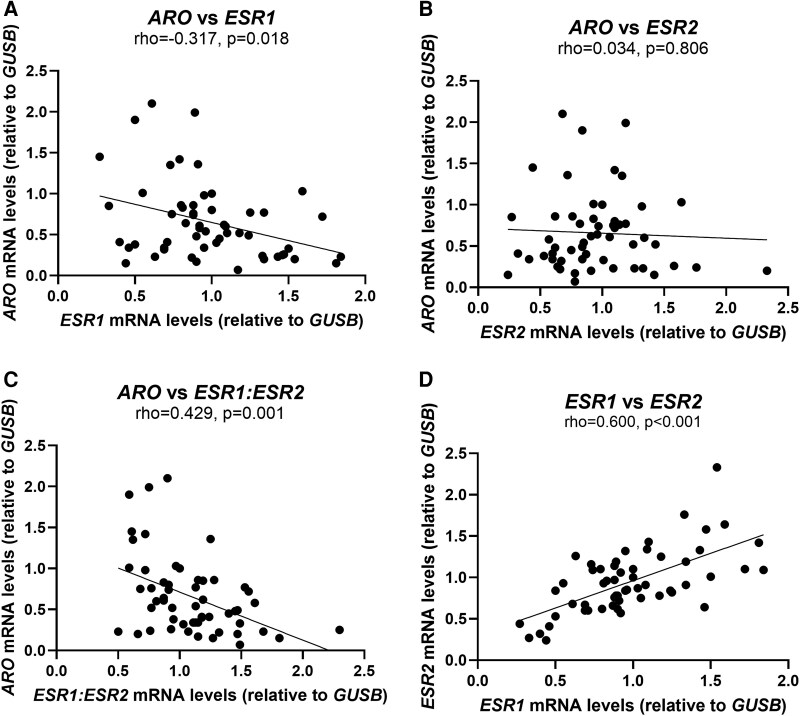
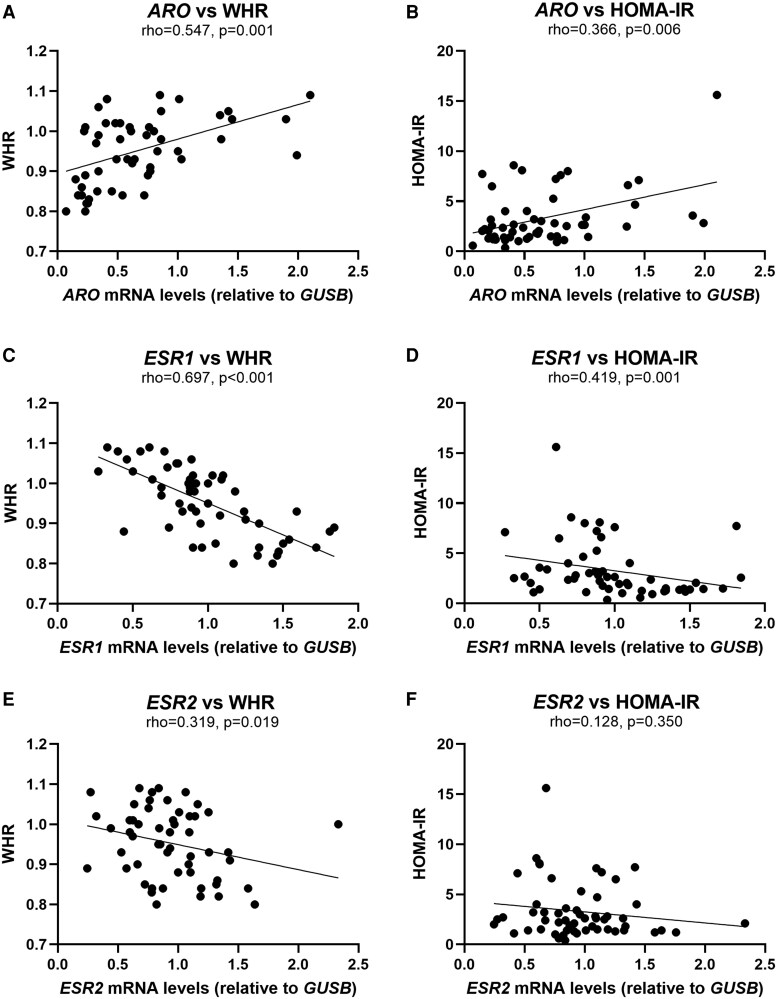
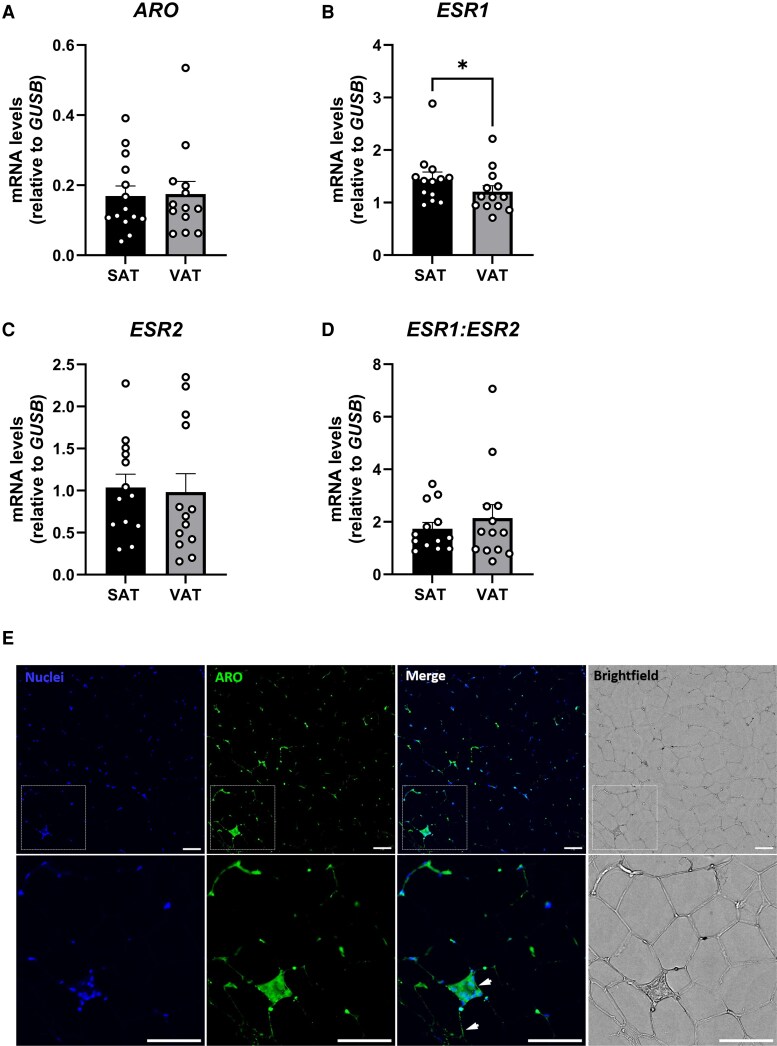
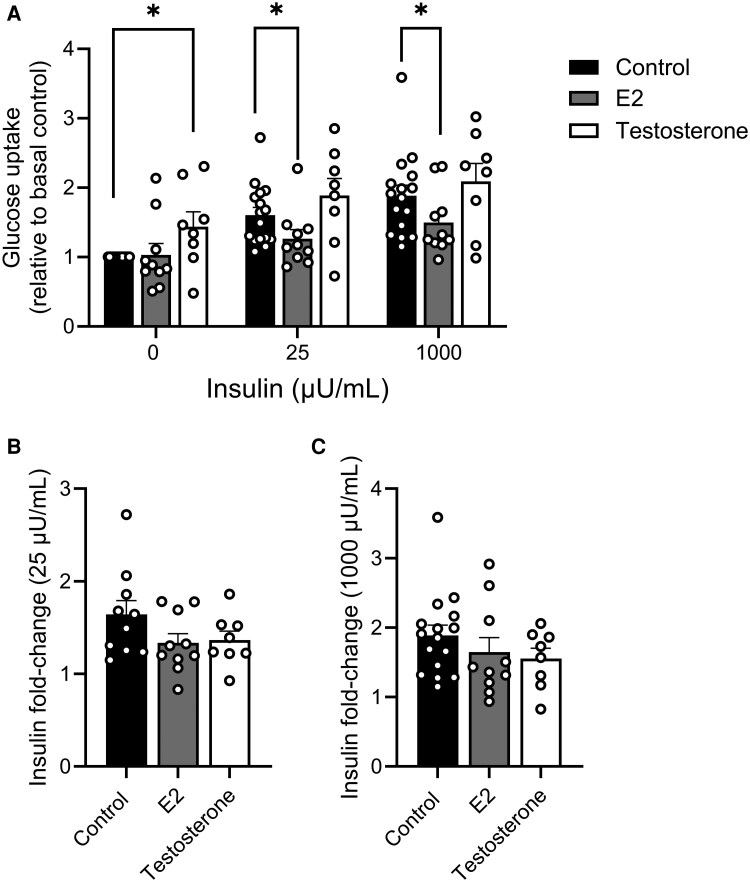
Context: Obesity and insulin resistance in men are linked to decreased testosterone and increased estradiol (E2) levels. Aromatase (ARO) converts testosterone into E2, and this occurs mainly in adipose tissue in men. E2 acts through estrogen receptors ESR1 and ESR2, and they potentially affect development of type 2 diabetes (T2D). Objective: This study explored alterations in ARO, ESR1, and ESR2 in men with obesity or T2D. Methods: Subcutaneous adipose tissue (SAT) from men with or without obesity or T2D was analyzed for ARO, ESR1, and ESR2 gene and protein expression. Data were compared across groups and correlated with markers of obesity, glycemia, insulin resistance, and sex hormones. Moreover, SAT was incubated with E2 or testosterone for ex vivo glucose uptake measurements. Results: ARO levels were higher in SAT from men with obesity compared to nonobese men, and gene expression correlated positively with adiposity, hyperglycemia, and insulin resistance. No association was found between ARO and circulating E2. Men with obesity had lower levels of ESR1 and ESR1:ESR2 ratio, but not ESR2. ESR1 gene expression in SAT correlated negatively with adiposity and insulin resistance markers as well as with ARO expression, and tended to be lower in men with T2D. E2 reduced insulin-stimulated glucose uptake, while testosterone increased basal glucose uptake in adipocytes. Conclusion: Elevated ARO in SAT was found in obese men, and this was linked to insulin resistance and glycemia, supporting the idea that local estrogen production contributes to metabolic dysregulation. ESR1 was reduced in men with T2D and was linked to adiposity and insulin resistance. Taken together, high ARO and altered ESR1:ESR2 balance in SAT in obese men may contribute to insulin resistance and T2D development.
Overview
The claims and statistics of this paper haven’t been checked yet.
Free: it reads the open-access text and checks the first 5 claims that cite a source we can check. Create a free account to check every claim.
Integrity signals
Registry
Cites
Statistics
Figures
Verification
Claims the paper makes
The claims and statistics of this paper haven’t been checked yet.
Free: it reads the open-access text and checks the first 5 claims that cite a source we can check. Create a free account to check every claim.
Claims other papers make about this one
Each is checked against this paper’s own text: does it say what the citing paper says it does?
The cited source says what the claim attributes to it.
In the citing paper
“aromatase gene expression in SAT positively correlated with increased adiposity and IR, but interestingly not with circulating E2 (190).”
From Metabolic impact of endogenously produced estrogens by adipose tissue in females and males across the lifespan (2025) · cites this paper as [190]
Self-check
Percentages, sums and reported differences re-computed from the paper’s own numbers.
The self-check needs the paper’s full text.
Citations
Cites
The NHGRI-EBI GWAS Catalog: knowledgebase and deposition resource
Sollis, E., Mosaku, A., Abid, A., Buniello, A., Cerezo, M., Gil, L., Groza, T., Güneş, O., Hall, P., Hayhurst, J., et al. (2023) · Nucleic Acids Research · doi:10.1093/nar/gkac1010 · Cited by 1,641 · cited 1×
“Summary statistics were downloaded from the NHGRI-EBI GWAS Catalog (23) March 20, 2024, for the gene CYP19A1 and after trait selection, additional data were downloaded for study GCST 012228 (24).”
Gonadal Steroids and Body Composition, Strength, and Sexual Function in Men
Finkelstein, J. S., Lee, H., Burnett-Bowie, S.-A. M., Pallais, J. C., Yu, E. W., Borges, L. F., Jones, B. F., Barry, C. V., Wulczyn, K. E., Thomas, B. J., et al. (2013) · New England Journal of Medicine · doi:10.1056/nejmoa1206168 · Cited by 782
HEMSELL, D. L., GRODIN, J. M., BRENNER, P. F., SIITERI, P. K., & MACDONALD, P. C. (1974) · The Journal of Clinical Endocrinology & Metabolism · doi:10.1210/jcem-38-3-476 · Cited by 444 · cited 3×
“Adipose tissue is a major source of estrogen production in men, and it is hypothesized that increased aromatase activity in adipose tissue contributes to lower testosterone and hyperestrogenemia in men with obesity (8, 9).”
Burger, H. G., Dudley, E. C., Cui, J., Dennerstein, L., & Hopper, J. L. (2000) · The Journal of Clinical Endocrinology & Metabolism · doi:10.1210/jcem.85.8.6740 · Cited by 439
A simple method to determine fat cell size and number in four mammalian species
Di Girolamo, M., Mendlinger, S., & Fertig, J. (1971) · American Journal of Physiology-Legacy Content · doi:10.1152/ajplegacy.1971.221.3.850 · Cited by 369 · cited 1×
“Cell number was determined following measurements of tri-glyceride content (Doles extraction) (21), and cell size (Axiovision) (22).”
Origin of Estrogen in Normal Men and in Women with Testicular Feminization*
MACDONALD, P. C., MADDEN, J. D., BRENNER, P. F., WILSON, J. D., & SIITERI, P. K. (1979) · The Journal of Clinical Endocrinology & Metabolism · doi:10.1210/jcem-49-6-905 · Cited by 321 · cited 1×
“ARO converts androgens to estrogens, and approximately 80% of E2 in men is produced through the aromatization of testosterone in ex - tragonadal tissues, including adipose tissue (30).”
Metabolic Actions of Estrogen Receptor Beta (ERβ) are Mediated by a Negative Cross-Talk with PPARγ
Foryst-Ludwig, A., Clemenz, M., Hohmann, S., Hartge, M., Sprang, C., Frost, N., Krikov, M., Bhanot, S., Barros, R., Morani, A., et al. (2008) · PLoS Genetics · doi:10.1371/journal.pgen.1000108 · Cited by 287
Fat cell enlargement is an independent marker of insulin resistance and ‘hyperleptinaemia’
Lundgren, M., Svensson, M., Lindmark, S., Renström, F., Ruge, T., & Eriksson, J. W. (2007) · Diabetologia · doi:10.1007/s00125-006-0572-1 · Cited by 277 · cited 1×
“Cell number was determined following measurements of tri-glyceride content (Doles extraction) (21), and cell size (Axiovision) (22).”
Self-citationCohen, P. G. (1999) · Medical Hypotheses · doi:10.1054/mehy.1997.0624 · Cited by 245 · cited 3×
“Adipose tissue is a major source of estrogen production in men, and it is hypothesized that increased aromatase activity in adipose tissue contributes to lower testosterone and hyperestrogenemia in men with obesity (8, 9).”
Després, J.-P. (2006) · European Heart Journal Supplements · doi:10.1093/eurheartj/sul002 · Cited by 205 · cited 2×
“In contrast, lower-body obesity (gynoid fat distribution), more common in premenopausal women, is considered metabolically favorable, carrying a lower risk for glucose and lipid dysregulation (2, 4).”
Research works printed but not linked: 2
- WHO. Obesity and Overweight. World Health Organization; 2018.
- Ahmed F, Hetty S, Laterveer R, et al Supplementary material: “Altered expression of aromatase and estrogen receptors in adipose tissue from men with obesity or type 2 diabetes”. Zenodo. 2024. 10.5281/zenodo.14514186 PMC12448628 39833659 · DOI
Cited by
Body mass index and subsequent fracture risk: a meta-analysis to update FRAX
Harvey, N. C., Johansson, H., McCloskey, E. V., Liu, E., Åkesson, K., Anderson, F. A., Azagra, R., Bager, C. L., Beaudart, C., Bischoff-Ferrari, H. A., et al. (2025) · Journal of Bone and Mineral Research · doi:10.1093/jbmr/zjaf091 · Cited by 37
“31 However, in men, obesity may lead to a concomitant reduction in male sex steroids and thus potentially effective hypogonadism, 32,33 with increased fracture risk possibly additionally mediated via impaired muscle health in addition to reduced BMD. 34”
Lee, A. A., & Den Hartigh, L. J. (2025) · Frontiers in Endocrinology · doi:10.3389/fendo.2025.1682231 · Cited by 32
Metabolic Messengers: oestradiol
Hevener, A. L., & Correa, S. M. (2025) · Nature Metabolism · doi:10.1038/s42255-025-01317-7 · Cited by 21
“Of note, a strong negative relationship between Esr1 / ESR1 and adiposity is similar between females and males from mice to humans 42,43,101 .”
Sex-specific mechanisms in the pathogenesis and progression of chronic kidney disease
Li, G., Xu, Z., Yang, H., Zhang, D., Liu, B., Song, Y., Li, Q., Zhang, Y., Zhou, H., & Wang, Y. (2025) · Autoimmunity Reviews · doi:10.1016/j.autrev.2025.103938 · Cited by 17
The impact of food and nutraceuticals on human fertility
Farina, M., Maugeri, A., Rapisarda, A., & Navarra, M. (2025) · Food Nutrition · doi:10.1016/j.fnutr.2025.100021 · Cited by 6
A Contemporary Perspective on Long-Term Complications of Bariatric Surgery
Skossyrskiy, V. S., Stepochkin, D., Zaharova, E., Mamedov, R., Muraviev, S. Y., Александровна, П. Р., German, E., Nikolaev, A. V., Berikkhanov, Z. G. M., Markov, I., et al. (2025) · Obesity Surgery · doi:10.1007/s11695-025-08398-z · Cited by 4
Low Testosterone in Men With Type 2 Diabetes: The Role of Estrogen Excess and Aromatase Activity
Tun, N. N., Livingstone, D. E. W., & Gibb, F. W. (2026) · Clinical Endocrinology · doi:10.1111/cen.70098 · Cited by 3
Zhuge, Z., Zheng, K., Ji, X., Wang, X., & Zhang, X. (2025) · Frontiers in Nutrition · doi:10.3389/fnut.2025.1577823 · Cited by 2
Wang, A., Vreijling, J. P., Jongejan, A., Rumanova, V. S., Versteeg, R. I., Kalsbeek, A., Serlie, M. J. M., la Fleur, S. E., Bisschop, P. H. L. T., Baas, F., et al. (2025) · Clocks & Sleep · doi:10.3390/clockssleep7030045 · Cited by 1
Nayak, S. S., Partheepan, K., Mantena, S., Misra, M., Leon, G. D., Perali, T., Chen, J., Islam, M. A., Sedaliu, T., & Polisetty, L. D. (2025) · Endocrine Practice · doi:10.1016/j.eprac.2025.10.014 · Cited by 1
Dai, Y., Wang, Y., Huang, Y., Jiang, X. L., & Tan, J. (2026) · Frontiers in Immunology · doi:10.3389/fimmu.2026.1731024 · Cited by 3
Bathina, S., Lopez, V. F., Prado, M., Teo, S., Villareal, D. T., Chen, R., Qualls, C., & Armamento‐Villareal, R. (2026) · Metabolites · doi:10.3390/metabo16030198 · Cited by 1
“Obesity has become a global epidemic, contributing to a wide spectrum of metabolic and endocrine disorders including type 2 diabetes mellitus, cardiovascular disease, and male hypogonadism [1–3].”
Cormio, A., Matsukawa, A., Dematteis, A., Alfarhan, A. R., Miszczyk, M., Roessler, N., Alqahtani, A. S., Mancon, S., Tsuboi, I., Rajwa, P., et al. (2026) · Prostate Cancer and Prostatic Diseases · doi:10.1038/s41391-026-01108-5 · Cited by 1
Adipose as a Driver, Not a Bystander: A Modern Synthesis of Obesity‐Related Erectile Dysfunction
Sailis, A. B., & Noh, M. A. M. (2026) · Diabetes Obesity and Metabolism · doi:10.1111/dom.70818 · Cited by 1
Wu, Y., Yang, H., Shangguan, W., Zhang, W., Chen, L., Min, R., Fan, X., Zhu, Y., Zheng, X., Xiong, Y., et al. (2026) · Phytochemistry · doi:10.1016/j.phytochem.2026.115008 · Cited by 1
Effect of Aromatase and ESR1 Expression in SAT on Insulin Resistance and T2D in Obese Men
Gallardo, N., & Andrés, A. (2025) · The Journal of Clinical Endocrinology & Metabolism · doi:10.1210/clinem/dgaf167 · Cited by 1
Tang, D., Yuan, B., Gu, C., Zhou, H., Jiang, J., Peng, J., & Cao, X. (2025) · Research Square · doi:10.21203/rs.3.rs-6893841/v1
Oyeka, C. P., Ma, J., He, J. H., Srialluri, N., Gisinger, T., Michos, E. D., Woodward, M., Kalyani, R. R., Clark, J. M., Bennett, W. L., et al. (2025) · medRxiv · doi:10.1101/2025.09.02.25334965
Metformin and estrogen modulation in LABC with T2DM: A 36-month randomized trial
Liu, F., Xu, C., Bai, Y., & Yuan, Y. (2025) · Open Medicine · doi:10.1515/med-2025-1262
“…hyperinsulinemia in insulin-resistant states promotes breast epithelial cell proliferation through activation of insulin-like growth factor-1 receptors, while elevated aromatase activity in adipose tissue may exacerbate peripheral estrogen synthesis, creating a pro-cancer microenvironment [10,11].”
Kagios, C., Hetty, S., Hukema, F., Fanni, G., Roman, E., & Eriksson, J. W. (2025) · Endocrine · doi:10.1007/s12020-025-04448-9
“Our group has previously reported a negative correlation between testosterone levels and adiposity markers in male individuals with obesity [41], which was not observed herein.”
Self-citationLv, Q., & Wang, Z. (2025) · Renal Failure · doi:10.1080/0886022x.2025.2585662
“…metabolic and cardiovascular risks. the greater proportion of subcutaneous fat in women may confer protective effects on kidney function [1,30–33]. age-related variations in the relationship between aBSi and dKd or albuminuria may stem from declining renal function and increased metabolic…”
Petridis, S. F., Baez, K., Punjabi, N. M., Cruz-Munoz, N. F. D. L., Bernal‐Mizrachi, E., & Varghese, R. T. (2026) · Journal of Investigative Medicine High Impact Case Reports · doi:10.1177/23247096261433343 · Cited by 1
“13,14 Thus, the patient’s hypogonadism is likely multifactorial, reflecting contributions from obesity, metabolic dysfunction, and possible early iron-mediated endocrine disruption.”
Capó, X., Ferrer, M. D., Sureda, A., Quetglas‐Llabrés, M. M., Monserrat-Mesquida, M., Bibiloni, M. D. M., García, S., Ródenas-Munar, M., Ugarriza, L., Mateos, D., et al. (2026) · International Journal of Molecular Sciences · doi:10.3390/ijms27073314
“Moreover, adipose tissue acts as an important site of oestrogen synthesis through aromatase activity, particularly in obesity, which may further influence inflammatory and oxidative stress responses in a sex-dependent manner [22].”
Prabhata, W. R., Pratama, G. Y., & Kaldella, S. A. T. (2026) · JURNAL FARMASIMED (JFM) · doi:10.35451/gnmer592
A-to-I edited miR-483-5p: a virulence factor of premature ovarian insufficiency
Ma, N., Xu, K., Liu, J., & Wang, Z. (2026) · Cytotechnology · doi:10.1007/s10616-026-00995-9
“Estrogen production in granulosa cells is critically dependent on aromatase activity, which is known to be regu - lated by ESR2 signaling (Ahmed et al. 2025).”
Lai, Y.-H., Liu, Y. H., Chuang, H., Anh, N. T. K., Chang, H.-Y., & Chen, Y. (2026) · Pediatric Allergy and Immunology · doi:10.1111/pai.70355
“…local aromatase activity and intra-adipose estrogen concentrations are more closely associated with meta - bolic risk than circulating estrogen levels, 25,26 although the direct mechanistic link between local adipose estrogen production and allergic disease progression remains under investigation.”
High-concentration estradiol promotes platelet activation and thrombosis through Src-ADP axis
Ma, R., Chen, S., Yang, B., Jin, Y., Yan, R., Zhang, L., Zhao, L., Zhao, R., & Dai, K. (2026) · Translational research · doi:10.1016/j.trsl.2026.06.002
Kardiometabolisches Syndrom – Pathophysiologie, Therapie und Prävention
Raeder, S. (2026) · Kardiologie up2date · doi:10.1055/a-2654-6802
Lundqvist, M., Pereira, M. J., Wiklund, U., Hetty, S., & Eriksson, J. W. (2026) · Journal of the Endocrine Society · doi:10.1210/jendso/bvag138
“For example, a lower ESR1:ESR2 gene expression ratio has been observed in adipose tissue from postmenopausal compared with premenopausal women and has been associated with markers of insulin resistance and obesity in men [30, 31].”
Self-citationLiu, H., Li, B., Huang, Y., Wang, W., & Cai, J. (2026) · World Journal of Urology · doi:10.1007/s00345-026-06565-0
Wang, D., & Jiao, C. (2026) · Frontiers in Endocrinology · doi:10.3389/fendo.2026.1872434
“To assess potential reverse causality, reverse MR analysis was performed (Table 7; Supplementary Figures 2, 6 – 8).”
InfluentialEfficacy of acupuncture therapies for polycystic ovary syndrome: a network meta-analysis
Yang, N., Li, Y., Jiang, H., Wang, R., Zhang, Q., Tang, Q., Liu, H., Xie, Y., Wang, S., Li, Z., et al. (2026) · Frontiers in Medicine · doi:10.3389/fmed.2026.1895421
“Excess testosterone can be converted into estrogen in peripheral tissues, including adipose tissue (119).”
Milan, G., Compagnin, C., Zucal, I., Perale, G., Bettini, S., Pilatone, A., Monti, M. D., Harder, Y., Parodi, C., Schmauß, D., et al. (2026) · Biomedicines · doi:10.3390/biomedicines14081706
“Regarding SAT, a recent study observed that aromatase levels were higher in SAT from males with obesity compared to those without obesity, and CYP19A1 expression correlated positively with adiposity, hyperglycemia, and insulin resistance [20].”
Leptin modulates NK cell function and MAPK signaling in obesity
de Andrade, A. G., de Lima, A. R. V., de Queiroz, A. C., Alexandre‐Moreira, M. S., Silva, L. H. A. C., & Keesen, T. S. L. (2026) · Immunology Letters · doi:10.1016/j.imlet.2026.107225
Samuel, B. A., Selvaraj, J., Natarajan, J., Namboori, P. K. K., & Philip, A. K. (2026) · Gene · doi:10.1016/j.gene.2026.150376
Padilla, A. I. D. V. (2026) · e_Buah
Bandura, A., Ďurina, P., Cambal, E., & Kečkéš, Š. (2026) · The Journal of Steroid Biochemistry and Molecular Biology · doi:10.1016/j.jsbmb.2026.107121
Ying, 康. K., Xu, S., Deng, Y., & Yu, Y. (2026) · Journal of Environmental Exposure Assessment · doi:10.20517/jeea.2026.16
Kumar, D. S., Sharma, D. P., Sharma, A. S., & Badyal, A. (2024) · African Journal of Biomedical Research · doi:10.69980/ajbr.v27i4s.9599
Update on testosterone deficiency and therapeutic options for testosterone replacement therapy
Thompson, T., Mubarak, M., Jones, T. H., Pearce, I., & Modgil, V. (2026) · Nature Reviews Urology · doi:10.1038/s41585-026-01190-3 · Cited by 1
Luo, D., 张璐璐, Qi, X., Guan, Q., Xu, F., Lu, P., & Yu, C. (2026) · Molecular Medicine Reports · doi:10.3892/mmr.2026.14051
“…driven by multiple factors such as TNF‑ α , IL‑6, insulin resistance and glucocorticoids, contribute to enhanced peripheral aromatization, increasing the conversion of testosterone to estradiol and thereby elevating estrogen levels while directly reducing circulating testosterone (58,59).”
Onwu, D. O., Bakare, O. S., Adekunle, Y. A., Asuk, A. A., Agbi, M., Dasofunjo, K., Ati, B. U., Okafor, A. I., Arobadade, O. A., Olajuyigbe, O. J., et al. (2026) · Chemical Papers · doi:10.1007/s11696-026-05817-y
Zhang, Y., Liu, P., Peng, Y., Chen, Y., Lei, E., & Liu, J. (2026) · Frontiers in Immunology · doi:10.3389/fimmu.2026.1963905
Hormonal Influence on Breast Cancer Progression
De, K., Calaf, G. M., Jana, M., Chowdhury, B., Crispin, L. A., & Roy, D. (2026) · International Journal of Molecular Sciences · doi:10.3390/ijms272110002
Siyi, Z., Wu, Y., liu, Y., Ma, C., Zhang, Y., Liu, A., & zhang, Q. (2026) · Frontiers in Endocrinology · doi:10.3389/fendo.2026.1999437
Metadata
- Authors
- Ahmed, F., Hetty, S., Laterveer, R., Surucu, E. B., Mathioudaki, A., Hornbrinck, E., Patsoukaki, V., Olausson, J., Sundbom, M., Svensson, M. K., Pereira, M. J., & Eriksson, J. W.
- Affiliations
- Uppsala University (SE)
- Corresponding author
- Eriksson, Jan W
- ORCID
- Venue
- The Journal of Clinical Endocrinology & Metabolism
- Publisher
- The Endocrine Society
- Published
- 2025-01-21
- Volume
- 110
- Issue
- 10
- Pages
- e3410-e3424
- ISSN
- 0021-972X (ISSN-L)
- 1945-7197
- PMC
- PMC12448628
- OpenAlex
- W4406604975
- Cited by
- 40
- References
- 47
- Citations by year
- 2026: 24 · 2025: 16
- FWCI
- 23.51
- Type
- journal article
- Language
- en
- Open access
- hybrid
- doi.org
- Licence
- Locations
- The Journal of Clinical Endocrinology & Metabolism (publishedVersion, cc-by)
- Europe PMC (PubMed Central) (publishedVersion, cc-by)
- PubMed (publishedVersion)
- PubMed Central (publishedVersion, cc-by)
- Uppsala University Publications (Uppsala University) (submittedVersion, other-oa)
- Funders
- Swedish Diabetes Foundation (DIA2021-661)
- Swedish National Strategic Research Initiative EXODIAB
- the Family Ernfors Foundation
- P.O Zetterlings Foundation
- Swedish Society for Medical Research
- AstraZeneca R&D
- NovoNordisk Foundation (NNF20OC0063864, NNF23OC0084483)
- Agnes and Mac Rudberg Foundation
- European Commission Horizon RIA (PAS GRAS 101080329)
- Uppsala University Hospital ALF
- Topics
- Life Sciences › Biochemistry, Genetics and Molecular Biology › Endocrinology › Estrogen and related hormone effects
- Health Sciences › Medicine › Endocrinology, Diabetes and Metabolism › Adipokines, Inflammation, and Metabolic Diseases
- Health Sciences › Medicine › Physiology (medical) › Adipose Tissue and Metabolism
- Keywords
- aromatase, estrogen receptor alpha, estrogen receptor beta, subcutaneous adipose tissue, obesity, type 2 diabetes, insulin resistance, estradiol, testosterone, local estrogen production, glucose uptake, men
- MeSH terms
- Adipose Tissue, Adult, Aged, Aromatase, Diabetes Mellitus, Type 2, Estradiol, Humans, Insulin Resistance, Male, Middle Aged, Obesity, Testosterone, Estrogen Receptor alpha, Estrogen Receptor beta, Subcutaneous Fat
About these checks
Registry, retraction, Cites and statistics results are computed, not judged, with one exception: a printed reference that no index lists is read once by a model before it counts as a citation error. Claims are extracted by a model and kept only when their quote appears verbatim in the text; each cited source is then checked, with a model’s help, for whether it says what the claim relies on. Those verdicts can be wrong — read the claim’s quote and the cited source before relying on one.
Statistics and arithmetic are recomputed, not judged.
Confidence bands are shown only for fields calibrated on our annotated test set. None is calibrated yet, so no band is shown.
What counts as a claim ›How we measure confidence ›How we check this ›
Are you an author, or do you see a problem with this page? Request a review
Data sources
Bibliographic data: Semantic Scholar, OpenAlex, Crossref.
Contains information from the Semantic Scholar Academic Graph Datasets, made available under the ODC Attribution License (ODC-BY 1.0).
Semantic Scholar’s data is described in: Kinney, R., et al. (2023). The Semantic Scholar Open Data Platform. arXiv:2301.10140.
