

The DOI matches its Crossref record; 39 of the 39 references it cites were found in a registry or an index.
Odor identification as a biomarker of preclinical AD in older adults at risk
Open accessAbstract
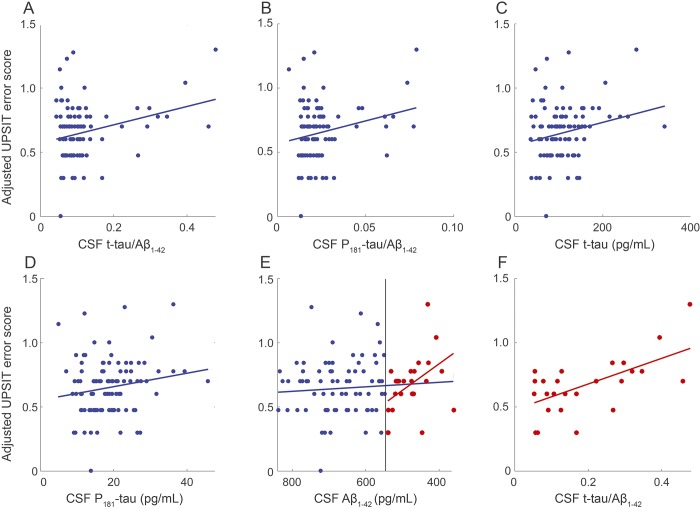
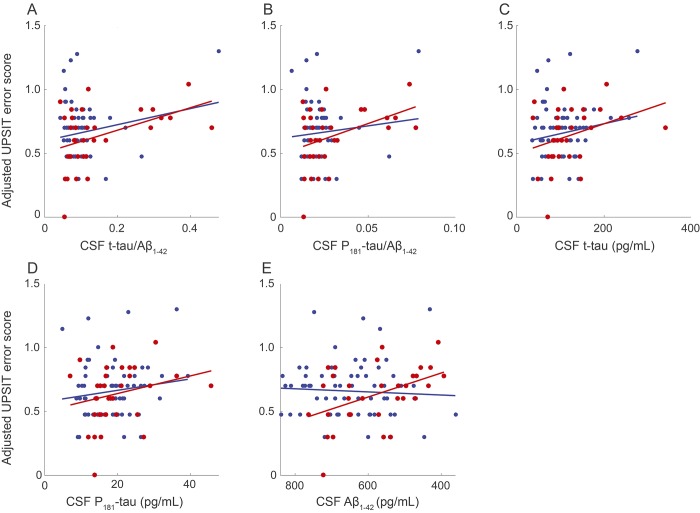
Objective: To assess odor identification (OI) as an indicator of presymptomatic Alzheimer disease (AD) pathogenesis in cognitively normal aging individuals at increased risk of AD dementia. Methods: In 274 members of the PREVENT-AD cohort of healthy aging persons with a parental or multiple-sibling history of AD dementia, we assessed the cross-sectional association of OI with potential indicators of presymptomatic AD. Some 101 participants donated CSF, thus enabling assessment of AD pathology with the biomarkers total tau (t-tau), phospho-tau (P181-tau), and their ratios with β-amyloid (Aβ1-42). Adjusted analyses considered age, cognition, APOE ε4 status, education, and sex as covariates. We measured OI using the University of Pennsylvania Smell Identification Test and cognitive performance using the Repeatable Battery for Assessment of Neuropsychological Status. Standard kits provided assays of the AD biomarkers. Analyses used robust-fit linear regression models. Results: Reduced OI was associated with lower cognitive score and older age, as well as increased ratios of CSF t-tau and P181-tau to Aβ1-42 (all p < 0.02). However, the observed associations of OI with age and cognition were unapparent in adjusted models that restricted observations to CSF donors and included AD biomarkers. OI showed little association with CSF Aβ1-42 alone except in APOE ε4 carriers having lowest-quartile Aβ1-42 levels. Conclusions: These findings from healthy high-risk older individuals suggest that OI reflects degree of preclinical AD pathology, while its relationships with age and cognition result from the association of these latter variables with such pathology. Diminished OI may be a practical and affordable biomarker of AD pathology.
Overview
The claims and statistics of this paper haven’t been checked yet.
Run the check — free, no account needed. It reads the open-access text and checks the sources it cites.
Integrity signals
Registry
Cites
Statistics
Figures
Verification
Claims the paper makes
The claims and statistics of this paper haven’t been checked yet.
Run the check — free, no account needed. It reads the open-access text and checks the sources it cites.
Claims other papers make about this one
Each is checked against this paper’s own text: does it say what the citing paper says it does?
The source backs part of the claim, not all of it — or backs it for a different population, condition or comparison.
In the citing paper
“the connection to the entorhinal cortex, the olfactory bulb, is directly affected by changes in the perforant pathway, and one of the earliest pathological changes in AD”
From AAVrh.10-Mediated APOE2 Central Nervous System Gene Therapy for APOE4-Associated Alzheimer's Disease (2018) · cites this paper as [43]
Experimental — accuracy not yet measuredThe source backs part of the claim, not all of it — or backs it for a different population, condition or comparison.
In the citing paper
“the amyloid deposition spreads, and the disease pathogenesis progressively involves a broad region of the brain”
From AAVrh.10-Mediated APOE2 Central Nervous System Gene Therapy for APOE4-Associated Alzheimer's Disease (2018) · cites this paper as [43]
Experimental — accuracy not yet measured
Self-check
Percentages, sums and reported differences re-computed from the paper’s own numbers.
The self-check needs the paper’s full text.
Citations
Cites
The Montreal Cognitive Assessment, MoCA: a brief screening tool for mild cognitive impairment
Nasreddine, Z. S., Phillips, N. A., Bédirian, V., Charbonneau, S., Whitehead, V., Collin, I., Cummings, J. L., & Chertkow, H. (2005) · Journal of the American Geriatrics Society · doi:10.1111/j.1532-5415.2005.53221.x · Cited by 25,553
Hirono, N., Mori, E., Ikejiri, Y., Imamura, T., Shimomura, T., Hashimoto, M., Yamashita, H., & Ikeda, M. (1997) · PubMed · Cited by 21,012
A New Clinical Scale for the Staging of Dementia
Hughes, C. P., Berg, L., Danziger, W., Coben, L. A., & Martin, R. L. (1982) · British Journal of Psychiatry · doi:10.1192/bjp.140.6.566 · Cited by 7,056
Randolph, C., Tierney, M. C., Mohr, E., & Chase, T. N. (1998) · Journal of Clinical and Experimental Neuropsychology · doi:10.1076/jcen.20.3.310.823 · Cited by 2,519 · cited 1×
“Assessments included a health history and review of systems, a standardized neurologic examination, and a cognitive examination with version A of the Repeatable Battery for Assessment of Neuropsychological Status (RBANS).(21)”
MethodDoty, R. L., Shaman, P., & Dann, M. (1984) · Physiology & Behavior · doi:10.1016/0031-9384(84)90269-5 · Cited by 1,854 · cited 1×
“We assessed OI abilities using the 40-item University of Pennsylvania Smell Identification Test (UPSIT).(23) This test includes a simple scratch-and-sniff booklet along with multiple-choice response forms for OI.”
MethodThe influences of age on olfaction: a review
Doty, R. L., & Kamath, V. J. (2014) · Frontiers in Psychology · doi:10.3389/fpsyg.2014.00020 · Cited by 681
Roberts, R. O., Christianson, T. J. H., Kremers, W. K., Mielke, M. M., Machulda, M. M., Vassilaki, M. E., Alhurani, R. E., Geda, Y. E., Knopman, D. S., & Petersen, R. C. (2015) · JAMA Neurology · doi:10.1001/jamaneurol.2015.2952 · Cited by 437
Devanand, D. P., Liu, X., Tabert, M. H., Pradhaban, G., Cuasay, K., Bell, K. L., de Leon, M. J., Doty, R. L., Stern, Y., & Pelton, G. H. (2008) · Biological Psychiatry · doi:10.1016/j.biopsych.2008.06.020 · Cited by 413
Olfaction in patients with mild cognitive impairment and Alzheimer's disease
Djordjevic, J., Jones‐Gotman, M., Sousa, K. D., & Chertkow, H. M. (2007) · Neurobiology of Aging · doi:10.1016/j.neurobiolaging.2006.11.014 · Cited by 365
Olfactory deficits predict cognitive decline and Alzheimer dementia in an urban community
Devanand, D. P., Lee, S., Manly, J. J., Andrews, H., Schupf, N., Doty, R. L., Stern, Y., Zahodne, L. B., Louis, E. D., & Mayeux, R. P. (2014) · Neurology · doi:10.1212/wnl.0000000000001132 · Cited by 351
Cited by
Sorted by citations
Olfactory and other sensory impairments in Alzheimer disease
Murphy, C. (2019) · Nature Reviews Neurology · doi:10.1038/s41582-018-0097-5 · Cited by 425
Olfactory Dysfunction in Neurodegenerative Diseases
Marín, C., Vilas, D., Langdon, C., Alobid, I., López‐Chacon, M., Haehner, A., Hummel, T. R., & Mullol, J. (2018) · Current Allergy and Asthma Reports · doi:10.1007/s11882-018-0796-4 · Cited by 303
Neural oscillations and brain stimulation in Alzheimer’s disease
Jafari, Z., Kolb, B. E., & Mohajerani, M. H. (2020) · Progress in Neurobiology · doi:10.1016/j.pneurobio.2020.101878 · Cited by 192
AAVrh.10-Mediated APOE2 Central Nervous System Gene Therapy for APOE4-Associated Alzheimer's Disease
Rosenberg, J. B., Kaplitt, M. G., De, B. P., Chen, A., Flagiello, T., Salami, C., Pey, E., Zhao, L., Ricart Arbona, R. J., Monette, S., et al. (2018) · Human Gene Therapy Clinical Development · doi:10.1089/humc.2017.231 · Cited by 176
“Of interest, the connection to the entorhinal cortex, the olfactory bulb, is directly affected by changes in the perforant pathway, and one of the earliest pathological changes in AD.(43,49) Similarly, the loss of visual recognition is a characteristic pathology associated with AD.”
BackgroundInfluentialInternational consensus statement on allergy and rhinology: Olfaction
Patel, Z. M., Holbrook, E. H., Turner, J. H., Adappa, N. D., Albers, M. W., Altundağ, A., Appenzeller, S., Costanzo, R. M., Croy, I., Davis, G. E., et al. (2022) · International Forum of Allergy & Rhinology · doi:10.1002/alr.22929 · Cited by 142
Neurons, Nose, and Neurodegenerative Diseases: Olfactory Function and Cognitive Impairment
Fatuzzo, I., Niccolini, G. F., Zoccali, F., Cavalcanti, L., Bellizzi, M. G., Riccardi, G., VINCENTIIS, M. D., Fiore, M., Petrella, C., Minni, A., et al. (2023) · International Journal of Molecular Sciences · doi:10.3390/ijms24032117 · Cited by 137
The human olfactory system in two proteinopathies: Alzheimer’s and Parkinson’s diseases
Úbeda‐Bañón, I., Saiz‐Sánchez, D., Flores‐Cuadrado, A., Corroto, E. R., González-Rodríguez, M., Villar‐Conde, S., Astillero‐Lopez, V., Cabello, J. P., Gallardo‐Alcañiz, M. J., Vaamonde‐Gamo, J., et al. (2020) · Translational Neurodegeneration · doi:10.1186/s40035-020-00200-7 · Cited by 131
“In the same vein, odor identification has been demonstrated to be useful for identifying Alzheimer’s disease pathology in healthy high-risk individuals [72].”
BackgroundZhang, Z., Zhang, B., Wang, X., Zhang, X., Yang, Q. X., Zhao, Q., Zhang, W., Zhu, D., & Bi, Y. (2019) · Diabetes Care · doi:10.2337/dc18-2584 · Cited by 122
INTREPAD: A randomized trial of naproxen to slow progress of presymptomatic Alzheimer disease
Meyer, P.-F., Tremblay-Mercier, J., Leoutsakos, J., Madjar, C., Lafaille-Maignan, M.-É., Savard, M., Rosa-Neto, P., Poirier, J., Etienne, P., Breitner, J., et al. (2019) · Neurology · doi:10.1212/wnl.0000000000007232 · Cited by 113
Self-citationRelationship Between Poor Olfaction and Mortality Among Community-Dwelling Older Adults
Liu, B., Luo, Z., Pinto, J. M., Shiroma, E. J., Tranah, G. J., Wirdefeldt, K., Fang, F., Harris, T. B., & Chen, H. (2019) · Annals of Internal Medicine · doi:10.7326/m18-0775 · Cited by 111
Open science datasets from PREVENT-AD, a longitudinal cohort of pre-symptomatic Alzheimer’s disease
Tremblay‐Mercier, J., Madjar, C., Das, S., Binette, A. P., Dyke, S. O. M., Etienne, P. E., Lafaille‐Magnan, M., Remz, J., Bellec, P., Collins, D. L., et al. (2021) · NeuroImage Clinical · doi:10.1016/j.nicl.2021.102733 · Cited by 115
Self-citationThe changing role of the senses in food choice and food intake across the lifespan
Boesveldt, S., Bobowski, N. K., McCrickerd, K., Maître, I., Sulmont‐Rossé, C., & Forde, C. G. (2018) · Food Quality and Preference · doi:10.1016/j.foodqual.2018.02.004 · Cited by 120
Jafari, Z., Kolb, B. E., & Mohajerani, M. H. (2019) · Neuroscience & Biobehavioral Reviews · doi:10.1016/j.neubiorev.2019.04.001 · Cited by 95
“and malfunction in olfactory behavioural tests as the primary landmark for identifying the AD (Lafaille-Magnan et al., 2017; Vasavada et al., 2017).”
Olfactory Dysfunction as a Global Biomarker for Sniffing out Alzheimer’s Disease: A Meta-Analysis
Kotecha, A., Corrêa, A., Fisher, K., & Rushworth, J. V. (2018) · Biosensors · doi:10.3390/bios8020041 · Cited by 82
“In AD, odour identification appears to be the most reliable indicator of disease [52,53].”
BackgroundThe Dentate Gyrus Classifies Cortical Representations of Learned Stimuli
Woods, N. I., Stefanini, F., Apodaca-Montano, D. L., Tan, I. M. C., Biane, J. S., & Kheirbek, M. A. (2020) · Neuron · doi:10.1016/j.neuron.2020.04.002 · Cited by 84
Environmental Enrichment and Successful Aging
Leon, M., & Woo, C. C. (2018) · Frontiers in Behavioral Neuroscience · doi:10.3389/fnbeh.2018.00155 · Cited by 76
Cheng, H., Zhang, Z., Zhang, B., Zhang, W., Wang, J., Ni, W., Miao, Y., Liu, J., & Bi, Y. (2022) · Diabetes Care · doi:10.2337/dc21-2064 · Cited by 75
Deficit in Central Auditory Processing as a Biomarker of Pre-Clinical Alzheimer’s Disease
Tuwaig, M., Savard, M., Jutras, B., Poirier, J., Collins, D. L., Rosa‐Neto, P., Fontaine, D. J., & Breitner, J. C. S. (2017) · Journal of Alzheimer s Disease · doi:10.3233/jad-170545 · Cited by 72
Self-citationGhosh, A., Torraville, S. E., Mukherjee, B., Walling, S. G., Martin, G. M., Harley, C. W., & Yuan, Q. (2019) · Alzheimer s Research & Therapy · doi:10.1186/s13195-019-0511-2 · Cited by 74
Lifestyle, multi‐omics features, and preclinical dementia among Chinese: The Taizhou Imaging Study
Jiang, Y., Cui, M., Tian, W., Zhu, S., Chen, J., Suo, C., Liu, Z., Lü, M., Xu, K., Fan, M., et al. (2020) · Alzheimer s & Dementia · doi:10.1002/alz.12171 · Cited by 69
Diagnosis and Management of Neuropsychiatric Symptoms in Alzheimer’s Disease
Wolinsky, D., Drake, K., & Bostwick, J. R. (2018) · Current Psychiatry Reports · doi:10.1007/s11920-018-0978-8 · Cited by 73
Lu, J., Testa, N., Jordan, R., Elyan, R., Kanekar, S. G., Wang, J., Eslinger, P. J., Yang, Q. X., Zhang, B., & Karunanayaka, P. (2019) · Brain Sciences · doi:10.3390/brainsci9120338 · Cited by 66
“This development could contribute to an inexpensive, noninvasive predictor for cognitive decline in the early stages of AD [67].”
BackgroundYahiaoui‐Doktor, M., Luck, T., Riedel-Heller, S. G., Loeffler, M., Wirkner, K., & Engel, C. (2019) · Alzheimer s Research & Therapy · doi:10.1186/s13195-019-0494-z · Cited by 61
Chen, M., Chen, Y., Huo, Q., Wang, L., Tan, S., Misrani, A., Jiang, J., Chen, J., Chen, S., Zhang, J., et al. (2021) · Molecular Neurodegeneration · doi:10.1186/s13024-021-00434-7 · Cited by 61
“Thus, one potential approach to the early diagnosis of AD would be to detect the olfactory sensory dysfunction in combination with neuropsychological measures involving affective changes [14, 15].”
BackgroundChen, B., Wang, Q., Zhong, X., Mai, N., Zhang, M., Zhou, H., Haehner, A., Chen, X., Wu, Z., Alberi, L. A., et al. (2021) · The International Journal of Neuropsychopharmacology · doi:10.1093/ijnp/pyab091 · Cited by 59
Olfactory Impairment Is Related to Tau Pathology and Neuroinflammation in Alzheimer’s Disease
Klein, J., Yan, X., Johnson, A. S., Tomljanovic, Z., Zou, J., Polly, K., Honig, L. S., Brickman, A. M., Stern, Y., Devanand, D. P., et al. (2021) · Journal of Alzheimer s Disease · doi:10.3233/jad-201149 · Cited by 55
Olfaction as an early marker of Parkinson's disease and Alzheimer's disease
Walker, I. M., Fullard, M. E., Morley, J. F., & Duda, J. E. (2021) · Handbook of clinical neurology · doi:10.1016/b978-0-12-819973-2.00030-7 · Cited by 55
Zhang, Z., Zhang, B., Wang, X., Zhang, X., Yang, Q. X., Zhao, Q., Lu, J., Bi, Y., & Zhu, D. (2018) · Diabetes · doi:10.2337/db17-1274 · Cited by 50
Striatal dopamine uptake and olfactory dysfunction in patients with early Parkinson's disease
Oh, Y., Kim, J., Hwang, E.-J., & Lyoo, C. H. (2018) · Parkinsonism & Related Disorders · doi:10.1016/j.parkreldis.2018.06.022 · Cited by 47
Association of Olfactory Impairment With All-Cause Mortality
Pang, N. Y., Song, H. J. J. M. D., Tan, B. K. J., Tan, J., Chen, A. S. R., See, A., Xu, S., Charn, T. C., & Teo, N. W. Y. (2022) · JAMA Otolaryngology–Head & Neck Surgery · doi:10.1001/jamaoto.2022.0263 · Cited by 46
Chen, B., Zhong, X., Mai, N., Peng, Q., Wu, Z., Ouyang, C., Zhang, W., Liang, W., Wu, Y., Liu, S., et al. (2018) · The International Journal of Neuropsychopharmacology · doi:10.1093/ijnp/pyy016 · Cited by 46
Effects of Acupuncture on Alzheimer’s Disease: Evidence from Neuroimaging Studies
Yu, C.-C., Ma, C., Wang, H., Kong, L.-H., Zhao, Y., Shen, F., & Wu, M. (2018) · Chinese Journal of Integrative Medicine · doi:10.1007/s11655-018-2993-3 · Cited by 44
Comparison of olfactory and gustatory disorders in Alzheimer’s disease
Kouzuki, M., Suzuki, T., Nagano, M., Nakamura, S., Katsumata, Y., Takamura, A., & Urakami, K. (2017) · Neurological Sciences · doi:10.1007/s10072-017-3187-z · Cited by 44
“Therefore, it has been suggested that evaluation of olfactory function may be useful for detection of preclinical AD and MCI [25].”
BackgroundIntact global cognitive and olfactory ability predicts lack of transition to dementia
Devanand, D. P., Lee, S., Luchsinger, J. A., Andrews, H., Goldberg, T. E., Huey, E. D., Schupf, N., Manly, J. J., Stern, Y., Kreisl, W. C., et al. (2019) · Alzheimer s & Dementia · doi:10.1016/j.jalz.2019.08.200 · Cited by 40
Olfactory deficit: a potential functional marker across the Alzheimer’s disease continuum
Liu, D., Lu, J., Wei, L., Yao, M., Yang, H., Lv, P., Wang, H., Zhu, Y., Zhu, Z., Zhang, X., et al. (2024) · Frontiers in Neuroscience · doi:10.3389/fnins.2024.1309482 · Cited by 41
Su, B., Bleier, B. S., Wei, Y., & Wu, D. (2021) · Frontiers in Neuroscience · doi:10.3389/fnins.2021.646956 · Cited by 39
Fimbria-Fornix Volume Is Associated With Spatial Memory and Olfactory Identification in Humans
Dahmani, L., Courcot, B., Near, J., Patel, R., Amaral, R. S. C., Chakravarty, M. M., & Bohbot, V. D. (2020) · Frontiers in Systems Neuroscience · doi:10.3389/fnsys.2019.00087 · Cited by 37
“Both olfaction and spatial memory are impaired early on in cognitive aging and Alzheimer’s disease (Henderson et al., 1989; Pai and Jacobs, 2004; Tu and Pai, 2006; Wilson et al., 2007, 2009; Devanand et al., 2008, 2015; Head and Isom, 2010; Stanciu et al., 2014; Allison et al., 2016; Lafaille-Magnan et al., 2017).”
BackgroundKong, V., Devenyi, G. A., Gallino, D., Ayranci, G., Germann, J., Rollins, C., & Chakravarty, M. M. (2018) · Brain Structure and Function · doi:10.1007/s00429-018-1691-4 · Cited by 32
Tau propagation in the brain olfactory circuits is associated with smell perception changes in aging
Diez, I. P., Ortiz-Terán, L., Ng, T. S. C., Albers, M. W., Marshall, G. A., Orwig, W., Kim, C. M., Bueichekú, E., Montal, V., Olofsson, J., et al. (2024) · Nature Communications · doi:10.1038/s41467-024-48462-3 · Cited by 39
“Despite investigations advo-cating forthe use of olfactorymeasures asa diagnostic and prognostic biomarker for neurogenerative diseases 13,14,32,33 , it remains unclear whethertheolfactorysystemiscriticaltounderstandingagingandAD-related neurodegeneration.”
BackgroundShenkarev, Z. O., Shulepko, M. A., Bychkov, M. L., Kulbatskii, D. S., Shlepova, O. V., Васильева, Н. А., Andreev-Andrievskiy, A. A., Popova, A. S., Lagereva, E., Loktyushov, E. V., et al. (2020) · Journal of Neurochemistry · doi:10.1111/jnc.15018 · Cited by 36
“Similar to α7-nAChRs, the activation of α4β2-nAChRs significantly improves memory function (Levin & Christopher, 2002).”
BackgroundLian, T., Zhu, W., Li, S., Liu, Y., Guo, P. F., Zuo, L.-J., Hu, Y., Yu, S., Li, L., Jin, Z. Y., et al. (2019) · Journal of Alzheimer s Disease · doi:10.3233/jad-181217 · Cited by 35
Intact olfactory memory in the 5xFAD mouse model of Alzheimer’s disease from 3 to 15 months of age
O’Leary, T. P., Stover, K. R., Mantolino, H. M., Darvesh, S., & Brown, R. E. (2020) · Behavioural Brain Research · doi:10.1016/j.bbr.2020.112731 · Cited by 30
Particulate matter and Alzheimer’s disease: an intimate connection
O’Piela, D. R., Durisek, G., Escobar, Y.-N. H., Mackos, A. R., & Wold, L. E. (2022) · Trends in Molecular Medicine · doi:10.1016/j.molmed.2022.06.004 · Cited by 36
Delgado‐Losada, M. L., Delgado‐Lima, A. H., & Bouhaben, J. (2020) · Brain Sciences · doi:10.3390/brainsci10120943 · Cited by 31
“The presence of olfactory alterations early in the course of neurodegenerative diseases suggests that systematic clinical evaluation of this function can provide valuable information for early detection [43,44,51,105].”
BackgroundYan, Y., Aierken, A., Wang, C., Song, D. F., Ni, J., Wang, Z., Quan, Z., & Qing, H. (2021) · Neuroscience & Biobehavioral Reviews · doi:10.1016/j.neubiorev.2021.11.009 · Cited by 32
Jafari, Z., Mehla, J., Kolb, B. E., & Mohajerani, M. H. (2018) · Cerebral Cortex · doi:10.1093/cercor/bhy251 · Cited by 29
“Current studies suggest a relationship between higher deposition of Aβ peptide and dysfunction in olfactory behavioral tests as the primary landmark of identifying the AD in humans (Lafaille-Magnan et al. 2017; Vasavada et al. 2017; Yao et al. 2017).”
BackgroundTu, L., Lv, X., Fan, Z., Zhang, M., Wang, H., & Yu, X. (2020) · Frontiers in Neuroscience · doi:10.3389/fnins.2020.586330 · Cited by 28
“Four studies measured CSF levels, two of which examined Aβ42, p-tau, and t-tau (Körtvélyessy et al., 2015; Lafaille-Magnan et al., 2017), whereas one study measured Aβ42 and p-tau (Kouzuki et al.”
BackgroundMethodZhou, C., Li, J., Dong, M., Ping, L., Lin, H., Wang, Y., Wang, S., Gao, S., Yu, G., Cheng, Y., et al. (2021) · Frontiers in Endocrinology · doi:10.3389/fendo.2021.658198 · Cited by 28
MXene/perovskite-based bionic human odor sensor array with machine learning
Hu, J., Liu, D., Xia, X., Wang, B., Pan, D., Cheng, Y., & Lu, Y. (2023) · Chemical Engineering Journal · doi:10.1016/j.cej.2023.143752 · Cited by 27
Associations between olfactory dysfunction and cognition: a scoping review
Jacobson, P. T., Vilarello, B. J., Tervo, J. P., Waring, N. A., Gudis, D. A., Goldberg, T. E., Devanand, D. P., & Overdevest, J. B. (2024) · Journal of Neurology · doi:10.1007/s00415-023-12057-7 · Cited by 27
“The relationship between neurodegenerative disease and olfaction has been clearly established, and the consequences of cognitive decline among those with neurodegenerative diseases is substantial [8, 9].”
Chen, B., Zhong, X., Zhang, M., Mai, N., Wu, Z., Chen, X., Peng, Q., Zhou, H., Wang, Q., Yang, M., et al. (2021) · Translational Psychiatry · doi:10.1038/s41398-021-01291-0 · Cited by 25
Chen, B., Zhong, X., Mai, N., Peng, Q., Zhang, M., Chen, X., Wu, Z., Zou, L., Liang, W., Ouyang, C., et al. (2018) · Journal of Alzheimer s Disease · doi:10.3233/jad-180760 · Cited by 26
Tebrügge, S., on behalf of the Heinz Nixdorf Recall Study Investigative Group, Winkler, A., Gerards, D., Weimar, C., Moebus, S., Jöckel, K., Erbel, R. M., & Jokisch, M. (2018) · Journal of Alzheimer s Disease · doi:10.3233/jad-170863 · Cited by 23
“A recent study by Lafaille-Magnan et al. [35] showed a decrease in odor identification with increasing cerebrospinal fluid biomarker evidence of AD pathology.”
Role of physical exercise type in olfactory deterioration in ageing
Zhang, C., Li, D., & Wang, X. (2020) · Rhinology Journal · doi:10.4193/rhin19.274 · Cited by 21
Olfactory Dysfunction and Incidence of Motoric Cognitive Risk Syndrome
Kravatz, N. L., Ayers, E. I., Bennett, D. A., & Verghese, J. (2022) · Neurology · doi:10.1212/wnl.0000000000201030 · Cited by 22
Winchester, R. L., & Martyn, K. (2020) · Neurology and Therapy · doi:10.1007/s40120-020-00199-z · Cited by 23
Kamath, V. J., Senjem, M. L., Spychalla, A. J., Chen, H., Palta, P., Mosley, T. H., Windham, B. G., Griswold, M. E., Knopman, D. S., Gottesman, R. F., et al. (2022) · Journal of Alzheimer s Disease · doi:10.3233/jad-220228 · Cited by 21
Guo, J., Dove, A. E., Wang, J., Laukka, E. J., Ekström, I., Dunk, M. M., Bennett, D. A., & Xu, W. (2023) · EBioMedicine · doi:10.1016/j.ebiom.2023.104862 · Cited by 20
Olfactory dysfunction as potential biomarker in neurodegenerative diseases: a narrative review
Cleene, N. D., Schwarzová, K., Labrecque, S., Cerejo, C., Djamshidian, A., Seppi, K., & Heim, B. (2025) · Frontiers in Neuroscience · doi:10.3389/fnins.2024.1505029 · Cited by 23
Xiao, Z., Wu, W., Zhao, Q., Zhang, J., Hong, Z., & Ding, D. (2020) · Aging and Health Research · doi:10.1016/j.ahr.2020.100002 · Cited by 21
Obstructive sleep apnea syndrome and olfactory perception: An OERP study
Invitto, S., Calcagnì, A., Piraino, G., Ciccarese, V., Balconi, M., de Tommaso, M., & Toraldo, D. M. (2018) · Respiratory Physiology & Neurobiology · doi:10.1016/j.resp.2018.07.002 · Cited by 20
Wang, S., Kang, D. W., Um, Y. H., Kim, S., Lee, C. U., & Lim, H. K. (2023) · Biomolecules · doi:10.3390/biom13091336 · Cited by 17
“Tau pathology is known to precede neurodegeneration, and a study showed cerebrospinal fluid level of total-tau and P181-tau were associated with olfactory deficit in CN who are a at increased risk of AD [22].”
BackgroundShrestha, S., Zhu, X., Griswold, M. E., Palta, P., Sullivan, K., Chen, H., Schneider, A. L. C., Moghekar, A., Grove, M. L., Thyagarajan, B., et al. (2025) · Neurology · doi:10.1212/wnl.0000000000213706 · Cited by 15
“…4 carrier status, race, and cognitive status in a large community-based sample of Black and White participants in the Atherosclerosis Risk in Communities (ARIC) study. on previous studies showing potential heterogeneity in the associations by amyloid 9,10,13,14 we β 42 β 40 p-tau , GFAP, and NfL.”
Smaller grey matter volume in the central olfactory system in mild cognitive impairment
Jobin, B., Boller, B., & Frasnelli, J. (2023) · Experimental Gerontology · doi:10.1016/j.exger.2023.112325 · Cited by 15
Effect of A/T/N imaging biomarkers on impaired odor identification in Alzheimer's disease
Baek, M. S., Cho, H., Lee, H. S., Lee, J., Ryu, Y. H., & Lyoo, C. H. (2020) · Scientific Reports · doi:10.1038/s41598-020-68504-2 · Cited by 15
Open Science Datasets from PREVENT-AD, a Longitudinal Cohort of Pre-symptomatic Alzheimer’s DiseasePreprint
Tremblay‐Mercier, J., Madjar, C., Das, S., Binette, A. P., Dyke, S. O. M., Etienne, P. E., Lafaille‐Magnan, M., Remz, J., Bellec, P., Collins, D. L., et al. (2020) · bioRxiv (Cold Spring Harbor Laboratory) · doi:10.1101/2020.03.04.976670 · Cited by 14
Self-citationNarrative Review of Sensory Changes as a Biomarker for Alzheimer’s Disease
Romano, R. R., Carter, M. A., & Monroe, T. B. (2020) · Biological Research For Nursing · doi:10.1177/1099800420947176 · Cited by 14
“Neuroimaging techniques are able to visualize taste perception in cerebral representations and suggest that gustatory processing may be impaired in people with brain disease (Camicioli et al., 1998; Lang et al., 2006).”
BackgroundZheng, C., Cui, Y. A., Gu, S., Yan, S., Cui, B., Song, T., Li, J., Jin, S., Xiao, K., Ge, Q., et al. (2023) · ESC Heart Failure · doi:10.1002/ehf2.14599 · Cited by 11
“29,30 Therefore, our fi ndings con fi rm that brain alterations in these speci fi c regions may contribute to cognitive impairment in HF patients, given that the affected brain regions reported here are also involved in AD, potentially indicating their vulnerability to the development of AD-related…”
BackgroundEkanayake, A., Peiris, S., Ahmed, B., Kanekar, S. G., Grove, C., Kalra, D., Eslinger, P. J., Yang, Q. X., & Karunanayaka, P. (2024) · American Journal of Alzheimer s Disease & Other Dementias® · doi:10.1177/15333175241272025 · Cited by 13
The AROMHA brain health test is a remote olfactory assessment to screen for cognitive impairment
Jobin, B., Magdamo, C., Delphus, D., Runde, A., Reineke, S., Alejandro-Soto, A., Ergun, B., Mukhija, S., Albers, A. D., & Albers, M. W. (2025) · Scientific Reports · doi:10.1038/s41598-025-92826-8 · Cited by 15
“Smell identification performance has been associated with AD biomarkers, elevated levels of CSF and PET tau 18,26–30 and worse performance is associated with smaller hippocampal volume in older adults 31,32 and in patients with cognitive impairment on the AD clinical continuum 22,33–37 .”
Odor-evoked Autobiographical Memory in Alzheimer’s disease?
Haj, M. E. (2021) · Archives of Clinical Neuropsychology · doi:10.1093/arclin/acab074 · Cited by 12
Dong, J., Zhan, X., Sun, H., Fang, F., & Wei, Y. (2022) · European Archives of Oto-Rhino-Laryngology · doi:10.1007/s00405-021-07194-6 · Cited by 12
Olfactory identification disorders due to Alzheimer’s disease: A new test from France to Quebec
Payne, M., Manera, V., Robert, P. H., Vandersteen, C., Beauchet, O., Galéry, K., Sacco, G., Fabre, R., & Gros, A. (2022) · PLoS ONE · doi:10.1371/journal.pone.0265764 · Cited by 12
Ramírez-Vélez, R., López-Gil, J., de Asteasu, M. L. D., Izquierdo, M., & García-Hermoso, A. (2021) · Scientific Reports · doi:10.1038/s41598-021-93355-w · Cited by 10
Motter, J. N., Choi, J.-W., Lee, S., Goldberg, T. E., Albert, S. M., & Devanand, D. P. (2023) · Neurology · doi:10.1212/wnl.0000000000207578 · Cited by 12
Shahbaz, M. A., Kuivanen, S. H., Lampinen, R., Mussalo, L., Hron, T., Závodná, T., Ojha, R., Krejčík, Z., Saveleva, L., Tahir, N. A., et al. (2023) · Journal of Neuroinflammation · doi:10.1186/s12974-023-02979-4 · Cited by 12
“Interestingly, like SARS-CoV-2 infection, olfactory dysfunction is often reported in several neurodegenerative diseases [24], including AD [25–28].”
BackgroundSmell identification function in early-onset Alzheimer’s disease and mild cognitive impairment
Velayudhan, L., Wilson-Morkeh, F., Penney, E., Jesu, A. J. M., Baillon, S. F., & Brugha, T. S. (2018) · International Psychogeriatrics · doi:10.1017/s1041610218001503 · Cited by 11
Delgado‐Losada, M. L., Bouhaben, J., & Delgado‐Lima, A. H. (2021) · Brain Sciences · doi:10.3390/brainsci11020216 · Cited by 11
Wang, Q., Chen, B., Zhong, X., Zhou, H., Zhang, M., Mai, N., Wu, Z., Chen, X., Yang, M., Zhang, S., et al. (2022) · Frontiers in Aging Neuroscience · doi:10.3389/fnagi.2021.732840 · Cited by 11
“A recent study also showed a combination of Aβ1−42 and odor identification scores to improve the predictive accuracy of conversion from MCI to AD (Zhao et al., 2020).”
BackgroundInfluentialGlover, S., Hill, C., McGuinness, B., McKnight, A. J., & Hunter, R. F. (2024) · Cities & Health · doi:10.1080/23748834.2024.2335707 · Cited by 14
Variability and Coupling of Olfactory Identification and Episodic Memory in Older Adults
Knight, J. E., Bennett, D. A., & Piccinin, A. M. (2018) · The Journals of Gerontology Series B · doi:10.1093/geronb/gby058 · Cited by 10
“…increased risk of mild cognitive impairment (MCI; Devanand et al., 2000; Wilson & Schneider, et al., 2007), predict conversion from MCI to AD (Devanand et al., 2000), and are related to an increased level of AD pathology after autopsy (Lafaille-Magnan et al., 2017; Wilson & Arnold, et al., 2007).”
BackgroundBuchanan, S. M., Parker, T. D., Lane, C., Keshavan, A., Keuss, S. E., Lu, K., James, S., Murray‐Smith, H., Wong, A., Nicholas, J. M., et al. (2020) · Journal of Neurology · doi:10.1007/s00415-020-10004-4 · Cited by 10
“The finding in smaller studies that associations between OI and imaging markers were strengthened by the inclusion of individuals with MCI (who are closer to disease onset) may also indicate this [8, 9] Limitations of this study include its cross-sectional design and lack of a marker of tau pathology, as there is evid…”
ResultSundermann, E. E., Fields, A., Saloner, R., Gouaux, B. D., Bharti, A., Murphy, C., & Moore, D. J. (2020) · AIDS · doi:10.1097/qad.0000000000002761 · Cited by 11
Igeta, Y., Hemmi, I., Yuyama, K., & Ouchi, Y. (2024) · Scientific Reports · doi:10.1038/s41598-024-54322-3 · Cited by 9
“Olfactory impairment is correlated with CSF t-Tau/Aβ1-42 ratio, p-Tau/Aβ1-42 ratio, and t-Tau levels, but not with Aβ1-42 levels alone, except in ApoE ε4 carriers 45 .”
BackgroundOlfactory Attunements and Technologies: Exposing the Affective Economy of Scent
Kitson, J., & McHugh, K. E. (2019) · GeoHumanities · doi:10.1080/2373566x.2019.1644961 · Cited by 9
Differences in Odor Identification in Early-Onset and Late-Onset Depression
Liu, M., Chen, B., Zhong, X., Zhang, M., Wang, Q., Zhou, H., Wu, Z., Hou, L., Peng, Q., Zhang, S., et al. (2022) · Brain Sciences · doi:10.3390/brainsci12020276 · Cited by 9
“Odor identification (OI) dysfunction is known to be a noninvasive and inexpensive predictor for developing AD, with accuracy comparable with that of cerebrospinal fluid or neuroimaging biomarkers [20,21].”
BackgroundFactors associated with odour identification in older Indonesian and white Australian adults
Turana, Y., Lipnicki, D. M., Handajani, Y. S., Sani, T. P., Widayanti, J. R., Suswanti, I., Kochan, N. A., Brodaty, H., & Sachdev, P. S. (2019) · Aging Clinical and Experimental Research · doi:10.1007/s40520-019-01419-9 · Cited by 8
Multi-sensory potential of archives in dementia care
Tischler, V., & Clapp, S. (2019) · Archives and Records · doi:10.1080/23257962.2019.1675147 · Cited by 8
Differences in olfactory functional connectivity in early-onset depression and late-onset depression
Chen, B., Yang, M., Liu, M., Wang, Q., Zhou, H., Zhang, M., Hou, L., Wu, Z., Zhang, S., Lin, G., et al. (2023) · Psychoradiology · doi:10.1093/psyrad/kkad030 · Cited by 7
Alia, S., Andrenelli, E., Paolo, A. D., Membrino, V., Mazzanti, L., Capecci, M., Vignini, A., Mara Fabri, C., & Ceravolo, M. G. (2025) · Nutrients · doi:10.3390/nu17040671 · Cited by 6
Echevarria‐Cooper, S. L., Ho, E., Gershon, R. C., Weıntraub, S., & Kahnt, T. (2023) · Alzheimer s & Dementia · doi:10.1002/alz.13426 · Cited by 5
“24,25,53 Future targeted investigations into the relationships between odor identification scores and amyloid and tau burden will help determine the usefulness of these tests for identifying participants with AD-specific pathologies.”
BackgroundChang, F., Hong, J., Yuan, F., & Wu, D. (2023) · European Archives of Oto-Rhino-Laryngology · doi:10.1007/s00405-023-07853-w · Cited by 6
Zhong, S., Wroblewski, K., Laumann, E. O., McClintock, M. K., & Pinto, J. M. (2023) · Alzheimer Disease & Associated Disorders · doi:10.1097/wad.0000000000000554 · Cited by 6
“12) (3-18) 3046 Cognitive Subdomains 3046 Orientation 1.”
Lower odor identification in subjective cognitive decline: a meta‐analysis
Jobin, B., Zigrand, C., Frasnelli, J., Boller, B., & Albers, M. W. (2025) · Alzheimer s & Dementia Diagnosis Assessment & Disease Monitoring · doi:10.1002/dad2.70168 · Cited by 5
“This result aligns with studies demonstrating associations between olfactory identification scores and AD tau or amyloid pathology biomarkers measured in cognitively unimpaired 19,40 and non-dementedindividuals.”
Vavougios, G. D., Mavridis, T., Doskas, T. K., Papaggeli, O., Foka, P., & Hadjigeorgiou, G. M. (2024) · Current Issues in Molecular Biology · doi:10.3390/cimb46050277 · Cited by 5
“Notably, impaired odor identification has also been correlated with neurodegeneration in the setting of Alzheimer’s disease [24] and has shown potential as a preclinical marker [25].”
BackgroundXu, M. Q., Liu, J., Liu, Q., Gong, Y., Li, Y., Zhang, J., Shi, S., & Shi, Y. (2024) · Frontiers in Aging Neuroscience · doi:10.3389/fnagi.2024.1326394 · Cited by 5
Zhang, S., Chen, B., Zhong, X., Zhang, M., Wang, Q., Wu, Z., Hou, L., Zhou, H., Chen, X., Liu, M., et al. (2022) · Frontiers in Psychiatry · doi:10.3389/fpsyt.2022.839012 · Cited by 4
Albertazzi, A., & Murphy, C. (2025) · Neurobiology of Aging · doi:10.1016/j.neurobiolaging.2025.02.001 · Cited by 3
Oral supplementation of fucoxanthin regulates gene expression in the brain of middle-aged rats
Park, H., Amjad, E. C., Burnett, G., Ferdous, K. A., Scott, M., Jansen, J., Bannerman, S., Scott, M., Correll, R. N., Ciesla, L. M., et al. (2025) · British Journal Of Nutrition · doi:10.1017/s0007114525104996 · Cited by 3
“…of this pathway analysis are interesting because preclinical processes of neurodegeneration are known to occur decades before the diagnosis of neurodegenerative diseases, and inflammation and olfactory dysfunction are important predictors (47,48) and biomarkers of neurodegeneration (49,50) .”
Olfactory deprivation promotes amyloid β deposition in a mouse model of Alzheimer’s disease
Zhao, X., Zhou, Q., Zhang, H., Ono, M., Furuyama, T., Yamamoto, R., Ishikura, T., Kumai, M., Nakamura, Y., Shiga, H., et al. (2025) · Brain Research · doi:10.1016/j.brainres.2025.149500 · Cited by 3
Metadata
- Authors
- Lafaille-Magnan, M.-E., Poirier, J., Etienne, P., Tremblay-Mercier, J., Frenette, J., Rosa-Neto, P., Breitner, J. C. S., & For the PREVENT-AD Research Group
- Affiliations
- From the Centre for Studies on Prevention of AD (M.-E.L.-M., J.P., P.E., J.T.-M., J.F., P.R.-N., J.C.S.B.) and McGill Centre for Studies in Aging (P.R.-N.), Douglas Mental Health University Institute, McGill University, Faculty of Medicine, Montreal, Quebec, Canada.
- Douglas Mental Health University Institute (CA)
- Venue
- Neurology
- Published
- 2017-07-25
- Volume
- 89
- Issue
- 4
- Pages
- 327-335
- ISSN
- 0028-3878 (ISSN-L)
- 1526-632X
- PMC
- PMC5574678
- OpenAlex
- W2732607734
- Cited by
- 145
- References
- 38
- Citations by year
- 2026: 6 · 2025: 15 · 2024: 18 · 2023: 16 · 2022: 12 · 2021: 21 · 2020: 20 · 2019: 13 · 2018: 21 · 2017: 3
- FWCI
- 12.81
- Type
- journal article
- Language
- en
- Open access
- hybrid
- doi.org
- Licence
- cc-by-nc-nd
- Locations
- Neurology (publishedVersion, cc-by-nc-nd)
- Europe PMC (PubMed Central) (publishedVersion, cc-by-nc-nd)
- PubMed Central (publishedVersion, cc-by-nc-nd)
- PubMed (publishedVersion)
- Funders
- Eli Lilly and Company
- Pfizer
- McGill University
- Weston Brain Institute
- Consortium canadien en neurodégénérescence associée au vieillissement
- TauRx Pharmaceuticals
- Government of Canada
- Pfizer Canada
- Canadian Institutes of Health Research
- Topics
- Health Sciences › Medicine › Psychiatry and Mental health › Dementia and Cognitive Impairment Research
- Life Sciences › Neuroscience › Cellular and Molecular Neuroscience › Alzheimer's disease research and treatments
- Life Sciences › Neuroscience › Sensory Systems › Olfactory and Sensory Function Studies
- Keywords
- odor identification, smell impairment, preclinical Alzheimer's disease, Alzheimer's disease biomarkers, cerebrospinal fluid tau, phosphorylated tau, amyloid-beta 42, APOE ε4, cognitively normal older adults, high-risk families, olfaction, cognitive aging
- MeSH terms
- Aged, Aged, 80 and over, Aging, Alzheimer Disease, Cognition, Cross-Sectional Studies, Female, Humans, Male, Middle Aged, Peptide Fragments, Phosphorylation, Risk, Cohort Studies, Biomarkers, Amyloid beta-Peptides, tau Proteins, Recognition, Psychology, Pattern Recognition, Physiological, Apolipoprotein E4, Olfactory Perception, Prodromal Symptoms
About these checks
Registry, retraction, Cites and statistics results are computed, not judged, with one exception: a printed reference that no index lists is read once by a model before it counts as a citation error. Claims are extracted by a model and kept only when their quote appears verbatim in the text; each cited source is then checked, with a model’s help, for whether it says what the claim relies on. Those verdicts can be wrong — read the claim’s quote and the cited source before relying on one.
Statistics and arithmetic are recomputed, not judged.
Confidence bands are shown only for fields calibrated on our annotated test set. None is calibrated yet, so no band is shown.
What counts as a claim ›How we measure confidence ›How we check this ›
Are you an author, or do you see a problem with this page? Request a review
