

The DOI matches its Crossref record; 43 of the 43 references it cites were found in a registry or an index.
[ 11 C]PK11195 binding in Alzheimer disease and progressive supranuclear palsy
Open accessAbstract
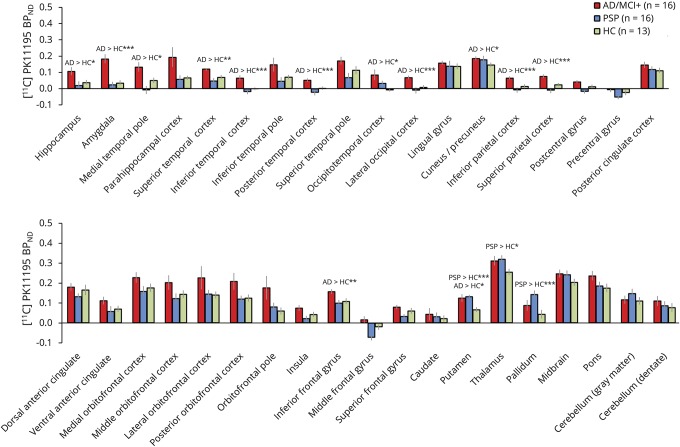
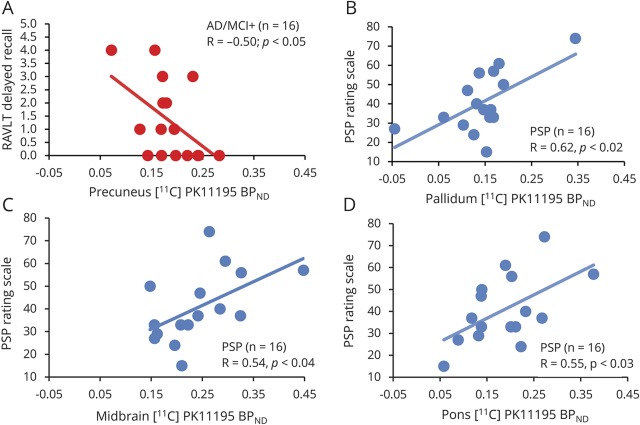
OBJECTIVE: We tested whether in vivo neuroinflammation relates to the distinctive distributions of pathology in Alzheimer disease (AD) and progressive supranuclear palsy (PSP). METHODS: C]PK11195 PET scanning, which was used as an in vivo index of neuroinflammation. RESULTS: C]PK11195 binding in the pallidum, midbrain, and pons correlated with disease severity in PSP. CONCLUSIONS: Together, our results suggest that neuroinflammation has an important pathogenic role in the 2 very different human neurodegenerative disorders of AD and PSP. The increase and distribution of microglial activation suggest that immunotherapeutic strategies may be useful in slowing the progression of both diseases.
Overview
The claims and statistics of this paper haven’t been checked yet.
Run the check — free, no account needed. It reads the open-access text and checks the sources it cites.
Integrity signals
Registry
Cites
Statistics
Figures
Verification
Claims the paper makes
The claims and statistics of this paper haven’t been checked yet.
Run the check — free, no account needed. It reads the open-access text and checks the sources it cites.
Claims other papers make about this one
Each is checked against this paper’s own text: does it say what the citing paper says it does?
The source backs part of the claim, not all of it — or backs it for a different population, condition or comparison.
In the citing paper
“This finding adds relevant information to the literature as only a few previous studies have explored how [11C]PK11195 and [18F]AV-1451 binding relate to disease severity in PSP8,9,13,14,16,18.”
From Neuroinflammation and Tau Colocalize in vivo in Progressive Supranuclear Palsy (2020) · cites this paper as [18]
Experimental — accuracy not yet measuredThe source backs part of the claim, not all of it — or backs it for a different population, condition or comparison.
In the citing paper
“PK-PET is increased in the entorhinal, temporal, parietal and cingulate cortex in AD, in the frontotemporal regions in FTD, while PSP shows increased PK-PET binding in the thalamus, putamen and pallidum, showing differential distribution of neuroinflammatory processes in different types of dementia [215–218].”
From The use of neuroimaging techniques in the early and differential diagnosis of dementia (2023) · cites this paper as [218]
Experimental — accuracy not yet measuredThe check wasn’t confident either way, so it gives no verdict — never disputed.
In the citing paper
“Elevated in vivo binding is seen in tauopathies characterized by straight filaments (Bevan-Jones et al., 2016; Passamonti et al., 2018; Smith et al., 2017; Jones et al., 2018), albeit with generally lower binding affinity than in Alzheimer’s disease”
From Neuroinflammation and protein aggregation co-localize across the frontotemporal dementia spectrum (2020) · cites this paper as Passamonti et al., 2018
Experimental — accuracy not yet measuredThe check wasn’t confident either way, so it gives no verdict — never disputed.
In the citing paper
“However, neuromelanin is not expressed by cortex even in tauopathies (Passamonti et al., 2018) and is unlikely to account for our FTD results.”
From Neuroinflammation and protein aggregation co-localize across the frontotemporal dementia spectrum (2020) · cites this paper as Passamonti et al., 2018
Experimental — accuracy not yet measuredIn the citing paper
“Additionally, subcortical tau pathology and microglial activation positively correlated with clinical severity376,378,379 and could predict disease progression in PSP.379”
From Microglia in neurodegenerative diseases: mechanism and potential therapeutic targets (2023) · cites this paper as [376]
In the citing paper
“PSP patients showed significantly increased mean [11C](R)-PK11195 binding in the midbrain, basal ganglia, frontal lobe, cerebellum,375 thalamus, putamen, and globus pallidus376 compared to controls.”
From Microglia in neurodegenerative diseases: mechanism and potential therapeutic targets (2023) · cites this paper as [376]
In the citing paper
“Microglial activation in PSP brains was also detected by PET imaging.”
From Microglia in neurodegenerative diseases: mechanism and potential therapeutic targets (2023) · cites this paper as [376]
In the citing paper
“[11C]PK11195 is widely used as a marker of microglial activation in neurodegenerative diseases23, including PSP17,18.”
From Neuroinflammation and Tau Colocalize in vivo in Progressive Supranuclear Palsy (2020) · cites this paper as [18]
Self-check
Percentages, sums and reported differences re-computed from the paper’s own numbers.
The self-check needs the paper’s full text.
Citations
Cites
McKhann, G. M., Knopman, D. S., Chertkow, H., Hyman, B. T., Jack, C. R., Kawas, C. H., Klunk, W. E., Koroshetz, W. J., Manly, J. J., Mayeux, R., et al. (2011) · Alzheimer's & Dementia · doi:10.1016/j.jalz.2011.03.005 · Cited by 18,657
Braak, H., Alafuzoff, I., Arzberger, T., Kretzschmar, H., & Del Tredici, K. (2006) · Acta Neuropathologica · doi:10.1007/s00401-006-0127-z · Cited by 3,172
Litvan, I., Agid, Y., Calne, D., Campbell, G., Dubois, B., Duvoisin, R. C., Goetz, C. G., Golbe, L. I., Grafman, J., Growdon, J. H., et al. (1996) · Neurology · doi:10.1212/wnl.47.1.1 · Cited by 2,538
Clinical diagnosis of progressive supranuclear palsy: The movement disorder society criteria
Höglinger, G. U., Respondek, G., Stamelou, M., Kurz, C., Josephs, K. A., Lang, A. E., Mollenhauer, B., Müller, U., Nilsson, C., Whitwell, J. L., et al. (2017) · Movement Disorders · doi:10.1002/mds.26987 · Cited by 2,434
Self-citationPET Imaging of Tau Deposition in the Aging Human Brain
Schöll, M., Lockhart, S. N., Schonhaut, D. R., O’Neil, J. P., Janabi, M., Ossenkoppele, R., Baker, S. L., Vogel, J. W., Faria, J., Schwimmer, H. D., et al. (2016) · Neuron · doi:10.1016/j.neuron.2016.01.028 · Cited by 1,214
In vivo imaging of microglial activation with [11C](R)-PK11195 PET in idiopathic Parkinson's disease
Gerhard, A., Pavese, N., Hotton, G., Turkheimer, F., Es, M., Hammers, A., Eggert, K., Oertel, W., Banati, R. B., & Brooks, D. J. (2006) · Neurobiology of Disease · doi:10.1016/j.nbd.2005.08.002 · Cited by 1,200
Parametric Imaging of Ligand-Receptor Binding in PET Using a Simplified Reference Region Model
Gunn, R. N., Lammertsma, A. A., Hume, S. P., & Cunningham, V. J. (1997) · NeuroImage · doi:10.1006/nimg.1997.0303 · Cited by 1,085
In-vivo measurement of activated microglia in dementia
Cagnin, A., Brooks, D. J., Kennedy, A. M., Gunn, R. N., Myers, R., Turkheimer, F. E., Jones, T., & Banati, R. B. (2001) · The Lancet · doi:10.1016/s0140-6736(01)05625-2 · Cited by 1,054
Hauw, J., Daniel, S. E., Dickson, D. W., Horoupian, D. S., Jellinger, K. A., Lantos, P. L., McKee, A. C., Tabaton, M., & Litvan, I. (1994) · Neurology · doi:10.1212/wnl.44.11.2015 · Cited by 854
Owen, D. R., Yeo, A. J., Gunn, R. N., Song, K., Wadsworth, G., Lewis, A., Rhodes, C., Pulford, D. J., Bennacef, I., Parker, C. A., et al. (2012) · Journal of Cerebral Blood Flow & Metabolism · doi:10.1038/jcbfm.2011.147 · Cited by 779
Research works printed but not linked: 2
- 10.1001/archneur.56.3.303 · DOI · Paper page
- 10.1109/23.34585 · DOI
Cited by
Sorted by citations
Microglia in neurodegenerative diseases: mechanism and potential therapeutic targets
Gao, C., Jiang, J., Tan, Y., & Chen, S. (2023) · Signal Transduction and Targeted Therapy · doi:10.1038/s41392-023-01588-0 · Cited by 1,616
A Path Toward Precision Medicine for Neuroinflammatory Mechanisms in Alzheimer's Disease
Hampel, H., Caraci, F., Cuello, A. C., Caruso, G., Nisticò, R., Corbo, M., Baldacci, F., Toschi, N., Garaci, F., Chiesa, P. A., et al. (2020) · Frontiers in Immunology · doi:10.3389/fimmu.2020.00456 · Cited by 360
“A number of studies show alterations in [11C]-PK11195 binding in AD and several other ND (186–189), Parkinson’s disease (190), and progressive supranuclear palsy (189, 191), and the distributions of [11C]-PK11195 found in these studies are akin to the wellknown distribution of neurodegeneration (e.”
Passamonti, L., Tsvetanov, K. A., Jones, P. S., Bevan-Jones, W. R., Arnold, R., Borchert, R. J., Mak, E., Su, L., O'Brien, J. T., & Rowe, J. B. (2019) · The Journal of Neuroscience · doi:10.1523/jneurosci.2574-18.2019 · Cited by 220
Self-citationMicroglial activation and tau burden predict cognitive decline in Alzheimer’s disease
Malpetti, M., Kievit, R. A., Passamonti, L., Jones, P. S., Tsvetanov, K. A., Rittman, T., Mak, E., Nicastro, N., Bevan-Jones, W. R., Su, L., et al. (2020) · Brain · doi:10.1093/brain/awaa088 · Cited by 194
Self-citationThe use of neuroimaging techniques in the early and differential diagnosis of dementia
Chouliaras, L., & O’Brien, J. T. (2023) · Molecular Psychiatry · doi:10.1038/s41380-023-02215-8 · Cited by 221
“…in the entorhinal, temporal, parietal and cingulate cortex in AD, in the frontotemporal regions in FTD, while PSP shows increased PK-PET binding in the thalamus, putamen and pallidum, showing differential distribution of neuroin fl ammatory processes in different types of dementia [215 – 218].”
BackgroundSelf-citationEarly microglial activation and peripheral inflammation in dementia with Lewy bodies
Surendranathan, A., Su, L., Mak, E., Passamonti, L., Hong, Y. T., Arnold, R., Vázquez Rodríguez, P., Bevan-Jones, W. R., Brain, S. A. E., Fryer, T. D., et al. (2018) · Brain · doi:10.1093/brain/awy265 · Cited by 154
Self-citationNeuroinflammation and protein aggregation co-localize across the frontotemporal dementia spectrum
Bevan-Jones, W. R., Cope, T. E., Jones, P. S., Kaalund, S. S., Passamonti, L., Allinson, K., Green, O., Hong, Y. T., Fryer, T. D., Arnold, R., et al. (2020) · Brain · doi:10.1093/brain/awaa033 · Cited by 124
Self-citationGenetic determinants of survival in progressive supranuclear palsy: a genome-wide association study
Jabbari, E., Koga, S., Valentino, R. R., Reynolds, R. H., Ferrari, R., Tan, M. M. X., Rowe, J. B., Dalgard, C. L., Scholz, S. W., Dickson, D. W., et al. (2021) · The Lancet Neurology · doi:10.1016/s1474-4422(20)30394-x · Cited by 111
Self-citationNeuroinflammation and Tau Colocalize in vivo in Progressive Supranuclear Palsy
Malpetti, M., Passamonti, L., Rittman, T., Jones, P. S., Vázquez Rodríguez, P., Bevan‐Jones, W. R., Hong, Y. T., Fryer, T. D., Aigbirhio, F. I., O'Brien, J. T., et al. (2020) · Annals of Neurology · doi:10.1002/ana.25911 · Cited by 83
Self-citationNeuroinflammation predicts disease progression in progressive supranuclear palsy
Malpetti, M., Passamonti, L., Jones, P. S., Street, D., Rittman, T., Fryer, T. D., Hong, Y. T., Vàsquez Rodriguez, P., Bevan-Jones, W. R., Aigbirhio, F. I., et al. (2021) · Journal of Neurology, Neurosurgery & Psychiatry · doi:10.1136/jnnp-2020-325549 · Cited by 85
Self-citationIn Vivo Assessment of Neuroinflammation in 4‐Repeat Tauopathies
Palleis, C., Sauerbeck, J., Beyer, L., Harris, S., Schmitt, J., Morenas‐Rodriguez, E., Finze, A., Nitschmann, A., Ruch‐Rubinstein, F., Eckenweber, F., et al. (2021) · Movement Disorders · doi:10.1002/mds.28395 · Cited by 62
McFarland, K. N., & Chakrabarty, P. (2022) · Neurotherapeutics · doi:10.1007/s13311-021-01179-3 · Cited by 48
In vivo evidence for pre‐symptomatic neuroinflammation in a MAPT mutation carrier
Bevan‐Jones, W. R., Cope, T. E., Jones, P. S., Passamonti, L., Hong, Y. T., Fryer, T., Arnold, R., Coles, J. P., Aigbirhio, F. I., O'Brien, J. T., et al. (2019) · Annals of Clinical and Translational Neurology · doi:10.1002/acn3.683 · Cited by 36
Self-citationStrobel, J., Müller, H.-P., Ludolph, A. C., Beer, A. J., Sollmann, N., & Kassubek, J. (2023) · Cells · doi:10.3390/cells12242776 · Cited by 10
Metadata
- Authors
- Passamonti, L., Rodríguez, P. V., Hong, Y. T., Allinson, K. S. J., Bevan-Jones, W. R., Williamson, D., Jones, P. S., Arnold, R., Borchert, R. J., Surendranathan, A., Mak, E., Su, L., Fryer, T. D., Aigbirhio, F. I., O'Brien, J. T., & Rowe, J. B.
- Affiliations
- MRC Cognition and Brain Sciences Unit (GB)
- Corresponding author
- Passamonti, Luca
- Rodríguez, Patricia Vázquez
- O'Brien, John T.
- Rowe, James B.
- ORCID
- Venue
- Neurology
- Published
- 2018-05-29
- Volume
- 90
- Issue
- 22
- Pages
- e1989-e1996
- ISSN
- 0028-3878 (ISSN-L)
- 1526-632X
- PMC
- PMC5980519
- OpenAlex
- W2799640243
- Cited by
- 115
- References
- 43
- Citations by year
- 2026: 5 · 2025: 15 · 2024: 9 · 2023: 17 · 2022: 15 · 2021: 9 · 2020: 28 · 2019: 11 · 2018: 6
- FWCI
- 6.07
- Type
- journal article
- Language
- en
- Open access
- hybrid
- doi.org
- Licence
- cc-by
- Locations
- Neurology (publishedVersion, cc-by)
- Europe PMC (PubMed Central) (publishedVersion, cc-by)
- PubMed Central (publishedVersion, cc-by)
- PubMed (publishedVersion)
- Apollo (University of Cambridge) (submittedVersion, cc-by)
- Apollo (cc-by)
- Funders
- Wellcome Trust (103838/Z/14/Z, JBR 103838, 103838)
- PSP Association
- National Institute for Health and Care Research (RG64473)
- Research Councils UK (MR/P01271X/1)
- Cambridge University Hospitals (146281)
- Medical Research Council (MR/P01271X/1, MR/M024873/1, MC-A060-5PQ30, MR/M009041/1)
- NIHR Cambridge Biomedical Research Centre
- Topics
- Life Sciences › Neuroscience › Neurology › Neuroinflammation and Neurodegeneration Mechanisms
- Life Sciences › Neuroscience › Cellular and Molecular Neuroscience › Alzheimer's disease research and treatments
- Health Sciences › Medicine › Psychiatry and Mental health › Dementia and Cognitive Impairment Research
- Keywords
- [11C]PK11195, neuroinflammation, Alzheimer's disease, progressive supranuclear palsy, microglial activation, positron emission tomography, globus pallidus, midbrain, passive optical networks, disease severity, immunotherapy
- MeSH terms
- Alzheimer Disease, Brain, Carbon Radioisotopes, Encephalitis, Female, Humans, Magnetic Resonance Imaging, Male, Middle Aged, Supranuclear Palsy, Progressive, Positron-Emission Tomography
About these checks
Registry, retraction, Cites and statistics results are computed, not judged, with one exception: a printed reference that no index lists is read once by a model before it counts as a citation error. Claims are extracted by a model and kept only when their quote appears verbatim in the text; each cited source is then checked, with a model’s help, for whether it says what the claim relies on. Those verdicts can be wrong — read the claim’s quote and the cited source before relying on one.
Statistics and arithmetic are recomputed, not judged.
Confidence bands are shown only for fields calibrated on our annotated test set. None is calibrated yet, so no band is shown.
What counts as a claim ›How we measure confidence ›How we check this ›
Are you an author, or do you see a problem with this page? Request a review
