

Role of Cardiovascular Risk Factors on the Association Between Physical Activity and Brain Integrity Markers in Older Adults
Open accessThe DOI matches its Crossref record; 49 of the 49 references it cites were found in a registry or an index.
Abstract
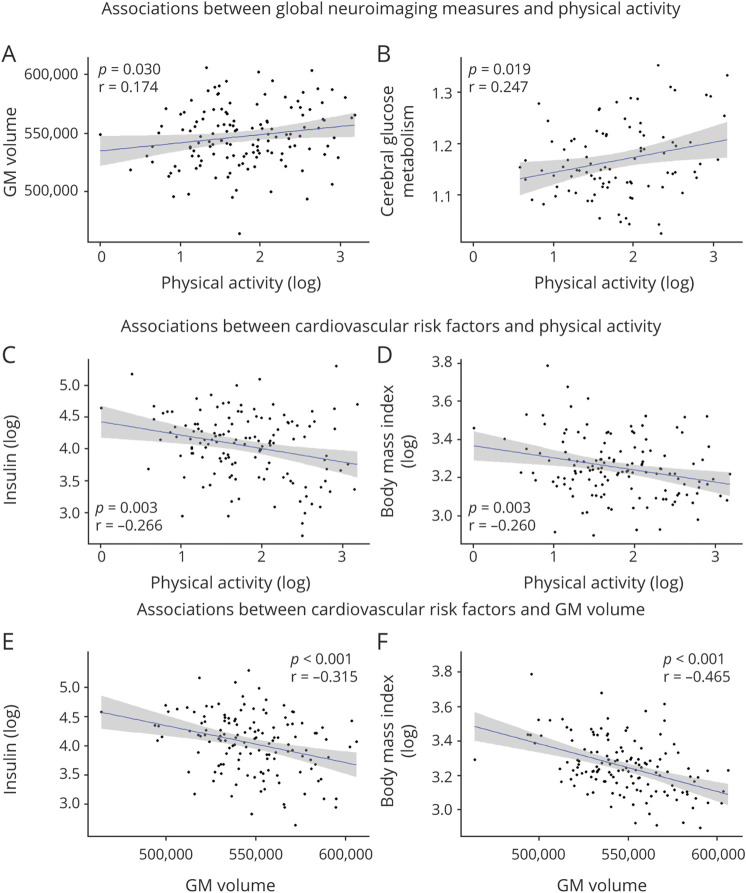
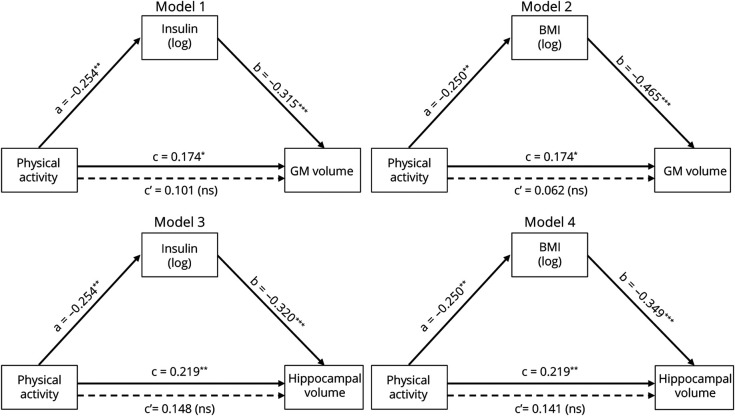
BACKGROUND AND OBJECTIVES: Physical activity has been associated with a decreased risk for dementia, but the mechanisms underlying this association remain to be determined. Our objective was to assess whether cardiovascular risk factors mediate the association between physical activity and brain integrity markers in older adults. METHODS: At baseline, participants from the Age-Well study completed a physical activity questionnaire and underwent cardiovascular risk factors collection (systolic blood pressure, body mass index [BMI], current smoker status, and high-density lipoprotein cholesterol, total cholesterol, and insulin levels) and multimodal neuroimaging (structural MRI, diffusion MRI, FDG-PET, and florbetapir PET). Multiple regressions were conducted to assess the association among physical activity, cardiovascular risk factors, and neuroimaging. Mediation analyses were performed to test whether cardiovascular risk factors mediated the associations between physical activity and neuroimaging. RESULTS: = 0.019) but not with amyloid deposition or white matter integrity. Higher physical activity was associated with lower insulin level and BMI but not with the other cardiovascular risk factors. Lower insulin level and BMI were related to higher GM volume but not to cerebral glucose metabolism. When controlling for insulin level and BMI, the association between physical activity and cerebral glucose metabolism remained unchanged, while the association with GM volume was lost. When insulin level and BMI were entered in the same model, only BMI remained a significant predictor of GM volume. Mediation analyses confirmed that insulin level and BMI mediated the association between physical activity and GM volume. Analyses were replicated within Alzheimer disease-sensitive regions and results remained overall similar. DISCUSSION: The association between physical activity and GM volume is mediated by changes in insulin level and BMI. In contrast, the association with cerebral glucose metabolism seems to be independent from cardiovascular risk factors. Older adults engaging in physical activity experience cardiovascular benefits through the maintenance of a lower BMI and insulin level, resulting in greater structural brain integrity. This study has implications for understanding how physical activity affects brain health and may help in developing strategies to prevent or delay age-related decline. TRIAL REGISTRATION INFORMATION: EudraCT: 2016-002,441-36; IDRCB: 2016-A01767-44; ClinicalTrials.gov Identifier: NCT02977819.
Overview
The claims and statistics of this paper haven’t been checked yet.
Free: it reads the open-access text and checks the first 5 claims that cite a source we can check. Create a free account to check every claim.
Integrity signals
Registry
Cites
Statistics
Figures
Verification
Claims the paper makes
The claims and statistics of this paper haven’t been checked yet.
Free: it reads the open-access text and checks the first 5 claims that cite a source we can check. Create a free account to check every claim.
Claims other papers make about this one
Each is checked against this paper’s own text: does it say what the citing paper says it does?
The cited source says what the claim attributes to it.
In the citing paper
“In contrast, physical activity appears to decrease risk. [119][120]0][121][122][123][124][125][126][127][128]”
From 2023 Alzheimer's disease facts and figures (2023) · cites this paper as [127]
Experimental — accuracy not yet measured
Self-check
Percentages, sums and reported differences re-computed from the paper’s own numbers.
The self-check needs the paper’s full text.
Citations
Cites
The projected effect of risk factor reduction on Alzheimer's disease prevalence
Barnes, D. E., & Yaffe, K. (2011) · The Lancet Neurology · doi:10.1016/s1474-4422(11)70072-2 · Cited by 2,666
Exercise builds brain health: key roles of growth factor cascades and inflammation
Cotman, C. W., Berchtold, N. C., & Christie, L.-A. (2007) · Trends in Neurosciences · doi:10.1016/j.tins.2007.06.011 · Cited by 2,268 · cited 2×
“The increased nutrient and energy demands of these neural processes are met with increased expression of enzymes implicated in glucose use and metabolism.(13) Alternatively, benefits of physical activity on cerebral glucose metabolism could be mediated by other factors not measured here.”
BackgroundBrain insulin resistance in type 2 diabetes and Alzheimer disease: concepts and conundrums
Arnold, S. E., Arvanitakis, Z., Macauley-Rambach, S. L., Koenig, A. M., Wang, H.-Y., Ahima, R. S., Craft, S., Gandy, S., Buettner, C., Stoeckel, L. E., et al. (2018) · Nature Reviews Neurology · doi:10.1038/nrneurol.2017.185 · Cited by 1,597 · cited 4×
“Obesity and insulin level dysfunction may develop with aging(33) and are risk factors for brain atrophy, cognitive impairment, and dementia, including AD.(31,34) Obesity is the most common cause of insulin resistance(33,35) and they are both sources of inflammation and oxidative stress(36) that negatively affect brain…”
BackgroundResultInfluentialAlzheimer’s disease is type 3 diabetes—Evidence reviewed
de la Monte, S. M., & Wands, J. R. (2008) · Journal of Diabetes Science and Technology · doi:10.1177/193229680800200619 · Cited by 1,158
Midlife and Late-Life Obesity and the Risk of Dementia: Cardiovascular Health Study
Fitzpatrick, A. L., Kuller, L. H., Lopez, O. L., Diehr, P., O’Meara, E. S., Longstreth, W. T., & Luchsinger, J. A. (2009) · Archives of Neurology · doi:10.1001/archneurol.2008.582 · Cited by 796 · cited 1×
“However, controversy exists in the literature; BMI might not be a sensitive index at older ages as it could be protective.(50) BMI is nonetheless considered a valuable measure that is widely used, allowing for better comparison with previous studies.”
ResultMidlife vascular risk factor exposure accelerates structural brain aging and cognitive decline
Debette, S., Seshadri, S., Beiser, A., Au, R., Himali, J. J., Palumbo, C., Wolf, P. A., & DeCarli, C. (2011) · Neurology · doi:10.1212/wnl.0b013e318227b227 · Cited by 772
Kriska, A. M., Knowler, W. C., LaPorte, R. E., Drash, A. L., Wing, R. R., Blair, S. N., Bennett, P. H., & Kuller, L. H. (1990) · Diabetes Care · doi:10.2337/diacare.13.4.401 · Cited by 755 · cited 1×
“Even though imprecision in the measure is likely to occur, validity and reliability of the questionnaire have been previously established.(24) In addition, as participants are cognitively unimpaired, it seems unlikely that major recollection issues affected the questionnaire.”
BackgroundRaji, C. A., Ho, A. J., Parikshak, N. N., Becker, J. T., Lopez, O. L., Kuller, L. H., Hua, X., Leow, A. D., Toga, A. W., & Thompson, P. M. (2010) · Human Brain Mapping · doi:10.1002/hbm.20870 · Cited by 686
Estimation of tensors and tensor‐derived measures in diffusional kurtosis imaging
Tabesh, A., Jensen, J. H., Ardekani, B. A., & Helpern, J. A. (2011) · Magnetic Resonance in Medicine · doi:10.1002/mrm.22655 · Cited by 460
Willette, A. A., Bendlin, B. B., Starks, E. J., Birdsill, A. C., Johnson, S. C., Christian, B. T., Okonkwo, O. C., La Rue, A., Hermann, B. P., Koscik, R. L., et al. (2015) · JAMA Neurology · doi:10.1001/jamaneurol.2015.0613 · Cited by 418
Associations between vascular risk factors and brain MRI indices in UK Biobank
Cox, S. R., Lyall, D. M., Ritchie, S. J., Bastin, M. E., Harris, M. A., Buchanan, C. R., Fawns-Ritchie, C., Barbu, M. C., de Nooij, L., Reus, L. M., et al. (2019) · European Heart Journal · doi:10.1093/eurheartj/ehz100 · Cited by 327
Brain Changes Underlying Cognitive Dysfunction in Diabetes: What Can We Learn From MRI?
Biessels, G. J., & Reijmer, Y. D. (2014) · Diabetes · doi:10.2337/db14-0348 · Cited by 295
Sedentary Behavior, Physical Activity, and Markers of Health in Older Adults
GENNUSO, K. P., GANGNON, R. E., MATTHEWS, C. E., THRAEN-BOROWSKI, K. M., & COLBERT, L. H. (2013) · Medicine & Science in Sports & Exercise · doi:10.1249/mss.0b013e318288a1e5 · Cited by 292
Physical activity and brain plasticity in late adulthood
Erickson, K. I., Gildengers, A. G., & Butters, M. A. (2013) · Dialogues in Clinical Neuroscience · doi:10.31887/dcns.2013.15.1/kerickson · Cited by 284
Insulin Resistance with Aging: Effects of Diet and Exercise
Ryan, A. S. (2000) · Sports Medicine · doi:10.2165/00007256-200030050-00002 · Cited by 282
Physical activity in obesity and metabolic syndrome
Strasser, B. (2013) · Annals of the New York Academy of Sciences · doi:10.1111/j.1749-6632.2012.06785.x · Cited by 279
Sexton, C. E., Betts, J. F., Demnitz, N., Dawes, H., Ebmeier, K. P., & Johansen-Berg, H. (2016) · NeuroImage · doi:10.1016/j.neuroimage.2015.09.071 · Cited by 254
Brown, B. M., Peiffer, J. J., Taddei, K., Lui, J. K., Laws, S. M., Gupta, V. B., Taddei, T., Ward, V. K., Rodrigues, M. A., Burnham, S., et al. (2013) · Molecular Psychiatry · doi:10.1038/mp.2012.107 · Cited by 235
Age‐related non‐Gaussian diffusion patterns in the prefrontal brain
Falangola, M. F., Jensen, J. H., Babb, J. S., Hu, C., Castellanos, F. X., Di Martino, A., Ferris, S. H., & Helpern, J. A. (2008) · Journal of Magnetic Resonance Imaging · doi:10.1002/jmri.21604 · Cited by 227
Physical activity attenuates age-related biomarker alterations in preclinical AD
Okonkwo, O. C., Schultz, S. A., Oh, J. M., Larson, J., Edwards, D., Cook, D., Koscik, R., Gallagher, C. L., Dowling, N. M., Carlsson, C. M., et al. (2014) · Neurology · doi:10.1212/wnl.0000000000000964 · Cited by 226
Physical activity and brain plasticity in late adulthood.
Erickson, K. I., Gildengers, A. G., & Butters, M. A. (2013) · PubMed · Cited by 197
Effect of lifestyle activities on alzheimer disease biomarkers and cognition
Vemuri, P., Lesnick, T. G., Przybelski, S. A., Knopman, D. S., Roberts, R. O., Lowe, V. J., Kantarci, K., Senjem, M. L., Gunter, J. L., Boeve, B. F., et al. (2012) · Annals of Neurology · doi:10.1002/ana.23665 · Cited by 193
Sripetchwandee, J., Chattipakorn, N., & Chattipakorn, S. C. (2018) · Frontiers in Endocrinology · doi:10.3389/fendo.2018.00496 · Cited by 190
Self-administered questionnaire compared with interview to assess past-year physical activity
VUILLEMIN, A., OPPERT, J.-M., GUILLEMIN, F., ESSERMEANT, L., FONTVIEILLE, A.-M., GALAN, P., KRISKA, A. M., & HERCBERG, S. (2000) · Medicine & Science in Sports & Exercise · doi:10.1097/00005768-200006000-00013 · Cited by 182
Effects of physical activity on brain function and structure in older adults: A systematic review
Domingos, C., Pêgo, J. M., & Santos, N. C. (2020) · Behavioural Brain Research · doi:10.1016/j.bbr.2020.113061 · Cited by 179
Herrod, P., Doleman, B., Blackwell, J., O’Boyle, F., Williams, J. P., Lund, J. N., & Phillips, B. E. (2018) · Journal of the American Society of Hypertension · doi:10.1016/j.jash.2018.01.008 · Cited by 145
The effects of physical activity, education, and body mass index on the aging brain
Ho, A. J., Raji, C. A., Becker, J. T., Lopez, O. L., Kuller, L. H., Hua, X., Dinov, I. D., Stein, J. L., Rosano, C., Toga, A. W., et al. (2011) · Human Brain Mapping · doi:10.1002/hbm.21113 · Cited by 142
Besson, F. L., La Joie, R., Doeuvre, L., Gaubert, M., Mezenge, F., Egret, S., Landeau, B., Barre, L., Abbas, A., Ibazizene, M., et al. (2015) · Journal of Neuroscience · doi:10.1523/jneurosci.0150-15.2015 · Cited by 141
Self-citationWhite matter hyperintensities across the adult lifespan: Relation to age, Aβ load, and cognition
Garnier-Crussard, A., Bougacha, S., Wirth, M., André, C., Delarue, M., Landeau, B., Mézenge, F., Kuhn, E., Gonneaud, J., Chocat, A., et al. (2020) · Alzheimer's Research & Therapy · doi:10.1186/s13195-020-00669-4 · Cited by 130 · cited 2×
“For FLAIR data, the total volume of WMH was extracted, as fully described elsewhere.(20)”
MethodSelf-citationBoots, E. A., Schultz, S. A., Oh, J. M., Larson, J., Edwards, D. F., Cook, D. B., Koscik, R. L., Dowling, N. M., Gallagher, C. L., Carlsson, C. M., et al. (2014) · Brain Imaging and Behavior · doi:10.1007/s11682-014-9325-9 · Cited by 123
Exercise Improves Vascular Function, but does this Translate to the Brain?
Barnes, J. N., & Corkery, A. T. (2018) · Brain Plasticity · doi:10.3233/bpl-180075 · Cited by 112
Chen, F., Hopman, R. J., Huang, C., Chu, C., Hillman, C. H., Hung, T., & Chang, Y. (2020) · Journal of Clinical Medicine · doi:10.3390/jcm9040914 · Cited by 111
Walhovd, K., Storsve, A. B., Westlye, L., Drevon, C., & Fjell, A. (2014) · Neurobiology of Aging · doi:10.1016/j.neurobiolaging.2013.11.011 · Cited by 108
Poisnel, G., Arenaza‐Urquijo, E., Collette, F., Klimecki, O. M., Marchant, N. L., Wirth, M., de La Sayette, V., Rauchs, G., Salmon, E., Vuilleumier, P., et al. (2018) · Alzheimer's & Dementia: Translational Research & Clinical Interventions · doi:10.1016/j.trci.2018.10.011 · Cited by 103
Self-citationAssociation of objectively measured physical activity with brain structure: UK Biobank study
Hamer, M., Sharma, N., & Batty, G. D. (2018) · Journal of Internal Medicine · doi:10.1111/joim.12772 · Cited by 102
Corlier, F., Hafzalla, G., Faskowitz, J., Kuller, L. H., Becker, J. T., Lopez, O. L., Thompson, P. M., & Braskie, M. N. (2018) · NeuroImage · doi:10.1016/j.neuroimage.2017.12.027 · Cited by 94
Distinct effects of late adulthood cognitive and physical activities on gray matter volume
Arenaza‐Urquijo, E. M., de Florès, R., Gonneaud, J., Wirth, M., Ourry, V., Callewaert, W., Landeau, B., Egret, S., Mézenge, F., Desgranges, B., et al. (2016) · Brain Imaging and Behavior · doi:10.1007/s11682-016-9617-3 · Cited by 77
Self-citationMatthews, D. C., Davies, M., Murray, J., Williams, S., Tsui, W. H., Li, Y., Andrews, R. D., Lukic, A., McHugh, P., Vallabhajosula, S., et al. (2014) · Advances in Molecular Imaging · doi:10.4236/ami.2014.44006 · Cited by 70
Effects of Insulin on Local Cerebral Glucose Utilization in the Rat
Lucignani, G., Namba, H., Nehlig, A., Porrino, L. J., Kennedy, C., & Sokoloff, L. (1987) · Journal of Cerebral Blood Flow & Metabolism · doi:10.1038/jcbfm.1987.68 · Cited by 56
Neth, B. J., Graff‐Radford, J., Mielke, M. M., Przybelski, S. A., Lesnick, T. G., Schwarz, C. G., Reid, R. I., Senjem, M. L., Lowe, V. J., Machulda, M. M., et al. (2020) · Frontiers in Aging Neuroscience · doi:10.3389/fnagi.2019.00355 · Cited by 49
Dougherty, R. J., Schultz, S. A., Kirby, T. K., Boots, E. A., Oh, J. M., Edwards, D., Gallagher, C. L., Carlsson, C. M., Bendlin, B. B., Asthana, S., et al. (2017) · Journal of Alzheimer’s Disease · doi:10.3233/jad-161067 · Cited by 48
Raichlen, D. A., Klimentidis, Y. C., Bharadwaj, P. K., & Alexander, G. E. (2020) · Brain Imaging and Behavior · doi:10.1007/s11682-019-00148-x · Cited by 46
Can active life mitigate the impact of diabetes on dementia and brain aging?
Marseglia, A., Darin‐Mattsson, A., Kalpouzos, G., Grande, G., Fratiglioni, L., Dekhtyar, S., & Xu, W. (2020) · Alzheimer s & Dementia · doi:10.1002/alz.12142 · Cited by 40
How Does Obesity and Physical Activity Affect Aging?: Focused on Telomere as a Biomarker of Aging
Shin, Y.-A. (2019) · Journal of Obesity & Metabolic Syndrome · doi:10.7570/jomes.2019.28.2.92 · Cited by 36
Smoking Predicting Physical Activity in an Aging America
Swan, J. H., Brooks, J., Amini, R., Moore, A. R., & Turner, K. (2017) · The journal of nutrition health & aging · doi:10.1007/s12603-017-0967-3 · Cited by 31
Ishibashi, K., Onishi, A., Fujiwara, Y., Ishiwata, K., & Ishii, K. (2017) · PLoS ONE · doi:10.1371/journal.pone.0181400 · Cited by 27
Pegueroles, J., Pané, A., Vilaplana, E., Montal, V., Bejanin, A., Videla, L., Carmona‐Iragui, M., Barroeta, I., Ibarzábal, A., Casajoana, A., et al. (2020) · Alzheimer s & Dementia Diagnosis Assessment & Disease Monitoring · doi:10.1002/dad2.12052 · Cited by 25
Fitness, insulin sensitivity, and frontal lobe integrity in adults with overweight and obesity
Castro, M. G., Venutolo, C., Yau, P. L., & Convit, A. J. (2016) · Obesity · doi:10.1002/oby.21500 · Cited by 21
Byun, M. S., Kim, H. J., Yi, D., Choi, H. J., Baek, H., Lee, J. H., Choe, Y. M., Lee, S. H., Ko, K., Sohn, B. K., et al. (2019) · NeuroImage Clinical · doi:10.1016/j.nicl.2019.101765 · Cited by 16
Research works printed but not linked: 2
- Schmidt P. Bayesian Inference for Structured Additive Regression Models for Large-Scale Problems with Applications to Medical Imaging [Online]. 2017. Accessed December 27, 2018. edoc.ub.uni-muenchen.de/20373/
- Castro MG, Venutolo C, Yau PL, Convit A. Fitness, insulin level sensitivity, and frontal lobe integrity in adults with overweight and obesity. Obesity. 2016; 24(6): 1283- 1289. 27123868 PMC4882260 · DOI
Cited by
2023 Alzheimer's disease facts and figures
(2023) · Alzheimer's & Dementia · doi:10.1002/alz.13016 · Cited by 3,212
2024 Alzheimer's disease facts and figures
(2024) · Alzheimer's & Dementia · doi:10.1002/alz.13809 · Cited by 2,536
2025 Alzheimer's disease facts and figures
(2025) · Alzheimer's & Dementia · doi:10.1002/alz.70235 · Cited by 474
Slee, M. G., Scotney, J., Rainey‐Smith, S. R., Erickson, K. I., Sohrabi, H. R., Verdile, G., & Brown, B. M. (2025) · Ageing Research Reviews · doi:10.1016/j.arr.2025.102956 · Cited by 186
Exercise-related physical activity relates to brain volumes in 10,125 individuals
Raji, C. A., Meysami, S., Hashemi, S., Garg, S., Akbari, N., Ahmed, G., Chodakiewitz, Y. G., Nguyen, T. D., Niotis, K., Merrill, D. A., et al. (2024) · Journal of Alzheimer's Disease · doi:10.3233/jad-230740 · Cited by 48
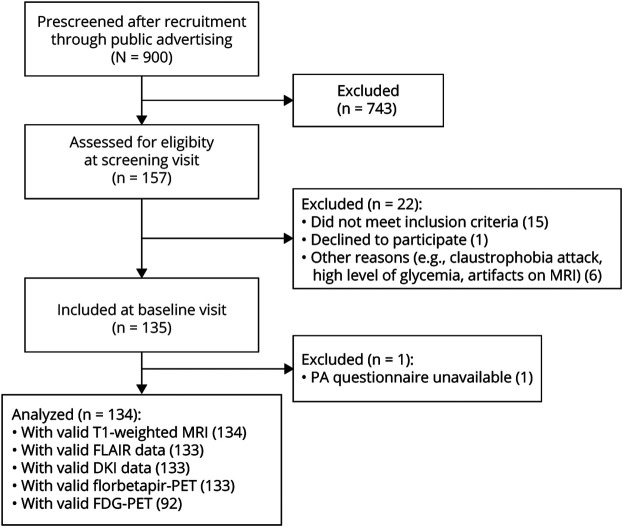
“Higher self-reported physical activity in 134 cognitively unimpaired older adults 65 years or older related to larger gray matter volume, improved cerebral glucose metabolism but not with amyloid deposition [33].”
Metadata
- Authors
- Felisatti, F., Gonneaud, J., Palix, C., Garnier-Crussard, A., Mézenge, F., Landeau, B., Chocat, A., Quillard, A., Ferrand-Devouge, E., de La Sayette, V., Vivien, D., Chételat, G., Poisnel, G., & on behalf of the Medit-Ageing Research Group
- Affiliations
- Inserm (FR)
- From PhIND, “Physiopathology and Imaging of Neurological Disorders” (F.F., J.G., C.P., A.G.-C., F.M., B.L., A.C., A.Q., E.F.-D., D.V., G.C., G.P.), Institut Blood and Brain at Caen-Normandie, Normandie Univ, UNICAEN, INSERM, U1237, Cyceron, Caen; Clinical and Research Memory Center of Lyon (A.G.-C.), Lyon Institute For Elderly, Charpennes Hospital, Hospices Civils de Lyon; Claude Bernard University Lyon 1 (A.G.-C.); Department of General Practice (E.F.-D.), Normandie Univ, UNIROUEN, Rouen; Rouen...
- ORCID
- Venue
- Neurology
- Published
- 2022-05-17
- Volume
- 98
- Issue
- 20
- Pages
- e2023-e2035
- ISSN
- 0028-3878 (ISSN-L)
- 1526-632X
- PMC
- PMC9162049
- OpenAlex
- W4223956980
- Cited by
- 26
- References
- 48
- Citations by year
- 2026: 1 · 2025: 10 · 2024: 5 · 2023: 6 · 2022: 4
- FWCI
- 4.07
- Type
- journal article
- Language
- en
- Open access
- hybrid
- doi.org
- Licence
- cc-by-nc-nd
- Locations
- Neurology (publishedVersion, cc-by-nc-nd)
- PubMed Central (publishedVersion, cc-by-nc-nd)
- PubMed (publishedVersion)
- HAL (submittedVersion, other-oa)
- Funders
- Institut National de la Santé et de la Recherche Médicale
- Inserm Transfert
- Topics
- Health Sciences › Medicine › Psychiatry and Mental health › Dementia and Cognitive Impairment Research
- Health Sciences › Medicine › Public Health, Environmental and Occupational Health › Physical Activity and Health
- Health Sciences › Medicine › Public Health, Environmental and Occupational Health › Nutritional Studies and Diet
- Keywords
- physical activity, cardiovascular risk factors, brain integrity, older adults, gray matter volume, brain glucose metabolism, insulin, body mass index, mediation analysis, Alzheimer's disease, amyloid deposition, white matter integrity, dementia prevention
- MeSH terms
- Heart Disease Risk Factors, Aged, Brain, Cardiovascular Diseases, Cholesterol, Glucose, Humans, Magnetic Resonance Imaging, Risk Factors, Biomarkers, Exercise, Insulins
About these checks
Registry, retraction, Cites and statistics results are computed, not judged, with one exception: a printed reference that no index lists is read once by a model before it counts as a citation error. Claims are extracted by a model and kept only when their quote appears verbatim in the text; each cited source is then checked, with a model’s help, for whether it says what the claim relies on. Those verdicts can be wrong — read the claim’s quote and the cited source before relying on one.
Statistics and arithmetic are recomputed, not judged.
Confidence bands are shown only for fields calibrated on our annotated test set. None is calibrated yet, so no band is shown.
What counts as a claim ›How we measure confidence ›How we check this ›
Are you an author, or do you see a problem with this page? Request a review
Data sources
Bibliographic data: Semantic Scholar, OpenAlex, Crossref.
Contains information from the Semantic Scholar Academic Graph Datasets, made available under the ODC Attribution License (ODC-BY 1.0).
Semantic Scholar’s data is described in: Kinney, R., et al. (2023). The Semantic Scholar Open Data Platform. arXiv:2301.10140.
