

Cardiorespiratory Reference Data in Older Adults: The Generation 100 Study
Open accessThe DOI matches its Crossref record; 43 of the 45 references it cites were found in a registry or an index.
Abstract
PURPOSE: Cardiorespiratory fitness (CRF) is regarded a clinical vital sign, and accurate reference values for all age groups are essential. Little data exist on CRF and cardiorespiratory function in older adults. The aim of this study was to provide normative values for CRF and cardiorespiratory function in older adults, including people with history of cardiovascular diseases (CVD). METHODS: In total, 1537 (769 women) participants age 70 to 77 yr underwent clinical examinations and cardiopulmonary exercise tests. Peak oxygen uptake (V˙O2peak), ventilation (V˙Epeak), expiration of carbon dioxide (VV˙CO2peak), breathing frequency (BFpeak), tidal volume (VTpeak), oxygen pulse (O2 pulsepeak), ventilatory efficiency (EqV˙O2peak and EqV˙CO2peak), and 1-min HR recovery were assessed. RESULTS: Men compared with women had higher V˙O2peak (31.3 ± 6.7 vs 26.2 ± 5.0 mL·min·kg), BFpeak (41.8 ± 8.0 vs 39.7 ± 7.1 breaths per minute), VTpeak (2.3 ± 0.5 vs 1.6 ± 0.3), O2 pulsepeak (16.4 ± 3.2 vs 11.3 ± 2.0), V˙CO2peak (2.9 ± 0.2 and 1.9 ± 0.1 L·min), V˙Epeak (96.2 ± 21.7 vs 61.1 ± 21.6 L·min), EqV˙O2peak (38.0 ± 6.9 vs 35.1 ± 5.6), and EqV˙CO2peak (33.5 ± 5.7 vs 31.9 ± 4.5). Women and men with CVD had lower V˙O2peak (14% and 19%), peak HR (5% and 6%), V˙Epeak (8% and 10%), VTpeak (7% and 4%), and lower EqV˙CO2peak (4% and 6%) compared with their healthy counterparts, respectively. Compared with healthy women and men, 1-min HR recovery was 12% and 16% lower for women and men with CVD. CONCLUSIONS: This study represents the largest reference material on directly measured CRF and cardiorespiratory function in older men and women, with and without CVD. This novel information will help researchers and clinicians to interpret data form cardiopulmonary testing in older adults.
Overview
The claims and statistics of this paper haven’t been checked yet.
Free: it reads the open-access text and checks the first 5 claims that cite a source we can check. Create a free account to check every claim.
Integrity signals
Registry
Cites
Statistics
Figures
Verification
Claims the paper makes
The claims and statistics of this paper haven’t been checked yet.
Free: it reads the open-access text and checks the first 5 claims that cite a source we can check. Create a free account to check every claim.
Self-check
Percentages, sums and reported differences re-computed from the paper’s own numbers.
The self-check needs the paper’s full text.
Citations
Cites
Psychophysical bases of perceived exertion
BORG, G. A. V. (1982) · Medicine & Science in Sports & Exercise · doi:10.1249/00005768-198205000-00012 · Cited by 16,580 · cited 2×
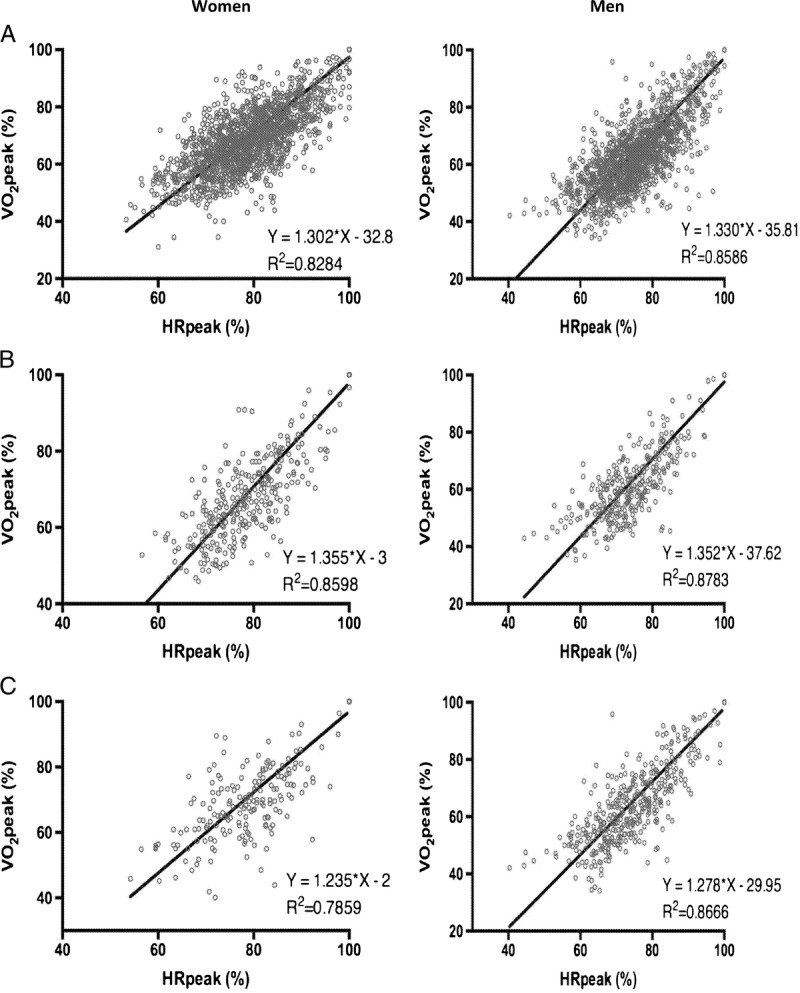
“Both men and women in our study worked at a significantly higher %V̇O2peak and %HRpeak compared with what has been reported previously (1,7).”
BackgroundResultMiller, M. R., Hankinson, J., Brusasco, V., Burgos, F., Casaburi, R., Coates, A., Crapo, R., Enright, P., van der Grinten, C. P. M., Gustafsson, P., et al. (2005) · European Respiratory Journal · doi:10.1183/09031936.05.00034805 · Cited by 15,627 · cited 1×
“San Diego, CA) in accordance with the American Thoracic Society/European Respiratory Society criteria (27,29), as”
Garber, C. E., Blissmer, B., Deschenes, M. R., Franklin, B. A., Lamonte, M. J., Lee, I.-M., Nieman, D. C., & Swain, D. P. (2011) · Medicine & Science in Sports & Exercise · doi:10.1249/mss.0b013e318213fefb · Cited by 9,319 · cited 6×
“The differences are pronounced at lower intensities, where an exercise intensity at 57 to 64 of %HRpeak in our study corresponds to a higher %V̇O2peak compared with American College of Sports Medicine guidelines (13).”
MethodResultInfluentialHeart Disease and Stroke Statistics—2015 Update: A Report From the American Heart Association
Mozaffarian, D., Benjamin, E. J., Go, A. S., Arnett, D. K., Blaha, M. J., Cushman, M., de Ferranti, S., Després, J.-P., Fullerton, H. J., Howard, V. J., et al. (2015) · Circulation · doi:10.1161/cir.0000000000000152 · Cited by 5,797 · cited 1×
“Further, individuals with CVD are typically excluded in studies aiming to present normative values for CRF (2,11), despite CVD being highly prevalent in older adults (30).”
BackgroundExercise capacity and mortality among men referred for exercise testing
Myers, J., Prakash, M., Froelicher, V., Do, D., Partington, S., & Atwood, J. E. (2002) · New England Journal of Medicine · doi:10.1056/nejmoa011858 · Cited by 4,114 · cited 1×
“peak oxygen uptake (V̇O2peak) during cardiopulmonary exercise testing (CPET), has been shown to be the single best predictor for future cardiovascular disease (CVD) and mortality (21,24,31,42), it is often ignored in health risk assessment (20).”
BackgroundA new method for detecting anaerobic threshold by gas exchange
Beaver, W. L., Wasserman, K., & Whipp, B. J. (1986) · Journal of Applied Physiology · doi:10.1152/jappl.1986.60.6.2020 · Cited by 4,103 · cited 1×
“The V-slope method (5) was used to establish ventilatory anaerobic threshold (VAT) and respiratory compensation point (RCP), and V̇O2, EqV̇O2, V̇CO2, EqV̇CO2, V̇E, BF, and RER were reported at VAT and RCP.”
MethodPollock, M. L., Gaesser, G. A., Butcher, J. D., Despr??s, J.-P., Dishman, R. K., Franklin, B. A., & Garber, C. E. (1998) · Medicine & Science in Sports & Exercise · doi:10.1097/00005768-199806000-00032 · Cited by 3,051
Ross, R., Blair, S. N., Arena, R., Church, T. S., Després, J.-P., Franklin, B. A., Haskell, W. L., Kaminsky, L. A., Levine, B. D., Lavie, C. J., et al. (2016) · Circulation · doi:10.1161/cir.0000000000000461 · Cited by 2,486 · cited 1×
“Both the FRIEND registry committee and the AHA 2017 statement (35) highlights that being able to compare an individual_s CRF to their peers is critical for optimal risk assessment, and will provide important information for physical activity guidelines (19,20).”
BackgroundSelf-citationStandardisation of the single-breath determination of carbon monoxide uptake in the lung
MacIntyre, N., Crapo, R. O., Viegi, G., Johnson, D. C., van der Grinten, C. P. M., Brusasco, V., Burgos, F., Casaburi, R., Coates, A., Enright, P., et al. (2005) · European Respiratory Journal · doi:10.1183/09031936.05.00034905 · Cited by 2,255
Wisløff, U., Støylen, A., Loennechen, J. P., Bruvold, M., Rognmo, Ø., Haram, P. M., Tjønna, A. E., Helgerud, J., Slørdahl, S. A., Lee, S. J., et al. (2007) · Circulation · doi:10.1161/circulationaha.106.675041 · Cited by 1,996 · cited 1×
“Interestingly, O2 pulse in men with CVD in our study was relatively high compared to previously reported in people with heart failure (43) and coronary heart disease (23), again indicating that our CVD patients were somewhat healthier than in previous studies.”
ResultSelf-citation
Cited by
Stensvold, D., Viken, H., Steinshamn, S. L., Dalen, H., Støylen, A., Loennechen, J. P., Reitlo, L. S., Zisko, N., Bækkerud, F. H., Tari, A. R., et al. (2020) · BMJ · doi:10.1136/bmj.m3485 · Cited by 154
Self-citationTakken, T., Mylius, C., Paap, D., Broeders, W. H. M., Hulzebos, E. H. J., van Brussel, M., & Bongers, B. C. (2019) · Expert Review of Cardiovascular Therapy · doi:10.1080/14779072.2019.1627874 · Cited by 107
“Two studies were performed in children [29,35] and two in adults [39,41].”
BackgroundDo weather changes influence physical activity level among older adults? – The Generation 100 study
Aspvik, N. P., Viken, H., Ingebrigtsen, J. E., Zisko, N., Mehus, I., Wisløff, U., & Stensvold, D. (2018) · PLoS ONE · doi:10.1371/journal.pone.0199463 · Cited by 91
Self-citationWindsor, M., Bailey, T. G., Perissiou, M., Meital, L. T., Golledge, J., Russell, F. D., & Askew, C. D. (2018) · Frontiers in Physiology · doi:10.3389/fphys.2018.00203 · Cited by 78
“The current study is the first to compare acute cytokine responses to exercise in participants with above average (37.4 ± 5.9mL.kg−1.min−1) and below average (22.6± 2.8mL.kg−1.min−1) cardiorespiratory fitness levels, relative to age-specific normative data (Stensvold et al., 2017).”
BackgroundInfluentialReitlo, L. S., Sandbakk, S. B., Viken, H., Aspvik, N. P., Ingebrigtsen, J. E., Tan, X., Wisløff, U., & Stensvold, D. (2018) · BMC Geriatrics · doi:10.1186/s12877-018-0900-6 · Cited by 71
Self-citationFan, Q., & Jia, J. (2020) · Stroke · doi:10.1161/strokeaha.119.027345 · Cited by 57
Prescott, E., Mikkelsen, N., Holdgaard, A., Eser, P., Marcin, T., Wilhelm, M., Peña, C., González‐Juanatey, J. R., Moatemri, F., Iliou, M. C., et al. (2019) · European Journal of Preventive Cardiology · doi:10.1177/2047487319839819 · Cited by 49
Zotcheva, E., Håberg, A. K., Wisløff, U., Salvesen, Ø., Selbæk, G., Stensvold, D., & Ernstsen, L. (2022) · Sports Medicine · doi:10.1007/s40279-021-01608-5 · Cited by 43
“Peak oxygen uptake (mL/kg/min) was measured using ergospirometry, details described elsewhere [33].”
MethodSelf-citationPredictors of Dropout in Exercise Trials in Older Adults: The Generation 100 Study
Viken, H., Reitlo, L. S., Zisko, N., Nauman, J., Aspvik, N. P., Ingebrigtsen, J. E., Wisløff, U., & Stensvold, D. (2018) · Medicine & Science in Sports & Exercise · doi:10.1249/mss.0000000000001742 · Cited by 49
Self-citationExternal validation of VO2max prediction models based on recreational and elite endurance athletes
Wiecha, S., Kasiak, P. S., Cieśliński, I., Takken, T., Pałka, T., Knechtle, B., Nikolaidis, P. Τ., Małek, Ł. A., Postula, M. A., Mamcarz, A., et al. (2023) · PLoS ONE · doi:10.1371/journal.pone.0280897 · Cited by 48
“Males typically have higher VO2max than females [14], and VO2max values decrease with age [15].”
BackgroundLetnes, J. M., Berglund, I., Johnson, K. E., Dalen, H., Nes, B. M., Lydersen, S., Viken, H., Hassel, E., Steinshamn, S., Vesterbekkmo, E. K., et al. (2021) · European Heart Journal · doi:10.1093/eurheartj/ehab721 · Cited by 42
“Further information on testing and calibration procedures has been described in detail previously.(23) The VO2peak was recorded as the average of the three highest consecutive measures over 30 s.”
MethodSelf-citationDifferential control of respiratory frequency and tidal volume during exercise
Nicolò, A., & Sacchetti, M. (2022) · European Journal of Applied Physiology · doi:10.1007/s00421-022-05077-0 · Cited by 54
“Indeed, the V̇CO2 peak is to a great extent lower in females compared to males and decreases substantially with age, while fR peak does not vary proportionally with V̇CO2 peak (Loe et al. 2014; Stensvold et al. 2017).”
BackgroundPrescott, E., Eser, P., Mikkelsen, N., Holdgaard, A., Marcin, T., Wilhelm, M., Peña, C., González‐Juanatey, J. R., Moatemri, F., Iliou, M. C., et al. (2020) · European Journal of Preventive Cardiology · doi:10.1177/2047487320903869 · Cited by 45
Sokołowski, D. R., Hansen, T. I., Rise, H. H., Reitlo, L. S., Wisløff, U., Stensvold, D., & Haberg, A. K. (2021) · Frontiers in Aging Neuroscience · doi:10.3389/fnagi.2021.742587 · Cited by 34
Self-citationValidity of the Maximal Heart Rate Prediction Models among Runners and Cyclists
Kasiak, P. S., Wiecha, S., Cieśliński, I., Takken, T., Łach, J., Lewandowski, M., Barylski, M., Mamcarz, A., & Śliż, D. (2023) · Journal of Clinical Medicine · doi:10.3390/jcm12082884 · Cited by 27
“Although those methods are not always accessible due to the limited availability of specialized diagnostic centers, high costs of fees, participant health restrictions, and limitations in locations of events [33].”
BackgroundThe association between cardio-respiratory fitness and incident depression: The Maastricht Study
Gianfredi, V., Koster, A., Eussen, S. J. P. M., Odone, A., Amerio, A., Signorelli, C., Stehouwer, C. D. A., Savelberg, H. H. C. M., Wesselius, A., Köhler, S., et al. (2020) · Journal of Affective Disorders · doi:10.1016/j.jad.2020.09.090 · Cited by 25
Ekkekakis, P., & Tiller, N. B. (2022) · Kinesiology Review · doi:10.1123/kr.2022-0003 · Cited by 22
Marcin, T., Eser, P., Prescott, E., Mikkelsen, N., Prins, L. F., Kolkman, E., Lado‐Baleato, Ó., Cardaso-Suaréz, C., Bruins, W., van der Velde, A. E., et al. (2019) · European Journal of Preventive Cardiology · doi:10.1177/2047487319894676 · Cited by 22
“There is a paucity of data on peak VO2 in the elderly, and particularly in the elderly with CAD or VHD. Existing reference populations have included relatively few subjects older than 65 years.33–35 The HUNT Fitness study included 1046 healthy elderly dwellers older than 60 years, but only 269 of them were older than…”
BackgroundInfluentialArild, A., Vangberg, T. R., Nikkels, H., Lydersen, S., Wisløff, U., Stensvold, D., & Haberg, A. K. (2022) · Aging · doi:10.18632/aging.203843 · Cited by 18
“Cardiorespiratory fitness was assessed as VO2 (mLꞏkg−1ꞏmin−1) obtained with graded maximal exercise testing on a treadmill or an ergometer bicycle [81].”
MethodSelf-citationBlood Volume, Hemoglobin Mass, and Peak Oxygen Uptake in Older Adults: The Generation 100 Study
Lundgren, K. M., Aspvik, N. P., Langlo, K. A. R., Braaten, T., Wisløff, U., Stensvold, D., & Karlsen, T. (2021) · Frontiers in Sports and Active Living · doi:10.3389/fspor.2021.638139 · Cited by 14
Self-citationModeling Physiological Predictors of Running Velocity for Endurance Athletes
Wiecha, S., Kasiak, P. S., Cieśliński, I., Maciejczyk, M., Mamcarz, A., & Śliż, D. (2022) · Journal of Clinical Medicine · doi:10.3390/jcm11226688 · Cited by 17
“Higher BMI [19] and increasing age [39] were associated with lower endurance performance.”
Survival of the fittest? Peak oxygen uptake and all-cause mortality among older adults in Norway
Tari, A. R., Brissach, D. E., Ingeström, E., Nauman, J., Tyrell, T., Foster, C., Radtke, K., Porcari, J. P., Lydersen, S., Kaminsky, L. A., et al. (2024) · Progress in Cardiovascular Diseases · doi:10.1016/j.pcad.2024.11.004 · Cited by 14
Self-citationHIIT at Home: Enhancing Cardiorespiratory Fitness in Older Adults—A Randomized Controlled Trial
Fosstveit, S. H., Berntsen, S., Feron, J., Joyce, K. E., Ivarsson, A., Segaert, K., Lucas, S. J. E., & Lohne‐Seiler, H. (2024) · Scandinavian Journal of Medicine and Science in Sports · doi:10.1111/sms.14694 · Cited by 16
“Nonetheless, the average baseline V̇O 2 peak for males and females was lower than Norwegian reference data for this age group [42], indicating accurate recruitment in terms of base-line fitness level.”
Establishing Reference Cardiorespiratory Fitness Parameters in Alzheimer’s Disease
Salisbury, D. L., & Yu, F. (2020) · Sports Medicine International Open · doi:10.1055/a-1089-4957 · Cited by 10
“Although this is one of the largest sample sizes to date reporting CRF parameters in persons with AD, longitudinal studies investigating CRF values in older populations without AD and across the lifespan have used substantially larger samples [28].”
BackgroundResultReitlo, L. S., Mihailovic, J. M., Stensvold, D., Wisløff, U., Hyder, F., & Haberg, A. K. (2023) · GeroScience · doi:10.1007/s11357-022-00719-9 · Cited by 10
Self-citationComprehensive cardiopulmonary profile of individuals with Down syndrome
Beck, V. D. Y., Wee, S. O., Lefferts, E. C., Hibner, B. A., Burton, L. C., Baynard, T., Fernhall, B., & Hilgenkamp, T. I. M. (2022) · Journal of Intellectual Disability Research · doi:10.1111/jir.12954 · Cited by 7
Sun, Z., Xu, Z., Yu, K., Sun, H., Lin, Y., Zhu, Z., Zhu, Y., & Zhang, J. (2024) · PLoS ONE · doi:10.1371/journal.pone.0301673 · Cited by 6
Johansen, K. R., Ranhoff, A. H., Sørensen, E., Nes, B. M., Sandbakk, S. B., Wilsgaard, T., Løchen, M., Thelle, D. S., Morseth, B., Myrstad, M., et al. (2023) · Scandinavian Journal of Medicine and Science in Sports · doi:10.1111/sms.14385 · Cited by 5
Hobbs, M., Moltchanova, E. V., Wicks, C. L., Pringle, A., Griffiths, C., Radley, D., & Zwolinsky, S. (2020) · Preventive Medicine · doi:10.1016/j.ypmed.2020.106334 · Cited by 5
“Although, unpleasant weather conditions (26) and an individual’s age (27) influence physical activity participation outdoors, less is known about how these determinants influence participation in physical activity undertaken indoors (20).”
BackgroundBaharavar, F., Vakili, J., Sari-Sarraf, V., & Pourmanaf, H. (2025) · Sport Sciences for Health · doi:10.1007/s11332-025-01330-z · Cited by 4
Carlsen, T., Stensvold, D., Wisløff, U., Ernstsen, L., & Halvorsen, T. (2022) · BMC Geriatrics · doi:10.1186/s12877-022-03262-6 · Cited by 4
“A description of the CPET protocol and equipment is previously described in detail [28].”
MethodSelf-citationVergara, M. B., Ozimica, J. O., Fernández, L. L., Osorio‐Fuentealba, C., Costagliola, V. G., & Sacomori, C. (2018) · Revista Internacional de Medicina y Ciencias de la Actividad Física y del Deporte · doi:10.15366/rimcafd2018.71.006 · Cited by 9
“503 establecidos, como educar a las personas sobres los beneficios de la actividad física dosificada y regular, en conjunto con un estilo de vida saludable, con el objetivo disminuir la edad fitness entre personas sedentarias (20).”
BackgroundStubbe, B., Ittermann, T., Kaczmarek, S., Obst, A., Bahls, M., Bollmann, T., Gläser, S., Völzke, H., Dörr, M., & Ewert, R. (2020) · ERJ Open Research · doi:10.1183/23120541.00350-2020 · Cited by 3
Ruíz-Montero, P. J., Ayala-MArtínez, G., Gómez-Pedroche, M. D., Teixeira, A. M., & Ruiz-Ruiz, A. (2023) · Revista Iberoamericana de Ciencias de la Actividad Física y el Deporte · doi:10.24310/riccafd.12.3.2023.17802 · Cited by 3
A Unified System Fitness Design: Concepts Of Holistic and Inclusive Fitness Framework
Nguyen, T. G., & Gomez, O. N. (2024) · Routledge eBooks · doi:10.4324/9781003502937 · Cited by 2
Myrstad, M., Johansen, K. R., Sørensen, E., & Ranhoff, A. H. (2023) · BMC Geriatrics · doi:10.1186/s12877-023-04099-3 · Cited by 1
Midttun, S., Lydersen, S., Kaminsky, L. A., Wisløff, U., & Stensvold, D. (2026) · Medicine & Science in Sports & Exercise · doi:10.1249/mss.0000000000004028 · Cited by 1
“The highly selected nature of the present study sample is also a reflected by the fact that participants showed baseline ˙VO 2peak values comparable to or even exceeding those in the Generation 100 reference data (30).”
Self-citationReference Data for a Treadmill-Based Peak Oxygen Uptake (VO2peak) in Older Adults
Šagát, P. (2025) · Biology · doi:10.3390/biology14020128 · Cited by 3
“Heart rate at rest (HR resting ) and at peak level (HR max ) were measured automatically with a Philips IntelliVue MP50 (Philips Medizin Systeme, Boeblingen, Germany) at the beginning and at the end of the testing procedure, as described in previous studies [27].”
InfluentialSolberg, A., Aspvik, N. P., Lydersen, S., Midttun, S., Reitlo, L. S., Steinshamn, S., Ingebrigtsen, J. E., Helbostad, J. L., Wisløff, U., & Stensvold, D. (2025) · Journal of Physical Activity and Health · doi:10.1123/jpah.2024-0767 · Cited by 1
Self-citationSvobodová, L., Sebera, M., Strašilová, K., Hlinský, T., Crhová, M., Martincová, A., Vajda, P., & Stračárová, N. (2020) · International Conference on Kinanthropology · doi:10.5817/cz.muni.p210-9631-2020-40 · Cited by 1
Mylius, C. (2024) · University of Groningen research database (University of Groningen / Centre for Information Technology) · doi:10.33612/diss.893591302
Influence of aging and perception tasks on EEG during step-up/down movement exercise
Kato, T., Hayasaka, T., Kawagoe, T., Muroga, S., & Yamashiro, S. M. (2024) · Gazzetta Medica Italiana Archivio per le Scienze Mediche · doi:10.23736/s0393-3660.23.05081-7
Midttun, S., Dalen, H., Lund, E., Vesterbekkmo, E. K., Aksetøy, I. A., Kaminsky, L. A., Coombes, J. S., Wisløff, U., & Stensvold, D. (2026) · European Journal of Preventive Cardiology · doi:10.1093/eurjpc/zwag450
Self-citationIndiana Jones and the V˙O2peak of Destiny: A cross-sectional analysis from the Generation 100 Study
Midttun, S., Helbostad, J. L., Berg, J., Stensvold, D., & Wisløff, U. (2026) · Sports Medicine and Health Science · doi:10.1016/j.smhs.2026.10.002
Self-citation
Metadata
- Authors
- STENSVOLD, D., BUCHER SANDBAKK, S., VIKEN, H., ZISKO, N., REITLO, L. S., NAUMAN, J., GAUSTAD, S. E., HASSEL, E., MOUFACK, M., BRØNSTAD, E., ASPVIK, N. P., MALMO, V., STEINSHAMN, S. L., STØYLEN, A., ANDERSSEN, S. A., HELBOSTAD, J. L., ROGNMO, Ø., & WISLØFF, U.
- Affiliations
- The University of Queensland (AU)
- Norwegian University of Science and Technology (NO)
- St Olav's University Hospital (NO)
- Norwegian School of Sport Sciences (NO)
- ORCID
- Venue
- Medicine & Science in Sports & Exercise
- Published
- 2017-11
- Volume
- 49
- Issue
- 11
- Pages
- 2206-2215
- ISSN
- 0195-9131 (ISSN-L)
- PMC
- PMC5647117
- OpenAlex
- W2622523422
- Semantic Scholar
- e3bf745a487f8de2f580355215f5c69dfca5e8ce
- Cited by
- 46
- References
- 45
- Citations by year
- 2026: 3 · 2025: 3 · 2024: 5 · 2023: 7 · 2022: 7 · 2021: 4 · 2020: 8 · 2019: 4 · 2018: 5
- FWCI
- 6.91
- Type
- journal article
- Language
- en
- Open access
- hybrid
- doi.org
- Licence
- cc-by-nc-nd
- Locations
- Medicine & Science in Sports & Exercise (publishedVersion, cc-by-nc-nd)
- PubMed Central (publishedVersion, cc-by-nc-nd)
- PubMed (publishedVersion)
- BIBSYS Brage (BIBSYS (Norway)) (acceptedVersion, cc-by-nc-nd)
- NORA - Norwegian Open Research Archives (submittedVersion, cc-by-nc-nd)
- BIBSYS Brage (BIBSYS (Norway)) (submittedVersion, cc-by-nc-nd)
- NORA - Norwegian Open Research Archives (submittedVersion, other-oa)
- Funders
- Norges Teknisk-Naturvitenskapelige Universitet
- Fondation pour la Recherche Médicale
- Helse Midt-Norge
- Norges Forskningsråd
- Topics
- Health Sciences › Medicine › Physiology (medical) › Cardiovascular and exercise physiology
- Health Sciences › Medicine › Public Health, Environmental and Occupational Health › Physical Activity and Health
- Health Sciences › Medicine › Public Health, Environmental and Occupational Health › Occupational Health and Performance
- Keywords
- cardiorespiratory fitness, older adults, reference values, peak oxygen uptake, ventilatory efficiency, cardiovascular disease, sex differences, heart rate recovery, cardiopulmonary exercise testing, ventilatory parameters, oxygen pulse, tidal volume, respiratory rate, peak heart rate, reference data
- MeSH terms
- Cardiorespiratory Fitness, Aged, Anthropometry, Exercise Test, Physical Exertion, Female, Heart Rate, Humans, Male, Oxygen Consumption, Perception, Reference Values, Respiratory Function Tests, Anaerobic Threshold
About these checks
Registry, retraction, Cites and statistics results are computed, not judged, with one exception: a printed reference that no index lists is read once by a model before it counts as a citation error. Claims are extracted by a model and kept only when their quote appears verbatim in the text; each cited source is then checked, with a model’s help, for whether it says what the claim relies on. Those verdicts can be wrong — read the claim’s quote and the cited source before relying on one.
Statistics and arithmetic are recomputed, not judged.
Confidence bands are shown only for fields calibrated on our annotated test set. None is calibrated yet, so no band is shown.
What counts as a claim ›How we measure confidence ›How we check this ›
Are you an author, or do you see a problem with this page? Request a review
Data sources
Bibliographic data: Semantic Scholar, OpenAlex, Crossref.
Contains information from the Semantic Scholar Academic Graph Datasets, made available under the ODC Attribution License (ODC-BY 1.0).
Semantic Scholar’s data is described in: Kinney, R., et al. (2023). The Semantic Scholar Open Data Platform. arXiv:2301.10140.
