

Cardiorespiratory Reference Data in Older Adults: The Generation 100 Study
Open accessThe DOI matches its Crossref record; 43 of the 45 references it cites were found in a registry or an index.
Abstract
PURPOSE: Cardiorespiratory fitness (CRF) is regarded a clinical vital sign, and accurate reference values for all age groups are essential. Little data exist on CRF and cardiorespiratory function in older adults. The aim of this study was to provide normative values for CRF and cardiorespiratory function in older adults, including people with history of cardiovascular diseases (CVD). METHODS: In total, 1537 (769 women) participants age 70 to 77 yr underwent clinical examinations and cardiopulmonary exercise tests. Peak oxygen uptake (V˙O2peak), ventilation (V˙Epeak), expiration of carbon dioxide (VV˙CO2peak), breathing frequency (BFpeak), tidal volume (VTpeak), oxygen pulse (O2 pulsepeak), ventilatory efficiency (EqV˙O2peak and EqV˙CO2peak), and 1-min HR recovery were assessed. RESULTS: Men compared with women had higher V˙O2peak (31.3 ± 6.7 vs 26.2 ± 5.0 mL·min·kg), BFpeak (41.8 ± 8.0 vs 39.7 ± 7.1 breaths per minute), VTpeak (2.3 ± 0.5 vs 1.6 ± 0.3), O2 pulsepeak (16.4 ± 3.2 vs 11.3 ± 2.0), V˙CO2peak (2.9 ± 0.2 and 1.9 ± 0.1 L·min), V˙Epeak (96.2 ± 21.7 vs 61.1 ± 21.6 L·min), EqV˙O2peak (38.0 ± 6.9 vs 35.1 ± 5.6), and EqV˙CO2peak (33.5 ± 5.7 vs 31.9 ± 4.5). Women and men with CVD had lower V˙O2peak (14% and 19%), peak HR (5% and 6%), V˙Epeak (8% and 10%), VTpeak (7% and 4%), and lower EqV˙CO2peak (4% and 6%) compared with their healthy counterparts, respectively. Compared with healthy women and men, 1-min HR recovery was 12% and 16% lower for women and men with CVD. CONCLUSIONS: This study represents the largest reference material on directly measured CRF and cardiorespiratory function in older men and women, with and without CVD. This novel information will help researchers and clinicians to interpret data form cardiopulmonary testing in older adults.
Overview
The claims and statistics of this paper haven’t been checked yet.
Free: it reads the open-access text and checks the first 5 claims that cite a source we can check. Create a free account to check every claim.
Integrity signals
Registry
Cites
Statistics
Figures
Verification
Claims the paper makes
The claims and statistics of this paper haven’t been checked yet.
Free: it reads the open-access text and checks the first 5 claims that cite a source we can check. Create a free account to check every claim.
Self-check
Percentages, sums and reported differences re-computed from the paper’s own numbers.
The self-check needs the paper’s full text.
Citations
Cites
Psychophysical bases of perceived exertion
BORG, G. A. V. (1982) · Medicine & Science in Sports & Exercise · doi:10.1249/00005768-198205000-00012 · Cited by 16,580 · cited 2×
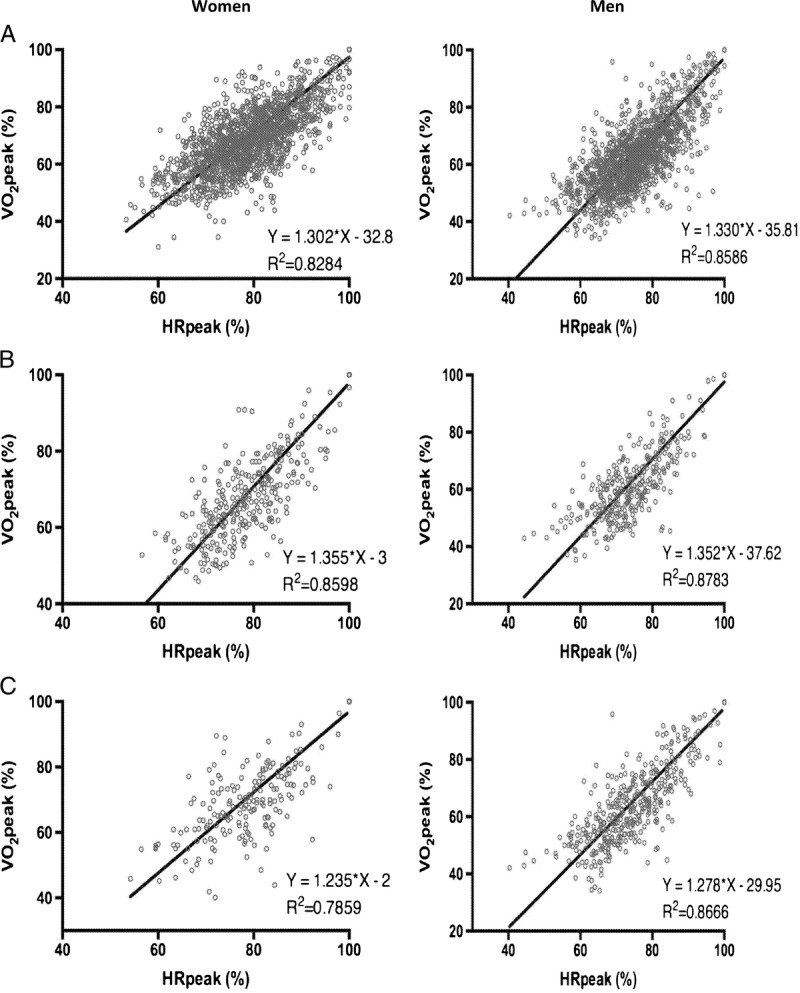
“Both men and women in our study worked at a significantly higher %V̇O2peak and %HRpeak compared with what has been reported previously (1,7).”
BackgroundResultMiller, M. R., Hankinson, J., Brusasco, V., Burgos, F., Casaburi, R., Coates, A., Crapo, R., Enright, P., van der Grinten, C. P. M., Gustafsson, P., et al. (2005) · European Respiratory Journal · doi:10.1183/09031936.05.00034805 · Cited by 15,627 · cited 1×
“San Diego, CA) in accordance with the American Thoracic Society/European Respiratory Society criteria (27,29), as”
Garber, C. E., Blissmer, B., Deschenes, M. R., Franklin, B. A., Lamonte, M. J., Lee, I.-M., Nieman, D. C., & Swain, D. P. (2011) · Medicine & Science in Sports & Exercise · doi:10.1249/mss.0b013e318213fefb · Cited by 9,319 · cited 6×
“The differences are pronounced at lower intensities, where an exercise intensity at 57 to 64 of %HRpeak in our study corresponds to a higher %V̇O2peak compared with American College of Sports Medicine guidelines (13).”
MethodResultInfluentialHeart Disease and Stroke Statistics—2015 Update: A Report From the American Heart Association
Mozaffarian, D., Benjamin, E. J., Go, A. S., Arnett, D. K., Blaha, M. J., Cushman, M., de Ferranti, S., Després, J.-P., Fullerton, H. J., Howard, V. J., et al. (2015) · Circulation · doi:10.1161/cir.0000000000000152 · Cited by 5,797 · cited 1×
“Further, individuals with CVD are typically excluded in studies aiming to present normative values for CRF (2,11), despite CVD being highly prevalent in older adults (30).”
BackgroundExercise capacity and mortality among men referred for exercise testing
Myers, J., Prakash, M., Froelicher, V., Do, D., Partington, S., & Atwood, J. E. (2002) · New England Journal of Medicine · doi:10.1056/nejmoa011858 · Cited by 4,114 · cited 1×
“peak oxygen uptake (V̇O2peak) during cardiopulmonary exercise testing (CPET), has been shown to be the single best predictor for future cardiovascular disease (CVD) and mortality (21,24,31,42), it is often ignored in health risk assessment (20).”
BackgroundA new method for detecting anaerobic threshold by gas exchange
Beaver, W. L., Wasserman, K., & Whipp, B. J. (1986) · Journal of Applied Physiology · doi:10.1152/jappl.1986.60.6.2020 · Cited by 4,103 · cited 1×
“The V-slope method (5) was used to establish ventilatory anaerobic threshold (VAT) and respiratory compensation point (RCP), and V̇O2, EqV̇O2, V̇CO2, EqV̇CO2, V̇E, BF, and RER were reported at VAT and RCP.”
MethodPollock, M. L., Gaesser, G. A., Butcher, J. D., Despr??s, J.-P., Dishman, R. K., Franklin, B. A., & Garber, C. E. (1998) · Medicine & Science in Sports & Exercise · doi:10.1097/00005768-199806000-00032 · Cited by 3,051
Ross, R., Blair, S. N., Arena, R., Church, T. S., Després, J.-P., Franklin, B. A., Haskell, W. L., Kaminsky, L. A., Levine, B. D., Lavie, C. J., et al. (2016) · Circulation · doi:10.1161/cir.0000000000000461 · Cited by 2,486 · cited 1×
“Both the FRIEND registry committee and the AHA 2017 statement (35) highlights that being able to compare an individual_s CRF to their peers is critical for optimal risk assessment, and will provide important information for physical activity guidelines (19,20).”
BackgroundSelf-citationStandardisation of the single-breath determination of carbon monoxide uptake in the lung
MacIntyre, N., Crapo, R. O., Viegi, G., Johnson, D. C., van der Grinten, C. P. M., Brusasco, V., Burgos, F., Casaburi, R., Coates, A., Enright, P., et al. (2005) · European Respiratory Journal · doi:10.1183/09031936.05.00034905 · Cited by 2,255
Wisløff, U., Støylen, A., Loennechen, J. P., Bruvold, M., Rognmo, Ø., Haram, P. M., Tjønna, A. E., Helgerud, J., Slørdahl, S. A., Lee, S. J., et al. (2007) · Circulation · doi:10.1161/circulationaha.106.675041 · Cited by 1,996 · cited 1×
“Interestingly, O2 pulse in men with CVD in our study was relatively high compared to previously reported in people with heart failure (43) and coronary heart disease (23), again indicating that our CVD patients were somewhat healthier than in previous studies.”
ResultSelf-citationBalady, G. J., Arena, R., Sietsema, K., Myers, J., Coke, L., Fletcher, G. F., Forman, D., Franklin, B., Guazzi, M., Gulati, M., et al. (2010) · Circulation · doi:10.1161/cir.0b013e3181e52e69 · Cited by 1,964 · cited 1×
“Breathing reserve was calculated as the difference between maximum voluntary ventilation (FEV1 40) and peak ventilation, and presented as percentage of maximum voluntary ventilation (3).”
MethodHeart-rate Recovery Immediately After Exercise as a Predictor of Mortality
Cole, C. R., Blackstone, E. H., Pashkow, F. J., Snader, C. E., & Lauer, M. S. (1999) · New England Journal of Medicine · doi:10.1056/nejm199910283411804 · Cited by 1,935 · cited 2×
“This indicates that the individuals with CVD in our population in general do not have a delayed decrease in HR after graded exercise, as often seen in people with heart failure (10,18).”
BackgroundGibbons, R. J., Balady, G. J., Beasley, J. W., FAAFP, Bricker, J. T., Duvernoy, W. F. C., Froelicher, V. F., Mark, D. B., Marwick, T. H., McCallister, B. D., et al. (1997) · Circulation · doi:10.1161/01.cir.96.1.345 · Cited by 1,094
Imai, K., Sato, H., Hori, M., Kusuoka, H., Ozaki, H., Yokoyama, H., Takeda, H., Inoue, M., & Kamada, T. (1994) · Journal of the American College of Cardiology · doi:10.1016/0735-1097(94)90150-3 · Cited by 991 · cited 1×
“This indicates that the individuals with CVD in our population in general do not have a delayed decrease in HR after graded exercise, as often seen in people with heart failure (10,18).”
BackgroundGuazzi, M., Adams, V., Conraads, V., Halle, M., Mezzani, A., Vanhees, L., Arena, R., Fletcher, G. F., Forman, D. E., Kitzman, D. W., et al. (2012) · Circulation · doi:10.1161/cir.0b013e31826fb946 · Cited by 822 · cited 4×
“normal SBPpeak for men is approximately 210 mm Hg and for women approximately 190 mm Hg (16).”
BackgroundMethodInfluentialPredictors of skeletal muscle mass in elderly men and women
Baumgartner, R. N., Waters, D. L., Gallagher, D., Morley, J. E., & Garry, P. J. (1999) · Mechanisms of Ageing and Development · doi:10.1016/s0047-6374(98)00130-4 · Cited by 809 · cited 1×
“Because aging often is characterized by profound physiological changes (4,39), it is a major limitation that the existing reference values for CRF and cardiorespiratory function are based on studies that include few older adults (2,22,36,41).”
BackgroundPhysical fitness and activity as separate heart disease risk factors: a meta-analysis
WILLIAMS, P. T. (2001) · Medicine & Science in Sports & Exercise · doi:10.1097/00005768-200105000-00012 · Cited by 724
Chronotropic Incompetence: Causes, Consequences, and Management
Brubaker, P. H., & Kitzman, D. W. (2011) · Circulation · doi:10.1161/circulationaha.110.940577 · Cited by 637 · cited 1×
“(chronotropic incompetence) with increased activity or physical demand (8), we observed that both men and women with”
BackgroundGitt, A. K., Wasserman, K., Kilkowski, C., Kleemann, T., Kilkowski, A., Bangert, M., Schneider, S., Schwarz, A., & Senges, J. (2002) · Circulation · doi:10.1161/01.cir.0000041428.99427.06 · Cited by 491 · cited 1×
“CRF, the physiological responses during CPET can be used as a prognostic and diagnostic tool because it may identify underlying pathophysiological mechanisms for several diseases (9,15,33).”
Sedentary Lifestyle, Poor Cardiorespiratory Fitness, and the Metabolic Syndrome
LAKKA, T. A., LAAKSONEN, D. E., LAKKA, H.-M., M??NNIKK??, N., NISKANEN, L. K., RAURAMAA, R., & SALONEN, J. T. (2003) · Medicine & Science in Sports & Exercise · doi:10.1249/01.mss.0000079076.74931.9a · Cited by 472 · cited 1×
“peak oxygen uptake (V̇O2peak) during cardiopulmonary exercise testing (CPET), has been shown to be the single best predictor for future cardiovascular disease (CVD) and mortality (21,24,31,42), it is often ignored in health risk assessment (20).”
BackgroundReference Standards for Cardiorespiratory Fitness Measured With Cardiopulmonary Exercise Testing
Kaminsky, L. A., Arena, R., & Myers, J. (2015) · Mayo Clinic Proceedings · doi:10.1016/j.mayocp.2015.07.026 · Cited by 461 · cited 7×
“The CRF values reported in the present study are higher compared those previously reported in older adults in the United States by Kaminsky et al. (20).”
BackgroundInfluential(1997) · Journal of the American College of Cardiology · doi:10.1016/s0735-1097(97)00150-2 · Cited by 448
Lee, D.-C., Sui, X., Ortega, F. B., Kim, Y.-S., Church, T. S., Winett, R. A., Ekelund, U., Katzmarzyk, P. T., & Blair, S. N. (2011) · British Journal of Sports Medicine · doi:10.1136/bjsm.2009.066209 · Cited by 435 · cited 1×
“peak oxygen uptake (V̇O2peak) during cardiopulmonary exercise testing (CPET), has been shown to be the single best predictor for future cardiovascular disease (CVD) and mortality (21,24,31,42), it is often ignored in health risk assessment (20).”
BackgroundVentilatory Efficiency during Exercise in Healthy Subjects
Sun, X.-G., Hansen, J. E., Garatachea, N., Storer, T. W., & Wasserman, K. (2002) · American Journal of Respiratory and Critical Care Medicine · doi:10.1164/rccm.2202033 · Cited by 413 · cited 2×
“(26), EqV̇CO2 at VAT in our study was 930 for all groups, indicating that for older adults, the normal value for submaximal EqV̇CO2 should be higher than previously suggested (38).”
BackgroundKaminsky, L. A., Arena, R., Beckie, T. M., Brubaker, P. H., Church, T. S., Forman, D. E., Franklin, B. A., Gulati, M., Lavie, C. J., Myers, J., et al. (2013) · Circulation · doi:10.1161/cir.0b013e31827ee100 · Cited by 364
Older, R., Smith, R., Courtney, B., & Hone, R. (1993) · Chest · doi:10.1378/chest.104.3.701 · Cited by 349 · cited 1×
“CRF, the physiological responses during CPET can be used as a prognostic and diagnostic tool because it may identify underlying pathophysiological mechanisms for several diseases (9,15,33).”
Peak Oxygen Uptake and Cardiovascular Risk Factors in 4631 Healthy Women and Men
ASPENES, S. T., NILSEN, T. I. L., SKAUG, E.-A., BERTHEUSSEN, G. F., ELLINGSEN, Ø., VATTEN, L., & WISLØFF, U. (2011) · Medicine & Science in Sports & Exercise · doi:10.1249/mss.0b013e31820ca81c · Cited by 278 · cited 3×
“Because aging often is characterized by profound physiological changes (4,39), it is a major limitation that the existing reference values for CRF and cardiorespiratory function are based on studies that include few older adults (2,22,36,41).”
BackgroundSelf-citationExercise-induced myocardial ischaemia detected by cardiopulmonary exercise testing
Belardinelli, R. (2003) · European Heart Journal · doi:10.1016/s0195-668x(03)00210-0 · Cited by 256 · cited 2×
“Although it has been shown that the O2 pulse flattening duration during CPET improves the diagnostic accuracy to identify exercise-induced myocardial ischemia (6), the prognostic value of O2 pulsepeak has been questioned (23).”
BackgroundEdvardsen, E., Hansen, B. H., Holme, I. M., Dyrstad, S. M., & Anderssen, S. A. (2013) · Chest · doi:10.1378/chest.12-1458 · Cited by 248 · cited 2×
“(11) has presented reference values of CRF in Norwegian adults age 20 to 85 yr.”
BackgroundSelf-citationSmaller lungs in women affect exercise hyperpnea
McClaran, S. R., Harms, C. A., Pegelow, D. F., & Dempsey, J. A. (1998) · Journal of Applied Physiology · doi:10.1152/jappl.1998.84.6.1872 · Cited by 238 · cited 1×
“in pulmonary function, both at rest and during exercise (26, 28).”
BackgroundThe Relationship between Lung Inflammation and Cardiovascular Disease
Van Eeden, S., Leipsic, J., Paul Man, S. F., & Sin, D. D. (2012) · American Journal of Respiratory and Critical Care Medicine · doi:10.1164/rccm.201203-0455pp · Cited by 226 · cited 1×
“Importantly, many of the risk factors associated with CVD (such as smoking and dyslipidemia) also affect the pulmonary system (40).”
BackgroundAerobic Capacity Reference Data in 3816 Healthy Men and Women 20–90 Years
Loe, H., Rognmo, Ø., Saltin, B., & Wisløff, U. (2013) · PLoS ONE · doi:10.1371/journal.pone.0064319 · Cited by 216 · cited 2×
“Our findings support previous studies in showing that there is a sex difference related to subjectively rated effort using Borg scale and relative V̇O2peak/HRpeak at lower intensities (25,32).”
BackgroundResultSelf-citationPhan, T. T., Shivu, G. N., Abozguia, K., Davies, C., Nassimizadeh, M., Jimenez, D., Weaver, R., Ahmed, I., & Frenneaux, M. (2010) · Circulation: Heart Failure · doi:10.1161/circheartfailure.109.877720 · Cited by 215 · cited 1×
“In line with studies on people with heart failure (34), we observed that elderly people with CVD had lower HRpeak and HR-recovery compared to the healthy participants.”
ResultBrunelli, A., Belardinelli, R., Refai, M., Salati, M., Socci, L., Pompili, C., & Sabbatini, A. (2009) · Chest · doi:10.1378/chest.08-2059 · Cited by 166 · cited 1×
“CRF, the physiological responses during CPET can be used as a prognostic and diagnostic tool because it may identify underlying pathophysiological mechanisms for several diseases (9,15,33).”
Sassen, B., Cornelissen, V. A., Kiers, H., Wittink, H., Kok, G., & Vanhees, L. (2009) · European Journal of Cardiovascular Prevention & Rehabilitation · doi:10.1097/hjr.0b013e3283312e94 · Cited by 155 · cited 1×
“Because aging often is characterized by profound physiological changes (4,39), it is a major limitation that the existing reference values for CRF and cardiorespiratory function are based on studies that include few older adults (2,22,36,41).”
BackgroundLanghammer, A., Johnsen, R., Gulsvik, A., Holmen, T. L., & Bjermer, L. (2001) · European Respiratory Journal · doi:10.1183/09031936.01.00255301 · Cited by 140 · cited 1×
“Because aging often is characterized by profound physiological changes (4,39), it is a major limitation that the existing reference values for CRF and cardiorespiratory function are based on studies that include few older adults (2,22,36,41).”
BackgroundAn analysis of aerobic capacity in a large United States population
Vogel, J. A., Patton, J. F., Mello, R. P., & Daniels, W. L. (1986) · Journal of Applied Physiology · doi:10.1152/jappl.1986.60.2.494 · Cited by 130 · cited 1×
“Because aging often is characterized by profound physiological changes (4,39), it is a major limitation that the existing reference values for CRF and cardiorespiratory function are based on studies that include few older adults (2,22,36,41).”
BackgroundThe Pulmonary Circulation and Exercise Responses in the Elderly
Taylor, B., & Johnson, B. (2010) · Seminars in Respiratory and Critical Care Medicine · doi:10.1055/s-0030-1265894 · Cited by 83 · cited 1×
“Because aging often is characterized by profound physiological changes (4,39), it is a major limitation that the existing reference values for CRF and cardiorespiratory function are based on studies that include few older adults (2,22,36,41).”
BackgroundPeak oxygen pulse during exercise as a predictor for coronary heart disease and all cause death
Laukkanen, J. A., Kurl, S., Salonen, J. T., Lakka, T. A., & Rauramaa, R. (2006) · Heart · doi:10.1136/hrt.2005.077487 · Cited by 75 · cited 2×
“Although it has been shown that the O2 pulse flattening duration during CPET improves the diagnostic accuracy to identify exercise-induced myocardial ischemia (6), the prognostic value of O2 pulsepeak has been questioned (23).”
BackgroundResultStensvold, D., Viken, H., Rognmo, Ø., Skogvoll, E., Steinshamn, S., Vatten, L. J., Coombes, J. S., Anderssen, S. A., Magnussen, J., Ingebrigtsen, J. E., et al. (2015) · BMJ Open · doi:10.1136/bmjopen-2014-007519 · Cited by 70 · cited 4×
“The baseline-data from Generation 100 are used as basis for the present study (37).”
BackgroundMethodInfluentialSelf-citationLoe, H., Steinshamn, S., & Wisløff, U. (2014) · PLoS ONE · doi:10.1371/journal.pone.0113884 · Cited by 68 · cited 3×
“As shown previously, men and women reached VAT and RCP at the same %V̇O2peak (26), and no differences were seen between the healthy people and people with CVD.”
BackgroundResultSelf-citationExercise Patterns and Peak Oxygen Uptake in a Healthy Population: The HUNT Study
NES, B. M., JANSZKY, I., ASPENES, S. T., BERTHEUSSEN, G. F., VATTEN, L. J., & WISLØFF, U. (2012) · Medicine & Science in Sports & Exercise · doi:10.1249/mss.0b013e318258b443 · Cited by 41 · cited 1×
“Our findings support previous studies in showing that there is a sex difference related to subjectively rated effort using Borg scale and relative V̇O2peak/HRpeak at lower intensities (25,32).”
ResultSelf-citationAssociation between pulmonary function and peak oxygen uptake in elderly: the Generation 100 study
Hassel, E., Stensvold, D., Halvorsen, T., Wisløff, U., Langhammer, A., & Steinshamn, S. (2015) · Respiratory Research · doi:10.1186/s12931-015-0317-0 · Cited by 41
Self-citation
Cited by
Stensvold, D., Viken, H., Steinshamn, S. L., Dalen, H., Støylen, A., Loennechen, J. P., Reitlo, L. S., Zisko, N., Bækkerud, F. H., Tari, A. R., et al. (2020) · BMJ · doi:10.1136/bmj.m3485 · Cited by 154
Self-citationTakken, T., Mylius, C., Paap, D., Broeders, W. H. M., Hulzebos, E. H. J., van Brussel, M., & Bongers, B. C. (2019) · Expert Review of Cardiovascular Therapy · doi:10.1080/14779072.2019.1627874 · Cited by 107
“Two studies were performed in children [29,35] and two in adults [39,41].”
BackgroundDo weather changes influence physical activity level among older adults? – The Generation 100 study
Aspvik, N. P., Viken, H., Ingebrigtsen, J. E., Zisko, N., Mehus, I., Wisløff, U., & Stensvold, D. (2018) · PLoS ONE · doi:10.1371/journal.pone.0199463 · Cited by 91
Self-citationWindsor, M., Bailey, T. G., Perissiou, M., Meital, L. T., Golledge, J., Russell, F. D., & Askew, C. D. (2018) · Frontiers in Physiology · doi:10.3389/fphys.2018.00203 · Cited by 78
“The current study is the first to compare acute cytokine responses to exercise in participants with above average (37.4 ± 5.9mL.kg−1.min−1) and below average (22.6± 2.8mL.kg−1.min−1) cardiorespiratory fitness levels, relative to age-specific normative data (Stensvold et al., 2017).”
BackgroundInfluentialReitlo, L. S., Sandbakk, S. B., Viken, H., Aspvik, N. P., Ingebrigtsen, J. E., Tan, X., Wisløff, U., & Stensvold, D. (2018) · BMC Geriatrics · doi:10.1186/s12877-018-0900-6 · Cited by 71
Self-citation
Metadata
- Authors
- STENSVOLD, D., BUCHER SANDBAKK, S., VIKEN, H., ZISKO, N., REITLO, L. S., NAUMAN, J., GAUSTAD, S. E., HASSEL, E., MOUFACK, M., BRØNSTAD, E., ASPVIK, N. P., MALMO, V., STEINSHAMN, S. L., STØYLEN, A., ANDERSSEN, S. A., HELBOSTAD, J. L., ROGNMO, Ø., & WISLØFF, U.
- Affiliations
- The University of Queensland (AU)
- Norwegian University of Science and Technology (NO)
- St Olav's University Hospital (NO)
- Norwegian School of Sport Sciences (NO)
- ORCID
- Venue
- Medicine & Science in Sports & Exercise
- Published
- 2017-11
- Volume
- 49
- Issue
- 11
- Pages
- 2206-2215
- ISSN
- 0195-9131 (ISSN-L)
- PMC
- PMC5647117
- OpenAlex
- W2622523422
- Cited by
- 46
- References
- 45
- Citations by year
- 2026: 3 · 2025: 3 · 2024: 5 · 2023: 7 · 2022: 7 · 2021: 4 · 2020: 8 · 2019: 4 · 2018: 5
- FWCI
- 6.91
- Type
- journal article
- Language
- en
- Open access
- hybrid
- doi.org
- Licence
- cc-by-nc-nd
- Locations
- Medicine & Science in Sports & Exercise (publishedVersion, cc-by-nc-nd)
- PubMed Central (publishedVersion, cc-by-nc-nd)
- PubMed (publishedVersion)
- BIBSYS Brage (BIBSYS (Norway)) (acceptedVersion, cc-by-nc-nd)
- NORA - Norwegian Open Research Archives (submittedVersion, cc-by-nc-nd)
- BIBSYS Brage (BIBSYS (Norway)) (submittedVersion, cc-by-nc-nd)
- NORA - Norwegian Open Research Archives (submittedVersion, other-oa)
- Funders
- Norges Teknisk-Naturvitenskapelige Universitet
- Fondation pour la Recherche Médicale
- Helse Midt-Norge
- Norges Forskningsråd
- Topics
- Health Sciences › Medicine › Physiology (medical) › Cardiovascular and exercise physiology
- Health Sciences › Medicine › Public Health, Environmental and Occupational Health › Physical Activity and Health
- Health Sciences › Medicine › Public Health, Environmental and Occupational Health › Occupational Health and Performance
- Keywords
- cardiorespiratory fitness, older adults, reference values, peak oxygen uptake, ventilatory efficiency, cardiovascular disease, sex differences, heart rate recovery, cardiopulmonary exercise testing, ventilatory parameters, oxygen pulse, tidal volume, respiratory rate, peak heart rate, reference data
- MeSH terms
- Cardiorespiratory Fitness, Aged, Anthropometry, Exercise Test, Physical Exertion, Female, Heart Rate, Humans, Male, Oxygen Consumption, Perception, Reference Values, Respiratory Function Tests, Anaerobic Threshold
About these checks
Registry, retraction, Cites and statistics results are computed, not judged, with one exception: a printed reference that no index lists is read once by a model before it counts as a citation error. Claims are extracted by a model and kept only when their quote appears verbatim in the text; each cited source is then checked, with a model’s help, for whether it says what the claim relies on. Those verdicts can be wrong — read the claim’s quote and the cited source before relying on one.
Statistics and arithmetic are recomputed, not judged.
Confidence bands are shown only for fields calibrated on our annotated test set. None is calibrated yet, so no band is shown.
What counts as a claim ›How we measure confidence ›How we check this ›
Are you an author, or do you see a problem with this page? Request a review
Data sources
Bibliographic data: Semantic Scholar, OpenAlex, Crossref.
Contains information from the Semantic Scholar Academic Graph Datasets, made available under the ODC Attribution License (ODC-BY 1.0).
Semantic Scholar’s data is described in: Kinney, R., et al. (2023). The Semantic Scholar Open Data Platform. arXiv:2301.10140.
