

The HERITAGE Family Study: A Review of the Effects of Exercise Training on Cardiometabolic Health, with Insights into Molecular Transducers
Open accessThe DOI matches its Crossref record; 288 of the 298 references it cites were found in a registry or an index.
Abstract
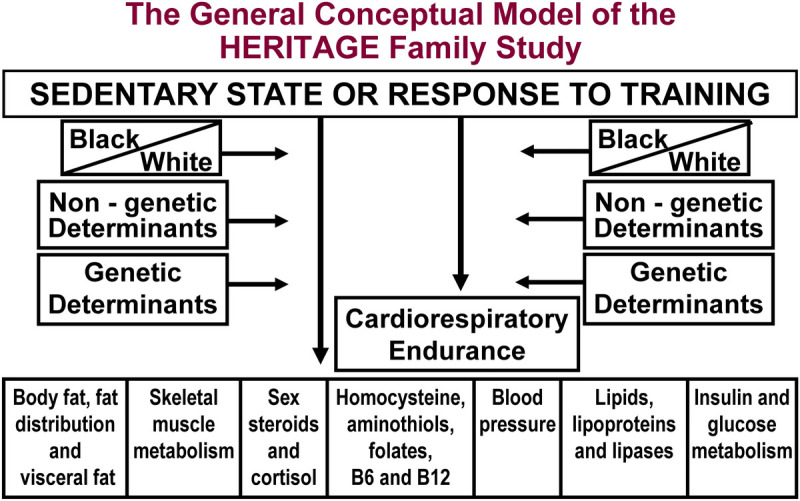
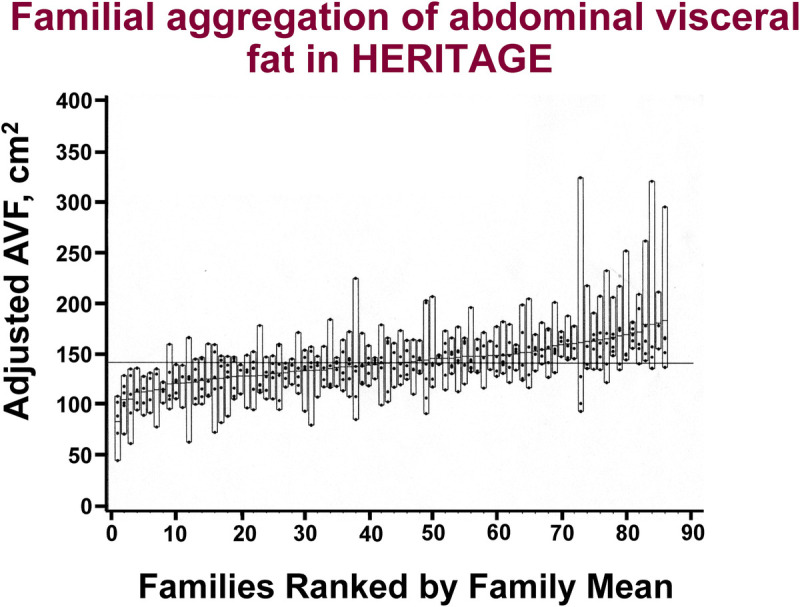
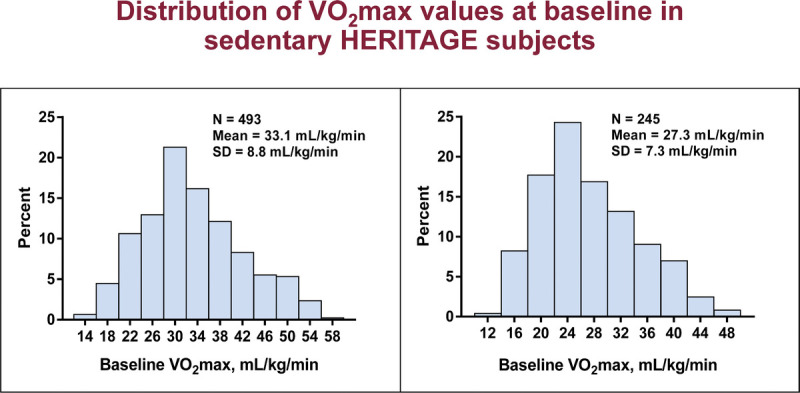
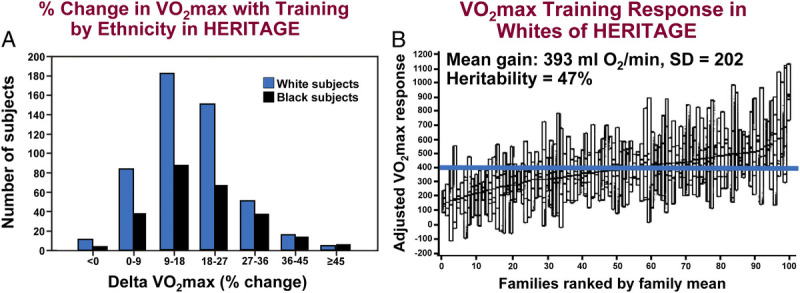
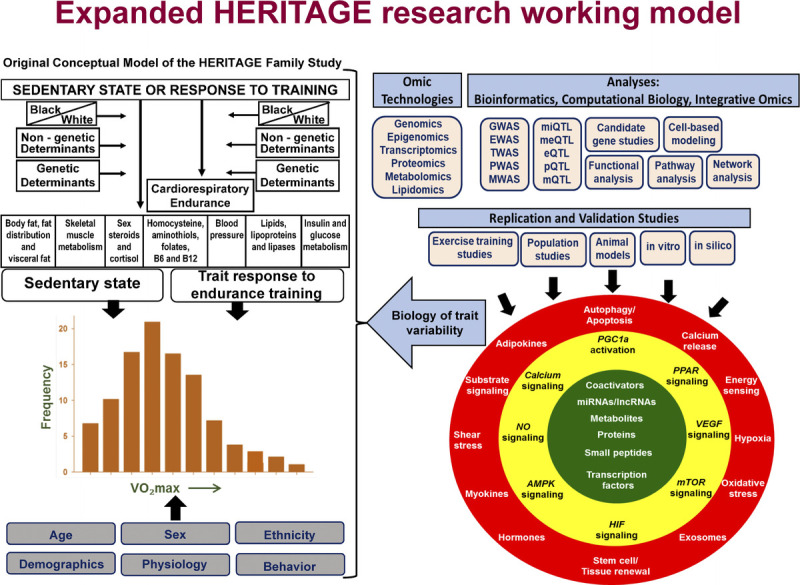
The aim of the HERITAGE Family Study was to investigate individual differences in response to a standardized endurance exercise program, the role of familial aggregation, and the genetics of response levels of cardiorespiratory fitness and cardiovascular disease and diabetes risk factors. Here we summarize the findings and their potential implications for cardiometabolic health and cardiorespiratory fitness. It begins with overviews of background and planning, recruitment, testing and exercise program protocol, quality control measures, and other relevant organizational issues. A summary of findings is then provided on cardiorespiratory fitness, exercise hemodynamics, insulin and glucose metabolism, lipid and lipoprotein profiles, adiposity and abdominal visceral fat, blood levels of steroids and other hormones, markers of oxidative stress, skeletal muscle morphology and metabolic indicators, and resting metabolic rate. These summaries document the extent of the individual differences in response to a standardized and fully monitored endurance exercise program and document the importance of familial aggregation and heritability level for exercise response traits. Findings from genomic markers, muscle gene expression studies, and proteomic and metabolomics explorations are reviewed, along with lessons learned from a bioinformatics-driven analysis pipeline. The new opportunities being pursued in integrative -omics and physiology have extended considerably the expected life of HERITAGE and are being discussed in relation to the original conceptual model of the study.
Overview
The claims and statistics of this paper haven’t been checked yet.
Free: it reads the open-access text and checks the first 5 claims that cite a source we can check. Create a free account to check every claim.
Integrity signals
Registry
Cites
Statistics
Figures
Verification
Claims the paper makes
The claims and statistics of this paper haven’t been checked yet.
Free: it reads the open-access text and checks the first 5 claims that cite a source we can check. Create a free account to check every claim.
Claims other papers make about this one
Each is checked against this paper’s own text: does it say what the citing paper says it does?
In the citing paper
“Recent data show that the variation in V̇O2 peak changes among individuals ranges from -4.7 to 47.8% [614].”
From Global consensus on optimal exercise recommendations for enhancing healthy longevity in older adults (ICFSR) (2025) · cites this paper as [614]
In the citing paper
“Recent data show that the variation in V̇O2 peak changes among individuals ranges from -4.7 to 47.8% [614].”
From Global consensus on optimal exercise recommendations for enhancing healthy longevity in older adults (ICFSR) (2025) · cites this paper as [614]
Self-check
Percentages, sums and reported differences re-computed from the paper’s own numbers.
The self-check needs the paper’s full text.
Citations
Cites
1 retracted
Effects of endurance training on total fat oxidation in elderly persons
Poehlman, E. T., Gardner, A. W., Arciero, P. J., Goran, M. I., & Calles-Escandon, J. (1994) · Journal of Applied Physiology · doi:10.1152/jappl.1994.76.6.2281 · Cited by 80
RetractedLee, I.-M., Shiroma, E. J., Lobelo, F., Puska, P., Blair, S. N., & Katzmarzyk, P. T. (2012) · The Lancet · doi:10.1016/s0140-6736(12)61031-9 · Cited by 8,215
Genetic studies of body mass index yield new insights for obesity biology
Study, T. L. C., Locke, A. E., The ADIPOGen Consortium, The AGEN-BMI Working Group, The CARDIOGRAMplusC4D Consortium, The CKDGen Consortium, The, G. L. G. C., The, I. C. B. P., The MAGIC Investigators, The MuTHER Consortium, et al. (2015) · Nature · doi:10.1038/nature14177 · Cited by 4,534
Reproducibility and validity of a semiquantitative food frequency questionnaire
WILLETT, W. C., SAMPSON, L., STAMPFER, M. J., ROSNER, B., BAIN, C., WITSCHI, J., HENNEKENS, C. H., & SPEIZER, F. E. (1985) · American Journal of Epidemiology · doi:10.1093/oxfordjournals.aje.a114086 · Cited by 4,274
A short questionnaire for the measurement of habitual physical activity in epidemiological studies
Baecke, J., Burema, J., & Frijters, J. (1982) · The American Journal of Clinical Nutrition · doi:10.1093/ajcn/36.5.936 · Cited by 3,945
Age-predicted maximal heart rate revisited
Tanaka, H., Monahan, K. D., & Seals, D. R. (2001) · Journal of the American College of Cardiology · doi:10.1016/s0735-1097(00)01054-8 · Cited by 3,775
Merlin—rapid analysis of dense genetic maps using sparse gene flow trees
Abecasis, G. R., Cherny, S. S., Cookson, W. O., & Cardon, L. R. (2002) · Nature Genetics · doi:10.1038/ng786 · Cited by 3,354
Kodama, S. (2009) · JAMA · doi:10.1001/jama.2009.681 · Cited by 3,035
Longitudinal Effects of Aging on Serum Total and Free Testosterone Levels in Healthy Men
Harman, S. M., Metter, E. J., Tobin, J. D., Pearson, J., & Blackman, M. R. (2001) · The Journal of Clinical Endocrinology & Metabolism · doi:10.1210/jcem.86.2.7219 · Cited by 2,760
The Electronic Medical Records and Genomics (eMERGE) Consortium, Wood, A. R., The MIGen Consortium, The PAGE Consortium, Study, T. L. C., Esko, T., Yang, J., Vedantam, S., Pers, T. H., Gustafsson, S., et al. (2014) · Nature Genetics · doi:10.1038/ng.3097 · Cited by 1,853
Self-citation
Research works printed but not linked: 5
- Hunninghake DB Mullis RM Brekke ML Peters JR Quiter ES. A simple tool for the assessment of dietary fat intake in clinical populations. Circulation. 1987; 76(IV Suppl): 35.
- Nilsson K. Establishment of permanent human lymphblastoid cell lines in vitro. In: Bloom BR David JR, editors. In Vitro Methods in Cell-Mediated and Tumor Immunity. New York (NY): Academic Press; 1976. pp. 713– 35.
- He Z Rankinen T Leon AS Skinner JS Tchernof A Bouchard C. Plasma steroids and cardiorespiratory fitness response to regular exercise. In: Spiegelman B, editor. Hormones, Metabolism and the Benefits of Exercise. Cham (Switzerland); 2017. pp. 25– 42. 31314465
- Romano AD Serviddio G de Matthaeis A Bellanti F Vendemiale G. Oxidative stress and aging. J Nephrol. 2010; 23(15 Suppl): S29– 36. 20872368
- Wilhelmsen L Bjure J Ekstrom-Jodal B,. Nine years’ follow-up of a maximal exercise test in a random population sample of middle-age men. Cardiology. 1981; 68(2 Suppl): 1– 8. 7317889
Cited by
Izquierdo, M., de Souto Barreto, P., Arai, H., Bischoff-Ferrari, H. A., Cadore, E. L., Cesari, M., Chen, L.-K., Coen, P. M., Courneya, K. S., Duque, G., et al. (2025) · The Journal of nutrition, health and aging · doi:10.1016/j.jnha.2024.100401 · Cited by 273
Noone, J., Mucinski, J. M., DeLany, J. P., Sparks, L. M., & Goodpaster, B. H. (2024) · Cell Metabolism · doi:10.1016/j.cmet.2023.12.025 · Cited by 128
JAKICIC, J. M., APOVIAN, C. M., BARR-ANDERSON, D. J., COURCOULAS, A. P., DONNELLY, J. E., EKKEKAKIS, P., HOPKINS, M., LAMBERT, E. V., NAPOLITANO, M. A., & VOLPE, S. L. (2024) · Medicine & Science in Sports & Exercise · doi:10.1249/mss.0000000000003520 · Cited by 68
Erickson, M. L., Allen, J. M., Beavers, D. P., Collins, L. M., Davidson, K. W., Erickson, K. I., Esser, K. A., Hesselink, M. K. C., Moreau, K. L., Laber, E. B., et al. (2023) · GeroScience · doi:10.1007/s11357-022-00668-3 · Cited by 47
“Furthermore, the selected research outcome of interest also contributes to response variation both within [11] and between studies.”
BackgroundInfluentialShero, J. A., Lindholm, M. E., Sandri, M. F., & Stanford, K. I. (2025) · Circulation Research · doi:10.1161/circresaha.124.325614 · Cited by 45
Exercise, exerkines, and cardiometabolic health: from individual players to a team sport
Robbins, J., & Gerszten, R. E. (2023) · Journal of Clinical Investigation · doi:10.1172/jci168121 · Cited by 46
Self-citationPlasma Proteomic Kinetics in Response to Acute Exercise
Mi, M., Barber, J. L., Rao, P., Farrell, L. A., Sarzynski, M. A., Bouchard, C., Robbins, J., & Gerszten, R. E. (2023) · Molecular & Cellular Proteomics · doi:10.1016/j.mcpro.2023.100601 · Cited by 37
“Full details of the research protocol and phenotypic measurements are summarized in a review of HERITAGE (25).”
MethodSelf-citationConserved multi-tissue transcriptomic adaptations to exercise training in humans and mice
Moore, T. M., Lee-Ødegård, S., Olsén, T., Morselli, M., Strumwasser, A. R., Lin, A. J., Zhou, Z., Abrishami, A. D., Garcia, S. M., Bribiesca, J., et al. (2023) · Cell Reports · doi:10.1016/j.celrep.2023.112499 · Cited by 31
“28 Our findings corroborate similar observations of prior gene-environment interaction studies.”
He, M., Hu, S., Wang, J., Wang, J., Găman, M., Hariri, Z., & Tian, Y. (2023) · European Journal of Obstetrics & Gynecology and Reproductive Biology · doi:10.1016/j.ejogrb.2023.06.023 · Cited by 31
Cardiorespiratory Fitness in the Prevention and Management of Cardiovascular Disease
LaMonte, M. J. (2022) · Reviews in Cardiovascular Medicine · doi:10.31083/j.rcm2311382 · Cited by 30
Jakicic, J. M., Apovian, C. M., Barr‐Anderson, D. J., Courcoulas, A. P., Donnelly, J. E., Ekkekakis, P., Hopkins, M., Lambert, M., Napolitano, M. A., & Volpe, S. L. (2024) · Translational Journal of the American College of Sports Medicine · doi:10.1249/tjx.0000000000000266 · Cited by 34
Whelan, S. A., Hendricks, N. P., Dwight, Z., Fu, Q., Moradian, A., Eyk, J. E. V., & Mockus, S. M. (2023) · Analytical Chemistry · doi:10.1021/acs.analchem.3c01189 · Cited by 26
Sex differences in skeletal muscle metabolism in exercise and type 2 diabetes mellitus
MacGregor, K. A., Ellefsen, S., Pillon, N. J., Hammarström, D., & Krook, A. (2024) · Nature Reviews Endocrinology · doi:10.1038/s41574-024-01058-9 · Cited by 29
“Consensus exists on the positive effects of exercise with respect to whole-body insulin sensitivity and glucose metabolism, but there is also an appreciation for the individual differences in the response to exercise 27,101 .”
The genetic basis of exercise and cardiorespiratory fitness – relation to cardiovascular disease
Klevjer, M., Nordeidet, A. N., & Bye, A. (2023) · Current Opinion in Physiology · doi:10.1016/j.cophys.2023.100649 · Cited by 20
Hoffmann, W. G., Chen, Y., Schwartz, C. S., Barber, J. L., Dev, P. K., Reasons, R. J., Miranda-Maravi, S., Armstrong, B., Gerszten, R. E., Silbernagel, G., et al. (2023) · Journal of Lipid Research · doi:10.1016/j.jlr.2023.100495 · Cited by 16
“Full details on study design and sample have been previously described (32, 33).”
BackgroundMethodSelf-citationYang, X., Li, Y., Mei, T., Duan, J., Yan, X., McNaughton, L. R., & He, Z. (2024) · Physiological Genomics · doi:10.1152/physiolgenomics.00019.2024 · Cited by 12
When should I run—the role of exercise timing in metabolic health
Kirchner, H., Weisner, L., & Wilms, B. (2023) · Acta Physiologica · doi:10.1111/apha.13953 · Cited by 12
Osório, T. G., Pavesi, E., Abou‐El‐Ardat, K., Qureshi, N., Cassidy, L., John, T. L. S., Sirotin, N., & Piechowski‐Jóźwiak, B. (2025) · Frontiers in Aging · doi:10.3389/fragi.2025.1656727 · Cited by 13
Human Plasma Proteomics Links Modifiable Lifestyle Exposome to Disease RiskPreprint
Isaac, S., Ellis, R. J., Jee, Y. H., Murthy, V. L., Udler, M. S., Neale, B. M., Sunyaev, S., Gusev, A., Martin, A. R., & Patel, C. J. (2025) · medRxiv · doi:10.1101/2025.05.07.25327178 · Cited by 12
“We utilized plasma proteomic data from the HERITAGE 35,36 STEP2: r = 0.69, adj.p =1.1e-3) were positively correlated with GLP1 agonist effects, suggesting that smoking cessation may induce proteomic changes similar to GLP1 agonist treatment ( Supplementary Figure 4 ).”
InfluentialQi, K., Tan, L., Xu, Q., Xu, Y., Kawczyński, A., & Chen, A. (2026) · BMC Sports Science Medicine and Rehabilitation · doi:10.1186/s13102-025-01479-7 · Cited by 13
“As an indicator reflecting the maximal working capacity of the heart, HRmax is largely constrained by genetic factors and age [38], making it difficult to achieve substantial changes solely through training.”
Tracking of Cardiorespiratory Fitness from Childhood to Mid-adulthood
Guo, J., Fraser, B. J., Blizzard, L., Schmidt, M. D., Dwyer, T., Venn, A., & Magnussen, C. G. (2023) · The Journal of Pediatrics · doi:10.1016/j.jpeds.2023.113778 · Cited by 10
Plaza‐Florido, A., Esteban‐Cornejo, I., Mora-González, J., Torres‐Lopez, L. V., Osuna‐Prieto, F. J., Gil-Cosano, J. J., Radom‐Aizik, S., Labayen, I., Ruiz, J. R., Altmäe, S., et al. (2023) · Journal of Applied Physiology · doi:10.1152/japplphysiol.00435.2023 · Cited by 12
Hota, M., Barber, J. L., Ruiz‐Ramie, J. J., Schwartz, C. S., Lam, D. T. U. H., Rao, P., Mi, M., Katz, D. H., Robbins, J., Clish, C. B., et al. (2023) · Physiological Genomics · doi:10.1152/physiolgenomics.00163.2022 · Cited by 9
Self-citationAstorino, T. A., Teske, A., Sturdy, R. E., Thomas, H., Stavrinou, P. S., & Bogdanis, G. C. (2022) · Research Quarterly for Exercise and Sport · doi:10.1080/02701367.2022.2120176 · Cited by 9
ExerGeneDB: A physical exercise-regulated differential gene expression database
Pan, L., Ai, S., Shi, X., Tong, X., Spanos, M., Li, G., Crețoiu, D., Gao, J., Zhou, Q., & Xiao, J. (2025) · Journal of sport and health science/Journal of Sport and Health Science · doi:10.1016/j.jshs.2025.101027 · Cited by 9
“HERITAGE and FAMuSS studies explore individual differences in response to exercise from a genetic perspective, while STRRIDE trials assess the effects of specific exercise interventions on cardiovascular health markers.”
InfluentialNylén, E. (2024) · Reviews in Cardiovascular Medicine · doi:10.31083/j.rcm2507263 · Cited by 7
“However, it should be realized that the degree of impact of age, race, and/or sex on CRF is relatively minor when compared to the influence of hereditability and a sedentary lifestyle [54].”
BackgroundFarooque, S., Mitra, M., & Das, P. K. (2023) · Physical Education Theory and Methodology · doi:10.17309/tmfv.2023.6.12 · Cited by 7
Mitral valve prolapse and physical performance in Asian military males: The CHIEF Heart study
Liu, W.-N., Feng, A., Hsu, C., Liu, P., Tsai, K., Zeng, H.-C., Lavie, C. J., & Lin, G. (2023) · Journal of Sports Sciences · doi:10.1080/02640414.2023.2260626 · Cited by 5
Bell, L. R., Worn, R. L., O’Grady, M., Denham, J., & O’Brien, B. J. (2024) · Medical Hypotheses · doi:10.1016/j.mehy.2024.111366 · Cited by 4
Ozemek, C., & Hardwick, J. (2025) · Heart and Mind · doi:10.4103/hm.hm-d-24-00078 · Cited by 5
Maravi, J. S. M., Leszczynski, E. C., Schwartz, C. S., Dev, P. K., Barber, J. L., Reasons, R. J., Pearce, R. W., McPhaul, M. J., Konrad, R. J., Robbins, J., et al. (2024) · Atherosclerosis · doi:10.1016/j.atherosclerosis.2024.117587 · Cited by 4
Self-citationMitochondrial haplotype and sex modulate responses to endurance exercise training
Ahn, B., Wei, T., Pettit‐Mee, R. J., Kim, E., Musci, R. V., Wanagat, J., Nguyen, H. V. M., Richardson, A. G., & Kim, H. (2025) · The Journal of Physiology · doi:10.1113/jp288330 · Cited by 4
“A major contributor underlying this variability is genetic diversity (Sarzynski et al., 2022).”
InfluentialGraham, Z., Bubak, M. P., Raymond‐Pope, C. J., Cutter, G., McAdam, J. S., Tuggle, S. C., Siedlik, J. A., de Sousa, L. G. O., Chappe, E., Meece, K., et al. (2025) · Journal of Applied Physiology · doi:10.1152/japplphysiol.00486.2025 · Cited by 4
“The HERITAGE study provided a key understanding that there are genetic limiters in an individual’s response to ET 19 .”
Shared and distinct adaptations to early‐life exercise training based on inborn fitness
Sadler, D. G., Treas, L. D., Barre, M., Ross, T., Sikes, J. D., Zhong, Y., Britton, S. L., Koch, L. G., Wankhade, U. D., Børsheim, E., et al. (2025) · The Journal of Physiology · doi:10.1113/jp288331 · Cited by 4
Children’s Individual Differences in the Responses to a New Method for Physical Education
Pereira, S., Santos, C., Maia, J. A. R., Vasconcelos, O., Guimarães, E., Garganta, R., Farias, C. F. G., Barreira, T. V., Tani, G., Katzmarzyk, P. T., et al. (2024) · Sports · doi:10.3390/sports12120328 · Cited by 4
GWAS shows links between EDARADD and LRFN5 and performance in professional athletes
Terekhov, M. V., Deev, R. V., Kadykova, A. I., Dzhumaniiazova, I., Мамчур, А. А., Zelenova, Е., Matkava, L. R., Ivanov, M. V., Kashtanova, D. A., Игоревич, М. С., et al. (2025) · BMC Sports Science Medicine and Rehabilitation · doi:10.1186/s13102-025-01423-9 · Cited by 3
“It is estimated that gender and height may contribute up to 40% of the variability in VO2 max levels [5].”
Carrard, J., Hofer, M., Prechtl, L. M., Fleischlin, E., Huber, M. B., Gallart‐Ayala, H., Teav, T., Infanger, D., Höchsmann, C., Koehler, K., et al. (2024) · PLoS ONE · doi:10.1371/journal.pone.0302477 · Cited by 3
“The molecular pathways underlying the beneficial effects of exercise are increasingly understood [29]; however, many mechanisms remain to be elucidated [29, 30].”
Kulik, G. L., Wilson, M. P., Jankowski, C. M., Fourman, L. T., & Erlandson, K. M. (2025) · Journal of Aging Research · doi:10.1155/jare/6952002 · Cited by 2
Toward an Integrated Therapeutic Approach for Familial Hypercholesterolemia
Balkrishna, A., Agarwal, U., Saxena, S., Sharma, G., & Arya, V. (2026) · Current Medical Science · doi:10.1007/s11596-025-00149-6 · Cited by 2
“The effectiveness of yoga and fitness interventions varies widely between individuals due to genetic differences, baseline fitness, and regimen adherence [114].”
Characterization and response to exercise training of HDL-specific phospholipid efflux
Leszczynski, E. C., Schwartz, C. S., Jacobs, K. J. C., Dev, P. K., Ghosh, S., Robbins, J. M., Gerszten, R. E., Rohatgi, A. K., Collier, T. S., Konrad, R. J., et al. (2026) · Journal of Lipid Research · doi:10.1016/j.jlr.2026.100993 · Cited by 2
Self-citationZhou, T., Su, S., Yuan, C., Jiang, D., Qiu, Y., Xiao, J., Lu, X., Gu, D., & Liu, F. (2026) · Medicine Plus · doi:10.1016/j.medp.2026.100137 · Cited by 2
In‐Field Validity and Inter‐Unit Variability of Metabolic Carts During Simulated Exercise
Hooren, B. V., Souren, T., & Bongers, B. C. (2026) · Scandinavian Journal of Medicine and Science in Sports · doi:10.1111/sms.70297 · Cited by 2
“Large-scale initiatives such as the FRIEND registry [37, 38] and the HERITAGE Family Study [39, 40] highlight the increasing prevalence of such designs [35, 36, 41].”
Stem cells as an essential mediator of the exercise–tumorigenesis link
Zhuang, X., Wong, E. S. W., Tammela, T., & Jones, L. W. (2026) · Nature reviews. Cancer · doi:10.1038/s41568-026-00933-z · Cited by 2
“HERITAGE investigated individual differences in response to standardized structured aerobic training (that is, 3 h per week for 20 consecutive weeks at 55–75% of participant-specific cardiorespiratory fitness) among 529 white and 326 Black individuals aged 17–65 years 40 .”
Roberts, M. D., Bamman, M. M., Hornberger, T. A., Mackey, A. L., Derave, W., Atherton, P. J., Phillips, S. M., Schoenfeld, B. J., Nader, G. A., Hecksteden, A., et al. (2026) · Journal of Applied Physiology · doi:10.1152/japplphysiol.00289.2026 · Cited by 3
COVID-19 as a Factor Influencing Maximal Heart Rates among Male University Students
Podstawski, R., Borysławski, K., & Wąsik, J. (2024) · Applied Sciences · doi:10.3390/app14146146 · Cited by 2
Maitland, S. B., Brauer, P. M., Mutch, D. M., Royall, D., Klein, D., Tremblay, A., Rhéaume, C., & Jeejeebhoy, K. N. (2024) · BMC Family Practice · doi:10.1186/s12875-024-02608-w · Cited by 2
“The results support arguments in the literature for the potential importance of inherent differences in responsiveness [60, 61].”
ResultSelf-citationNúñez‐Cortés, R., Joensuu, L., López‐Gil, J. F., Calatayud, J., Petermann-Rocha, F. E., Andersen, L. L., Sillanpää, E., & López‐Bueno, R. (2025) · European Journal of Preventive Cardiology · doi:10.1093/eurjpc/zwaf348 · Cited by 3
Editorial: Women and men in physical activity
Modesti, A., Luti, S., Pinto, G., Vassalle, C., & Nikolaidis, P. Τ. (2022) · Frontiers in Physiology · doi:10.3389/fphys.2022.988839 · Cited by 2
“Physical activity represents a well-known approach for the prevention and treatment of cardio-metabolic diseases (Sarzynski et al., 2022).”
O’Brien, B. J., Evans, S., Worn, R. L., Lavender, A. P., Bell, L. R., & Cover, T. (2025) · Medical Hypotheses · doi:10.1016/j.mehy.2025.111725 · Cited by 1
Dev, P. K., Leszczynski, E. C., Schwartz, C. S., Barber, J. L., Ayala, E. J., Wang, X., Fairman, C. M., Ghosh, S., Gerszten, R. E., Olivier, M., et al. (2025) · Metabolomics · doi:10.1007/s11306-025-02330-3 · Cited by 1
“The study design, inclusion and exclusion criteria, exercise training, and testing protocol has been previously described (Bouchard et al., 1995; Sarzynski et al., 2022).”
Self-citationNutrition and physical activity behaviors in 16-18 -year-old adolescents in Tirana
Kosta, O., & Kosta, O. (2025) · SPORT TK-Revista EuroAmericana de Ciencias del Deporte · doi:10.6018/sportk.606161 · Cited by 1
“Physical activity represents a well-known approach for the prevention and treatment of cardio-metabolic diseases (Sarzynski et al., 2022).”
Ni, D., Kokkinos, P. F., & Nylén, E. (2024) · Military Medicine · doi:10.1093/milmed/usae311 · Cited by 1
THE EFFECTIVENESS OF EXERCISE APPLICATION IN GENETICALLY PREDISPOSED OBESITY AND DIABETES
Mazur, Y. Y., Ilyin, V. M., Pastukhova, V. A., & Drozdovska, S. (2024) · Bulletin of Problems Biology and Medicine · doi:10.29254/2077-4214-2024-3-174-36-49 · Cited by 1
Honoring The HERITAGE Study and Looking Forward
Kenney, W. L., Jablonski, N. G., BROWN, M. D., & Keith, N. R. (2022) · Medicine & Science in Sports & Exercise · doi:10.1249/mss.0000000000002911
Smith, S. G., Bharadwaj, P. K., Raichlen, D. A., Grilli, M. D., Andrews‐Hanna, J. R., Hishaw, G. A., Huentelman, M. J., Trouard, T. P., & Alexander, G. E. (2025) · Frontiers in Aging Neuroscience · doi:10.3389/fnagi.2025.1542458 · Cited by 1
The influence of demographic factors on healthy living among adolescents
Kosta, O., & Kosta, O. (2025) · International Journal of Innovative Research and Scientific Studies · doi:10.53894/ijirss.v8i5.8762
Skeletal muscle enhancer programming of intrinsic cardiorespiratory fitnessPreprint
Weitzel, A. M., Orchard, P., Evans, C. R., Manickam, N., Treutelaar, M. K., Britton, S. L., Koch, L. G., Li, J. Z., Parker, S. C. J., & Burant, C. (2025) · bioRxiv (Cold Spring Harbor Laboratory) · doi:10.1101/2025.10.02.679855
Variation in cycling exercise mechanical efficiency in the HERITAGE Family Study
Tremblay, A., Bouchard, C., Sarzynski, M. A., Skinner, J. S., Marin‐Couture, É., Schrauwen, P., Joanisse, D. R., Thibault, G., Mathieu, M.-E., & Përusse, L. (2025) · Physiological Reports · doi:10.14814/phy2.70626
Self-citationPrecision Medicine in Diabetes: From Genetic Risk to Real-World Implementation
Pearcey, B. (2025) · EMJ Diabetes · doi:10.33590/emjdiabet/fxco4643
Electrocardiographic and echocardiographic differences in the athlete’s heart: a special category
Piotrowicz, K., Uziębło‐Życzkowska, B., & Krzesiński, P. (2025) · Elsevier eBooks · doi:10.1016/b978-0-443-33927-1.00007-9
The Role of Cardiorespiratory Fitness in White Matter and Cognition in Healthy Aging
Smith, S. G., & Smith, S. G. (2024) · UA Campus Repository (The University of Arizona)
Platen, P. (2025) · Springer eBooks · doi:10.1007/978-3-662-69524-1_11
Sanchez, O. A., Salgado, A., Hesse, A. S., Walser-Kuntz, E., Benson, G., & Conroy, W. E. (2025) · Exercise Medicine · doi:10.26644/em.2025.003
“[23] Interestingly, 49% of the variation in the change in VO 2 max following the exercise training program was associated with 21 single-nucleotide polymorphisms (SNPs) identified during the HERITAGE Family study [24].”
Tremblay, A., Jacob, R., Përusse, L., & Drapeau, V. (2026) · Nutrients · doi:10.3390/nu18020195
“The HERITAGE study also identified adverse responders in VO 2 max [7].”
Self-citationVisker, J. R., Tseliou, E., Drosatos, K., Wever-Pinzon, O., Holland, W., & Drakos, S. (2026) · Heart Failure Reviews · doi:10.1007/s10741-026-10626-2
Damay, V. A. (2026) · International Journal of Angiology · doi:10.1055/a-2846-2630
Kozai, A. C., Koczo, A., Countouris, M. E., Gokhale, T., Yoshimasu, T. A., Gordon, B. D., & Catov, J. M. (2026) · medRxiv · doi:10.64898/2026.05.21.26353584
The role of physical activity in the management of obesity
Creel, D. B. (2026) · Advances in pharmacology · doi:10.1016/bs.apha.2026.06.006
Friedman, Z. J. (2026) · Journal of the Arkansas Academy of Science
McManus, C., Waterworth, S., Penney, R., Taylor, J., & Chung, H. (2026) · Research Square · doi:10.21203/rs.3.rs-8213821/v1
Mebrahtu, A. (2026) · Libraries and Cultural Resources (University of Calgary) · doi:10.11575/prism/52076
Carrard, J., Hofer, M., Prechtl, L., Fleischlin, E., Huber, M., Gallart-Ayala, H., Teav, T., Infanger, D., Höchsmann, C., Koehler, K., et al. (2024) · doi:10.1371/journal.pone.0302477.r001
Metadata
- Authors
- SARZYNSKI, M. A., RICE, T. K., DESPRÉS, J.-P., PÉRUSSE, L., TREMBLAY, A., STANFORTH, P. R., TCHERNOF, A., BARBER, J. L., FALCIANI, F., CLISH, C., ROBBINS, J. M., GHOSH, S., GERSZTEN, R. E., LEON, A. S., SKINNER, J. S., RAO, D. C., & BOUCHARD, C.
- Affiliations
- University of South Carolina (US)
- Washington University in St. Louis (US)
- Institut universitaire de cardiologie et de pneumologie de Québec (CA)
- Université Laval (CA)
- The University of Texas at Austin (US)
- Institute of Systems, Molecular and Integrative Biology, University of Liverpool, Liverpool, UNITED KINGDOM
- Broad Institute (US)
- University of Minnesota (US)
- Pennington Biomedical Research Center (US)
- ORCID
- Venue
- Medicine & Science in Sports & Exercise
- Published
- 2022-05
- Volume
- 54
- Issue
- 5S
- Pages
- S1-S43
- ISSN
- 0195-9131 (ISSN-L)
- 1530-0315
- PMC
- PMC9012529
- OpenAlex
- W4281486836
- Semantic Scholar
- 2e81e41547562ed52474720e48d6f1df7569d0d7
- Cited by
- 62
- References
- 298
- Citations by year
- 2026: 10 · 2025: 19 · 2024: 15 · 2023: 13 · 2022: 5
- FWCI
- 3.01
- Type
- journal article
- Language
- en
- Open access
- hybrid
- doi.org
- Licence
- Locations
- Medicine & Science in Sports & Exercise (publishedVersion, cc-by-nc-nd)
- PubMed Central (publishedVersion, cc-by-nc-nd)
- PubMed (publishedVersion)
- Digital Commons@Becker (Washington University School of Medicine) (submittedVersion, cc-by-nc-nd)
- Civil War Book Review (submittedVersion)
- Scholar Commons (University of South Carolina) (submittedVersion, cc-by-nc-nd)
- Funders
- American Heart Association (U54 GM115428)
- University of Minnesota
- Université Laval
- University of Oklahoma
- Case Western Reserve University
- Louisiana State University
- University of Warwick
- National Institutes of Health (GM103499)
- University of California, San Diego
- Canadian Institutes of Health Research (FDN- 167278)
- Natural Sciences and Engineering Research Council of Canada
- Medical Research Council
- National Medical Research Council (WBS R913200076263, R913200076263)
- National Heart, Lung, and Blood Institute (R01HL047327, HL 47321, HL 45670, HL47323, R01HL047317, K23HL150327, R01HL047323, R01HL146462, HL47317, R01HL045670)
- National Institute of Nursing Research (R01NR019628)
- National Institute of General Medical Sciences (GM103499, P20GM103528, P30GM118430, P20GM103499, U54GM115428, U54GM104940)
- National Institute of Diabetes and Digestive and Kidney Diseases (U24DK112340, R01DK128057, P30DK040561, R01DK081572)
- NIH Clinical Center
- Topics
- Health Sciences › Medicine › Physiology (medical) › Cardiovascular and exercise physiology
- Life Sciences › Biochemistry, Genetics and Molecular Biology › Genetics › Genetics and Physical Performance
- Health Sciences › Medicine › Public Health, Environmental and Occupational Health › Physical Activity and Health
- Keywords
- HERITAGE Family Study, endurance training, cardiometabolic health, cardiorespiratory fitness, familial aggregation, heritability, exercise hemodynamics, adiposity, visceral fat, oxidative stress, skeletal muscle morphology, resting metabolic rate, muscle gene expression, proteomics, metabolomics, multi-omics integration
- MeSH terms
- Cardiorespiratory Fitness, Cardiovascular Diseases, Hemodynamics, Humans, Exercise, Computational Biology, Genomics, Proteomics, Metabolomics
About these checks
Registry, retraction, Cites and statistics results are computed, not judged, with one exception: a printed reference that no index lists is read once by a model before it counts as a citation error. Claims are extracted by a model and kept only when their quote appears verbatim in the text; each cited source is then checked, with a model’s help, for whether it says what the claim relies on. Those verdicts can be wrong — read the claim’s quote and the cited source before relying on one.
Statistics and arithmetic are recomputed, not judged.
Confidence bands are shown only for fields calibrated on our annotated test set. None is calibrated yet, so no band is shown.
What counts as a claim ›How we measure confidence ›How we check this ›
Are you an author, or do you see a problem with this page? Request a review
Data sources
Bibliographic data: Semantic Scholar, OpenAlex, Crossref.
Contains information from the Semantic Scholar Academic Graph Datasets, made available under the ODC Attribution License (ODC-BY 1.0).
Semantic Scholar’s data is described in: Kinney, R., et al. (2023). The Semantic Scholar Open Data Platform. arXiv:2301.10140.
