

The Quantity and Quality of Life and the Evolution of World Inequality
The DOI matches its Crossref record; 41 of the 41 references it cites were found in a registry or an index.
Abstract
GDP per capita is usually used to proxy for the quality of life of individuals living in different countries. Welfare is also affected by quantity of life, however, as represented by longevity. This paper incorporates longevity into an overall assessment of the evolution of cross-country inequality and shows that it is quantitatively important. The absence of reduction in cross-country inequality up to the 1990s documented in previous work is in stark contrast to the reduction in inequality after incorporating gains in longevity. Throughout the post–World War II period, health contributed to reduce significantly welfare inequality across countries. This paper derives valuation formulas for infra-marginal changes in longevity and computes a “full” growth rate that incorporates the gains in health experienced by 96 countries for the period between 1960 and 2000. Incorporating longevity gains changes traditional results; countries starting with lower income tended to grow faster than countries starting with higher income. We estimate an average yearly growth in “full income” of 4.1 percent for the poorest 50 percent of countries in 1960, of which 1.7 percentage points are due to health, as opposed to a growth of 2.6 percent for the richest 50 percent of countries, of which only 0.4 percentage points are due to health. Additionally, we decompose changes in life expectancy into changes attributable to 13 broad groups of causes of death and three age groups. We show that mortality from infectious, respiratory, and digestive diseases, congenital, perinatal, and “ill-defined” conditions, mostly concentrated before age 20 and between ages 20 and 50, is responsible for most of the reduction in life expectancy inequality. At the same time, the recent effect of AIDS, together with reductions in mortality after age 50—due to nervous system, senses organs, heart and circulatory diseases—contributed to increase health inequality across countries.
Overview
The claims and statistics of this paper haven’t been checked yet.
Free: it reads the open-access text and checks the first 5 claims that cite a source we can check. Create a free account to check every claim.
Integrity signals
Registry
Cites
Statistics
Figures
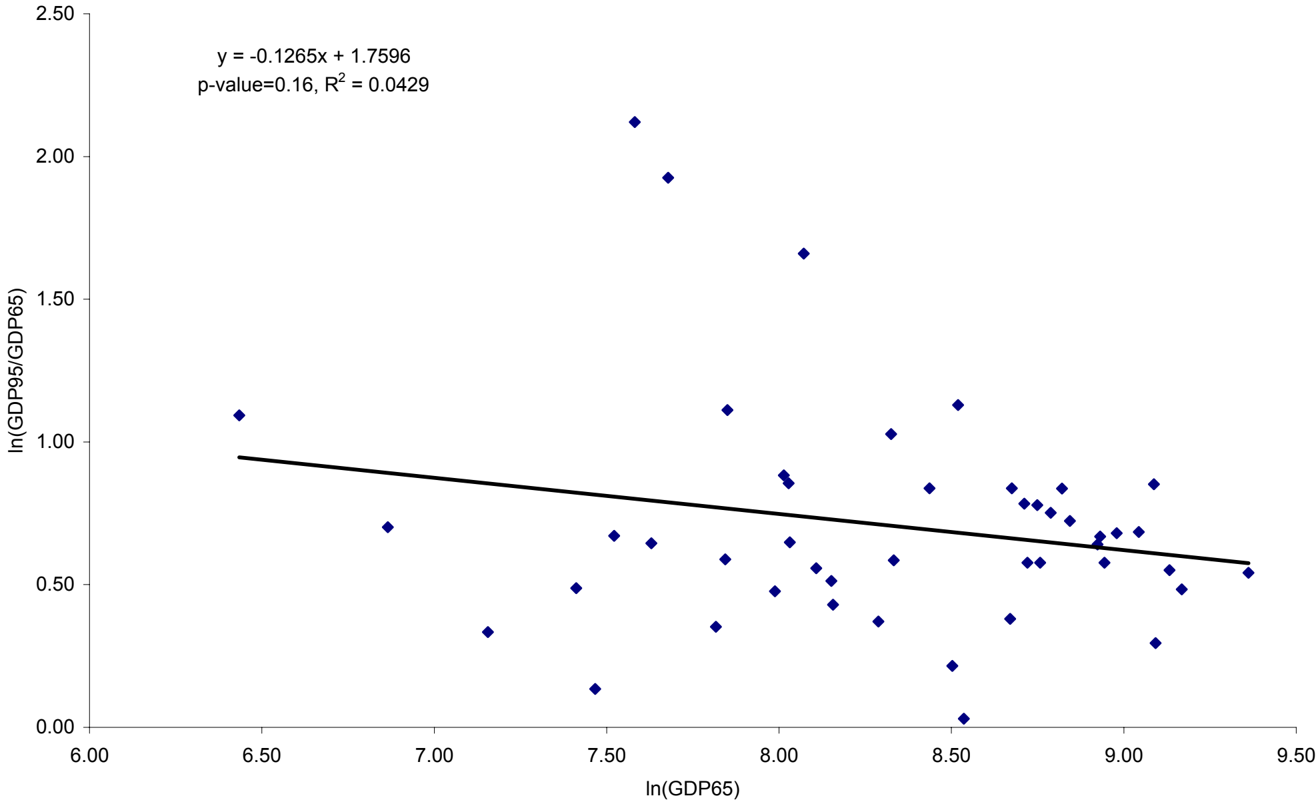
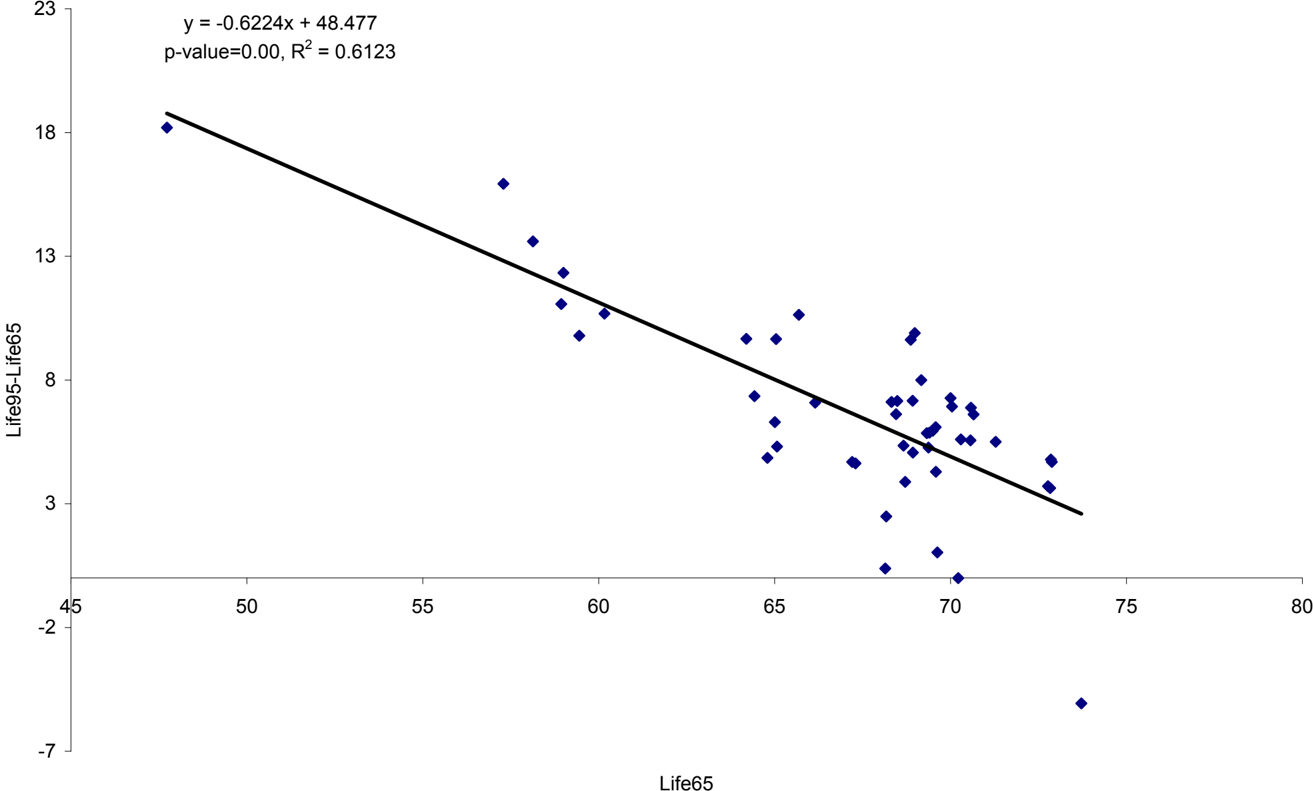
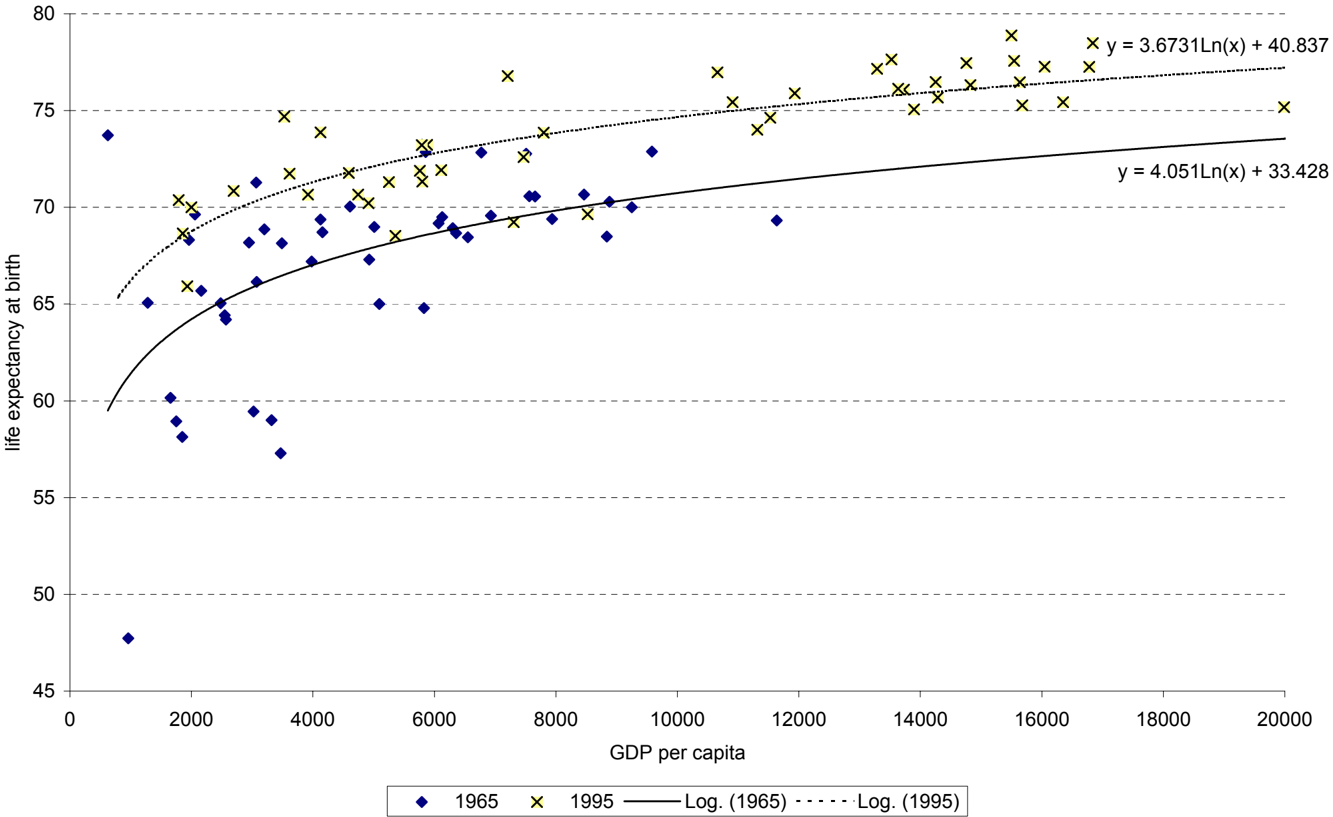
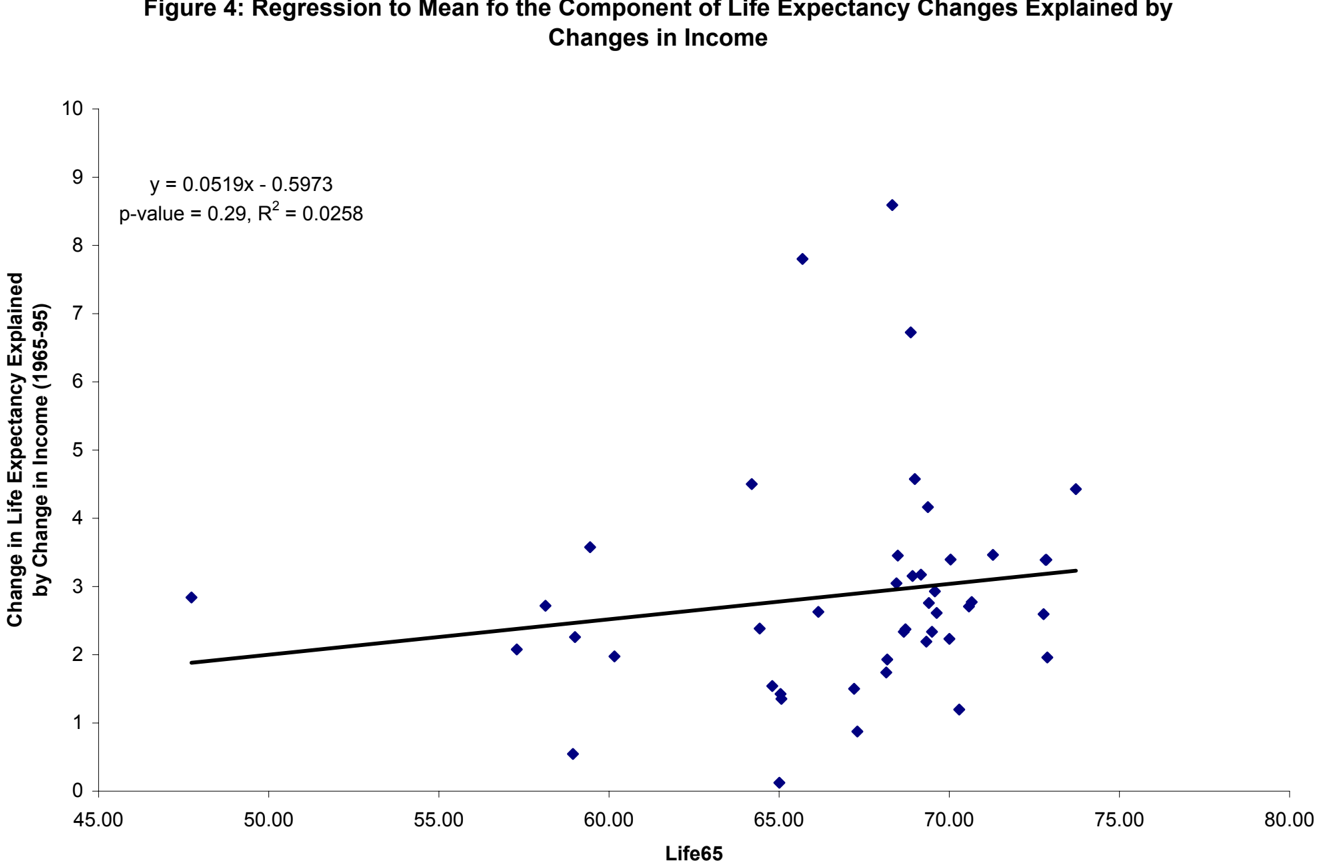
Verification
Claims the paper makes
The claims and statistics of this paper haven’t been checked yet.
Free: it reads the open-access text and checks the first 5 claims that cite a source we can check. Create a free account to check every claim.
Claims other papers make about this one
Each is checked against this paper’s own text: does it say what the citing paper says it does?
The cited source says what the claim attributes to it.
In the citing paper
“Our broader welfare measure includes leisure and inequality as well as life expectancy, and uses consumption instead of income as the base. All of these differences are first-order to our findings.”
From Beyond GDP? Welfare across Countries and Time (2016) · cites this paper as Becker, Philipson and Soares (2005)
Self-check
Percentages, sums and reported differences re-computed from the paper’s own numbers.
The self-check needs the paper’s full text.
Citations
Cites
A Contribution to the Empirics of Economic Growth
Mankiw, N. G., Romer, D., & Weil, D. N. (1992) · The Quarterly Journal of Economics · doi:10.2307/2118477 · Cited by 15,119
Journal of Economic Literature
(2019) · AEA Papers and Proceedings · doi:10.1257/pandp.109.633 · Cited by 7,468
The value of a statistical life: A critical review of market estimates throughout the world
Viscusi, W. K., & Aldy, J. E. (2003) · Journal of Risk and Uncertainty · doi:10.1023/a:1025598106257 · Cited by 2,135
Microfluidic diagnostic technologies for global public health
Yager, P., Edwards, T., Fu, E., Helton, K., Nelson, K., Tam, M. R., & Weigl, B. H. (2006) · Nature · doi:10.1038/nature05064 · Cited by 1,979
Demography, Measuring and Modeling Population Processes
Veron, J., Preston, S. H., Heuveline, P., & Guillot, M. (2002) · Population (French Edition) · doi:10.2307/1535065 · Cited by 1,709
Cutler, D., Deaton, A., & Lleras-Muney, A. (2006) · Journal of Economic Perspectives · doi:10.1257/jep.20.3.97 · Cited by 1,555
Inequality Among World Citizens: 1820–1992
Bourguignon, F., & Morrisson, C. (2002) · American Economic Review · doi:10.1257/00028280260344443 · Cited by 1,467
Empirics for economic growth and convergence
Quah, D. T. (1996) · European Economic Review · doi:10.1016/0014-2921(95)00051-8 · Cited by 1,454
Disease and Development: The Effect of Life Expectancy on Economic Growth
Acemoglu, D., & Johnson, S. (2007) · Journal of Political Economy · doi:10.1086/529000 · Cited by 1,290
The value of risks to life and health
Viscusi, W. K. (1993) · Cited by 1,110
Research works printed but not linked: 9
- Barro, Robert J. and Xavier Sala-i-Martin (1992). Convergence. Journal of Political Economy , 100, n2 (April 1992), 223-51.
- Barro, Robert J. and Xavier Sala-i-Martin (1995). Economic Growth . New York, McGraw-Hill, Inc., 1995, 539p.
- Boyle, G. E. and T. G. McCarthy (1999). Simple measures of convergence in per capita GDP: A note on some further international evidence. Applied Economic Letters , 1999, 6, 343-47.
- Browning, Martin, Lars Peter Hansen, and James J. Heckman (1999). Micro data and general equilibrium models. In: John B. Taylor and Michael Woodford (editors). Handbook of Macroeconomics , V.1A. Elsevier Science B.V., 1999, 543-636.
- Cannon, Edmund S. and Nigel W. Duck (2000). Galton's fallacy and economic convergence. Oxford Economic Papers , 52(2000), 415-19.
- Gains from Medical Research: An Economic Approach . The University of Chicago Press, 2003.
- Philipson Tomas J, 2002, DC: World Bank, 245
- Usher, Dan (1973). An imputation of the measure of economic growth for changes in life expectancy. In: Milton Moss (editor). The Measurement of Economic and Social Performance , Studies in Income and Wealth, Volume 38. Conference on Research in Income and Wealth. New York, National Bureau of Economic Research and Columbia University Press, 1973, 193-225.
- Soares Rodrigo R, American Economic Review (forthcoming).
Cited by
Report by the commission on the measurement of economic performance and social progress
Fitoussi, J., Sen, A. K., & Stiglitz, J. E. (2011) · Cited by 3,090
Microfluidic diagnostic technologies for global public health
Yager, P., Edwards, T., Fu, E., Helton, K., Nelson, K., Tam, M. R., & Weigl, B. H. (2006) · Nature · doi:10.1038/nature05064 · Cited by 1,979
Cutler, D., Deaton, A., & Lleras-Muney, A. (2006) · Journal of Economic Perspectives · doi:10.1257/jep.20.3.97 · Cited by 1,555
Inequality Among World Citizens: 1820–1992
Bourguignon, F., & Morrisson, C. (2002) · American Economic Review · doi:10.1257/00028280260344443 · Cited by 1,467
Disease and Development: The Effect of Life Expectancy on Economic Growth
Acemoglu, D., & Johnson, S. (2007) · Journal of Political Economy · doi:10.1086/529000 · Cited by 1,290
Metadata
- Authors
- Becker, G. S., Philipson, T. J., & Soares, R. R.
- Venue
- American Economic Review
- Publisher
- American Economic Association
- Published
- 2005-02-01
- Volume
- 95
- Issue
- 1
- Pages
- 277-291
- ISSN
- 0002-8282 (ISSN-L)
- OpenAlex
- W3122265117
- Cited by
- 840
- References
- 41
- FWCI
- 162.20
- Type
- journal article
- Language
- en
- Open access
- closed
About these checks
Registry, retraction, Cites and statistics results are computed, not judged, with one exception: a printed reference that no index lists is read once by a model before it counts as a citation error. Claims are extracted by a model and kept only when their quote appears verbatim in the text; each cited source is then checked, with a model’s help, for whether it says what the claim relies on. Those verdicts can be wrong — read the claim’s quote and the cited source before relying on one.
Statistics and arithmetic are recomputed, not judged.
Confidence bands are shown only for fields calibrated on our annotated test set. None is calibrated yet, so no band is shown.
What counts as a claim ›How we measure confidence ›How we check this ›
Are you an author, or do you see a problem with this page? Request a review
Data sources
Bibliographic data: Semantic Scholar, OpenAlex, Crossref.
Contains information from the Semantic Scholar Academic Graph Datasets, made available under the ODC Attribution License (ODC-BY 1.0).
Semantic Scholar’s data is described in: Kinney, R., et al. (2023). The Semantic Scholar Open Data Platform. arXiv:2301.10140.
