

From reads to genes to pathways: differential expression analysis of RNA-Seq experiments using Rsubread and the edgeR quasi-likelihood pipeline
Open accessThe DOI matches its Crossref record; 32 of the 32 references it cites were found in a registry or an index; none of the 26 sources its claims cite is checked for support yet.
Abstract
In recent years, RNA sequencing (RNA-seq) has become a very widely used technology for profiling gene expression. One of the most common aims of RNA-seq profiling is to identify genes or molecular pathways that are differentially expressed (DE) between two or more biological conditions. This article demonstrates a computational workflow for the detection of DE genes and pathways from RNA-seq data by providing a complete analysis of an RNA-seq experiment profiling epithelial cell subsets in the mouse mammary gland. The workflow uses R software packages from the open-source Bioconductor project and covers all steps of the analysis pipeline, including alignment of read sequences, data exploration, differential expression analysis, visualization and pathway analysis. Read alignment and count quantification is conducted using the Rsubread package and the statistical analyses are performed using the edgeR package. The differential expression analysis uses the quasi-likelihood functionality of edgeR.
Overview
CoChat Summary
TL;DR
This article presents a complete Bioconductor workflow for RNA-seq differential expression and pathway analysis, from raw reads through Rsubread alignment/counting to edgeR quasi-likelihood testing. Applied to mouse mammary gland epithelial subsets, it identifies thousands of DE genes and enriched pathways, including strong cell-cycle down-regulation upon lactation in mammary stem cells.
Key findings
- The workflow demonstrates Rsubread (Subread aligner and featureCounts) and the edgeR quasi-likelihood pipeline for RNA-seq DE and pathway analysis.
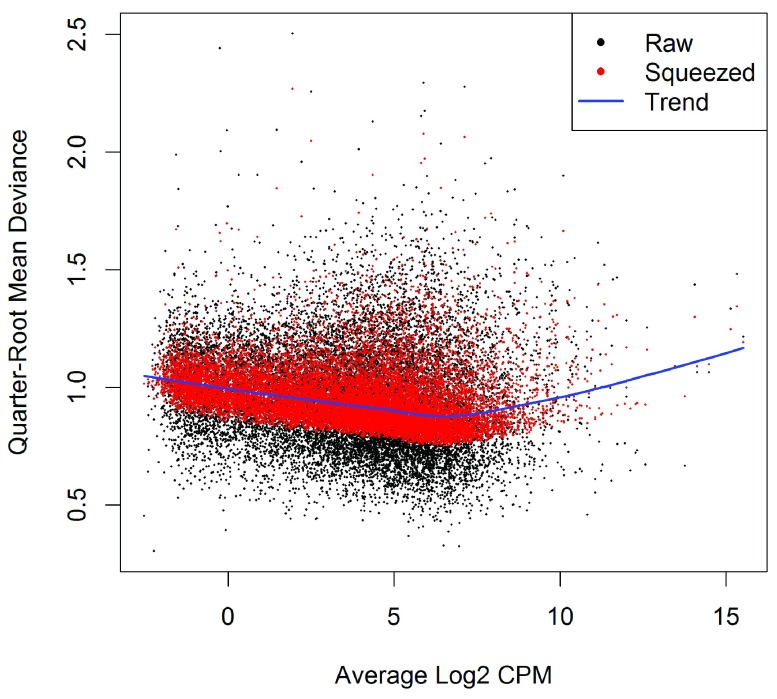
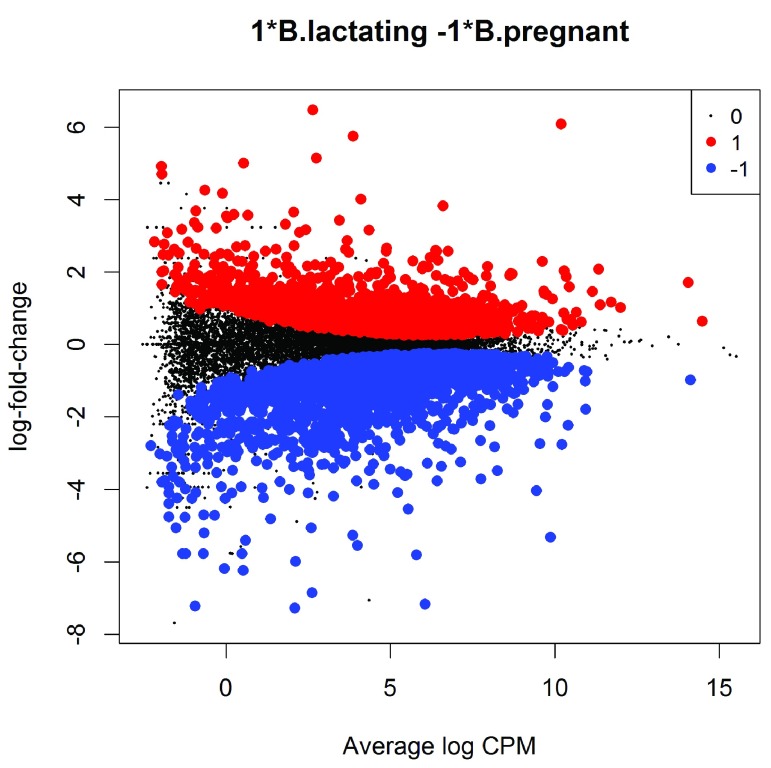
- In the basal pregnant vs lactating comparison, more than 5000 DE genes are identified at an FDR of 5%; the top DE gene, Csn1s2b, is far more highly expressed in basal cells of lactating than pregnant mice.
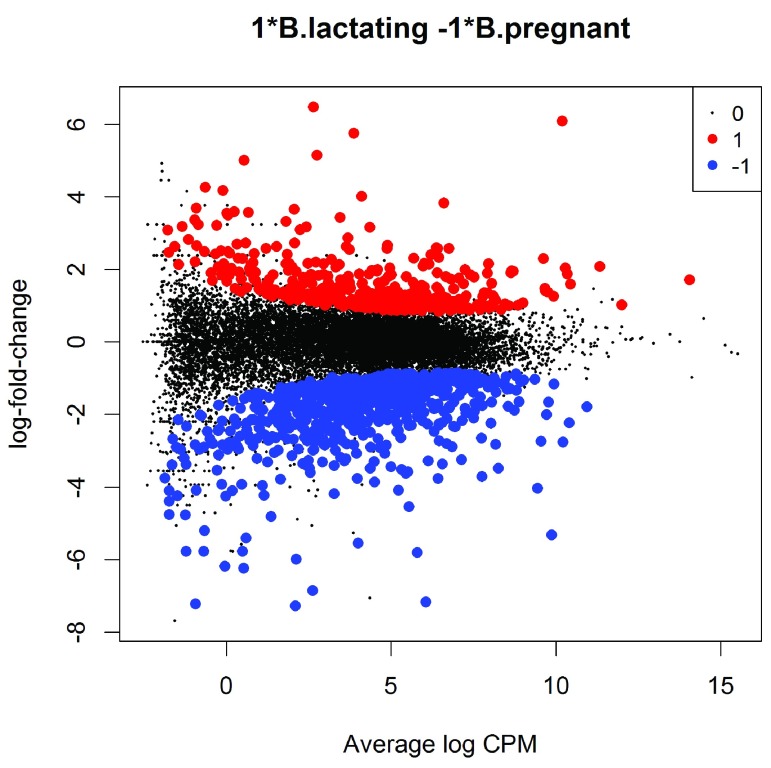
- Using glmTreat with a fold-change threshold of 1.5, about 1100 genes are detected as DE at an FDR of 5%; all statistically significant changes have logFC greater than 0.8 and 97% are greater than 0.9.
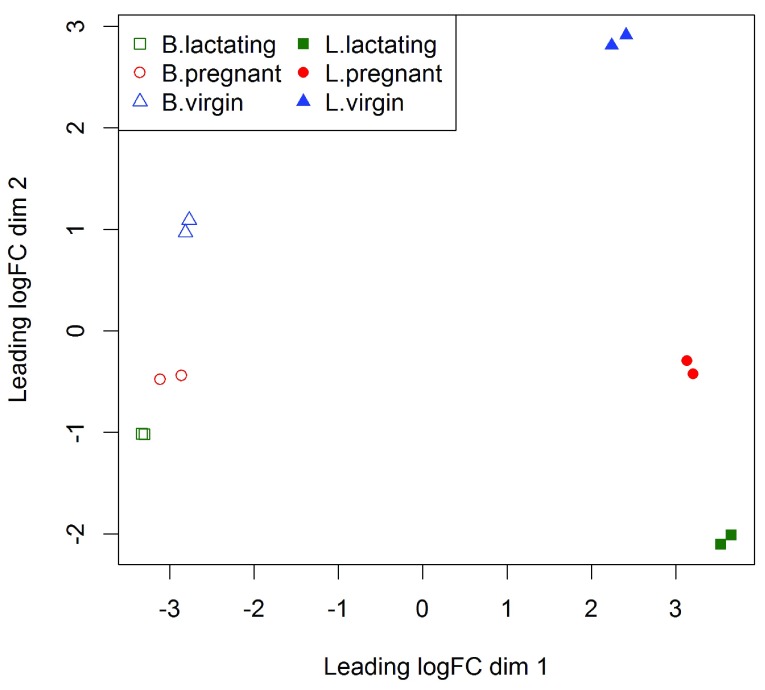
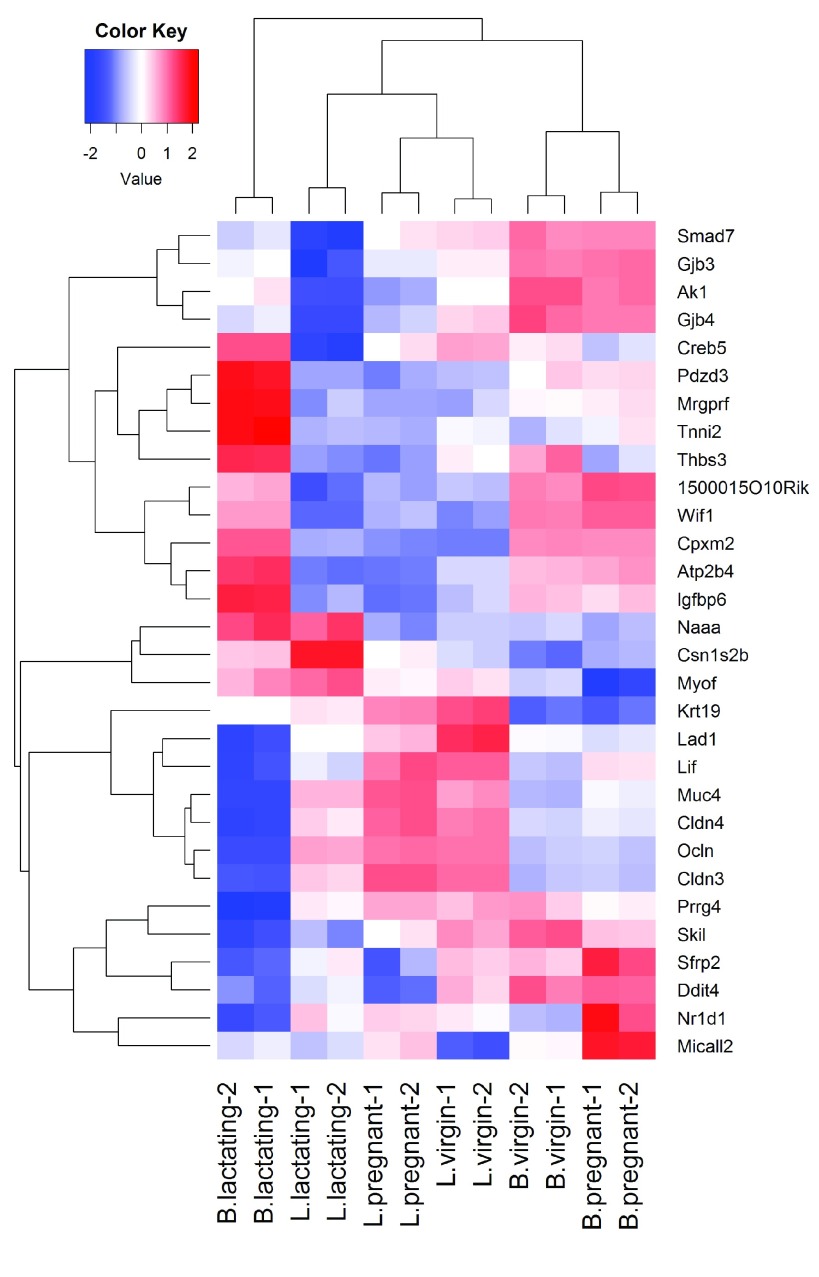
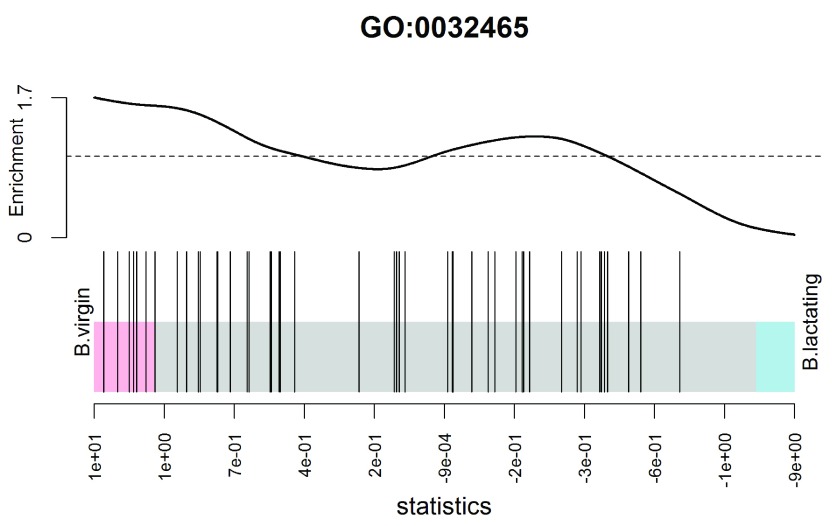
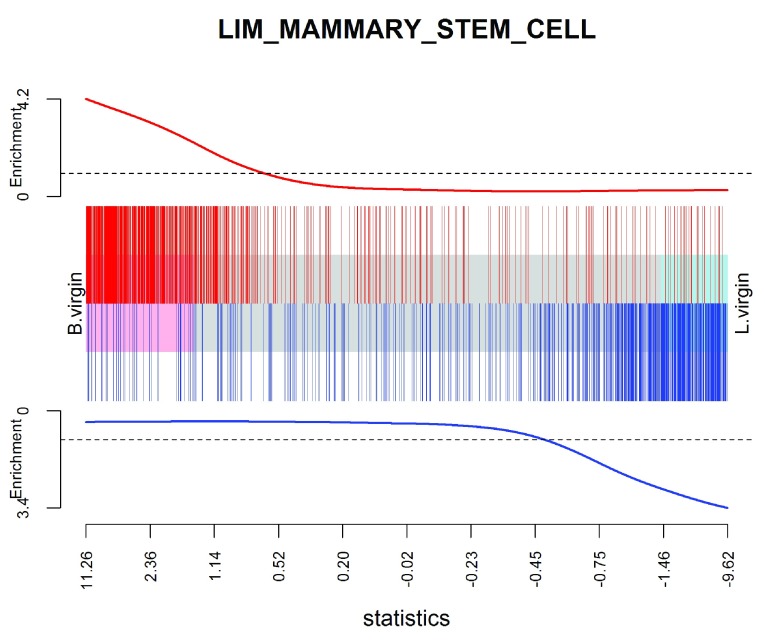
- MDS shows basal and luminal cells separated by about six units on the x-axis, corresponding to a leading fold change of about 64-fold; GO and KEGG analyses show the cell cycle pathway is strongly down-regulated upon lactation in mammary stem cells.
Methods
- Design: RNA-seq profiling of basal stem-cell enriched cells (B) and committed luminal cells (L) in the mouse mammary gland of virgin, pregnant, and lactating mice; six groups with two biological replicates each (GEO series GSE60450).
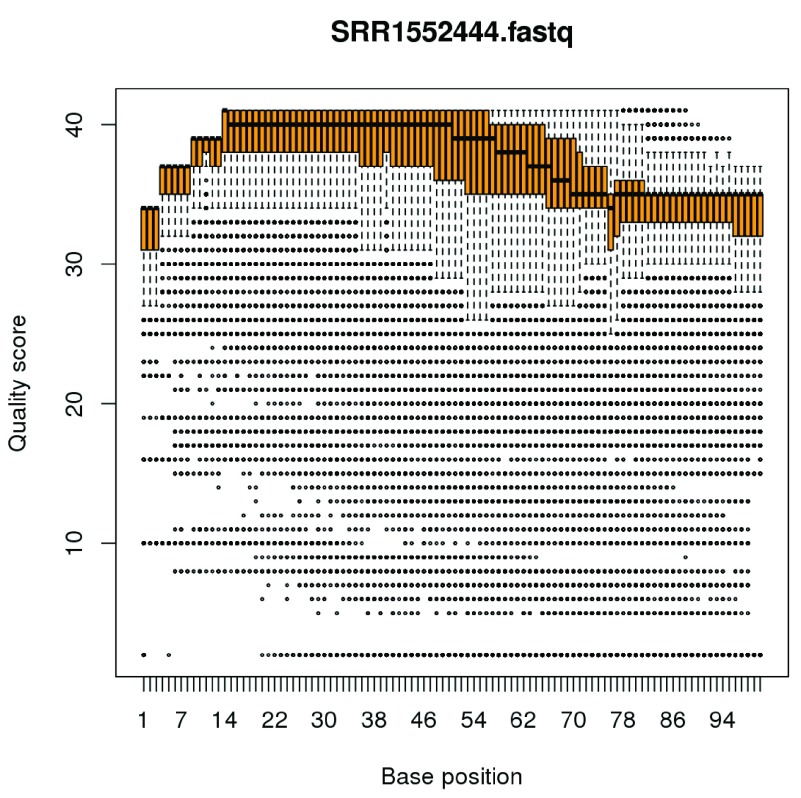
- Data and processing: Illumina HiSeq generated about 30 million 100bp single-end reads per sample; Subread version 1.4.4 aligned reads to the mouse mm10 genome, and featureCounts assigned reads to Entrez Genes using RefSeq annotation.
- Analysis: edgeR DGEList; genes filtered to those with CPM above 0.5 in at least two libraries; TMM normalization; robust estimateDisp and glmQLFit; QL F-tests, glmTreat, goana/kegga, and fry/camera gene set tests.
Limitations
- Stated: the small sample size (n = 2 per group) is justified by low background variability and distinctly different expression profiles; studies with more variability or smaller effect sizes may require more biological replicates.
- Stated: TMM normalization is generally satisfactory for well-designed mRNA gene expression experiments, but single-cell RNA-seq and studies with global differential expression require specialized normalization methods or spike-ins.
- Evident: this is a demonstration workflow on one dataset rather than a formal benchmark; the text notes edgeR-quasi, limma-voom, and limma-trend are equally suitable and give similar results for this data, and read alignment requires Unix or Mac OS and in practice a high-performance Unix server.
Model-written summary. Check it against the paper before relying on it.
Integrity signals
Registry
Cites
Statistics
Figures
Verification
Claims the paper makes
0 Valid · 5 Not valid · 20 Not checked · 50 Own results and interpretations
A result the paper reports from its own data — it cites no other source for it, so there is none to check. The quote shows it is in the paper.
In the paper
“Both the GO and KEGG analyses show that the cell cycle pathway is strongly down-regulated upon lactation in mammary stem cells.”
§ From reads to genes to pathways: differential expression analysis of RNA-Seq experiments using Rsubread and the edgeR quasi-likelihood pipeline > Pathway analysis > KEGG pathway analysis
boostedstates a cause- Asserted: passes — The authors put it forward as true.
- Checkable: passes — It can be checked against evidence.
- Load-bearing: unclear — It is unclear whether the paper’s conclusions depend on it.
- Based: passes — The paper gives a reason why it holds.
- Rests on an assumption not shown here.
A result the paper reports from its own data — it cites no other source for it, so there is none to check. The quote shows it is in the paper.
In the paper
“There are in fact more than 5000 DE genes in this comparison:”
§ From reads to genes to pathways: differential expression analysis of RNA-Seq experiments using Rsubread and the edgeR quasi-likelihood pipeline > Differential expression analysis > Testing for differential expression
boosted- Asserted: passes — The authors put it forward as true.
- Checkable: passes — It can be checked against evidence.
- Load-bearing: unclear — It is unclear whether the paper’s conclusions depend on it.
- Based: passes — The paper gives a reason why it holds.
A result the paper reports from its own data — it cites no other source for it, so there is none to check. The quote shows it is in the paper.
In the paper
“almost all (97%) are greater than 0.9”
§ From reads to genes to pathways: differential expression analysis of RNA-Seq experiments using Rsubread and the edgeR quasi-likelihood pipeline > Differential expression analysis > Differential expression relative to a fold-change threshold
plainstates an association- Asserted: passes — The authors put it forward as true.
- Checkable: passes — It can be checked against evidence.
- Load-bearing: unclear — It is unclear whether the paper’s conclusions depend on it.
- Based: passes — The paper gives a reason why it holds.
A result the paper states — it cites no source for it, so there is none to check. The quote shows it is in the paper.
In the paper
“the number of significantly DE genes is fewer”
§ From reads to genes to pathways: differential expression analysis of RNA-Seq experiments using Rsubread and the edgeR quasi-likelihood pipeline > Differential expression analysis > Differential expression relative to a fold-change threshold
plain- Asserted: passes — The authors put it forward as true.
- Checkable: passes — It can be checked against evidence.
- Load-bearing: passes — The paper’s conclusions depend on it.
- Based: passes — The paper gives a reason why it holds.
A result the paper states — it cites no source for it, so there is none to check. The quote shows it is in the paper.
In the paper
“The p-values from glmTreat are larger than those from glmQLFTest”
§ From reads to genes to pathways: differential expression analysis of RNA-Seq experiments using Rsubread and the edgeR quasi-likelihood pipeline > Differential expression analysis > Differential expression relative to a fold-change threshold
plainstates an association- Asserted: passes — The authors put it forward as true.
- Checkable: passes — It can be checked against evidence.
- Load-bearing: unclear — It is unclear whether the paper’s conclusions depend on it.
- Based: passes — The paper gives a reason why it holds.
20 more claims
Create a free account to see all 75 claims and to verify the 23 references still open.
- It may state two separate claims as one. 24
- Probably not a substantial claim. 37
- The quote only partly states this claim. 1
Citations
Cites
Moderated estimation of fold change and dispersion for RNA-seq data with DESeq2
Love, M. I., Huber, W., & Anders, S. (2014) · Genome Biology · doi:10.1186/s13059-014-0550-8 · Cited by 95,106
Trimmomatic: a flexible trimmer for Illumina sequence data
Bolger, A. M., Lohse, M., & Usadel, B. (2014) · Bioinformatics · doi:10.1093/bioinformatics/btu170 · Cited by 65,548 · cited 8×
“13 loaded via a namespace (and not attached): [1] magrittr_1.”
InfluentialSubramanian, A., Tamayo, P., Mootha, V. K., Mukherjee, S., Ebert, B. L., Gillette, M. A., Paulovich, A., Pomeroy, S. L., Golub, T. R., Lander, E. S., et al. (2005) · Proceedings of the National Academy of Sciences · doi:10.1073/pnas.0506580102 · Cited by 53,625
Robinson, M. D., McCarthy, D. J., & Smyth, G. K. (2010) · Bioinformatics · doi:10.1093/bioinformatics/btp616 · Cited by 41,364
Self-citationlimma powers differential expression analyses for RNA-sequencing and microarray studies
Ritchie, M. E., Phipson, B., Wu, D., Hu, Y., Law, C. W., Shi, W., & Smyth, G. K. (2015) · Nucleic Acids Research · doi:10.1093/nar/gkv007 · Cited by 40,458
Self-citationfeatureCounts: an efficient general purpose program for assigning sequence reads to genomic features
Liao, Y., Smyth, G. K., & Shi, W. (2014) · Bioinformatics · doi:10.1093/bioinformatics/btt656 · Cited by 27,219
Self-citationMcCullagh, P., & Nelder, J. A. (1989) · doi:10.1007/978-1-4899-3242-6 · Cited by 16,836
Smyth, G. K. (2004) · Statistical Applications in Genetics and Molecular Biology · doi:10.2202/1544-6115.1027 · Cited by 11,829
Self-citationA scaling normalization method for differential expression analysis of RNA-seq data
Robinson, M. D., & Oshlack, A. (2010) · Genome Biology · doi:10.1186/gb-2010-11-3-r25 · Cited by 7,876
voom: precision weights unlock linear model analysis tools for RNA-seq read counts
Law, C. W., Chen, Y., Shi, W., & Smyth, G. K. (2014) · Genome Biology · doi:10.1186/gb-2014-15-2-r29 · Cited by 6,155 · cited 1×
“The RNA-seq pipelines of the limma package also offer excellent error rate control [13, 14].”
MethodSelf-citation
Cited by
Items 1,601–1,604 of 1,604
Peer review history of Mayaro virus pathogenesis and immunity in rhesus macaques (part 2)
Weber, W. C., Labriola, C. S., Kreklywich, C. N., Ray, K., Haese, N. N., Andoh, T. F., Denton, M., Medica, S., Streblow, M. M., Smith, P. P., et al. (2023) · doi:10.1371/journal.pntd.0011742.r002
Malmberg, H.-R., Hanel, A., Taipale, M., Heikkinen, S., & Carlberg, C. (2021) · doi:10.3389/fimmu.2021.754056.s003
Cox, M. P., Guo, Y., Winter, D. J., Sen, D., Cauldron, N. C., Shiller, J., Bradley, E. L., Ganley, A. R., Gerth, M. L., Lacey, R. F., et al. (2022) · doi:10.3389/fmicb.2022.1038444.s001
Minor intron splicing efficiency increases with the development of lethal prostate cancer
Augspach, A., Drake, K. D., Roma, L., Qian, E., Lee, S. R., Clarke, D., Kumar, S., Jaquet, M., Gallon, J., Bolis, M., et al. (2021) · Research Portal (Queen's University Belfast)
Self-citation
Metadata
- Authors
- Chen, Y., Lun, A. T. L., & Smyth, G. K.
- Affiliations
- The University of Melbourne (AU)
- University of Cambridge (GB)
- Corresponding author
- Smyth, Gordon K.
- Venue
- F1000Research
- Publisher
- F1000 Research Ltd
- Published
- 2016-06-20
- Volume
- 5
- Pages
- 1438
- ISSN
- 2046-1402 (ISSN-L)
- PMC
- PMC4934518
- OpenAlex
- W2466314544
- Cited by
- 1,601
- References
- 32
- Citations by year
- 2026: 288 · 2025: 254 · 2024: 346 · 2023: 262 · 2022: 188 · 2021: 95 · 2020: 85 · 2019: 46 · 2018: 24 · 2017: 10 · 2016: 2
- FWCI
- 7.84
- Type
- journal article
- Language
- en
- Update notices
- new_version (2016-08-02)
- Open access
- gold
- doi.org
- Locations
- F1000Research (publishedVersion, cc-by)
- Europe PMC (PubMed Central) (publishedVersion, cc-by)
- PubMed Central (publishedVersion, cc-by)
- PubMed (publishedVersion)
- DOAJ (DOAJ: Directory of Open Access Journals) (submittedVersion)
- Minerva Access (University of Melbourne) (submittedVersion, cc-by)
- Funders
- Medical Research Council
- National Health and Medical Research Council (1054618, 1058892)
- Topics
- Life Sciences › Biochemistry, Genetics and Molecular Biology › Molecular Biology › Genomics and Phylogenetic Studies
- Life Sciences › Biochemistry, Genetics and Molecular Biology › Molecular Biology › Gene expression and cancer classification
- Life Sciences › Biochemistry, Genetics and Molecular Biology › Molecular Biology › Bioinformatics and Genomic Networks
- Keywords
- differential expression analysis, RNA-seq, edgeR, quasi-likelihood, pathway analysis, gene expression profiling, mouse mammary gland, read mapping, Bioconductor workflow
About these checks
Registry, retraction, Cites and statistics results are computed, not judged, with one exception: a printed reference that no index lists is read once by a model before it counts as a citation error. Claims are extracted by a model and kept only when their quote appears verbatim in the text; each cited source is then checked, with a model’s help, for whether it says what the claim relies on. Those verdicts can be wrong — read the claim’s quote and the cited source before relying on one.
A language model drew the claims from the paper on 2026-11-23, under version 3 of the claim definition (model deepseek-v4.1-flash, prompt extract-v3).
A second model labelled each claim on 2026-11-23 (model jev-1.13-20260917, definition revision gold-guideline-v0.2).
Statistics and arithmetic are recomputed, not judged.
Confidence bands are shown only for fields calibrated on our annotated test set. None is calibrated yet, so no band is shown.
What counts as a claim ›How we measure confidence ›How we check this ›
Are you an author, or do you see a problem with this page? Request a review
Data sources
Bibliographic data: Semantic Scholar, OpenAlex, Crossref.
Contains information from the Semantic Scholar Academic Graph Datasets, made available under the ODC Attribution License (ODC-BY 1.0).
Semantic Scholar’s data is described in: Kinney, R., et al. (2023). The Semantic Scholar Open Data Platform. arXiv:2301.10140.
