

The integration site of the APP transgene in the J20 mouse model of Alzheimer's disease
The DOI matches its Crossref record; 32 of the 32 references it cites were found in a registry or an index.
Abstract
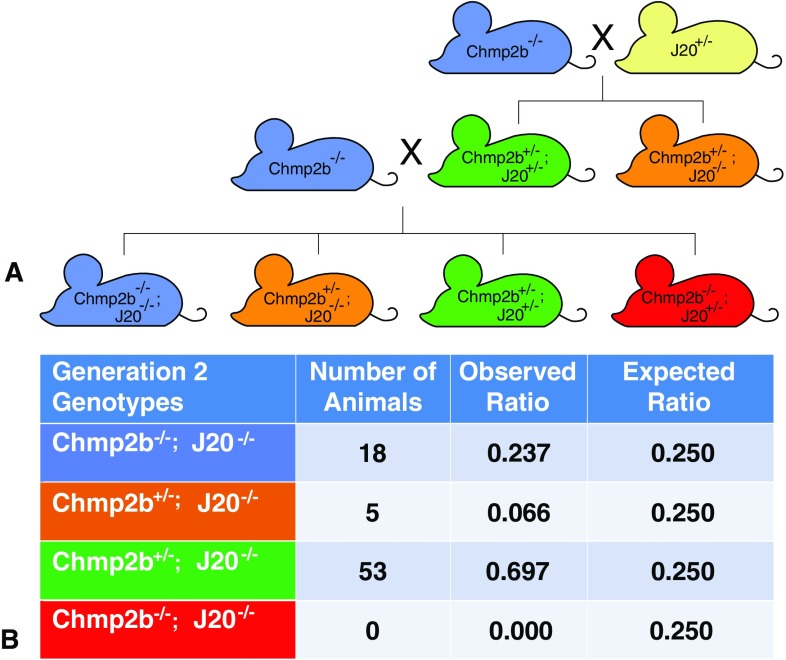
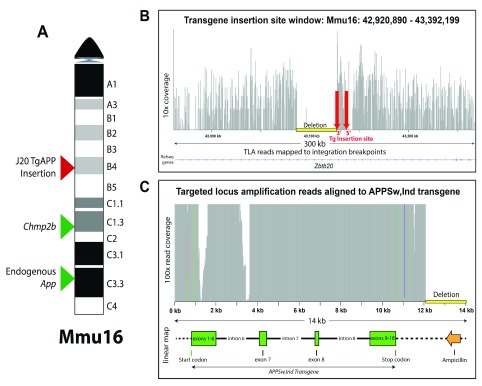
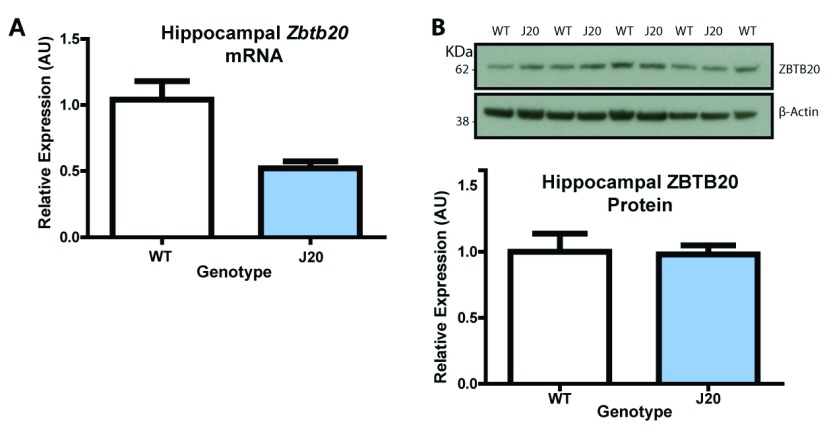
Background: Transgenic animal models are a widely used and powerful tool to investigate human disease and develop therapeutic interventions. Making a transgenic mouse involves random integration of exogenous DNA into the host genome that can have the effect of disrupting endogenous gene expression. The J20 mouse model of Alzheimer’s disease (AD) is a transgenic overexpresser of human APP with familial AD mutations and has been extensively utilised in preclinical studies and our aim was to determine the genomic location of the J20 transgene insertion. Methods: We used a combination of breeding strategy and Targeted Locus Amplification with deep sequencing to identify the insertion site of the J20 transgene array. To assess RNA and protein expression of Zbtb20, we used qRT-PCR and Western Blotting. Results: We demonstrate that the J20 transgene construct has inserted within the genetic locus of endogenous mouse gene Zbtb20 on chromosome 16 in an array , disrupting expression of mRNA from this gene in adult hippocampal tissue, while expression of Zbtb20 protein remains unchanged. We note that the endogenous mouse App gene also lies on chromosome 16, although 42 Mb from the Zbtb20 locus. Conclusions: These data will be useful for future studies utilising this popular model of AD, particularly those investigating gene interactions between the J20 APP transgene and other genes present on Mmu16 in the mouse.
Overview
The claims and statistics of this paper haven’t been checked yet.
Free: it reads the open-access text and checks the first 5 claims that cite a source we can check. Create a free account to check every claim.
Integrity signals
Registry
Cites
Statistics
Figures
Verification
Claims the paper makes
The claims and statistics of this paper haven’t been checked yet.
Free: it reads the open-access text and checks the first 5 claims that cite a source we can check. Create a free account to check every claim.
Claims other papers make about this one
Each is checked against this paper’s own text: does it say what the citing paper says it does?
In the citing paper
“We would like to emphasize here that the genome editing technology is applicable only to KI animals because transgene(s) are generally inserted into multiple loci in a random manner in the overexpressing transgenic animals.68”
From Human MAPT knockin mouse models of frontotemporal dementia for the neurodegenerative research community (2025) · cites this paper as [68]
Self-check
Percentages, sums and reported differences re-computed from the paper’s own numbers.
The self-check needs the paper’s full text.
Citations
Cites
Robinson, J. T., Thorvaldsdóttir, H., Winckler, W., Guttman, M., Lander, E. S., Getz, G., & Mesirov, J. P. (2011) · Nature Biotechnology · doi:10.1038/nbt.1754 · Cited by 15,390
Global quantification of mammalian gene expression control
Schwanhäusser, B., Busse, D., Li, N., Dittmar, G., Schuchhardt, J., Wolf, J., Chen, W., & Selbach, M. (2011) · Nature · doi:10.1038/nature10098 · Cited by 6,566
Complement and microglia mediate early synapse loss in Alzheimer mouse models
Hong, S., Beja-Glasser, V. F., Nfonoyim, B. M., Frouin, A., Li, S., Ramakrishnan, S., Merry, K. M., Shi, Q., Rosenthal, A., Barres, B. A., et al. (2016) · Science · doi:10.1126/science.aad8373 · Cited by 3,343
Alzheimer-type neuropathology in transgenic mice overexpressing V717F β-amyloid precursor protein
Games, D., Adams, D., Alessandrini, R., Barbour, R., Borthelette, P., Blackwell, C., Carr, T., Clemens, J., Donaldson, T., Gillespie, F., et al. (1995) · Nature · doi:10.1038/373523a0 · Cited by 2,516
Self-citationReducing Endogenous Tau Ameliorates Amyloid ß-Induced Deficits in an Alzheimer's Disease Mouse Model
Roberson, E. D., Scearce-Levie, K., Palop, J. J., Yan, F., Cheng, I. H., Wu, T., Gerstein, H., Yu, G.-Q., & Mucke, L. (2007) · Science · doi:10.1126/science.1141736 · Cited by 1,892
Self-citationMucke, L., Masliah, E., Yu, G.-Q., Mallory, M., Rockenstein, E. M., Tatsuno, G., Hu, K., Kholodenko, D., Johnson-Wood, K., & McConlogue, L. (2000) · The Journal of Neuroscience · doi:10.1523/jneurosci.20-11-04050.2000 · Cited by 1,856
Self-citationMass-spectrometry-based draft of the human proteome
Wilhelm, M., Schlegl, J., Hahne, H., Gholami, A. M., Lieberenz, M., Savitski, M. M., Ziegler, E., Butzmann, L., Gessulat, S., Marx, H., et al. (2014) · Nature · doi:10.1038/nature13319 · Cited by 1,820
Preparation of PCR-Quality Mouse Genomic DNA with Hot Sodium Hydroxide and Tris (HotSHOT)
Truett, G. E., Heeger, P., Mynatt, R. L., Truett, A. A., Walker, J. A., & Warman, M. L. (2000) · BioTechniques · doi:10.2144/00291bm09 · Cited by 1,738
Palop, J. J., Chin, J., Roberson, E. D., Wang, J., Thwin, M. T., Bien-Ly, N., Yoo, J., Ho, K. O., Yu, G.-Q., Kreitzer, A., et al. (2007) · Neuron · doi:10.1016/j.neuron.2007.07.025 · Cited by 1,653
Self-citationMullan, M., Crawford, F., Axelman, K., Houlden, H., Lilius, L., Winblad, B., & Lannfelt, L. (1992) · Nature Genetics · doi:10.1038/ng0892-345 · Cited by 1,513
Research works printed but not linked: 2
- Bishop JO Smith P: Mechanism of chromosomal integration of microinjected DNA. Mol Biol Med. 1989; 6(4): 283– 298. 2695741
- Sutherland AP Zhang H Zhang Y: Zinc finger protein Zbtb20 is essential for postnatal survival and glucose homeostasis. Mol Cell Biol. 2009; 29(10): 2804– 2815. 10.1128/MCB.01667-08 19273596 PMC2682054 · DOI
Cited by
Goodwin, L. O., Splinter, E., Davis, T. L., Urban, R., He, H., Braun, R. E., Chesler, E. J., Kumar, V., van Min, M., Ndukum, J., et al. (2019) · Genome Research · doi:10.1101/gr.233866.117 · Cited by 205
Johnson, E. C. B., Ho, K., Yu, G.-Q., Das, M., Sanchez, P. E., Djukic, B., Lopez, I., Yu, X., Gill, M., Zhang, W., et al. (2020) · Molecular Neurodegeneration · doi:10.1186/s13024-020-00393-5 · Cited by 73
Self-citationRodent Modeling of Alzheimer's Disease in Down Syndrome: In vivo and ex vivo Approaches
Farrell, C., Mumford, P., & Wiseman, F. K. (2022) · Frontiers in Neuroscience · doi:10.3389/fnins.2022.909669 · Cited by 22
Self-citationMorito, T., Qi, M., Kamano, N., Sasaguri, H., Bez, S., Foiani, M., Duff, K., Benner, S., Endo, T., Hama, H., et al. (2025) · Cell Reports Methods · doi:10.1016/j.crmeth.2025.101024 · Cited by 18
Metadata
- Authors
- Tosh, J. L., Rickman, M., Rhymes, E., Norona, F. E., Clayton, E., Mucke, L., Isaacs, A. M., Fisher, E. M. C., & Wiseman, F. K.
- Venue
- Wellcome Open Research
- Publisher
- F1000 Research Ltd
- Published
- 2017-09-13
- Volume
- 2
- Pages
- 84
- ISSN
- 2398-502X
- PMC
- PMC5645710
- Cited by
- 21
- References
- 32
- Language
- en
- Update notices
- new_version (2018-10-10)
- Funders
- Alzheimer's Society (192(ALZSOC-PhD-2013-001))
- Medical Research Council (MR/J004022/1)
- Alzheimer’s Research UK (ARUK-PPG2014B-5)
- Wellcome Trust (098330)
About these checks
Registry, retraction, Cites and statistics results are computed, not judged, with one exception: a printed reference that no index lists is read once by a model before it counts as a citation error. Claims are extracted by a model and kept only when their quote appears verbatim in the text; each cited source is then checked, with a model’s help, for whether it says what the claim relies on. Those verdicts can be wrong — read the claim’s quote and the cited source before relying on one.
Statistics and arithmetic are recomputed, not judged.
Confidence bands are shown only for fields calibrated on our annotated test set. None is calibrated yet, so no band is shown.
What counts as a claim ›How we measure confidence ›How we check this ›
Are you an author, or do you see a problem with this page? Request a review
Data sources
Bibliographic data: Semantic Scholar, OpenAlex, Crossref.
Contains information from the Semantic Scholar Academic Graph Datasets, made available under the ODC Attribution License (ODC-BY 1.0).
Semantic Scholar’s data is described in: Kinney, R., et al. (2023). The Semantic Scholar Open Data Platform. arXiv:2301.10140.
