

The DOI matches its Crossref record; 53 of the 54 references it cites were found in a registry or an index.
Advances in Patient Reported Outcomes: The NIH PROMIS Measures
Open accessAbstract
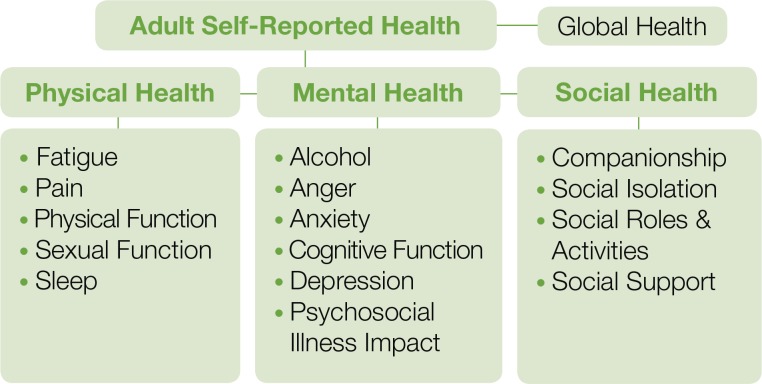
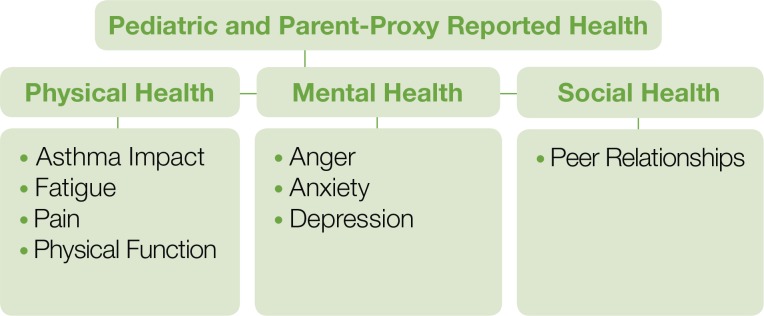
Patient reported outcomes (PROs) are questionnaire measures of patients’ symptoms, functioning, and health-related quality of life. They are designed to provide important clinical information that generally cannot be captured with objective medical testing. Recent legislative developments in the United States support greater efforts to include patients’ reports of health experience to evaluate treatment outcomes, engage in shared decision-making, and prioritize the focus of treatment. PROs have garnered increased attention by the Food and Drug Administration (FDA) for evaluating drugs and medical devices. Recent calls for comparative effectiveness research favor inclusion of PROs. In 2004, the National Institutes of Health launched a research initiative to improve the clinical research enterprise by developing state-of-the-art PROs. The NIH Patient Reported Outcomes Measurement System (PROMIS) and Assessment Center are the products of that initiative. Adult, pediatric, and parent-proxy item banks have been developed using contemporary psychometric methods, yielding rapid, accurate measurement. PROMIS currently provides tools for assessing physical, mental, and social health using short-form and computer adaptive testing methods. The PROMIS tools are being adopted for use in clinical trials and translational research. They are also being introduced in clinical medicine to assess a broad range of disease outcomes. There is potential for use of PROs to improve quality of care and disease outcomes, to provide patient-centered assessment for comparative effectiveness research, and to enable a common metric for tracking outcomes across providers and medical systems.
Overview
The claims and statistics of this paper haven’t been checked yet.
Run the check — free, no account needed. It reads the open-access text and checks the sources it cites.
Integrity signals
Registry
Cites
Statistics
Figures
Verification
Claims the paper makes
The claims and statistics of this paper haven’t been checked yet.
Run the check — free, no account needed. It reads the open-access text and checks the sources it cites.
Self-check
Percentages, sums and reported differences re-computed from the paper’s own numbers.
The self-check needs the paper’s full text.
Citations
Cites
Cella, D., Yount, S., Rothrock, N., Gershon, R., Cook, K., Reeve, B., Ader, D., Fries, J. F., Bruce, B., & Rose, M. (2007) · Medical Care · doi:10.1097/01.mlr.0000258615.42478.55 · Cited by 3,118
Self-citationU.S. Department of Health and Human Services FDA Center for Drug Evaluation and Research, U.S. Department of Health and Human Services FDA Center for Biologics Evaluation and Research, & U.S. Department of Health and Human Services FDA Center for Devices and Radiological Health (2006) · Health and Quality of Life Outcomes · doi:10.1186/1477-7525-4-79 · Cited by 2,856
Psychometric Evaluation and Calibration of Health-Related Quality of Life Item Banks
Reeve, B. B., Hays, R. D., Bjørner, J. B., Cook, K. F., Crane, P. K., Teresi, J. A., Thissen, D., Revicki, D. A., Weiss, D. J., Hambleton, R. K., et al. (2007) · Medical Care · doi:10.1097/01.mlr.0000250483.85507.04 · Cited by 1,491
Self-citationTowards a global definition of patient centred care
Stewart, M. (2001) · BMJ · doi:10.1136/bmj.322.7284.444 · Cited by 1,114
Using quality of life measures in the clinical setting
Higginson, I. J., & Carr, A. J. (2001) · BMJ · doi:10.1136/bmj.322.7297.1297 · Cited by 982
Why the nation needs a policy push on patient-centered health care
Epstein, R. M., Fiscella, K., Lesser, C. S., & Stange, K. C. (2010) · Health Affairs · doi:10.1377/hlthaff.2009.0888 · Cited by 866
Valderas, J. M., Kotzeva, A., Espallargues, M., Guyatt, G., Ferrans, C. E., Halyard, M. Y., Revicki, D. A., Symonds, T., Parada, A., & Alonso, J. (2008) · Quality of Life Research · doi:10.1007/s11136-007-9295-0 · Cited by 775
Gravel, K., Légaré, F., & Graham, I. D. (2006) · Implementation Science · doi:10.1186/1748-5908-1-16 · Cited by 755
Evaluation of Item Candidates: The PROMIS Qualitative Item Review
DeWalt, D. A., Rothrock, N., Yount, S., & Stone, A. A. (2007) · Medical Care · doi:10.1097/01.mlr.0000254567.79743.e2 · Cited by 719
Self-citationEllwood, P. M. (1988) · New England Journal of Medicine · doi:10.1056/nejm198806093182327 · Cited by 698
Cited by
Sorted by citations
Delivering transformative action in paediatric pain: a Lancet Child & Adolescent Health Commission
Eccleston, C., Fisher, E., Howard, R. F., Slater, R., Forgeron, P. A., Palermo, T. M., Birnie, K. A., Anderson, B. J., Chambers, C. T., Crombez, G., et al. (2020) · The Lancet Child & Adolescent Health · doi:10.1016/s2352-4642(20)30277-7 · Cited by 361
PEDSnet: a National Pediatric Learning Health System
Forrest, C. B., Margolis, P. A., Bailey, L. C., Marsolo, K. A., Beccaro, M. A. D., Finkelstein, J. A., Milov, D. E., Vieland, V. J., Wolf, B. A., Yu, F., et al. (2014) · Journal of the American Medical Informatics Association · doi:10.1136/amiajnl-2014-002743 · Cited by 229
Self-citationFree, Brief, and Validated: Standardized Instruments for Low-Resource Mental Health Settings
Beidas, R. S., Stewart, R. E., Walsh, L., Lucas, S., Downey, M. M., Jackson, K., Fernandez, T., & Mandell, D. S. (2014) · Cognitive and Behavioral Practice · doi:10.1016/j.cbpra.2014.02.002 · Cited by 240
Taylor, A. M., Phillips, K., Patel, K. V., Turk, D. C., Dworkin, R. H., Beaton, D., Clauw, D. J., Gignac, M. A. M., Markman, J. D., Williams, D. A., et al. (2016) · Pain · doi:10.1097/j.pain.0000000000000577 · Cited by 208
Garcia‐Romeu, A., Cox, D. J., Smith, K. E., Dunn, K. E., & Griffiths, R. R. (2020) · Drug and Alcohol Dependence · doi:10.1016/j.drugalcdep.2020.107849 · Cited by 187
Metadata
- Authors
- Broderick, J., DeWit, E. M., Rothrock, N., Crane, P., & Forrest, C. B.
- Affiliations
- Stony Brook University (US)
- Northwestern University (US)
- University of Washington (US)
- University of Pennsylvania (US)
- Venue
- eGEMs (Generating Evidence & Methods to improve patient outcomes)
- Publisher
- Ubiquity Press, Ltd.
- Published
- 2013-02-08
- Volume
- 1
- Issue
- 1
- Pages
- 12
- ISSN
- 2327-9214 (ISSN-L)
- PMC
- PMC4371419
- OpenAlex
- W1908118904
- Cited by
- 244
- References
- 54
- Citations by year
- 2026: 6 · 2025: 13 · 2024: 25 · 2023: 23 · 2022: 34 · 2021: 31 · 2020: 26 · 2019: 21 · 2018: 25 · 2017: 14 · 2016: 10 · 2015: 5 · 2014: 10
- FWCI
- 11.40
- Type
- journal article
- Language
- en
- Open access
- diamond
- doi.org
- Licence
- cc-by-nc-nd
- Locations
- eGEMs (Generating Evidence & Methods to improve patient outcomes) (publishedVersion, cc-by-nc-nd)
- Europe PMC (PubMed Central) (publishedVersion, cc-by-nc-nd)
- PubMed Central (publishedVersion, cc-by-nc-nd)
- PubMed (publishedVersion)
- DOAJ (DOAJ: Directory of Open Access Journals) (submittedVersion)
- Funders
- Children's Hospital of Philadelphia (U01AR057956)
- Northwestern University (U54AR057951, U54AR057943, U01AR052177)
- University of Washington (U01AR052171, U01AR057954)
- University of Pittsburgh (U01AR052155)
- Georgetown University (U01AR057971)
- Australian Government
- National Institutes of Health (5u01ar057940-04, U01AR057940)
- University of California, Los Angeles (U01AR057936)
- University of North Carolina at Chapel Hill (U01AR052181)
- National Institute of Arthritis and Musculoskeletal and Skin Diseases (U01AR052171, U01AR057956, U01AR057967, U01AR052186, U01-AR-057940, U01AR057936, U54AR057943, U01AR057929, U01AR052170, U01AR052158, U01AR052155, U01AR052177, U01AR052181, U01AR057971, U01AR057954, U01AR057948, U54AR057926, U54AR057951)
- Common Fund
- Topics
- Social Sciences › Decision Sciences › Management Science and Operations Research › Psychometric Methodologies and Testing
- Social Sciences › Economics, Econometrics and Finance › Economics and Econometrics › Health Systems, Economic Evaluations, Quality of Life
- Health Sciences › Nursing › Research and Theory › Health Education and Validation
- Keywords
- patient-reported outcomes, PROMIS, item bank, computerized adaptive testing, health-related quality of life, physical function, mental health, social health, shared decision-making, comparative effectiveness research, patient-centered outcomes, outcome measurement
About these checks
Registry, retraction, Cites and statistics results are computed, not judged, with one exception: a printed reference that no index lists is read once by a model before it counts as a citation error. Claims are extracted by a model and kept only when their quote appears verbatim in the text; each cited source is then checked, with a model’s help, for whether it says what the claim relies on. Those verdicts can be wrong — read the claim’s quote and the cited source before relying on one.
Statistics and arithmetic are recomputed, not judged.
Confidence bands are shown only for fields calibrated on our annotated test set. None is calibrated yet, so no band is shown.
What counts as a claim ›How we measure confidence ›How we check this ›
Are you an author, or do you see a problem with this page? Request a review
