

Cetaceans Have Complex Brains for Complex Cognition
Open accessThe DOI matches its Crossref record; 82 of the 82 references it cites were found in a registry or an index.
Abstract
A group of eminent cetacean researchers respond to headlines charging that dolphins might be "flippin' idiots". They examine behavioural, anatomical and evolutionary data to conclude that the large brain of cetaceans evolved to support complex cognitive abilities.
Overview
The claims and statistics of this paper haven’t been checked yet.
Free: it reads the open-access text and checks the first 5 claims that cite a source we can check. Create a free account to check every claim.
Integrity signals
Registry
Cites
Statistics
Figures


Verification
Claims the paper makes
The claims and statistics of this paper haven’t been checked yet.
Free: it reads the open-access text and checks the first 5 claims that cite a source we can check. Create a free account to check every claim.
Claims other papers make about this one
Each is checked against this paper’s own text: does it say what the citing paper says it does?
The source backs part of the claim, not all of it — or backs it for a different population, condition or comparison.
In the citing paper
“The available information suggests, however, that social communication and structure are often complex in mysticetes, and include long-term social bonds, long-range communication, cooperative hunting, cultural traditions, and fission-fusion like social behavior (Simmonds 2006;Marino et al. 2007;Whitehead 2011).”
From THE EVOLUTIONARY HISTORY OF CETACEAN BRAIN AND BODY SIZE: CETACEAN BRAIN EVOLUTION (2013) · cites this paper as Marino et al. 2007
Experimental — accuracy not yet measuredThe cited source says what the claim attributes to it.
In the citing paper
“Beluga whales are members of the family Monodontidae and like the other mammalian species that demonstrate the capacity for MSR, have large complex brains [19,20] and live in complex societies with a fission-fusion social structure [21–23].”
From Evidence for mirror self-recognition in beluga whales (Delphinapterus leucas) (2026) · cites this paper as [20]
Self-check
Percentages, sums and reported differences re-computed from the paper’s own numbers.
The self-check needs the paper’s full text.
Citations
Cites
Trends, Rhythms, and Aberrations in Global Climate 65 Ma to Present
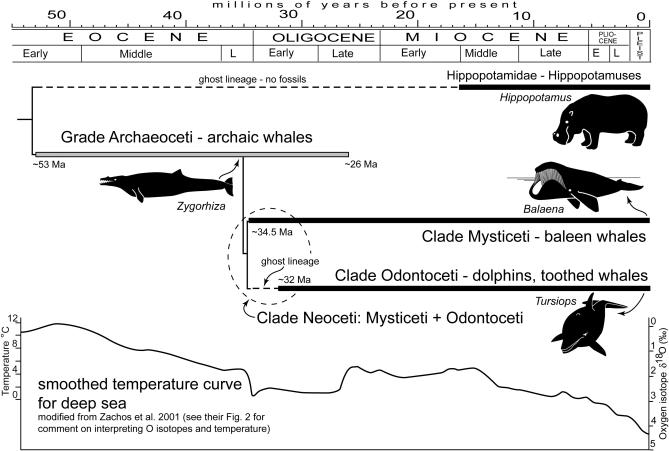
Zachos, J., Pagani, M., Sloan, L., Thomas, E., & Billups, K. (2001) · Science · doi:10.1126/science.1059412 · Cited by 10,458
A molecular timescale for vertebrate evolution
Kumar, S., & Hedges, S. B. (1998) · Nature · doi:10.1038/31927 · Cited by 1,936
Glia: listening and talking to the synapse
Haydon, P. G. (2001) · Nature Reviews Neuroscience · doi:10.1038/35058528 · Cited by 1,408
Control of Synapse Number by Glia
Ullian, E. M., Sapperstein, S. K., Christopherson, K. S., & Barres, B. A. (2001) · Science · doi:10.1126/science.291.5504.657 · Cited by 1,380
Social intelligence, innovation, and enhanced brain size in primates
Reader, S. M., & Laland, K. N. (2002) · Proceedings of the National Academy of Sciences · doi:10.1073/pnas.062041299 · Cited by 1,126
Culture in whales and dolphins
Rendell, L., & Whitehead, H. (2001) · Behavioral and Brain Sciences · doi:10.1017/s0140525x0100396x · Cited by 990
Self-citationAstrocyte-mediated potentiation of inhibitory synaptic transmission
Kang, J., Jiang, L., Goldman, S. A., & Nedergaard, M. (1998) · Nature Neuroscience · doi:10.1038/3684 · Cited by 842
A universal scaling law between gray matter and white matter of cerebral cortex
Zhang, K., & Sejnowski, T. J. (2000) · Proceedings of the National Academy of Sciences · doi:10.1073/pnas.090504197 · Cited by 723
Mirror self-recognition in the bottlenose dolphin: a case of cognitive convergence
Reiss, D., & Marino, L. (2001) · Proceedings of the National Academy of Sciences · doi:10.1073/pnas.101086398 · Cited by 711
Self-citationSelf-recognition in an Asian elephant
Plotnik, J. M., de Waal, F. B. M., & Reiss, D. (2006) · Proceedings of the National Academy of Sciences · doi:10.1073/pnas.0608062103 · Cited by 709
Self-citation
Research works printed but not linked: 80
- Marino, 1998, Brain Behav Evol, 51, 230
- Connor, 1992, Coalitions and alliances in animals and humans, 415
- Ridgway, 1986, Dolphin cognition and behavior: a comparative approach, 31
- Manger, 2006, Biol Rev, 81, 293
- Geisler, 2005, J Mamm Evol, 12, 145
- Marino, 2004, Anat Rec, 281A, 1247
- Zachos, 2001, Science, 292, 686
- Millien, 2006, Ecol Lett, 9, 853
- Downhower, 1988, Nature, 335, 675
- Fleischer, 1976, J Paleontol, 50, 133
- Kumar, 1998, Nature, 392, 917
- Gingerich, 1998, Paleo-electronica, 2, 1
- Kesarev, 1971, Soviet Sci Rev, 1, 52
- Glezer, 1988, Behav Brain Sci, 11, 75
- Hof, 2005, Anat Rec, 287, 1142
- Hof, 2007, Anat Rec, 290, 1
- Allman, 2005, Trends Cogn Sci, 9, 367
- Nimchinsky, 1995, J Comp Neurol, 355, 27
- Nimchinsky, 1999, Proc Natl Acad Sci U S A, 96, 5268
- Zhang, 2000, Proc Natl Acad Sci U S A, 97, 5621
- Schenker, 2005, J Hum Evol, 49, 547
- Schoenemann, 2005, Nat Neurosci, 8, 242
- Haydon, 2001, Nat Rev Neurosci, 2, 185
- Kang, 1998, Nat Neurosci, 1, 683
- Ullian, 2001, Science, 26, 657
- Herman, 1974, J Exp Anal Behav, 21, 19
- Herman, 1989, J Exp Psych: Anim Behav Proc, 15, 124
- Thompson, 1977, Science, 195, 501
- Thompson, 1981, Animal Learn Behav, 9, 9
- Herman, 1994, Mar Mamm Sci, 10, 70
- Mercado, 2000, Behav Proc, 50, 79
- Herman, 1990, J Exp Psych: Gen, 119, 215
- Herman, 1984, Cognition, 16, 129
- Herman, 1993, J Exp Psychol: Gen, 122, 184
- Reiss, 1993, J Comp Psychol, 107, 301
- Richards, 1984, J Comp Psychol, 98, 10
- Hooper, 2006, Int J Comp Psychol, 19, 116
- Whiten, 2001, Behav Brain Sci, 24, 359
- Herman, 1999, J Comp Psychol, 113, 1
- Pack, 2004, J Comp Psychol, 118, 160
- Tschudin, 2001, J Comp Psychol, 115, 100
- Pack, 2007, J Comp Psychol, 121, 34
- Xitco, 1996, Anim Learn Behav, 24, 355
- Xitco, 2001, Anim Cogn, 4, 115
- Xitco, 2004, Anim Cogn, 7, 231
- Reiss, 2001, Proc Natl Acad Sci U S A, 98, 5937
- Plotnik, 2006, Proc Natl Acad Sci U S A, 103, 17053
- McCowan, 2000, J Comp Psychol, 114, 98
- Mercado, 1998, Anim Learn Behav, 26, 210
- Mercado, 1999, Anim Cogn, 2, 17
- Herman, 2001, Anim Learn Behav, 29, 250
- Smith, 1995, J Exp Psychol: Gen, 124, 391
- Connor, 2000, Cetacean societies: Field studies of whales and dolphins, 91
- Baird, 2000, Cetacean societies: Field studies of whales and dolphins, 127
- Gazda, 2005, Proc R Soc Lond Ser B, 272, 135
- Lusseau, 2006, Behav Proc, 73, 257
- Lusseau, 2007, Evol Ecol
- Rendell, 2001, Behav Brain Sci, 24, 309
- Ford, 2000, Killer whales
- Herman, 1980, Cetacean behavior: Mechanisms and functions, 149
- Reidenberg, 1987, Anat Rec, 218, 98
- Reidenberg, 1988, Anat Rec, 221, 892
- Reidenberg, 1994, Anat Rec, 240, 598
- Reidenberg, 1999, Eur Res Cetaceans, 12, 259
- Ferrer, 2006, Europhys Lett, 74, 1095
- McCowan, 1999, Anim Behav, 57, 409
- McCowan, 2002, J Comp Psychol, 116, 166
- Ford, 1991, Can J Zool, 69, 1454
- Yurk, 2002, Anim Behav, 63, 1103
- Deecke, 2000, Anim Behav, 40, 629
- Rendell, 2003, Proc Biol Sci, 270, 225
- Deecke, 2002, Nature, 420, 171
- Janik, 2006, Proc Natl Acad Sci U S A, 103, 8293
- Guinet, 1995, Can J Zool, 73, 27
- Foote, 2007, Biol Lett
- Connor, 2006, Anim Behav, 72, 1371
- Reader, 2002, Proc Natl Acad Sci U S A, 99, 4436
- Lefebvre, 2002, Behav, 139, 939
- Krûtzen, 2005, Proc Natl Acad Sci U S A, 102, 8939
- Magnan, 1934, Le Vol des Insects
Cited by
Items 101–200 of 352
The size and complexity of dolphin brains-a paradox?
Huggenberger, S. (2008) · Journal of the Marine Biological Association of the United Kingdom · doi:10.1017/s0025315408000738 · Cited by 27
Johnson, C. M., Sullivan, J., Buck, C. L., Trexel, J., & Scarpuzzi, M. (2014) · Animal Cognition · doi:10.1007/s10071-014-0788-2 · Cited by 27
Observational Learning in Wild and Captive Dolphins
Yeater, D. B., & Kuczaj, S. A. (2010) · International Journal of Comparative Psychology · doi:10.46867/ijcp.2010.23.03.04 · Cited by 27
SETI in the light of cosmic convergent evolution
Martinez, C. L. F. (2014) · Acta Astronautica · doi:10.1016/j.actaastro.2014.08.013 · Cited by 31
Morphology and Variation in Porpoise (Cetacea: Phocoenidae) Cranial Endocasts
Racicot, R. A., & Colbert, M. W. (2013) · The Anatomical Record · doi:10.1002/ar.22704 · Cited by 29
Xu, S., Sun, X., Niu, X., Zhang, Z., Tian, R., Ren, W., Zhou, K., & Yang, G. (2017) · BMC Evolutionary Biology · doi:10.1186/s12862-017-1051-7 · Cited by 27
The relationship between problem-solving ability and laterality in cats
Isparta, S., Demirbaş, Y. S., Bars, Z., Kul, B. Ç., Güntürkün, O., Ocklenburg, S., & Pereira, G. G. (2020) · Behavioural Brain Research · doi:10.1016/j.bbr.2020.112691 · Cited by 30
Montie, E. W., Schneider, G. E., Ketten, D. R., Marino, L., Touhey, K. E., & Hahn, M. E. (2008) · The Anatomical Record · doi:10.1002/ar.20654 · Cited by 27
Self-citationSexual Strategies: Male and Female Mating Tactics
Orbach, D. N. (2019) · Ethology and behavioral ecology of marine mammals · doi:10.1007/978-3-030-16663-2_4 · Cited by 24
Herzing, D. L. (2013) · Acta Astronautica · doi:10.1016/j.actaastro.2013.08.007 · Cited by 24
Neuroplasticity, limbic neuroblastosis and neuro-regenerative disorders
Kandasamy, M., & Aigner, L. (2018) · Neural Regeneration Research · doi:10.4103/1673-5374.235214 · Cited by 23
Macroevolution of Toothed Whales Exceptional Relative Brain Size
Serio, C., Castiglione, S., Tesone, G., Piccolo, M., Melchionna, M., Mondanaro, A., Febbraro, M. D., & Raia, P. (2019) · Evolutionary Biology · doi:10.1007/s11692-019-09485-7 · Cited by 24
On seeing our selves and others as persons
Barresi, J. (2009) · New Ideas in Psychology · doi:10.1016/j.newideapsych.2009.11.003 · Cited by 24
Vollmer, N. L., Hayek, L. C., Heithaus, M. R., & Connor, R. C. (2015) · Behaviour · doi:10.1163/1568539x-00003311 · Cited by 22
Self-citationNeural Correlates of Caregiver Burden in Cortical Basal Syndrome and Frontotemporal Dementia
Knutson, K. M., Zamboni, G., Tierney, M., & Grafman, J. H. (2008) · Dementia and Geriatric Cognitive Disorders · doi:10.1159/000167268 · Cited by 25
Individuals as information sources: Could followers benefit from leaders’ knowledge?
Lewis, J. S., Wartzok, D., & Heithaus, M. R. (2013) · Behaviour · doi:10.1163/1568539x-00003075 · Cited by 22
Racicot, R. A., & Rowe, T. B. (2014) · Journal of Paleontology · doi:10.1666/13-109 · Cited by 24
Abramson, J. Z., Hernández-Lloreda, M. V., Esteban, J.-A., Colmenares, F., Aboitiz, F., & Call, J. (2017) · PLoS ONE · doi:10.1371/journal.pone.0178906 · Cited by 20
The Development of a Low-Cost Hydrophone for Passive Acoustic Monitoring of Dolphin’s Vocalizations
Marco, R. D., Nardo, F. D., Lucchetti, A., Virgili, M., Petetta, A., Veli, D. L., Screpanti, L., Bartolucci, V., & Scaradozzi, D. (2023) · Remote Sensing · doi:10.3390/rs15071946 · Cited by 20
The Synergy of Laboratory and Field Studies of Dolphin Behavior and Cognition
Pack, A. A. (2010) · International Journal of Comparative Psychology · doi:10.46867/ijcp.2010.23.04.14 · Cited by 20
Self-citationRecognition Memory in Marmoset and Macaque Monkeys: A Comparison of Active Vision
Nummela, S. U., Jutras, M. J., Wixted, J. T., Buffalo, E. A., & Miller, C. T. (2018) · Journal of Cognitive Neuroscience · doi:10.1162/jocn_a_01361 · Cited by 20
The Relevance of Ecological Transitions to Intelligence in Marine Mammals
Bauer, G. B., Cook, P. F., & Harley, H. E. (2020) · Frontiers in Psychology · doi:10.3389/fpsyg.2020.02053 · Cited by 21
Bruton, O. J. (2021) · Intelligence · doi:10.1016/j.intell.2021.101540 · Cited by 21
Güntürkün, O. (2014) · Brain Behavior and Evolution · doi:10.1159/000357551 · Cited by 21
Butler, A. B. (2012) · Advances in experimental medicine and biology · doi:10.1007/978-1-4614-1704-0_19 · Cited by 22
Butterworth, A., Brakes, P., Vail, C. S., & Reiss, D. (2013) · Journal of Applied Animal Welfare Science · doi:10.1080/10888705.2013.768925 · Cited by 19
Self-citationKelley, T. C., Higdon, J. W., & Ferguson, S. H. (2014) · Canadian Journal of Zoology · doi:10.1139/cjz-2014-0044 · Cited by 20
The pattern of brain-size change in the early evolution of cetaceans
Waugh, D. A., & Thewissen, J. G. M. (2021) · PLoS ONE · doi:10.1371/journal.pone.0257803 · Cited by 19
The PROUST hypothesis: the embodiment of olfactory cognition
Jacobs, L. F. (2022) · Animal Cognition · doi:10.1007/s10071-022-01734-1 · Cited by 23
Brain size evolution in whales and dolphins: new data from fossil mysticetes
McCurry, M. R., Marx, F. G., Evans, A. R., Park, T., Pyenson, N. D., Kohno, N., Castiglione, S., & Fitzgerald, E. M. G. (2021) · Biological Journal of the Linnean Society · doi:10.1093/biolinnean/blab054 · Cited by 18
Chen, M., Tian, J., Gan, Z., Wu, J., Ding, S., & Su, S. (2023) · Journal of Hazardous Materials · doi:10.1016/j.jhazmat.2023.132694 · Cited by 18
Potential Welfare Impacts of Chase and Capture of Small Cetaceans during Drive Hunts in Japan
Vail, C. S., Reiss, D., Brakes, P., & Butterworth, A. (2019) · Journal of Applied Animal Welfare Science · doi:10.1080/10888705.2019.1574576 · Cited by 18
Self-citationManger, P. R., Patzke, N., Spocter, M. A., Bhagwandin, A., Karlsson, K. Æ., Bertelsen, M. F., Alagaili, A. N., Bennett, N. C., Mohammed, O. B., Herculano‐Houzel, S., et al. (2021) · Scientific Reports · doi:10.1038/s41598-021-84762-0 · Cited by 18
Self-citationBoys, R. M., Beausoleil, N. J., Pawley, M. D. M., Littlewood, K. E., Betty, E. L., & Stockin, K. A. (2022) · Diversity · doi:10.3390/d14050338 · Cited by 19
Brough, T., Rayment, W., Slooten, E., & Dawson, S. (2019) · Marine Ecology Progress Series · doi:10.3354/meps13198 · Cited by 18
The natural selection of fidelity in social learning
Claidière, N., & Sperber, D. (2010) · Communicative & Integrative Biology · doi:10.4161/cib.3.4.11829 · Cited by 18
Evolution of whale sensory ecology: Frontiers in nondestructive anatomical investigations
Racicot, R. A. (2021) · The Anatomical Record · doi:10.1002/ar.24761 · Cited by 18
How the evolution of air breathing shaped hippocampal function
Jacobs, L. F. (2021) · Philosophical Transactions of the Royal Society B Biological Sciences · doi:10.1098/rstb.2020.0532 · Cited by 22
Social interaction analysis in captive orcas (Orcinus orca)
Sánchez–Hernández, P., Krasheninnikova, A., Almunia, J., & Molina–Borja, M. (2019) · Zoo Biology · doi:10.1002/zoo.21502 · Cited by 18
The ability of artisanal fishers to recognize the dolphins they cooperate with
da Rosa, D. S. X., Hanazaki, N., Cantor, M., Simões‐Lopes, P. C., & Daura-Jorge, F. G. (2020) · Journal of Ethnobiology and Ethnomedicine · doi:10.1186/s13002-020-00383-3 · Cited by 16
Feral horses’ (Equus ferus caballus) behavior toward dying and dead conspecifics
Mendonça, R. S., Ringhofer, M., Pinto, P., Inoue, S., & Hirata, S. (2019) · Primates · doi:10.1007/s10329-019-00728-x · Cited by 21
Dolphin Cognition: Representations and Processes in Memory and Perception
Mercado, E., & DeLong, C. M. (2010) · International Journal of Comparative Psychology · doi:10.46867/ijcp.2010.23.03.05 · Cited by 20
Co‐evolution of cerebral and cerebellar expansion in cetaceans
Muller, A. S., & Montgomery, S. H. (2019) · Journal of Evolutionary Biology · doi:10.1111/jeb.13539 · Cited by 15
Orekhova, K., Selmanovic, E., Gasperi, R. D., Sosa, M. A. G., Wicinski, B. A., Maloney, B., Seifert, A. C., Alipour, A., Balchandani, P., Gerussi, T., et al. (2022) · Veterinary Sciences · doi:10.3390/vetsci9120692 · Cited by 15
Self-citationCognitive Plasticity and Cortical Modules
Mercado, E. (2009) · Current Directions in Psychological Science · doi:10.1111/j.1467-8721.2009.01627.x · Cited by 15
Multivariate Meta-Analysis of Brain-Mass Correlations in Eutherian Mammals
Steinhausen, C., Zehl, L., Haas-Rioth, M., Morcinek, K., Walkowiak, W., & Huggenberger, S. (2016) · Frontiers in Neuroanatomy · doi:10.3389/fnana.2016.00091 · Cited by 16
Paleoneurology of Artiodactyla, an Overview of the Evolution of the Artiodactyl Brain
Orliac, M. J., Maugoust, J., Balcarcel, A. M., & Gilissen, E. (2022) · Springer eBooks · doi:10.1007/978-3-031-13983-3_13 · Cited by 15
Future-thinking in animals: capacities and limits
Redshaw, J., & Bulley, A. (2018) · Cited by 36
The Endocranial Cast of Indohyus (Artiodactyla, Raoellidae): The Origin of the Cetacean Brain
Orliac, M. J., & Thewissen, J. G. M. (2021) · Journal of Mammalian Evolution · doi:10.1007/s10914-021-09552-x · Cited by 14
Tissue distribution and health risk of trace elements in East Asian finless porpoises
Tian, J., Gan, Z., Sanganyado, E., Lü, Z., Wu, J., Han, J., & Liu, W. (2021) · Environmental Pollution · doi:10.1016/j.envpol.2021.118007 · Cited by 14
Georgiev, D. D. (2023) · Life · doi:10.3390/life14010048 · Cited by 13
Ribeiro, R. R., Nanduca, H. R., Piuma, L. A., Piuma, J. F., Piuma, M., Redecker, G. S., & Hoffmann, L. S. (2022) · Marine Mammal Science · doi:10.1111/mms.12921 · Cited by 13
Bottlenose dolphins understand relationships between concepts
Herman, L. M., Uyeyama, R. K., & Pack, A. A. (2008) · Behavioral and Brain Sciences · doi:10.1017/s0140525x08003658 · Cited by 13
Self-citationComplexity in animal behaviour: towards common ground
Cochet, H., & Byrne, R. W. (2015) · acta ethologica · doi:10.1007/s10211-014-0205-5 · Cited by 12
“sorts of animals: for instance, making comparisons between corvids, apes, and cetaceans (e.g. Emery and Clayton 2004; Marino 2002; Marino et al. 2007; Van Horik et al. 2012).”
BackgroundCetacean Cognitive Specializations
Jaakkola, K. (2012) · Oxford University Press eBooks · doi:10.1093/oxfordhb/9780199738182.013.0009 · Cited by 13
Mahmud, A. I., Jaaman, S. A., Muda, A. M., Muhamad, H. M., Zhang, X., & Scapini, F. (2018) · Journal of Ethology · doi:10.1007/s10164-018-0549-9 · Cited by 12
A Bayesian Analysis of Technological Intelligence in Land and Oceans
Lingam, M., Balbi, A., & Mahajan, S. M. (2023) · The Astrophysical Journal · doi:10.3847/1538-4357/acb6fa · Cited by 11
Platto, S., Wang, D., & Wang, K. (2015) · Chinese Journal of Oceanology and Limnology · doi:10.1007/s00343-016-5074-5 · Cited by 11
Eierman, L. E., Laccetti, K., Melillo‐Sweeting, K., & Kaplan, J. D. (2019) · Animal Behaviour · doi:10.1016/j.anbehav.2019.09.002 · Cited by 11
Prosociality and reciprocity in bottlenose dolphins (Tursiops truncatus)
Lalot, M., Delfour, F., Mercera, B., & Bovet, D. (2021) · Animal Cognition · doi:10.1007/s10071-021-01499-z · Cited by 22
Living cognition and the nature of organisms
Just, B. B., & de Farías, S. T. (2024) · Biosystems · doi:10.1016/j.biosystems.2024.105356 · Cited by 10
Budka, M., & Osiejuk, T. S. (2014) · PLoS ONE · doi:10.1371/journal.pone.0104031 · Cited by 10
Rambaldi, A. M., Cozzi, B., Grandis, A., Canova, M., Mazzoni, M., & Bombardi, C. (2017) · The Anatomical Record · doi:10.1002/ar.23634 · Cited by 10
Graïc, J., Corain, L., Finos, L., Vadori, V., Grisan, E., Gerussi, T., Orekhova, K., Centelleghe, C., Cozzi, B., & Peruffo, A. (2024) · Frontiers in Neuroanatomy · doi:10.3389/fnana.2023.1330384 · Cited by 9
Quantum information theoretic approach to the hard problem of consciousness
Georgiev, D. D. (2025) · Biosystems · doi:10.1016/j.biosystems.2025.105458 · Cited by 13
The Cetacean Sanctuary: A Sea of Unknowns
Bruck, J. N. (2024) · Animals · doi:10.3390/ani14020335 · Cited by 9
Cerebral Sulcal Asymmetry in Macaque Monkeys
Sawada, K. (2020) · Symmetry · doi:10.3390/sym12091509 · Cited by 9
Learning performance is influenced by the social environment in cichlid fishes.
Stanbrook, E., Jodoin, J., Culbert, B. M., Shultz, S., & Balshine, S. (2020) · Canadian Journal of Experimental Psychology/Revue canadienne de psychologie expérimentale · doi:10.1037/cep0000236 · Cited by 10
Tanaka, Y., Ortega, M., & Fordyce, R. E. (2022) · New Zealand Journal of Geology and Geophysics · doi:10.1080/00288306.2021.2021956 · Cited by 10
Self-citationMultimodal imitative learning and synchrony in cetaceans: A model for speech and singing evolution
Zamorano-Abramson, J., Michon, M., Hernández‐Lloreda, M. V., & Aboitiz, F. (2023) · Frontiers in Psychology · doi:10.3389/fpsyg.2023.1061381 · Cited by 10
Perazio, C. E., & Kuczaj, S. A. (2017) · International Journal of Comparative Psychology · doi:10.46867/ijcp.2017.30.00.07 · Cited by 9
Sayigh, L. S., & Janik, V. M. (2009) · Elsevier eBooks · doi:10.1016/b978-0-12-373553-9.00235-2 · Cited by 9
Fish self-awareness: limits of current knowledge and theoretical expectations
Hubená, P., Horký, P., & Slavík, O. (2022) · Animal Cognition · doi:10.1007/s10071-021-01566-5 · Cited by 8
The Relevance of Human Whistled Languages for the Analysis and Decoding of Dolphin Communication
Meyer, J., Magnasco, M. O., & Reiss, D. (2021) · Frontiers in Psychology · doi:10.3389/fpsyg.2021.689501 · Cited by 9
Self-citationThe Evolution of Brains and Cognitive Abilities
Mitchell, C. (2016) · Springer eBooks · doi:10.1007/978-3-319-41324-2_5 · Cited by 11
Convergent evolution and the search for biosignatures within the solar system and beyond
Martinez, C. L. F. (2014) · Acta Astronautica · doi:10.1016/j.actaastro.2014.11.013 · Cited by 10
An Unparalleled Sexual Dimorphism of Sperm Whale Encephalization
Cozzi, B., Mazzariol, S., Podestà, M., Zotti, A., & Huggenberger, S. (2016) · International Journal of Comparative Psychology · doi:10.46867/ijcp.2016.29.00.01 · Cited by 8
Pathology of Marine Mammals: What It Can Tell Us About Environment and Welfare
Fernández, A., de Quirós, Y. B., Sacchini, S., & Sierra, E. (2017) · Animal welfare · doi:10.1007/978-3-319-46994-2_32 · Cited by 8
Social learning is central to innovation, in primates and beyond
Logan, C., & Pepper, J. W. (2007) · Behavioral and Brain Sciences · doi:10.1017/s0140525x07002476 · Cited by 8
A functional paradigm for evaluating culture: An example with cetaceans
Greggor, A. L. (2012) · Current Zoology · doi:10.1093/czoolo/58.2.271 · Cited by 8
Würsig, B. (2017) · Elsevier eBooks · doi:10.1016/b978-0-12-804327-1.00200-4 · Cited by 8
Dudzinski, K. M., Ribic, C. A., Hill, H. M. M., & Bolton, T. T. (2021) · Animal Behavior and Cognition · doi:10.26451/abc.08.01.05.2021 · Cited by 8
Stereotyped whistles in southern resident killer whales
Souhaut, M., & Shields, M. W. (2021) · PeerJ · doi:10.7717/peerj.12085 · Cited by 7
Maximino, C. (2009) · Marine and Freshwater Behaviour and Physiology · doi:10.1080/10236240902761656 · Cited by 7
Evolution of Large Brain and Body Size in Mammals
Montgomery, S. H. (2016) · Elsevier eBooks · doi:10.1016/b978-0-12-804042-3.00034-8 · Cited by 7
Do Dolphins’ Whistles Reveal their Age and Sex?
McIntosh, B., Dudzinski, K. M., & Mercado, E. (2015) · Animal Behavior and Cognition · doi:10.12966/abc.11.02.2015 · Cited by 7
Nieder, C., Rosene, D., Mortazavi, F., Oblak, A. L., & Ketten, D. (2022) · Journal of morphology · doi:10.1002/jmor.21453 · Cited by 3
Integumentary and Sensory Systems
Berta, A., Sumich, J. L., Kovacs, K. M., Folkens, P. A., & Adam, P. (2006) · Elsevier eBooks · doi:10.1016/b978-012088552-7/50008-4 · Cited by 7
Cranial endothermy in mobulid rays: Evolutionary and ecological implications of a thermogenic brain
Arostegui, M. C. (2024) · Journal of Animal Ecology · doi:10.1111/1365-2656.14200 · Cited by 6
Flem, S., Berns, G. S., Inglis, B. A., Niederhut, D., Montie, E. W., Deacon, T. W., Miller, K. L., Tyack, P. L., & Cook, P. F. (2025) · PLoS ONE · doi:10.1371/journal.pone.0323617 · Cited by 6
Major transitions in the physiological machinery of cognition
Just, B. B., & de Farías, S. T. (2025) · Biosystems · doi:10.1016/j.biosystems.2025.105517 · Cited by 6
Broadway, M. S., Samuelson, M. M., Christopher, J. L., Jett, S. E., & Lyn, H. (2017) · Behavioural Processes · doi:10.1016/j.beproc.2017.01.012 · Cited by 7
A Matter of Mice and Men: Ethical Issues in Animal Experimentation
Norman, G. A. V. (2015) · International Anesthesiology Clinics · doi:10.1097/aia.0000000000000066 · Cited by 6
Evolution of Cognitive Brains: Mammals
Roth, G., & Dicke, U. (2017) · Springer eBooks · doi:10.1007/978-4-431-56559-8_6 · Cited by 6
Odontocetes (‘toothed whales’): cognitive science and moral standing–are dolphins persons?
Pettit, S. G., & McCulloch, S. P. (2023) · Journal of Applied Animal Ethics Research · doi:10.1163/25889567-bja10033 · Cited by 5
Waqas, M., Smith, T., Rana, R. S., & Orliac, M. J. (2024) · Brain Behavior and Evolution · doi:10.1159/000542574 · Cited by 5
The evolution of hearing and brain size in Eocene whales
Peacock, J., Waugh, D. A., Bajpai, S., & Thewissen, J. G. M. (2025) · Paleobiology · doi:10.1017/pab.2024.64 · Cited by 5
Delfour, F., & Herzing, D. L. (2013) · International Journal of Comparative Psychology · doi:10.46867/ijcp.2013.26.02.02 · Cited by 8
Conceiving of self and others as persons: evolution and development
Barresi, J., Moore, C. L., & Martin, R. (2012) · Cambridge University Press eBooks · doi:10.1017/cbo9781139086493.010 · Cited by 6
Javanaud, K., Sanghani, H., & Young, G. C. (2018) · Journal of Animal Ethics · doi:10.5406/janimalethics.8.2.0133 · Cited by 5
Metadata
- Authors
- Marino, L., Connor, R. C., Fordyce, R. E., Herman, L. M., Hof, P. R., Lefebvre, L., Lusseau, D., McCowan, B., Nimchinsky, E. A., Pack, A. A., Rendell, L., Reidenberg, J. S., Reiss, D., Uhen, M. D., Van der Gucht, E., & Whitehead, H.
- Affiliations
- Emory University (US)
- University of Massachusetts Dartmouth (US)
- University of Otago (NZ)
- University of Hawaiʻi at Mānoa (US)
- Icahn School of Medicine at Mount Sinai (US)
- McGill University (CA)
- Rutgers, The State University of New Jersey (US)
- University of St Andrews (GB)
- Wildlife Conservation Society (US)
- Smithsonian Institution (US)
- Dalhousie University (CA)
- Corresponding author
- Marino, Lori
- ORCID
- Venue
- PLoS Biology
- Publisher
- Public Library of Science (PLoS)
- Published
- 2007-05-15
- Volume
- 5
- Issue
- 5
- Pages
- e139
- ISSN
- 1544-9173 (ISSN-L)
- 1545-7885
- PMC
- PMC1868071
- OpenAlex
- W2129942835
- Cited by
- 339
- References
- 82
- Citations by year
- 2026: 12 · 2025: 30 · 2024: 7 · 2023: 15 · 2022: 18 · 2021: 26 · 2020: 20 · 2019: 16 · 2018: 20 · 2017: 30 · 2016: 11 · 2015: 16 · 2014: 19 · 2013: 15 · 2012: 21
- FWCI
- 1.98
- Type
- journal article
- Language
- en
- Open access
- gold
- doi.org
- Locations
- PLoS Biology (publishedVersion, cc-by)
- Europe PMC (PubMed Central) (publishedVersion, cc-by)
- PubMed Central (publishedVersion, cc-by)
- PubMed (publishedVersion)
- Aberdeen University Research Archive (Aberdeen University) (submittedVersion)
- WBI Studies Repository (submittedVersion, cc-by)
- DalSpace (Dalhousie University) (submittedVersion)
- DOAJ (DOAJ: Directory of Open Access Journals) (submittedVersion, cc-by-sa)
- St Andrews Research Repository (St Andrews Research Repository) (submittedVersion, cc-by)
- Funders
- National Science Foundation
- James S. McDonnell Foundation (220020078)
- Killam Trusts
- Natural Environment Research Council (NER/I/S/2002/00632)
- Topics
- Physical Sciences › Environmental Science › Ecology › Marine animal studies overview
- Life Sciences › Agricultural and Biological Sciences › Ecology, Evolution, Behavior and Systematics › Primate Behavior and Ecology
- Life Sciences › Agricultural and Biological Sciences › Animal Science and Zoology › Animal Behavior and Welfare Studies
- Keywords
- cetaceans, dolphins, brain evolution, cognitive ability, brain size, animal cognition, comparative cognition, cetacean behavior, cetacean anatomy
- MeSH terms
- Animals, Behavior, Animal, Brain, Cetacea, Cognition, Biological Evolution, Imitative Behavior, Organ Size, Species Specificity
About these checks
Registry, retraction, Cites and statistics results are computed, not judged, with one exception: a printed reference that no index lists is read once by a model before it counts as a citation error. Claims are extracted by a model and kept only when their quote appears verbatim in the text; each cited source is then checked, with a model’s help, for whether it says what the claim relies on. Those verdicts can be wrong — read the claim’s quote and the cited source before relying on one.
Statistics and arithmetic are recomputed, not judged.
Confidence bands are shown only for fields calibrated on our annotated test set. None is calibrated yet, so no band is shown.
What counts as a claim ›How we measure confidence ›How we check this ›
Are you an author, or do you see a problem with this page? Request a review
Data sources
Bibliographic data: Semantic Scholar, OpenAlex, Crossref.
Contains information from the Semantic Scholar Academic Graph Datasets, made available under the ODC Attribution License (ODC-BY 1.0).
Semantic Scholar’s data is described in: Kinney, R., et al. (2023). The Semantic Scholar Open Data Platform. arXiv:2301.10140.
