

Quantifying and contextualizing the impact of bioRxiv preprints through automated social media audience segmentation
Open accessPublished version of a preprint
The DOI matches its Crossref record; 60 of the 60 references it cites were found in a registry or an index.
Abstract
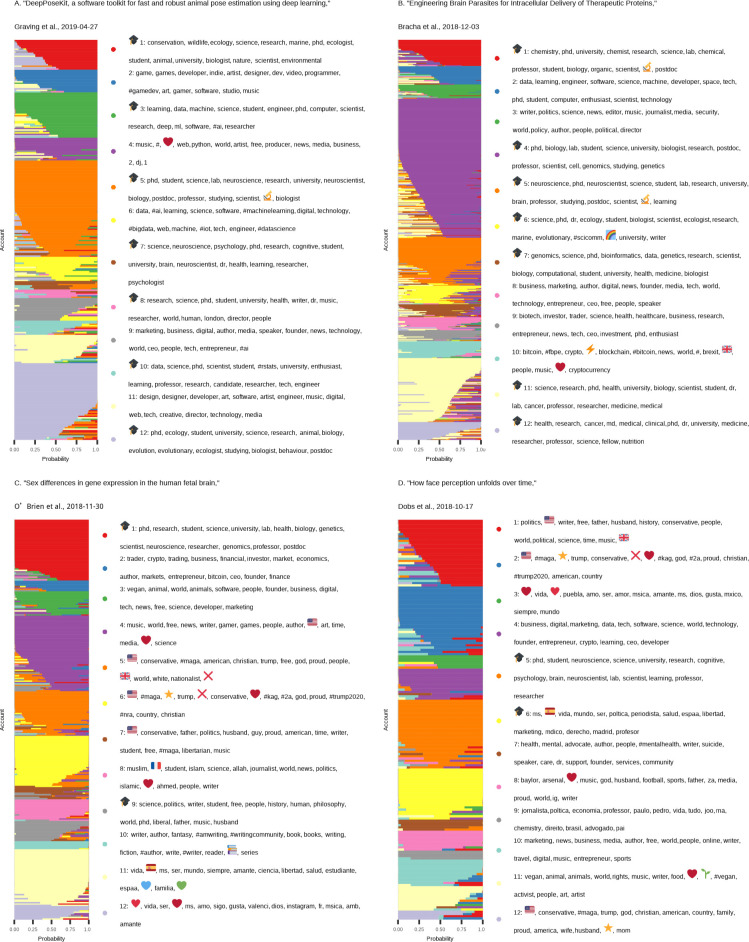
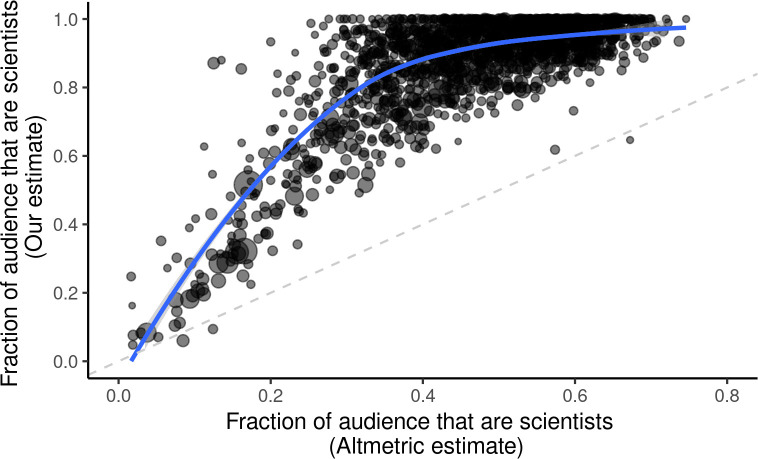
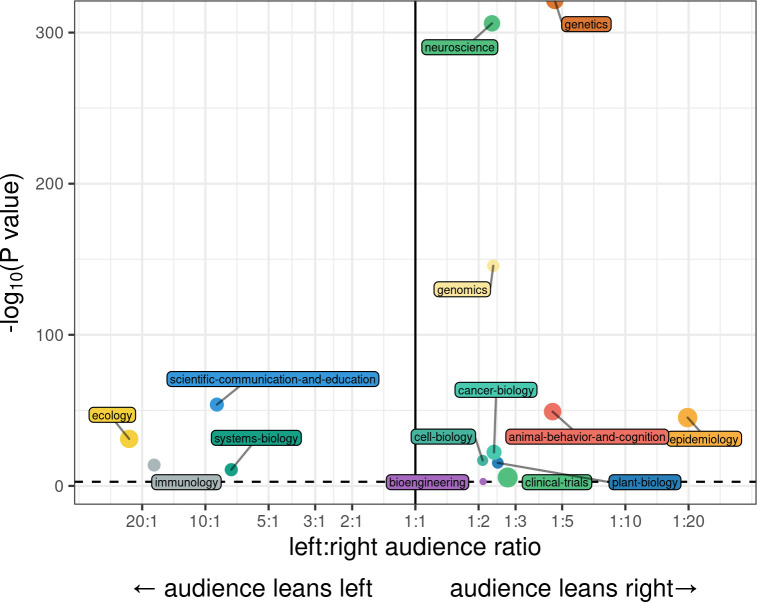
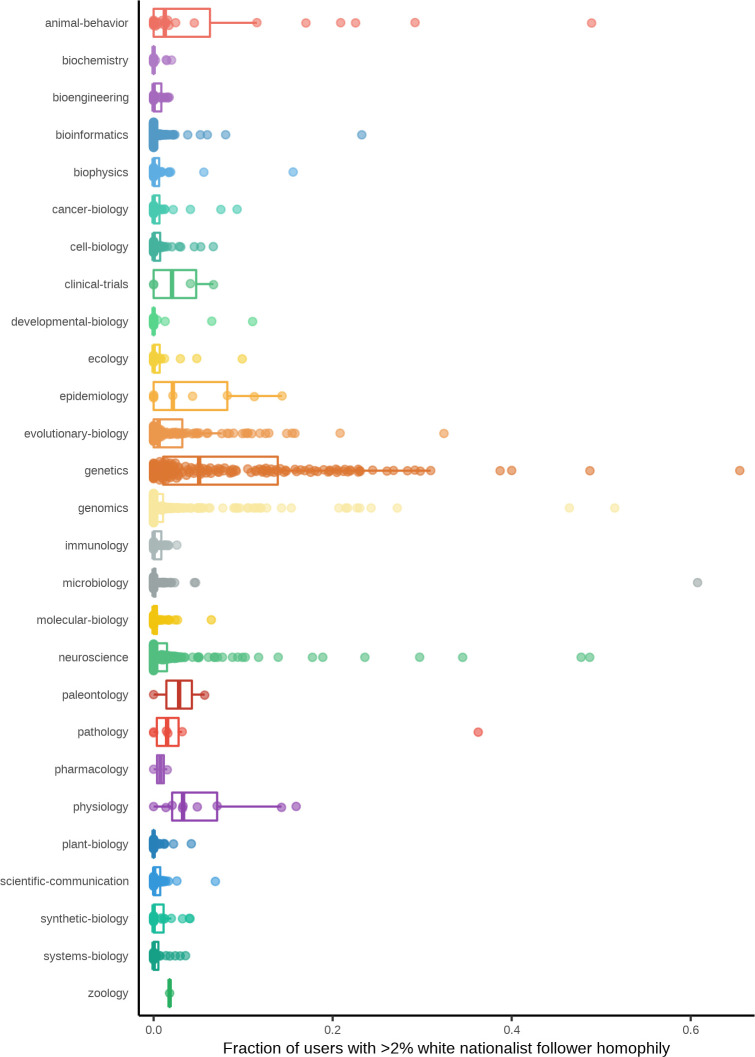
Engagement with scientific manuscripts is frequently facilitated by Twitter and other social media platforms. As such, the demographics of a paper's social media audience provide a wealth of information about how scholarly research is transmitted, consumed, and interpreted by online communities. By paying attention to public perceptions of their publications, scientists can learn whether their research is stimulating positive scholarly and public thought. They can also become aware of potentially negative patterns of interest from groups that misinterpret their work in harmful ways, either willfully or unintentionally, and devise strategies for altering their messaging to mitigate these impacts. In this study, we collected 331,696 Twitter posts referencing 1,800 highly tweeted bioRxiv preprints and leveraged topic modeling to infer the characteristics of various communities engaging with each preprint on Twitter. We agnostically learned the characteristics of these audience sectors from keywords each user's followers provide in their Twitter biographies. We estimate that 96% of the preprints analyzed are dominated by academic audiences on Twitter, suggesting that social media attention does not always correspond to greater public exposure. We further demonstrate how our audience segmentation method can quantify the level of interest from nonspecialist audience sectors such as mental health advocates, dog lovers, video game developers, vegans, bitcoin investors, conspiracy theorists, journalists, religious groups, and political constituencies. Surprisingly, we also found that 10% of the preprints analyzed have sizable (>5%) audience sectors that are associated with right-wing white nationalist communities. Although none of these preprints appear to intentionally espouse any right-wing extremist messages, cases exist in which extremist appropriation comprises more than 50% of the tweets referencing a given preprint. These results present unique opportunities for improving and contextualizing the public discourse surrounding scientific research.
Overview
The claims and statistics of this paper haven’t been checked yet.
Free: it reads the open-access text and checks the first 5 claims that cite a source we can check. Create a free account to check every claim.
Integrity signals
Registry
Cites
Statistics
Figures
Verification
Claims the paper makes
The claims and statistics of this paper haven’t been checked yet.
Free: it reads the open-access text and checks the first 5 claims that cite a source we can check. Create a free account to check every claim.
Claims other papers make about this one
Each is checked against this paper’s own text: does it say what the citing paper says it does?
The source backs part of the claim, not all of it — or backs it for a different population, condition or comparison.
In the citing paper
“a finding echoed by a recent study on the spread of the wider (i.e., not limited to preprints) COVID-19 research field on Twitter, which found that COVID-19 research was being widely disseminated and driven largely by academic Twitter users [33,34].”
From The evolving role of preprints in the dissemination of COVID-19 research and their impact on the science communication landscape (2021) · cites this paper as [34]
Experimental — accuracy not yet measured
Self-check
Percentages, sums and reported differences re-computed from the paper’s own numbers.
The self-check needs the paper’s full text.
Citations
Cites
Inference of Population Structure Using Multilocus Genotype Data
Pritchard, J. K., Stephens, M., & Donnelly, P. (2000) · Genetics · doi:10.1093/genetics/155.2.945 · Cited by 33,908
(2003) · Journal of Machine Learning Research · doi:10.5555/944919.944937 · Cited by 32,337
Birds of a Feather: Homophily in Social Networks
McPherson, M., Smith-Lovin, L., & Cook, J. M. (2001) · Annual Review of Sociology · doi:10.1146/annurev.soc.27.1.415 · Cited by 18,567 · cited 1×
“A cornerstone of sociological research is the principle of network homophily, which states that individuals tend to connect and engage within a social network of others who share similar characteristics [18].”
Backgroundgenalex 6: genetic analysis in Excel. Population genetic software for teaching and research
PEAKALL, R., & SMOUSE, P. E. (2006) · Molecular Ecology Notes · doi:10.1111/j.1471-8286.2005.01155.x · Cited by 16,589
Blei, D. M., Ng, A. Y., & Jordan, M. I. (2002) · Advances in Neural Information Processing Systems 14 · doi:10.7551/mitpress/1120.003.0082 · Cited by 12,223
A Bayesian Hierarchical Model for Learning Natural Scene Categories
Li, F.-F., & Perona, P. (2005) · 2005 IEEE Computer Society Conference on Computer Vision and Pattern Recognition (CVPR'05) · doi:10.1109/cvpr.2005.16 · Cited by 3,613 · cited 1×
“Probabilistic topic modeling is a powerful and 150 flexible method for revealing the granular composition of all sorts of complex datasets—not only 151 the present application of text mining [36], but also inference of population ancestry using 152 genetic markers [32], computer vision [33], and many other areas of st…”
MethodPredicting protein structures with a multiplayer online game
Cooper, S., Khatib, F., Treuille, A., Barbero, J., Lee, J., Beenen, M., Leaver-Fay, A., Baker, D., Popović, Z., & players, F. (2010) · Nature · doi:10.1038/nature09304 · Cited by 1,368 · cited 1×
“their work in grant applications, enable new citizen science collaborations (such as fold-it, a 357 crowdsourced computer game where players predict protein structures [46]) or crowdfunded 358 research (such as the ~1,000 research projects that have been successfully funded on the 359 scientific crowdfunding platform,…”
BackgroundBirds of the Same Feather Tweet Together: Bayesian Ideal Point Estimation Using Twitter Data
Barberá, P. (2015) · Political Analysis · doi:10.1093/pan/mpu011 · Cited by 1,298
Eysenbach, G. (2011) · Journal of Medical Internet Research · doi:10.2196/jmir.2012 · Cited by 1,083 · cited 1×
“…might provide an immediate indicator of an article’s potential downstream impacts, including (1) pre-dicting—and perhaps even causally increasing—the number of times one’s research is cited in the scientific literature [7,8]; (2) facilitating engagement with news media and public audiences [9,10]”
BackgroundA Review of Theory and Practice in Scientometrics
Mingers, J., & Leydesdorff, L. (2015) · European Journal of Operational Research · doi:10.1016/j.ejor.2015.04.002 · Cited by 1,002 · cited 1×
“These citation-based metrics (hereafter referred to as “traditional scientometrics”) 42 are not without their flaws, as they can be gamed and exploited [2] and are susceptible to 43 systematic biases [3].”
Background
Research works printed but not linked: 5
- To tweet or not to tweet? In: Science | AAAS [Internet]. 20 Nov 2014. [cited 2019 Dec 10]. Available from: https://www.sciencemag.org/careers/2014/10/tweet-or-not-tweet
- Kang J-H, Lerman K. Using Lists to Measure Homophily on Twitter. Workshops at the Twenty-Sixth AAAI Conference on Artificial Intelligence. 2012. [cited 2019 Nov 5]. Available from: https://www.aaai.org/ocs/index.php/WS/AAAIW12/paper/viewPaper/5425/5628
- Birney E. Race, genetics and pseudoscience: an explainer. In: Ewan’s Blog: Bioinformatician at large [Internet]. 24 10 2019 [cited 2019 Oct 31]. Available from: http://ewanbirney.com/2019/10/race-genetics-and-pseudoscience-an-explainer.html
- Sommer W. Why a Red “X” Is the New Symbol of Conservative Twitter. In: The Daily Beast [Internet]. 10 8 2018 [cited 2019 Aug 30]. Available from: https://www.thedailybeast.com/why-a-red-x-is-the-new-symbol-of-conservative-twitter
- “It”s a toxic place.’ How the online world of white nationalists distorts population genetics. In: Science | AAAS [Internet]. 22 May 2018. [cited 2020 Jan 16]. Available from: https://www.sciencemag.org/news/2018/05/it-s-toxic-place-how-online-world-white-nationalists-distorts-population-genetics
Cited by
Fraser, N., Brierley, L., Dey, G., Polka, J. K., Pálfy, M., Nanni, F., & Coates, J. A. (2021) · PLOS Biology · doi:10.1371/journal.pbio.3000959 · Cited by 555
“Hashtags associated with individual, highly tweeted preprints reveal some emergent themes that suggest communication of certain preprints can also extend well beyond scientific audiences (S4A Fig) [34].”
BackgroundKarlsson Linnér, R., Mallard, T. T., Barr, P. B., Sanchez-Roige, S., Madole, J. W., Driver, M. N., Poore, H. E., de Vlaming, R., Grotzinger, A. D., Tielbeek, J. J., et al. (2021) · Nature Neuroscience · doi:10.1038/s41593-021-00908-3 · Cited by 317
Self-citationA systematic review of the use of topic models for short text social media analysis
Doogan, C., Buntine, W., & Linger, H. (2023) · Artificial Intelligence Review · doi:10.1007/s10462-023-10471-x · Cited by 206
“For example, replacing characters with their word form such as ‘$’ to ‘dollar’ (Gregoriades and Pampaka 2020) and ‘#’ to ‘hashtag‘ before appending this word to the hashtag-word itself (Carlson and Harris 2020).”
BackgroundKhan, A., Gogarten, S. M., McHugh, C., Stilp, A. M., Sofer, T., Bowers, M., Wong, Q., Cupples, L. A., Hidalgo, B., Johnson, A. D., et al. (2022) · Cell Genomics · doi:10.1016/j.xgen.2022.100155 · Cited by 124
Counter the weaponization of genetics research by extremists
Carlson, J., Henn, B. M., Al-Hindi, D. R., & Ramachandran, S. (2022) · Nature · doi:10.1038/d41586-022-03252-z · Cited by 96
Self-citationGenetic determinism, essentialism and reductionism: semantic clarity for contested science
Harden, K. P. (2022) · Nature Reviews Genetics · doi:10.1038/s41576-022-00537-x · Cited by 95
Wrestling with Social and Behavioral Genomics: Risks, Potential Benefits, and Ethical Responsibility
Meyer, M. N., Appelbaum, P. S., Benjamin, D. J., Callier, S., Comfort, N., Conley, D., Freese, J., Garrison, N. A., Hammonds, E. M., Harden, K. P., et al. (2023) · The Hastings Center Report · doi:10.1002/hast.1477 · Cited by 88
Preprints: Their Evolving Role in Science Communication
Puebla, I., Polka, J., & Rieger, O. Y. (2022) · doi:10.3998/mpub.12412508 · Cited by 49
Polygenic Scores in Developmental Psychology: Invite Genetics In, Leave Biodeterminism Behind
Raffington, L., Mallard, T. T., & Harden, K. P. (2020) · Annual Review of Developmental Psychology · doi:10.1146/annurev-devpsych-051820-123945 · Cited by 52
Reporting preprints in the media during the COVID-19 pandemic
Schalkwyk, F. B. V., & Dudek, J. (2022) · Public Understanding of Science · doi:10.1177/09636625221077392 · Cited by 42
“All the more so when the communities of attention for preprints on social media platforms comprise mostly academics (Carlson and Harris, 2020).”
BackgroundPreprints: Their Evolving Role in Science CommunicationPreprint
Puebla, I., Polka, J., & Rieger, O. Y. (2021) · MetArXiv (OSF Preprints) · doi:10.31222/osf.io/ezfsk · Cited by 36
Bird, K. A., & Carlson, J. (2024) · Frontiers in Genetics · doi:10.3389/fgene.2024.1345631 · Cited by 28
Self-citationAdams, D. M., Blatt, S. H., Flaherty, T. M., Haug, J. D., Isa, M. I., Michael, A. R., & Smith, A. C. (2023) · Humans · doi:10.3390/humans3030013 · Cited by 24
“As such, it is important for forensic anthropologists to also be conscious of not only moving beyond education in public-facing work, but also in the mechanisms by which individuals navigate said work [157,162–164].”
BackgroundThe clinical, mechanistic, and social impacts of air pollution on atopic dermatitis
Zeldin, J., Ratley, G., Shobnam, N., & Myles, I. A. (2024) · Journal of Allergy and Clinical Immunology · doi:10.1016/j.jaci.2024.07.027 · Cited by 24
Examining linguistic shifts between preprints and publications
Nicholson, D. N., Rubinetti, V., Hu, D., Thielk, M., Hunter, L., & Greene, C. S. (2022) · PLoS Biology · doi:10.1371/journal.pbio.3001470 · Cited by 21
“Some preprint categories are shared on social media by both scientists and non-scientists [12].”
BackgroundAlperín, J. P., Fleerackers, A., Riedlinger, M. E., & Haustein, S. (2024) · Quantitative Science Studies · doi:10.1162/qss_a_00298 · Cited by 20
“Numerous studies have found that hyperlinks to research articles shared on social media tend to circulate within closed communities of academic insiders rather than among wider public communities (Alperin et al., 2019; Carlson & Harris, 2020).”
BackgroundLi, Y., Zhang, Y., Tiffany, L. A., Chen, R., Cai, M., & Liu, J. (2021) · Environmental Science & Policy · doi:10.1016/j.envsci.2021.07.020 · Cited by 18
“We chose projects in two continents to facilitate a multinational analysis (Carlson and Harris, 2020; Hu, 2018; Janowicz et al., 2012).”
MethodPsychologists update their beliefs about effect sizes after replication studies
McDiarmid, A. D., Tullett, A. M., Whitt, C. M., Vazire, S., Smaldino, P. E., & Stephens, J. E. (2021) · Nature Human Behaviour · doi:10.1038/s41562-021-01220-7 · Cited by 16
Who tweets climate change papers? investigating publics of research through users’ descriptions
Toupin, R., Millerand, F., & Larivière, V. (2022) · PLoS ONE · doi:10.1371/journal.pone.0268999 · Cited by 16
de Hemptinne, M., & Posthuma, D. (2023) · Nature Neuroscience · doi:10.1038/s41593-023-01333-4 · Cited by 19
Zheng, E., Fu, H., Thelwall, M. A., & Fang, Z. (2025) · Journal of the Association for Information Science and Technology · doi:10.1002/asi.70028 · Cited by 14
“While both scientists and the general public contribute to the dissemination of research on Twitter (Yu et al., 2019; Zhang et al., 2023), scientists remain the primary participants in science-related discussions (Carlson & Harris, 2020).”
SciTweets - A Dataset and Annotation Framework for Detecting Scientific Online Discourse
Hafid, S., Schellhammer, K. S., Bringay, S., Todorov, K., & Dietze, S. (2022) · ACM International Conference on Information and Knowledge Management (CIKM) · doi:10.1145/3511808.3557693 · Cited by 24
“From a social sciences perspective, works measure the engagement with scientific publications on social media [5, 6, 12] or investigate the role of social media in facilitating the”
BackgroundAdams, D. M., & Pilloud, M. A. (2021) · Human Biology · doi:10.1353/hub.2017.0097 · Cited by 13
Altmetric Scores in Conservation Science have Gender and Regional Biases
Chapman, C. A., Hemingway, C. A., Sarkar, D., Gogarten, J. F., & Stenseth, N. C. (2022) · Conservation and Society · doi:10.4103/cs.cs_27_21 · Cited by 13
Originality in Research Publication: Measure, Concept, or Skill?
Buckley, R. (2022) · Journal of Travel Research · doi:10.1177/00472875221095214 · Cited by 11
“Pre-publication repositories such as arXiv® and biorXiv® are used widely (Carlson and Harris 2020; Rosati 2021), as are post-publication review systems such as Pubpeer®.”
MethodThe apportionment of citations: a scientometric analysis of Lewontin 1972
Carlson, J., & Harris, K. (2022) · Philosophical Transactions of the Royal Society B Biological Sciences · doi:10.1098/rstb.2020.0409 · Cited by 11
“Carlson J, Harris K. 2020 Quantifying and contextualizing the impact of bioRxiv preprints through automated social media audience segmentation.”
BackgroundMethodSelf-citationKavanagh, C. M., & Kapitány, R. (2021) · Journal for the Cognitive Science of Religion · doi:10.1558/jcsr.38713 · Cited by 11
Forecasting the publication and citation outcomes of COVID-19 preprints
Gordon, M., Bishop, M., Chen, Y., Dreber, A., Goldfedder, B., Holzmeister, F., Johannesson, M., Liu, Y., Tran, L., Twardy, C. R., et al. (2022) · Royal Society Open Science · doi:10.1098/rsos.220440 · Cited by 9
The methodological and ethical concerns of genetic studies of same-sex sexual behavior
Ventresca, C., Martschenko, D. O., Wedow, R., Civelek, M., Tabery, J. G., Carlson, J., Parker, S. C. J., & Ramos, P. S. (2024) · The American Journal of Human Genetics · doi:10.1016/j.ajhg.2024.08.007 · Cited by 8
Self-citationPreprint articles as a tool for teaching data analysis and scientific communication
Scheifele, L. Z., Tsotakos, N., & Wolyniak, M. J. (2021) · PLoS ONE · doi:10.1371/journal.pone.0261622 · Cited by 7
Linguistic Analysis of the bioRxiv Preprint LandscapePreprint
Nicholson, D. N., Rubinetti, V., Hu, D., Thielk, M., Hunter, L. E., & Greene, C. S. (2021) · bioRxiv (Cold Spring Harbor Laboratory) · doi:10.1101/2021.03.04.433874 · Cited by 8
Social Paleontology on Twitter: A Case Study of Topic Archetypes, Network Composition, and Structure
Lundgren, L. M., Crippen, K. J., Bauer, J. E., & Bex, R. T. (2022) · Social Media + Society · doi:10.1177/20563051221080475 · Cited by 6
“…et al., 2018; Vainio & Holmberg, 2017); however, much of this research is laden with jargon and discussed with targeted groups, thus there is little opportunity for communication of this nature to sustain interest or interaction beyond a narrow few (Carlson & Harris, 2020; Shuai et al., 2012).”
BackgroundHow localized are computational templates? A machine learning approach
Noichl, M. (2023) · Synthese · doi:10.1007/s11229-023-04057-x · Cited by 9
Race science without racists: how bigoted paradigms persist in allergy research
Myles, I. A. (2024) · Frontiers in Public Health · doi:10.3389/fpubh.2024.1351732 · Cited by 5
Social and Behavioral Genomics: On the Ethics of the Research and Its Downstream Applications
Martschenko, D. O., Lee, S. S., Meyer, M. N., & Parens, E. (2025) · Annual Review of Genomics and Human Genetics · doi:10.1146/annurev-genom-011224-015733 · Cited by 7
Power and Limitations of Inferring Genetic Ancestry
Bird, N., King, T., & Hellenthal, G. (2025) · Annals of Human Genetics · doi:10.1111/ahg.70007 · Cited by 5
“…of methods for understanding genetic ancestry discussed above, can be difficult to communicate, or even be deliberately misinterpreted, with the increased availability of DTC tests seeming to exacerbate these issues (Carlson and Harris 2020; Kampourakis and Peterson 2023; Panofsky et al. 2020).”
Toupin, R., Melnick, K., Moharana, T., Curry, B., Gracey, C., Richards, N., MacDonald, B. H., & Mongeon, P. (2023) · Marine Policy · doi:10.1016/j.marpol.2023.105829 · Cited by 5
Madden, E., Prior, K., Gückel, T., Bock, S. G., Bryant, Z., O’Dean, S., Nepal, S., Ward, C., & Thornton, L. K. (2023) · Journal of Health Communication · doi:10.1080/10810730.2023.2278617 · Cited by 6
“%) contained misinformation (Kouzy et al., 2020), and researchers also noted an increase in preprinted publications that had not yet been peer reviewed being shared via Twitter (Carlson, Harris, & Blekhman, 2020).”
BackgroundIskander, J. K., & Bianchi, K. M. (2021) · Health Security · doi:10.1089/hs.2020.0194 · Cited by 5
“Preprints may be appropriated by social media users as a platform for spreading ideological messages that are separate from the scientific content of the paper.(14)”
BackgroundFleerackers, A., Riedlinger, M. E., Bruns, A., & Burgess, J. (2022) · Media International Australia · doi:10.1177/1329878x221145022 · Cited by 7
“If social media accounts are mainly academic, then second-order citations of preprint research might mirror first-order citations and engage an audience of academic insiders (Carlson and Harris, 2020) with the expertise needed to understand and vet preprint results.”
InfluentialBirds of feather flock together: A longitudinal study of a social media outreach effort
Cavanah, S., Owens, S., Kemink, K. M., Riley, C., Kim, S., Lee, J., & Ellis‐Felege, S. N. (2023) · Biological Conservation · doi:10.1016/j.biocon.2023.109999 · Cited by 6
Lamba, M., & Madhusudhan, M. (2021) · Springer eBooks · doi:10.1007/978-3-030-85085-2_4 · Cited by 4
Feminist retroviruses to white Sharia: Gender “science fan fiction” on 4Chan
Iturriaga, N., Panofsky, A. L., & Dasgupta, K. (2024) · Public Understanding of Science · doi:10.1177/09636625241228160 · Cited by 4
“Research has recently noted a rise in “scientific racist” discourse among the far-right on the Internet (Carlson and Harris, 2020).”
BackgroundInfluentialEffect of Compensation on Employee Job Satisfaction at PT. Indohealth Pekanbaru
Pranata, R., Iska, S., & Mastanora, R. (2023) · El-Hekam · doi:10.31958/jeh.v8i1.8600 · Cited by 3
“In this study, researchers distributed questionnaires prepared using 5 alternative answers or responses to these questions (Carlson, 2020; Hurbain dkk., 2022).”
MethodZahedi, Z., Zhang, Y., Han, Z., Zheng, E., & Fang, Z. (2026) · Journal of Information Science · doi:10.1177/01655515261421164 · Cited by 2
“Approaches include keyword matching [14], machine learning [15], co-word analysis [16–18], and topic modelling [19].”
Text similarity study for Twitter-based news on Russian - Ukraine cyber war
Giannaris, P. S., Karamanoli, V., Agathocleous, A., Ilias, Ι., & Doukas, N. (2022) · International Conference on Dependable Systems, Services and Technologies (DESSERT) · doi:10.1109/dessert58054.2022.10018791 · Cited by 2
“Through text-based Tweets, individual users or organizations can focus on national interest, current affairs, community events, research breakthroughs, biomedical advances, or provide alerts on crime or public health[10], [11].”
BackgroundRace science in mainstream psychology, 1960–2010
Hicks, D., & Lobato, E. J. C. (2025) · Quantitative Science Studies · doi:10.1162/qss.a.11 · Cited by 2
The first six years of meta-research at PLOS Biology
Roberts, R. G., & Editors, O. B. O. T. P. B. S. (2022) · PLoS Biology · doi:10.1371/journal.pbio.3001553 · Cited by 2
“Many aspects of this process have been scrutinised, including the misuse of scientific preprints by right-wing social media groups [10] and the effects of article titles on subsequent press coverage [11].”
BackgroundOgbunugafor, C. B. (2022) · American Journal of Biological Anthropology · doi:10.1002/ajpa.24599 · Cited by 2
“Harden, in fact, spends a good amount of time clarifying her views on race (Chapter 4) and cites important work that demonstrates how the far right are large consumers of genetic information (Carlson & Harris, 2020).”
BackgroundPublic interest in science or bots? Selective amplification of scientific articles on Twitter
Rahman, A., Mohammadi, E., & Alhoori, H. (2024) · Aslib Journal of Information Management · doi:10.1108/ajim-01-2024-0050 · Cited by 1
“Given the bots’ capability of manipulating social discussion, a better understanding of why and which research areas the bots target is essential to prevent that.”
BackgroundLancetgate or scientific publication put to the test by Twitter: Disorganized scepticism
Guillouet, S., Schultz, É., Cape, E., Lachenal, G., & Carey-Libbrecht, L. (2024) · Réseaux · doi:10.3917/res.246.0269 · Cited by 1
Dycks, V., & Beyer, A. (2026) · Biochemistry and Molecular Biology Education · doi:10.1002/bmb.70029
“It has been documented that the communication of certain preprints can reach far beyond scientific audiences [6].”
Giangrande, E. J. (2026) · Behavior Genetics · doi:10.1007/s10519-026-10260-6 · Cited by 1
Reimagining bioRxiv and preprint servers as platforms for academic learning
Benjamin, J. I., Wanjalla, C. N., Gaddy, J. A., Kirabo, A., Williams, E. M., & Hinton, A. O., Jr. (2024) · Journal of Cellular Physiology · doi:10.1002/jcp.31234 · Cited by 1
“%+) are principally seen by academics on social media platforms, right ‐ wing white nationalist communities have been shown to dominate about one in ten preprints (Carlson & Harris, 2020).”
Reporting uncertified science in the news media during the Covid-19 pandemicPreprint
Schalkwyk, F. B. V., & Dudek, J. (2022) · doi:10.14293/111.000/000025.v1 · Cited by 1
Tracking the Development of COVID-19-related PsyArXiv Preprints
Wulf, M., Yesilada, M., Holford, D. L., Abels, C. M., Radosevic, M., Stuchlý, E., Taylor, K. S., Ye, S., Saxena, G., El-Halaby, G., et al. (2024) · Collabra Psychology · doi:10.1525/collabra.121378
Race Science in Mainstream Psychology, 1960-2010Preprint
Hicks, D., & Lobato, E. J. C. (2024) · PsyArXiv (OSF Preprints) · doi:10.31234/osf.io/y8hr3
Bachaud, L., & Gauchon, R. (2026) · Developmental Biology Advances · doi:10.1186/s13227-026-00262-0
“It has been shown that these activists engage with scholarly literature, which they curate in online collaborative “journal clubs” or share and interpret on social media [14, 47].”
How can we measure and communicate the impact of science?
Hochstrasser, M. L., Neal, J., & Roth, R. (2024) · doi:10.57844/arcadia-74d6-huec
Natanson, A. (2023) · Carolina Digital Repository (University of North Carolina at Chapel Hill) · doi:10.17615/wh7e-7y24
Toupin, R. (2023) · Archipel (Université du Québec à Montréal)
Pernicious Diversity, Neutrality, and Right Values
Hicks, D. (2026) · Kennedy Institute of Ethics journal · doi:10.1353/ken.2026.a1004409
“…hereditarians do not personally endorse violent racism and sexism, their research provides ideological cover and recruiting materials for such movements (Pronczuk and Ryck-ewaert 2022; Carlson and Harris 2020; Carlson 2022; Panofsky and Donovan 2019; Panofsky, Dasgupta, and Iturriaga 2021).”
Diaz-Papkovich, A., Kuntzleman, A., Davis, S. C., & Ramachandran, S. (2026) · bioRxiv (Cold Spring Harbor Laboratory) · doi:10.64898/2026.07.27.741055
Physiological Relevance of Engineered Brain Models
Servais, B., Collins, D. J., & Nisbet, D. R. (2026) · Organoids · doi:10.3390/organoids5030025
“Analysis of preprints in biological research indicates neuroscience and genetics attract above-average attention from white nationalist social media users [47].”
Metadata
- Authors
- Carlson, J., & Harris, K.
- Affiliations
- University of Washington (US)
- Corresponding author
- Carlson, Jedidiah
- Venue
- PLoS Biology
- Publisher
- Public Library of Science (PLoS)
- Published
- 2020-09-22
- Volume
- 18
- Issue
- 9
- Pages
- e3000860
- ISSN
- 1544-9173 (ISSN-L)
- 1545-7885
- PMC
- PMC7508356
- OpenAlex
- W3088297402
- Cited by
- 61
- References
- 55
- Citations by year
- 2026: 6 · 2025: 4 · 2024: 11 · 2023: 9 · 2022: 17 · 2021: 10 · 2020: 4
- FWCI
- 9.91
- Type
- journal article
- Language
- en
- Open access
- gold
- doi.org
- Licence
- Locations
- PLoS Biology (publishedVersion, cc-by)
- bioRxiv (Cold Spring Harbor Laboratory) (acceptedVersion, cc-by-nd)
- PubMed Central (publishedVersion, cc-by)
- PubMed (publishedVersion)
- RePEc: Research Papers in Economics (submittedVersion)
- DOAJ (DOAJ: Directory of Open Access Journals) (submittedVersion, cc-by-sa)
- Funders
- National Institute of General Medical Sciences (1R35GM133428-01)
- Burroughs Wellcome Fund
- Pew Charitable Trusts
- Searle Scholars Program
- Alfred P. Sloan Foundation
- Fred Hutchinson Cancer Research Center
- Topics
- Social Sciences › Library and Information Sciences › Academic Publishing and Open Access
- Social Sciences › Library and Information Sciences › scientometrics and bibliometrics research
- Social Sciences › Health › Social Media in Health Education
- Keywords
- Twitter engagement, audience segmentation, social media audiences, public perception of science, topic modeling, right-wing extremism, conspiracy theorists, science communication
- MeSH terms
- Academies and Institutes, Political Activism, Preprints as Topic, Electronic Data Processing, Humans, Publications, Science, Social Change, Databases as Topic, Internet, Access to Information, Information Literacy, Social Media
About these checks
Registry, retraction, Cites and statistics results are computed, not judged, with one exception: a printed reference that no index lists is read once by a model before it counts as a citation error. Claims are extracted by a model and kept only when their quote appears verbatim in the text; each cited source is then checked, with a model’s help, for whether it says what the claim relies on. Those verdicts can be wrong — read the claim’s quote and the cited source before relying on one.
Statistics and arithmetic are recomputed, not judged.
Confidence bands are shown only for fields calibrated on our annotated test set. None is calibrated yet, so no band is shown.
What counts as a claim ›How we measure confidence ›How we check this ›
Are you an author, or do you see a problem with this page? Request a review
Data sources
Bibliographic data: Semantic Scholar, OpenAlex, Crossref.
Contains information from the Semantic Scholar Academic Graph Datasets, made available under the ODC Attribution License (ODC-BY 1.0).
Semantic Scholar’s data is described in: Kinney, R., et al. (2023). The Semantic Scholar Open Data Platform. arXiv:2301.10140.
