

The DOI matches its Crossref record; 81 of the 81 references it cites were found in a registry or an index.
Brain Anatomical Network and Intelligence
Open accessAbstract
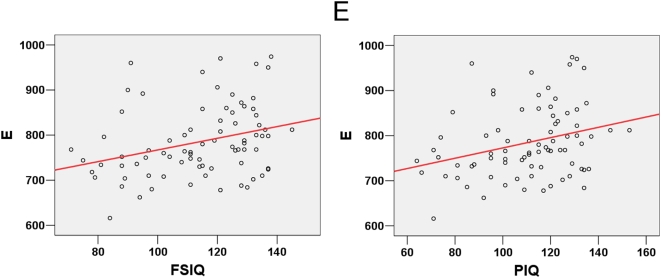
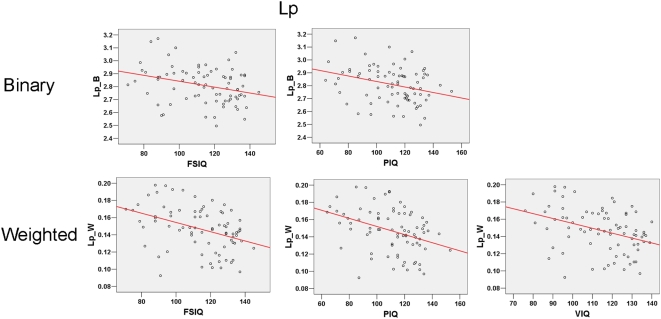
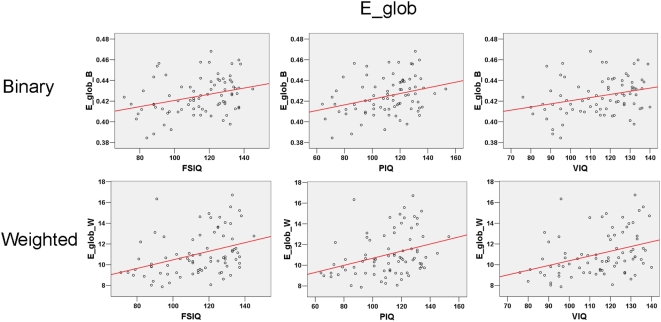
Intuitively, higher intelligence might be assumed to correspond to more efficient information transfer in the brain, but no direct evidence has been reported from the perspective of brain networks. In this study, we performed extensive analyses to test the hypothesis that individual differences in intelligence are associated with brain structural organization, and in particular that higher scores on intelligence tests are related to greater global efficiency of the brain anatomical network. We constructed binary and weighted brain anatomical networks in each of 79 healthy young adults utilizing diffusion tensor tractography and calculated topological properties of the networks using a graph theoretical method. Based on their IQ test scores, all subjects were divided into general and high intelligence groups and significantly higher global efficiencies were found in the networks of the latter group. Moreover, we showed significant correlations between IQ scores and network properties across all subjects while controlling for age and gender. Specifically, higher intelligence scores corresponded to a shorter characteristic path length and a higher global efficiency of the networks, indicating a more efficient parallel information transfer in the brain. The results were consistently observed not only in the binary but also in the weighted networks, which together provide convergent evidence for our hypothesis. Our findings suggest that the efficiency of brain structural organization may be an important biological basis for intelligence.
Overview
The claims and statistics of this paper haven’t been checked yet.
Run the check — free, no account needed. It reads the open-access text and checks the sources it cites.
Integrity signals
Registry
Cites
Statistics
Figures
Verification
Claims the paper makes
The claims and statistics of this paper haven’t been checked yet.
Run the check — free, no account needed. It reads the open-access text and checks the sources it cites.
Claims other papers make about this one
Each is checked against this paper’s own text: does it say what the citing paper says it does?
The cited source says what the claim attributes to it.
In the citing paper
“High intelligence corresponds to higher global efficiency in both weighted and binary graphs.”
From Graph theory analysis of complex brain networks: new concepts in brain mapping applied to neurosurgery (2016) · cites this paper as [63]
Self-check
Percentages, sums and reported differences re-computed from the paper’s own numbers.
The self-check needs the paper’s full text.
Citations
Cites
Collective dynamics of ‘small-world’ networks
Watts, D. J., & Strogatz, S. H. (1998) · Nature · doi:10.1038/30918 · Cited by 43,060
Tzourio-Mazoyer, N., Landeau, B., Papathanassiou, D., Crivello, F., Etard, O., Delcroix, N., Mazoyer, B., & Joliot, M. (2002) · NeuroImage · doi:10.1006/nimg.2001.0978 · Cited by 16,319
Complex networks: structure and dynamics
BOCCALETTI, S., LATORA, V, MORENO, Y., CHAVEZ, M., & HWANG, D. (2006) · Physics Reports · doi:10.1016/j.physrep.2005.10.009 · Cited by 11,010
Strogatz, S. H. (2001) · Nature · doi:10.1038/35065725 · Cited by 8,236
Network motifs: simple building blocks of complex networks.
Milo, R., Shen-Orr, S., Itzkovitz, S., Kashtan, N., Chklovskii, D., & Alon, U. (2002) · Science · doi:10.1126/science.298.5594.824 · Cited by 7,368
Efficient behavior of small-world networks
Latora, V., & Marchiori, M. (2001) · Physical Review Letters · doi:10.1103/physrevlett.87.198701 · Cited by 5,119
Mapping the structural core of human cerebral cortex
Hagmann, P., Cammoun, L., Gigandet, X., Meuli, R., Honey, C. J., Wedeen, V. J., & Sporns, O. (2008) · PLoS Biology · doi:10.1371/journal.pbio.0060159 · Cited by 4,173
The architecture of complex weighted networks.
Barrat, A., Barthelemy, M., Pastor-Satorras, R., & Vespignani, A. (2003) · Proceedings of the National Academy of Sciences of the United States of America · doi:10.1073/pnas.0400087101 · Cited by 4,084
Probabilistic diffusion tractography with multiple fibre orientations: What can we gain?
Behrens, T. E. J., Berg, H. J., Jbabdi, S., Rushworth, M. F. S., & Woolrich, M. W. (2007) · NeuroImage · doi:10.1016/j.neuroimage.2006.09.018 · Cited by 3,471
Specificity and Stability in Topology of Protein Networks
Maslov, S., & Sneppen, K. (2002) · Science · doi:10.1126/science.1065103 · Cited by 3,051
Cited by
Sorted by citations
BrainNet Viewer: A Network Visualization Tool for Human Brain Connectomics
Xia, M., Wang, J., & He, Y. (2013) · PLoS ONE · doi:10.1371/journal.pone.0068910 · Cited by 4,106
Exploring the brain network: A review on resting-state fMRI functional connectivity
van den Heuvel, M. P., & Hulshoff Pol, H. E. (2010) · European Neuropsychopharmacology · doi:10.1016/j.euroneuro.2010.03.008 · Cited by 3,326
The economy of brain network organization
Bullmore, E., & Sporns, O. (2012) · Nature Reviews Neuroscience · doi:10.1038/nrn3214 · Cited by 3,284
Network-based statistic: identifying differences in brain networks
Zalesky, A., Fornito, A., & Bullmore, E. T. (2010) · NeuroImage · doi:10.1016/j.neuroimage.2010.06.041 · Cited by 2,750
Network hubs in the human brain
van den Heuvel, M. P., & Sporns, O. (2013) · Trends in Cognitive Sciences · doi:10.1016/j.tics.2013.09.012 · Cited by 2,123
Metadata
- Authors
- Li, Y., Liu, Y., Li, J., Qin, W., Li, K., Yu, C., & Jiang, T.
- Affiliations
- Chinese Academy of Sciences (CN)
- Capital Medical University (CN)
- Corresponding author
- Yu, Chunshui
- Jiang, Tianzi
- Venue
- PLoS Computational Biology
- Publisher
- Public Library of Science (PLoS)
- Published
- 2009-05-29
- Volume
- 5
- Issue
- 5
- Pages
- e1000395
- ISSN
- 1553-734X (ISSN-L)
- 1553-7358
- PMC
- PMC2683575
- OpenAlex
- W2073017605
- Cited by
- 597
- References
- 81
- Citations by year
- 2026: 9 · 2025: 9 · 2024: 14 · 2023: 18 · 2022: 26 · 2021: 41 · 2020: 29 · 2019: 53 · 2018: 27 · 2017: 40 · 2016: 56 · 2015: 54 · 2014: 43 · 2013: 59 · 2012: 50
- FWCI
- 29.97
- Type
- journal article
- Language
- en
- Open access
- gold
- doi.org
- Locations
- PLoS Computational Biology (publishedVersion, cc-by)
- PubMed Central (publishedVersion, cc-by)
- PubMed (publishedVersion)
- DOAJ (DOAJ: Directory of Open Access Journals) (submittedVersion, cc-by-sa)
- Figshare (submittedVersion, cc-by)
- Funders
- National Natural Science Foundation of China (30730035, 60675033, 30670601)
- Chinese Academy of Sciences
- Program for New Century Excellent Talents in University (NCET-07-0568)
- Topics
- Health Sciences › Medicine › Radiology, Nuclear Medicine and Imaging › Advanced Neuroimaging Techniques and Applications
- Life Sciences › Neuroscience › Cognitive Neuroscience › Functional Brain Connectivity Studies
- Physical Sciences › Physics and Astronomy › Statistical and Nonlinear Physics › Complex Network Analysis Techniques
- Keywords
- intelligence, global efficiency, average path length, individual differences in intelligence, structural connectivity, diffusion tensor tractography, graph theory, information transmission efficiency, IQ
- MeSH terms
- Adolescent, Adult, Brain, Brain Mapping, Female, Humans, Intelligence, Intelligence Tests, Male, Models, Neurological, Nerve Net, Neural Pathways, Cluster Analysis, Diffusion Magnetic Resonance Imaging
About these checks
Registry, retraction, Cites and statistics results are computed, not judged, with one exception: a printed reference that no index lists is read once by a model before it counts as a citation error. Claims are extracted by a model and kept only when their quote appears verbatim in the text; each cited source is then checked, with a model’s help, for whether it says what the claim relies on. Those verdicts can be wrong — read the claim’s quote and the cited source before relying on one.
Statistics and arithmetic are recomputed, not judged.
Confidence bands are shown only for fields calibrated on our annotated test set. None is calibrated yet, so no band is shown.
What counts as a claim ›How we measure confidence ›How we check this ›
Are you an author, or do you see a problem with this page? Request a review
