

Predicting dementia from spontaneous speech using large language models
Open accessThe DOI matches its Crossref record; 39 of the 39 references it cites were found in a registry or an index.
Abstract
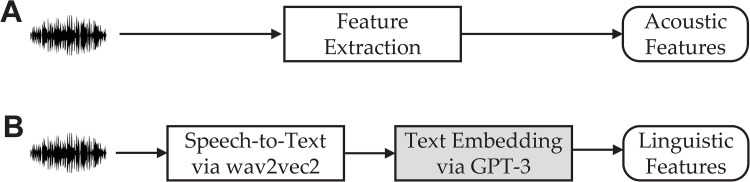
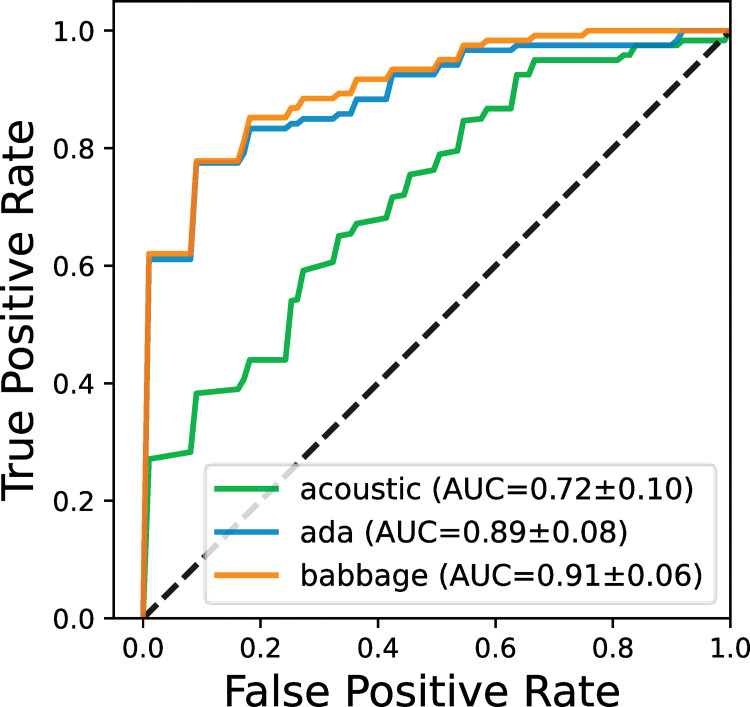
Language impairment is an important biomarker of neurodegenerative disorders such as Alzheimer’s disease (AD). Artificial intelligence (AI), particularly natural language processing (NLP), has recently been increasingly used for early prediction of AD through speech. Yet, relatively few studies exist on using large language models, especially GPT-3, to aid in the early diagnosis of dementia. In this work, we show for the first time that GPT-3 can be utilized to predict dementia from spontaneous speech. Specifically, we leverage the vast semantic knowledge encoded in the GPT-3 model to generate text embedding, a vector representation of the transcribed text from speech, that captures the semantic meaning of the input. We demonstrate that the text embedding can be reliably used to (1) distinguish individuals with AD from healthy controls, and (2) infer the subject’s cognitive testing score, both solely based on speech data. We further show that text embedding considerably outperforms the conventional acoustic feature-based approach and even performs competitively with prevailing fine-tuned models. Together, our results suggest that GPT-3 based text embedding is a viable approach for AD assessment directly from speech and has the potential to improve early diagnosis of dementia.
Overview
The claims and statistics of this paper haven’t been checked yet.
Free: it reads the open-access text and checks the first 5 claims that cite a source we can check. Create a free account to check every claim.
Integrity signals
Registry
Cites
Statistics
Figures
Verification
Claims the paper makes
The claims and statistics of this paper haven’t been checked yet.
Free: it reads the open-access text and checks the first 5 claims that cite a source we can check. Create a free account to check every claim.
Claims other papers make about this one
Each is checked against this paper’s own text: does it say what the citing paper says it does?
The source backs part of the claim, not all of it — or backs it for a different population, condition or comparison.
In the citing paper
“Even in dementia syndromes where language symptoms are not dominant, such as the behavioral variant of frontotemporal dementia, automated speech analysis can detect subtle linguistic and acoustic patterns that reflect underlying cognitive, behavioral, or socio-emotional changes.91,92”
From Review of Artificial Intelligence for Clinical Use in Alzheimer's Disease and Related Dementias (2026) · cites this paper as [91]
Experimental — accuracy not yet measured
Self-check
Percentages, sums and reported differences re-computed from the paper’s own numbers.
The self-check needs the paper’s full text.
Citations
Cites
Folstein, M. F., Folstein, S. E., & McHugh, P. R. (1975) · Journal of Psychiatric Research · doi:10.1016/0022-3956(75)90026-6 · Cited by 88,282 · cited 12×
“MMSE score prediction.”
BackgroundMethodInfluentialBERT: Pre-training of Deep Bidirectional Transformers for Language Understanding
Devlin, J., Chang, M.-W., Lee, K., & Toutanova, K. (2018) · arXiv · doi:10.48550/arxiv.1810.04805 · Cited by 73,173 · cited 1×
“The current NLP landscape has been revolutionized by large language models [23,26].”
BackgroundScikit-learn: Machine Learning in Python
Pedregosa, F., Varoquaux, G., Gramfort, A., Michel, V., Thirion, B., Grisel, O., Blondel, M., Müller, A., Nothman, J., Louppe, G., et al. (2012) · arXiv · doi:10.48550/arxiv.1201.0490 · Cited by 71,016 · cited 2×
“We use the scikit-learn library for the implementation of these models [42].”
MethodGlove: Global Vectors for Word Representation
Pennington, J., Socher, R., & Manning, C. (2014) · Proceedings of the 2014 Conference on Empirical Methods in Natural Language Processing (EMNLP) · doi:10.3115/v1/d14-1162 · Cited by 34,071
Efficient Estimation of Word Representations in Vector Space
Mikolov, T., Chen, K., Corrado, G., & Dean, J. (2013) · arXiv · doi:10.48550/arxiv.1301.3781 · Cited by 26,568
Hirono, N., Mori, E., Ikejiri, Y., Imamura, T., Shimomura, T., Hashimoto, M., Yamashita, H., & Ikeda, M. (1997) · Brain and nerve · Cited by 21,038
Kok, J. S., Berg, I. J., & Scherder, E. J. A. (2013) · Dementia and Geriatric Cognitive Disorders Extra · doi:10.1159/000353441 · Cited by 20,589
Older Adults' Reasons for Using Technology while Aging in Place
Peek, S. T. M., Luijkx, K. G., Rijnaard, M. D., Nieboer, M. E., van der Voort, C. S., Aarts, S., van Hoof, J., Vrijhoef, H. J. M., & Wouters, E. J. M. (2016) · Gerontology · doi:10.1159/000430949 · Cited by 19,690
Sensitivity and False Alarm Rate of a Fall Sensor in Long-Term Fall Detection in the Elderly
Kangas, M., Korpelainen, R., Vikman, I., Nyberg, L., & Jämsä, T. (2015) · Gerontology · doi:10.1159/000362720 · Cited by 18,909
Exploring the Limits of Transfer Learning with a Unified Text-to-Text Transformer
Raffel, C., Shazeer, N., Roberts, A., Lee, K., Narang, S., Matena, M., Zhou, Y., Li, W., & Liu, P. J. (2019) · arXiv · doi:10.48550/arxiv.1910.10683 · Cited by 10,929 · cited 1×
“Fine-tuning has become the de facto standard to leverage large pretrained models to perform downstream tasks [24,25,32].”
Background
Research works printed but not linked: 9
- H Goodglass, 2001, BDAE: The Boston Diagnostic Aphasia Examination.
- S Luz, 2020, Alzheimer’s Dementia Recognition through Spontaneous Speech: The ADReSS Challenge [Internet]., arXiv
- SO Orimaye, 2015, Learning Linguistic Biomarkers for Predicting Mild Cognitive Impairment using Compound Skip-grams [Internet]., arXiv
- Y Aytar, 2016, SoundNet: Learning Sound Representations from Unlabeled Video. In: Advances in Neural Information Processing Systems [Internet].
- A Balagopalan, 2020, To BERT or Not To BERT: Comparing Speech and Language-based Approaches for Alzheimer’s Disease Detection [Internet]., arXiv
- J Devlin, 2019, BERT: Pre-training of Deep Bidirectional Transformers for Language Understanding [Internet]., arXiv
- A Radford, 2018, Improving language understanding by generative pre-training
- T Brown, 2020, Language Models are Few-Shot Learners. In: Advances in Neural Information Processing Systems [Internet]., 1877
- ME Peters, 2018, Deep contextualized word representations [Internet]., arXiv
Cited by
Items 101–151 of 151
KGLMQA: enhancing medical visual question answering with knowledge graphs and LLMs
Wang, W., Liu, H., & Wei, C. (2026) · PeerJ Computer Science · doi:10.7717/peerj-cs.3679 · Cited by 1
Chen, X., Chen, J., Pan, X., Zhang, X., & Feng, S. (2026) · Humanities and Social Sciences Communications · doi:10.1057/s41599-026-07258-0 · Cited by 1
Sweidan, J., El‐Yacoubi, M. A., & Semmar, N. (2026) · Pattern Recognition · doi:10.1016/j.patcog.2026.114166 · Cited by 1
Madden, K. M., Feldman, B., Jimenez, D., Khokhar, M., Li, Q., Nguyen, M., & Zhu, J. (2026) · PLOS Digital Health · doi:10.1371/journal.pdig.0001444 · Cited by 1
“This has been attempted previously using GPT-3, one of the popular Large Language Models to calculate text embeddings for the same task (classification and regression for people with or without Alzheimer’s Disease) [26].”
InfluentialPeykani, P., Charles, V., Emrouznejad, A., Ghanidel, S., & Sabour, D. (2026) · Archives of Computational Methods in Engineering · doi:10.1007/s11831-026-10720-6 · Cited by 1
A Review of Research Progress and Applications of ChatGPT in Orthopedics
陈, 志. (2025) · Advances in Clinical Medicine · doi:10.12677/acm.2025.151203 · Cited by 1
Speech-based Dementia Prediction using Artificial Intelligence
Vivekanand, C. V., Nayagam, S., & Rajeev, S. (2025) · International Conference on Visual Analytics and Data Visualization (ICVADV) · doi:10.1109/icvadv63329.2025.10961739 · Cited by 1
Lange, B., Pathak, S., Vijayarani, K. R., DeRuiter, J., Alharbi, H. F., Bhupathyraaj, M., Mohandoss, K., & Dhanasekaran, M. (2024) · Nutritional neurosciences · doi:10.1007/978-981-97-2577-9_1 · Cited by 1
New Research Offers Clues About the Aging Brain
Abrams, Z. (2023) · IEEE Pulse · doi:10.1109/mpuls.2023.3324228
“Agbavor and Liang [7] trained their model using transcripts from a dataset of speech recordings and then found that it could predict early cases of dementia with 80% accuracy.”
BackgroundMethodAdvances in artificial intelligence for diagnosing Alzheimer’s disease through speech
Abid, M., Asif, M., Khemane, Z., Jawaid, A., Khan, A. W., Naveed, H., Naveed, T., Farah, A. A., & Siddiq, M. A. (2024) · Annals of Medicine and Surgery · doi:10.1097/ms9.0000000000002200
“Recently, GPT-3 — a language model produced by OpenAI was experimented with to discover if it could predict Alzheimer ’ s dementia [3] .”
Abrar, A., Ashar, A. A. K., & Liu, J. (2024) · International Conference on Information System and Data Mining (ICISDM) · doi:10.1145/3686397.3686401 · Cited by 2
“This information was fed into three classification models -SVM, RF, and LR classifiers [20].”
Mortensen, G. A., & Zhu, R. (2025) · Europe PMC (PubMed Central)
Soares, C., Correia, C., Rato, R. N., Gonçalves‐Pinho, M., Zampogna, A., & Costa, A. (2025) · Journal of Neurology · doi:10.1007/s00415-025-13305-8
Dementia Prediction From Speech Signal Using Optimized Prosodic Features
Atmaja, B. T., & Sakti, S. (2025) · Asia-Pacific Signal and Information Processing Association Annual Summit and Conference (APSIPA ASC) · doi:10.1109/apsipaasc65261.2025.11249322
Multimodal Dementia Prediction with LLMs: Cross-Attention over Text, Audio, and Image
Agbavor, F., & Liang, H. (2025) · ACM International Conference on Bioinformatics, Computational Biology, and Health Informatics (ACM-BCB) · doi:10.1145/3768322.3769098
Self-citationDetecting Alzheimer's Disease Through Speech Patterns
Nasr-Aldin, S., Sakran, Z., Morad, S., Nabil, S., Ehab, M., Ebe, K., EL-Assiouti, O. S., & Hindy, H. (2025) · International Conference on Intelligent Computing and Information Systems (ICICIS) · doi:10.1109/icicis66182.2025.11313101
“Multimodal systems like [17] and [18] integrated GPT-3 or Word2Vec with Wav2Vec, achieving 81.4% and 84.8% accuracy, respectively.”
InfluentialPedersen, M., Nashaat, N. H., Camesasca, V., Villoria, R. H., & Das, S. (2026) · Springer eBooks · doi:10.1007/978-3-032-03134-1 · Cited by 1
AI-Enhanced Voice Analysis for Neurological Diseases
Nashaat, N. H. (2026) · Springer eBooks · doi:10.1007/978-3-032-03134-1_3 · Cited by 1
Monteil, C., & Béranger, J. (2024) · Journal international de bioéthique et d éthique des sciences · doi:10.54695/jibes.352.0095
Responsible Intelligence: A Framework for Managing AI Hallucinations in the Metaverse Systems
Singh, G., & Walia, J. S. (2026) · Advances in computational intelligence and robotics book series · doi:10.4018/979-8-3373-7534-2.ch006
Dementia Detection from Spontaneous Speech Using Cross-Attention Fusion
Agbavor, F., & Hualou, L. (2026) · Journal of dementia and Alzheimer's disease · doi:10.3390/jdad3010012 · Cited by 1
“Our recent work in LLM-enabled speech and language analysis has improved robustness and reduced the need for manual feature engineering, enabling practical screening workflows [7,12].”
Self-citationAffective Computing in Gerontolinguistic Research: Application and Development
徐, 子. (2026) · Modern Linguistics · doi:10.12677/ml.2026.143198
Agaronnik, N. D., Davis, J., Sounack, T., Manz, C. R., & Lindvall, C. J. (2026) · Journal of Palliative Medicine · doi:10.1177/10966218261438105
“26 However, the ability of LLMs to draw inferences may come at the risk of hallucination, which is the speci fi c term used to describe the ability of LLMs to generate factually incorrect information.”
Elazri, O., Hanae, B., & Minaoui, K. (2026) · Lecture notes in networks and systems · doi:10.1007/978-3-032-19963-8_19
Kim, M., Choi, H., Shim, Y., Ryoo, N., Jeong, H. T., Yun, G., Lee, H., Kim, S., & Youn, Y. C. (2026) · PLoS ONE · doi:10.1371/journal.pone.0349412
“The complexity of features captured by a model like Wav2Vec 2.0 could lead to better performance in identifying AD [36,37].”
InfluentialHsu, M.-H., Hwang, S., Tsai, Y.-H., Chang, Y.-C., Liang, C., & Chang, C.-Y. (2026) · JMIR Medical Informatics · doi:10.2196/86965
“Recent developments in large language models (LLMs) have demonstrated promise in analyzing speech transcripts from the Cookie Theft picture description task, with studies reporting accuracies of 80.3% using GPT-3 [35] (OpenAI).”
InfluentialEstimating MMSE Scores from Conversational Transcripts Using Quantized Large Language Models
Díaz, A. P., Patricio, M. A., Molina, J. P., & Berlanga, A. (2026) · Lecture notes in computer science · doi:10.1007/978-3-032-27314-7_34
Beyond Silence Stripping: Robust Whisper-Based ASR for Dementia Speech
Ramos-Sanchez, G., Ortiz-Pérez, D., Ψαρρού, Α., & Garcia-Rodriguez, J. (2026) · Communications in computer and information science · doi:10.1007/978-3-032-29254-4_50
Braun, F., Rüggeberg, A., Ranzenberger, T., Lehfeld, H., Hillemacher, T., Bocklet, T., & Riedhammer, K. (2026) · Lecture notes in computer science · doi:10.1007/978-3-032-37249-9_49
Listening Through Temporal Windows: Multi-Scale Hierarchical Attention for Early Alzheimer Detection
Elazri, O., Hanae, B., & Minaoui, K. (2026) · International Symposium on Signal, Image, Video and Communications (ISIVC) · doi:10.1109/isivc69944.2026.11574099
“Agbavor and Liang [8] extracted eGeMAPS features using OpenSMILE and reached 74.60% accuracy with Random Forest classifiers.”
InfluentialVoice, Speech, and Large Language Models in Neurology: From Acoustic Biomarkers to Conversational AI
Shelly, S. (2026) · Computation · doi:10.3390/computation14070160
“Agbavor and Liang showed that transformers could predict MMSE scores from transcripts with accuracy approaching clinical utility [66].”
Automated language impairment screening in acute stroke using connected speechPreprint
Pugalenthi, L. S., & Schnur, T. T. (2026) · medRxiv · doi:10.64898/2026.08.14.26360474
Mobtahej, P., Ghaedi, S., Thomas, J., Naing, T. H., & Sajjadi, S. A. (2026) · IEEE/ACM Conference on Connected Health: Applications, Systems and Engineering Technologies · doi:10.1109/chase69719.2026.00102
Automated Dementia Detection from Speech Using Disfluency Features
Diallo, L., Botezatu, M. R., & Rao, P. S. (2026) · IEEE/ACM Conference on Connected Health: Applications, Systems and Engineering Technologies · doi:10.1109/chase69719.2026.00106
“…have highlighted the potential of Natural Language Processing (NLP) approaches for detecting cognitive decline including BERT [6] and its variants RoBERTa [7] DistilBERT [8] for text-based analysis and HuBERT [9] for speech processing and some also have explored Large Language Models (LLM) [10].”
Validated Multi-Agent Simulation for Dementia Care: LLM-Based Agents with Biometric Feedback
Murphy, C., Zhao, X., & Qi, H. (2026) · IEEE/ACM Conference on Connected Health: Applications, Systems and Engineering Technologies · doi:10.1109/chase69719.2026.00008
“…[21] reviewed LLM uses in psychology, including therapeutic dialogue generation and patient-interaction simulation for training; in dementia-specific work, Treder et al. [4] explored LLMs for dementia care and research, and Agbavor and Liang [22] predicted dementia from speech via LLM embeddings.”
Agbavor, F., & Liang, H. (2026) · JMIR Aging · doi:10.2196/93279
“Spontaneous speech has emerged as a particularly promising biomarker for dementia because it reflects a wide range of cognitive-linguistic processes, including lexical retrieval, syntactic organization, semantic coherence, and executive control [6-8].”
Self-citationGuo, X., Sun, Y., Chen, Y., Liu, H., Liu, X., & Wang, X. (2026) · Biosensors · doi:10.3390/bios16090514 · Cited by 1
“Agbavor and Liang extracted GPT-3 embeddings from speech transcripts and demonstrated their effectiveness for dementia screening compared with traditional acoustic features [155].”
Viswanathan, V., Zhang, P., & Chaudhary, D. (2026) · Communications in computer and information science · doi:10.1007/978-981-92-5190-2_4
Sun, J., Yu, Z., & 高俊虹 (2026) · Artificial Intelligence in Health · doi:10.36922/aih026130032
Research on Elderly Cognitive Profiling and Game Recommendation Based on Large Model Interaction
Li, A., Hu, J., Xing, X., Pu, F., & 甄茂成 (2026) · Procedia Computer Science · doi:10.1016/j.procs.2026.08.087
Elazri, O., Hanae, B., & Minaoui, K. (2026) · Lecture notes on data engineering and communications technologies · doi:10.1007/978-3-032-18758-1_8
Derdıyok, Ş., Gül, İ., İlhan, H. O., & Serbes, G. (2026) · IEEE Conference on Information Technology and Data Science (CITDS) · doi:10.1109/citds70571.2026.11706850
“Large language models have also been applied to spontaneous speech transcripts, although transcript quality and confounding factors remain important concerns for clinically reliable text-based systems [21], [22].”
(2026) · International Journal of Drug Delivery Technology · doi:10.25258/ijddt.16.84s.104
Rosahl, M., Kaplan, M., McKniff, M., Callahan, A., Chaturvedi, R., & Giovannetti, T. (2026) · Journal of Clinical and Experimental Neuropsychology · doi:10.1080/13803395.2026.2743150
Application of large language models in early screening of Alzheimer’s disease: a scoping review
Tian, J., Huang, W., Wen, Y., & Liang, Y. (2026) · Frontiers in Aging Neuroscience · doi:10.3389/fnagi.2026.1906641
A Fuzzy Pause-Aware Framework for Alzheimer’s Disease Detection from Spontaneous Speech
Rishabh, Singh, K., Kumar, D., & Meena, Y. (2026) · International Joint Conference on Neural Networks (IJCNN) · doi:10.1109/ijcnn69854.2026.11728676
Bayesian Demonstration Selection for LLM-Based Dementia Detection From Patient-Generated Text
Rahman, M. A., Babiker, H. K. B., Hossain, M. R. I., Kim, M., & Goebel, R. G. (2026) · IEEE Access · doi:10.1109/access.2026.3744279
Omidi, M., Bacsu, J.-D., Absher, J. R., Babaieasl, F., Kooshiar, H., Imani, S. M., Ebrahimi, N., Smith, M. L., & Rahemi, Z. (2026) · Bioengineering · doi:10.3390/bioengineering13101225
“…on a real input [52,67,68], when limited training data are augmented with synthetic samples [22,33], when an LLM serves as a feature extractor or fine-tuned classifier rather than a zero-shot oracle [32,33], and in caregiver-facing usability when outputs are grounded in curated content [37].”
InfluentialDinet, J., Verdel, H., & Schneider, B. (2026) · Pratiques Psychologiques · doi:10.1016/j.prps.2026.09.002
Metadata
- Authors
- Agbavor, F., & Liang, H.
- Affiliations
- Drexel University (US)
- Corresponding author
- Liang, Hualou
- Venue
- PLOS Digital Health
- Publisher
- Public Library of Science (PLoS)
- Published
- 2022-12-22
- Volume
- 1
- Issue
- 12
- Pages
- e0000168
- ISSN
- 2767-3170 (ISSN-L)
- PMC
- PMC9931366
- OpenAlex
- W4312091558
- Cited by
- 147
- References
- 34
- Citations by year
- 2026: 39 · 2025: 47 · 2024: 42 · 2023: 17 · 2022: 2
- FWCI
- 17.60
- Type
- journal article
- Language
- en
- Open access
- gold
- doi.org
- Licence
- Locations
- PLOS Digital Health (publishedVersion, cc-by)
- PubMed Central (publishedVersion, cc-by)
- PubMed (publishedVersion)
- DOAJ (DOAJ: Directory of Open Access Journals) (submittedVersion)
- Funders
- Drexel University
- National Institutes of Health (AG05133)
- National Institute on Aging (P50AG005133)
- Topics
- Health Sciences › Medicine › Psychiatry and Mental health › Dementia and Cognitive Impairment Research
- Physical Sciences › Computer Science › Artificial Intelligence › Speech Recognition and Synthesis
- Health Sciences › Health Professions › Health Information Management › Artificial Intelligence in Healthcare
- Keywords
- dementia prediction, Alzheimer's disease, spontaneous speech, GPT-3, text embeddings, language impairment, early diagnosis, speech biomarkers, natural language processing
About these checks
Registry, retraction, Cites and statistics results are computed, not judged, with one exception: a printed reference that no index lists is read once by a model before it counts as a citation error. Claims are extracted by a model and kept only when their quote appears verbatim in the text; each cited source is then checked, with a model’s help, for whether it says what the claim relies on. Those verdicts can be wrong — read the claim’s quote and the cited source before relying on one.
Statistics and arithmetic are recomputed, not judged.
Confidence bands are shown only for fields calibrated on our annotated test set. None is calibrated yet, so no band is shown.
What counts as a claim ›How we measure confidence ›How we check this ›
Are you an author, or do you see a problem with this page? Request a review
Data sources
Bibliographic data: Semantic Scholar, OpenAlex, Crossref.
Contains information from the Semantic Scholar Academic Graph Datasets, made available under the ODC Attribution License (ODC-BY 1.0).
Semantic Scholar’s data is described in: Kinney, R., et al. (2023). The Semantic Scholar Open Data Platform. arXiv:2301.10140.
