

Predicting dementia from spontaneous speech using large language models
Open accessThe DOI matches its Crossref record; 39 of the 39 references it cites were found in a registry or an index.
Abstract
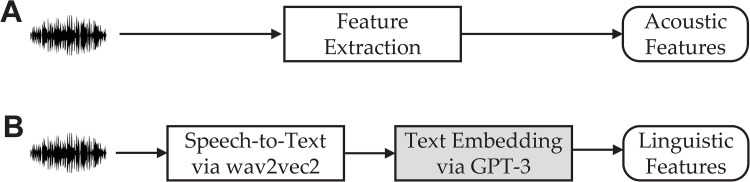
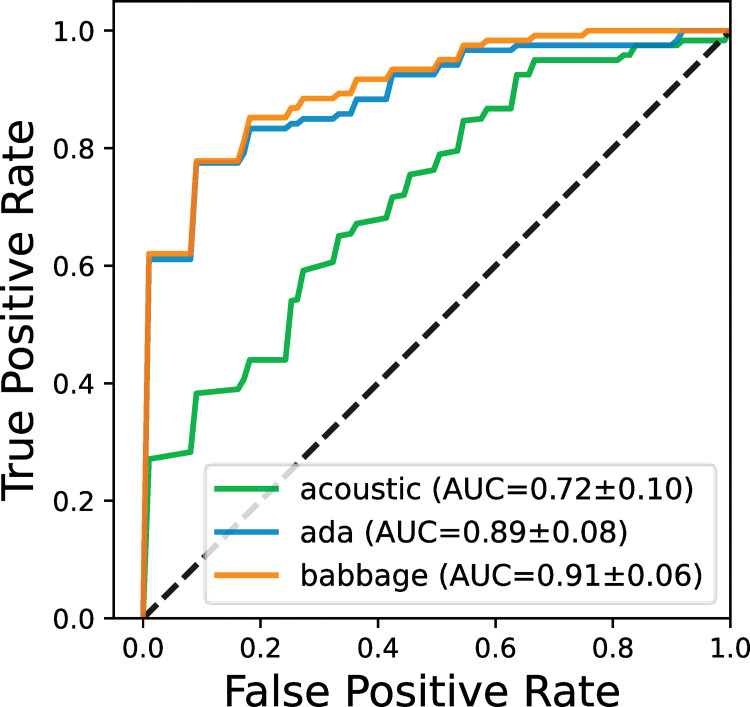
Language impairment is an important biomarker of neurodegenerative disorders such as Alzheimer’s disease (AD). Artificial intelligence (AI), particularly natural language processing (NLP), has recently been increasingly used for early prediction of AD through speech. Yet, relatively few studies exist on using large language models, especially GPT-3, to aid in the early diagnosis of dementia. In this work, we show for the first time that GPT-3 can be utilized to predict dementia from spontaneous speech. Specifically, we leverage the vast semantic knowledge encoded in the GPT-3 model to generate text embedding, a vector representation of the transcribed text from speech, that captures the semantic meaning of the input. We demonstrate that the text embedding can be reliably used to (1) distinguish individuals with AD from healthy controls, and (2) infer the subject’s cognitive testing score, both solely based on speech data. We further show that text embedding considerably outperforms the conventional acoustic feature-based approach and even performs competitively with prevailing fine-tuned models. Together, our results suggest that GPT-3 based text embedding is a viable approach for AD assessment directly from speech and has the potential to improve early diagnosis of dementia.
Overview
The claims and statistics of this paper haven’t been checked yet.
Free: it reads the open-access text and checks the first 5 claims that cite a source we can check. Create a free account to check every claim.
Integrity signals
Registry
Cites
Statistics
Figures
Verification
Claims the paper makes
The claims and statistics of this paper haven’t been checked yet.
Free: it reads the open-access text and checks the first 5 claims that cite a source we can check. Create a free account to check every claim.
Claims other papers make about this one
Each is checked against this paper’s own text: does it say what the citing paper says it does?
The source backs part of the claim, not all of it — or backs it for a different population, condition or comparison.
In the citing paper
“Even in dementia syndromes where language symptoms are not dominant, such as the behavioral variant of frontotemporal dementia, automated speech analysis can detect subtle linguistic and acoustic patterns that reflect underlying cognitive, behavioral, or socio-emotional changes.91,92”
From Review of Artificial Intelligence for Clinical Use in Alzheimer's Disease and Related Dementias (2026) · cites this paper as [91]
Experimental — accuracy not yet measured
Self-check
Percentages, sums and reported differences re-computed from the paper’s own numbers.
The self-check needs the paper’s full text.
Citations
Cites
Folstein, M. F., Folstein, S. E., & McHugh, P. R. (1975) · Journal of Psychiatric Research · doi:10.1016/0022-3956(75)90026-6 · Cited by 88,282 · cited 12×
“MMSE score prediction.”
BackgroundMethodInfluentialBERT: Pre-training of Deep Bidirectional Transformers for Language Understanding
Devlin, J., Chang, M.-W., Lee, K., & Toutanova, K. (2018) · arXiv · doi:10.48550/arxiv.1810.04805 · Cited by 73,173 · cited 1×
“The current NLP landscape has been revolutionized by large language models [23,26].”
BackgroundScikit-learn: Machine Learning in Python
Pedregosa, F., Varoquaux, G., Gramfort, A., Michel, V., Thirion, B., Grisel, O., Blondel, M., Müller, A., Nothman, J., Louppe, G., et al. (2012) · arXiv · doi:10.48550/arxiv.1201.0490 · Cited by 71,016 · cited 2×
“We use the scikit-learn library for the implementation of these models [42].”
MethodGlove: Global Vectors for Word Representation
Pennington, J., Socher, R., & Manning, C. (2014) · Proceedings of the 2014 Conference on Empirical Methods in Natural Language Processing (EMNLP) · doi:10.3115/v1/d14-1162 · Cited by 34,071
Efficient Estimation of Word Representations in Vector Space
Mikolov, T., Chen, K., Corrado, G., & Dean, J. (2013) · arXiv · doi:10.48550/arxiv.1301.3781 · Cited by 26,568
Hirono, N., Mori, E., Ikejiri, Y., Imamura, T., Shimomura, T., Hashimoto, M., Yamashita, H., & Ikeda, M. (1997) · Brain and nerve · Cited by 21,038
Kok, J. S., Berg, I. J., & Scherder, E. J. A. (2013) · Dementia and Geriatric Cognitive Disorders Extra · doi:10.1159/000353441 · Cited by 20,589
Older Adults' Reasons for Using Technology while Aging in Place
Peek, S. T. M., Luijkx, K. G., Rijnaard, M. D., Nieboer, M. E., van der Voort, C. S., Aarts, S., van Hoof, J., Vrijhoef, H. J. M., & Wouters, E. J. M. (2016) · Gerontology · doi:10.1159/000430949 · Cited by 19,690
Sensitivity and False Alarm Rate of a Fall Sensor in Long-Term Fall Detection in the Elderly
Kangas, M., Korpelainen, R., Vikman, I., Nyberg, L., & Jämsä, T. (2015) · Gerontology · doi:10.1159/000362720 · Cited by 18,909
Exploring the Limits of Transfer Learning with a Unified Text-to-Text Transformer
Raffel, C., Shazeer, N., Roberts, A., Lee, K., Narang, S., Matena, M., Zhou, Y., Li, W., & Liu, P. J. (2019) · arXiv · doi:10.48550/arxiv.1910.10683 · Cited by 10,929 · cited 1×
“Fine-tuning has become the de facto standard to leverage large pretrained models to perform downstream tasks [24,25,32].”
Background
Research works printed but not linked: 9
- H Goodglass, 2001, BDAE: The Boston Diagnostic Aphasia Examination.
- S Luz, 2020, Alzheimer’s Dementia Recognition through Spontaneous Speech: The ADReSS Challenge [Internet]., arXiv
- SO Orimaye, 2015, Learning Linguistic Biomarkers for Predicting Mild Cognitive Impairment using Compound Skip-grams [Internet]., arXiv
- Y Aytar, 2016, SoundNet: Learning Sound Representations from Unlabeled Video. In: Advances in Neural Information Processing Systems [Internet].
- A Balagopalan, 2020, To BERT or Not To BERT: Comparing Speech and Language-based Approaches for Alzheimer’s Disease Detection [Internet]., arXiv
- J Devlin, 2019, BERT: Pre-training of Deep Bidirectional Transformers for Language Understanding [Internet]., arXiv
- A Radford, 2018, Improving language understanding by generative pre-training
- T Brown, 2020, Language Models are Few-Shot Learners. In: Advances in Neural Information Processing Systems [Internet]., 1877
- ME Peters, 2018, Deep contextualized word representations [Internet]., arXiv
Cited by
Large language models in healthcare and medical domain: A review
Nazi, Z. A., & Peng, W. (2024) · Informatics · doi:10.3390/informatics11030057 · Cited by 415
Haltaufderheide, J., & Ranisch, R. (2024) · npj Digital Medicine · doi:10.1038/s41746-024-01157-x · Cited by 396
“38–”
Hirosawa, T., Harada, Y., Yokose, M., Sakamoto, T., Kawamura, R., & Shimizu, T. (2023) · International Journal of Environmental Research and Public Health · doi:10.3390/ijerph20043378 · Cited by 343
“Some GPT-3-related medical articles have been reported about a medical dialogue summarizer [28], navigation application for electronic health record systems [5], and its implementation in clinical use [7] including ophthalmology [4] and dementia prediction [29].”
BackgroundMoulaei, K., Yadegari, A., Baharestani, M., Farzanbakhsh, S., Sabet, B., & Reza Afrash, M. (2024) · International Journal of Medical Informatics · doi:10.1016/j.ijmedinf.2024.105474 · Cited by 244
Wang, L., Wan, Z., Ni, C., Song, Q., Li, Y., Clayton, E., Malin, B., & Yin, Z. (2024) · Journal of Medical Internet Research · doi:10.2196/22769 · Cited by 165
“ChatGPT has been evaluated in dental [6], allergy [64], and mental disorders diagnoses [66].”
Deploying artificial intelligence in services to AID vulnerable consumers
Hermann, E., Williams, G. Y., & Puntoni, S. (2023) · Journal of the Academy of Marketing Science · doi:10.1007/s11747-023-00986-8 · Cited by 136
“Recent advances in large language models have even demonstrated the potential for predicting and diagnosing diseases, such as dementia (e.g., Agbavor & Liang, 2022).”
Speech based detection of Alzheimer's disease: a survey of AI techniques, datasets and challenges
Ding, K., Chetty, M., Noori Hoshyar, A., Bhattacharya, T., & Klein, B. (2024) · Artificial Intelligence Review · doi:10.1007/s10462-024-10961-6 · Cited by 82
“…et al. (2023), Shah et al. (2023), Chen et al. (2023b), Vats et al. (2022), Luz et al. (2020), Luz et al. (2021), MohamedShreif and Lawgali (2022), Liang et al. (2022 ), Horigome et al. ( 2022), Woszczyk et al. (2022), Deng et al. (2022), Ablimit et al. (2022), Vats et al. (2021), Valsaraj et al.…”
InfluentialLarge Language Models in Neurology Research and Future Practice
Romano, M. F., Shih, L. C., Paschalidis, I. C., Au, R., & Kolachalama, V. B. (2023) · Neurology · doi:10.1212/wnl.0000000000207967 · Cited by 73
Irfan, B., Kuoppamäki, S., & Skantze, G. (2024) · Frontiers in Robotics and AI · doi:10.3389/frobt.2024.1363713 · Cited by 97
Large Language Models in Biomedical and Health Informatics: A Review with Bibliometric Analysis
Yu, H., Fan, L., Li, L., Zhou, J., Ma, Z., Xian, L., Hua, W., He, S., Jin, M., Zhang, Y., et al. (2024) · Journal of Healthcare Informatics Research · doi:10.1007/s41666-024-00171-8 · Cited by 100
Mao, C., Xu, J., Rasmussen, L., Li, Y., Adekkanattu, P., Pacheco, J., Bonakdarpour, B., Vassar, R., Shen, L., Jiang, G., et al. (2023) · Journal of Biomedical Informatics · doi:10.1016/j.jbi.2023.104442 · Cited by 67
Introduction to large language models (LLMs) for dementia care and research
Treder, M. S., Lee, S., & Tsvetanov, K. A. (2024) · Frontiers in Dementia · doi:10.3389/frdem.2024.1385303 · Cited by 63
Redefining Virtual Assistants in Health Care: The Future With Large Language Models
Sezgin, E. (2024) · Journal of Medical Internet Research · doi:10.2196/53225 · Cited by 47
“A digital health ecosystem represents the ecosystem where we may envision a future of support from VAs enhanced by LLMs with speech interaction and audio-based sensing capabilities [23].”
Agbavor, F., & Liang, H. (2022) · Brain Sciences · doi:10.3390/brainsci13010028 · Cited by 47
Self-citationArtificial intelligence for dementia research methods optimization
Bucholc, M., James, C., Khleifat, A. A., Badhwar, A., Clarke, N., Dehsarvi, A., Madan, C. R., Marzi, S. J., Shand, C., Schilder, B. M., et al. (2023) · Alzheimer's & Dementia · doi:10.1002/alz.13441 · Cited by 40
“99 Numerous studies have suggested that analysis of acous-ticfeaturesextractedfromspeechaudioandlinguisticfeaturesderived from written texts or speech transcripts may lead to the discovery of novel, non-invasive biomarkers of cognitive impairment given that subtle changes in language can be…”
BackgroundBerisha, V., & Liss, J. M. (2024) · npj Digital Medicine · doi:10.1038/s41746-024-01199-1 · Cited by 41
Progress on early diagnosing Alzheimer’s disease
Chen, Y., Al‐Nusaif, M., Li, S., Tan, X., Yang, H., Cai, H., & Le, W. (2024) · Frontiers of Medicine · doi:10.1007/s11684-023-1047-1 · Cited by 46
Large language models for bioinformatics
Ruan, W., Lyu, Y., Zhang, J., Cai, J., Shu, P., Yang, G., Lu, Y., Gao, S., Wang, Y., Wang, P., et al. (2025) · Quantitative Biology · doi:10.1002/qub2.70014 · Cited by 48
“The ADReSS Challenge dataset inspired the research community to develop automated methods to analyze speech, acoustic, and linguistic patterns in individuals to detect cognitive changes, frequently used in such studies [281–284].”
An Entity Extraction Pipeline for Medical Text Records Using Large Language Models: Analytical Study
Wang, L., Ma, Y., Bi, W., Lv, H., & Li, Y. (2024) · Journal of Medical Internet Research · doi:10.2196/54580 · Cited by 46
“• Rule extraction: concepts from established knowledge base, such as International Classification of Diseases, Tenth Revision [9], are used for concept term extraction.”
Wang, L., Bi, W., Zhao, S., Ma, Y., Lv, L., Meng, C., Fu, J., & Lv, H. (2024) · JMIR Formative Research · doi:10.2196/53216 · Cited by 37
“Research by Agbavor and Liang [8] demonstrated that GPT-3–generated text embeddings can reliably distinguish Alzheimer disease patients from healthy controls and infer cognitive test scores of patients, potentially enhancing early dementia diagnosis.”
BackgroundShi, Y., Ren, P., Wang, J., Han, B., ValizadehAslani, T., Agbavor, F., Zhang, Y., Hu, M., Zhao, L., & Liang, H. (2023) · Journal of Biomedical Informatics · doi:10.1016/j.jbi.2023.104533 · Cited by 40
Self-citationLi, R., Wang, X., & Yu, H. Q. (2023) · Findings of the Association for Computational Linguistics: EMNLP (Findings of EMNLP) · doi:10.18653/v1/2023.findings-emnlp.474 · Cited by 72
Lin, W.-C., Chen, A., Song, X. B., Weiskopf, N. G., Chiang, M. F., & Hribar, M. R. (2023) · Journal of the American Medical Informatics Association · doi:10.1093/jamia/ocad213 · Cited by 31
Shakeri, A., & Farmanbar, M. (2025) · Alzheimer s & Dementia Diagnosis Assessment & Disease Monitoring · doi:10.1002/dad2.70082 · Cited by 53
A Review of Large Language Models in Healthcare: Taxonomy, Threats, Vulnerabilities, and Framework
Hamid, R., & Brohi, S. N. (2024) · Big Data and Cognitive Computing · doi:10.3390/bdcc8110161 · Cited by 32
Runde, B. S., Alapati, A., & Bazan, N. G. (2024) · Brain Sciences · doi:10.3390/brainsci14030211 · Cited by 28
“This model showed promising results in Agbavor and Liang [10].”
BackgroundMethodResultInfluentialDigital detection of Alzheimer’s disease using smiles and conversations with a chatbot
Takeshige‐Amano, H., Oyama, G., Ogawa, M., Fusegi, K., Kambe, T., Shiina, K., Ueno, S., Okuzumi, A., Hatano, T., Motoi, Y., et al. (2024) · Scientific Reports · doi:10.1038/s41598-024-77220-0 · Cited by 30
“Auditory data from an image-description task including this picture have been used in previous studies to discriminate patients with AD from HCs 13,19,25,28,29,34 , partially because there is an accessible databank that includes these data.”
MethodNeuroNet-AD: A Multimodal Deep Learning Framework for Multiclass Alzheimer’s Disease Diagnosis
Rahman, S., Rahman, M. M., Bhatt, S., Sundararajan, R., & Faezipour, M. (2025) · Bioengineering · doi:10.3390/bioengineering12101107 · Cited by 25
“The multimodal approach of integrating neuroimaging with clinical textual data offers a more comprehensive understanding of the complex and diverse nature of AD [46,47].”
He, R., Chapin, K., Al‐Tamimi, J., Bel, N., Marquié, M., Rosende‐Roca, M., Pytel, V., Tartari, J. P., Alegret, M., Sanabria, Á., et al. (2023) · American Journal of Speech-Language Pathology · doi:10.1044/2023_ajslp-22-00403 · Cited by 33
Li, J., & Zhang, W.-Q. (2024) · IEEE International Conference on Acoustics Speech and Signal Processing · doi:10.1109/icassp48485.2024.10448004 · Cited by 29
“The current commonly used approach involves extracting acoustic or linguistic features from spontaneous speech and using various classifiers or deep neural networks for learning [2, 3, 4], especially using various pre-trained language models that significantly improve the results [5, 6, 7].”
MethodA novel speech analysis algorithm to detect cognitive impairment in a Spanish population
Kaser, A. N., Lacritz, L. H., Winiarski, H. R., Gabirondo, P., Schaffert, J., Coca, A. J., Jiménez-Raboso, J., Rojo, T., Zaldua, C., Honorato, I., et al. (2024) · Frontiers in Neurology · doi:10.3389/fneur.2024.1342907 · Cited by 21
“Several additional studies have demonstrated efficacy of computer-assisted linguistic processing algorithms in detecting speech differences between normal and impaired individuals in the English language (32, 33).”
BackgroundIdentification and Description of Emotions by Current Large Language ModelsPreprint
Patel, S., & Fan, J. (2023) · Research Square · doi:10.1101/2023.07.17.549421 · Cited by 27
“Its clinical applications show that LLM cognitive language capacity is advanced enough to predict dementia from speech [24].”
BackgroundSteurer, B., Vanhaelen, Q., & Zhavoronkov, A. A. (2024) · The Journals of Gerontology Series A · doi:10.1093/gerona/glae006 · Cited by 18
“The study identified a new target that had not been previously considered for treating AD (41).”
BackgroundMultilingual Prediction of Cognitive Impairment with Large Language Models and Speech Analysis
Agbavor, F., & Liang, H. (2024) · Brain Sciences · doi:10.3390/brainsci14121292 · Cited by 21
“Other studies [9,21,22] have utilized linguistic features from LLMs such as Bidirectional Encoder Representations from Trans-formers (BERT) [23] and Generative Pre-trained Transformer 3 (GPT-3) [24] for dementia detection.”
Self-citationMachine Learning Approaches for Speech-Based Alzheimer’s Detection: A Comprehensive Survey
Sharafeldeen, A., Keowen, J., & Shaffie, A. (2025) · Computers · doi:10.3390/computers14020036 · Cited by 23
Detecting and Explaining Postpartum Depression in Real-Time with Generative Artificial Intelligence
García-Méndez, S., & de Arriba-Pérez, F. (2025) · Applied Artificial Intelligence · doi:10.1080/08839514.2025.2515063 · Cited by 17
“This is highly appropriate to the health care field, where understanding the decision-making process of the diagnosis may be crucial and benefit personalized treatments (Agbavor & Liang, 2022; G¨ond¨ocs & D¨orfler, 2024).”
Toward Personalized Medicine Approaches for Parkinson Disease Using Digital Technologies
Khanna, A., & Jones, G. B. (2023) · JMIR Formative Research · doi:10.2196/47486 · Cited by 20
“Already, the potential for AI approaches to personalization has been proposed [68]; the impact of new automated speech recognition technologies appears to hold great promise in detection and staging in PD [69,70] and the utility of chatbots such as GPT3 is already being pursued in neurodegenerative disease [71].”
BackgroundClinical classification of memory and cognitive impairment with multimodal digital biomarkers
Banks, R., Higgins, C., Greene, B. R., Jannati, A., Gomes‐Osman, J., Tobyne, S. M., Bates, D. W., & Pascual‐Leone, Á. (2024) · Alzheimer s & Dementia Diagnosis Assessment & Disease Monitoring · doi:10.1002/dad2.12557 · Cited by 14
What Does ChatGPT Know About Dementia? A Comparative Analysis of Information Quality
Dosso, J. A., Kailley, J. N., & Robillard, J. M. (2023) · Journal of Alzheimer s Disease · doi:10.3233/jad-230573 · Cited by 14
Yang, H., Chang, J., He, W., Wee, C. F., Soong, J. T. Y., & Feng, M. (2024) · IEEE Journal of Biomedical and Health Informatics · doi:10.1109/jbhi.2024.3430226 · Cited by 16
de Arriba-Pérez, F., García-Méndez, S., Otero-Mosquera, J., & González-Castaño, F. J. (2024) · Applied Intelligence · doi:10.1007/s10489-024-05808-0 · Cited by 21
“However, personalized medical treatment recommendations provided by llm s remain unreliable [30]. llm s have broader language generation and understanding capabilities [9, 31], compared to domain-dependent models, when adequate prompt engineering is applied [32].”
BackgroundInfluentialThe role of AI for MRI-analysis in multiple sclerosis—A brief overview
Falet, J.-P. R., Nobile, S., Szpindel, A., Barile, B., Kumar, A., Durso-Finley, J., Arbel, T., & Arnold, D. L. (2025) · Frontiers in Artificial Intelligence · doi:10.3389/frai.2025.1478068 · Cited by 16
A Systematic Review of NLP for Dementia: Tasks, Datasets, and Opportunities
Peled-Cohen, L., & Reichart, R. (2025) · Transactions of the Association for Computational Linguistics · doi:10.1162/tacl.a.35 · Cited by 20
Evaluating spoken language as a biomarker for automated screening of cognitive impairment
Lima, M. R. D., Capstick, A., Geranmayeh, F., Nilforooshan, R., Matarić, M. J., Vaidyanathan, R., & Barnaghi, P. M. (2025) · Communications Medicine · doi:10.1038/s43856-025-01263-1 · Cited by 23
“We consider the following ADRD severity groups based on MMSE scores according to the UK National Institute for Health and Care Excellence dementia guidelines [25]: cognitively normal (CN) (26, 30], MCI (20, 26], moderate [10, 20], severe [0, 10) (following interval notation).”
Chen, J., Liu, L., Ruan, S., Li, M., & Yin, C. (2023) · Journal of Multidisciplinary Healthcare · doi:10.2147/jmdh.s441790 · Cited by 14
“11–13 Rao 14 found that ChatGPT achieved an overall accuracy rate of 71.7% across all 36 clinical cases.”
BackgroundInfluentialKwan, H. Y. (2024) · International Conference on Computer Communication and Artificial Intelligence (CCAI) · doi:10.1109/ccai61966.2024.10603150 · Cited by 16
“A notable research endeavor conducted by the Drexel University research team involved the integration of GPT-3 with neurological diagnostics [4].”
BackgroundMethodDong, Z., Xu, W., Xu, X., & Zhang, Z. (2025) · IEEE Journal of Biomedical and Health Informatics · doi:10.1109/jbhi.2025.3546950 · Cited by 13
Crawford, J. L. (2025) · PLOS Digital Health · doi:10.1371/journal.pdig.0000757 · Cited by 20
García-Méndez, S., & de Arriba-Pérez, F. (2024) · Annals of Biomedical Engineering · doi:10.1007/s10439-024-03454-8 · Cited by 10
“Note that describing the decision path of the intelligent systems enables corrective and personalized measures [2].”
ChatGPT as a Diagnostic Aid in Alzheimer’s Disease: An Exploratory Study
Haj, M. E., Boutoleau‐Bretonnière, C., Gallouj, K., Wagemann, N., Antoine, P., Kapogiannis, D., & Chapelet, G. (2024) · Journal of Alzheimer s Disease Reports · doi:10.3233/adr-230191 · Cited by 13
de Arriba-Pérez, F., & García-Méndez, S. (2025) · Arabian Journal for Science and Engineering · doi:10.1007/s13369-024-09508-2 · Cited by 8
“…degraded version ( gpt-d ) created with a dementia-related linguistic anomalies layer induction based on data from a picture description task, while Agbavor and Liang [14] predicted dementia and cognitive score from ct data using gpt-3 exploiting both word embeddings and acoustic…”
InfluentialTang, L., Zhang, Z., Feng, F., Yang, L., & Li, H. H. (2023) · Dementia and Geriatric Cognitive Disorders · doi:10.1159/000531818 · Cited by 13
Castelli, M., Sousa, M., Illner, V., Single, M., Amstutz, D., Maradan‐Gachet, M. E., Magalhães, A. D., Debove, I., Rusz, J., Martínez‐Martín, P., et al. (2025) · npj Parkinson s Disease · doi:10.1038/s41531-025-00939-8 · Cited by 12
“A neuropsychiatric state score was calculated from the NFS items using a formula previously described by Magalhães et al. 35 , ranging between 0 and 60.”
InfluentialAI-assisted care for older adults: a review of practical and ethical areas of concern
Choi, W. J., Ahn, B., Moorthy, G., & Do, K. (2025) · AI and Ethics · doi:10.1007/s43681-025-00776-8 · Cited by 9
“…to mood screenings to predict depressive episodes in bipolar patients [ 23]; large language models can analyze speech patterns to detect dementia [ 24 – 27]; AI chatbots can interactively interview patients to evaluate for depression [28 ]; even wearable devices are being developed to monitor…”
Gao, H., Wang, K., Yuan, Y., Wang, Y., Liu, Q., Wang, Y., Sun, J. Q., Wang, W., Wang, H., Zhou, S., et al. (2025) · Scientific Reports · doi:10.1038/s41598-025-07649-4 · Cited by 12
Rezaii, N., Wong, B., Aisen, P., Beckett, L. A., Dage, J. L., Eloyan, A., Foroud, T., Womack, K. B., Carrillo, M. C., Kramer, J. H., et al. (2025) · npj Dementia · doi:10.1038/s44400-025-00040-0 · Cited by 20
“…most recent studies investigating this topic have combined hand-selected features with embeddings derived from LLMs to maximize performance 27 – 31 , we intentionally kept these approaches separate to allow for a direct comparison between patterns de fi ned by human expertise and those…”
Mekulu, K., Aqlan, F., & Yang, H. (2025) · Alzheimer s & Dementia · doi:10.1002/alz70861_108503 · Cited by 8
Large Language Models: A Paradigm Shift for Dementia Diagnosis and Care
Harrison, J. R., Tang, S. L., Burston, B., Robertson, A., Liang, H., & Taylor, J. (2025) · British Journal of Hospital Medicine · doi:10.12968/hmed.2024.0666 · Cited by 9
Self-citationMulti-modal data analysis for early detection of alzheimer’s disease and related dementias
Wang, L., Glass, J. R., Kourtis, L. C., & Au, R. (2025) · The Journal of Prevention of Alzheimer s Disease · doi:10.1016/j.tjpad.2025.100399 · Cited by 10
“Agbavor and Liang (2022) found that GPT-3 based text embeddings notably outperformed conventional acoustic feature-based approaches for AD classification [25].”
Igarashi, T., Iijima, K., Nitta, K., & Chen, Y. (2024) · Healthcare · doi:10.3390/healthcare12181821 · Cited by 10
“…[40], a study by Liang et al. that evaluated cognitive impairment detection using voice assistant commands [41], and Agbavor and Liang’s study [42] that used an automatic speech recognition model Wav2Vec 2.0 to convert speech to text and captured lexical, syntactic, and semantic properties…”
MethodInfluentialWithdrawn: Large Language Models in Healthcare Decision Support: A ReviewPreprint
Vavekanand, R., Karttunen, P., Xu, Y., Milani, S., & Li, H. (2024) · Preprints.org · doi:10.20944/preprints202407.1842.v1 · Cited by 14
Review of Artificial Intelligence for Clinical Use in Alzheimer's Disease and Related Dementias
Breithaupt, A. G., Tang, A., Paolillo, E. W., Bibars, M., Johnson, E. C. B., Saloner, R., Possin, K. L., Windon, C. C., Hill-Jarrett, T. G., Giorgio, J., et al. (2026) · Seminars in Neurology · doi:10.1055/a-2744-9871 · Cited by 6
“…— known as embeddings — that capture nuanced relationships within audio (e.g., wav2vec2) or text (e.g., BERT) to extract complex patterns, 102 104 enabling a more holistic approach to speech analysis than using individual features, yet at the cost of transparency Growing access to speech…”
Xiao, Y., Pan, Q., Liu, H., He, Y., Zhang, Y., & Jiang, N. (2025) · Health Informatics Journal · doi:10.1177/14604582251381240 · Cited by 7
“18,19 22 However, concerns about hallucination and reliability remain, emphasizing the need for careful validation in clinical contexts.”
Xinming, X. U., Haoxuan, L. I., Guan, Z., Dian, Z. E. N. G., ZHENG, Q., Qin, Y., Yang, W. E. N., Li, H., Lim, C. T., Wong, T. Y., et al. (2025) · Virtual Reality & Intelligent Hardware · doi:10.1016/j.vrih.2025.08.001 · Cited by 7
Transferring Speech-Generic and Depression-Specific Knowledge for Alzheimer’s Disease Detection
Cui, Z.-Y., Wu, W., Zhang, W.-Q., Wu, J., & Zhang, C. (2023) · Automatic Speech Recognition & Understanding · doi:10.1109/asru57964.2023.10389785 · Cited by 9
“In addition, the success of parallel knowledge trans-Paper F1-max Baseline [3] 0.789 Agbavor et al. [25] 0.829 Pappagari et al. [44] 0.860 Deng et al. [45] 0.873 Chen et al. [20] 0.889 Priyadarshinee et al. [46] 0.894 Ours 0.928 Table 5 .”
BackgroundMethodInfluentialHan, Y., Lam, J. C. K., Li, V. O. K., & Cheung, L. Y. L. (2025) · Data & Policy · doi:10.1017/dap.2025.8 · Cited by 9
“Agbavor and Liang (2022) showed that text embeddings from GPT-3 can distinguish AD subjects from normal controls (NCs).”
Automated Software Testing through Large Language Models: Opportunities and Challenges
Fuente, J. A. D. (2022) · Qubahan Techno Journal · doi:10.48161/qtj.v1n3a15 · Cited by 5
ChatGPT Related Technology and Its Applications in the Medical Field
Zhang, B. T., & Qian, M. L. (2023) · Advanced ultrasound in diagnosis and therapy · doi:10.37015/audt.2023.230028 · Cited by 5
Alzheimer’s Disease Detection Based on Large Language Model Prompt Engineering
Zheng, T., Xie, X., Peng, X., Chen, H., & Tian, F. (2025) · Lecture notes in computer science · doi:10.1007/978-981-96-1151-5_21 · Cited by 13
Heitz, J., Engler, I., & Langer, N. (2026) · npj Digital Medicine · doi:10.1038/s41746-026-02360-8 · Cited by 10
“Agbavor and Liang 16 predicted MMSE scores using text embeddings derived from modern large language models.”
Enhanced diagnostic interpretation of the MoCA using machine learning
Gourdeau, C., Gourdeau, C. L., Bernier, P. J., & Laforce, R. J. (2026) · Frontiers in Neuroscience · doi:10.3389/fnins.2026.1679649 · Cited by 4
Ntampakis, N., Diamantaras, K., Chouvarda, I., Tsolaki, M., Sarigianndis, P., & Argyriou, V. (2025) · Lecture notes in computer science · doi:10.1007/978-3-032-05185-1_40 · Cited by 7
Shewcraft, R. A., Schwarz, J., & Balan, M. M. (2025) · JMIR AI · doi:10.2196/67369 · Cited by 4
“Recent advancements in large language models (LLMs) have opened up exciting possibilities for quantitative assessment of neurological diseases [7,8].”
Artificial Intelligence in and Beyond Healthcare Psychology
Han, D. Y. (2025) · Journal of Clinical Psychology in Medical Settings · doi:10.1007/s10880-025-10101-4 · Cited by 4
“AI supervised by certified mental health professionals may analyze linguistic patterns to improve diagnostic accuracy in neurocognitive disorders (Agbavor & Liang, 2022), detect prodromal cues before manic episodes or relapse (Murugavel et al., 2025), predict treatment response rates (Curtiss &…”
Areas of research focus and trends in the research on the application of AIGC in healthcare
Wang, C., Zhu, Y., Zhang, X., Chen, X., Li, Y., Tan, Y., & Qi, H. (2025) · Journal of Health Population and Nutrition · doi:10.1186/s41043-025-00947-7 · Cited by 6
“This paper proved that GPT-3 powered text embedding can be reliably used to distinguish between Alzheimer’s patients and healthy controls, and infer cognitive test scores of subjects, and this method is superior to the traditional feature-based approach [18].”
MultiConAD: A Unified Multilingual Conversational Dataset for Early Alzheimer's Detection
Shakeri, A., Farmanbar, M., & Balog, K. (2025) · International ACM SIGIR Conference on Research and Development in Information Retrieval (SIGIR) · doi:10.1145/3726302.3730313 · Cited by 6
Mekulu, K., Aqlan, F., & Yang, H. Y. (2025) · Frontiers in Digital Health · doi:10.3389/fdgth.2025.1659366 · Cited by 5
How can precision health care contribute to healthy aging?
Michel, J. (2024) · Aging Medicine · doi:10.1002/agm2.12333 · Cited by 3
Cellular Automaton-Based Sentiment Analysis Using Deep Learning Methods
Elizabeth, M. J., & Hazari, R. (2024) · Complex Systems · doi:10.25088/complexsystems.33.3.353 · Cited by 3
“A pretrained language model that uses 175 billion parameters for text processing [36].”
Language models in digital psychiatry: challenges with simplification of healthcare materials
Aich, A., Liu, T., Giorgi, S., Isman, K., Bobojonova, R., Ungar, L., & Curtis, B. (2025) · NPP—Digital Psychiatry and Neuroscience · doi:10.1038/s44277-025-00029-w · Cited by 4
“While prior research has explored summarizing complex texts [51 – 54], extracting relevant information to aid understanding [55], and supporting mental health assessments [56, 57], our fi ndings underscore the limitations that persist in automating these simpli fi cations reliably.”
Assessing the proficiency of large language models on funduscopic disease knowledge
Wu, J.-Y., Qian, X.-Z., Zeng, Y.-M., Qian, X.-Z., Wei, H., Zou, J., Wei, H., Zou, J., Chen, X., Wang, X.-Y., et al. (2025) · International Journal of Ophthalmology · doi:10.18240/ijo.2025.07.03 · Cited by 2
Chandru, M., Abinesh, M., Ananth, M. S., Vashist, A., & Manickam, P. (2025) · Current Opinion in Biomedical Engineering · doi:10.1016/j.cobme.2025.100638 · Cited by 4
Affordable Audio Hardware and Artificial Intelligence Can Transform the Dementia Care Pipeline
Potamitis, I. (2025) · Algorithms · doi:10.3390/a18120787 · Cited by 2
Singh, S., Sharma, Y., Bhardwaj, P., Kothari, D., Chhikara, A., Gupta, V., Kumar, D., Choudhary, N., & Kondaveeti, S. B. (2026) · Behavioral and Brain Functions · doi:10.1186/s12993-026-00329-x · Cited by 3
Ullah, R., Akbar, S., Nawaz, R., Ali, Z., Singh, V. K., & Bukhari, S. A. C. (2026) · Journal of dementia and Alzheimer's disease · doi:10.3390/jdad3020018 · Cited by 4
“Transformer-based LLMs can encode discourse structure, semantic coherence, and contextual language use from spontaneous speech, capturing impairments that may not be reflected in surface-level acoustic or lexical metrics [43,44].”
Exploring the Efficacy of Text Embeddings in Early Dementia Diagnosis from Speech
Ajroudi, K., Khedher, M. I., Jemai, O., & El‐Yacoubi, M. A. (2024) · Conference on Human System Interactions · doi:10.1109/hsi61632.2024.10613581 · Cited by 2
“By combining information from various sources such as acoustic and language features, fusion approaches aim to enhance the accuracy and reliability of detection systems [11].”
BackgroundWang, J., Gao, J., Xiao, J., Li, J., Li, H., Xie, X., Tan, R., Jia, Y., Zhang, X., Zhang, C., et al. (2024) · medRxiv · doi:10.1101/2024.06.30.24309714 · Cited by 3
Dementia Care and Generative Artificial Intelligence
Yang, Y., & An, R. (2025) · Springer eBooks · doi:10.1007/978-3-031-40858-8_528-1 · Cited by 2
Exploring Chronic Pain Experiences: Leveraging Text and Audio Analysis to Infer Well-Being Metrics
Agurto, C., Merler, M., Reinen, J., Parida, P. R., Cecchi, G., & Rogers, J. L. (2024) · IEEE International Conference on Digital Health (ICDH) · doi:10.1109/icdh62654.2024.00041 · Cited by 2
“These have been applied successfully to areas such as electronic health records [13], schizophrenia spectrum disorders [14] and dementia [15], among others.”
Identifying Alzheimer’s Disease Across Cognitive Impairment Spectrum Using Acoustic Features Only
Jon, H. J., Jung, H., Jin, L., & Kim, E. Y. (2024) · Lecture notes in computer science · doi:10.1007/978-3-031-78195-7_27 · Cited by 1
Alzheimer’s Disease Classification From Speech Pause Distributions With Context Information
Khatri, G., Soleimani, R., Haley, K. L., Jacks, A., & Lobaton, E. J. (2024) · Annual International Conference of the IEEE Engineering in Medicine and Biology Society (EMBC) · doi:10.1109/embc53108.2024.10782834 · Cited by 1
“DL models applied to dementia include multi-layer perceptrons (MLPs) [12], long short-term memory (LSTM) models [13]– [17], convolutional neural networks (CNNs) [18], and trans-formers like BERT [10], [14], [16], [19]–[23], ERNIE [23], GPT-3 [24] and the vision transformer (ViT) [19].”
Deterring Academic Integrity Breaches: The Roles of Institutions, Academics, and Support Services
Sivasubramaniam, S. D. (2025) · Journal of Scholarly Publishing · doi:10.3138/jsp-2024-1115 · Cited by 2
Comparison of Read and Spontaneous Speech in Children using Deep Learning
Disha, D., Hegde, S., & Raju, K. (2025) · International Conference on Inventive Computation Technologies (ICICT) · doi:10.1109/icict64420.2025.11005324 · Cited by 1
Utility of artificial intelligence-based conversation voice analysis for detecting cognitive decline
Kuroda, T., Ono, K., Murakami, K., Onishi, M., Shoji, D., Kosuge, S., Ishida, A., Hieda, S., Yamaguchi, S., Takahashi, M., et al. (2025) · PLoS ONE · doi:10.1371/journal.pone.0325177 · Cited by 3
“Agbavor and Liang demonstrated that large language models (LLMs), such as GPT-3, can predict dementia with high accuracy by analyzing spontaneous speech [10].”
Guo, L. Z., Liu, H., Yang, H., Chen, H., Du, W., & Liu, Y. (2025) · Communications in computer and information science · doi:10.1007/978-981-96-6960-8_19 · Cited by 3
Practical Implementation and Integration of AI in Mental Healthcare
Goyal, S. B., & Fiorini, L. (2025) · Information systems engineering and management · doi:10.1007/978-3-031-91147-7_18 · Cited by 1
Integrating Acoustic and Linguistic Feature Extraction for Enhanced Dementia Diagnosis
Vivekanand, C. V., Nayagam, S., & Rajeev, S. (2025) · International Conference on Self Sustainable Artificial Intelligence Systems (ICSSAS) · doi:10.1109/icssas66150.2025.11081266 · Cited by 1
Fan, S., Liu, X., Tang, M. M., Ju, S., Li, J., & Luo, J. (2025) · Digital Health · doi:10.1177/20552076251396576 · Cited by 2
Use of Big Data and Artificial Intelligence in Multiple Sclerosis
Peeters, L. M., Comi, G., & Faes, A. (2025) · Frontiers research topics · doi:10.3389/978-2-8325-7054-8 · Cited by 1
Metadata
- Authors
- Agbavor, F., & Liang, H.
- Affiliations
- Drexel University (US)
- Corresponding author
- Liang, Hualou
- Venue
- PLOS Digital Health
- Publisher
- Public Library of Science (PLoS)
- Published
- 2022-12-22
- Volume
- 1
- Issue
- 12
- Pages
- e0000168
- ISSN
- 2767-3170 (ISSN-L)
- PMC
- PMC9931366
- OpenAlex
- W4312091558
- Cited by
- 147
- References
- 34
- Citations by year
- 2026: 39 · 2025: 47 · 2024: 42 · 2023: 17 · 2022: 2
- FWCI
- 17.60
- Type
- journal article
- Language
- en
- Open access
- gold
- doi.org
- Licence
- Locations
- PLOS Digital Health (publishedVersion, cc-by)
- PubMed Central (publishedVersion, cc-by)
- PubMed (publishedVersion)
- DOAJ (DOAJ: Directory of Open Access Journals) (submittedVersion)
- Funders
- Drexel University
- National Institutes of Health (AG05133)
- National Institute on Aging (P50AG005133)
- Topics
- Health Sciences › Medicine › Psychiatry and Mental health › Dementia and Cognitive Impairment Research
- Physical Sciences › Computer Science › Artificial Intelligence › Speech Recognition and Synthesis
- Health Sciences › Health Professions › Health Information Management › Artificial Intelligence in Healthcare
- Keywords
- dementia prediction, Alzheimer's disease, spontaneous speech, GPT-3, text embeddings, language impairment, early diagnosis, speech biomarkers, natural language processing
About these checks
Registry, retraction, Cites and statistics results are computed, not judged, with one exception: a printed reference that no index lists is read once by a model before it counts as a citation error. Claims are extracted by a model and kept only when their quote appears verbatim in the text; each cited source is then checked, with a model’s help, for whether it says what the claim relies on. Those verdicts can be wrong — read the claim’s quote and the cited source before relying on one.
Statistics and arithmetic are recomputed, not judged.
Confidence bands are shown only for fields calibrated on our annotated test set. None is calibrated yet, so no band is shown.
What counts as a claim ›How we measure confidence ›How we check this ›
Are you an author, or do you see a problem with this page? Request a review
Data sources
Bibliographic data: Semantic Scholar, OpenAlex, Crossref.
Contains information from the Semantic Scholar Academic Graph Datasets, made available under the ODC Attribution License (ODC-BY 1.0).
Semantic Scholar’s data is described in: Kinney, R., et al. (2023). The Semantic Scholar Open Data Platform. arXiv:2301.10140.
