

Inferring the Joint Demographic History of Multiple Populations from Multidimensional SNP Frequency Data
Open accessThe DOI matches its Crossref record; 66 of the 66 references it cites were found in a registry or an index.
Abstract
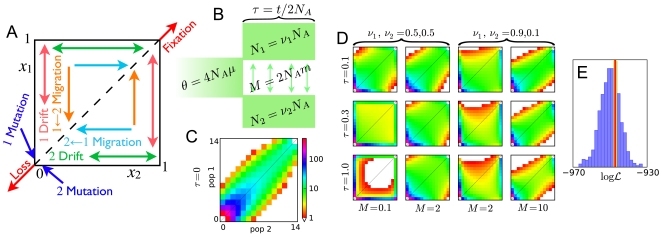
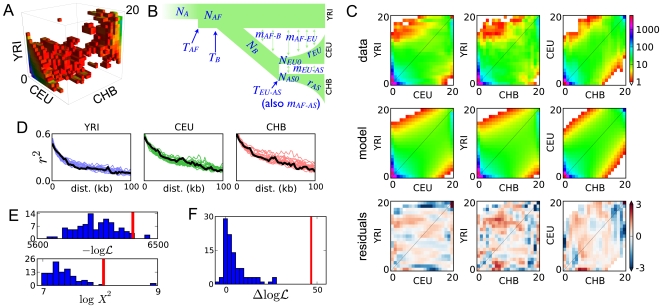
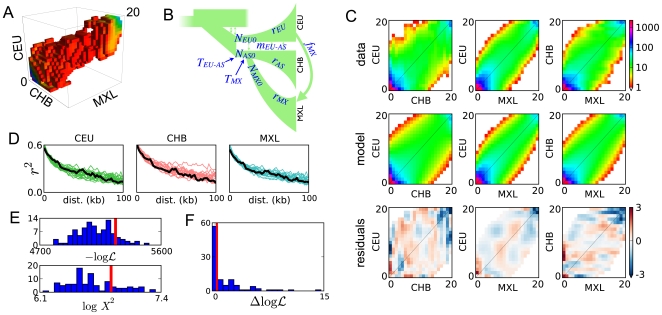
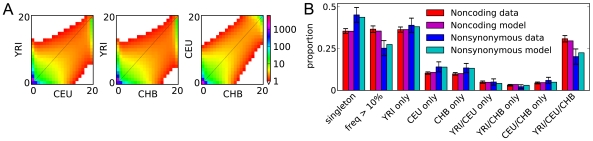
Demographic models built from genetic data play important roles in illuminating prehistorical events and serving as null models in genome scans for selection. We introduce an inference method based on the joint frequency spectrum of genetic variants within and between populations. For candidate models we numerically compute the expected spectrum using a diffusion approximation to the one-locus, two-allele Wright-Fisher process, involving up to three simultaneous populations. Our approach is a composite likelihood scheme, since linkage between neutral loci alters the variance but not the expectation of the frequency spectrum. We thus use bootstraps incorporating linkage to estimate uncertainties for parameters and significance values for hypothesis tests. Our method can also incorporate selection on single sites, predicting the joint distribution of selected alleles among populations experiencing a bevy of evolutionary forces, including expansions, contractions, migrations, and admixture. We model human expansion out of Africa and the settlement of the New World, using 5 Mb of noncoding DNA resequenced in 68 individuals from 4 populations (YRI, CHB, CEU, and MXL) by the Environmental Genome Project. We infer divergence between West African and Eurasian populations 140 thousand years ago (95% confidence interval: 40-270 kya). This is earlier than other genetic studies, in part because we incorporate migration. We estimate the European (CEU) and East Asian (CHB) divergence time to be 23 kya (95% c.i.: 17-43 kya), long after archeological evidence places modern humans in Europe. Finally, we estimate divergence between East Asians (CHB) and Mexican-Americans (MXL) of 22 kya (95% c.i.: 16.3-26.9 kya), and our analysis yields no evidence for subsequent migration. Furthermore, combining our demographic model with a previously estimated distribution of selective effects among newly arising amino acid mutations accurately predicts the frequency spectrum of nonsynonymous variants across three continental populations (YRI, CHB, CEU).
Overview
The claims and statistics of this paper haven’t been checked yet.
Free: it reads the open-access text and checks the first 5 claims that cite a source we can check. Create a free account to check every claim.
Integrity signals
Registry
Cites
Statistics
Figures
Verification
Claims the paper makes
The claims and statistics of this paper haven’t been checked yet.
Free: it reads the open-access text and checks the first 5 claims that cite a source we can check. Create a free account to check every claim.
Claims other papers make about this one
Each is checked against this paper’s own text: does it say what the citing paper says it does?
The cited source says what the claim attributes to it.
In the citing paper
“Recent estimates based on genome-wide patterns of variation have suggested that the European and East Asian divergence might have occurred as late as 25,000 years ago (Keinan et al. 2007;Gutenkunst et al. 2009;Laval et al. 2010;Rasmussen et al. 2011), implying that the colonization of Europe could have involved several migration movements at different ages (Laval et al. 2010).”
From The timing of pigmentation lightening in Europeans (2013) · cites this paper as Gutenkunst et al. 2009
Self-check
Percentages, sums and reported differences re-computed from the paper’s own numbers.
The self-check needs the paper’s full text.
Citations
Cites
Matplotlib: a 2D graphics environment
Hunter, J. D. (2007) · Computing in Science & Engineering · doi:10.1109/mcse.2007.55 · Cited by 39,249 · cited 1×
“Our implementation of these methods, ∂a∂i, is written in cross-platform Python and C, making use of the NumPy [38], Scipy [39], and Matplotlib libraries [40].”
MethodInference of Population Structure Using Multilocus Genotype Data
Pritchard, J. K., Stephens, M., & Donnelly, P. (2000) · Genetics · doi:10.1093/genetics/155.2.945 · Cited by 33,908
Savitzky-Golay Smoothing Filters
Press, W. H., & Teukolsky, S. A. (1990) · Computers in Physics · doi:10.1063/1.4822961 · Cited by 11,670
Numerical Recipes, The Art of Scientific Computing
Press, W. H., Flannery, B. P., Teukolsky, S. A., Vetterling, W. T., & Gould, H. (1987) · American Journal of Physics · doi:10.1119/1.14981 · Cited by 10,024
Numerical Recipes: The Art of Scientific Computing
Ziegel, E. (1987) · Technometrics · doi:10.1080/00401706.1987.10488304 · Cited by 6,702
On the number of segregating sites in genetical models without recombination
Watterson, G. A. (1975) · Theoretical Population Biology · doi:10.1016/0040-5809(75)90020-9 · Cited by 3,915 · cited 1×
“) Given an infinitely-manysites mutational model [31] and Wright-Fisher reproduction in each generation, the dynamics of φ for an arbitrary finite number of populations P are governed by a linear diffusion equation:”
BackgroundNumerical recipes: the art of scientific computing
Press, W. H., Flannery, B. P., Teukolsky, S. A., Vetterling, W. T., & Chipperfield, J. R. (1987) · Analytica Chimica Acta · doi:10.1016/s0003-2670(00)82860-3 · Cited by 3,304
Python for scientific computing
Oliphant, T. E. (2007) · Computing in Science & Engineering · doi:10.1109/mcse.2007.58 · Cited by 3,303 · cited 1×
“Our implementation of these methods, ∂a∂i, is written in cross-platform Python and C, making use of the NumPy [38], Scipy [39], and Matplotlib libraries [40].”
MethodBayesian Coalescent Inference of Past Population Dynamics from Molecular Sequences
Drummond, A. J. (2005) · Molecular Biology and Evolution · doi:10.1093/molbev/msi103 · Cited by 3,143 · cited 1×
“, [4–6,16,17], but also see [10,18]).”
Initial sequence of the chimpanzee genome and comparison with the human genome
The Chimpanzee Sequencing and Analysis Consortium (2005) · Nature · doi:10.1038/nature04072 · Cited by 2,459
Cited by
Items 601–700 of 1,004
The time and place of European admixture in Ashkenazi Jewish history
Xue, J. R., Lencz, T., Darvasi, A., Pe’er, I., & Carmi, S. (2017) · PLoS Genetics · doi:10.1371/journal.pgen.1006644 · Cited by 47
“, based on the allele frequency spectrum [66, 67] or IBD sharing [60]; however, to use these methods one must specify and infer a model for the entire history.”
MethodSignatures of Introgression across the Allele Frequency Spectrum
Martin, S. H., & Amos, W. (2020) · Molecular Biology and Evolution · doi:10.1093/molbev/msaa239 · Cited by 44
“Various methods exist to make inferences about demographic history and introgression using rich summaries of genomic data such as the site frequency spectrum (Gutenkunst et al. 2009; Excoffier et al. 2013), patterns of linkage disequilibrium (Machado et al.”
MethodKreiner, J. M., Sandler, G., Stern, A. J., Tranel, P. J., Weigel, D., Stinchcombe, J. R., & Wright, S. I. (2022) · eLife · doi:10.7554/elife.70242 · Cited by 43
Small effective population size and genetic homogeneity in the Val Borbera isolate
Colonna, V., Pistis, G., Bomba, L., Mona, S., Matullo, G., Boano, R., Sala, C. F., Viganò, F., Torroni, A., Achilli, A., et al. (2012) · European Journal of Human Genetics · doi:10.1038/ejhg.2012.113 · Cited by 38
Fine-scale population structure and the era of next-generation sequencing
Henn, B. M., Gravel, S., Moreno-Estrada, A., Acevedo-Acevedo, S., & Bustamante, C. D. (2010) · Human Molecular Genetics · doi:10.1093/hmg/ddq403 · Cited by 37
“A variety of statistical approaches have been used, ranging from classical descriptors, such as Wright’s F statistics [which are akin to factors in hierarchical analysis of variance (2)] to non-parametric methods [such as principal component analysis of individual genotype data (3)] to fully parametric models of the j…”
MethodSelf-citationRu, D., Mao, K., Zhang, L., Wang, X., Lu, Z., & Sun, Y. (2016) · Molecular Ecology · doi:10.1111/mec.13656 · Cited by 44
“3 to analyse demographic inference for the above three lineages based on the neutral data set (Gutenkunst et al. 2009).”
BackgroundMethodInfluentialHow to choose sets of ancestry informative markers: A supervised feature selection approach
Pfaffelhuber, P., Grundner-Culemann, F., Lipphardt, V., & Baumdicker, F. (2020) · Forensic Science International Genetics · doi:10.1016/j.fsigen.2020.102259 · Cited by 41
He, F., Steige, K. A., Kováčová, V., Göbel, U., Bouzid, M., Keightley, P. D., Beyer, A., & de Meaux, J. (2021) · Nature Communications · doi:10.1038/s41467-021-23558-2 · Cited by 45
Steinrücken, M., Wang, Y. X. R., & Song, Y. S. (2012) · Theoretical Population Biology · doi:10.1016/j.tpb.2012.10.006 · Cited by 37
“As achieved in the alternative approaches of Gutenkunst et al. (2009) and Lukić et al. (2011), mentioned in Introduction, it would be desirable to generalize our approach to incorporate subdivided populations exchanging migrants, with possibly fluctuating population sizes.”
InfluentialRasmussen, M. S., Garcia‐Erill, G., Korneliussen, T. S., Wiuf, C., & Albrechtsen, A. (2022) · Genetics · doi:10.1093/genetics/iyac148 · Cited by 38
Gladieux, P., Wilson, B. A., Perraudeau, F., Montoya, L., Kowbel, D., Hann-Soden, C., Fischer, M., Sylvain, I. A., Jacobson, D. J., & Taylor, J. W. (2015) · Molecular Ecology · doi:10.1111/mec.13417 · Cited by 39
“Model fitting using the PYTHON package DADI (Gutenkunst et al. 2009) indicated that observed SFS were significantly different from those expected under the standard neutral model (v2 > 300; P < 0.001).”
MethodInfluentialCagliani, R., Guerini, F. R., Fumagalli, M., Riva, S., Agliardi, C., Galimberti, D., Pozzoli, U., Goris, A., Dubois, B., Fenoglio, C., et al. (2012) · Molecular Biology and Evolution · doi:10.1093/molbev/mss002 · Cited by 39
“Coalescent simulation was also run using additional demographic models (Marth et al. 2004; Voight et al. 2005; Gutenkunst et al. 2009).”
MethodNovel ecological and climatic conditions drive rapid adaptation in invasive Florida Burmese pythons
Card, D. C., Perry, B. W., Adams, R. H. J., Schield, D. R., Young, A. S., Andrew, A. L., Ježková, T., Pasquesi, G. I. M., Hales, N. R., Walsh, M., et al. (2018) · Molecular Ecology · doi:10.1111/mec.14885 · Cited by 41
Blanco‐Pastor, J. L., Manel, S., Barré, P., Roschanski, A. M., Willner, E., Dehmer, K. J., Hegarty, M., Muylle, H., Ruttink, T., Roldán-Ruíz, I., et al. (2019) · Journal of Biogeography · doi:10.1111/jbi.13587 · Cited by 45
“A previous study based on chloroplast DNA (cpDNA) poly‐ morphisms suggested that natural L. perenne populations could have been introduced to Europe following human migration routes from the Fertile Crescent as a weed of cereals (Balfourier, Imbert, & Charmet, 2000).”
BackgroundInfluentialUnbiased estimation of linkage disequilibrium from unphased data
Ragsdale, A. P., & Gravel, S. (2020) · Molecular Biology and Evolution · doi:10.1093/molbev/msz265 · Cited by 36
Stauber, L., Badet, T., Feurtey, A., Prospero, S., & Croll, D. (2021) · eLife · doi:10.7554/elife.56279 · Cited by 35
Inferring Genome-Wide Correlations of Mutation Fitness Effects between Populations
Huang, X., Fortier, A. L., Coffman, A. J., Struck, T. J., Irby, M. N., James, J., León-Burguete, J. E., Ragsdale, A. P., & Gutenkunst, R. N. (2021) · Molecular Biology and Evolution · doi:10.1093/molbev/msab162 · Cited by 39
Self-citationGenomic Underpinnings of Population Persistence in Isle Royale Moose
Kyriazis, C. C., Beichman, A. C., Brzeski, K. E., Hoy, S. R., Peterson, R. O., Vucetich, J. A., Vucetich, L. M., Lohmueller, K. E., & Wayne, R. K. (2023) · Molecular Biology and Evolution · doi:10.1093/molbev/msad021 · Cited by 36
“168 169 Demographic inference 170 To understand the demographic processes accounting for these patterns of genetic diversity 171 and inbreeding, we fitted demographic models to the site frequency spectrum (SFS) using ∂a∂i 172 (33).”
MethodInfluentialThe Demographic and Adaptive History of the African Green Monkey
Pfeifer, S. P. (2017) · Molecular Biology and Evolution · doi:10.1093/molbev/msx056 · Cited by 40
High-Resolution Estimates of Crossover and Noncrossover Recombination from a Captive Baboon Colony
Wall, J. D., Robinson, J. A., & Cox, L. A. (2022) · Genome Biology and Evolution · doi:10.1093/gbe/evac040 · Cited by 37
Reference Genome Choice and Filtering Thresholds Jointly Influence Phylogenomic Analyses
Rick, J. A., Brock, C. D., Lewanski, A. L., Golcher‐Benavides, J., & Wagner, C. E. (2023) · Systematic Biology · doi:10.1093/sysbio/syad065 · Cited by 49
Xin, X., Li, P., Zhao, X., Yu, Y., Wang, W., Jin, G., Wang, J., Sun, L., Zhang, D., Zhang, F., et al. (2024) · Nature Communications · doi:10.1038/s41467-024-49721-z · Cited by 39
“Models of the demographic history of PC , DG , and Par were evaluated using diffusion approximations to the allele frequency spectrum (AFS) with ∂ a ∂ i 68 .”
Genomic islands of divergence or opportunities for introgression?
Bay, R. A., & Ruegg, K. (2017) · Proceedings of the Royal Society B Biological Sciences · doi:10.1098/rspb.2016.2414 · Cited by 43
“We inferred demographic history from RAD-Seq SNPs using the joint allele frequency spectrum, implemented in dadi [23].”
MethodSilva, A. C. A., Bragg, J. G., Potter, S., Fernandes, C., Coelho, M. M., & Moritz, C. C. (2017) · Molecular Ecology · doi:10.1111/mec.14185 · Cited by 37
Hybrids and horizontal transfer: introgression allows adaptive allele discovery
Schmickl, R., Marburger, S., Bray, S., & Yant, L. J. (2017) · Journal of Experimental Botany · doi:10.1093/jxb/erx297 · Cited by 39
Choi, J. Y., Purugganan, M., & Stacy, E. A. (2020) · Molecular Biology and Evolution · doi:10.1093/molbev/msz259 · Cited by 35
“Demography models were tested using the diffusion approximation method of dadi (Gutenkunst et al. 2009).”
MethodDetecting glacial refugia in the Southern Ocean
Lau, S. C. Y., Wilson, N. G., Silva, C. N. S., & Strugnell, J. M. (2020) · Ecography · doi:10.1111/ecog.04951 · Cited by 36
Barrera‐Redondo, J., Piñero, D., & Eguiarte, L. E. (2020) · Frontiers in Genetics · doi:10.3389/fgene.2020.00742 · Cited by 39
“There are many methods available for demographic modeling, which can be more suitable depending on the type of scenarios that need to be tested (Anderson et al., 2005; Gutenkunst et al., 2009; Excoffier and Foll, 2011; Cornuet et al., 2014).”
MethodA Southeast Asian origin for present-day non-African human Y chromosomes
Hallast, P., Agdzhoyan, A., Balanovsky, O. P., Xue, Y., & Tyler‐Smith, C. (2020) · Human Genetics · doi:10.1007/s00439-020-02204-9 · Cited by 39
Xiao, J., Ding, X., Li, L., Ma, H., Ci, X., van der Merwe, M. M., Conran, J. G., & Li, J. (2020) · Ecology and Evolution · doi:10.1002/ece3.6710 · Cited by 34
Benchmarking the performance of Pool‐seq SNP callers using simulated and real sequencing data
Guirao‐Rico, S., & González, J. (2021) · Molecular Ecology Resources · doi:10.1111/1755-0998.13343 · Cited by 38
“Obtaining a robust estimate of the SFS is crucial in population genomics because from its shape, both past demographic processes and selection events can be inferred, among others (Bustamante et al., 2001; Excoffier et al., 2013; Gutenkunst et al., 2009; Koropoulis et al., 2020; Ronen et al., 2013).”
BackgroundPast environmental changes affected lemur population dynamics prior to human impact in Madagascar
Teixeira, H., Montade, V., Salmona, J., Metzger, J., Brémond, L., Kasper, T., Daut, G., Rouland, S., Ranarilalatiana, S., Rakotondravony, R., et al. (2021) · Communications Biology · doi:10.1038/s42003-021-02620-1 · Cited by 43
Klassmann, A., & Gautier, M. (2022) · Kölner Universitäts PublikationsServer (Universität zu Köln) · Cited by 33
Johri, P., Pfeifer, S. P., & Jensen, J. D. (2023) · Molecular Biology and Evolution · doi:10.1093/molbev/msad100 · Cited by 40
“As Gutenkunst et al. (2009) and Gravel et al. (2011) fit a single-size change model that yielded a size change relatively long ago ( ∼ 6–8k generations), those models were not used to parametrize the model in this study.”
MethodThe genomic footprint of whaling and isolation in fin whale populations
Nigenda‐Morales, S. F., Lin, M., Nuñez-Valencia, P. G., Kyriazis, C. C., Beichman, A. C., Robinson, J. A., Ragsdale, A. P., Jorge Urbán, R., Archer, F. I., Gómora, L. V., et al. (2023) · Nature Communications · doi:10.1038/s41467-023-40052-z · Cited by 38
“To avoid introducing bias to our demographic inferences from known contributing factors, such as uneven read depth 99 , admixture proportions 44 and highly related individuals 100 , six individuals were discarded in SFS projection (Low genotype depth: “ ENPOR12 ” ; Admix-ture proportion > 0.25: “…”
InfluentialSouissi, A., Bonhomme, F., Manchado, M., Bahri‐Sfar, L., & Gagnaire, P. (2018) · Heredity · doi:10.1038/s41437-018-0079-9 · Cited by 32
Speciation with gene flow: Evidence from a complex of alpine butterflies ( Coenonympha , Satyridae)
Capblancq, T., Mavárez, J., Rioux, D., & Després, L. (2019) · Ecology and Evolution · doi:10.1002/ece3.5220 · Cited by 36
“All these evolutionary models were fitted independently for each pair or triplet of species using “BFGS” optimization (Gutenkunst et al., 2009).”
Ice-Age Climate Adaptations Trap the Alpine Marmot in a State of Low Genetic Diversity
Gossmann, T. I., Shanmugasundram, A., Börno, S. T., Duvaux, L., Lemaire, C., Kuhl, H., Klages, S., Roberts, L. D., Schade, S., Gostner, J. M., et al. (2019) · Current Biology · doi:10.1016/j.cub.2019.04.020 · Cited by 38
Inferring number of populations and changes in connectivity under the n-island model
Arredondo, A., Mourato, B. V., Nguyen, K. N. D., Boitard, S., Rodríguez, W., Mazet, O., & Chikhi, L. (2021) · Heredity · doi:10.1038/s41437-021-00426-9 · Cited by 38
“We also applied SNIF to genomic data simulated under the scenarios used to describe recent human evolutionary history by Gutenkunst et al. (2009) and Noskova et al. (2019). Here, we thus ask the following two questions: if human evolution were indeed closer to such splitting models, would our method infer again an n-i…”
InfluentialNolen, Z. J., Yıldırım, B., Irisarri, I., Liu, S., Crego, C. G., Amby, D. B., Mayer, F., Gilbert, M. T. P., & Pereira, R. J. (2020) · Molecular Ecology · doi:10.1111/mec.15695 · Cited by 34
“0.5 (Gutenkunst et al., 2009).”
InfluentialA geometric relationship of F 2, F 3 and F 4-statistics with principal component analysis
Peter, B. M. (2022) · Philosophical Transactions of the Royal Society B Biological Sciences · doi:10.1098/rstb.2020.0413 · Cited by 39
“Typically, these analyses are then complemented with methods based on explicit demographic models, which are used to estimate parameters or test hypotheses [34 – 36].”
MethodReid, B. N., & Pinsky, M. L. (2022) · Integrative and Comparative Biology · doi:10.1093/icb/icac144 · Cited by 38
Xue, A. T., & Hickerson, M. J. (2017) · Molecular Ecology Resources · doi:10.1111/1755-0998.12686 · Cited by 35
“…the quite poor performance here heavily suggests that likelihood approaches generally are not advised for our set of hierarchical co-demographic models, unlike other inferential applications on single-taxon SFS data sets (Excoffier et al., 2013; Gutenkunst et al., 2009; Lukic & Hey, 2012).”
BackgroundMethodInfluentialMassatti, R. T., Prendeville, H. R., Larson, S. R., Richardson, B. A., Waldron, B. L., & Kilkenny, F. F. (2018) · Evolutionary Applications · doi:10.1111/eva.12704 · Cited by 32
A genealogical estimate of genetic relationships
Fan, C., Mancuso, N., & Chiang, C. W. K. (2022) · The American Journal of Human Genetics · doi:10.1016/j.ajhg.2022.03.016 · Cited by 36
Dealing With the Complexity of Effective Population Size in Conservation Practice
Fedorca, A., Mergeay, J., Akinyele, A. O., Albayrak, T., Biebach, I., Brambilla, A., Burger, P. A., Bužan, E., Čurik, I., Gargiulo, R., et al. (2024) · Evolutionary Applications · doi:10.1111/eva.70031 · Cited by 39
Murphy, R., Edwards, T., Karl, A. E., Vaughn, M., Rosen, P. C., & Torres, C. M. (2016) · ZooKeys · doi:10.3897/zookeys.562.6124 · Cited by 33
“They also tested for ancestral lineage admixture with RNA-seq data based on diffusion approximation for demographic inference using the software package ∂A∂I (Gutenkunst et al. 2009).”
MethodModel‐based demographic inference of introgression history in European whitefish species pairs'
Rougeux, C., Gagnaire, P., & Bernatchez, L. (2019) · Journal of Evolutionary Biology · doi:10.1111/jeb.13482 · Cited by 38
Hartl, D. L. (2020) · Oxford University Press eBooks · doi:10.1093/oso/9780198862291.003.0007 · Cited by 33
Inferring Population Histories Using Genome-Wide Allele Frequency Data
Gautier, M., & Vitalis, R. (2012) · Molecular Biology and Evolution · doi:10.1093/molbev/mss257 · Cited by 35
“Using a diffusion approximation to the one-locus, two-alleles Wright– Fisher process, Gutenkunst et al. (2009) proposed a new method to infer population history in models involving up to three populations.”
Genomic inference using diffusion models and the allele frequency spectrum
Ragsdale, A. P., Moreau, C., & Gravel, S. (2018) · Current Opinion in Genetics & Development · doi:10.1016/j.gde.2018.10.001 · Cited by 32
Selection on the Protein-Coding Genome
Kosiol, C., & Anisimova, M. O. (2012) · Methods in molecular biology · doi:10.1007/978-1-61779-585-5_5 · Cited by 39
Temporal challenges in detecting balancing selection from population genomic data
Soni, V., & Jensen, J. D. (2024) · G3 Genes Genomes Genetics · doi:10.1093/g3journal/jkae069 · Cited by 38
“2007; Harris and Jensen 2020), and given that many commonly studied populations and species are thought to have experienced recent and severe bottlenecks [e.g. humans (Gutenkunst et al .”
BackgroundTournebize, R., & Chikhi, L. (2024) · Nature Ecology & Evolution · doi:10.1038/s41559-024-02591-6 · Cited by 45
“…genetic data tend to either ignore population structure altogether 14 or assume that it is mainly important only between continental populations 15 , with a few exceptions 5–7 The importance of model-based approaches to address these challenges has been stressed for several decades 1,2,17,18 .”
InfluentialAdaptation repeatedly uses complex structural genomic variation
Gompert, Z., Feder, J. L., Parchman, T. L., Planidin, N. P., Whiting, F. J. H., & Nosil, P. (2025) · Science · doi:10.1126/science.adp3745 · Cited by 45
4P: fast computing of population genetics statistics from large DNA polymorphism panels
Benazzo, A., Panziera, A., & Bertorelle, G. (2014) · Ecology and Evolution · doi:10.1002/ece3.1261 · Cited by 35
“4P can be easily integrated in pipelines that require a preliminary computation of summary statistics from real or simulated data (e.g., when using dadi , Gutenkunst et al. 2009, or when performing an approximate Bayesian computation analysis).”
MethodDisruptive selection without genome‐wide evolution across a migratory divide
von Rönn, J. A. C., Shafer, A. B. A., & Wolf, J. B. W. (2016) · Molecular Ecology · doi:10.1111/mec.13521 · Cited by 37
“The SFS © 2016 John Wiley & Sons Ltd EVOLUTIONARY DYNAMICS IN A MIGRATORY DIVIDE 2533 was projected to a sample size of 200 to account for missing data using a hyper-geometric distribution (Gutenkunst et al. 2009).”
MethodInfluentialPhuong, M. A., Bi, K., & Moritz, C. C. (2017) · Molecular Ecology · doi:10.1111/mec.14238 · Cited by 31
“We removed SNPs that were either (i) nonsynonymous variants, (ii) found on Xlinked exons, (iii) immediately adjacent to each other, or (iv) had less than five diploid genotypes confidently called per lineage because of assumptions made by the @a@i algorithm (Gutenkunst et al., 2009).”
BackgroundMethodInfluentialOhtsuki, H., & Innan, H. (2017) · Theoretical Population Biology · doi:10.1016/j.tpb.2017.08.006 · Cited by 30
Population Genomics of Colonization and Invasion
Welles, S. R., & Dlugosch, K. M. (2018) · Population genomics · doi:10.1007/13836_2018_22 · Cited by 42
Genetic diversity of CHC22 clathrin impacts its function in glucose metabolism
Fumagalli, M., Camus, S. M., Diekmann, Y., Burke, A., Camus, M. D., Norman, P. J., Joseph, A. P., Abi‐Rached, L., Benazzo, A., Rasteiro, R., et al. (2019) · eLife · doi:10.7554/elife.41517 · Cited by 30
“The observed values for TW and PI were significantly greater than expected under neutral evolution for all populations (p-values 0.001), while TD was greater than expected for CHB only, although with a marginally non-significant statistical support ( p -value 0.056).”
InfluentialMattingsdal, M., Jorde, P. E., Knutsen, H., Jentoft, S., Stenseth, N. C., Sodeland, M., Robalo, J. I., Hansen, M. M., André, C., & Gonzalez, E. B. (2019) · Molecular Ecology · doi:10.1111/mec.15310 · Cited by 36
Derbyshire, M. C. (2020) · Frontiers in Microbiology · doi:10.3389/fmicb.2020.00644 · Cited by 36
Lessons Learned from Bugs in Models of Human History
Ragsdale, A. P., Nelson, D., Gravel, S., & Kelleher, J. (2020) · The American Journal of Human Genetics · doi:10.1016/j.ajhg.2020.08.017 · Cited by 31
Evaluating insect-host interactions as a driver of species divergence in palm flower weevils
de Medeiros, B. A. S., & Farrell, B. D. (2020) · Communications Biology · doi:10.1038/s42003-020-01482-3 · Cited by 33
Hendry, J. A., Kwiatkowski, D. P., & McVean, G. (2021) · PLoS Computational Biology · doi:10.1371/journal.pcbi.1009287 · Cited by 35
“For example, a multitude of methods 36 now exist for estimating effective population size (Ne) from genetic data [17–20], and it 37 could be hypothesized that the regional transmission intensity of malaria is a function of 38 the Ne of the local parasite population.”
MethodLandscape genomics of the American lobster ( Homarus americanus )
Dorant, Y., Laporte, M., Rougemont, Q., Cayuela, H., Rochette, R., & Bernatchez, L. (2022) · Molecular Ecology · doi:10.1111/mec.16653 · Cited by 32
“…dependence/independence among large scale population structure groups, we estimated the rate of gene flow and the ancestral and present effective population size among populations from demographic modelling using the diffusion approximation framework implemented in dadi (Gutenkunst et al., 2009).”
MethodAncient and Recent Selective Pressures Shaped Genetic Diversity at AIM2-Like Nucleic Acid Sensors
Cagliani, R., Forni, D., Biasin, M., Comabella, M., Guerini, F. R., Riva, S., Pozzoli, U., Agliardi, C., Caputo, D., Malhotra, S., et al. (2014) · Genome Biology and Evolution · doi:10.1093/gbe/evu066 · Cited by 31
“Very similar results were obtained when different demographic models were used for coalescent simulations (Marth et al. 2004; Voight et al. 2005; Gutenkunst et al. 2009) (supplementary table S5, Supplementary Material online).”
ResultStatistical methods for analyzing ancient DNA from hominins
Slatkin, M. (2016) · Current Opinion in Genetics & Development · doi:10.1016/j.gde.2016.08.004 · Cited by 32
“Many computer-intensive methods have been developed to estimate model parameters, among others dadi [17], fastsimcoal2 [18], and G-PhoCS [19].”
MethodPalstra, F. P., Heyer, E., & Austerlitz, F. (2015) · Molecular Biology and Evolution · doi:10.1093/molbev/msv030 · Cited by 36
“1416 Downloaded from https://academic.oup.com/mbe/article-abstract/32/6/1411/1069534 by guest on 28 July 2018 such as Admixtools (Patterson et al. 2012), Treemix (Pickrell and Pritchard 2012), and @a@I (Gutenkunst et al. 2009) applied to genomic data for the same sampled populations.”
BackgroundMethodGeneral Triallelic Frequency Spectrum Under Demographic Models with Variable Population Size
Jenkins, P. A., Mueller, J. W., & Song, Y. S. (2013) · Genetics · doi:10.1534/genetics.113.158584 · Cited by 33
“…one writes down the Kolmogorov forward equation for the underlying diffusion approximation and then obtains a numerical solution using finite differences (Williamson et al., 2005; Evans et al., 2007; Gutenkunst et al., 2009) or spectral methods (Lukić et al., 2011; Lukić and Hey, 2013).”
BackgroundMethodInfluentialMoyle, R. G., Manthey, J. D., Hosner, P. A., Rahman, M. A., Lakim, M., & Sheldon, F. H. (2017) · PeerJ · doi:10.7717/peerj.3335 · Cited by 33
“In ∂a∂i, we tested different models utilizing a composite log-likelihood-based multinomial approach using site frequency spectra (Gutenkunst et al., 2009).”
MethodExplosive genetic evidence for explosive human population growth
Gao, F., & Keinan, A. (2016) · Current Opinion in Genetics & Development · doi:10.1016/j.gde.2016.09.002 · Cited by 38
“, [23,24]) have also been very successful.”
BackgroundLambert, S. M., Streicher, J. W., Fisher‐Reid, M. C., la Cruz, F. R. M., Martínez‐Méndez, N., García‐Vázquez, U. O., de, A. N., & Wiens, J. J. (2018) · Molecular Ecology Resources · doi:10.1111/1755-0998.12972 · Cited by 31
Derbyshire, M. C., Denton‐Giles, M., Hane, J. K., Chang, S., Mousavi‐Derazmahalleh, M., Raffaele, S., Buchwaldt, L., & Kamphuis, L. G. (2019) · PLoS ONE · doi:10.1371/journal.pone.0214201 · Cited by 37
“0 [56] was used to model demographic history of two S.”
MethodGenome Analysis Traces Regional Dispersal of Rice in Taiwan and Southeast Asia
Alam, O., Gutaker, R. M., Wu, C., Hicks, K. A., Bocinsky, R. K., Castillo, C., Acabado, S. B., Fuller, D. Q., Guedes, J. D., Hsing, Y.-I. C., et al. (2021) · Molecular Biology and Evolution · doi:10.1093/molbev/msab209 · Cited by 36
Ai, H., Zhang, M., Yang, B. J., Goldberg, A., Li, W., Ma, J., Brandt, D. Y. C., Zhang, Z., Nielsen, R., & Huang, L. (2021) · Molecular Biology and Evolution · doi:10.1093/molbev/msab230 · Cited by 32
“The method of ordinary differential equations was applied using diffusion approximations for demographic inference @a@i software (Gutenkunst et al. 2009) implemented in GADMA.”
Disentangling Signatures of Selection Before and After European Colonization in Latin Americans
Mendoza‐Revilla, J., Chacón-Duque, J. C., Fuentes‐Guajardo, M., Ormond, L., Wang, K., Hurtado, M., Villegas, V., Granja, V., Acuña-Alonzo, V., Jaramillo, C., et al. (2022) · Molecular Biology and Evolution · doi:10.1093/molbev/msac076 · Cited by 35
“The model is based on parameter estimates from Gravel et al. (2011) and Gutenkunst et al. (2009) of a three-population demography, namely, an African (AFR), European (EUR), and Asian population (ASN).”
Martínez‐Cadenas, C., López, S., Ribas, G., Flores, C., García, O., Sevilla, A., Zubiaga, I. S., Ibarrola‐Villava, M., Pino-Yanes, M. D. M., Gardeazábal, J., et al. (2013) · Molecular Biology and Evolution · doi:10.1093/molbev/mst158 · Cited by 37
“Thus, table 2 shows that Tajima's D and Fu's and Li's D and F tests are highly significant even under models that incorporate a recent Out-of-Africa demographic history (Gutenkunst et al. 2009; Laval et al. 2010), whereas the combined DHEW Table 1.”
BackgroundMethodInfluentialCapblancq, T., Butnor, J. R., Deyoung, S., Thibault, E., Munson, H., Nelson, D. M., Fitzpatrick, M. C., & Keller, S. R. (2020) · Evolutionary Applications · doi:10.1111/eva.12985 · Cited by 30
Genomic and phenomic analysis of island ant community assembly
Darwell, C. T., Fischer, G., Sarnat, E. M., Friedman, N. R., Liu, C., Baião, G. C., Mikheyev, A. S., & Economo, E. P. (2019) · Molecular Ecology · doi:10.1111/mec.15326 · Cited by 31
Díaz‐Arce, N., Gagnaire, P., Richardson, D. E., Walter, J. F., Arnaud‐Haond, S., Fromentin, J., Brophy, D., Lutcavage, M. E., Addis, P., Alemany, F., et al. (2023) · Molecular Ecology · doi:10.1111/mec.17188 · Cited by 34
Gao, F., & Keinan, A. (2015) · Genetics · doi:10.1534/genetics.115.180570 · Cited by 35
“Several recent demographic inference studies showed evidence that human populations have undergone a recent epoch of fast growth in effective population size (Gutenkunst et al. 2009; Coventry et al. 2010; Gravel et al. 2011; Nelson et al. 2012; Tennessen et al. 2012; Gazave et al. 2014).”
BackgroundEvolutionary processes and cellular functions underlying divergence in Alexandrium minutum
Gac, M. L., Metegnier, G., Chomérat, N., Malestroit, P., Quéré, J., Bouchez, O., Siano, R., Destombe, C., Guillou, L., & Chapelle, A. (2016) · Molecular Ecology · doi:10.1111/mec.13815 · Cited by 34
“7.0 (Gutenkunst et al. 2009).”
InfluentialThe Demographic History of African Drosophila melanogaster
Kapopoulou, A., Pfeifer, S. P., Jensen, J. D., & Laurent, S. (2018) · Genome Biology and Evolution · doi:10.1093/gbe/evy185 · Cited by 30
Provost, K. L., Myers, E. A., & Smith, B. T. (2021) · Journal of Biogeography · doi:10.1111/jbi.14115 · Cited by 31
“Advances in demographic modeling have enabled phylogeographers to distinguish between alternative modes of population differentiation (e.g., Gutenkunst et al., 2009; Gravel, 2012).”
BackgroundJiang, F., Lin, R., Xiao, C., Xie, T., Jiang, Y., Chen, J., Ni, P., Sung, W.-K. K., Han, J., Du, X., et al. (2021) · Genetics Selection Evolution · doi:10.1186/s12711-021-00627-0 · Cited by 40
“In addition, using demographic modeling [15], Zhang et al.”
MethodThe Pop-Gen Pipeline Platform: A Software Platform for Population Genomic Analyses
Webb, A. E., Knoblauch, J. G., Sabankar, N., Kallur, A. S., Hey, J., & Sethuraman, A. (2021) · Molecular Biology and Evolution · doi:10.1093/molbev/msab113 · Cited by 34
“2011), dadi (Gutenkunst et al. 2009), EIGENSTRAT (Price et al.”
A two-step adaptive walk rewires nutrient transport in a challenging edaphic environment
Tergemina, E., Elfarargi, A. F., Flis, P., Fulgione, A., Göktay, M., Neto, C., Scholle, M., Flood, P. J., Xerri, S.-A., Zicola, J., et al. (2022) · Science Advances · doi:10.1126/sciadv.abm9385 · Cited by 32
Wang, L., Liu, S., Yang, Y., Meng, Z., & Zhuang, Z. (2022) · Molecular Ecology · doi:10.1111/mec.16693 · Cited by 31
“The demographic history of divergence between species was studied by modelling the alternative two- population demographic scenarios based on joint site frequency spectrum (SFS), with the program DaDi version 1.6.3 (Gutenkunst et al., 2009).”
MethodInfluentialLi, H., Long, J., Lin, Y., Gu, Z., Su, H., Dong, X., Lin, Z., Xiao, Q., Batbayar, N., Bold, B., et al. (2022) · Nature Communications · doi:10.1038/s41467-022-34138-3 · Cited by 35
The Effect of Recent Admixture on Inference of Ancient Human Population History
Lohmueller, K. E., Bustamante, C. D., & Clark, A. G. (2010) · Genetics · doi:10.1534/genetics.109.113761 · Cited by 30
Self-citationGuillén‐Guío, B., Lorenzo-Salazar, J. M., González‐Montelongo, R., Usera, A. D.-D., Marcelino-Rodríguez, I., Corrales, A., de León, A. C., Alonso, S., & Flores, C. (2018) · Molecular Biology and Evolution · doi:10.1093/molbev/msy190 · Cited by 36
“As parameters, we used those from the reference model of Gutenkunst et al.”
MethodThe Impact of Modern Admixture on Archaic Human Ancestry in Human Populations
Witt, K. E., Funk, A., Añorve-Garibay, V., Fang, L. L., & Huerta-Sánchez, E. (2023) · Genome Biology and Evolution · doi:10.1093/gbe/evad066 · Cited by 25
“Note that this demographic model was not inferred, and the mutation rate that we are using is from Gutenkunst et al. (2009) (μ = 2.35e−08).”
BackgroundMethodHarris, S. E., Xue, A. T., Alvarado‐Serrano, D. F., Boehm, J. T., Joseph, T., Hickerson, M. J., & Munshi‐South, J. (2016) · Biology Letters · doi:10.1098/rsbl.2015.0983 · Cited by 29
Inferring Demographic History Using Two-Locus Statistics
Ragsdale, A. P., & Gutenkunst, R. N. (2017) · Genetics · doi:10.1534/genetics.117.201251 · Cited by 36
Self-citationThe population genetics of crypsis in vertebrates: recent insights from mice, hares, and lizards
Harris, R. B., Irwin, K. K., Jones, M. R., Laurent, S., Barrett, R. D. H., Nachman, M. W., Good, J. M., Linnen, C. R., Jensen, J. D., & Pfeifer, S. P. (2019) · Heredity · doi:10.1038/s41437-019-0257-4 · Cited by 31
Genomic Basis of Convergent Island Phenotypes in Boa Constrictors
Card, D. C., Adams, R. H. J., Schield, D. R., Perry, B. W., Corbin, A. B., Pasquesi, G. I. M., Row, K., Kleeck, M. J. V., Daza, J. M., Booth, W., et al. (2019) · Genome Biology and Evolution · doi:10.1093/gbe/evz226 · Cited by 36
“…populations, we conducted more detailed demographic model inference using 2D site-frequency spectra (2D SFS) analyses of our RADseq data in the program d a d i (Gutenkunst et al. 2009) to evaluate eight competing demographic models (supplementary tables S5 and S6, Supplementary Material online).”
MethodAncestral and neo‐sex chromosomes contribute to population divergence in a dioecious plant
Beaudry, F. E. G., Barrett, S. C. H., & Wright, S. (2019) · Evolution · doi:10.1111/evo.13892 · Cited by 30
Mercier, A., Simon, A., Lapalu, N., Giraud, T., Bardin, M., Walker, A., Viaud, M., & Gladieux, P. (2021) · Phytopathology · doi:10.1094/phyto-07-20-0302-fi · Cited by 32
Metadata
- Authors
- Gutenkunst, R. N., Hernandez, R. D., Williamson, S. H., & Bustamante, C. D.
- Affiliations
- Los Alamos National Laboratory (US)
- University of Chicago (US)
- Cornell University (US)
- Corresponding author
- Gutenkunst, Ryan N.
- Venue
- PLoS Genetics
- Publisher
- Public Library of Science (PLoS)
- Published
- 2009-10-23
- Volume
- 5
- Issue
- 10
- Pages
- e1000695
- ISSN
- 1553-7390 (ISSN-L)
- 1553-7404
- PMC
- PMC2760211
- OpenAlex
- W2125300654
- Cited by
- 1,906
- References
- 66
- Citations by year
- 2026: 141 · 2025: 149 · 2024: 147 · 2023: 126 · 2022: 130 · 2021: 177 · 2020: 135 · 2019: 131 · 2018: 144 · 2017: 120 · 2016: 127 · 2015: 88 · 2014: 93 · 2013: 74 · 2012: 50
- FWCI
- 23.59
- Type
- journal article
- Language
- en
- Open access
- gold
- doi.org
- Licence
- Locations
- PLoS Genetics (publishedVersion, public-domain)
- PubMed Central (publishedVersion, public-domain)
- PubMed (publishedVersion)
- arXiv (Cornell University) (submittedVersion)
- OSTI OAI (U.S. Department of Energy Office of Scientific and Technical Information) (submittedVersion)
- Knowledge@UChicago (University of Chicago) (submittedVersion, cc-by-nc-nd)
- RePEc: Research Papers in Economics (submittedVersion)
- DOAJ (DOAJ: Directory of Open Access Journals) (submittedVersion, cc-by-sa)
- eScholarship (California Digital Library) (submittedVersion)
- eScholarship (California Digital Library) (submittedVersion, public-domain)
- arXiv (Cornell University)
- University of Chicago
- Funders
- National Science Foundation (0551164, DE-AC52-06NA25396)
- U.S. Department of Energy (DE-AC52-06NA2-5396, AC52-06NA25396, 51164, contract DE-AC52-06NA25396)
- National Institutes of Health (n01es15478-9-0-0, DE-AC52-06NA25396)
- National Human Genome Research Institute (R01HG003229)
- National Institute of General Medical Sciences (R01GM083606, 1R01GM83606)
- National Institute of Environmental Health Sciences (ES15478, N01 ES015478)
- Topics
- Life Sciences › Biochemistry, Genetics and Molecular Biology › Genetics › Forensic and Genetic Research
- Life Sciences › Biochemistry, Genetics and Molecular Biology › Genetics › Genetic diversity and population structure
- Life Sciences › Biochemistry, Genetics and Molecular Biology › Genetics › Genetic Associations and Epidemiology
- Keywords
- frequency spectrum, diffusion approximation, Wright-Fisher process, composite likelihood, linkage, admixture, migration, divergence time estimation, European colonization of the Americas, non-synonymous mutations, selection, non-coding DNA, Yoruba, Han Chinese, European Americans, Mexican Americans
- MeSH terms
- Africa, Asia, Demography, Europe, Gene Frequency, Humans, Models, Genetic, Evolution, Molecular, Polymorphism, Single Nucleotide, Racial Groups, History, Ancient
About these checks
Registry, retraction, Cites and statistics results are computed, not judged, with one exception: a printed reference that no index lists is read once by a model before it counts as a citation error. Claims are extracted by a model and kept only when their quote appears verbatim in the text; each cited source is then checked, with a model’s help, for whether it says what the claim relies on. Those verdicts can be wrong — read the claim’s quote and the cited source before relying on one.
Statistics and arithmetic are recomputed, not judged.
Confidence bands are shown only for fields calibrated on our annotated test set. None is calibrated yet, so no band is shown.
What counts as a claim ›How we measure confidence ›How we check this ›
Are you an author, or do you see a problem with this page? Request a review
Data sources
Bibliographic data: Semantic Scholar, OpenAlex, Crossref.
Contains information from the Semantic Scholar Academic Graph Datasets, made available under the ODC Attribution License (ODC-BY 1.0).
Semantic Scholar’s data is described in: Kinney, R., et al. (2023). The Semantic Scholar Open Data Platform. arXiv:2301.10140.
