

Inferring the Joint Demographic History of Multiple Populations from Multidimensional SNP Frequency Data
Open accessThe DOI matches its Crossref record; 66 of the 66 references it cites were found in a registry or an index.
Abstract
Demographic models built from genetic data play important roles in illuminating prehistorical events and serving as null models in genome scans for selection. We introduce an inference method based on the joint frequency spectrum of genetic variants within and between populations. For candidate models we numerically compute the expected spectrum using a diffusion approximation to the one-locus, two-allele Wright-Fisher process, involving up to three simultaneous populations. Our approach is a composite likelihood scheme, since linkage between neutral loci alters the variance but not the expectation of the frequency spectrum. We thus use bootstraps incorporating linkage to estimate uncertainties for parameters and significance values for hypothesis tests. Our method can also incorporate selection on single sites, predicting the joint distribution of selected alleles among populations experiencing a bevy of evolutionary forces, including expansions, contractions, migrations, and admixture. We model human expansion out of Africa and the settlement of the New World, using 5 Mb of noncoding DNA resequenced in 68 individuals from 4 populations (YRI, CHB, CEU, and MXL) by the Environmental Genome Project. We infer divergence between West African and Eurasian populations 140 thousand years ago (95% confidence interval: 40-270 kya). This is earlier than other genetic studies, in part because we incorporate migration. We estimate the European (CEU) and East Asian (CHB) divergence time to be 23 kya (95% c.i.: 17-43 kya), long after archeological evidence places modern humans in Europe. Finally, we estimate divergence between East Asians (CHB) and Mexican-Americans (MXL) of 22 kya (95% c.i.: 16.3-26.9 kya), and our analysis yields no evidence for subsequent migration. Furthermore, combining our demographic model with a previously estimated distribution of selective effects among newly arising amino acid mutations accurately predicts the frequency spectrum of nonsynonymous variants across three continental populations (YRI, CHB, CEU).
Overview
The claims and statistics of this paper haven’t been checked yet.
Free: it reads the open-access text and checks the first 5 claims that cite a source we can check. Create a free account to check every claim.
Integrity signals
Registry
Cites
Statistics
Figures
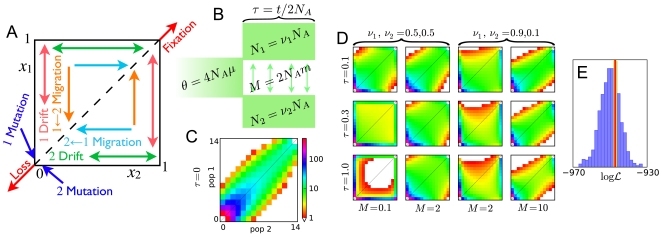
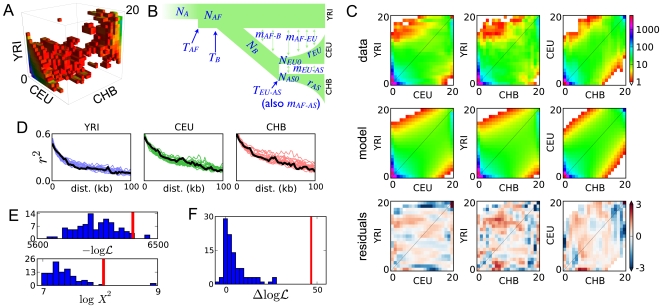
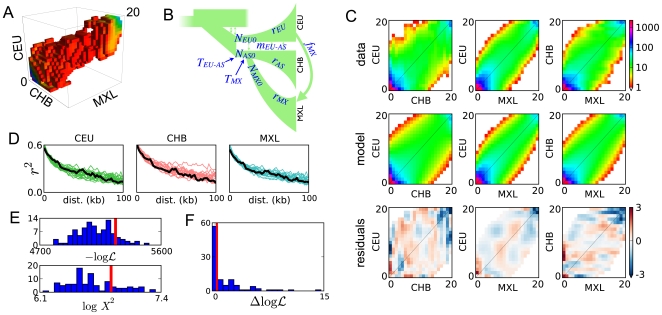
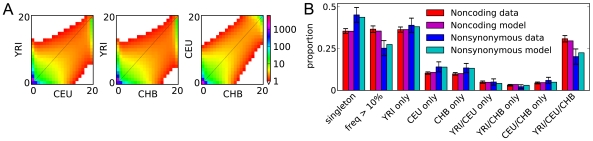
Verification
Claims the paper makes
The claims and statistics of this paper haven’t been checked yet.
Free: it reads the open-access text and checks the first 5 claims that cite a source we can check. Create a free account to check every claim.
Claims other papers make about this one
Each is checked against this paper’s own text: does it say what the citing paper says it does?
The cited source says what the claim attributes to it.
In the citing paper
“Recent estimates based on genome-wide patterns of variation have suggested that the European and East Asian divergence might have occurred as late as 25,000 years ago (Keinan et al. 2007;Gutenkunst et al. 2009;Laval et al. 2010;Rasmussen et al. 2011), implying that the colonization of Europe could have involved several migration movements at different ages (Laval et al. 2010).”
From The timing of pigmentation lightening in Europeans (2013) · cites this paper as Gutenkunst et al. 2009
Self-check
Percentages, sums and reported differences re-computed from the paper’s own numbers.
The self-check needs the paper’s full text.
Citations
Cites
Matplotlib: a 2D graphics environment
Hunter, J. D. (2007) · Computing in Science & Engineering · doi:10.1109/mcse.2007.55 · Cited by 39,249 · cited 1×
“Our implementation of these methods, ∂a∂i, is written in cross-platform Python and C, making use of the NumPy [38], Scipy [39], and Matplotlib libraries [40].”
MethodInference of Population Structure Using Multilocus Genotype Data
Pritchard, J. K., Stephens, M., & Donnelly, P. (2000) · Genetics · doi:10.1093/genetics/155.2.945 · Cited by 33,908
Savitzky-Golay Smoothing Filters
Press, W. H., & Teukolsky, S. A. (1990) · Computers in Physics · doi:10.1063/1.4822961 · Cited by 11,670
Numerical Recipes, The Art of Scientific Computing
Press, W. H., Flannery, B. P., Teukolsky, S. A., Vetterling, W. T., & Gould, H. (1987) · American Journal of Physics · doi:10.1119/1.14981 · Cited by 10,024
Numerical Recipes: The Art of Scientific Computing
Ziegel, E. (1987) · Technometrics · doi:10.1080/00401706.1987.10488304 · Cited by 6,702
On the number of segregating sites in genetical models without recombination
Watterson, G. A. (1975) · Theoretical Population Biology · doi:10.1016/0040-5809(75)90020-9 · Cited by 3,915 · cited 1×
“) Given an infinitely-manysites mutational model [31] and Wright-Fisher reproduction in each generation, the dynamics of φ for an arbitrary finite number of populations P are governed by a linear diffusion equation:”
BackgroundNumerical recipes: the art of scientific computing
Press, W. H., Flannery, B. P., Teukolsky, S. A., Vetterling, W. T., & Chipperfield, J. R. (1987) · Analytica Chimica Acta · doi:10.1016/s0003-2670(00)82860-3 · Cited by 3,304
Python for scientific computing
Oliphant, T. E. (2007) · Computing in Science & Engineering · doi:10.1109/mcse.2007.58 · Cited by 3,303 · cited 1×
“Our implementation of these methods, ∂a∂i, is written in cross-platform Python and C, making use of the NumPy [38], Scipy [39], and Matplotlib libraries [40].”
MethodBayesian Coalescent Inference of Past Population Dynamics from Molecular Sequences
Drummond, A. J. (2005) · Molecular Biology and Evolution · doi:10.1093/molbev/msi103 · Cited by 3,143 · cited 1×
“, [4–6,16,17], but also see [10,18]).”
Initial sequence of the chimpanzee genome and comparison with the human genome
The Chimpanzee Sequencing and Analysis Consortium (2005) · Nature · doi:10.1038/nature04072 · Cited by 2,459
Cited by
Items 701–800 of 1,004
Population Genomics of Yams: Evolution and Domestication of Dioscorea Species
Sugihara, Y., Kudoh, A., Tamiru, M., Takagi, H., Natsume, S., Shimizu, M., Abe, A., Asiedu, R., Asfaw, A., Adebola, P. O., et al. (2021) · Population genomics · doi:10.1007/13836_2021_94 · Cited by 44
“To conform this hypothesis, we compared the three evolutionary models by ∂a∂i which assesses evolutionary models with their likelihood based on the site frequency spectrum (Gutenkunst et al. 2009).”
MethodDeep connections: Divergence histories with gene flow in mesophotic Agaricia corals
Prata, K. E., Riginos, C., Gutenkunst, R. N., Latijnhouwers, K. R. W., Sánchez, J. A., Englebert, N., Hay, K. B., & Bongaerts, P. (2022) · Molecular Ecology · doi:10.1111/mec.16391 · Cited by 32
“2.4.4 | Demographic inference To explore the possibility of gene flow occurring during the divergence of our taxa, we used the diffusion approximation of demographic inference dadi v.2.1.1 (Gutenkunst et al., 2009) in PYTHON v.3.6.”
MethodInfluentialSelf-citationSoni, V., Johri, P., & Jensen, J. D. (2023) · Evolution · doi:10.1093/evolut/qpad120 · Cited by 31
“…bottlenecks (e.g., non-African populations of Drosophila melanogaster [Li & Stephan, 2006] and humans [Excoffier et al., 2013; Gravel et al., 2011; Gutenkunst et al., 2009], as well as multiple clinically significant pathogens owing to the underlying dynamics of host infection [Howell et al.,…”
BackgroundA Novel Approach to Estimating Heterozygosity from Low-Coverage Genome Sequence
Bryc, K., Patterson, N. J., & Reich, D. (2013) · Genetics · doi:10.1534/genetics.113.154500 · Cited by 35
A POSITIVELY SELECTED APOBEC3H HAPLOTYPE IS ASSOCIATED WITH NATURAL RESISTANCE TO HIV-1 INFECTION
Cagliani, R., Riva, S., Fumagalli, M., Biasin, M., Caputo, S. L., Mazzotta, F., Piacentini, L., Pozzoli, U., Bresolin, N., Clerici, M., et al. (2011) · Evolution · doi:10.1111/j.1558-5646.2011.01368.x · Cited by 32
“Whether APOBEC3H expression in such tissues is modulated by SNPs in the positive selection region remains to be evaluated, but it is worth noting that antiviral mucosal responses might play a central role in the protection from sexually transmitted HIV-1 infection (Haynes and Shattock 2008).”
BackgroundCosta, R. J., & Wilkinson‐Herbots, H. (2017) · Genetics · doi:10.1534/genetics.116.188060 · Cited by 30
“Gutenkunst et al. (2009) introduced a method based on the joint sample frequency spectrum (JSFS) that is able to fit a range of demographic models incorporating multiple populations, periods of migration and admixture, splits and joins of populations, and changes in population sizes.”
MethodPhylogeography of a widespread eastern North American shrub, Viburnum lantanoides
Park, B., & Donoghue, M. J. (2019) · American Journal of Botany · doi:10.1002/ajb2.1248 · Cited by 28
Coalescent Simulation with msprime
Kelleher, J., & Lohse, K. (2020) · Methods in molecular biology · doi:10.1007/978-1-0716-0199-0_9 · Cited by 41
Nakagome, S., Mano, S., Kozlowski, L. P., Bujnicki, J. M., Shibata, H., Fukumaki, Y., Kidd, J. R., Kídd, K. K., Kawamura, S., & Oota, H. (2012) · Molecular Biology and Evolution · doi:10.1093/molbev/mss006 · Cited by 37
Albert, F. W., Hodges, E., Jensen, J. D., Besnier, F., Xuan, Z., Rooks, M., Bhattacharjee, A., Brizuela, L., Good, J. M., Green, R. E., et al. (2011) · Heredity · doi:10.1038/hdy.2011.4 · Cited by 28
“However, using the likelihood based approach dadi (Gutenkunst et al., 2009), we estimated a very severe reduction in effective population size (to 0.”
MethodSoni, V., Pfeifer, S. P., & Jensen, J. D. (2024) · Genome Biology and Evolution · doi:10.1093/gbe/evae004 · Cited by 32
“2), as is standard practice (Gutenkunst et al. 2009; Excoffier et al. 2013).”
BackgroundMethodInfluentialChen, J., Liu, C., Li, W., Zhang, W., Wang, Y., Clark, A. G., & Lü, J. (2024) · Science Advances · doi:10.1126/sciadv.adh3425 · Cited by 29
Luisi, P., Alvarez‐Ponce, D., Dall’Olio, G. M., Sikora, M., Bertranpetit, J., & Laayouni, H. (2011) · Molecular Biology and Evolution · doi:10.1093/molbev/msr298 · Cited by 37
“2003) and that shared evolutionary history (Gutenkunst et al. 2009; Moorjani et al. 2011) accounts for the similar patterns observed in these three areas.”
BackgroundIzuno, A., Kitayama, K., Onoda, Y., Tsujii, Y., Hatakeyama, M., Nagano, A. J., Honjo, M. N., Shimizu‐Inatsugi, R., Kudoh, H., Shimizu, K. K., et al. (2017) · Molecular Ecology · doi:10.1111/mec.14016 · Cited by 31
“…to enable the revelation of spatial genetic structure and demographic histories that could not have been obtained using a handful of neutral markers (e.g. Gutenkunst et al. 2009; Emerson et al. 2010; Hohenlohe et al. 2012; Wagner et al. 2012; Catchen et al. 2013; Excoffier et al. 2013).”
BackgroundPopulation Genomics in Wild Tomatoes—The Interplay of Divergence and Admixture
Beddows, I., Reddy, A. K., Kloesges, T., & Rose, L. E. (2017) · Genome Biology and Evolution · doi:10.1093/gbe/evx224 · Cited by 30
Platt, A., Pivirotto, A. M., Knoblauch, J. G., & Hey, J. (2019) · PLoS Genetics · doi:10.1371/journal.pgen.1008340 · Cited by 30
Long‐term cloud forest response to climate warming revealed by insect speciation history*
Salces‐Castellano, A., Stankowski, S., Arribas, P., Patiño, J., Karger, D. N., Butlin, R. K., & Emerson, B. C. (2020) · Evolution · doi:10.1111/evo.14111 · Cited by 28
“To estimate population demographic history, we used a modified version (Tine et al. 2014; Rougemont et al. 2017) of the software dadi version 1.7 (Gutenkunst et al. 2009) to analyze the two-dimensional joint site frequency spectrum (2D-JSFS).”
MethodInfluentialExtensive introgression at late stages of species formation: Insights from grasshopper hybrid zones
Hagberg, L., Celemín, E., Irisarri, I., Hawlitschek, O., Bella, J. L., Mott, T., & Pereira, R. J. (2022) · Molecular Ecology · doi:10.1111/mec.16406 · Cited by 32
“Second, the complete 2D- SFS was fit to all four demographic models using the diffusion approximation methods implemented in δaδi version 2.0.5 (Gutenkunst et al., 2009), as described in Nolen et al. (2020; see https://github.com/zjnol en/chort hippus_radia tion for commands), with four technical…”
MethodInfluentialOrigins, timing and introgression of domestic geese revealed by whole genome data
Wen, J., Li, H., Wang, H., Yu, J., Zhu, T., Zhang, J., Li, X., Jiang, Z., Ning, Z., & Qu, L. (2023) · Journal of Animal Science and Biotechnology/Journal of animal science and biotechnology · doi:10.1186/s40104-022-00826-9 · Cited by 42
“DaDi was used to estimate the demographic history of Chinese and European domestic geese, and showed that the domestication of Chinese domestic geese occurred approximately 3499 years ago.”
Chen, J., Källman, T., Ma, X., Zaina, G., Morgante, M., & Lascoux, M. (2016) · G3 Genes Genomes Genetics · doi:10.1534/g3.116.028753 · Cited by 34
“To assess the performance of the models, we applied a multinomial comparison between expected and observed SFS by calculating Anscombe residuals (Gutenkunst et al. 2009). n”
An ABC Method for Whole-Genome Sequence Data: Inferring Paleolithic and Neolithic Human Expansions
Jay, F., Boitard, S., & Austerlitz, F. (2019) · Molecular Biology and Evolution · doi:10.1093/molbev/msz038 · Cited by 28
Dolby, G., Dorsey, R. J., & Graham, M. R. (2019) · Journal of Biogeography · doi:10.1111/jbi.13685 · Cited by 28
Timesweeper: accurately identifying selective sweeps using population genomic time series
Whitehouse, L. S., & Schrider, D. R. (2023) · Genetics · doi:10.1093/genetics/iyad084 · Cited by 34
Complex Polyploids: Origins, Genomic Composition, and Role of Introgressed Alleles
Leal, J. L., Milesi, P., Hodková, E., Zhou, Q., James, J., Eklund, D. M., Pyhäjärvi, T., Salojärvi, J., & Lascoux, M. (2024) · Systematic Biology · doi:10.1093/sysbio/syae012 · Cited by 28
“For instance, demographic modeling using ABC (Beaumont et al. 2002), ∂a∂i (Gutenkunst et al. 2009), fastsimcoal2 (Excoffier et al. 2013), or momi2 (Kamm et al. 2020) is performed by testing one or more evolutionary models that must be pre-defined.”
MethodA structured coalescent model reveals deep ancestral structure shared by all modern humans
Cousins, T., Scally, A., & Durbin, R. (2025) · Nature Genetics · doi:10.1038/s41588-025-02117-1 · Cited by 27
“This contrasts with the identifiability problem from the pairwise coalescence rate profile 20,21 , and in principle suggests that a method that uses the SFS to jointly estimate population size changes and ghost admixture could have power to detect the structured event we propose 99 .”
InfluentialMolecular anthropology in the genomic era.
Destro‐Bisol, G., Jobling, M. A., Rocha, J., Novembre, J., Richards, M. B., Mulligan, C. J., Batini, C., & Manni, F. (2010) · PubMed · Cited by 36
High burden of private mutations due to explosive human population growth and purifying selection
Gao, F., & Keinan, A. (2014) · BMC Genomics · doi:10.1186/1471-2164-15-s4-s3 · Cited by 34
“However, empirical estimates in that paper were based on a small sample size of less than 100 individuals, while the contribution of recent rapid growth is expected to be more pronounced for larger sample sizes [1-6,9].”
BackgroundMoleirinho, A., Seixas, S., Lopes, A. M., Bento, C., Prata, M. J., & Amorim, A. (2013) · Genome Biology and Evolution · doi:10.1093/gbe/evt029 · Cited by 43
Coalescent inferences in conservation genetics: should the exception become the rule?
Montano, V. (2016) · Biology Letters · doi:10.1098/rsbl.2016.0211 · Cited by 26
The western Mediterranean region provided the founder population of domesticated narrow-leafed lupin
Mousavi‐Derazmahalleh, M., Nevado, B., Bayer, P. E., Filatov, D. A., Hane, J. K., Edwards, D., Erskine, W., & Nelson, M. N. (2018) · Theoretical and Applied Genetics · doi:10.1007/s00122-018-3171-x · Cited by 29
“The existing demographic modelling approaches, such as implemented in dadi software (Gutenkunst et al. 2009), typically assume that segregating sites sampled across the genome are independent from each other.”
MethodBouzid, N. M., Archie, J. W., Anderson, R. A., Grummer, J. A., & Leaché, A. D. (2021) · Molecular Ecology · doi:10.1111/mec.15836 · Cited by 34
“Divergence scenarios were modelled using joint site frequency spectra (JSFS) in δaδ i version 2.1.0 (Gutenkunst et al., 2009), and model optimization routines were performed using dadi _ pipeline version 3.1.5 (Portik et al., 2017).”
MethodInfluentialGenomes reveal selective sweeps in kiang and donkey for high-altitude adaptation
Zeng, L., 中国科学院昆明动物研究所遗传资源与进化国家重点实验室,云南 昆明650223, 中., Liu, H., Tu, X.-L., Ji, C., Gou, X., Esmailizadeh, A., Wang, S., Wang, M., Wang, M., et al. (2021) · 动物学研究 · doi:10.24272/j.issn.2095-8137.2021.095 · Cited by 30
“2rc program (Ewing & Hermisson, 2010) based on demographic parameters derived from the best-fitting model inferred by δaδi (Gutenkunst et al., 2009) (Supplementary Table S21).”
Genomic analyses reveal range‐wide devastation of sea otter populations
Beichman, A. C., Kalhori, P., Kyriazis, C. C., DeVries, A. A., Nigenda‐Morales, S. F., Heckel, G., Schramm, Y., Moreno‐Estrada, A., Kennett, D. J., Hylkema, M. G., et al. (2022) · Molecular Ecology · doi:10.1111/mec.16334 · Cited by 26
Mortensen, H. M., & Euling, S. Y. (2011) · Toxicology and Applied Pharmacology · doi:10.1016/j.taap.2011.01.015 · Cited by 30
“, changes in allele frequencies associated with evolutionary processes such as natural selection, genetic drift, mutation and gene flow) rather than individual or population level susceptibility across the genome (Gutenkunst et al., 2009; Ionita-Laza et al., 2009; Lohmueller et al., 2010).”
BackgroundLópez, S., García, O., Yurrebaso, I., Flores, C., Acosta‐Herrera, M., Chen, H., Gardeazábal, J., Careaga, J. M., Boyano, M. D., Sánchez, A., et al. (2014) · PLoS ONE · doi:10.1371/journal.pone.0104367 · Cited by 28
“To obtain the p-value we run coalescent simulations with msHOT following a neutral evolution model but considering the demographic model previously described [32].”
MethodA Deep Catalog of Autosomal Single Nucleotide Variation in the Pig
Bianco, E., Nevado, B., Ramos-Onsins, S. E., & Pérez-Enciso, M. (2015) · PLoS ONE · doi:10.1371/journal.pone.0118867 · Cited by 36
The Effects of Demography and Linkage on the Estimation of Selection and Mutation Parameters
Zeng, K., & Charlesworth, B. (2010) · Genetics · doi:10.1534/genetics.110.122150 · Cited by 31
“…population size can cause false inferences of selection from PRF methods, even if evolution is strictly neutral (Zhu and Bustamante 2005); new methods have been constructed to address this problem (Williamson et al. 2005; Keightley and Eyre-Walker 2007; Boyko et al. 2008; Gutenkunst et al. 2009).”
MethodKavembe, G. D., Kautt, A. F., Machado‐Schiaffino, G., & Meyer, A. (2016) · Molecular Ecology · doi:10.1111/mec.13461 · Cited by 32
“The MSFS was created as follows: data were parsed from variant call format (VCF) files using a custom python script and transformed into the MSFS using dadi (Gutenkunst et al. 2009).”
MethodOrigin of a cryptic lineage in a threatened reptile through isolation and historical hybridization
Sovic, M. G., Fries, A. C., & Gibbs, H. L. (2016) · Heredity · doi:10.1038/hdy.2016.56 · Cited by 27
Genomic evidence for convergent evolution of a key trait underlying divergence in island birds
Cooper, E., & Uy, J. A. C. (2017) · Molecular Ecology · doi:10.1111/mec.14116 · Cited by 30
Higher Gene Flow in Sex-Related Chromosomes than in Autosomes during Fungal Divergence
Hartmann, F. E., de la Vega, R. C. R., Gladieux, P., Ma, W., Hood, M. E., & Giraud, T. (2019) · Molecular Biology and Evolution · doi:10.1093/molbev/msz252 · Cited by 25
“the diffusion approximation method implemented in the python package dadi (Gutenkunst et al. 2009) that analyses the”
MethodDiBattista, J. D., Saenz‐Agudelo, P., Piatek, M. J., Cagua, E. F., Bowen, B. W., Choat, J. H., Rocha, L. A., Gaither, M. R., Hobbs, J., Sinclair‐Taylor, T. H., et al. (2020) · Ecology and Evolution · doi:10.1002/ece3.6199 · Cited by 26
Lavretsky, P., Mohl, J. E., Söderquist, P., Kraus, R. H. S., Schummer, M. L., & Brown, J. I. (2023) · Communications Biology · doi:10.1038/s42003-023-05170-w · Cited by 32
Likelihood‐based inference of population history from low‐coverage de novo genome assemblies
Hearn, J., Stone, G. N., Bunnefeld, L., Nicholls, J. A., Barton, N., & Lohse, K. (2013) · Molecular Ecology · doi:10.1111/mec.12578 · Cited by 25
“Third, most methods available for inferring population history from genomic data are either based on site frequency information (Gutenkunst et al. 2009; Durand et al. 2011; Pickrell & Pritchard 2012) – which requires large samples and ignores the historical signal contained in the higher moments of…”
BackgroundMethodDispersal capacity and genetic relatedness in Acropora cervicornis on the Florida Reef Tract
Drury, C., Paris, C. B., Kourafalou, V. H., & Lirman, D. (2018) · Coral Reefs · doi:10.1007/s00338-018-1683-0 · Cited by 30
“Migration rates were calculated from Dadi output following (Matz et al. 2017), and the median value was used for downstream analysis for each pairwise comparison (Supplementary materials).”
MethodInfluentialJacobs, A., Hughes, M. R., Robinson, P. C., Adams, C. E., & Elmer, K. R. (2018) · Genes · doi:10.3390/genes9060280 · Cited by 31
Can one hear the shape of a population history?
Kim, J., Mossel, E., Rácz, M. Z., & Ross, N. (2014) · Theoretical Population Biology · doi:10.1016/j.tpb.2014.12.002 · Cited by 26
“While it is known that allele frequencies are not sufficient statistics for the population size history in general [12], such data is often used to infer population history, see, e.g., [5, 1].”
BackgroundComparative phylogeography of mainland and insular species of Neotropical molossid bats (Molossus)
Loureiro, L. O., Engstrom, M. D., & Lim, B. K. (2019) · Ecology and Evolution · doi:10.1002/ece3.5903 · Cited by 26
Park, B., & Burke, J. M. (2020) · Genes · doi:10.3390/genes11030266 · Cited by 36
“com/isaacovercast/easySFS), sampling 24 and 30 haplotypes from the cultivated and wild lineages, respectively, to maximize the number of segregating SNPs for analysis [50].”
BackgroundLan, D., Ji, W., Xiong, X., Liang, Q., Yao, W., Mipam, T., Zhong, J., & Li, J. (2020) · Integrative Zoology · doi:10.1111/1749-4877.12484 · Cited by 39
Estimating divergence times from DNA sequences
Sjödin, P., McKenna, J., & Jakobsson, M. (2021) · Genetics · doi:10.1093/genetics/iyab008 · Cited by 26
“A related strategy is to assume independence among sites, using a composite likelihood framework (Gutenkunst et al. 2009; Excoffier et al. 2013).”
MethodBelleghem, S. M. V., Cole, J. M., Montejo‐Kovacevich, G., Bacquet, C. N., McMillan, W. O., Papa, R., & Counterman, B. A. (2021) · Evolution · doi:10.1111/evo.14272 · Cited by 29
“To infer the demographic history of the H. erato and H. himera populations, we used the joint site-frequency spectra (JSFS) of five population comparisons and a modified version of ∂a∂i version 1.7 (Gutenkunst et al. 2009).”
MethodInfluentialLyman, R. A., & Edwards, C. E. (2022) · Ecology and Evolution · doi:10.1002/ece3.8827 · Cited by 29
Nikolic, N., Devloo‐Delva, F., Bailleul, D., Noskova, E., Rougeux, C., Delord, C., Borsa, P., Liautard‐Haag, C., Hassan, M., Marie, A. D., et al. (2022) · Molecular Ecology · doi:10.1111/mec.16822 · Cited by 26
“…relative to the two detected clusters. gadma implements a global genetic algorithm and different existing “engines” of local optimization, such as δaδi (Gutenkunst et al., 2009), moments (Jouganous et al., 2017) or momi (Kamm et al., 2020), to simulate the expected joint allele- frequency spectrum…”
MethodGray, L. N., Barley, A. J., Poe, S., Thomson, R. C., de, A. N., & Wang, I. (2019) · Molecular Ecology · doi:10.1111/mec.14970 · Cited by 30
Time Dependency of Molecular Evolutionary Rates? Yes and No
Subramanian, S., & Lambert, D. M. (2011) · Genome Biology and Evolution · doi:10.1093/gbe/evr108 · Cited by 26
“Other time points are based on the divergence time estimated using the nuclear data from human populations (Green et al. 2006; Gutenkunst et al. 2009) and from human/Neanderthal (Green et al. 2006) comparisons, respectively.”
BackgroundAdaptive selection of an incretin gene in Eurasian populations
Chang, C. L., Cai, J. J., Lo, C., Amigo, J., Park, J.-I., & Hsu, S. Y. (2010) · Genome Research · doi:10.1101/gr.110593.110 · Cited by 26
Hobolth, A., & Sirén, J. (2015) · Theoretical Population Biology · doi:10.1016/j.tpb.2015.11.001 · Cited by 25
High genetic load without purging in caribou, a diverse species at risk
Taylor, R. S., Manseau, M., Keobouasone, S., Liu, P., Mastromonaco, G. F., Solmundson, K., Kelly, A., Larter, N. C., Gamberg, M., Schwantje, H. M., et al. (2024) · Current Biology · doi:10.1016/j.cub.2024.02.002 · Cited by 33
Crawford, J. E., Riehle, M. M., Markianos, K., Bischoff, E., Guelbeogo, M. W., Gnémé, A., Sagnon, N., Vernick, K. D., Nielsen, R., & Lazzaro, B. P. (2016) · Molecular Ecology · doi:10.1111/mec.13572 · Cited by 25
“2; Table 1; Methods) to the two-dimensional site frequency spectrum for GOUNDRY and A. coluzzii using dadi (Gutenkunst et al. 2009).”
BackgroundGraham, A. M., Lavretsky, P., Muñoz‐Fuentes, V., Green, A. J., Wilson, R. E., & McCracken, K. G. (2017) · Genome Biology and Evolution · doi:10.1093/gbe/evx253 · Cited by 28
“We tested for and estimated rates, as well as the directionality of gene flow, with the program @a@i (Gutenkunst et al. 2009, 2010), which implements a diffusion-based approach to test against specified evolutionary models with the best-fit model determined using a log likelihood-based multinomial…”
MethodOttenburghs, J., Honka, J., Müskens, G. J. D. M., & Ellegren, H. (2020) · Heredity · doi:10.1038/s41437-020-0322-z · Cited by 43
“Demographic inference was performed using the software package DADI (Gutenkunst et al. 2009).”
MethodAbrouk, M., Athiyannan, N., Müller, T., Pailles, Y., Stritt, C., Roulin, A. C., Chu, C., Liu, S., Morita, T., Handa, H., et al. (2021) · Communications Biology · doi:10.1038/s42003-021-01908-6 · Cited by 28
Rivers, not refugia, drove diversification in arboreal, sub‐Saharan African snakes
Allen, K. E., Greenbaum, E., Hime, P. M., Walter Paulin Tapondjou, N., Sterkhova, V. V., Kusamba, C., Rödel, M., Penner, J., Peterson, A. T., & Brown, R. M. (2021) · Ecology and Evolution · doi:10.1002/ece3.7429 · Cited by 26
“We created folded multidimensional site frequency spectrums for the two T. blandingii clades and the two Central African T. pulverulenta clades using easySFS (https://github.com/isaac overc ast/ easySFS), a wrapper for ∂a∂i (Gutenkunst et al., 2009).”
MethodGenomic differentiation with gene flow in a widespread Amazonian floodplain‐specialist bird species
Luna, L. W., RIBAS, C. C., & Aleixo, A. L. P. (2021) · Journal of Biogeography · doi:10.1111/jbi.14257 · Cited by 24
“7 (Gutenkunst et al., 2009).”
Hämälä, T., Ning, W., Kuittinen, H., Aryamanesh, N., & Savolainen, O. (2022) · eLife · doi:10.7554/elife.83115 · Cited by 29
“We then used ∂a∂i (Gutenkunst et al., 2009) to fit three-epoch demographic models to synonymous SFS and inferred a deleterious gamma DFE for nonsynonymous sites, conditional on the demography, using fit∂a∂i (Kim et al., 2017).”
MethodPurging due to self-fertilization does not prevent accumulation of expansion load
Zeitler, L., Parisod, C., & Gilbert, K. J. (2023) · PLoS Genetics · doi:10.1371/journal.pgen.1010883 · Cited by 27
Dallaire, X., Bouchard, R., Hénault, P., Ulmo‐Diaz, G., Normandeau, É., Mérot, C., Bernatchez, L., & Moore, J. (2023) · Genome Biology and Evolution · doi:10.1093/gbe/evad229 · Cited by 31
“…SFS and their joint form are the basis for many other analyses in population genomics, such as neutrality tests (Tajima 1989; Fu and Li 1993), selection scans (Andolfatto 2007; Begun et al. 2007), and demographic inferences (Gutenkunst et al. 2009; Excoffier et al. 2013; Rougeux et al. 2017).”
BackgroundRiginos, C., Popovic, I., Meziere, Z., Garcia, V. O. S., Byrne, I., Howitt, S. M., Ishida, H., Bairos‐Novak, K. R., Humanes, A., Scharfenstein, H. J., et al. (2024) · Peer Community Journal · doi:10.24072/pcjournal.492 · Cited by 30
Genomic signatures of population decline in the malaria mosquito Anopheles gambiae
O’Loughlin, S. M., Magesa, S., Mbogo, C. M., Mosha, F. W., Midega, J. T., & Burt, A. (2016) · Malaria Journal · doi:10.1186/s12936-016-1214-9 · Cited by 28
“Tajima’s D; [5, 6]).”
Xue, A. T., Ruggiero, R. P., Hickerson, M. J., & Boissinot, S. (2018) · Genome Biology and Evolution · doi:10.1093/gbe/evy083 · Cited by 28
“Although disregarding shared ancestry could possibly result in biased size change estimates, migration rates between these human populations have previously been established to be low (Gutenkunst et al. 2009; Gronau et al. 2011).”
BackgroundMethoddo Amaral, F. R., Maldonado‐Coelho, M., Aleixo, A. L. P., Luna, L. W., do Rêgo, P. S., Araripe, J., Souza, T. O., Silva, W. A. G., & Thom, G. (2018) · Molecular Ecology · doi:10.1111/mec.14843 · Cited by 28
Bourgeois, Y., Ruggiero, R. P., Manthey, J. D., & Boissinot, S. (2019) · Genome Biology and Evolution · doi:10.1093/gbe/evz110 · Cited by 26
Population distribution and ancestry of the cancer protective MDM2 SNP285 (rs117039649)
Knappskog, S., Gansmo, L. B., Dibirova, K., Metspalu, A., Cybulski, C., Peterlongo, P., Aaltonen, L. A., VATTEN, L. J., Romundstad, P., Hveem, K., et al. (2014) · Oncotarget · doi:10.18632/oncotarget.1910 · Cited by 26
“Calculations based on nuclear DNA divergence has estimated the separation between the European and Asian population to have occurred around 23,000 (CI: 17,000 - 40,000) years ago, [17], while calculations based on mitochondrial DNA divergence have estimated this event to take place approximately 40,000 years ago [29].”
BackgroundCutter, A. D., Wang, G., Ai, H., & PENG, Y. (2012) · Molecular Ecology · doi:10.1111/j.1365-294x.2012.05475.x · Cited by 27
“Approaches that exploit distinct sampling schemes provide a complement to analyses of multidimensional variant frequency spectra based on local sampling of multiple demes for demographic modelling (Li & Stephan 2006; Gutenkunst et al. 2009; Siol et al. 2010).”
BackgroundTamaki, I., Yoichi, W., Matsuki, Y., Suyama, Y., & Mizuno, M. (2016) · Tree Genetics & Genomes · doi:10.1007/s11295-016-1084-x · Cited by 24
Fast diffusion of domesticated maize to temperate zones
Li, X., Jian, Y., Xie, C., Wu, J., Xu, Y., & Zou, C. (2017) · Scientific Reports · doi:10.1038/s41598-017-02125-0 · Cited by 39
Manthey, J. D., Moyle, R. G., Gawin, D. F., Rahman, M. A., Ramji, M. F. S., & Sheldon, F. H. (2017) · Journal of Biogeography · doi:10.1111/jbi.13028 · Cited by 30
“In @a@i, different models are tested using a log-likelihood-based multinomial approach using site frequency spectra (Gutenkunst et al., 2009).”
MethodA Study of Faster-Z Evolution in the Great Tit (Parus major)
Hayes, K., Barton, H. J., & Zeng, K. (2020) · Genome Biology and Evolution · doi:10.1093/gbe/evaa044 · Cited by 24
Feng, L., Ruhsam, M., Wang, Y., Li, Z., & Wang, X. (2020) · Molecular Ecology · doi:10.1111/mec.15448 · Cited by 25
Bagley, J. C., Heming, N. M., Gutiérrez, E. E., Devisetty, U. K., Mock, K. E., Eckert, A. J., & Strauss, S. H. (2020) · Ecology and Evolution · doi:10.1002/ece3.6214 · Cited by 27
“…Felsenstein, 2006) that has been shown to yield high-resolution inferences of population history, even with small–moderate sample sizes (e.g., Gutenkunst, Hernandez, Williamson, & Bustamante, 2009; Willing, Dreyer, & Oosterhout, 2012; Robinson, Bunnefeld, Hearn, Stone, & Hickerson, 2014;…”
Hsieh, P., Dang, V., Vollger, M. R., Mao, Y., Huang, T., Dishuck, P. C., Baker, C. A., Cantsilieris, S., Lewis, A. P., Munson, K. M., et al. (2021) · Nature Communications · doi:10.1038/s41467-021-25435-4 · Cited by 25
Hernández, F., Brown, J. I., Kaminski, M. H., Harvey, M. G., & Lavretsky, P. (2021) · Animals · doi:10.3390/ani11092677 · Cited by 26
“For nuclear DNA, we used the program ∂a∂i [69,70], which implements a diffusionbased approach to test empirical data against specified evolutionary models (e.”
MethodIncorporating Genetic Measures of Connectivity and Adaptation in Marine Spatial Planning for Corals
Riginos, C., & Beger, M. (2022) · Coral reefs of the world · doi:10.1007/978-3-031-07055-6_2 · Cited by 29
Stankowski, S., Chase, M. A., McIntosh, H., & Streisfeld, M. A. (2023) · Molecular Ecology · doi:10.1111/mec.16849 · Cited by 26
“To gain a deeper understanding of the history of gene flow and isolation in this system, we performed demographic inference in ∂ a ∂ i (Gutenkunst et al., 2009).”
Demographic history inference and the polyploid continuum
Blischak, P. D., Sajan, M., Barker, M. S., & Gutenkunst, R. N. (2023) · Genetics · doi:10.1093/genetics/iyad107 · Cited by 24
Self-citationDemogenomic inference from spatially and temporally heterogeneous samples
Marchi, N., Kapopoulou, A., & Excoffier, L. (2023) · Molecular Ecology Resources · doi:10.1111/1755-0998.13877 · Cited by 33
Inferring the History of Population Size Change from Genome-Wide SNP Data
Theunert, C., Tang, K., Lachmann, M., Hu, S., & Stoneking, M. (2012) · Molecular Biology and Evolution · doi:10.1093/molbev/mss175 · Cited by 25
“Many existing methods infer demographic parameters by examining the allele frequency spectra (AFS) (Adams and Hudson 2004; Marth et al. 2004; Keinan et al. 2007; Gutenkunst et al. 2009).”
MethodInfluentialChen, H., & Chen, K. (2013) · Genetics · doi:10.1534/genetics.113.151522 · Cited by 24
Inference of directional selection and mutation parameters assuming equilibrium
Vogl, C., & Bergman, J. (2015) · Theoretical Population Biology · doi:10.1016/j.tpb.2015.10.003 · Cited by 24
Inferring the age of a fixed beneficial allele
Ormond, L., Foll, M., Ewing, G. B., Pfeifer, S. P., & Jensen, J. D. (2015) · Molecular Ecology · doi:10.1111/mec.13478 · Cited by 25
“dadi (Gutenkunst et al. 2009), fastsimcoal (Excoffier et al.”
Brown, A. P. C., Arias‐Rodríguez, L., Yee, M., Tobler, M., & Kelley, J. L. (2018) · Genome Biology and Evolution · doi:10.1093/gbe/evy198 · Cited by 31
“The joint site frequency spectra were then used to estimate demographic models using dadi (Gutenkunst et al. 2009).”
MethodBenham, P. M., & Cheviron, Z. A. (2019) · Molecular Ecology · doi:10.1111/mec.15049 · Cited by 26
“The program ∂a∂i does not handle missing data (Gutenkunst et al., 2009).”
BackgroundDemographic modeling of admixed Latin American populations from whole genomes
Medina-Muñoz, S. G., Vecchyo, D. O., Cruz‐Hervert, L. P., Ferreyra-Reyes, L. D., García‐García, L., Moreno‐Estrada, A., & Ragsdale, A. P. (2023) · The American Journal of Human Genetics · doi:10.1016/j.ajhg.2023.08.015 · Cited by 24
Population Genomics of Adaptive Radiation
Combrink, L. L., Golcher‐Benavides, J., Lewanski, A. L., Rick, J. A., Rosenthal, W. C., & Wagner, C. E. (2024) · Molecular Ecology · doi:10.1111/mec.17574 · Cited by 24
“In the adaptive radiation of Chorthippus grasshoppers, the diffusion approximation-based program δaδi (Gutenkunst et al. 2009) was used to re-construct the process of divergence among species including the timing of divergence and gene flow events as well as population size changes (Nolen et al.…”
Wang, Y., & Nielsen, R. (2011) · Molecular Ecology · doi:10.1111/j.1365-294x.2011.05413.x · Cited by 26
“Therefore, many studies on large SNP data sets use composite likelihood methods that treat sites as if there were independent (Garrigan 2009; Gutenkunst et al. 2009; Naduvilezhath et al. 2011).”
BackgroundMethodA Genomic View of the Pleistocene Population History of Asia
Sikora, M. (2017) · Current Anthropology · doi:10.1086/694422 · Cited by 29
“The method compares the observed joint site frequency spectrum (SFS) between at most three populations to one expected under a particular demographic model, using an approach introduced by Gutenkunst et al. (2009).”
BackgroundMethodOn the decidability of population size histories from finite allele frequency spectra
Baharian, S., & Gravel, S. (2018) · Theoretical Population Biology · doi:10.1016/j.tpb.2017.12.008 · Cited by 25
Capron, A., Feau, N., Heinzelmann, R., Barnes, I., Benowicz, A., Bradshaw, R. E., Dale, A. L., Lewis, K. J., Owen, T. J., Reich, R. W., et al. (2020) · Phytopathology · doi:10.1094/phyto-08-20-0350-fi · Cited by 25
Chen, Y., Zhao, L., Teng, H., Shi, C., Liu, Q., Zhang, J., & Zhang, Y. (2021) · Frontiers in Zoology · doi:10.1186/s12983-021-00387-z · Cited by 24
“To investigate alternative divergence scenarios for XJ population, we used the diffusion approximation method of δaδi to analyze two-dimensional joint site frequency spectra (2D-JSFS) [30].”
MethodInfluential
Metadata
- Authors
- Gutenkunst, R. N., Hernandez, R. D., Williamson, S. H., & Bustamante, C. D.
- Affiliations
- Los Alamos National Laboratory (US)
- University of Chicago (US)
- Cornell University (US)
- Corresponding author
- Gutenkunst, Ryan N.
- Venue
- PLoS Genetics
- Publisher
- Public Library of Science (PLoS)
- Published
- 2009-10-23
- Volume
- 5
- Issue
- 10
- Pages
- e1000695
- ISSN
- 1553-7390 (ISSN-L)
- 1553-7404
- PMC
- PMC2760211
- OpenAlex
- W2125300654
- Cited by
- 1,906
- References
- 66
- Citations by year
- 2026: 141 · 2025: 149 · 2024: 147 · 2023: 126 · 2022: 130 · 2021: 177 · 2020: 135 · 2019: 131 · 2018: 144 · 2017: 120 · 2016: 127 · 2015: 88 · 2014: 93 · 2013: 74 · 2012: 50
- FWCI
- 23.59
- Type
- journal article
- Language
- en
- Open access
- gold
- doi.org
- Licence
- Locations
- PLoS Genetics (publishedVersion, public-domain)
- PubMed Central (publishedVersion, public-domain)
- PubMed (publishedVersion)
- arXiv (Cornell University) (submittedVersion)
- OSTI OAI (U.S. Department of Energy Office of Scientific and Technical Information) (submittedVersion)
- Knowledge@UChicago (University of Chicago) (submittedVersion, cc-by-nc-nd)
- RePEc: Research Papers in Economics (submittedVersion)
- DOAJ (DOAJ: Directory of Open Access Journals) (submittedVersion, cc-by-sa)
- eScholarship (California Digital Library) (submittedVersion)
- eScholarship (California Digital Library) (submittedVersion, public-domain)
- arXiv (Cornell University)
- University of Chicago
- Funders
- National Science Foundation (0551164, DE-AC52-06NA25396)
- U.S. Department of Energy (DE-AC52-06NA2-5396, AC52-06NA25396, 51164, contract DE-AC52-06NA25396)
- National Institutes of Health (n01es15478-9-0-0, DE-AC52-06NA25396)
- National Human Genome Research Institute (R01HG003229)
- National Institute of General Medical Sciences (R01GM083606, 1R01GM83606)
- National Institute of Environmental Health Sciences (ES15478, N01 ES015478)
- Topics
- Life Sciences › Biochemistry, Genetics and Molecular Biology › Genetics › Forensic and Genetic Research
- Life Sciences › Biochemistry, Genetics and Molecular Biology › Genetics › Genetic diversity and population structure
- Life Sciences › Biochemistry, Genetics and Molecular Biology › Genetics › Genetic Associations and Epidemiology
- Keywords
- frequency spectrum, diffusion approximation, Wright-Fisher process, composite likelihood, linkage, admixture, migration, divergence time estimation, European colonization of the Americas, non-synonymous mutations, selection, non-coding DNA, Yoruba, Han Chinese, European Americans, Mexican Americans
- MeSH terms
- Africa, Asia, Demography, Europe, Gene Frequency, Humans, Models, Genetic, Evolution, Molecular, Polymorphism, Single Nucleotide, Racial Groups, History, Ancient
About these checks
Registry, retraction, Cites and statistics results are computed, not judged, with one exception: a printed reference that no index lists is read once by a model before it counts as a citation error. Claims are extracted by a model and kept only when their quote appears verbatim in the text; each cited source is then checked, with a model’s help, for whether it says what the claim relies on. Those verdicts can be wrong — read the claim’s quote and the cited source before relying on one.
Statistics and arithmetic are recomputed, not judged.
Confidence bands are shown only for fields calibrated on our annotated test set. None is calibrated yet, so no band is shown.
What counts as a claim ›How we measure confidence ›How we check this ›
Are you an author, or do you see a problem with this page? Request a review
Data sources
Bibliographic data: Semantic Scholar, OpenAlex, Crossref.
Contains information from the Semantic Scholar Academic Graph Datasets, made available under the ODC Attribution License (ODC-BY 1.0).
Semantic Scholar’s data is described in: Kinney, R., et al. (2023). The Semantic Scholar Open Data Platform. arXiv:2301.10140.
