

Inferring the Joint Demographic History of Multiple Populations from Multidimensional SNP Frequency Data
Open accessThe DOI matches its Crossref record; 66 of the 66 references it cites were found in a registry or an index.
Abstract
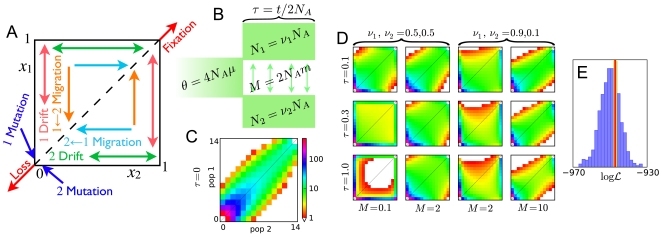
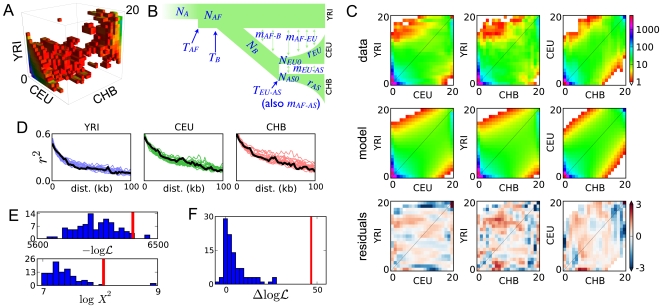
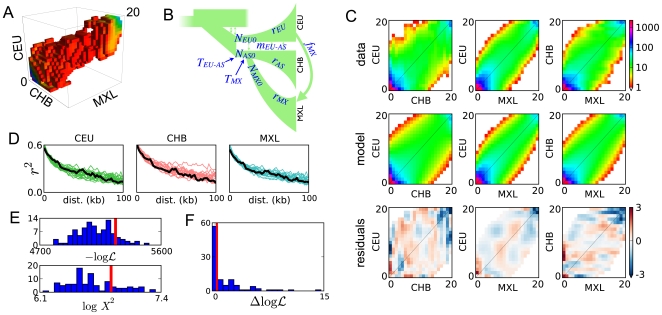
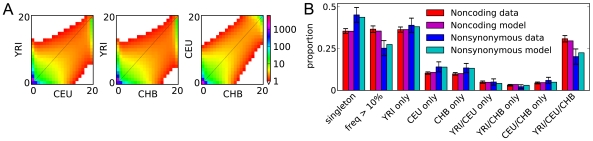
Demographic models built from genetic data play important roles in illuminating prehistorical events and serving as null models in genome scans for selection. We introduce an inference method based on the joint frequency spectrum of genetic variants within and between populations. For candidate models we numerically compute the expected spectrum using a diffusion approximation to the one-locus, two-allele Wright-Fisher process, involving up to three simultaneous populations. Our approach is a composite likelihood scheme, since linkage between neutral loci alters the variance but not the expectation of the frequency spectrum. We thus use bootstraps incorporating linkage to estimate uncertainties for parameters and significance values for hypothesis tests. Our method can also incorporate selection on single sites, predicting the joint distribution of selected alleles among populations experiencing a bevy of evolutionary forces, including expansions, contractions, migrations, and admixture. We model human expansion out of Africa and the settlement of the New World, using 5 Mb of noncoding DNA resequenced in 68 individuals from 4 populations (YRI, CHB, CEU, and MXL) by the Environmental Genome Project. We infer divergence between West African and Eurasian populations 140 thousand years ago (95% confidence interval: 40-270 kya). This is earlier than other genetic studies, in part because we incorporate migration. We estimate the European (CEU) and East Asian (CHB) divergence time to be 23 kya (95% c.i.: 17-43 kya), long after archeological evidence places modern humans in Europe. Finally, we estimate divergence between East Asians (CHB) and Mexican-Americans (MXL) of 22 kya (95% c.i.: 16.3-26.9 kya), and our analysis yields no evidence for subsequent migration. Furthermore, combining our demographic model with a previously estimated distribution of selective effects among newly arising amino acid mutations accurately predicts the frequency spectrum of nonsynonymous variants across three continental populations (YRI, CHB, CEU).
Overview
The claims and statistics of this paper haven’t been checked yet.
Free: it reads the open-access text and checks the first 5 claims that cite a source we can check. Create a free account to check every claim.
Integrity signals
Registry
Cites
Statistics
Figures
Verification
Claims the paper makes
The claims and statistics of this paper haven’t been checked yet.
Free: it reads the open-access text and checks the first 5 claims that cite a source we can check. Create a free account to check every claim.
Claims other papers make about this one
Each is checked against this paper’s own text: does it say what the citing paper says it does?
The cited source says what the claim attributes to it.
In the citing paper
“Recent estimates based on genome-wide patterns of variation have suggested that the European and East Asian divergence might have occurred as late as 25,000 years ago (Keinan et al. 2007;Gutenkunst et al. 2009;Laval et al. 2010;Rasmussen et al. 2011), implying that the colonization of Europe could have involved several migration movements at different ages (Laval et al. 2010).”
From The timing of pigmentation lightening in Europeans (2013) · cites this paper as Gutenkunst et al. 2009
Self-check
Percentages, sums and reported differences re-computed from the paper’s own numbers.
The self-check needs the paper’s full text.
Citations
Cites
Matplotlib: a 2D graphics environment
Hunter, J. D. (2007) · Computing in Science & Engineering · doi:10.1109/mcse.2007.55 · Cited by 39,249 · cited 1×
“Our implementation of these methods, ∂a∂i, is written in cross-platform Python and C, making use of the NumPy [38], Scipy [39], and Matplotlib libraries [40].”
MethodInference of Population Structure Using Multilocus Genotype Data
Pritchard, J. K., Stephens, M., & Donnelly, P. (2000) · Genetics · doi:10.1093/genetics/155.2.945 · Cited by 33,908
Savitzky-Golay Smoothing Filters
Press, W. H., & Teukolsky, S. A. (1990) · Computers in Physics · doi:10.1063/1.4822961 · Cited by 11,670
Numerical Recipes, The Art of Scientific Computing
Press, W. H., Flannery, B. P., Teukolsky, S. A., Vetterling, W. T., & Gould, H. (1987) · American Journal of Physics · doi:10.1119/1.14981 · Cited by 10,024
Numerical Recipes: The Art of Scientific Computing
Ziegel, E. (1987) · Technometrics · doi:10.1080/00401706.1987.10488304 · Cited by 6,702
On the number of segregating sites in genetical models without recombination
Watterson, G. A. (1975) · Theoretical Population Biology · doi:10.1016/0040-5809(75)90020-9 · Cited by 3,915 · cited 1×
“) Given an infinitely-manysites mutational model [31] and Wright-Fisher reproduction in each generation, the dynamics of φ for an arbitrary finite number of populations P are governed by a linear diffusion equation:”
BackgroundNumerical recipes: the art of scientific computing
Press, W. H., Flannery, B. P., Teukolsky, S. A., Vetterling, W. T., & Chipperfield, J. R. (1987) · Analytica Chimica Acta · doi:10.1016/s0003-2670(00)82860-3 · Cited by 3,304
Python for scientific computing
Oliphant, T. E. (2007) · Computing in Science & Engineering · doi:10.1109/mcse.2007.58 · Cited by 3,303 · cited 1×
“Our implementation of these methods, ∂a∂i, is written in cross-platform Python and C, making use of the NumPy [38], Scipy [39], and Matplotlib libraries [40].”
MethodBayesian Coalescent Inference of Past Population Dynamics from Molecular Sequences
Drummond, A. J. (2005) · Molecular Biology and Evolution · doi:10.1093/molbev/msi103 · Cited by 3,143 · cited 1×
“, [4–6,16,17], but also see [10,18]).”
Initial sequence of the chimpanzee genome and comparison with the human genome
The Chimpanzee Sequencing and Analysis Consortium (2005) · Nature · doi:10.1038/nature04072 · Cited by 2,459
Cited by
Inference of population splits and mixtures from genome-wide allele frequency data
Pickrell, J. K., & Pritchard, J. K. (2012) · PLoS Genetics · doi:10.1371/journal.pgen.1002967 · Cited by 2,731
“In application to dogs, we show that the boxer and basenji breeds have a considerable component of ancestry from grey wolves subsequent to domestication.”
BackgroundInference of human population history from individual whole-genome sequences
Li, H., & Durbin, R. (2011) · Nature · doi:10.1038/nature10231 · Cited by 2,590
Sequencing of 50 Human Exomes Reveals Adaptation to High Altitude
Yi, X., Liang, Y., Huerta-Sanchez, E., Jin, X., Cuo, Z. X. P., Pool, J. E., Xu, X., Jiang, H., Vinckenbosch, N., Korneliussen, T. S., et al. (2010) · Science · doi:10.1126/science.1190371 · Cited by 1,611
Evolution and functional impact of rare coding variation from deep sequencing of human exomes
Tennessen, J. A., Bigham, A. W., O’Connor, T. D., Fu, W., Kenny, E. E., Gravel, S., McGee, S., Do, R., Liu, X., Jun, G., et al. (2012) · Science · doi:10.1126/science.1219240 · Cited by 1,613
Self-citationRobust Demographic Inference from Genomic and SNP Data
Excoffier, L., Dupanloup, I., Huerta-Sánchez, E., Sousa, V. C., & Foll, M. (2013) · PLoS Genetics · doi:10.1371/journal.pgen.1003905 · Cited by 1,466
“The use of an outgroup species with fixed divergence time is a standard way to calibrate mutation rates (as e.g. in [21]), but we note it could also be used within species for DNA sequence data when some uncertainty exist on mutation rates, which is currently the case in humans [67,68].”
MethodResultInfluentialA reference genome for common bean and genome-wide analysis of dual domestications
Schmutz, J., McClean, P. E., Mamidi, S., Wu, G. A., Cannon, S. B., Grimwood, J., Jenkins, J., Shu, S., Song, Q., Chavarro, C., et al. (2014) · Nature Genetics · doi:10.1038/ng.3008 · Cited by 1,321
“The difference between the model and data is described by Anscombe residuals following dadi (Gutenkunst et al. 2009), and is shown in the lower panel.”
MethodHow to fail at species delimitation
Carstens, B. C., Pelletier, T. A., Reid, N. M., & Satler, J. D. (2013) · Molecular Ecology · doi:10.1111/mec.12413 · Cited by 1,248
“1998), population divergence (Hey & Nielsen 2007) or combinations of these processes (Gutenkunst et al. 2009) are widely applied to phylogeographical data.”
BackgroundLam, H.-M., Xu, X., Liu, X., Chen, W., Yang, G., Wong, F.-L., Li, M.-W., He, W., Qin, N., Wang, B., et al. (2010) · Nature Genetics · doi:10.1038/ng.715 · Cited by 1,062
“To explain this unexpected observation, we inferred soybean history using a maximum-likelihood analysis based on the joint-allele frequenc”
Dsuite ‐ Fast D ‐statistics and related admixture evidence from VCF files
Malinsky, M., Matschiner, M., & Svardal, H. (2021) · Molecular Ecology Resources · doi:10.1111/1755-0998.13265 · Cited by 992
“Finally, methods based on detailed population genetic models, such as δ a δ i (Gutenkunst et al., 2009), fastsimcoal2 (Excoffier et al., 2013), or IMa2 (Hey, 2010) can be used to infer demographic history that includes events such as population size changes, population splits and joins, and…”
BackgroundMethodBryant, D., Bouckaert, R., Felsenstein, J., Rosenberg, N. A., & RoyChoudhury, A. (2012) · Molecular Biology and Evolution · doi:10.1093/molbev/mss086 · Cited by 965
Upper Palaeolithic Siberian genome reveals dual ancestry of Native Americans
Raghavan, M., Skoglund, P., Graf, K. E., Metspalu, M., Albrechtsen, A., Moltke, I., Rasmussen, S., Stafford Jr, T. W., Orlando, L., Metspalu, E., et al. (2014) · Nature · doi:10.1038/nature12736 · Cited by 963
Genomic analyses provide insights into the history of tomato breeding
Lin, T., Zhu, G., Zhang, J., Xu, X., Yu, Q., Zheng, Z., Zhang, Z., Lun, Y., Li, S., Wang, X., et al. (2014) · Nature Genetics · doi:10.1038/ng.3117 · Cited by 955
Analysis of 6,515 exomes reveals the recent origin of most human protein-coding variants
Fu, W., O’Connor, T. D., Jun, G., Kang, H. M., Abecasis, G., Leal, S. M., Gabriel, S., Rieder, M. J., Altshuler, D., Shendure, J., et al. (2013) · Nature · doi:10.1038/nature11690 · Cited by 949
Robust and scalable inference of population history from hundreds of unphased whole genomes
Terhorst, J., Kamm, J. A., & Song, Y. S. (2017) · Nature Genetics · doi:10.1038/ng.3748 · Cited by 937
“Next, we compared SMC++ with MSMC and the SFS-based inference method ∂ a ∂ i 18 .”
BackgroundResultPopulation differentiation as a test for selective sweeps
Chen, H., Patterson, N., & Reich, D. (2010) · Genome Research · doi:10.1101/gr.100545.109 · Cited by 888
Reconstructing Native American population history
Reich, D., Patterson, N., Campbell, D., Tandon, A., Mazieres, S., Ray, N., Parra, M. V., Rojas, W., Duque, C., Mesa, N., et al. (2012) · Nature · doi:10.1038/nature11258 · Cited by 696
A genetic atlas of human admixture history
Hellenthal, G., Busby, G. B. J., Band, G., Wilson, J. F., Capelli, C., Falush, D., & Myers, S. (2014) · Science · doi:10.1126/science.1243518 · Cited by 798
An aboriginal Australian genome reveals separate human dispersals into Asia
Rasmussen, M., Guo, X., Wang, Y., Lohmueller, K. E., Rasmussen, S., Albrechtsen, A., Skotte, L., Lindgreen, S., Metspalu, M., Jombart, T., et al. (2011) · Science · doi:10.1126/science.1211177 · Cited by 787
Self-citationGenome sequencing and population genomics in non-model organisms
Ellegren, H. (2014) · Trends in Ecology & Evolution · doi:10.1016/j.tree.2013.09.008 · Cited by 759
Efficient Coalescent Simulation and Genealogical Analysis for Large Sample Sizes
Kelleher, J., Etheridge, A. M., & McVean, G. (2016) · PLOS Computational Biology · doi:10.1371/journal.pcbi.1004842 · Cited by 654
“Researchers are seeking to understand fine scale population structure using methods based on principal component analysis [112], admixture fractions [113–115], length of haplotype blocks [116–118] and allele frequencies [119].”
MethodA genomic history of Aboriginal Australia
Malaspinas, A.-S., Westaway, M. C., Muller, C., Sousa, V. C., Lao, O., Alves, I., Bergström, A., Athanasiadis, G., Cheng, J. Y., Crawford, J. E., et al. (2016) · Nature · doi:10.1038/nature18299 · Cited by 650
“Under our best model, Australo-Papuans began to diverge from Eurasians ~58 kya (95% CI 51-72 kya, Figure5c, S07), whereas Europeans and East Asians diverged from each other ~42 kya (95% CI 29-55 kya, Figure5c, S07) in agreement with previous estimates 19,39,60,61 .”
ResultDemographic history and rare allele sharing among human populations
Gravel, S., Henn, B. M., Gutenkunst, R. N., Indap, A. R., Marth, G. T., Clark, A. G., Yu, F., Gibbs, R. A., The 1000 Genomes Project, Bustamante, C. D., et al. (2011) · Proceedings of the National Academy of Sciences · doi:10.1073/pnas.1019276108 · Cited by 624
“When inferring demographic parameters by maximum likelihood of a Poisson Random Field (6), we therefore incorporate the error model in our demographic model rather than attempt to correct the SFS. Prediction of the Rate of Variant Discovery.”
MethodResultInfluentialSelf-citationDNA analysis of an early modern human from Tianyuan Cave, China
Fu, Q., Meyer, M., Gao, X., Stenzel, U., Burbano, H. A., Kelso, J., & Pääbo, S. (2013) · Proceedings of the National Academy of Sciences · doi:10.1073/pnas.1221359110 · Cited by 608
“Asian and European populations from nuclear DNA variation in present-day populations (34).”
BackgroundBayesian inference of ancient human demography from individual genome sequences
Gronau, I., Hubisz, M. J., Gulko, B., Danko, C. G., & Siepel, A. (2011) · Nature Genetics · doi:10.1038/ng.937 · Cited by 595
Genomics and the challenging translation into conservation practice
Shafer, A. B. A., Wolf, J. B. W., Alves, P. C., Bergström, L., Bruford, M. W., Brännström, I., Colling, G., Dalén, L., De Meester, L., Ekblom, R., et al. (2015) · Trends in Ecology & Evolution · doi:10.1016/j.tree.2014.11.009 · Cited by 573
A genomic perspective on hybridization and speciation
Payseur, B. A., & Rieseberg, L. H. (2016) · Molecular Ecology · doi:10.1111/mec.13557 · Cited by 552
“(2 01 4) © 2016 John Wiley & Sons Ltd history within species (especially humans) – including diffusion-based analysis of the site frequency spectrum (Gutenkunst et al. 2009) and a host of methods based on individual haplotypes (Pool & Nielsen 2009; Gravel 2012; Mailund et al. 2012; Harris & Nielsen…”
MethodRecent Explosive Human Population Growth Has Resulted in an Excess of Rare Genetic Variants
Keinan, A., & Clark, A. G. (2012) · Science · doi:10.1126/science.1217283 · Cited by 548
Interpreting the genomic landscape of speciation: a road map for finding barriers to gene flow
Ravinet, M., Faria, R., Butlin, R. K., Galindo, J., Bierne, N., Rafajlović, M., Noor, M. A. F., Mehlig, B., & Westram, A. M. (2017) · Journal of Evolutionary Biology · doi:10.1111/jeb.13047 · Cited by 529
“Site frequency spectrum (SFS) methods can rapidly approximate the joint allele frequency distribution between populations, allowing comparisons of divergence with and without gene flow and the estimation of migration rate (Gutenkunst et al., 2009; Excoffier et al., 2013).”
BackgroundMolecular evidence for a single evolutionary origin of domesticated rice
Molina, J., Sikora, M., Garud, N., Flowers, J. M., Rubinstein, S., Reynolds, A., Huang, P., Jackson, S., Schaal, B. A., Bustamante, C. D., et al. (2011) · Proceedings of the National Academy of Sciences · doi:10.1073/pnas.1104686108 · Cited by 516
“1) using ∂a∂i (36) (source code available on request).”
MethodSelf-citationQi, J., Liu, X., Shen, D., Miao, H., Xie, B., Li, X., Zeng, P., Wang, S., Shang, Y., Gu, X., et al. (2013) · Nature Genetics · doi:10.1038/ng.2801 · Cited by 517
Genetic Ancestry and Natural Selection Drive Population Differences in Immune Responses to Pathogens
Nédélec, Y., Sanz, J., Baharian, G., Szpiech, Z. A., Pacis, A., Dumaine, A., Grenier, J.-C., Freiman, A., Sams, A. J., Hebert, S., et al. (2016) · Cell · doi:10.1016/j.cell.2016.09.025 · Cited by 512
“…the observed iHS value for each putatively selected allele to those observed under neutral coalescent simulations matched to the known demographic history of African and European populations (Gutenkunst et al., 2009), the candidate allele’s observed frequency, and the local recombination rate.”
BackgroundMethodInfluentialSelf-citationGreenlandic Inuit show genetic signatures of diet and climate adaptation
Fumagalli, M., Moltke, I., Grarup, N., Racimo, F., Bjerregaard, P., Jørgensen, M. E., Korneliussen, T. S., Gerbault, P., Skotte, L., Linneberg, A., et al. (2015) · Science · doi:10.1126/science.aab2319 · Cited by 510
Exploring population size changes using SNP frequency spectra
Liu, X., & Fu, Y.-X. (2015) · Nature Genetics · doi:10.1038/ng.3254 · Cited by 473
“(3) increasing d by 1 and repeat the practice; based on the best θ break point(s) associated with Ld-1, find an additional break point associated with the largest L and designate it as Ld; and stop when –2ln(Ld-1/Ld) < 3.”
BackgroundExcavating Neandertal and Denisovan DNA from the genomes of Melanesian individuals
Vernot, B., Tucci, S., Kelso, J., Schraiber, J. G., Wolf, A. B., Gittelman, R. M., Dannemann, M., Grote, S., McCoy, R. C., Norton, H., et al. (2016) · Science · doi:10.1126/science.aad9416 · Cited by 459
Supervised Machine Learning for Population Genetics: A New Paradigm
Schrider, D. R., & Kern, A. D. (2018) · Trends in Genetics · doi:10.1016/j.tig.2017.12.005 · Cited by 453
“Indeed, much attention in the field has been placed on developing methods for the inference of population size histories and patterns of population splitting and migration [54–58].”
MethodTine, M., Kuhl, H., Gagnaire, P.-A., Louro, B., Desmarais, E., Martins, R. S. T., Hecht, J., Knaust, F., Belkhir, K., Klages, S., et al. (2014) · Nature Communications · doi:10.1038/ncomms6770 · Cited by 451
Classic Selective Sweeps Were Rare in Recent Human Evolution
Hernandez, R. D., Kelley, J. L., Elyashiv, E., Melton, S. C., Auton, A., McVean, G., 1000 Genomes Project, Sella, G., & Przeworski, M. (2011) · Science · doi:10.1126/science.1198878 · Cited by 446
Self-citationRecent Selective Sweeps in North American Drosophila melanogaster Show Signatures of Soft Sweeps
Garud, N. R., Messer, P. W., Buzbas, E. O., & Petrov, D. A. (2015) · PLOS Genetics · doi:10.1371/journal.pgen.1005004 · Cited by 442
“l. [31]. In this model, the North American population of D. melanogaster was co-founded by flies from both Africa and Europe. We also focused on three demographic models inferred by the software DaDi [36] using short intron autosomal polymorphism data from the DGRP data set (Material and Methods): a constant populatio…”
MethodInfluentialStairway Plot 2: demographic history inference with folded SNP frequency spectra
Liu, X., & Fu, Y.-X. (2020) · Genome Biology · doi:10.1186/s13059-020-02196-9 · Cited by 437
“Controlling overfitting is especially relevant for model-flexible methods, as they typically search a wider model space and involve more parameters than model-fixed methods, such as ∂ a ∂ i [17].”
Methodfastsimcoal2: demographic inference under complex evolutionary scenarios
Excoffier, L., Marchi, N., Marques, D. A., Matthey-Doret, R., Gouy, A., & Sousa, V. C. (2021) · Bioinformatics · doi:10.1093/bioinformatics/btab468 · Cited by 426
Nielsen, R., Korneliussen, T., Albrechtsen, A., Li, Y., & Wang, J. (2012) · PLoS ONE · doi:10.1371/journal.pone.0037558 · Cited by 424
“[20]) and quantifying population subdivision using FST (e.”
MethodThe Genetic Cost of Neanderthal Introgression
Harris, K., & Nielsen, R. (2016) · Genetics · doi:10.1534/genetics.116.186890 · Cited by 419
Whole-genome resequencing reveals Brassica napus origin and genetic loci involved in its improvement
Lu, K., Wei, L., Li, X., Wang, Y., Wu, J., Liu, M., Zhang, C., Chen, Z., Xiao, Z., Jian, H., et al. (2019) · Nature Communications · doi:10.1038/s41467-019-09134-9 · Cited by 417
Genomic adaptation to polyphagy and insecticides in a major East Asian noctuid pest
Cheng, T., Wu, J., Wu, Y., Chilukuri, R. V., Huang, L., Yamamoto, K., Feng, L., Li, W., Chen, Z., Guo, H., et al. (2017) · Nature Ecology & Evolution · doi:10.1038/s41559-017-0314-4 · Cited by 408
Genetic diversity of the African malaria vector Anopheles gambiae
The Anopheles gambiae 1000 Genomes Consortium (2017) · Nature · doi:10.1038/nature24995 · Cited by 411
Population genomics reveal recent speciation and rapid evolutionary adaptation in polar bears
Liu, S., Lorenzen, E. D., Fumagalli, M., Li, B., Harris, K., Xiong, Z., Zhou, L., Korneliussen, T. S., Somel, M., Babbitt, C., et al. (2014) · Cell · doi:10.1016/j.cell.2014.03.054 · Cited by 411
“To reliably estimate when polar bears and brown bears diverged, we used the IBS tract method (Harris and Nielsen, 2013) and vavi (Gutenkunst et al., 2009), which both take past population size changes into account.”
BackgroundMethodInfluentialArchaeological and genetic insights into the origins of domesticated rice
Gross, B. L., & Zhao, Z. (2014) · Proceedings of the National Academy of Sciences · doi:10.1073/pnas.1308942110 · Cited by 404
SNP ascertainment bias in population genetic analyses: Why it is important, and how to correct it
Lachance, J., & Tishkoff, S. A. (2013) · BioEssays · doi:10.1002/bies.201300014 · Cited by 398
“Modern computational methods use joint allele frequency distributions from multiple populations to infer divergence times, ancestral population sizes, and migration rates [19, 20].”
MethodChen, N., Cai, Y., Chen, Q., Li, R., Wang, K., Huang, Y., Hu, S., Huang, S., Zhang, H., Zheng, Z., et al. (2018) · Nature Communications · doi:10.1038/s41467-018-04737-0 · Cited by 403
Rare variant discovery by deep whole-genome sequencing of 1,070 Japanese individuals
Nagasaki, M., Yasuda, J., Katsuoka, F., Nariai, N., Kojima, K., Kawai, Y., Yamaguchi-Kabata, Y., Yokozawa, J., Danjoh, I., Saito, S., et al. (2015) · Nature Communications · doi:10.1038/ncomms9018 · Cited by 400
Is There a Genetic Paradox of Biological Invasion?
Estoup, A., Ravigné, V., Hufbauer, R., Vitalis, R., Gautier, M., & Facon, B. (2016) · Annual Review of Ecology, Evolution, and Systematics · doi:10.1146/annurev-ecolsys-121415-032116 · Cited by 394
Fuentes‐Pardo, A. P., & Ruzzante, D. E. (2017) · Molecular Ecology · doi:10.1111/mec.14264 · Cited by 394
Genomics advances the study of inbreeding depression in the wild
Kardos, M., Taylor, H. R., Ellegren, H., Luikart, G., & Allendorf, F. W. (2016) · Evolutionary Applications · doi:10.1111/eva.12414 · Cited by 387
Analysis of Human Sequence Data Reveals Two Pulses of Archaic Denisovan Admixture
Browning, S. R., Browning, B. L., Zhou, Y., Tucci, S., & Akey, J. M. (2018) · Cell · doi:10.1016/j.cell.2018.02.031 · Cited by 381
Identity by Descent: Variation in Meiosis, Across Genomes, and in Populations
Thompson, E. A. (2013) · Genetics · doi:10.1534/genetics.112.148825 · Cited by 378
“The patterns of genetic variation within and among populations, given the wealth of data now available, can provide a much more detailed picture of the major demographic events in human prehistory (Gutenkunst et al. 2009).”
BackgroundOn Detecting Incomplete Soft or Hard Selective Sweeps Using Haplotype Structure
Ferrer-Admetlla, A., Liang, M., Korneliussen, T., & Nielsen, R. (2014) · Molecular Biology and Evolution · doi:10.1093/molbev/msu077 · Cited by 376
Nachman, M. W., & Payseur, B. A. (2012) · Philosophical Transactions of the Royal Society B: Biological Sciences · doi:10.1098/rstb.2011.0249 · Cited by 376
Zhao, S., Zheng, P., Dong, S., Zhan, X., Wu, Q., Guo, X., Hu, Y., He, W., Zhang, S., Fan, W., et al. (2013) · Nature Genetics · doi:10.1038/ng.2494 · Cited by 355
The genetic prehistory of southern Africa
Pickrell, J. K., Patterson, N., Barbieri, C., Berthold, F., Gerlach, L., Güldemann, T., Kure, B., Mpoloka, S. W., Nakagawa, H., Naumann, C., et al. (2012) · Nature Communications · doi:10.1038/ncomms2140 · Cited by 347
“[55{57]). The other approach to this problem does not rely on simulations, but uses an explicit expression for the joint allele frequency spectrum in two populations under a given demographic history [58]. The joint allele frequency spectrum is in uenced by a number of demographic parameters, including the eective pop…”
BackgroundMethodSelf-citationOut of southern East Asia: the natural history of domestic dogs across the world
Wang, G.-D., Zhai, W., Yang, H.-C., Wang, L., Zhong, L., Liu, Y.-H., Fan, R.-X., Yin, T.-T., Zhu, C.-L., Poyarkov, A. D., et al. (2016) · Cell Research · doi:10.1038/cr.2015.147 · Cited by 351
Ewing, G., & Hermisson, J. (2010) · Bioinformatics · doi:10.1093/bioinformatics/btq322 · Cited by 344
“Population structure, as well as demography and recombination, are readily incorporated into a coalescent framework (for review, Hein et al., 2005; Wakeley, 2008). To include selection into a simulator based on the coalescent, we extend the approach of Kaplan et al. (1989) and Barton et al.”
Ancient genomes show social and reproductive behavior of early Upper Paleolithic foragers
Sikora, M., Seguin-Orlando, A., Sousa, V. C., Albrechtsen, A., Korneliussen, T., Ko, A., Rasmussen, S., Dupanloup, I., Nigst, P. R., Bosch, M. D., et al. (2017) · Science · doi:10.1126/science.aao1807 · Cited by 312
Yang, J., Li, W.-R., Lv, F.-H., He, S.-G., Tian, S.-L., Peng, W.-F., Sun, Y.-W., Zhao, Y.-X., Tu, X.-L., Zhang, M., et al. (2016) · Molecular Biology and Evolution · doi:10.1093/molbev/msw129 · Cited by 342
“…limited recombination events in this short time period (Li and Durbin 2011), we also used the diffusion approximation for demographic inference (∂a∂i; Gutenkunst et al. 2009) approach to infer the recent demographic history (e.g., < 4,000 years) of the three identified sheep groups…”
MethodInfluentialShafer, A. B. A., Peart, C. R., Tusso, S., Maayan, I., Brelsford, A., Wheat, C. W., & Wolf, J. B. W. (2017) · Methods in Ecology and Evolution · doi:10.1111/2041-210x.12700 · Cited by 341
“To account for missing data, all SFS were projected to half the sampled chromosomes using a hypergeometric distribution (Gutenkunst et al. 2009).”
MethodAdaptive introgression underlies polymorphic seasonal camouflage in snowshoe hares
Jones, M. R., Mills, L. S., Alves, P. C., Callahan, C. M., Alves, J. M., Lafferty, D. J. R., Jiggins, F. M., Jensen, J. D., Melo-Ferreira, J., & Good, J. M. (2018) · Science · doi:10.1126/science.aar5273 · Cited by 339
A beginner's guide to low‐coverage whole genome sequencing for population genomics
Lou, R. N., Jacobs, A., Wilder, A. P., & Therkildsen, N. O. (2021) · Molecular Ecology · doi:10.1111/mec.16077 · Cited by 334
Advances and limits of using population genetics to understand local adaptation
Tiffin, P., & Ross-Ibarra, J. (2014) · Trends in Ecology & Evolution · doi:10.1016/j.tree.2014.10.004 · Cited by 335
An intercross population study reveals genes associated with body size and plumage color in ducks
Zhou, Z., Li, M., Cheng, H., Fan, W., Yuan, Z., Gao, Q., Xu, Y., Guo, Z., Zhang, Y., Hu, J., et al. (2018) · Nature Communications · doi:10.1038/s41467-018-04868-4 · Cited by 334
Mazet, O., Rodríguez, W., Grusea, S., Boitard, S., & Chikhi, L. (2016) · Heredity · doi:10.1038/hdy.2015.104 · Cited by 324
“…2001; Städler et al., 2009; Broquet et al., 2010; Heller et al., 2013; Paz-Vinas et al., 2013) in generating spurious changes in inferred population size suggested that new models should be analyzed that can incorporate population structure (Goldstein and Chikhi, 2002; Harding and McVean, 2004.”
BackgroundResultInfluentialThe genomics of selection in dogs and the parallel evolution between dogs and humans
Wang, G.-D., Zhai, W., Yang, H.-C., Fan, R.-X., Cao, X., Zhong, L., Wang, L., Liu, F., Wu, H., Cheng, L.-G., et al. (2013) · Nature Communications · doi:10.1038/ncomms2814 · Cited by 323
Inferring whole-genome histories in large population datasets
Kelleher, J., Wong, Y., Wohns, A. W., Fadil, C., Albers, P. K., & McVean, G. (2019) · Nature Genetics · doi:10.1038/s41588-019-0483-y · Cited by 313
“In Supplementary Figure 6 we show results of simulations of a three population Out-of-Africa model of human demography 54 .”
MethodEarly Austronesians: Into and Out Of Taiwan
Ko, A. M.-S., Chen, C.-Y., Fu, Q., Delfin, F., Li, M., Chiu, H.-L., Stoneking, M., & Ko, Y.-C. (2014) · The American Journal of Human Genetics · doi:10.1016/j.ajhg.2014.02.003 · Cited by 310
“We assume the Taiwan and Philippines are settled at different times, and therefore the inhabitants shared a common ancestor any time from Neolithic Taiwan at 6 kya(55) up to the European/Asian split at 20–30 kya.(59) 7.”
BackgroundPopulation Genetics Models of Local Ancestry
Gravel, S. (2012) · Genetics · doi:10.1534/genetics.112.139808 · Cited by 311
A comprehensive map of mobile element insertion polymorphisms in humans
Stewart, C., Kural, D., Strömberg, M. P., Walker, J. A., Konkel, M. K., Stütz, A. M., Urban, A. E., Grubert, F., Lam, H. Y. K., Lee, W.-P., et al. (2011) · PLoS Genetics · doi:10.1371/journal.pgen.1002236 · Cited by 307
“SNP studies that the shape of the allele frequency spectrum is modulated by demographic history, and that this shape is characteristically different for European, African, and Asian populations [56,57].”
BackgroundMethodInfluentialYak whole-genome resequencing reveals domestication signatures and prehistoric population expansions
Qiu, Q., Wang, L., Wang, K., Yang, Y., Ma, T., Wang, Z., Zhang, X., Ni, Z., Hou, F., Long, R., et al. (2015) · Nature Communications · doi:10.1038/ncomms10283 · Cited by 304
The genetics of monarch butterfly migration and warning colouration
Zhan, S., Zhang, W., Niitepõld, K., Hsu, J., Haeger, J. F., Zalucki, M. P., Altizer, S., de Roode, J. C., Reppert, S. M., & Kronforst, M. R. (2014) · Nature · doi:10.1038/nature13812 · Cited by 292
“Because this timing was unexpected, we performed a follow-up analysis using ∂a∂i 28 and this also yielded split times of 2-3 ky ago between North America and the Atlantic and Pacific populations (Extended Data Fig.”
InfluentialAdaptive evolution of multiple traits through multiple mutations at a single gene
Linnen, C. R., Poh, Y.-P., Peterson, B. K., Barrett, R. D. H., Larson, J. G., Jensen, J. D., & Hoekstra, H. E. (2013) · Science · doi:10.1126/science.1233213 · Cited by 292
Understanding the origin of species with genome-scale data: modelling gene flow
Sousa, V., & Hey, J. (2013) · Nature Reviews Genetics · doi:10.1038/nrg3446 · Cited by 284
863 genomes reveal the origin and domestication of chicken
Wang, M.-S., Thakur, M., Peng, M.-S., Jiang, Y., Frantz, L. A. F., Li, M., Zhang, J.-J., Wang, S., Peters, J., Otecko, N. O., et al. (2020) · Cell Research · doi:10.1038/s41422-020-0349-y · Cited by 286
Estimating the mutation load in human genomes
Henn, B. M., Botigué, L. R., Bustamante, C. D., Clark, A. G., & Gravel, S. (2015) · Nature Reviews Genetics · doi:10.1038/nrg3931 · Cited by 281
Self-citationThe deleterious mutation load is insensitive to recent population history.
Simons, Y. B., Turchin, M. C., Pritchard, J. K., & Sella, G. (2014) · Nature Genetics · doi:10.1038/ng.2896 · Cited by 279
“The main features of the Tennessen model are similar to other recent models 9, 10, 17 while using a larger data set for parameter estimation.”
On the limits of fitting complex models of population history to f-statistics
Maier, R., Flegontov, P., Flegontova, O., Işıldak, U., Changmai, P., & Reich, D. (2023) · eLife · doi:10.7554/elife.85492 · Cited by 270
Toward a new history and geography of human genes informed by ancient DNA
Pickrell, J. K., & Reich, D. (2014) · Trends in Genetics · doi:10.1016/j.tig.2014.07.007 · Cited by 273
Gladieux, P., Ropars, J., Badouin, H., Branca, A., Aguileta, G., de Vienne, D. M., Rodríguez de la Vega, R. C., Branco, S., & Giraud, T. (2014) · Molecular Ecology · doi:10.1111/mec.12631 · Cited by 272
“Advances in theoretical population genomics have also increased power for the inference of demographic parameters (Gutenkunst et al. 2009; Excoffier et al. 2013), determinations of the relative importance of natural selection and ran-”
BackgroundKorneliussen, T. S., Moltke, I., Albrechtsen, A., & Nielsen, R. (2013) · BMC Bioinformatics · doi:10.1186/1471-2105-14-289 · Cited by 269
“35 ⋅ 10 (8), r = 10 8 [38,39] and use an infinite sites model.”
Population genetic inference from genomic sequence variation
Pool, J. E., Hellmann, I., Jensen, J. D., & Nielsen, R. (2010) · Genome Research · doi:10.1101/gr.079509.108 · Cited by 268
“These methods can also be applied to more than one population and more complex demographic models using the so-called multidimensional frequency spectrum (e.g., Caicedo et al. 2007; Gutenkunst et al. 2009; Nielsen et al. 2009).”
MethodGenomic diversity and evolution of the head crest in the rock pigeon
Shapiro, M. D., Kronenberg, Z., Li, C., Domyan, E. T., Pan, H., Campbell, M., Tan, H., Huff, C. D., Hu, H., Vickrey, A. I., et al. (2013) · Science · doi:10.1126/science.1230422 · Cited by 265
“Time to most recent common ancestor (TMRCA) We inferred the demographic history of the pigeon population using ∂a∂i (59), an inference method based on a diffusion approximation to the observed allele frequency spectrum.”
Schoville, S. D., Chen, Y. H., Andersson, M. N., Benoit, J. B., Bhandari, A., Bowsher, J. H., Brevik, K., Cappelle, K., Chen, M.-J. M., Childers, A. K., et al. (2018) · Scientific Reports · doi:10.1038/s41598-018-20154-1 · Cited by 262
Sequence Capture versus Restriction Site Associated DNA Sequencing for Shallow Systematics
Harvey, M. G., Smith, B. T., Glenn, T. C., Faircloth, B. C., & Brumfield, R. T. (2016) · Systematic Biology · doi:10.1093/sysbio/syw036 · Cited by 255
“We estimated demographic parameters using gene trees in BP&P v.3.2 (Yang and Rannala 2010) and using SNP frequency spectra in ∂a∂i v.1.7.0 (Gutenkunst et al. 2009) with both RAD-Seq and sequence capture data from X. minutus.”
MethodInfluentialQi, X., Cui, C., Peng, Y., Zhang, X., Yang, Z., Zhong, H., Zhang, H., Xiang, K., Cao, X., Wang, Y., et al. (2013) · Molecular Biology and Evolution · doi:10.1093/molbev/mst093 · Cited by 196
“An ideal choice to estimate population divergence time is to use likelihood methods, modeling the joint allele frequency spectrum of the two populations (Gutenkunst et al. 2009; Reich et al. 2009; Lukic et al. 2011; Chen 2012).”
Higher Levels of Neanderthal Ancestry in East Asians than in Europeans
Wall, J. D., Yang, M. A., Jay, F., Kim, S. K., Durand, E. Y., Stevison, L. S., Gignoux, C., Woerner, A., Hammer, M. F., & Slatkin, M. (2013) · Genetics · doi:10.1534/genetics.112.148213 · Cited by 249
“Consequently, estimates of East Asian–European population divergence of ,30 KYA (Gutenkunst et al. 2009; Gravel et al. 2011) are unlikely to be correct.”
BackgroundInfluentialLength Distributions of Identity by Descent Reveal Fine-Scale Demographic History
Palamara, P. F., Lencz, T., Darvasi, A., & Pe’er, I. (2012) · The American Journal of Human Genetics · doi:10.1016/j.ajhg.2012.08.030 · Cited by 247
Potential and limits for rapid genetic adaptation to warming in a Great Barrier Reef coral
Matz, M. V., Treml, E. A., Aglyamova, G. V., & Bay, L. K. (2018) · PLOS Genetics · doi:10.1371/journal.pgen.1007220 · Cited by 245
“Demographic subdivision and migration patterns Here we applied Diffusion Approximation for Demographic Inference (@a@i, [13]), a methodology of demographic analysis based on allele frequency spectrum (AFS).”
MethodPopulation genomics and local adaptation in wild isolates of a model microbial eukaryote
Ellison, C. E., Hall, C., Kowbel, D., Welch, J., Brem, R. B., Glass, N. L., & Taylor, J. W. (2011) · Proceedings of the National Academy of Sciences · doi:10.1073/pnas.1014971108 · Cited by 244
“Demographic parameters were estimated from the Louisiana and Caribbean joint allele frequency spectrum using a diffusion-based approach implemented in the program ∂a∂i (21).”
MethodBernatchez, L. (2016) · Journal of Fish Biology · doi:10.1111/jfb.13145 · Cited by 242
The origin and adaptive evolution of domesticated populations of yeast from Far East Asia
Duan, S.-F., Han, P.-J., Wang, Q.-M., Liu, W.-Q., Shi, J.-Y., Li, K., Zhang, X.-L., & Bai, F.-Y. (2018) · Nature Communications · doi:10.1038/s41467-018-05106-7 · Cited by 244
Narrow thermal tolerance and low dispersal drive higher speciation in tropical mountains
Polato, N. R., Gill, B. A., Shah, A. A., Gray, M. M., Casner, K. L., Barthelet, A., Messer, P. W., Simmons, M. P., Guayasamin, J. M., Encalada, A. C., et al. (2018) · Proceedings of the National Academy of Sciences · doi:10.1073/pnas.1809326115 · Cited by 242
“Effective migration rates (Nem) between population pairs were inferred in the program ∂a∂i (47), which uses a diffusion approximation approach on the folded 2D allele frequency spectrum (AFS) estimated over all SNPs.”
BackgroundMethodvan Dorp, L., Balding, D., Myers, S., Pagani, L., Tyler-Smith, C., Bekele, E., Tarekegn, A., Thomas, M. G., Bradman, N., & Hellenthal, G. (2015) · PLOS Genetics · doi:10.1371/journal.pgen.1005397 · Cited by 238
“The split at 2500 generations ago and subsequent bottleneck in populations 8–12 mimics the “out-of-Africa” event [36, 35, 55], and the split between populations 8–10 and populations 11–12 at 1000 generations ago mimics the split between Western Eurasia populations and East Asian populations [54, 53], with a subsequent…”
BackgroundInferring the Joint Demographic History of Multiple Populations: Beyond the Diffusion Approximation
Jouganous, J., Long, W., Ragsdale, A. P., & Gravel, S. (2017) · Genetics · doi:10.1534/genetics.117.200493 · Cited by 239
“Out of Africa 3D 3 populations Out of Africa expansion model as described in [9, 12]”
BackgroundMethodInfluentialAndrés, A. M., Dennis, M. Y., Kretzschmar, W. W., Cannons, J. L., Lee-Lin, S.-Q., Hurle, B., Program, N. C. S., Schwartzberg, P. L., Williamson, S. H., Bustamante, C. D., et al. (2010) · PLoS Genetics · doi:10.1371/journal.pgen.1001157 · Cited by 236
“Our null model followed a recently published demographic scenario that included African, Asian, and European populations [81] and that was a better fit to our control data than previously proposed demographic models.”
MethodSelf-citation
Metadata
- Authors
- Gutenkunst, R. N., Hernandez, R. D., Williamson, S. H., & Bustamante, C. D.
- Affiliations
- Los Alamos National Laboratory (US)
- University of Chicago (US)
- Cornell University (US)
- Corresponding author
- Gutenkunst, Ryan N.
- Venue
- PLoS Genetics
- Publisher
- Public Library of Science (PLoS)
- Published
- 2009-10-23
- Volume
- 5
- Issue
- 10
- Pages
- e1000695
- ISSN
- 1553-7390 (ISSN-L)
- 1553-7404
- PMC
- PMC2760211
- OpenAlex
- W2125300654
- Cited by
- 1,906
- References
- 66
- Citations by year
- 2026: 141 · 2025: 149 · 2024: 147 · 2023: 126 · 2022: 130 · 2021: 177 · 2020: 135 · 2019: 131 · 2018: 144 · 2017: 120 · 2016: 127 · 2015: 88 · 2014: 93 · 2013: 74 · 2012: 50
- FWCI
- 23.59
- Type
- journal article
- Language
- en
- Open access
- gold
- doi.org
- Licence
- Locations
- PLoS Genetics (publishedVersion, public-domain)
- PubMed Central (publishedVersion, public-domain)
- PubMed (publishedVersion)
- arXiv (Cornell University) (submittedVersion)
- OSTI OAI (U.S. Department of Energy Office of Scientific and Technical Information) (submittedVersion)
- Knowledge@UChicago (University of Chicago) (submittedVersion, cc-by-nc-nd)
- RePEc: Research Papers in Economics (submittedVersion)
- DOAJ (DOAJ: Directory of Open Access Journals) (submittedVersion, cc-by-sa)
- eScholarship (California Digital Library) (submittedVersion)
- eScholarship (California Digital Library) (submittedVersion, public-domain)
- arXiv (Cornell University)
- University of Chicago
- Funders
- National Science Foundation (0551164, DE-AC52-06NA25396)
- U.S. Department of Energy (DE-AC52-06NA2-5396, AC52-06NA25396, 51164, contract DE-AC52-06NA25396)
- National Institutes of Health (n01es15478-9-0-0, DE-AC52-06NA25396)
- National Human Genome Research Institute (R01HG003229)
- National Institute of General Medical Sciences (R01GM083606, 1R01GM83606)
- National Institute of Environmental Health Sciences (ES15478, N01 ES015478)
- Topics
- Life Sciences › Biochemistry, Genetics and Molecular Biology › Genetics › Forensic and Genetic Research
- Life Sciences › Biochemistry, Genetics and Molecular Biology › Genetics › Genetic diversity and population structure
- Life Sciences › Biochemistry, Genetics and Molecular Biology › Genetics › Genetic Associations and Epidemiology
- Keywords
- frequency spectrum, diffusion approximation, Wright-Fisher process, composite likelihood, linkage, admixture, migration, divergence time estimation, European colonization of the Americas, non-synonymous mutations, selection, non-coding DNA, Yoruba, Han Chinese, European Americans, Mexican Americans
- MeSH terms
- Africa, Asia, Demography, Europe, Gene Frequency, Humans, Models, Genetic, Evolution, Molecular, Polymorphism, Single Nucleotide, Racial Groups, History, Ancient
About these checks
Registry, retraction, Cites and statistics results are computed, not judged, with one exception: a printed reference that no index lists is read once by a model before it counts as a citation error. Claims are extracted by a model and kept only when their quote appears verbatim in the text; each cited source is then checked, with a model’s help, for whether it says what the claim relies on. Those verdicts can be wrong — read the claim’s quote and the cited source before relying on one.
Statistics and arithmetic are recomputed, not judged.
Confidence bands are shown only for fields calibrated on our annotated test set. None is calibrated yet, so no band is shown.
What counts as a claim ›How we measure confidence ›How we check this ›
Are you an author, or do you see a problem with this page? Request a review
Data sources
Bibliographic data: Semantic Scholar, OpenAlex, Crossref.
Contains information from the Semantic Scholar Academic Graph Datasets, made available under the ODC Attribution License (ODC-BY 1.0).
Semantic Scholar’s data is described in: Kinney, R., et al. (2023). The Semantic Scholar Open Data Platform. arXiv:2301.10140.
