

The DOI matches its Crossref record; 83 of the 83 references it cites were found in a registry or an index.
Genetic Adaptation Associated with Genome-Doubling in Autotetraploid Arabidopsis arenosa
Open accessAbstract
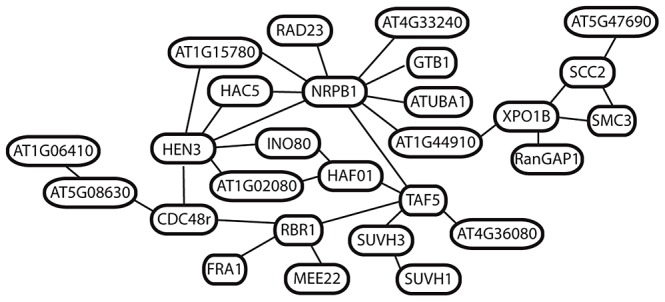
Genome duplication, which results in polyploidy, is disruptive to fundamental biological processes. Genome duplications occur spontaneously in a range of taxa and problems such as sterility, aneuploidy, and gene expression aberrations are common in newly formed polyploids. In mammals, genome duplication is associated with cancer and spontaneous abortion of embryos. Nevertheless, stable polyploid species occur in both plants and animals. Understanding how natural selection enabled these species to overcome early challenges can provide important insights into the mechanisms by which core cellular functions can adapt to perturbations of the genomic environment. Arabidopsis arenosa includes stable tetraploid populations and is related to well-characterized diploids A. lyrata and A. thaliana. It thus provides a rare opportunity to leverage genomic tools to investigate the genetic basis of polyploid stabilization. We sequenced the genomes of twelve A. arenosa individuals and found signatures suggestive of recent and ongoing selective sweeps throughout the genome. Many of these are at genes implicated in genome maintenance functions, including chromosome cohesion and segregation, DNA repair, homologous recombination, transcriptional regulation, and chromatin structure. Numerous encoded proteins are predicted to interact with one another. For a critical meiosis gene, ASYNAPSIS1, we identified a non-synonymous mutation that is highly differentiated by cytotype, but present as a rare variant in diploid A. arenosa, indicating selection may have acted on standing variation already present in the diploid. Several genes we identified that are implicated in sister chromatid cohesion and segregation are homologous to genes identified in a yeast mutant screen as necessary for survival of polyploid cells, and also implicated in genome instability in human diseases including cancer. This points to commonalities across kingdoms and supports the hypothesis that selection has acted on genes controlling genome integrity in A. arenosa as an adaptive response to genome doubling.
Overview
The claims and statistics of this paper haven’t been checked yet.
Run the check — free, no account needed. It reads the open-access text and checks the sources it cites.
Integrity signals
Registry
Cites
Statistics
Figures
Verification
Claims the paper makes
The claims and statistics of this paper haven’t been checked yet.
Run the check — free, no account needed. It reads the open-access text and checks the sources it cites.
Claims other papers make about this one
Each is checked against this paper’s own text: does it say what the citing paper says it does?
The source backs part of the claim, not all of it — or backs it for a different population, condition or comparison.
In the citing paper
“A notable example is adaptation to WGD in autotetraploid Arabidopsis, which was shown to involve standing genetic variation (Hollister et al., 2012; see also Polyploid speciation).”
From Genomics of plant speciation (2023) · cites this paper as Hollister et al., 2012
Experimental — accuracy not yet measured
Self-check
Percentages, sums and reported differences re-computed from the paper’s own numbers.
The self-check needs the paper’s full text.
Citations
Cites
The Genome Analysis Toolkit: A MapReduce framework for analyzing next-generation DNA sequencing data
McKenna, A., Hanna, M., Banks, E., Sivachenko, A., Cibulskis, K., Kernytsky, A., Garimella, K., Altshuler, D., Gabriel, S., Daly, M., et al. (2010) · Genome Research · doi:10.1101/gr.107524.110 · Cited by 27,895
Analysis of the genome sequence of the flowering plant Arabidopsis thaliana
Initiative, T. A. G. (2000) · Nature · doi:10.1038/35048692 · Cited by 9,301
A draft sequence of the Neandertal genome
Green, R. E., Krause, J., Briggs, A. W., Maricic, T., Stenzel, U., Kircher, M., Patterson, N., Li, H., Zhai, W., Fritz, M. H.-Y., et al. (2010) · Science · doi:10.1126/science.1188021 · Cited by 4,318
DNA double-strand breaks: signaling, repair and the cancer connection
Khanna, K. K., & Jackson, S. P. (2001) · Nature Genetics · doi:10.1038/85798 · Cited by 2,455
Generating samples under a Wright–Fisher neutral model of genetic variation
Hudson, R. R. (2002) · Bioinformatics · doi:10.1093/bioinformatics/18.2.337 · Cited by 2,397
The advantages and disadvantages of being polyploid
Comai, L. (2005) · Nature Reviews Genetics · doi:10.1038/nrg1711 · Cited by 2,308
Weir, B. S. (1997) · Biometrics · doi:10.2307/2533134 · Cited by 2,263
Raptor, a Binding Partner of Target of Rapamycin (TOR), Mediates TOR Action
Hara, K., Maruki, Y., Long, X., Yoshino, K.-I., Oshiro, N., Sujuti, H., Tokunaga, C., Avruch, J., & Yonezawa, K. (2002) · Cell · doi:10.1016/s0092-8674(02)00833-4 · Cited by 1,810
The frequency of polyploid speciation in vascular plants
Wood, T. E., Takebayashi, N., Barker, M. S., Mayrose, I., Greenspoon, P. B., & Rieseberg, L. H. (2009) · Proceedings of the National Academy of Sciences · doi:10.1073/pnas.0811575106 · Cited by 1,418
The Evolutionary Consequences of Polyploidy
Otto, S. P. (2007) · Cell · doi:10.1016/j.cell.2007.10.022 · Cited by 1,225
Neopolyploidy in Flowering Plants
Ramsey, J., & Schemske, D. W. (2002) · Annual Review of Ecology and Systematics · doi:10.1146/annurev.ecolsys.33.010802.150437 · Cited by 1,062
Genomic scans for selective sweeps using SNP dataPreprint
Nielsen, R., Williamson, S., Kim, Y., Hubisz, M. J., Clark, A. G., & Bustamante, C. D. (2005) · Genome Research · doi:10.1101/gr.4252305 · Cited by 1,026
Genetic and Epigenetic Mechanisms for Gene Expression and Phenotypic Variation in Plant Polyploids
Chen, Z. J. (2007) · Annual Review of Plant Biology · doi:10.1146/annurev.arplant.58.032806.103835 · Cited by 1,011
Zwenger, S. R., & Basu, C. (2010) · Science Publishers eBooks · doi:10.1201/9781439845523-14 · Cited by 951
Understanding mechanisms of novel gene expression in polyploids
Osborn, T. C., Pires, J. C., Birchler, J. A., Auger, D. L., Chen, Z. J., Lee, H.-S., Comai, L., Madlung, A., Doerge, R. W., Colot, V., et al. (2003) · Trends in Genetics · doi:10.1016/s0168-9525(03)00015-5 · Cited by 911
The Arabidopsis lyrata genome sequence and the basis of rapid genome size change
Hu, T. T., Pattyn, P., Bakker, E. G., Cao, J., Cheng, J., Clark, R. M., Fahlgren, N., Fawcett, J. A., Grimwood, J., Gundlach, H., et al. (2011) · Nature Genetics · doi:10.1038/ng.807 · Cited by 876
Self-citationFrom polyploidy to aneuploidy, genome instability and cancer
Štorchová, Z., & Pellman, D. S. (2004) · Nature Reviews Molecular Cell Biology · doi:10.1038/nrm1276 · Cited by 822
Evolutionary consequences of autopolyploidy
Parisod, C., Holderegger, R., & Brochmann, C. (2010) · New Phytologist · doi:10.1111/j.1469-8137.2009.03142.x · Cited by 683
Genomewide Nonadditive Gene Regulation in Arabidopsis Allotetraploids
Wang, J., Tian, L., Lee, H.-S., Wei, N. E., Jiang, H., Watson, B., Madlung, A., Osborn, T. C., Doerge, R. W., Comai, L., et al. (2005) · Genetics · doi:10.1534/genetics.105.047894 · Cited by 592
A Role for Small RNAs in DNA Double-Strand Break Repair
Wei, W., Ba, Z., Gao, M., Wu, Y., Ma, Y., Amiard, S., White, C. I., Danielsen, J. M. R., Yang, Y., & Qi, Y. (2012) · Cell · doi:10.1016/j.cell.2012.03.002 · Cited by 575
Molecular characterization of Ph1 as a major chromosome pairing locus in polyploid wheat
Griffiths, S., Sharp, R., Foote, T. N., Bertin, I., Wanous, M. K., Reader, S., Colas, I., & Moore, G. (2006) · Nature · doi:10.1038/nature04434 · Cited by 547
Structure and mechanism of the RNA polymerase II transcription machinery
Hahn, S. (2004) · Nature Structural & Molecular Biology · doi:10.1038/nsmb763 · Cited by 546
Expression and disruption of the Arabidopsis TOR (target of rapamycin) gene
Menand, B., Desnos, T., Nussaume, L., Berger, F., Bouchez, D., Meyer, C., & Robaglia, C. (2002) · Proceedings of the National Academy of Sciences · doi:10.1073/pnas.092141899 · Cited by 490
Sequencing of natural strains of Arabidopsis thaliana with short readsPreprint
Ossowski, S., Schneeberger, K., Clark, R. M., Lanz, C., Warthmann, N., & Weigel, D. (2008) · Genome Research · doi:10.1101/gr.080200.108 · Cited by 465
Autopolyploidy in angiosperms: Have we grossly underestimated the number of species?
(2007) · Taxon · doi:10.2307/25065732 · Cited by 452
Mechanisms of genomic rearrangements and gene expression changes in plant polyploids
Chen, Z. J., & Ni, Z. (2006) · BioEssays · doi:10.1002/bies.20374 · Cited by 432
Genome-wide genetic analysis of polyploidy in yeast
Štorchová, Z., Breneman, A., Cande, J., Dunn, J. G., Burbank, K. S., O'Toole, E. T., & Pellman, D. S. (2006) · Nature · doi:10.1038/nature05178 · Cited by 364
Stochastic and Epigenetic Changes of Gene Expression in Arabidopsis Polyploids
Wang, J., Tian, L., Madlung, A., Lee, H.-S., Chen, M., Lee, J. J., Watson, B., Kagochi, T., Comai, L., & Chen, Z. J. (2004) · Genetics · doi:10.1534/genetics.104.027896 · Cited by 358
Novel patterns of gene expression in polyploid plants
Adams, K. L., & Wendel, J. F. (2005) · Trends in Genetics · doi:10.1016/j.tig.2005.07.009 · Cited by 345
Adaptive Variation in Beach Mice Produced by Two Interacting Pigmentation Genes
Steiner, C., Weber, J. N., & Hoekstra, H. E. (2007) · PLoS Biology · doi:10.1371/journal.pbio.0050219 · Cited by 335
libsequence: a C++ class library for evolutionary genetic analysis
Thornton, K. (2003) · Bioinformatics · doi:10.1093/bioinformatics/btg316 · Cited by 329
RNA interference machinery regulates chromosome dynamics during mitosis and meiosis in fission yeast
Hall, I. M., Noma, K.-I., & Grewal, S. I. S. (2002) · Proceedings of the National Academy of Sciences · doi:10.1073/pnas.232688099 · Cited by 326
Genetic interactions between polymorphisms that affect gene expression in yeast
Brem, R. B., Storey, J. D., Whittle, J., & Kruglyak, L. (2005) · Nature · doi:10.1038/nature03865 · Cited by 298
qiRNA is a new type of small interfering RNA induced by DNA damage
Lee, H.-C., Chang, S.-S., Choudhary, S., Aalto, A. P., Maiti, M., Bamford, D. H., & Liu, Y. (2009) · Nature · doi:10.1038/nature08041 · Cited by 280
HOP1: a yeast meiotic pairing gene.
Hollingsworth, N. M., & Byers, B. (1989) · Genetics · doi:10.1093/genetics/121.3.445 · Cited by 249
Phenotypic and Transcriptomic Changes Associated With Potato Autopolyploidization
Stupar, R. M., Bhaskar, P. B., Yandell, B. S., Rensink, W. A., Hart, A., Ouyang, S., Veilleux, R. E., Busse, J. S., Erhardt, R. J., Buell, C. R., et al. (2007) · Genetics · doi:10.1534/genetics.107.074286 · Cited by 243
A homologue of the yeast HOP1 gene is inactivated in the Arabidopsis meiotic mutant asy1
Caryl, A. P., Armstrong, S. J., Jones, G. H., & Franklin, F. C. H. (2000) · Chromosoma · doi:10.1007/s004120050413 · Cited by 243
Cell numbers and leaf development in Arabidopsis: a functional analysis of the STRUWWELPETER gene
Autran, D., Jonak, C., Belcram, K., Beemster, G. T. S., Kronenberger, J., Grandjean, O., Inzé, D., & Traas, J. A. (2002) · The EMBO Journal · doi:10.1093/emboj/cdf614 · Cited by 237
Earley, K. W., Shook, M., Brower‐Toland, B. D., Hicks, L. M., & Pikaard, C. S. (2007) · The Plant Journal · doi:10.1111/j.1365-313x.2007.03264.x · Cited by 209
Genetic Interactions Between Transcription Factors Cause Natural Variation in Yeast
Gerke, J., Lorenz, K., & Cohen, B. A. (2009) · Science · doi:10.1126/science.1166426 · Cited by 203
Patterns of Polymorphism and Demographic History in Natural Populations of Arabidopsis lyrata
Ross‐Ibarra, J., Wright, S., Foxe, J. P., Kawabe, A., DeRose-Wilson, L., Gos, G., Charlesworth, D., & Gaut, B. S. (2008) · PLoS ONE · doi:10.1371/journal.pone.0002411 · Cited by 197
Gregory, T. R., & Mable, B. K. (2005) · Elsevier eBooks · doi:10.1016/b978-012301463-4/50010-3 · Cited by 186
Genetic variation and random drift in autotetraploid populations.
Moody, M. E., Mueller, L. D., & Soltis, D. E. (1993) · Genetics · doi:10.1093/genetics/134.2.649 · Cited by 175
The Arabidopsis AtRaptor genes are essential for post-embryonic plant growth
Anderson, G. H., Veit, B. E., & Hanson, M. R. (2005) · BMC Biology · doi:10.1186/1741-7007-3-12 · Cited by 173
Taxonomy and Phylogeny of Arabidopsis (Brassicaceae)
Al-Shehbaz, I. A., & O’Kane, S. L. (2002) · The Arabidopsis Book · doi:10.1199/tab.0001 · Cited by 168
Association of the Bloom syndrome protein with topoisomerase IIIalpha in somatic and meiotic cells.
Johnson, F. B., Lombard, D. B., Neff, N. F., Mastrangelo, M.-A. A., DeWolf, W. C., Ellis, N. A., Marciniak, R. A., Yin, Y., Jaenisch, R., & Guarente, L. (2000) · PubMed · Cited by 160
Impact of natural genetic variation on the transcriptome of autotetraploid Arabidopsis thaliana
Zheng, Y., Haberer, G., Matthes, M. S., Rattei, T., Mayer, K., Gierl, A., & Torres‐Ruiz, R. A. (2010) · Proceedings of the National Academy of Sciences · doi:10.1073/pnas.1000852107 · Cited by 157
Shaked, H., Avivi‐Ragolsky, N., & Levy, A. A. (2006) · Genetics · doi:10.1534/genetics.105.051664 · Cited by 149
PAIR2 is essential for homologous chromosome synapsis in rice meiosis I
Nonomura, K., Nakano, M., Eiguchi, M., Suzuki, T., & Kurata, N. (2006) · Journal of Cell Science · doi:10.1242/jcs.02736 · Cited by 146
An Argonaute-Like Protein Is Required for Meiotic Silencing
Lee, D. W., Pratt, R. J., McLaughlin, M., & Aramayo, R. (2003) · Genetics · doi:10.1093/genetics/164.2.821 · Cited by 140
Subdivision and haplotype structure in natural populations of Arabidopsis lyrata
Wright, S., Lauga, B., & Charlesworth, D. (2003) · Molecular Ecology · doi:10.1046/j.1365-294x.2003.01743.x · Cited by 138
Remarkably ancient balanced polymorphisms in a multi-locus gene network
Hittinger, C. T., Gonçalves, P. M., Sampaio, J. P., Dover, J., Johnston, M., & Rokas, A. (2010) · Nature · doi:10.1038/nature08791 · Cited by 135
Meiosis-Specific Noncoding RNA Mediates Robust Pairing of Homologous Chromosomes in Meiosis
Ding, D., Okamasa, K., Yamane, M., Tsutsumi, C., Haraguchi, T., Yamamoto, M. P., & Hiraoka, Y. (2012) · Science · doi:10.1126/science.1219518 · Cited by 131
Liu, J., & Krantz, I. D. (2008) · Annual Review of Genomics and Human Genetics · doi:10.1146/annurev.genom.9.081307.164211 · Cited by 131
Wang, W., & Chen, X. (2004) · Development · doi:10.1242/dev.01187 · Cited by 127
Impact of epistasis and pleiotropy on evolutionary adaptation
Østman, B., Hintze, A., & Adami, C. (2011) · Proceedings of the Royal Society B Biological Sciences · doi:10.1098/rspb.2011.0870 · Cited by 124
Evolution and genetic differentiation among relatives of Arabidopsis thaliana
Koch, М. A., & Matschinger, M. (2007) · Proceedings of the National Academy of Sciences · doi:10.1073/pnas.0701338104 · Cited by 123
The MED12-MED13 module of Mediator regulates the timing of embryo patterning in Arabidopsis
Gillmor, C. S., Park, M. Y., Smith, M., Pepitone, R., Kerstetter, R. A., & Poethig, R. S. (2009) · Development · doi:10.1242/dev.043174 · Cited by 118
Lam, W. S., Yang, X., & Makaroff, C. A. (2005) · Journal of Cell Science · doi:10.1242/jcs.02443 · Cited by 108
AtPIN: Arabidopsis thaliana Protein Interaction Network
Brandão, M. M., Dantas, L. L. D. B., & Silva-Filho, M. C. (2009) · BMC Bioinformatics · doi:10.1186/1471-2105-10-454 · Cited by 108
Watanabe, K., Pacher, M., Dukowic‐Schulze, S., Schubert, V., Puchta, H., & Schubert, I. A. (2009) · The Plant Cell · doi:10.1105/tpc.108.060525 · Cited by 105
Durand‐Dubief, M., & Bastin, P. (2003) · BMC Biology · doi:10.1186/1741-7007-1-2 · Cited by 88
Isolation and characterization of the RAD54 gene from Arabidopsis thaliana
Osakabe, K., Abe, K., Yoshioka, T., Osakabe, Y., Todoriki, S., Ichikawa, H., Höhn, B., & Toki, S. (2006) · The Plant Journal · doi:10.1111/j.1365-313x.2006.02927.x · Cited by 86
Meyer, R., Fofanov, V. Y., Panigrahi, A., Merchant, F. A., Zhang, N., & Pati, D. (2009) · Clinical Cancer Research · doi:10.1158/1078-0432.ccr-08-2454 · Cited by 85
TaASY1 promotes homologous chromosome interactions and is affected by deletion of Ph1
Boden, S. A., Langridge, P., SPANGENBERG, G. C., & Able, J. A. (2008) · The Plant Journal · doi:10.1111/j.1365-313x.2008.03701.x · Cited by 81
Mutations in the RAD54 recombination gene in primary cancers
Matsuda, M., Miyagawa, K., Takahashi, M., Fukuda, T., Kataoka, T., Asahara, T., Inui, H., Watatani, M., Yasutomi, M., Kamada, N., et al. (1999) · Oncogene · doi:10.1038/sj.onc.1202692 · Cited by 81
Proteomic divergence in Arabidopsis autopolyploids and allopolyploids and their progenitors
Ng, D. W.-K., Zhang, C., Miller, M. E., Shen, Z., Briggs, S. P., & Chen, Z. J. (2011) · Heredity · doi:10.1038/hdy.2011.92 · Cited by 76
Arabidopsis hybrid speciation processes
Schmickl, R., & Koch, М. A. (2011) · Proceedings of the National Academy of Sciences · doi:10.1073/pnas.1104212108 · Cited by 72
Interspecific and interploidal gene flow in Central European Arabidopsis (Brassicaceae)
Jørgensen, M. H., Ehrich, D., Schmickl, R., Koch, М. A., & Brysting, A. K. (2011) · BMC Evolutionary Biology · doi:10.1186/1471-2148-11-346 · Cited by 66
Bickel, J. S., Chen, L., Hayward, J., Yeap, S. L., Alkers, A. E., & Chan, R. C. (2010) · PLoS Genetics · doi:10.1371/journal.pgen.1001028 · Cited by 65
Schubert, V., Weißleder, A., Ali, H., Fuchs, J., Lermontová, I., Meister, A., & Schubert, I. A. (2009) · Chromosoma · doi:10.1007/s00412-009-0220-x · Cited by 62
Genome-wide computational identification of WG/GW Argonaute-binding proteins in Arabidopsis
Karlowski, W. M., Zieleziński, A., Carrère, J., Pontier, D., Lagrange, T., & Cooke, R. (2010) · Nucleic Acids Research · doi:10.1093/nar/gkq162 · Cited by 57
Obbard, D. J., Jiggins, F. M., Bradshaw, N. J., & Little, T. J. (2010) · Molecular Biology and Evolution · doi:10.1093/molbev/msq280 · Cited by 57
TBP-associated factors in Arabidopsis
Lago, C., Clerici, E., Mizzi, L., Colombo, L., & Kater, M. M. (2004) · Gene · doi:10.1016/j.gene.2004.08.023 · Cited by 55
Mannini, L., Menga, S., & Musio, A. (2010) · Human Mutation · doi:10.1002/humu.21252 · Cited by 54
Martelotto, L. G., Ortiz, J. P. A., Stein, J., Espinoza, F., Quarin, C. L., & Pessino, S. C. (2005) · Plant Science · doi:10.1016/j.plantsci.2005.03.015 · Cited by 53
Pignatta, D., Dilkes, B. P., Yoo, S., Henry, I. M., Madlung, A., Doerge, R. W., Chen, Z. J., & Comai, L. (2010) · New Phytologist · doi:10.1111/j.1469-8137.2010.03198.x · Cited by 47
Self-citationExtending Coalescent Theory to Autotetraploids
Arnold, B., Bomblies, K., & Wakeley, J. (2012) · Genetics · doi:10.1534/genetics.112.140582 · Cited by 46
Self-citationChromosome and DNA methylation dynamics during meiosis in the autotetraploid Arabidopsis arenosa
Carvalho, A., Delgado, M., Barão, A., Frescatada, M., Ribeiro, E., Pikaard, C. S., Viegas, W. S., & Neves, N. (2009) · Sexual Plant Reproduction · doi:10.1007/s00497-009-0115-2 · Cited by 40
Avivi, L. (1976) · Canadian Journal of Genetics and Cytology · doi:10.1139/g76-043 · Cited by 40
Sebastián, J., Ravi, M., Andreuzza, S., Panoli, A., Marimuthu, M. P. A., & Siddiqi, I. (2009) · The Plant Journal · doi:10.1111/j.1365-313x.2009.03845.x · Cited by 39
Ubiquitin and Ubiquitin-like Modifiers in Plants
Park, H. J., Park, H. C., Lee, S. Y., Bohnert, H. J., & Yun, D. (2011) · Journal of Plant Biology · doi:10.1007/s12374-011-9168-5 · Cited by 25
Coalescent under the evolution of coadaptation
Takahasi, K. R. (2009) · Molecular Ecology · doi:10.1111/j.1365-294x.2009.04424.x · Cited by 12
Cited by
Sorted by citations
The Molecular Biology of Meiosis in Plants
Mercier, R., Mézard, C., Jenczewski, E., Macaisne, N., & Grelon, M. (2014) · Annual Review of Plant Biology · doi:10.1146/annurev-arplant-050213-035923 · Cited by 592
A Species-Wide Inventory of NLR Genes and Alleles in Arabidopsis thaliana
de Weyer, A.-L. V., Monteiro, F., Furzer, O. J., Nishimura, M. T., Çevik, V., Witek, K., Jones, J. D. G., Dangl, J. L., Weigel, D., & Bemm, F. (2019) · Cell · doi:10.1016/j.cell.2019.07.038 · Cited by 397
On the relative abundance of autopolyploids and allopolyploids
Barker, M. S., Arrigo, N., Baniaga, A. E., Li, Z., & Levin, D. A. (2016) · New Phytologist · doi:10.1111/nph.13698 · Cited by 393
A New Insight of Salt Stress Signalingin Plant
Park, H. J., Kim, W., & Yun, D. (2016) · Molecules and Cells · doi:10.14348/molcells.2016.0083 · Cited by 381
Dufresne, F., Stift, M., Vergilino, R., & Mable, B. K. (2013) · Molecular Ecology · doi:10.1111/mec.12581 · Cited by 352
Metadata
- Authors
- Hollister, J. D., Arnold, B. J., Svedin, E., Xue, K. S., Dilkes, B. P., & Bomblies, K.
- Affiliations
- Harvard University (US)
- Purdue University West Lafayette (US)
- Corresponding author
- Bomblies, Kirsten
- Venue
- PLoS Genetics
- Publisher
- Public Library of Science (PLoS)
- Published
- 2012-12-20
- Volume
- 8
- Issue
- 12
- Pages
- e1003093
- ISSN
- 1553-7390 (ISSN-L)
- 1553-7404
- PMC
- PMC3527224
- OpenAlex
- W2136484851
- Cited by
- 182
- References
- 83
- Citations by year
- 2026: 9 · 2025: 9 · 2024: 12 · 2023: 11 · 2022: 19 · 2021: 19 · 2020: 15 · 2019: 14 · 2018: 11 · 2017: 9 · 2016: 14 · 2015: 14 · 2014: 18 · 2013: 7 · 2012: 1
- FWCI
- 14.62
- Type
- journal article
- Language
- en
- Open access
- gold
- doi.org
- Locations
- PLoS Genetics (publishedVersion, cc-by)
- Europe PMC (PubMed Central) (publishedVersion, cc-by)
- PubMed Central (publishedVersion, cc-by)
- PubMed (publishedVersion)
- Digital Access to Scholarship at Harvard (DASH) (Harvard University) (submittedVersion, cc-by)
- DOAJ (DOAJ: Directory of Open Access Journals) (submittedVersion, cc-by-sa)
- Figshare (submittedVersion, cc-by)
- Repository for Publications and Research Data (ETH Zurich) (submittedVersion, cc-by)
- ETH Zürich Research Collection (cc-by)
- Funders
- Harvard University
- Topics
- Life Sciences › Biochemistry, Genetics and Molecular Biology › Genetics › Chromosomal and Genetic Variations
- Life Sciences › Biochemistry, Genetics and Molecular Biology › Genetics › Evolution and Genetic Dynamics
- Life Sciences › Agricultural and Biological Sciences › Ecology, Evolution, Behavior and Systematics › Plant Taxonomy and Phylogenetics
- Keywords
- Arabidopsis arenosa, autotetraploidy, whole-genome duplication, natural selection, selective sweeps, genome stability, chromosome cohesion, sister chromatid segregation, DNA repair, homologous recombination, meiosis
- MeSH terms
- Adaptation, Biological, Diploidy, Meiosis, Arabidopsis, Genome, Plant, DNA Methylation, Chromosome Segregation, Genomic Instability, Tetraploidy
About these checks
Registry, retraction, Cites and statistics results are computed, not judged, with one exception: a printed reference that no index lists is read once by a model before it counts as a citation error. Claims are extracted by a model and kept only when their quote appears verbatim in the text; each cited source is then checked, with a model’s help, for whether it says what the claim relies on. Those verdicts can be wrong — read the claim’s quote and the cited source before relying on one.
Statistics and arithmetic are recomputed, not judged.
Confidence bands are shown only for fields calibrated on our annotated test set. None is calibrated yet, so no band is shown.
What counts as a claim ›How we measure confidence ›How we check this ›
Are you an author, or do you see a problem with this page? Request a review
