

The DOI matches its Crossref record; 115 of the 115 references it cites were found in a registry or an index.
Transposable Elements Are Major Contributors to the Origin, Diversification, and Regulation of Vertebrate Long Noncoding RNAs
Open accessAbstract
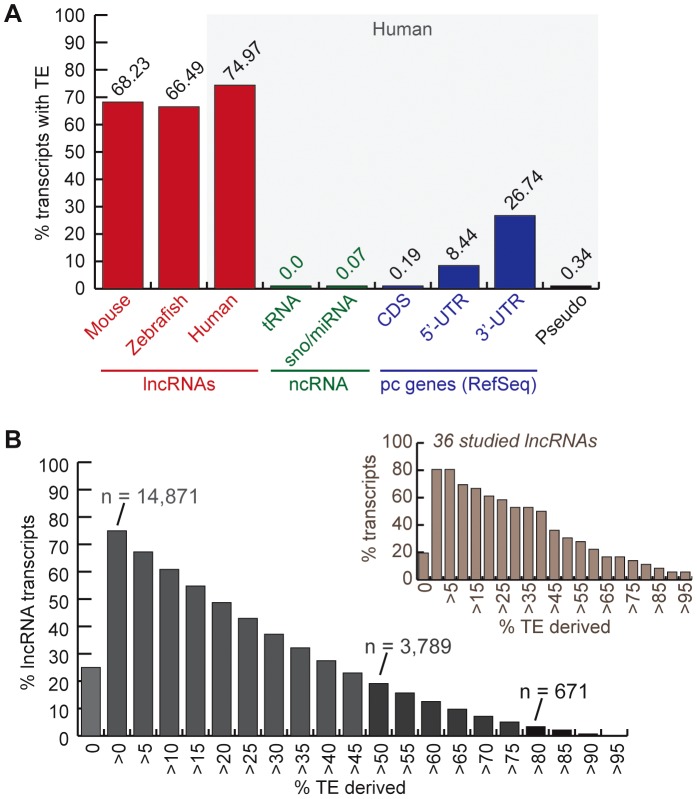
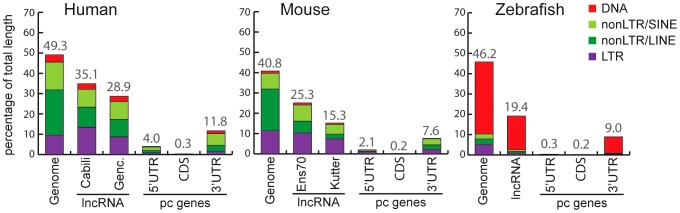
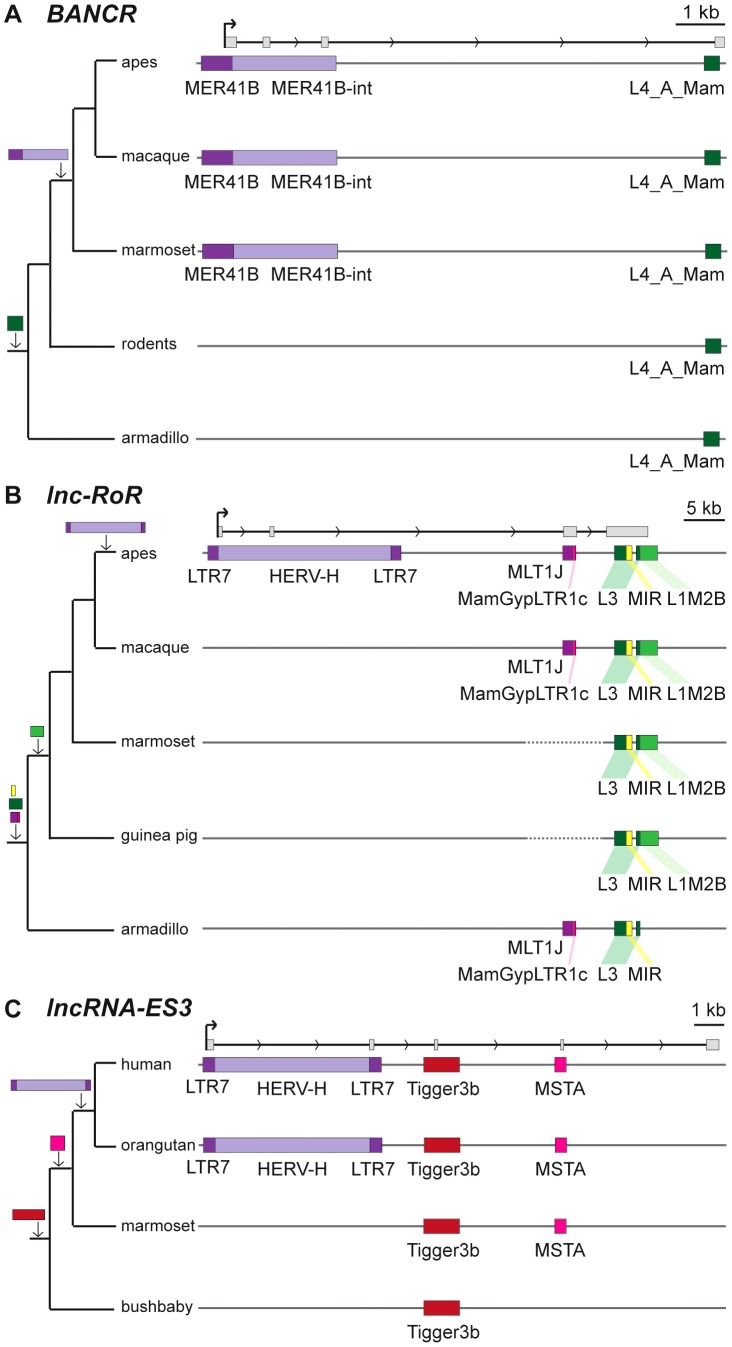
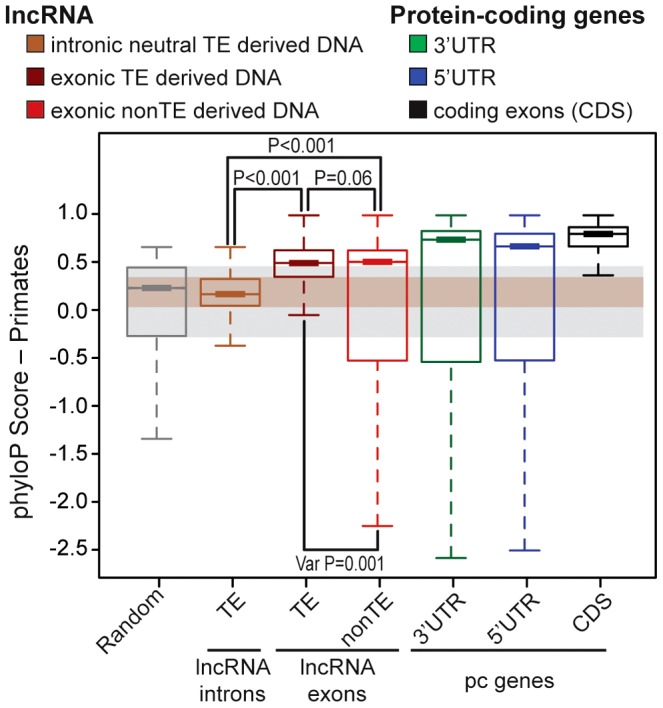
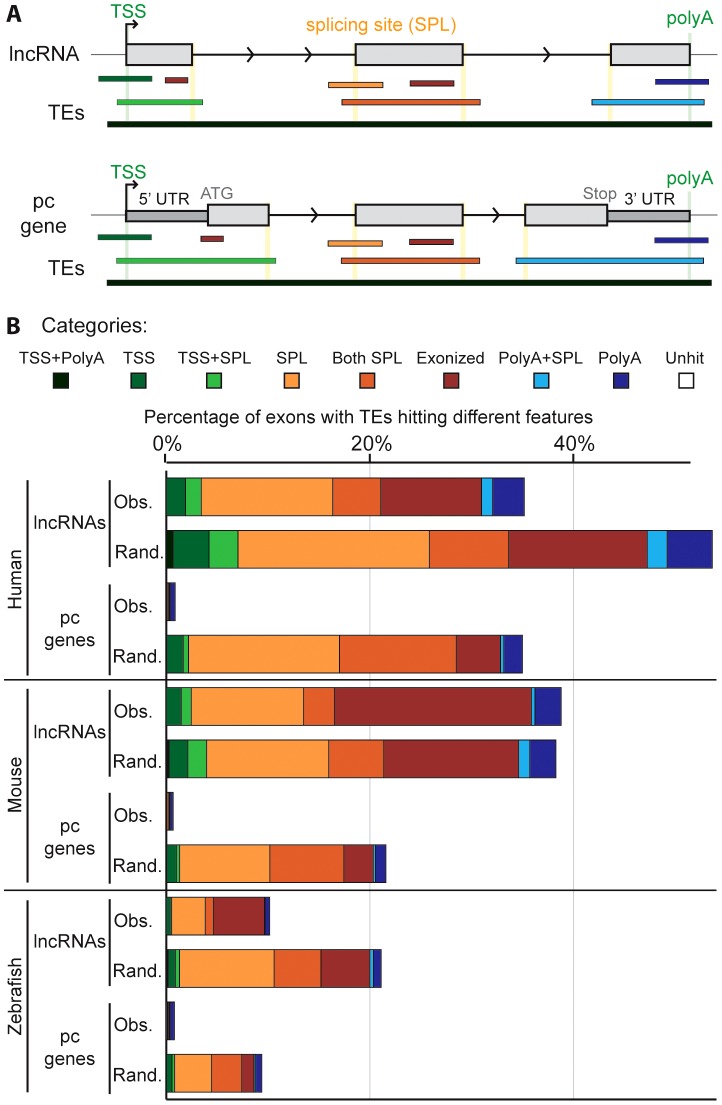
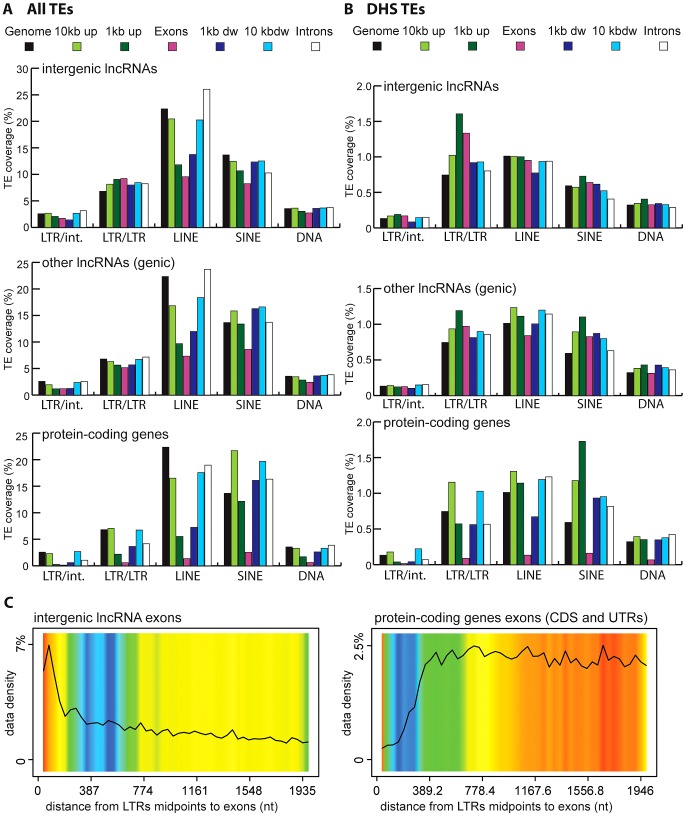
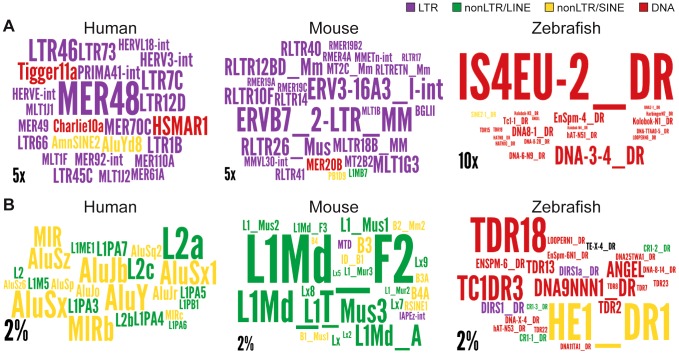
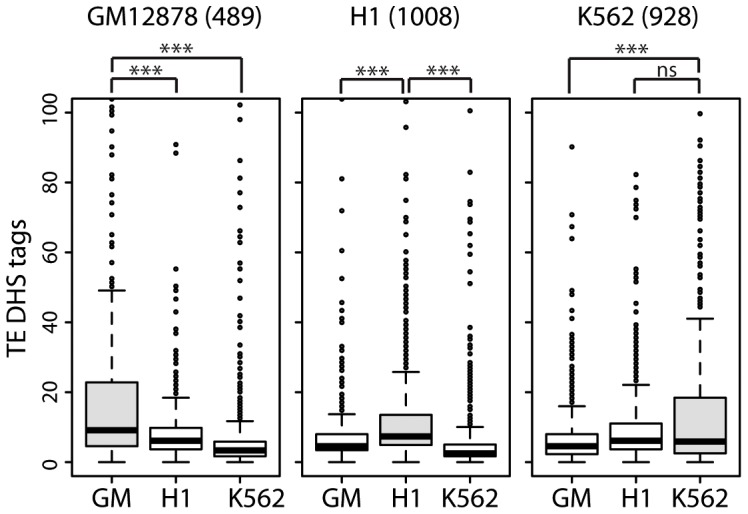
Advances in vertebrate genomics have uncovered thousands of loci encoding long noncoding RNAs (lncRNAs). While progress has been made in elucidating the regulatory functions of lncRNAs, little is known about their origins and evolution. Here we explore the contribution of transposable elements (TEs) to the makeup and regulation of lncRNAs in human, mouse, and zebrafish. Surprisingly, TEs occur in more than two thirds of mature lncRNA transcripts and account for a substantial portion of total lncRNA sequence (~30% in human), whereas they seldom occur in protein-coding transcripts. While TEs contribute less to lncRNA exons than expected, several TE families are strongly enriched in lncRNAs. There is also substantial interspecific variation in the coverage and types of TEs embedded in lncRNAs, partially reflecting differences in the TE landscapes of the genomes surveyed. In human, TE sequences in lncRNAs evolve under greater evolutionary constraint than their non-TE sequences, than their intronic TEs, or than random DNA. Consistent with functional constraint, we found that TEs contribute signals essential for the biogenesis of many lncRNAs, including ~30,000 unique sites for transcription initiation, splicing, or polyadenylation in human. In addition, we identified ~35,000 TEs marked as open chromatin located within 10 kb upstream of lncRNA genes. The density of these marks in one cell type correlate with elevated expression of the downstream lncRNA in the same cell type, suggesting that these TEs contribute to cis-regulation. These global trends are recapitulated in several lncRNAs with established functions. Finally a subset of TEs embedded in lncRNAs are subject to RNA editing and predicted to form secondary structures likely important for function. In conclusion, TEs are nearly ubiquitous in lncRNAs and have played an important role in the lineage-specific diversification of vertebrate lncRNA repertoires.
Overview
The claims and statistics of this paper haven’t been checked yet.
Run the check — free, no account needed. It reads the open-access text and checks the sources it cites.
Integrity signals
Registry
Cites
Statistics
Figures
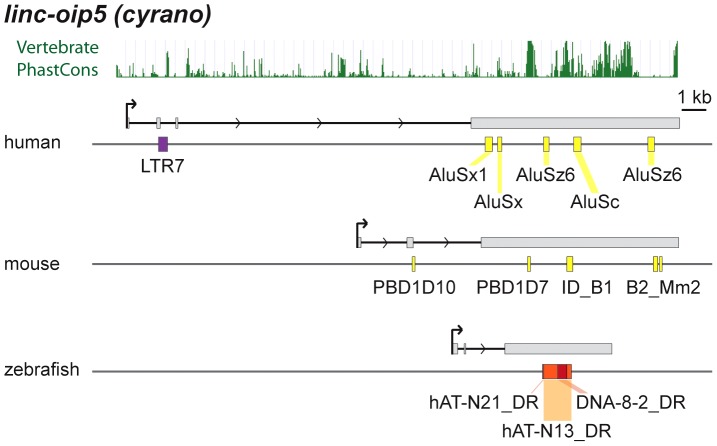
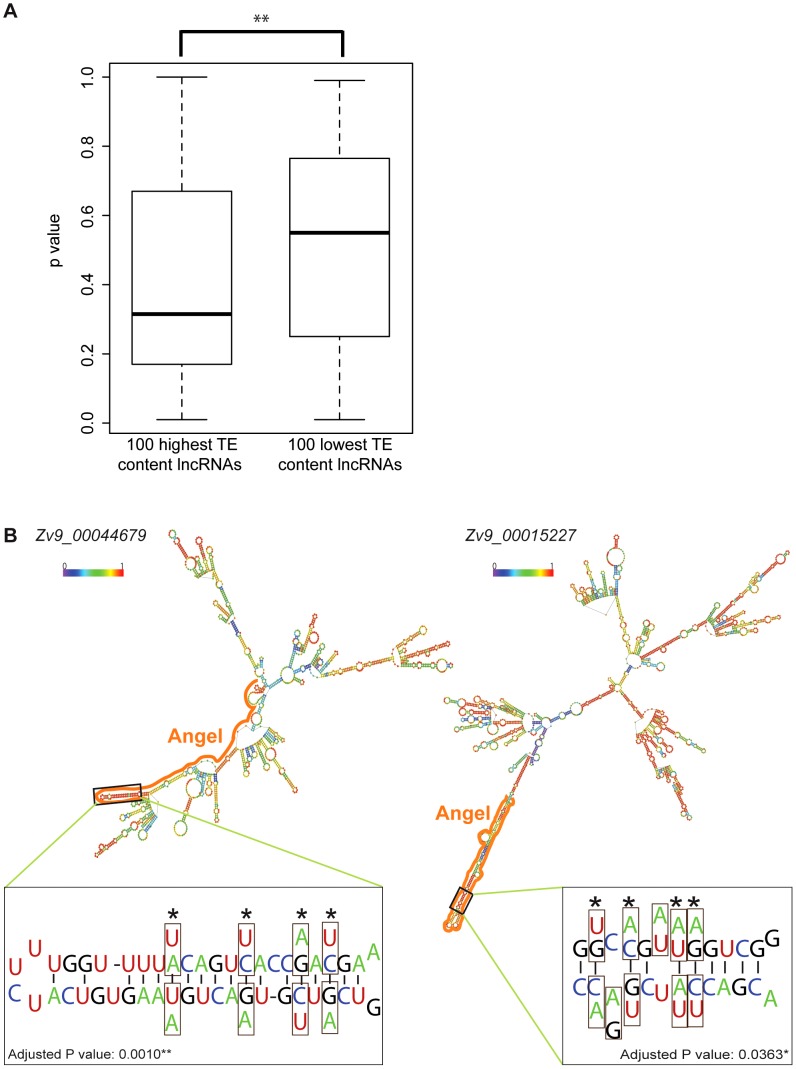
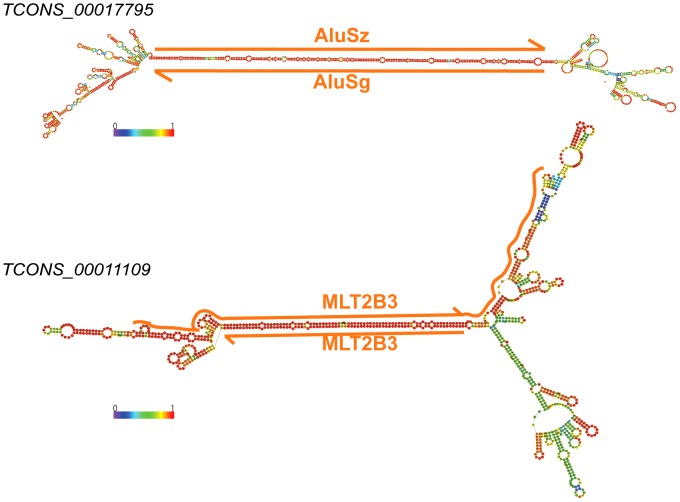
Verification
Claims the paper makes
The claims and statistics of this paper haven’t been checked yet.
Run the check — free, no account needed. It reads the open-access text and checks the sources it cites.
Claims other papers make about this one
Each is checked against this paper’s own text: does it say what the citing paper says it does?
The cited source says what the claim attributes to it.
In the citing paper
“Notably, 11 of these elements overlapped with the promoters of annotated lncRNAs (Fig. 5a), consistent with the previous finding that LTRs are enriched in the transcription start sites (TSSs) of lncRNAs80.”
From Multi-omic analysis of hepatocellular carcinoma reveals aberrant cis-regulatory changes and dysregulated retrotransposons with prognostic potential (2025) · cites this paper as [80]
In the citing paper
“as sources of long non-coding RNAs [10]”
From The case for not masking away repetitive DNA (2018) · cites this paper as [10]
Self-check
Percentages, sums and reported differences re-computed from the paper’s own numbers.
The self-check needs the paper’s full text.
Citations
Cites
BEDTools: a flexible suite of utilities for comparing genomic features
Quinlan, A. R., & Hall, I. M. (2010) · Bioinformatics · doi:10.1093/bioinformatics/btq033 · Cited by 27,437
Initial sequencing and analysis of the human genome
International Human Genome Sequencing Consortium, Whitehead Institute for Biomedical Research, C. F. G. R., Lander, E. S., Linton, L. M., Birren, B., Nusbaum, C., Zody, M. C., Baldwin, J., Devon, K., Dewar, K., et al. (2001) · Nature · doi:10.1038/35057062 · Cited by 24,216
An integrated encyclopedia of DNA elements in the human genome
The ENCODE Project Consortium (2012) · Nature · doi:10.1038/nature11247 · Cited by 18,072
The Human Genome Browser at UCSC
Kent, W. J., Sugnet, C. W., Furey, T. S., Roskin, K. M., Pringle, T. H., Zahler, A. M., & Haussler, A. D. (2002) · Genome Research · doi:10.1101/gr.229102 · Cited by 10,400
<tt>BLAT</tt> —The <tt>BLAST</tt> -Like Alignment Tool
Kent, W. J. (2002) · Genome Research · doi:10.1101/gr.229202 · Cited by 8,480
Initial sequencing and comparative analysis of the mouse genome
Mouse Genome Sequencing Consortium (2002) · Nature · doi:10.1038/nature01262 · Cited by 7,187
Long non-coding RNAs: insights into functions
Mercer, T. R., Dinger, M. E., & Mattick, J. S. (2009) · Nature Reviews Genetics · doi:10.1038/nrg2521 · Cited by 5,654
Long non-coding RNA HOTAIR reprograms chromatin state to promote cancer metastasis
Gupta, R. A., Shah, N., Wang, K., Kim, J., Horlings, H. M., Wong, D. J., Tsai, M.-C., Hung, T., Argani, P., Rinn, J. L., et al. (2010) · Nature · doi:10.1038/nature08975 · Cited by 5,205
Landscape of transcription in human cells
Djebali, S., Davis, C. A., Merkel, A., Dobin, A., Lassmann, T., Mortazavi, A., Tanzer, A., Lagarde, J., Lin, W., Schlesinger, F., et al. (2012) · Nature · doi:10.1038/nature11233 · Cited by 5,187
Derrien, T., Johnson, R., Bussotti, G., Andrea Tanzer, A., Djebali, S., Tilgner, H., Guernec, G., Martin, D., Merkel, A., Knowles, D. G., et al. (2012) · Genome Research · doi:10.1101/gr.132159.111 · Cited by 5,135
Cited by
Sorted by citations
Long non-coding RNAs: new players in cell differentiation and development
Fatica, A., & Bozzoni, I. (2014) · Nature Reviews Genetics · doi:10.1038/nrg3606 · Cited by 2,980
Long non-coding RNAs: definitions, functions, challenges and recommendations
Mattick, J. S., Amaral, P., Carninci, P., Carpenter, S. B., Chang, H. Y., Chen, L., Chen, R., Dean, C., Dinger, M. E., Fitzgerald, K. A., et al. (2023) · Nature Reviews Molecular Cell Biology · doi:10.1038/s41580-022-00566-8 · Cited by 2,509
Ten things you should know about transposable elements
Bourque, G., Burns, K. H., Gehring, M., Gorbunova, V., Seluanov, A., Hammell, M., Imbeault, M., Izsvák, Z., Levin, H. L., Macfarlan, T. S., et al. (2018) · Genome Biology · doi:10.1186/s13059-018-1577-z · Cited by 1,430
Self-citationMorris, K. V., & Mattick, J. S. (2014) · Nature Reviews Genetics · doi:10.1038/nrg3722 · Cited by 1,447
Regulatory activities of transposable elements: from conflicts to benefits
Chuong, E. B., Elde, N. C., & Feschotte, C. (2017) · Nature Reviews Genetics · doi:10.1038/nrg.2016.139 · Cited by 1,489
Self-citation
Metadata
- Authors
- Kapusta, A., Kronenberg, Z., Lynch, V. J., Zhuo, X., Ramsay, L., Bourque, G., Yandell, M., & Feschotte, C.
- Affiliations
- University of Utah (US)
- University of Chicago (US)
- McGill University and Génome Québec Innovation Centre (CA)
- Corresponding author
- Feschotte, Cédric
- ORCID
- Venue
- PLoS Genetics
- Publisher
- Public Library of Science (PLoS)
- Published
- 2013-04-25
- Volume
- 9
- Issue
- 4
- Pages
- e1003470
- ISSN
- 1553-7390 (ISSN-L)
- 1553-7404
- PMC
- PMC3636048
- OpenAlex
- W2029868997
- Cited by
- 687
- References
- 115
- Citations by year
- 2026: 21 · 2025: 27 · 2024: 60 · 2023: 52 · 2022: 57 · 2021: 70 · 2020: 53 · 2019: 52 · 2018: 68 · 2017: 58 · 2016: 50 · 2015: 62 · 2014: 42 · 2013: 13
- FWCI
- 67.23
- Type
- journal article
- Language
- en
- Open access
- gold
- doi.org
- Locations
- PLoS Genetics (publishedVersion, cc-by)
- Europe PMC (PubMed Central) (publishedVersion, cc-by)
- PubMed Central (publishedVersion, cc-by)
- PubMed (publishedVersion)
- Knowledge@UChicago (University of Chicago) (submittedVersion, cc-by-nc-nd)
- DOAJ (DOAJ: Directory of Open Access Journals) (submittedVersion, cc-by-sa)
- Figshare (submittedVersion, cc-by)
- University of Chicago (cc-by)
- Funders
- National Science Foundation (1126998)
- National Institutes of Health
- Canadian Institutes of Health Research (115090_1)
- National Human Genome Research Institute (R01HG004694)
- National Institute of General Medical Sciences (T32GM007464, R01GM077582)
- Topics
- Life Sciences › Biochemistry, Genetics and Molecular Biology › Genetics › Chromosomal and Genetic Variations
- Life Sciences › Biochemistry, Genetics and Molecular Biology › Cancer Research › Cancer-related molecular mechanisms research
- Life Sciences › Biochemistry, Genetics and Molecular Biology › Molecular Biology › Genomics and Chromatin Dynamics
- Keywords
- transposable elements, long non-coding RNA, lncRNA evolution, lncRNA biogenesis, cis-regulation, open chromatin, RNA editing, secondary structure, transcription initiation, splicing, polyadenylation, human, mice, zebrafish
- MeSH terms
- Animals, DNA Transposable Elements, Exons, Humans, Introns, Vertebrates, RNA, Long Noncoding
About these checks
Registry, retraction, Cites and statistics results are computed, not judged, with one exception: a printed reference that no index lists is read once by a model before it counts as a citation error. Claims are extracted by a model and kept only when their quote appears verbatim in the text; each cited source is then checked, with a model’s help, for whether it says what the claim relies on. Those verdicts can be wrong — read the claim’s quote and the cited source before relying on one.
Statistics and arithmetic are recomputed, not judged.
Confidence bands are shown only for fields calibrated on our annotated test set. None is calibrated yet, so no band is shown.
What counts as a claim ›How we measure confidence ›How we check this ›
Are you an author, or do you see a problem with this page? Request a review
