

The DOI matches its Crossref record; 115 of the 115 references it cites were found in a registry or an index.
Transposable Elements Are Major Contributors to the Origin, Diversification, and Regulation of Vertebrate Long Noncoding RNAs
Open accessAbstract
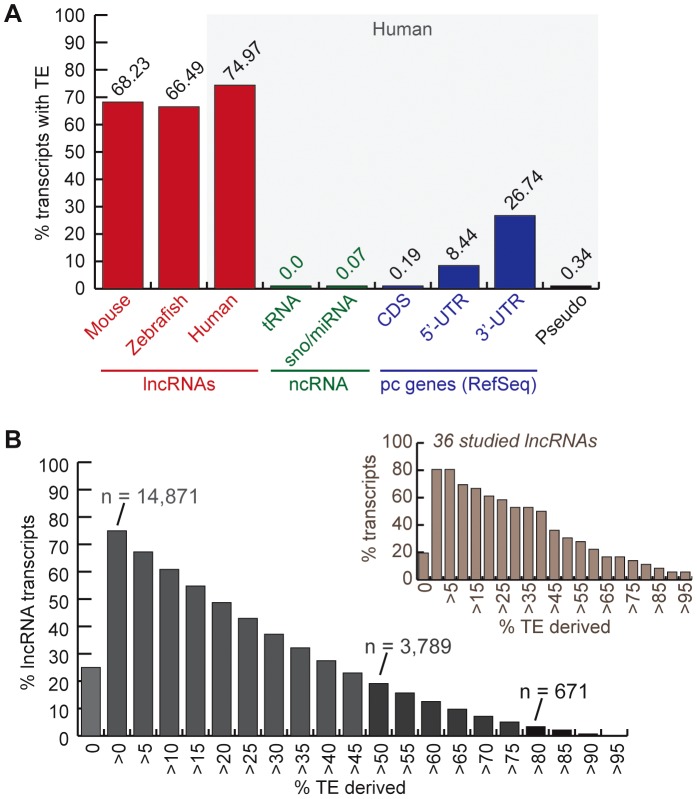
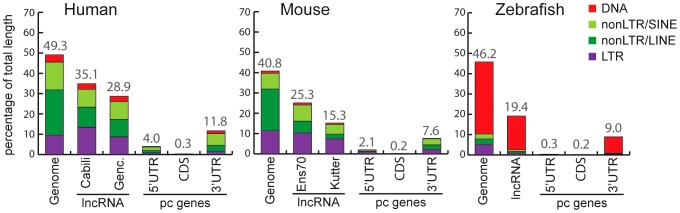
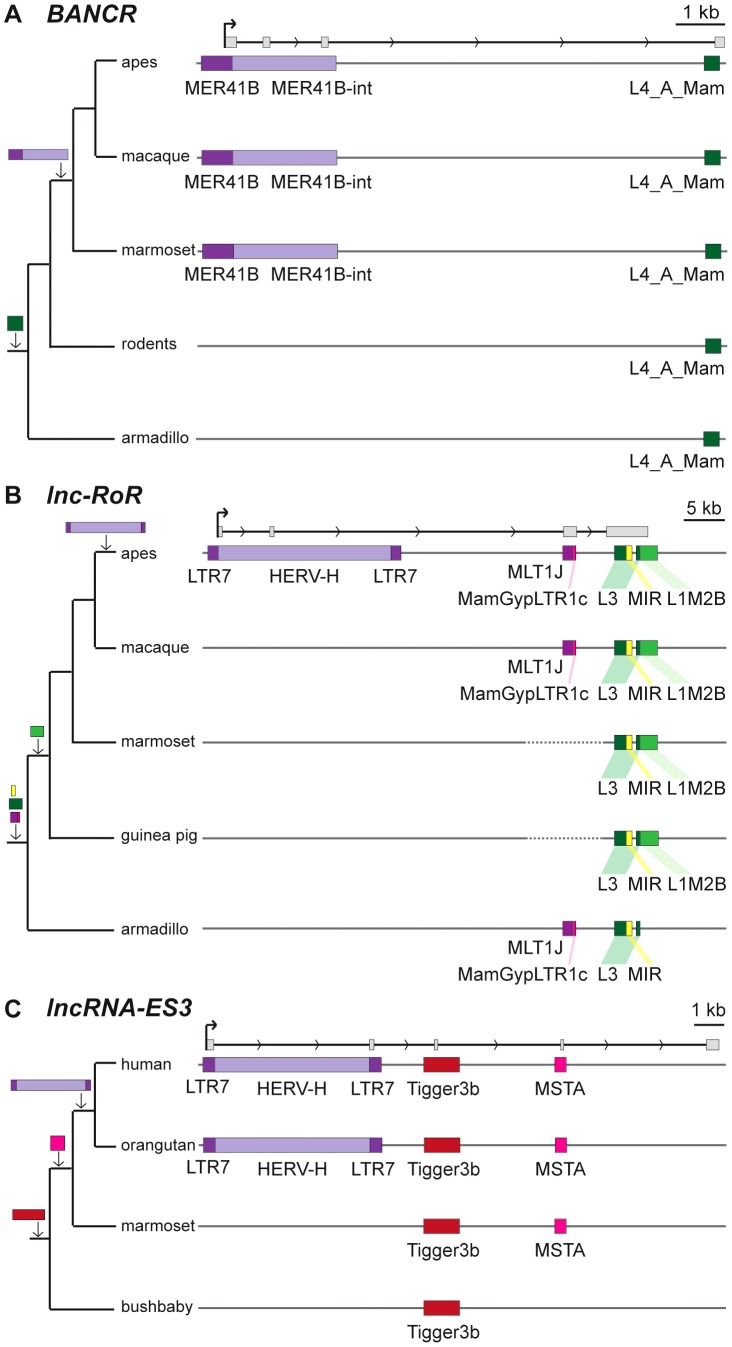
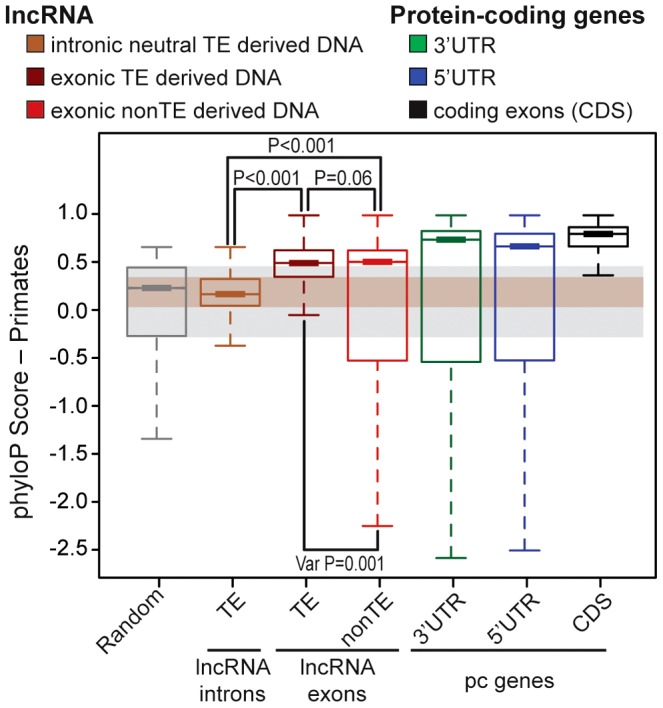
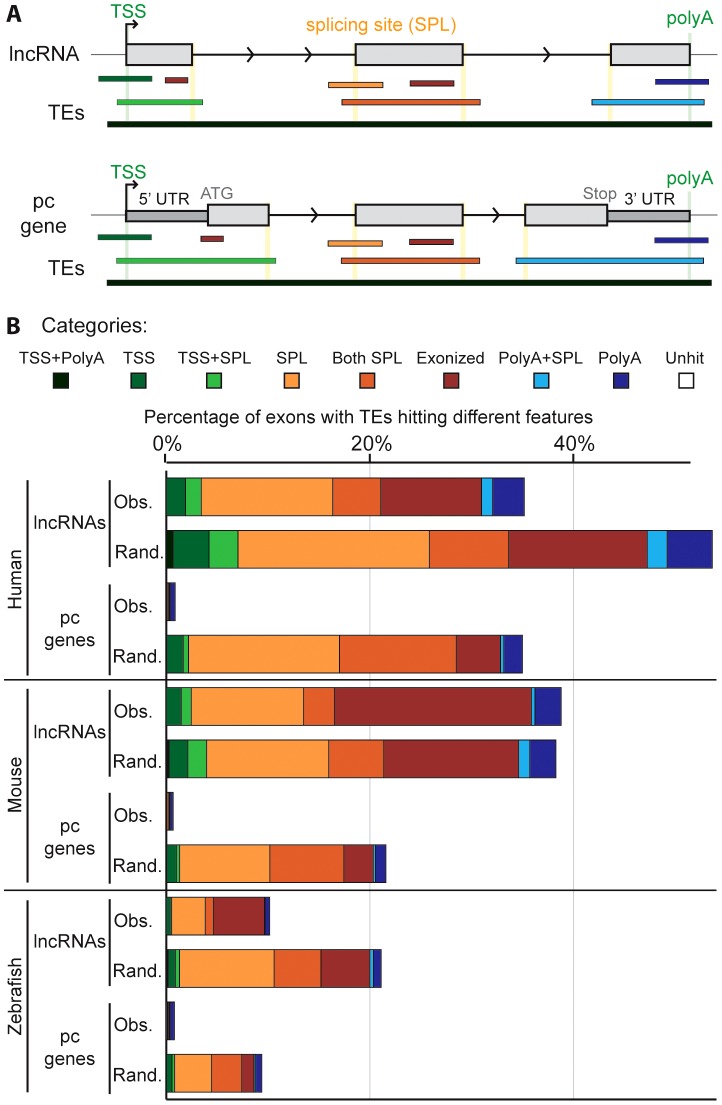
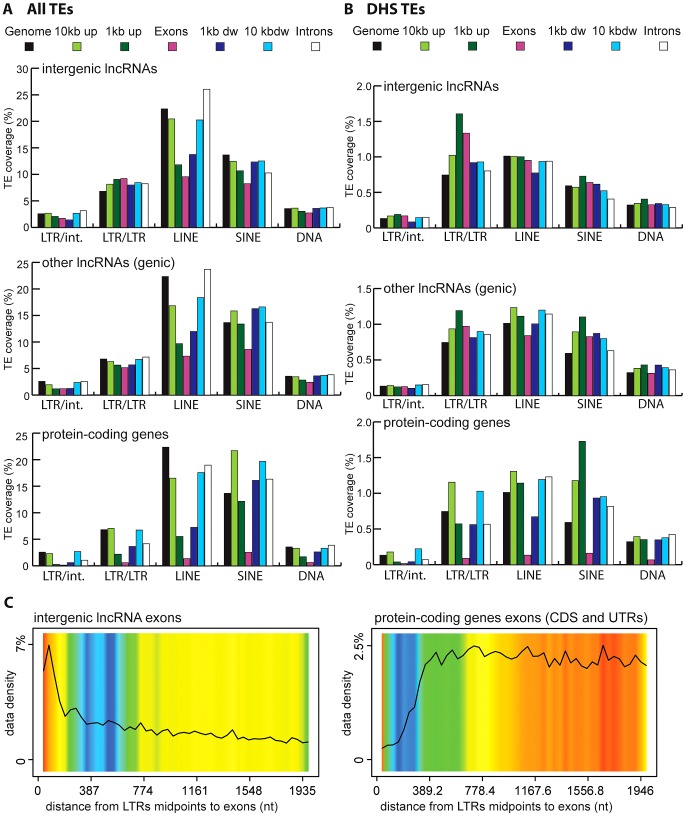
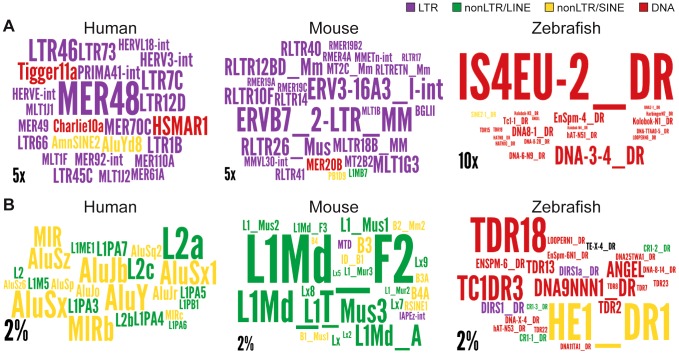
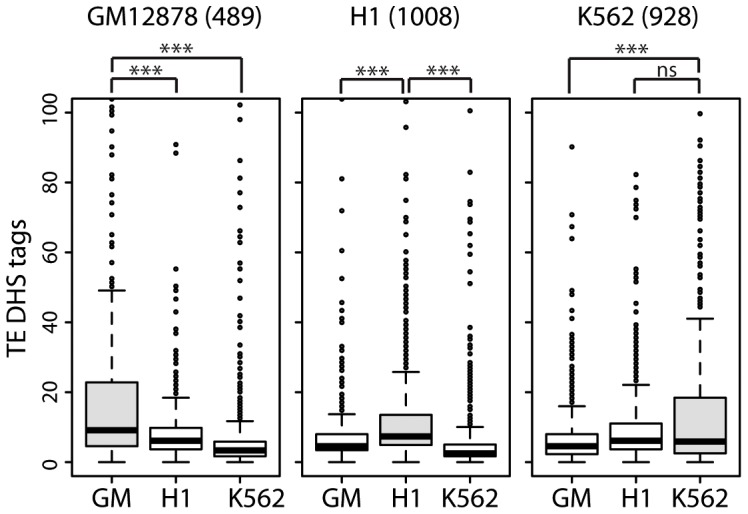
Advances in vertebrate genomics have uncovered thousands of loci encoding long noncoding RNAs (lncRNAs). While progress has been made in elucidating the regulatory functions of lncRNAs, little is known about their origins and evolution. Here we explore the contribution of transposable elements (TEs) to the makeup and regulation of lncRNAs in human, mouse, and zebrafish. Surprisingly, TEs occur in more than two thirds of mature lncRNA transcripts and account for a substantial portion of total lncRNA sequence (~30% in human), whereas they seldom occur in protein-coding transcripts. While TEs contribute less to lncRNA exons than expected, several TE families are strongly enriched in lncRNAs. There is also substantial interspecific variation in the coverage and types of TEs embedded in lncRNAs, partially reflecting differences in the TE landscapes of the genomes surveyed. In human, TE sequences in lncRNAs evolve under greater evolutionary constraint than their non-TE sequences, than their intronic TEs, or than random DNA. Consistent with functional constraint, we found that TEs contribute signals essential for the biogenesis of many lncRNAs, including ~30,000 unique sites for transcription initiation, splicing, or polyadenylation in human. In addition, we identified ~35,000 TEs marked as open chromatin located within 10 kb upstream of lncRNA genes. The density of these marks in one cell type correlate with elevated expression of the downstream lncRNA in the same cell type, suggesting that these TEs contribute to cis-regulation. These global trends are recapitulated in several lncRNAs with established functions. Finally a subset of TEs embedded in lncRNAs are subject to RNA editing and predicted to form secondary structures likely important for function. In conclusion, TEs are nearly ubiquitous in lncRNAs and have played an important role in the lineage-specific diversification of vertebrate lncRNA repertoires.
Overview
The claims and statistics of this paper haven’t been checked yet.
Run the check — free, no account needed. It reads the open-access text and checks the sources it cites.
Integrity signals
Registry
Cites
Statistics
Figures
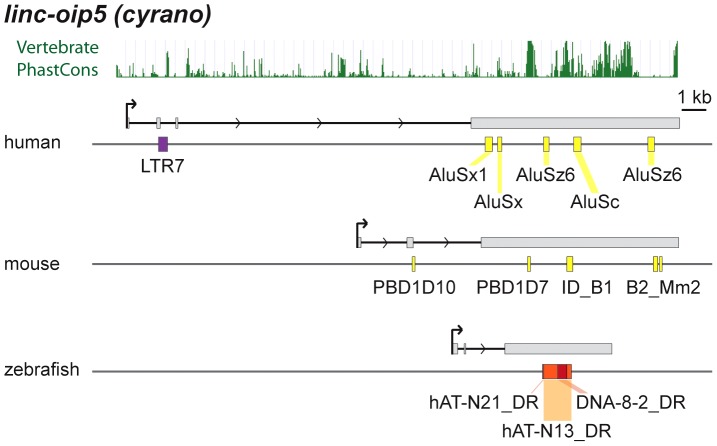
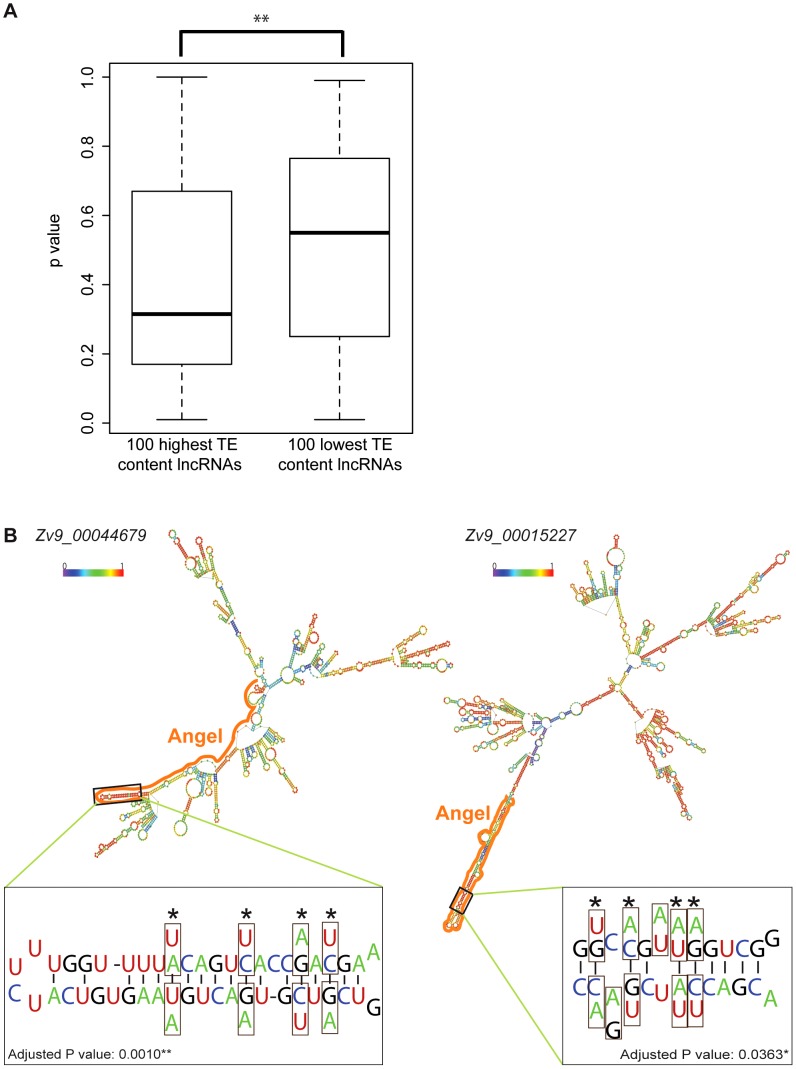
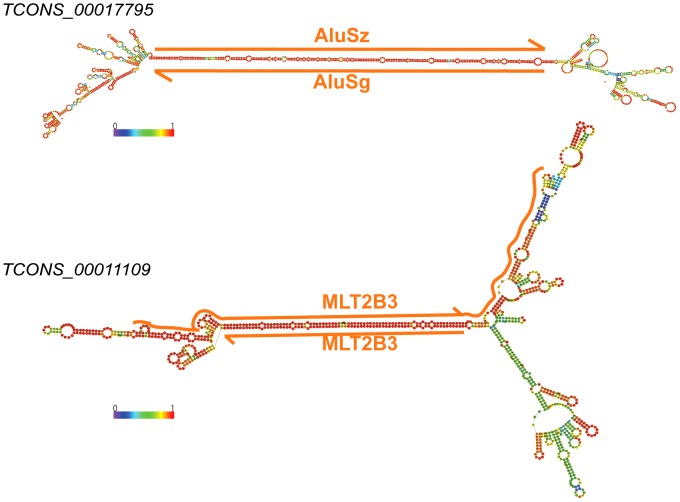
Verification
Claims the paper makes
The claims and statistics of this paper haven’t been checked yet.
Run the check — free, no account needed. It reads the open-access text and checks the sources it cites.
Claims other papers make about this one
Each is checked against this paper’s own text: does it say what the citing paper says it does?
The cited source says what the claim attributes to it.
In the citing paper
“Notably, 11 of these elements overlapped with the promoters of annotated lncRNAs (Fig. 5a), consistent with the previous finding that LTRs are enriched in the transcription start sites (TSSs) of lncRNAs80.”
From Multi-omic analysis of hepatocellular carcinoma reveals aberrant cis-regulatory changes and dysregulated retrotransposons with prognostic potential (2025) · cites this paper as [80]
In the citing paper
“as sources of long non-coding RNAs [10]”
From The case for not masking away repetitive DNA (2018) · cites this paper as [10]
Self-check
Percentages, sums and reported differences re-computed from the paper’s own numbers.
The self-check needs the paper’s full text.
Citations
Cites
BEDTools: a flexible suite of utilities for comparing genomic features
Quinlan, A. R., & Hall, I. M. (2010) · Bioinformatics · doi:10.1093/bioinformatics/btq033 · Cited by 27,437
Initial sequencing and analysis of the human genome
International Human Genome Sequencing Consortium, Whitehead Institute for Biomedical Research, C. F. G. R., Lander, E. S., Linton, L. M., Birren, B., Nusbaum, C., Zody, M. C., Baldwin, J., Devon, K., Dewar, K., et al. (2001) · Nature · doi:10.1038/35057062 · Cited by 24,216
An integrated encyclopedia of DNA elements in the human genome
The ENCODE Project Consortium (2012) · Nature · doi:10.1038/nature11247 · Cited by 18,072
The Human Genome Browser at UCSC
Kent, W. J., Sugnet, C. W., Furey, T. S., Roskin, K. M., Pringle, T. H., Zahler, A. M., & Haussler, A. D. (2002) · Genome Research · doi:10.1101/gr.229102 · Cited by 10,400
<tt>BLAT</tt> —The <tt>BLAST</tt> -Like Alignment Tool
Kent, W. J. (2002) · Genome Research · doi:10.1101/gr.229202 · Cited by 8,480
Initial sequencing and comparative analysis of the mouse genome
Mouse Genome Sequencing Consortium (2002) · Nature · doi:10.1038/nature01262 · Cited by 7,187
Long non-coding RNAs: insights into functions
Mercer, T. R., Dinger, M. E., & Mattick, J. S. (2009) · Nature Reviews Genetics · doi:10.1038/nrg2521 · Cited by 5,654
Long non-coding RNA HOTAIR reprograms chromatin state to promote cancer metastasis
Gupta, R. A., Shah, N., Wang, K., Kim, J., Horlings, H. M., Wong, D. J., Tsai, M.-C., Hung, T., Argani, P., Rinn, J. L., et al. (2010) · Nature · doi:10.1038/nature08975 · Cited by 5,205
Landscape of transcription in human cells
Djebali, S., Davis, C. A., Merkel, A., Dobin, A., Lassmann, T., Mortazavi, A., Tanzer, A., Lagarde, J., Lin, W., Schlesinger, F., et al. (2012) · Nature · doi:10.1038/nature11233 · Cited by 5,187
Derrien, T., Johnson, R., Bussotti, G., Andrea Tanzer, A., Djebali, S., Tilgner, H., Guernec, G., Martin, D., Merkel, A., Knowles, D. G., et al. (2012) · Genome Research · doi:10.1101/gr.132159.111 · Cited by 5,135
Cited by
Sorted by citations
Long non-coding RNAs: new players in cell differentiation and development
Fatica, A., & Bozzoni, I. (2014) · Nature Reviews Genetics · doi:10.1038/nrg3606 · Cited by 2,980
Long non-coding RNAs: definitions, functions, challenges and recommendations
Mattick, J. S., Amaral, P., Carninci, P., Carpenter, S. B., Chang, H. Y., Chen, L., Chen, R., Dean, C., Dinger, M. E., Fitzgerald, K. A., et al. (2023) · Nature Reviews Molecular Cell Biology · doi:10.1038/s41580-022-00566-8 · Cited by 2,509
Ten things you should know about transposable elements
Bourque, G., Burns, K. H., Gehring, M., Gorbunova, V., Seluanov, A., Hammell, M., Imbeault, M., Izsvák, Z., Levin, H. L., Macfarlan, T. S., et al. (2018) · Genome Biology · doi:10.1186/s13059-018-1577-z · Cited by 1,430
Self-citationMorris, K. V., & Mattick, J. S. (2014) · Nature Reviews Genetics · doi:10.1038/nrg3722 · Cited by 1,447
Regulatory activities of transposable elements: from conflicts to benefits
Chuong, E. B., Elde, N. C., & Feschotte, C. (2017) · Nature Reviews Genetics · doi:10.1038/nrg.2016.139 · Cited by 1,489
Self-citationAn atlas of human long non-coding RNAs with accurate 5′ ends
Hon, C.-C., Ramilowski, J. A., Harshbarger, J., Bertin, N., Rackham, O. J. L., Gough, J., Denisenko, E., Schmeier, S., Poulsen, T. M., Severin, J., et al. (2017) · Nature · doi:10.1038/nature21374 · Cited by 1,007
History, Discovery, and Classification of lncRNAs
Jarroux, J., Morillon, A., & Pinskaya, M. (2017) · Advances in experimental medicine and biology · doi:10.1007/978-981-10-5203-3_1 · Cited by 895
Hezroni, H., Koppstein, D., Schwartz, M. G., Avrutin, A., Bartel, D. P., & Ulitsky, I. (2015) · Cell Reports · doi:10.1016/j.celrep.2015.04.023 · Cited by 677
Towards a complete map of the human long non-coding RNA transcriptome
Uszczyńska-Ratajczak, B., Lagarde, J., Frankish, A., Guigó, R., & Johnson, R. (2018) · Nature Reviews Genetics · doi:10.1038/s41576-018-0017-y · Cited by 637
Bazak, L., Haviv, A., Barak, M., Jacob‐Hirsch, J., Deng, P., Zhang, R., Isaacs, F. J., Rechavi, G., Li, J. B., Eisenberg, E., et al. (2013) · Genome Research · doi:10.1101/gr.164749.113 · Cited by 604
Stein, J. C., Yu, Y., Copetti, D., Zwickl, D. J., Zhang, L., Zhang, C., Chougule, K. M., Gao, D., Iwata‐Otsubo, A., Goicoechea, J. L., et al. (2018) · Nature Genetics · doi:10.1038/s41588-018-0040-0 · Cited by 585
Evolution to the rescue: using comparative genomics to understand long non-coding RNAs
Ulitsky, I. (2016) · Nature Reviews Genetics · doi:10.1038/nrg.2016.85 · Cited by 548
Non-coding RNAs as direct and indirect modulators of epigenetic regulation
Peschansky, V. J., & Wahlestedt, C. (2013) · Epigenetics · doi:10.4161/epi.27473 · Cited by 539
Widespread contribution of transposable elements to the innovation of gene regulatory networks
Sundaram, V., Cheng, Y., Ma, Z., Li, D., Xing, X., Edge, P., Snyder, M. P., & Wang, T. (2014) · Genome Research · doi:10.1101/gr.168872.113 · Cited by 529
Genome-wide discovery and characterization of maize long non-coding RNAs
Li, L., Eichten, S. R., Shimizu, R., Petsch, K. A., Yeh, C., Wu, W., Chettoor, A. M., Givan, S. A., Cole, R. A., Fowler, J. E., et al. (2014) · Genome biology · doi:10.1186/gb-2014-15-2-r40 · Cited by 482
Immunobiology of Long Noncoding RNAs
Atianand, M., Caffrey, D. R., & Fitzgerald, K. A. (2017) · Annual Review of Immunology · doi:10.1146/annurev-immunol-041015-055459 · Cited by 459
Roles of transposable elements in the regulation of mammalian transcription
Fueyo, R., Judd, J., Feschotte, C., & Wysocka, J. (2022) · Nature Reviews Molecular Cell Biology · doi:10.1038/s41580-022-00457-y · Cited by 451
Self-citationThe retrovirus HERVH is a long noncoding RNA required for human embryonic stem cell identity
Lu, X., Sachs, F., Ramsay, L., Jacques, P., Göke, J., Bourque, G., & Ng, H. (2014) · Nature Structural & Molecular Biology · doi:10.1038/nsmb.2799 · Cited by 437
Self-citationOrigins and evolutionary consequences of ancient endogenous retroviruses
Johnson, W. E. (2019) · Nature Reviews Microbiology · doi:10.1038/s41579-019-0189-2 · Cited by 425
Chalopin, D., Naville, M., Plard, F., Galiana, D., & Volff, J.-N. (2015) · Genome Biology and Evolution · doi:10.1093/gbe/evv005 · Cited by 386
Measuring and interpreting transposable element expression
Lanciano, S., & Cristofari, G. (2020) · Nature Reviews Genetics · doi:10.1038/s41576-020-0251-y · Cited by 415
Göke, J., Lu, X., Chan, Y.-S., Ng, H., Ly, L.-H., Sachs, F., & Szczerbinska, I. (2015) · Cell stem cell · doi:10.1016/j.stem.2015.01.005 · Cited by 378
Transposable elements in human genetic disease
Payer, L. M., & Burns, K. H. (2019) · Nature Reviews Genetics · doi:10.1038/s41576-019-0165-8 · Cited by 366
Co-option of Sox3 as the male-determining factor on the Y chromosome in the fish Oryzias dancena
Takehana, Y., Matsuda, M., Myosho, T., Suster, M. L., Kawakami, K., Shin‐I, T., Kohara, Y., Kuroki, Y., Toyoda, A., Fujiyama, A., et al. (2014) · Nature Communications · doi:10.1038/ncomms5157 · Cited by 342
Sequences enriched in Alu repeats drive nuclear localization of long RNAs in human cells
Lubelsky, Y., & Ulitsky, I. (2018) · Nature · doi:10.1038/nature25757 · Cited by 342
The impact of transposable elements in adaptive evolution
Schrader, L., & Schmitz, J. (2018) · Molecular Ecology · doi:10.1111/mec.14794 · Cited by 360
Global Positioning System: Understanding Long Noncoding RNAs through Subcellular Localization
Carlevaro-Fita, J., & Johnson, R. (2019) · Molecular Cell · doi:10.1016/j.molcel.2019.02.008 · Cited by 329
The Influence of LINE-1 and SINE Retrotransposons on Mammalian Genomes
Richardson, S. R., Doucet, A. J., Kopera, H. C., Moldovan, J. B., Garcia-Perez, J. L., & Moran, J. V. (2015) · Microbiology Spectrum · doi:10.1128/microbiolspec.mdna3-0061-2014 · Cited by 338
The RIDL hypothesis: transposable elements as functional domains of long noncoding RNAs
Johnson, R., & Guigó, R. (2014) · RNA · doi:10.1261/rna.044560.114 · Cited by 324
Thompson, P. J., Macfarlan, T. S., & Lorincz, M. C. (2016) · Molecular Cell · doi:10.1016/j.molcel.2016.03.029 · Cited by 317
Volatile evolution of long noncoding RNA repertoires: mechanisms and biological implications
Kapusta, A., & Feschotte, C. (2014) · Trends in Genetics · doi:10.1016/j.tig.2014.08.004 · Cited by 306
Self-citationHost–transposon interactions: conflict, cooperation, and cooptionPreprint
Cosby, R. L., Chang, N., & Feschotte, C. (2019) · Genes & Development · doi:10.1101/gad.327312.119 · Cited by 300
Self-citationTransposable elements are the primary source of novelty in primate gene regulationPreprint
Trizzino, M., Park, Y., Beltrame, M. H., Aracena, K. A., Mika, K. M., Çalışkan, M., Perry, G. H., Lynch, V. J., & Brown, C. D. (2017) · Genome Research · doi:10.1101/gr.218149.116 · Cited by 286
Self-citationLong noncoding RNA transcriptome of plants
Liu, J., Wang, H., & Chua, N. (2015) · Plant Biotechnology Journal · doi:10.1111/pbi.12336 · Cited by 287
Beyond the RNA-dependent function of LncRNA genes
Ali, T., & Grote, P. (2020) · eLife · doi:10.7554/elife.60583 · Cited by 282
The Developmental Control of Transposable Elements and the Evolution of Higher Species
Friedli, M., & Trono, D. (2015) · Annual Review of Cell and Developmental Biology · doi:10.1146/annurev-cellbio-100814-125514 · Cited by 274
New Insights into Early Human Development: Lessons for Stem Cell Derivation and Differentiation
Rossant, J., & Tam, P. (2017) · Cell stem cell · doi:10.1016/j.stem.2016.12.004 · Cited by 252
Functional Long Non-coding RNAs Evolve from Junk Transcripts
Palazzo, A. F., & Koonin, E. V. (2020) · Cell · doi:10.1016/j.cell.2020.09.047 · Cited by 252
Endogenous retroviral promoter exaptation in human cancer
Babaian, A., & Mager, D. L. (2016) · Mobile DNA · doi:10.1186/s13100-016-0080-x · Cited by 261
Cytoplasmic long noncoding RNAs are frequently bound to and degraded at ribosomes in human cells
Carlevaro-Fita, J., Rahim, A. B., Guigó, R., Vardy, L. A., & Johnson, R. (2016) · RNA · doi:10.1261/rna.053561.115 · Cited by 242
Hrdličková, B., de Almeida, R. C., Borek, Z., & Withoff, S. (2014) · Biochimica et Biophysica Acta (BBA) - Molecular Basis of Disease · doi:10.1016/j.bbadis.2014.03.011 · Cited by 239
Mammalian Endogenous Retroviruses
Mager, D. L., & Stoye, J. P. (2015) · Microbiology Spectrum · doi:10.1128/microbiolspec.mdna3-0009-2014 · Cited by 245
Principles Governing A-to-I RNA Editing in the Breast Cancer Transcriptome
Fumagalli, D., Gacquer, D., Rothé, F., Lefort, A., Libert, F., Brown, D. N., Kheddoumi, N., Shlien, A., Konopka, T., Salgado, R., et al. (2015) · Cell Reports · doi:10.1016/j.celrep.2015.09.032 · Cited by 233
Transcriptome sequencing reveals altered long intergenic non-coding RNAs in lung cancer
White, N. M. A., Cabanski, C. R., Silva-Fisher, J., Dang, H. X., Govindan, R., & Maher, C. A. (2014) · Genome biology · doi:10.1186/preaccept-8565849481270705 · Cited by 225
The functions of long noncoding RNAs in development and stem cells
Perry, R. B., & Ulitsky, I. (2016) · Development · doi:10.1242/dev.140962 · Cited by 216
Stable C0T-1 Repeat RNA Is Abundant and Is Associated with Euchromatic Interphase Chromosomes
Hall, L. L., Carone, D. M., Gomez, A. V., Kolpa, H. J., Byron, M., Mehta, N., Fackelmayer, F. O., & Lawrence, J. B. (2014) · Cell · doi:10.1016/j.cell.2014.01.042 · Cited by 205
The Role of Transposable Elements in Speciation
Serrato-Capuchina, A., & Matute, D. R. (2018) · Genes · doi:10.3390/genes9050254 · Cited by 210
The impact of transposable elements on mammalian development
Garcia-Perez, J. L., Widmann, T. J., & Adams, I. R. (2016) · Development · doi:10.1242/dev.132639 · Cited by 215
The Emerging Role of Long Noncoding RNAs in Human Disease
DiStefano, J. K. (2018) · Methods in molecular biology · doi:10.1007/978-1-4939-7471-9_6 · Cited by 203
Long non‐coding RNA regulation of reproduction and development
Taylor, D. H., Chu, E. T., Spektor, R., & Soloway, P. D. (2015) · Molecular Reproduction and Development · doi:10.1002/mrd.22581 · Cited by 191
Huo, X., Han, S., Wu, G. J., Latchoumanin, O., Zhou, G., Hebbard, L., George, J., & Qiao, L. (2017) · Molecular Cancer · doi:10.1186/s12943-017-0734-4 · Cited by 187
Long noncoding RNA s and their proposed functions in fibre development of cotton ( Gossypium spp.)
Wang, M., Yuan, D., Tu, L., Gao, W., He, Y., Hu, H., Wang, P., Liu, N., Lindsey, K., & Zhang, X. (2015) · New Phytologist · doi:10.1111/nph.13429 · Cited by 175
Durruthy-Durruthy, J., Sebastiano, V., Wossidlo, M., Cepeda, D. A., Cui, J., Grow, E. J., Davila, J., Mall, M., Wong, W. H., Wysocka, J., et al. (2015) · Nature Genetics · doi:10.1038/ng.3449 · Cited by 186
Ito, J., Sugimoto, R., Nakaoka, H., YAMADA, S., Kimura, T., Hayano, T., & Inoue, I. (2017) · PLoS Genetics · doi:10.1371/journal.pgen.1006883 · Cited by 181
Cis- and trans-acting lncRNAs in pluripotency and reprogramming
Yan, P., Luo, S., Lu, J., & Shen, X. (2017) · Current Opinion in Genetics & Development · doi:10.1016/j.gde.2017.07.009 · Cited by 173
Chujo, T., Yamazaki, T., & Hirose, T. (2015) · Biochimica et Biophysica Acta (BBA) - Gene Regulatory Mechanisms · doi:10.1016/j.bbagrm.2015.05.007 · Cited by 174
Long Non-Coding RNAs Control Hematopoietic Stem Cell Function
Luo, M., Jeong, M., Sun, D., Park, H. J., Rodriguez, B. A. T., Xia, Z., Yang, L., Zhang, X., Sheng, K., Darlington, G., et al. (2015) · Cell stem cell · doi:10.1016/j.stem.2015.02.002 · Cited by 179
Marques, A. C., Hughes, J. R., Graham, B., Kowalczyk, M. S., Higgs, D. R., & Ponting, C. P. (2013) · Genome biology · doi:10.1186/gb-2013-14-11-r131 · Cited by 178
Recurrent evolution of vertebrate transcription factors by transposase capture
Cosby, R. L., Judd, J., Zhang, R., Zhong, A., Garry, N., Pritham, E. J., & Feschotte, C. (2021) · Science · doi:10.1126/science.abc6405 · Cited by 173
Self-citationA Novel RNA Motif Mediates the Strict Nuclear Localization of a Long Noncoding RNA
Zhang, B., Gunawardane, L. S., Niazi, F., Jahanbani, F., Chen, X., & Valadkhan, S. (2014) · Molecular and Cellular Biology · doi:10.1128/mcb.01673-13 · Cited by 169
Transposable elements in the mammalian embryo: pioneers surviving through stealth and service
Gerdes, P., Richardson, S. R., Mager, D. L., & Faulkner, G. J. (2016) · Genome Biology · doi:10.1186/s13059-016-0965-5 · Cited by 156
The control of gene expression and cell identity by H3K9 trimethylation
Ninova, M., Tóth, K. F., & Aravin, A. A. (2019) · Development · doi:10.1242/dev.181180 · Cited by 170
Long Noncoding RNAs and Repetitive Elements: Junk or Intimate Evolutionary Partners?
Lee, H., Zhang, Z., & Krause, H. M. (2019) · Trends in Genetics · doi:10.1016/j.tig.2019.09.006 · Cited by 164
Origins of De Novo Genes in Human and Chimpanzee
Ruiz-Orera, J., Hernandez-Rodriguez, J., Chiva, C., Sabidó, E., Kondova, I., Bontrop, R., Marqués-Bonet, T., & Albà, M. M. (2015) · PLOS Genetics · doi:10.1371/journal.pgen.1005721 · Cited by 160
DUX4 Binding to Retroelements Creates Promoters That Are Active in FSHD Muscle and Testis
Young, J. M., Whiddon, J. L., Yao, Z., Kasinathan, B., Snider, L. D., Geng, L. N., Balog, J., Tawil, R., van der Maarel, S. M., & Tapscott, S. J. (2013) · PLoS Genetics · doi:10.1371/journal.pgen.1003947 · Cited by 159
Transposable elements ( TE s) contribute to stress‐related long intergenic noncoding RNA s in plants
Wang, D., Qu, Z., Yang, L., Zhang, Q., Liu, Z., Trung, Q., Adelson, D. L., Wang, Z., Searle, I. R., & Zhu, J. (2017) · The Plant Journal · doi:10.1111/tpj.13481 · Cited by 156
De Novo Assembly and Transcriptome Analysis of Contrasting Sugarcane Varieties
Cardoso-Silva, C. B., Costa, E. A., Mancini, M. C., Balsalobre, T. W. A., Canesin, L. E. C., Pinto, L. R., Carneiro, M. S., Garcia, A. A. F., de Souza, A. P., & Vicentini, R. (2014) · PLoS ONE · doi:10.1371/journal.pone.0088462 · Cited by 159
A comprehensive overview of lncRNA annotation resources
Xu, J., Bai, J., Zhang, X., Lv, Y., Gong, Y., Liu, L., Zhao, H., Yu, F., Ping, Y., Zhang, G., et al. (2016) · Briefings in Bioinformatics · doi:10.1093/bib/bbw015 · Cited by 149
Taming transposable elements in vertebrates: from epigenetic silencing to domestication
Almeida, M. V., Vernaz, G., Putman, A. L. K., & Miska, E. A. (2022) · Trends in Genetics · doi:10.1016/j.tig.2022.02.009 · Cited by 150
The long noncoding RNA CHROME regulates cholesterol homeostasis in primates
Hennessy, E. J., Solingen, C. V., Scacalossi, K. R., Ouimet, M. I., Afonso, M. S., Prins, J., Koelwyn, G. J., Sharma, M., Ramkhelawon, B., Carpenter, S. B., et al. (2018) · Nature Metabolism · doi:10.1038/s42255-018-0004-9 · Cited by 150
Transposable elements as essential elements in the control of gene expression
Gebrie, A. (2023) · Mobile DNA · doi:10.1186/s13100-023-00297-3 · Cited by 157
Genome-Wide analysis of human long noncoding RNAs: a provocative review
Ponting, C. P., & Haerty, W. (2022) · Annual Review of Genomics and Human Genetics · doi:10.1146/annurev-genom-112921-123710 · Cited by 115
Transposable elements generate regulatory novelty in a tissue-specific fashion
Trizzino, M., Kapusta, A., & Brown, C. D. (2018) · BMC Genomics · doi:10.1186/s12864-018-4850-3 · Cited by 141
Self-citationHa, H., Song, J., Wang, S., Kapusta, A., Feschotte, C., Chen, K. C., & Xing, J. (2014) · BMC Genomics · doi:10.1186/1471-2164-15-545 · Cited by 136
Self-citationO'Rawe, J., Wu, Y., Dörfel, M. J., Rope, A. F., Au, P. Y. B., Parboosingh, J. S., Moon, S., Kousi, M., Kosma, K., Smith, C., et al. (2015) · The American Journal of Human Genetics · doi:10.1016/j.ajhg.2015.11.005 · Cited by 129
Onco-exaptation of an endogenous retroviral LTR drives IRF5 expression in Hodgkin lymphoma
Babaian, A., Romanish, M. T., Gagnier, L., Kuo, L. Y., Karimi, M. M., Steidl, C., & Mager, D. L. (2016) · Oncogene · doi:10.1038/onc.2015.308 · Cited by 121
Carrieri, C., Forrest, A. R. R., Santoro, C., Persichetti, F., Carninci, P., Zucchelli, S., & Gustincich, S. (2015) · Frontiers in Cellular Neuroscience · doi:10.3389/fncel.2015.00114 · Cited by 127
Warren, I. A., Naville, M., Chalopin, D., Levin, P., Berger, C. S., Galiana-Arnoux, D., & Volff, J. (2015) · Chromosome Research · doi:10.1007/s10577-015-9493-5 · Cited by 128
Chen, L., Zhu, Q., & Kaufmann, K. (2020) · Planta · doi:10.1007/s00425-020-03480-5 · Cited by 119
LINE-1 in cancer: multifaceted functions and potential clinical implications
Lu, X., Hui-Ying, X., Qi, X., Jiang, X., & Ma, S. (2015) · Genetics in Medicine · doi:10.1038/gim.2015.119 · Cited by 121
The Long Intergenic Noncoding RNA (LincRNA) Landscape of the Soybean Genome
Golicz, A. A., Singh, M. B., & Bhalla, P. L. (2017) · PLANT PHYSIOLOGY · doi:10.1104/pp.17.01657 · Cited by 114
Evidences for a role of two Y-specific genes in sex determination in Populus deltoides
Xue, L., Wu, H., Chen, Y., Li, X., Hou, J., Lü, J., Wei, S., Dai, X., Olson, M. S., Liu, J., et al. (2020) · Nature Communications · doi:10.1038/s41467-020-19559-2 · Cited by 120
Helitrons , the Eukaryotic Rolling-circle Transposable Elements
Thomas, J., & Pritham, E. J. (2015) · Microbiology Spectrum · doi:10.1128/microbiolspec.mdna3-0049-2014 · Cited by 121
Long noncoding RNAs, emerging players in muscle differentiation and disease
Neguembor, M. V., Jothi, M., & Gabellini, D. (2014) · Skeletal Muscle · doi:10.1186/2044-5040-4-8 · Cited by 119
Transposon-Derived Non-coding RNAs and Their Function in Plants
Cho, J. (2018) · Frontiers in Plant Science · doi:10.3389/fpls.2018.00600 · Cited by 117
Continuous salt stress-induced long non-coding RNAs and DNA methylation patterns in soybean roots
Chen, R., Li, M., Zhang, H., Duan, L., Sun, X., Jiang, Q., Zhang, H., & Hu, Z. (2019) · BMC Genomics · doi:10.1186/s12864-019-6101-7 · Cited by 117
Quan, Z., Zheng, D., & Qing, H. (2017) · Frontiers in Cellular Neuroscience · doi:10.3389/fncel.2017.00175 · Cited by 115
Lemos, A., Matos, A. D. R., Ferreira, L. B., & Gimba, E. R. P. (2019) · Oncotarget · doi:10.18632/oncotarget.27284 · Cited by 114
Variation in proviral content among human genomes mediated by LTR recombination
Thomas, J., Perron, H., & Feschotte, C. (2018) · Mobile DNA · doi:10.1186/s13100-018-0142-3 · Cited by 109
Self-citationNoncoding RNAs, Emerging Regulators of Skeletal Muscle Development and Diseases
Nie, M., Deng, Z., Liu, J., & Wang, D. (2015) · BioMed Research International · doi:10.1155/2015/676575 · Cited by 105
LncRNAs: emerging players in gene regulation and disease pathogenesis
Kazemzadeh, M., Safaralizadeh, R., & Orang, A. (2015) · Journal of Genetics · doi:10.1007/s12041-015-0561-6 · Cited by 107
Confined migration induces heterochromatin formation and alters chromatin accessibility
Hsia, C.-R., McAllister, J., Hasan, O., Judd, J., Lee, S. Y., Agrawal, R., Chang, C., Soloway, P. D., & Lammerding, J. (2022) · iScience · doi:10.1016/j.isci.2022.104978 · Cited by 109
Intergenic lncRNAs and the evolution of gene expression
Marques, A. C., & Ponting, C. P. (2014) · Current Opinion in Genetics & Development · doi:10.1016/j.gde.2014.03.009 · Cited by 103
Zhao, W., Mu, Y., Ma, L., Wang, C., Tang, Z., Yang, S., Zhou, R., Hu, X., Li, M.-H., & Li, K. (2015) · Scientific Reports · doi:10.1038/srep08957 · Cited by 101
Wang, X., Ai, G., Zhang, C., Cui, L., Wang, J., Li, J., Zhang, J., & Ye, Z. (2015) · New Phytologist · doi:10.1111/nph.13718 · Cited by 100
A call for benchmarking transposable element annotation methods
Hoen, D. R., Hickey, G., Bourque, G., Casacuberta, J., Cordaux, R., Feschotte, C., Fiston-Lavier, A.-S., Hua-Van, A., Hubley, R., Kapusta, A., et al. (2015) · Mobile DNA · doi:10.1186/s13100-015-0044-6 · Cited by 105
Self-citationHirano, T., Iwasaki, Y. W., Lin, Z. Y.-C., Imamura, M., Seki, N. M., Sasaki, E., Saito, K., Okano, H., Siomi, M. C., & Siomi, H. (2014) · RNA · doi:10.1261/rna.045310.114 · Cited by 99
Zucchelli, S., Cotella, D., Takahashi, H., Carrieri, C., Cimatti, L., Fasolo, F., Jones, M. H., Sblattero, D., Sanges, R., Santoro, C., et al. (2015) · RNA Biology · doi:10.1080/15476286.2015.1060395 · Cited by 102
Developmental dynamics of RNA translation in the human brain
Duffy, E. E., Finander, B., Choi, G., Carter, A. C., Pritišanac, I., Alam, A., Luria, V., Karger, A., Phu, W., Sherman, M. A., et al. (2022) · Nature Neuroscience · doi:10.1038/s41593-022-01164-9 · Cited by 96
Rôle des longs ARN non codants dans le développement normal et pathologique
Mathieu, È.-L., Belhocine, M., Dao, L. T. M., Puthier, D., & Spicuglia, S. (2014) · médecine/sciences · doi:10.1051/medsci/20143008018 · Cited by 101
Metadata
- Authors
- Kapusta, A., Kronenberg, Z., Lynch, V. J., Zhuo, X., Ramsay, L., Bourque, G., Yandell, M., & Feschotte, C.
- Affiliations
- University of Utah (US)
- University of Chicago (US)
- McGill University and Génome Québec Innovation Centre (CA)
- Corresponding author
- Feschotte, Cédric
- ORCID
- Venue
- PLoS Genetics
- Publisher
- Public Library of Science (PLoS)
- Published
- 2013-04-25
- Volume
- 9
- Issue
- 4
- Pages
- e1003470
- ISSN
- 1553-7390 (ISSN-L)
- 1553-7404
- PMC
- PMC3636048
- OpenAlex
- W2029868997
- Cited by
- 687
- References
- 115
- Citations by year
- 2026: 21 · 2025: 27 · 2024: 60 · 2023: 52 · 2022: 57 · 2021: 70 · 2020: 53 · 2019: 52 · 2018: 68 · 2017: 58 · 2016: 50 · 2015: 62 · 2014: 42 · 2013: 13
- FWCI
- 67.23
- Type
- journal article
- Language
- en
- Open access
- gold
- doi.org
- Locations
- PLoS Genetics (publishedVersion, cc-by)
- Europe PMC (PubMed Central) (publishedVersion, cc-by)
- PubMed Central (publishedVersion, cc-by)
- PubMed (publishedVersion)
- Knowledge@UChicago (University of Chicago) (submittedVersion, cc-by-nc-nd)
- DOAJ (DOAJ: Directory of Open Access Journals) (submittedVersion, cc-by-sa)
- Figshare (submittedVersion, cc-by)
- University of Chicago (cc-by)
- Funders
- National Science Foundation (1126998)
- National Institutes of Health
- Canadian Institutes of Health Research (115090_1)
- National Human Genome Research Institute (R01HG004694)
- National Institute of General Medical Sciences (T32GM007464, R01GM077582)
- Topics
- Life Sciences › Biochemistry, Genetics and Molecular Biology › Genetics › Chromosomal and Genetic Variations
- Life Sciences › Biochemistry, Genetics and Molecular Biology › Cancer Research › Cancer-related molecular mechanisms research
- Life Sciences › Biochemistry, Genetics and Molecular Biology › Molecular Biology › Genomics and Chromatin Dynamics
- Keywords
- transposable elements, long non-coding RNA, lncRNA evolution, lncRNA biogenesis, cis-regulation, open chromatin, RNA editing, secondary structure, transcription initiation, splicing, polyadenylation, human, mice, zebrafish
- MeSH terms
- Animals, DNA Transposable Elements, Exons, Humans, Introns, Vertebrates, RNA, Long Noncoding
About these checks
Registry, retraction, Cites and statistics results are computed, not judged, with one exception: a printed reference that no index lists is read once by a model before it counts as a citation error. Claims are extracted by a model and kept only when their quote appears verbatim in the text; each cited source is then checked, with a model’s help, for whether it says what the claim relies on. Those verdicts can be wrong — read the claim’s quote and the cited source before relying on one.
Statistics and arithmetic are recomputed, not judged.
Confidence bands are shown only for fields calibrated on our annotated test set. None is calibrated yet, so no band is shown.
What counts as a claim ›How we measure confidence ›How we check this ›
Are you an author, or do you see a problem with this page? Request a review
