

Antiviral Resistance and the Control of Pandemic Influenza
Open accessThe DOI matches its Crossref record; 40 of the 40 references it cites were found in a registry or an index.
Abstract
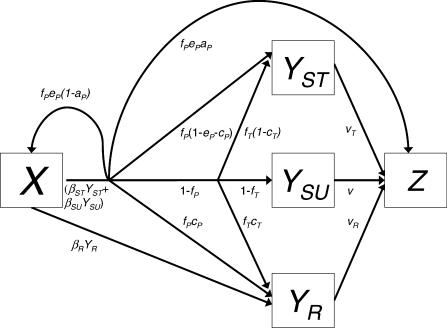
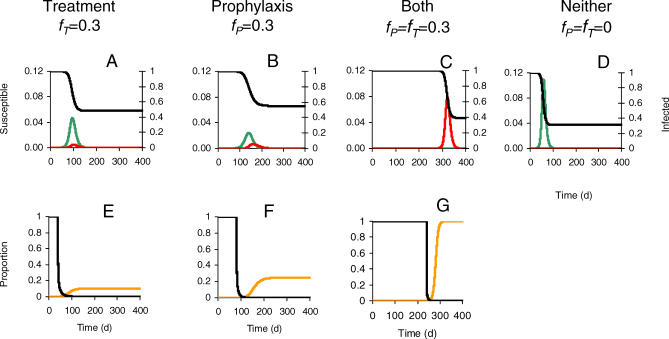
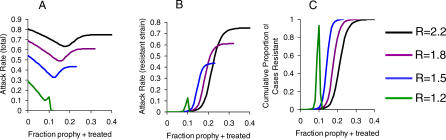
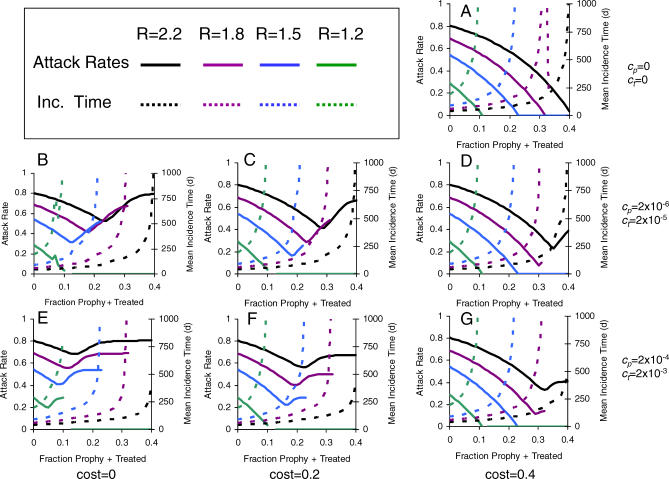
BACKGROUND: The response to the next influenza pandemic will likely include extensive use of antiviral drugs (mainly oseltamivir), combined with other transmission-reducing measures. Animal and in vitro studies suggest that some strains of influenza may become resistant to oseltamivir while maintaining infectiousness (fitness). Use of antiviral agents on the scale anticipated for the control of pandemic influenza will create an unprecedented selective pressure for the emergence and spread of these strains. Nonetheless, antiviral resistance has received little attention when evaluating these plans. METHODS AND FINDINGS: We designed and analyzed a deterministic compartmental model of the transmission of oseltamivir-sensitive and -resistant influenza infections during a pandemic. The model predicts that even if antiviral treatment or prophylaxis leads to the emergence of a transmissible resistant strain in as few as 1 in 50,000 treated persons and 1 in 500,000 prophylaxed persons, widespread use of antivirals may strongly promote the spread of resistant strains at the population level, leading to a prevalence of tens of percent by the end of a pandemic. On the other hand, even in circumstances in which a resistant strain spreads widely, the use of antivirals may significantly delay and/or reduce the total size of the pandemic. If resistant strains carry some fitness cost, then, despite widespread emergence of resistance, antivirals could slow pandemic spread by months or more, and buy time for vaccine development; this delay would be prolonged by nondrug control measures (e.g., social distancing) that reduce transmission, or use of a stockpiled suboptimal vaccine. Surprisingly, the model suggests that such nondrug control measures would increase the proportion of the epidemic caused by resistant strains. CONCLUSIONS: The benefits of antiviral drug use to control an influenza pandemic may be reduced, although not completely offset, by drug resistance in the virus. Therefore, the risk of resistance should be considered in pandemic planning and monitored closely during a pandemic.
Overview
The claims and statistics of this paper haven’t been checked yet.
Free: it reads the open-access text and checks the first 5 claims that cite a source we can check. Create a free account to check every claim.
Integrity signals
Registry
Cites
Statistics
Figures
Verification
Claims the paper makes
The claims and statistics of this paper haven’t been checked yet.
Free: it reads the open-access text and checks the first 5 claims that cite a source we can check. Create a free account to check every claim.
Claims other papers make about this one
Each is checked against this paper’s own text: does it say what the citing paper says it does?
The source backs part of the claim, not all of it — or backs it for a different population, condition or comparison.
In the citing paper
“A mitigated two-phase epidemic may result in a cumulative burden of morbidity and mortality less than that observed in a single unchecked epidemic because of reduced epidemic overshoot (7–9).”
From Public health interventions and epidemic intensity during the 1918 influenza pandemic (2007) · cites this paper as [9]
Experimental — accuracy not yet measuredThe check wasn’t confident either way, so it gives no verdict — never disputed.
In the citing paper
“Consistent with the predictions of modeling, the effect of the NPIs in St. Louis appear to have had a less-pronounced effect on CEPID than on peak death rates, and death rates were observed to climb after the NPIs were lifted in mid-November (7–9).”
From Public health interventions and epidemic intensity during the 1918 influenza pandemic (2007) · cites this paper as [9]
Experimental — accuracy not yet measured
Self-check
Percentages, sums and reported differences re-computed from the paper’s own numbers.
The self-check needs the paper’s full text.
Citations
Cites
Infectious Diseases of Humans: Dynamics and Control
(1992) · Annals of Internal Medicine · doi:10.7326/0003-4819-117-2-174_4 · Cited by 7,746
Infectious Diseases of Humans: Dynamics and Control
Anderson, R. M., & May, R. M. (1991) · doi:10.1093/oso/9780198545996.001.0001 · Cited by 6,179
Strategies for mitigating an influenza pandemic
Ferguson, N. M., Cummings, D. A. T., Fraser, C., Cajka, J. C., Cooley, P. C., & Burke, D. S. (2006) · Nature · doi:10.1038/nature04795 · Cited by 2,187 · cited 1×
“]. However, these studies also predict that antiviral prophylaxis and treatment may make a significant contribution to pandemic control when combined with other interventions, including social distancing, isolation and quarantine, measures to reduce person-to-person contact such as school closing, and perhaps the use…”
BackgroundMitigation strategies for pandemic influenza in the United States
Germann, T. C., Kadau, K., Longini, I. M., & Macken, C. A. (2006) · Proceedings of the National Academy of Sciences · doi:10.1073/pnas.0601266103 · Cited by 1,047 · cited 5×
“Prior studies [3–5, 11 ] and our Successful nondrug interventions, which themselves reduce the attack rate, considerably amplify the benefits of antiviral use, even in the presence of resistance (Figure 4, blue and green curves compared to purple and black curves).”
BackgroundInfluentialOseltamivir Resistance during Treatment of Influenza A (H5N1) Infection
de Jong, M. D., Thanh, T. T., Khanh, T. H., Hien, V. M., Smith, G. J. D., Chau, N. V., Cam, B. V., Qui, P. T., Ha, D. Q., Guan, Y., et al. (2005) · New England Journal of Medicine · doi:10.1056/nejmoa054512 · Cited by 901 · cited 5×
“It may be possible to reduce the risk of amplifying resistant viral subpopulations within a treated host [7,8,15,32] by adequate dosing and greater emphasis on prophylaxis than treatment [16].”
BackgroundInfluentialThe biological cost of antibiotic resistance
Andersson, D. I., & Levin, B. R. (1999) · Current Opinion in Microbiology · doi:10.1016/s1369-5274(99)00005-3 · Cited by 867 · cited 1×
“Moreover, compensatory mutations may mitigate any fitness costs incurred by resistant strains [25,26].”
BackgroundSelf-citationTransmissibility of 1918 pandemic influenza
Mills, C. E., Robins, J. M., & Lipsitch, M. (2004) · Nature · doi:10.1038/nature03063 · Cited by 796
Self-citationResistant influenza A viruses in children treated with oseltamivir: descriptive study
Kiso, M., Mitamura, K., Sakai-Tagawa, Y., Shiraishi, K., Kawakami, C., Kimura, K., Hayden, F. G., Sugaya, N., & Kawaoka, Y. (2004) · The Lancet · doi:10.1016/s0140-6736(04)16934-1 · Cited by 786
Containing Pandemic Influenza with Antiviral Agents
Longini, I. M. (2004) · American Journal of Epidemiology · doi:10.1093/aje/kwh092 · Cited by 705 · cited 1×
“]. Current mathematical modeling studies suggest that antivirals alone are unlikely to significantly reduce the spread and impact of a pandemic, in part due to supply constraints [”
BackgroundIsolation of drug-resistant H5N1 virus
Le, Q. M., Kiso, M., Someya, K., Sakai, Y. T., Nguyen, T. H., Nguyen, K. H. L., Pham, N. D., Ngyen, H. H., Yamada, S., Muramoto, Y., et al. (2005) · Nature · doi:10.1038/4371108a · Cited by 693 · cited 1×
“Resistant strains have also arisen in treated hosts infected with avian strains of influenza A/H5N1 [7,9].”
Background
Cited by
Items 101–200 of 209
A model for influenza with vaccination and awareness
Baba, I. A., & Hınçal, E. (2017) · Chaos Solitons & Fractals · doi:10.1016/j.chaos.2017.11.003 · Cited by 21
A Model-based Assessment of Oseltamivir Prophylaxis Strategies to Prevent Influenza in Nursing Homes
van den Dool, C., Hak, E., Bonten, M. J. M., & Wallinga, J. (2009) · Emerging infectious diseases · doi:10.3201/eid1510.081129 · Cited by 23
“Immunity did not develop in the other patients, but when they were infected they were considered to become less infectious than persons who did not take oseltamivir (26).”
InfluentialCommunity Strategy for Pandemic Influenza Mitigation
Español, E. (2011) · Cited by 22
McVernon, J., McCaw, J. M., & Nolan, T. M. (2010) · Australian and New Zealand Journal of Public Health · doi:10.1111/j.1753-6405.2010.00493.x · Cited by 20
“Depending on the rate of seeding and relative transmissibility of drug-resistant strains, containment efforts could be hindered or seemingly paradoxically aided by resistance emergence.(18,19) Reduced transmissibility of neuraminidase-inhibitor resistant influenza strains, while sometimes observed,(20) cannot be assum…”
BackgroundHow to Minimize the Attack Rate during Multiple Influenza Outbreaks in a Heterogeneous Population
Fung, I. C., Antia, R., & Handel, A. (2012) · PLoS ONE · doi:10.1371/journal.pone.0036573 · Cited by 18
Marois, I., Cloutier, A., Garneau, É., Lesur, O., & Richter, M. V. (2014) · The FASEB Journal · doi:10.1096/fj.14-260687 · Cited by 21
Liu, C. M., Driebe, E. M., Schupp, J. M., Kelley, E., Nguyen, J. T., McSharry, J. J., Weng, Q., Engelthaler, D. M., & Keim, P. (2009) · Journal of Virological Methods · doi:10.1016/j.jviromet.2009.09.007 · Cited by 19
“Given the limited treatment options in influenza, with damantanes and neuraminidase inhibitors (NAI) as the two FDApproved drug classes, development of rapid, sensitive resistance onitoring methods becomes time-critical and relevant globally Lipsitch et al., 2007).”
BackgroundIn VitroSusceptibility of Canine Influenza A (H3N8) Virus to Nitazoxanide and Tizoxanide
Ashton, L. V., Callan, R., Rao, S., & Landolt, G. A. (2010) · Veterinary Medicine International · doi:10.4061/2010/891010 · Cited by 19
“These results suggest that NTZ and TIZ are effective against CIV and may be useful for treatment of canine influenza in dogs but further investigation of the in vivo efficacy against CIV as well as the drug’s potential for toxicity in dogs is needed.”
ResultDynamics of Drug Resistance: Optimal Control of an Infectious Disease
Chehrazi, N., Cipriano, L. E., & Enns, E. A. (2019) · Operations Research · doi:10.1287/opre.2018.1817 · Cited by 24
“Current studies primarily focus on evaluating and comparing various treatment policies using detailed disease-specific models and numerical methods (see Lipsitch et al. 2007; Brockmann et al. 2008; Eichner et al. 2009; Xiao et al. 2016) which limits the generalizability of their conclusions.”
BackgroundCan treatment increase the epidemic size?
Xiao, Y., Brauer, F., & Moghadas, S. M. (2015) · Journal of Mathematical Biology · doi:10.1007/s00285-015-0887-y · Cited by 18
Optimal strategies of the age-specific vaccination and antiviral treatment against influenza
Yang, J., Li, Y., & Jin, Z. (2023) · Chaos Solitons & Fractals · doi:10.1016/j.chaos.2023.113199 · Cited by 20
Bygiene: The New Paradigm of Bidirectional Hygiene.
Al‐Ghalith, G. A., & Knights, D. (2015) · PubMed Central · Cited by 26
Dimitrov, N. B., Goll, S., Hupert, N., Pourbohloul, B., & Ancel, L. W. (2011) · PLoS ONE · doi:10.1371/annotation/cf0572ee-8088-4bcc-8680-e8ebb4f05ce3 · Cited by 18
Influenza virus assays based on virus‐inducible reporter cell lines
Li, Y., Larrimer, A., Curtiss, T., Kim, J. K., Jones, A., Baird‐Tomlinson, H., Pekosz, A. S., & Olivo, P. D. (2009) · Influenza and Other Respiratory Viruses · doi:10.1111/j.1750-2659.2009.00095.x · Cited by 17
Time-varying sensitivity analysis of an influenza model with interventions
Pedro, S. A., Rwezaura, H., & Tchuenche, J. M. (2021) · International Journal of Biomathematics · doi:10.1142/s1793524521500984 · Cited by 18
Transmission Dynamics of an Influenza Model with Age of Infection and Antiviral Treatment
Qiu, Z., & Feng, Z. (2010) · Journal of Dynamics and Differential Equations · doi:10.1007/s10884-010-9178-x · Cited by 17
Scire, J., Hozé, N., & Uecker, H. (2019) · PLoS Computational Biology · doi:10.1371/journal.pcbi.1007223 · Cited by 22
“In this case, using high drug doses is likely to be less efficient in reducing the risk of a large outbreak (see also a corresponding comment in [33]).”
BackgroundNews About Influenza B Drug Resistance That Cannot Be Ignored
Moscona, A., & McKimm‐Breschkin, J. L. (2007) · JAMA · doi:10.1001/jama.297.13.1492 · Cited by 16
McCaw, J. M., Arinaminpathy, N., Hurt, A. C., McVernon, J., & McLean, A. R. (2011) · PLoS Computational Biology · doi:10.1371/journal.pcbi.1002026 · Cited by 15
“Furthermore, we derive an estimate for the number of successfully infecting units transferred from the donor to recipient, an important measurement for helping parameterize epidemiological models of influenza transmission that consider, for example, the emergence and subsequent spread of NAI-resistant strains [12–14].”
BackgroundMathematical Assessment of Canada’s Pandemic Influenza Preparedness Plan
Gumel, A. B., Nuno, M. A., & Chowell, G. (2007) · Canadian Journal of Infectious Diseases and Medical Microbiology · doi:10.1155/2008/538975 · Cited by 15
Williams, B., St-Onge, G., & Hébert‐Dufresne, L. (2021) · PLoS Computational Biology · doi:10.1371/journal.pcbi.1008606 · Cited by 13
Antibiotic Use as a Tragedy of the Commons: A Cross-Sectional Survey
O’Brien, K. S., Blumberg, S., Enanoria, W. T. A., Ackley, S. F., Sippl-Swezey, N., & Lietman, T. M. (2014) · Computational and Mathematical Methods in Medicine · doi:10.1155/2014/837929 · Cited by 16
“Research Article Antibiotic Use as a Tragedy of the Commons:”
Dimitrov, N. B., Goll, S., Ancel, L. W., Pourbohloul, B., & Hupert, N. (2009) · PLoS Currents · doi:10.1371/currents.rrn1127 · Cited by 14
“Clinically, we assume that antivirals are 80 % efficacious at reducing disease and infectiousness [19][20][21][22][23][24][25].”
Strategies for the Use of Oseltamivir and Zanamivir during Pandemic Outbreaks
Hansen, E., Day, T., Arino, J., Wu, J., & Moghadas, S. M. (2010) · Canadian Journal of Infectious Diseases and Medical Microbiology · doi:10.1155/2010/690654 · Cited by 13
Interferon Lambda Delays the Emergence of Influenza Virus Resistance to Oseltamivir
Medaglia, C., Zwygart, A. C., Silva, P. J., Constant, S., Huang, S., Stellacci, F., & Tapparel, C. (2021) · Microorganisms · doi:10.3390/microorganisms9061196 · Cited by 16
“However, since resistant variants can arise either naturally or as a result of drug administration, it is very likely that the use of NAIs on the scale anticipated for the control of pandemic influenza will create a unique selective pressure for the emergence and spread of resistant strains [63].”
BackgroundAlthouse, B. M., Patterson‐Lomba, O., Goerg, G. M., & Hébert‐Dufresne, L. (2013) · PLoS Computational Biology · doi:10.1371/journal.pcbi.1002912 · Cited by 14
“we employ network models of influenza transmission extending previous work [2] to incorporate the effects of contact structure and timing of antiviral treatment.”
MethodResultAntiviral prophylaxis during pandemic influenza may increase drug resistance
Eichner, M., Schwehm, M., Duerr, H.-P., Witschi, M., Koch, D., Brockmann, S., & Vidondo, B. (2009) · BMC Infectious Diseases · doi:10.1186/1471-2334-9-4 · Cited by 13
“In contrast to [5] and [6], we found clear detrimental effects of any level of prophylaxis if the relative fitness of the resistant strain is higher than 80% [20,21].”
Asiedu‐Bekoe, F., Adu, D. A., & Offei, A. (2012) · Europe PMC (PubMed Central) · Cited by 13
Logistics of control for an influenza pandemic
Arinaminpathy, N., & McLean, A. R. (2009) · Epidemics · doi:10.1016/j.epidem.2009.04.001 · Cited by 12
Omori, R., & Nishiura, H. (2011) · Theoretical Biology and Medical Modelling · doi:10.1186/1742-4682-8-2 · Cited by 12
“[8-10]), most notably, by simulating the detailed influenza transmission dynamics.”
BackgroundEffects of influenza antivirals on individual and population immunity over many epidemic waves
Pepin, K. M., Riley, S., & Grenfell, B. T. (2012) · Epidemiology and Infection · doi:10.1017/s0950268812000477 · Cited by 15
Influenza Pandemic Waves under Various Mitigation Strategies with 2009 H1N1 as a Case Study
Ghosh, S., & Heffernan, J. M. (2010) · PLoS ONE · doi:10.1371/journal.pone.0014307 · Cited by 11
“Previous modeling studies on the effects of the accumulation of drug resistant mutations have, like our study, found that use of drug therapies should be minimized so as to prevent large epidemics where drug therapy has no effect [24,41–43].”
BackgroundTanaka, M. M., Althouse, B. M., & Bergstrom, C. T. (2014) · Evolution Medicine and Public Health · doi:10.1093/emph/eou027 · Cited by 11
“[17] but we do not consider any prophylaxis.”
BackgroundMikolajczyk, R., Krumkamp, R., Bornemann, R., Ahmad, A. A., Schwehm, M., & Duerr, H.-P. (2009) · Deutsches Ärzteblatt international · doi:10.3238/arztebl.2009.0777 · Cited by 13
Dafilis, M. P., Frascoli, F., McVernon, J., Heffernan, J. M., & McCaw, J. M. (2014) · Theoretical Biology and Medical Modelling · doi:10.1186/1742-4682-11-43 · Cited by 13
“Simple dynamical models of infectious disease have helped explain the spectacular success of childhood immunisation programs, yielded valuable insights into complex epidemiological phenomena [1-3] and contributed to public health policy development [4-10].”
Intermediate levels of vaccination coverage may minimize seasonal influenza outbreaks
Zarnitsyna, V. I., Bulusheva, I., Handel, A., Longini, I. M., Halloran, M. E., & Antia, R. (2018) · PLoS ONE · doi:10.1371/journal.pone.0199674 · Cited by 12
Modelers' Perception of Mathematical Modeling in Epidemiology: A Web-Based Survey
Hejblum, G., Setbon, M., Temime, L., Lesieur, S., & Valleron, A. (2011) · PLoS ONE · doi:10.1371/journal.pone.0016531 · Cited by 9
“For example MME has been widely applied to influenza pandemics (see among many references, refs [8,9,10,11]).”
Goldstein, E., & Lipsitch, M. (2009) · PLoS Currents · doi:10.1371/currents.rrn1122 · Cited by 10
Self-citationChallenges, Opportunities and Theoretical Epidemiology
Brauer, F., Castillo‐Chávez, C., & Feng, Z. (2019) · Texts in applied mathematics · doi:10.1007/978-1-4939-9828-9_16 · Cited by 11
Measuring the uncertainties of pandemic influenza
Fair, J. M., Powell, D. R., LeClaire, R. J., Moore, L. M., Wilson, M. L., Dauelsberg, L. R., Samsa, M. E., Deland, S. M., Hirsch, G. B., & Bush, B. (2012) · International Journal of Risk Assessment and Management · doi:10.1504/ijram.2012.047550 · Cited by 11
“In addition, antiviral resistance adds to uncertainty in treatment recommendations (Yen et al., 2005; Lipsitch et al., 2007).”
BackgroundOptimizing Treatment Regimes to Hinder Antiviral Resistance in Influenza across Time Scales
Patterson‐Lomba, O., Althouse, B. M., Goerg, G. M., & Hébert‐Dufresne, L. (2013) · PLoS ONE · doi:10.1371/journal.pone.0059529 · Cited by 9
“As in [17], we introduce the following correction to our numerical integrations: if Ir(t)v1 then Ir(t)~0.”
InfluentialBrauer, F., Castillo‐Chávez, C., & Feng, Z. (2019) · Texts in applied mathematics · doi:10.1007/978-1-4939-9828-9_9 · Cited by 15
Resource Consumption, Sustainability, and Cancer
Kareva, I., Morin, B. R., & Castillo‐Chávez, C. (2014) · Bulletin of Mathematical Biology · doi:10.1007/s11538-014-9983-1 · Cited by 8
“This class of drugs has not undergone significant changes or increases over the past three decades, while the rate of population-level resistance has (Lipsitch et al. 2007; Chow et al. 2011).”
InfluentialSpeed versus coverage trade off in targeted interventions during an outbreak
Marinović, A. A. B., Koopmans, M., Dittrich, S., Teunis, P. F. M., Swaan, C. M., van Steenbergen, J., & Kretzschmar, M. (2014) · Epidemics · doi:10.1016/j.epidem.2014.05.003 · Cited by 8
“It has been proposed that interventions including anti-viral treatment may promote the emergence of a drug resistant virus strain due to selective pressure exerted by the number of people treated with anti-viral drugs (Lipsitch et al., 2007).”
BackgroundOptimal Treatment Profile During an Influenza Epidemic
Jaberi‐Douraki, M., Heffernan, J. M., Wu, J., & Moghadas, S. M. (2012) · Differential Equations and Dynamical Systems · doi:10.1007/s12591-012-0149-z · Cited by 8
Pre‐dispensing of antivirals to high‐risk individuals in an influenza pandemic
Goldstein, E., Miller, J. C., O’Hagan, J. J., & Lipsitch, M. (2010) · Influenza and Other Respiratory Viruses · doi:10.1111/j.1750-2659.2009.00128.x · Cited by 8
“Moreover, prior mathematical modeling studies [27,28]have shown that if the epidemic is already large (as it is now) at the time that large-scale antiviral treatment begins, then resistant strains will be unlikely to ascend to high frequency in the population before the epidemic is over, even in…”
Self-citationExistence of travelling waves with the critical speed for an influenza model with treatment
Deng, D. G., & ZHANG, D. (2019) · European Journal of Applied Mathematics · doi:10.1017/s0956792518000700 · Cited by 8
“It is worth pointing out that, in 2014, based on the idea proposed in [7], Zhang and Wang [18] proposed the following influenza model with treatment ⎧⎪⎨⎪⎪⎪⎪⎪⎩ ∂S(x,t) ∂t = ds ∂ 2S(x,t) ∂x2 − β(Iu(x, t) + δIh(x, t))S(x, t), ∂Iu(x,t) ∂t = du ∂ (2)Iu(x,t) ∂x2 + (1 −μ)β(Iu(x, t) + δIh(x, t))S(x, t) − kuIu(x, t), ∂Ih(x,t)…”
Epidemics in Competition: Partial Cross-Immunity
Andreasen, V. (2018) · Bulletin of Mathematical Biology · doi:10.1007/s11538-018-0495-2 · Cited by 7
Antiviral Resistance in Influenza Viruses: Clinical and Epidemiological Aspects
Hayden, F. G. (2009) · Humana Press eBooks · doi:10.1007/978-1-60327-595-8_23 · Cited by 7
“However, even very low rates of resistance emergence in persons receiving antiviral treatment or prophylaxis would strongly promote the spread of resistant variants in a pandemic (150).”
BackgroundDafilis, M. P., Moss, R. G., McVernon, J., & McCaw, J. M. (2012) · Epidemics · doi:10.1016/j.epidem.2012.12.002 · Cited by 7
Transmission Dynamics of an Epidemic Model with Vaccination, Treatment and Isolation
Cui, Q., Zhang, Q., Qiu, Z., & Yang, X. (2017) · Bulletin of the Malaysian Mathematical Sciences Society · doi:10.1007/s40840-017-0519-3 · Cited by 7
Existence of traveling waves for a nonlocal dispersal SIR epidemic model with treatment
Deng, D. G., Li, J., & Zhang, D. (2021) · Journal of Mathematical Analysis and Applications · doi:10.1016/j.jmaa.2021.125009 · Cited by 7
Applications of Optimal Control Theory to Infectious Disease Modeling
Hansen, E. (2011) · QSpace (Queen's University Library) · Cited by 8
The Economics of Infectious Diseases
Auld, M. C., Fenichel, E. P., & Toxvaerd, F. (2025) · Journal of Economic Literature · doi:10.1257/jel.20241649 · Cited by 10
Optimality of a time-dependent treatment profile during an epidemic
Jaberi‐Douraki, M., & Moghadas, S. M. (2013) · Journal of Biological Dynamics · doi:10.1080/17513758.2013.816377 · Cited by 6
Antiviral Drugs for Treatment of Patients Infected with Pandemic (H1N1) 2009 Virus
Hartley, D., Nelson, N. P., & Perencevich, E. N. (2009) · Emerging infectious diseases · doi:10.3201/eid1511.090720 · Cited by 6
“Moreover, modeling studies suggest that antiviral-resistant strains may spread rapidly and markedly affect pandemic outcomes (9).”
BackgroundAssessing the effect of non-pharmaceutical interventions on containing an emerging disease
Sang, Z., Qiu, Z., Yan, X., & Zou, Y. (2011) · Mathematical Biosciences & Engineering · doi:10.3934/mbe.2012.9.147 · Cited by 6
Hsieh, N., Lin, Y., Yang, Y., & Liao, C. (2017) · Infection and Drug Resistance · doi:10.2147/idr.s138317 · Cited by 6
“Second, our study suggests that the risk of resistance would be considered into pandemic planning and monitored closely during a pandemic.(20) Although predicting whether resistance will disappear, persist, or increase in the next season is difficult, our findings suggest that resistance risk increase should be includ…”
Mathematical Modeling of Remdesivir to Treat COVID-19: Can Dosing Be Optimized?
Conway, J. M., & Wiesch, P. A. Z. (2021) · Pharmaceutics · doi:10.3390/pharmaceutics13081181 · Cited by 7
“However, 20% is within range, observed across multiple viral infections including SARS-CoV-1 [40–42] and is consistent with previous theoretical studies seeking to investigate the impact of fitness cost on emergent antiviral resistance [43].”
Dover, D. C., Kirwin, E. M., Hernández-Cerón, N., & Nelson, K. (2016) · Epidemiology and Infection · doi:10.1017/s0950268816001850 · Cited by 6
Novel drug targets for monkeypox: From viral to host proteins
Zhu, Z., Sun, Q., Xu, Y., Niu, Y., Yang, F., & Feng, S. (2025) · Infectious Medicine · doi:10.1016/j.imj.2025.100165 · Cited by 6
Periodic traveling waves for a diffusive influenza model with treatment and seasonality
Deng, D. G., & Wei, H. (2023) · Nonlinear Analysis Real World Applications · doi:10.1016/j.nonrwa.2023.104041 · Cited by 5
Modeling Influenza Antiviral Strategies: Reducing Burden and Preventing Resistance
Pasco, R. F., Hayden, F. G., & Ancel, L. W. (2025) · The Journal of Infectious Diseases · doi:10.1093/infdis/jiaf263 · Cited by 7
“Consequently, expanding the use of timely antiviral treatment is anticipated to lessen the overall societal burden of influenza and ease the strain on healthcare systems during severe epidemics [5, 47, 48].”
Drug resistance in an age-of-infection model
Brauer, F., Xiao, Y., & Moghadas, S. M. (2017) · Mathematical Population Studies · doi:10.1080/08898480.2015.1054216 · Cited by 5
“For epidemics with short duration, such as influenza, Lipsitch et al. (2007), Moghadas (2008), and Moghadas et al. (2008) have shown numerically that, when drug-resistant strains are highly transmissible, there may be a treatment rate minimizing the total number of infected people.”
BackgroundHost population structure impedes reversion to drug sensitivity after discontinuation of treatment
Liechti, J. I., Leventhal, G. E., & Bonhoeffer, S. (2017) · PLoS Computational Biology · doi:10.1371/journal.pcbi.1005704 · Cited by 6
Guoting Chen, B., Fu, X., & Sun, M. (2020) · Bulletin of Mathematical Biology · doi:10.1007/s11538-020-00799-8 · Cited by 5
Emergence and spread of drug resistant influenza: A two-population game theoretical model
Jnawali, K., Morsky, B., Poore, K. D., & Bauch, C. T. (2016) · Infectious Disease Modelling · doi:10.1016/j.idm.2016.07.003 · Cited by 5
The dynamics of an epidemic model with targeted antiviral prophylaxis
Qiu, Z., & Feng, Z. (2010) · Journal of Biological Dynamics · doi:10.1080/17513758.2010.498925 · Cited by 5
“There have been several published mathematical models focused on exploring the impact of the various preventive and control strategies on transmission dynamics of the infectious diseases [2–4, 16, 20, 21, 23].”
BackgroundManaging the emergence of pathogen resistance via spatially targeted antimicrobial use
Okamoto, K. W., Post, D. M., Vasseur, D. A., & Turner, P. E. (2018) · Evolutionary Applications · doi:10.1111/eva.12683 · Cited by 3
Ali, M., Rajurkar, J., Majumder, P., Jha, M. P., Sarkar, R., & Mapa, K. (2021) · Advances in experimental medicine and biology · doi:10.1007/978-3-030-85109-5_8 · Cited by 5
Predispensing of Antivirals to High-Risk Individuals in an Influenza Pandemic
Goldstein, E., Miller, J. C., O’Hagan, J. J., & Lipsitch, M. (2009) · PLoS Currents · doi:10.1371/currents.rrn1007 · Cited by 4
“Moreover, prior mathematical modeling studies [27,28]have shown that if the epidemic is already large (as it is now) at the time that large-scale antiviral treatment begins, then resistant strains will be unlikely to ascend to high frequency in the population before the epidemic is over, even in…”
Self-citationWood, J. A. (2021) · Journal of Marketing Analytics · doi:10.1057/s41270-021-00112-z · Cited by 4
Hall, R. J., Peacey, M., Ralston, J., de Joux, D. J., Bocacao, J., Nicol, M., Ziki, M., Gunn, W., Wang, J., & Huang, Q. S. (2012) · Western Pacific surveillance response journal · doi:10.5365/wpsar.2012.3.3.002 · Cited by 3
Ho, B.-S., & Chao, K. (2017) · Journal of Translational Medicine · doi:10.1186/s12967-017-1269-6 · Cited by 3
Biological activities of the extracts from the Andaman Sea sponges, Thailand
Pedpradab, P., Molex, W., Nukoolkarn, V. S., & Darumas, U. (2010) · Eurasian Journal of Biosciences · doi:10.5053/ejobios.2010.4.0.8 · Cited by 3
“Resistance to first-line drugs has been observed for those diseases; hence the need for the discovery of new lead molecules (Bredel 2001, Lipsitch et al. 2007, Wright and Zignol 2008).”
BackgroundKnipl, D., Röst, G., & Moghadas, S. M. (2017) · PeerJ · doi:10.7717/peerj.2817 · Cited by 3
“For the epidemic state, we show that in contrast with previous work on the short-term disease dynamics (Lipsitch et al., 2007; Moghadas, 2008; Moghadas et al., 2008; Xiao, Brauer & Moghadas, 2016), the minimum epidemic size may be achieved with different treatment coverages (i.e., the fraction of…”
InfluentialNon-pharmaceutical Intervention Strategies for Pandemic Influenza Outbreaks
Martinez, D. L. (2012) · Digital Commons - University of South Florida (University of South Florida) · Cited by 3
Strategic Interactions in Antiviral Drug Use During an Influenza Pandemic
Jnawali, K., Morsky, B., & Bauch, C. T. (2017) · PLoS Currents · doi:10.1371/currents.outbreaks.602dfa010991dbe510c51d5107b02343 · Cited by 4
Qualitative Analysis of an influenza model with biomedical interventions
Pedro, S. A., Rwezaura, H., Mandipezar, A., & Tchuenche, J. M. (2021) · Chaos Solitons & Fractals · doi:10.1016/j.chaos.2021.110852 · Cited by 3
Resource Distribution Strategies for Mitigation of Cross-Regional Influenza Pandemics
Uribe-Sanchez, A., & Savachkin, A. A. (2011) · International Journal of Artificial Life Research · doi:10.4018/jalr.2011040102 · Cited by 1
“…Milne, Kelso, Kelly, Huband, & McVernon, 2008; Yasuda & Suzuki, 2009) and travel restrictions, and the use of low-cost measures, such as face masks and hand washing (Glass, Glass, Beyeler, & Min, 2006; Lipsitch et al., 2007; Nigmatulina & Larson, 2009; Scharfstein, Halloran, Chu, & Daniels, 2006).”
Champredon, D., Laskowski, M., Charland, N., & Moghadas, S. M. (2018) · Scientific Reports · doi:10.1038/s41598-018-24764-7 · Cited by 3
Pandemic Influenza: Potential Contribution to Disease Burden
Nuno, M. A. (2009) · Springer eBooks · doi:10.1007/978-0-387-78665-0_81 · Cited by 1
“A recent study showed that the benefits of antivirals during a flu pandemic are likely to be reduced by the presence of drug resistance (Lipsitch et al., 2007).”
BackgroundProphylaxis of Healthcare Workers in an Influenza Pandemic
Moghadas, S. M. (2009) · Springer eBooks · doi:10.1007/978-0-387-78665-0_82 · Cited by 1
“However, antiviral prophylaxis has been a matter of ongoing debate for both logistical concerns and clinical-epidemiological consequences of viral evolution and transmission (Democratis et al., 2006; Lipsitch et al., 2007; Regoes and Bonhoeffer, 2006).”
BackgroundTwo resource distribution strategies for dynamic mitigation of influenza pandemics
Savachkin (2010) · Journal of Multidisciplinary Healthcare · doi:10.2147/jmdh.s11127 · Cited by 3
“[24] [25] [26] [27] In recent years, the models for PI containment and mitigation have focused on integrating therapeutical and nontherapeutical measures in search for synergistic strategies, aimed at better resource utilization.”
Nguyen, D. (2011) · Cited by 1
Lehnert, R. (2009) · Elsevier eBooks · doi:10.1016/b978-343724530-5.10005-2 · Cited by 1
Viral Social LearningPreprint
McAdams, D., & Song, Y. (2018) · SSRN Electronic Journal · doi:10.2139/ssrn.3299129 · Cited by 1
Bongiorno, C., & Cagnol, J. (2021) · medRxiv · doi:10.1101/2021.07.07.21259916 · Cited by 1
“In the context of the common flu, [14] studied the emergence of transmissible resistant strains when using vaccine or anti-viral treatments.”
BackgroundComplex Contagion in Viral Marketing: Causal Evidence from a Country-Scale Field ExperimentPreprint
Lee, J., Lazer, D. M. J., & Riedl, C. (2022) · SSRN Electronic Journal · doi:10.2139/ssrn.4092057 · Cited by 1
Optimizing Non-pharmaceutical Interventions Using Multi-coaffiliation Networks
Loza, O. (2013) · University of North Texas Digital Library (University of North Texas) · doi:10.12794/metadc271860
“Influenza pandemics have been widely studied through the use of MCMs [153], in communities [105], and schools [78].”
Lipsitch, M., & Smith, D. J. (2013) · Wiley eBooks · doi:10.1002/9781118636817.ch27 · Cited by 1
Self-citationAntiviral Treatment of Flaviviruses
Julander, J. G. (2014) · ASM Press eBooks · doi:10.1128/9781555815493.ch13
Analysis of Stochastic Disruptions to Support Design of Capacitated Engineered Networks
Uribe‐Sanchez, A. (2010) · Digital Commons - University of South Florida (University of South Florida)
Evaluating the effectiveness of antiviral treatment in models for influenza pandemic
Lunelli, A., & Pugliese, A. (2008) · Mathematical Medicine and Biology A Journal of the IMA · doi:10.1093/imammb/dqn018
“…al., 2005; Germannet al., 2006; Longini et al., 2004, 2005; Roberts et al., 2007), even in circumstances in which a resistant strain spreads widely (Lipsitch et al., 2007), others are more reluctant and suggest that a containment policy based on antivirals alone is unlikely to be successful…”
BackgroundUribe-Sánchez, A., & Savachkin, A. A. (2011) · Influenza Research and Treatment · doi:10.1155/2011/579597
“We did not consider the use of antiviral for a mass prophylactic reduction of infection susceptibility due to the limited antiviral availability [9] and the risk of emergence of antiviral resistant transmissible virus strains [26].”
BackgroundLaosiritaworn, Y. (2014) · D-Scholarship@Pitt (University of Pittsburgh) · Cited by 2
Supporting Online Material for Epidemic Dynamics at the Human-Animal Interface
Lloyd‐Smith, J. O., George, D. B., Pepin, K. M., Pitzer, V. E., Dobson, A. P., Hudson, P. J., & Grenfell, B. T. (2009)
Antibiotic resistance among the AIDS-immunocompromised
DeNegre, A. A. (2016) · doi:10.7282/t3r49st0
Antiviral resistance and dynamic treatment and chemoprophylaxis of pandemic influenza
Paz, S. A. (2014) · Digital Commons - University of South Florida (University of South Florida)
Resource Distribution Strategies for Mitigation of Cross-Regional Influenza Pandemics
Uribe-Sanchez, A., & Savachkin, A. A. (2013) · IGI Global eBooks · doi:10.4018/978-1-4666-3890-7.ch009
Metadata
- Authors
- Lipsitch, M., Cohen, T., Murray, M., & Levin, B. R.
- Affiliations
- Harvard University (US)
- Emory University (US)
- Corresponding author
- Lipsitch, Marc
- Venue
- PLoS Medicine
- Publisher
- Public Library of Science (PLoS)
- Published
- 2007-01-23
- Volume
- 4
- Issue
- 1
- Pages
- e15
- ISSN
- 1549-1277 (ISSN-L)
- 1549-1676
- PMC
- PMC1779817
- OpenAlex
- W2157231968
- Cited by
- 209
- References
- 39
- Citations by year
- 2026: 2 · 2025: 6 · 2024: 1 · 2023: 3 · 2022: 3 · 2021: 10 · 2020: 2 · 2019: 11 · 2018: 9 · 2017: 10 · 2016: 5 · 2015: 4 · 2014: 15 · 2013: 10 · 2012: 12
- FWCI
- 19.26
- Type
- journal article
- Language
- en
- Open access
- gold
- doi.org
- Locations
- PLoS Medicine (publishedVersion, cc-by)
- PubMed Central (publishedVersion, cc-by)
- PubMed (publishedVersion)
- Digital Access to Scholarship at Harvard (DASH) (Harvard University) (submittedVersion, cc-by)
- DOAJ (DOAJ: Directory of Open Access Journals) (submittedVersion, cc-by-sa)
- Figshare (submittedVersion, cc-by)
- Funders
- National Institutes of Health (5u01gm076497-03, 5U01GM076497, 7k08ai055985-02)
- National Institute of General Medical Sciences (U01GM076497, 5U01GM076497, R01GM091875)
- National Institute of Allergy and Infectious Diseases (R01AI040662, K08-AI055985, R01 AI40662)
- Topics
- Health Sciences › Medicine › Epidemiology › Influenza Virus Research Studies
- Physical Sciences › Mathematics › Applied Mathematics › Mathematical and Theoretical Epidemiology and Ecology Models
- Health Sciences › Medicine › Infectious Diseases › Antibiotic Use and Resistance
- Keywords
- antiviral resistance, pandemic influenza, oseltamivir, drug-resistant influenza, transmission dynamics, compartmental epidemic model, fitness cost of resistance, antiviral prophylaxis, social distancing, pandemic preparedness
- MeSH terms
- Antiviral Agents, Computer Simulation, Disease Outbreaks, Humans, Influenza, Human, Orthomyxoviridae, Planning Techniques, Drug Resistance, Viral, Oseltamivir
About these checks
Registry, retraction, Cites and statistics results are computed, not judged, with one exception: a printed reference that no index lists is read once by a model before it counts as a citation error. Claims are extracted by a model and kept only when their quote appears verbatim in the text; each cited source is then checked, with a model’s help, for whether it says what the claim relies on. Those verdicts can be wrong — read the claim’s quote and the cited source before relying on one.
Statistics and arithmetic are recomputed, not judged.
Confidence bands are shown only for fields calibrated on our annotated test set. None is calibrated yet, so no band is shown.
What counts as a claim ›How we measure confidence ›How we check this ›
Are you an author, or do you see a problem with this page? Request a review
Data sources
Bibliographic data: Semantic Scholar, OpenAlex, Crossref.
Contains information from the Semantic Scholar Academic Graph Datasets, made available under the ODC Attribution License (ODC-BY 1.0).
Semantic Scholar’s data is described in: Kinney, R., et al. (2023). The Semantic Scholar Open Data Platform. arXiv:2301.10140.
