

Some Lessons for the Future from the Global Malaria Eradication Programme (1955–1969)
Open accessThe DOI matches its Crossref record; 21 of the 27 references it cites were found in a registry or an index; 1 of the 17 sources its claims cite were checked for support.
Abstract
Encouraged by the early success of using dichloro-diphenyl-trichloroethane (DDT) against malaria, the World Health Organization (WHO) embarked on the Global Malaria Eradication Program (GMEP) in 1955. Fourteen years later, the campaign was discontinued when it was recognised that eradication was not achievable with the available means in many areas, although the long-term goal remained unchanged. During the GMEP, malaria was permanently eliminated from many regions. In other areas, however, substantial gains were lost in resurgences, sometimes of epidemic proportions. During the 1970s and 1980s, because of economic and financial crises, international support for malaria control declined rapidly, but in the past decade, following increasing demands from endemic countries and promising results from scaling up of control activities, interest in malaria elimination and the long-term goal of eradication has received international political and financial support. In 2007, there was a renewed call for malaria eradication and a consultative process to define a research and development agenda for malaria eradication (malERA) was established. Lessons learned from the GMEP (1955-1969) highlight the fact that no single strategy can be applicable everywhere and that a long-term commitment with a flexible strategy that includes community involvement, integration with health systems, and the development of agile surveillance systems is needed.
Overview
CoChat Summary
TL;DR
This historical review of the Global Malaria Eradication Programme (1955–1969) argues that its rigid, vertical, DDT-focused campaign and neglect of local epidemiology, surveillance, and research contributed to resurgences and limited sustainability. It draws lessons for current elimination efforts: integrate programmes into health systems, build community-rooted surveillance and professional cadres, and link control with research.
Key findings
- The GMEP was approved by the 8th World Health Assembly in 1955; by 1969 the 22nd WHA recognized that in some countries eradication was not feasible in the short term and that control was a valid step toward eradication. US contributions to the WHO Malaria Special Account, more than 85% of the total, stopped in 1963.
- The campaign relied basically on indoor residual spraying and abandoned other measures; problem areas were recognized only in the mid-1960s after vector avoidance of insecticide contact in southern Mexico. Chloroquine resistance was confirmed in 1960 after treatment failures reported since the late 1950s from Venezuela and Thailand, and DDT resistance in Greece appeared in 1951.
- Resurgences occurred after interruption of transmission, including the 1968–1969 epidemic in Sri Lanka, where surveillance had not reacted to 4 years of clear deterioration (1963–1967) or to 30 years of accumulated knowledge about epidemic periodicity. Stop-spraying indicators included annual parasite incidence <0.5/1,000 and <0.1/1,000 in the 8th and 10th Expert Committee reports, annual blood examination rate >10%, and slide positivity rate <5%.
- Lessons include the need for flexible strategies integrated into national health infrastructure, strengthened professional cadres, community involvement and ownership, close links with field and laboratory research, and surveillance from the start. Table 1 lists countries and regions certified malaria free up to 2010, grouped by long history of control, tourism-oriented islands, and other.
Methods
- Historical review and commentary examining the evolution, implementation, and outcome of the Global Malaria Eradication Programme (1955–1969), drawing on WHO resolutions, Expert Committee reports, historical literature, and the authors’ experience.
- Qualitative synthesis of lessons for current elimination and eradication efforts; no primary data collection or formal systematic review is described.
- Includes Table 1 of countries and regions certified malaria free up to 2010 and figures on campaign phases and progress.
Limitations
- The paper states it is “not a comprehensive coverage of the problems of malaria control,” indicating a deliberately limited scope.
- Evident from the text: it is a narrative historical review relying on selected documents and the authors’ experience, without a described systematic search or quantitative analysis.
- Evident from the text: the lessons are interpretive; the paper itself notes continuing disagreements among experts about integration with health services and gaps between formulating and applying lessons.
Model-written summary. Check it against the paper before relying on it.
Integrity signals
Registry
Cites
Statistics
Figures
Verification
Claims the paper makes
1 Valid · 4 Not valid · 13 Not checked · 33 Own results and interpretations
A result the paper states — it cites no source for it, so there is none to check. The quote shows it is in the paper.
In the paper
“This reduction of programme resources, aided by a strong La Niña in 1975–1976, resulted in severe epidemics in several countries, particularly in the Indian subcontinent and Turkey.”
§ Some Lessons for the Future from the Global Malaria Eradication Programme (1955–1969) > Malaria Control during the 1970s and 1980s
plainstates a cause- Asserted: passes — The authors put it forward as true.
- Checkable: passes — It can be checked against evidence.
- Load-bearing: passes — The paper’s conclusions depend on it.
- Based: passes — The paper gives a reason why it holds.
A result the paper states — it cites no source for it, so there is none to check. The quote shows it is in the paper.
In the paper
“By 1962, it was already recognised that the consolidation phase required an infrastructure capable of supporting epidemiological surveillance.”
§ Some Lessons for the Future from the Global Malaria Eradication Programme (1955–1969) > Malaria Resurgences after Interruption of Transmission
plain- Asserted: passes — The authors put it forward as true.
- Checkable: passes — It can be checked against evidence.
- Load-bearing: passes — The paper’s conclusions depend on it.
- Based: passes — The paper gives a reason why it holds.
In the paper
“its widespread application rapidly led to the first appearance of vector resistance to DDT in Greece in 1951 [4].”
§ Some Lessons for the Future from the Global Malaria Eradication Programme (1955–1969) > The Impact of DDT
What the sources say
- Not checked — no full text of the sourcecites [4] Livadas GA Georgopoulos G 1953 Development of resistance to DDT by Anopheles sacharovi in Greece. Bull World Health Organ 8 497 511 13066984 PMC2554166
plainstates a cause- Asserted: passes — The authors put it forward as true.
- Checkable: passes — It can be checked against evidence.
- Load-bearing: unclear — It is unclear whether the paper’s conclusions depend on it.
- Based: passes — The paper gives a reason why it holds.
A result the paper states — it cites no source for it, so there is none to check. The quote shows it is in the paper.
In the paper
“It was only in the mid-1960s that the existence of “problem areas” was recognised, after evidence of vector avoidance of contact with the insecticide in southern Mexico was confirmed.”
§ Some Lessons for the Future from the Global Malaria Eradication Programme (1955–1969) > Outcomes of the Campaign
plainstates a cause- Asserted: passes — The authors put it forward as true.
- Checkable: passes — It can be checked against evidence.
- Load-bearing: passes — The paper’s conclusions depend on it.
- Based: passes — The paper gives a reason why it holds.
A result the paper states — it cites no source for it, so there is none to check. The quote shows it is in the paper.
In the paper
“The lack of professional incentives as a result of the routine work imposed during the GMEP had reduced the professional cadres.”
§ Some Lessons for the Future from the Global Malaria Eradication Programme (1955–1969) > Malaria Control during the 1970s and 1980s
plainstates a cause- Asserted: passes — The authors put it forward as true.
- Checkable: passes — It can be checked against evidence.
- Load-bearing: passes — The paper’s conclusions depend on it.
- Based: passes — The paper gives a reason why it holds.
14 more claims
Create a free account to see all 51 claims and to verify the 6 references still open.
- It may state two separate claims as one. 25
- Probably not a substantial claim. 9
- The quote only partly states this claim. 1
Self-check
Percentages, sums and reported differences re-computed from the paper’s own numbers.
Each contradiction between two passages listed here was confirmed by an independent check.
Rated minor: it would not touch a result — a value no result rests on, a p-value that stays on the same side of the significance level, or a conflict that is clerical, resolved elsewhere in the paper, or outside its own findings.
In the paper
§ Some Lessons for the Future from the Global Malaria Eradication Programme (1955–1969) > After Global Eradication: A Return to Control
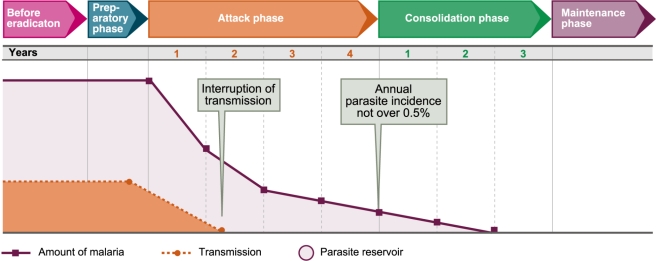
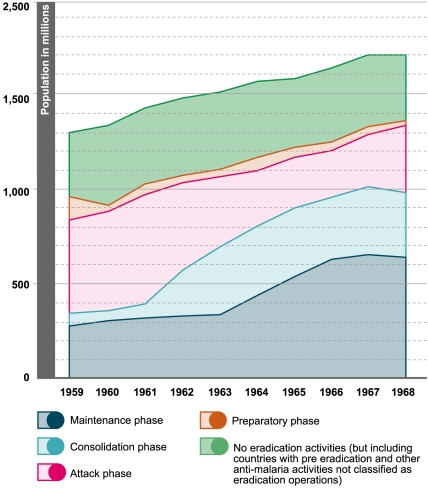
“Figure: Figure 2 Progress of the campaign, presented to the 8th WHA [16]. Image credit: Fusión Creativa.”
§ Some Lessons for the Future from the Global Malaria Eradication Programme (1955–1969) > After Global Eradication: A Return to Control
“The evaluation illustrated the slowing down of the global campaign [16], particularly after 1966 (Figure 2).”
Citations
Cites
(1988) · World Health Organization eBooks · Cited by 1,574
Elwood, J. M. (1989) · Journal of Epidemiology and Community Health · doi:10.1136/jech.43.1.92 · Cited by 1,412
The Epidemiology and Control of Malaria
(1960) · Medical Journal of Australia · doi:10.5694/j.1326-5377.1960.tb105313.x · Cited by 1,255
CONQUERING THE INTOLERABLE BURDEN OF MALARIA: WHAT’S NEW, WHAT’S NEEDED: A SUMMARY
BREMAN, J. G., ALILIO, M. S., & MILLS, A. (2004) · The American Journal of Tropical Medicine and Hygiene · doi:10.4269/ajtmh.2004.71.2_suppl.0700001 · Cited by 677 · cited 1×
“Although there are obviously great differences in the epidemiology and the response to control interventions between smallpox and malaria, these strategic considerations should now be taken into account in the malaria eradication programme where a lack of flexibility, an incapacity to adapt to changing situations, and…”
BackgroundEPIDEMIOLOGY AND CONTROL OF MALARIA
Covell, G. (1957) · BMJ · doi:10.1136/bmj.2.5059.1477 · Cited by 532
A Textbook of Malaria Eradication.
(1970) · Annals of Internal Medicine · doi:10.7326/0003-4819-73-4-674_2 · Cited by 208
Epidemiological basis of malaria control.
MacDonald, G. F. (1956) · Europe PMC (PubMed Central) · Cited by 196
(2001) · PubMed · Cited by 164
Self-citationControl to elimination: implications for malaria research
Greenwood, B. M. (2008) · Trends in Parasitology · doi:10.1016/j.pt.2008.07.002 · Cited by 155 · cited 1×
“Although there are obviously great differences in the epidemiology and the response to control interventions between smallpox and malaria, these strategic considerations should now be taken into account in the malaria eradication programme where a lack of flexibility, an incapacity to adapt to changing situations, and…”
BackgroundCold war, deadly fevers: malaria eradication in Mexico, 1955-1975
(2008) · doi:10.5860/choice.45-5021 · Cited by 118
Cited by
Items 201–300 of 397
Global scenario of Plasmodium vivax occurrence and resistance pattern
Kaur, D., Sinha, S., & Sehgal, R. (2022) · Journal of Basic Microbiology · doi:10.1002/jobm.202200316 · Cited by 12
The Spread of Mosquito-Borne Diseases: A Major and Global Public Health Problem
Vega-Rúa, A., & Okech, B. A. (2019) · Springer eBooks · doi:10.1007/978-3-030-05060-3_1 · Cited by 17
Onen, H., Kaddumukasa, M. A., Kayondo, J., Akol, A. M., & Tripet, F. (2024) · Parasites & Vectors · doi:10.1186/s13071-024-06332-3 · Cited by 15
Kastner, R. J., Sicuri, E., Stone, C., Matwale, G. K., Onapa, A. W., & Tediosi, F. (2017) · PLoS neglected tropical diseases · doi:10.1371/journal.pntd.0005934 · Cited by 10
Msugupakulya, B. J., Mhumbira, N. T., Mziray, D. T., Kilalangongono, M., Jumanne, M., Ngowo, H. S., Kahamba, N. F., Limwagu, A. J., Mollel, M. L., Selvaraj, P., et al. (2024) · Malaria Journal · doi:10.1186/s12936-024-05172-x · Cited by 10
Insecticide Resistance and Its Impact on Vector Control
Paine, M. J. I., & Brooke, B. D. (2016) · Springer eBooks · doi:10.1007/978-3-319-31800-4_15 · Cited by 16
The resistome and genomic reconnaissance in the age of malaria elimination
Kümpornsin, K., Kochakarn, T., & Chookajorn, T. (2019) · Disease Models & Mechanisms · doi:10.1242/dmm.040717 · Cited by 9
Renar, K. S., Iskra, J., & Križaj, I. (2016) · Toxicon · doi:10.1016/j.toxicon.2016.06.017 · Cited by 14
Ivermectin treatment in humans for reducing malaria transmission
de Souza, D. K., Thomas, R., Bradley, J., Leyrat, C., Boakye, D. A., & Okebe, J. (2021) · Cochrane Database of Systematic Reviews · doi:10.1002/14651858.cd013117.pub2 · Cited by 15
From malaria control to elimination in South Africa: The researchers’ perspectives
Hlongwana, K. W., & Tsoka-Gwegweni, J. M. (2016) · African Journal of Primary Health Care & Family Medicine · doi:10.4102/phcfm.v8i1.1078 · Cited by 8
Hast, M. A., Mharakurwa, S., Shields, T. M., Lubinda, J., Searle, K. M., Gwanzura, L., Munyati, S. S., & Moss, W. J. (2022) · BMC Infectious Diseases · doi:10.1186/s12879-022-07903-4 · Cited by 8
West, N., Gyeltshen, S., Dukpa, S., Khoshnood, K., Tashi, S., Durante, A., & Parikh, S. (2016) · Frontiers in Public Health · doi:10.3389/fpubh.2016.00167 · Cited by 10
Puerta-Guardo, H. N., & Manrique-Saide, P. C. (2022) · IntechOpen eBooks · doi:10.5772/intechopen.98177 · Cited by 12
Inter-city movement pattern of notifiable infectious diseases in China: a social network analysis
Yu, L.-J., Ji, P., Ren, X., Wang, Y., Lv, C., Geng, M., Chen, J., Tang, T., Shan, C.-X., Lin, S.-H., et al. (2024) · The Lancet Regional Health - Western Pacific · doi:10.1016/j.lanwpc.2024.101261 · Cited by 20
Oviedo, A., Herman, C., Knipes, A., Worrell, C. M., Fox, L. M., Désir, L., Fayette, C., Javel, A., Monestime, F., Mace, K. E., et al. (2022) · PLoS neglected tropical diseases · doi:10.1371/journal.pntd.0010049 · Cited by 11
Killeen, G. F., & Reed, T. E. (2018) · Malaria Journal · doi:10.1186/s12936-018-2441-z · Cited by 8
Drug Resistance in Protozoal Infections
Rizwan, H. M., Abbas, H., Sajid, M. S., Maqbool, M., Jones, M. K., Ullah, M. I., & Ijaz, N. (2021) · Springer eBooks · doi:10.1007/978-3-030-76320-6_4 · Cited by 9
Targeting Plasmodium with constrained peptides and peptidomimetics
Helton, L. G., & Kennedy, E. J. (2020) · IUBMB Life · doi:10.1002/iub.2244 · Cited by 9
Getting ready for malaria elimination: a check list of critical issues to consider
González-Silva, M., Bassat, Q., & Alonso, P. L. (2014) · Memórias do Instituto Oswaldo Cruz · doi:10.1590/0074-0276140205 · Cited by 8
Self-citationControl of Communicable Diseases as a Global Public Good
(2020) · doi:10.20900/mo20200002 · Cited by 8
Nie, P., He, C., & Feng, J. (2024) · Ecology and Evolution · doi:10.1002/ece3.70059 · Cited by 9
Lindblade, K. A., Li, X. H., Galappaththy, G. L., et al. (2019) · Methods in molecular biology · doi:10.1007/978-1-4939-9550-9_1 · Cited by 6
Origin of the human malaria parasite Plasmodium vivax
Sharp, P. M., Plenderleith, L. J., Culleton, R. L., & Hahn, B. H. (2024) · Trends in Parasitology · doi:10.1016/j.pt.2024.05.001 · Cited by 7
Parra-Henao, G., Coelho, G. E., Escobar, J. P., Gonzálvez, G., & Bezerra, H. S. D. S. (2021) · Therapeutic Advances in Infectious Disease · doi:10.1177/2049936121997655 · Cited by 11
Nejad, M. I. K., Djadid, N. D., & Raz, A. (2018) · Journal of Medical Entomology · doi:10.1093/jme/tjy127 · Cited by 9
Kemibala, E. E., Mafra‐Neto, A., Saroli, J., Silva, R. O. S., Philbert, A., Ng’habi, K. R., Foster, W. A., Dekker, T., & Mboera, L. E. G. (2020) · Malaria Journal · doi:10.1186/s12936-020-03395-2 · Cited by 7
Mathematical modeling of malaria vaccination with seasonality and immune feedback
Qu, Z., Patterson, D., Zhao, L., Ponce, J., Edholm, C. J., Prosper, O., & Childs, L. M. (2025) · PLoS Computational Biology · doi:10.1371/journal.pcbi.1012988 · Cited by 10
Global Health and Its Limitations: An Historical Perspective
Bump, J. B. (2025) · Health Systems & Reform · doi:10.1080/23288604.2025.2478681 · Cited by 8
Sterrett, S. G. (2013) · Studies in History and Philosophy of Science Part A · doi:10.1016/j.shpsa.2013.11.006 · Cited by 13
Preston, A., Okebe, J., Balen, J., Ribera, J. M., Masunaga, Y., Bah, A. S., Dabira, E. D., & D’Alessandro, U. (2019) · Journal of Global Health Reports · doi:10.29392/joghr.3.e2019084 · Cited by 5
Factors impacting sustained coverage in the context of donor transitions: experience from Sri Lanka
Perera, P. N., Amarasinghe, S., Fonseka, S., Abeysinghe, N., & Rannan-Eliya, R. P. (2024) · Health Policy and Planning · doi:10.1093/heapol/czad099 · Cited by 5
African Studies Keyword: Malaria
Graboyes, M., & Alidina, Z. (2021) · African Studies Review · doi:10.1017/asr.2021.133 · Cited by 5
Lessons Learned From Developing an Eradication Investment Case for Lymphatic Filariasis
Kastner, R. J., Stone, C., Steinmann, P., Tanner, M., & Tediosi, F. (2016) · Advances in Parasitology/Advances in parasitology · doi:10.1016/bs.apar.2016.08.004 · Cited by 6
Tediosi, F., Lengeler, C., Castro, M. C., Shretta, R., Levin, C., Wells, T. N. C., & Tanner, M. (2017) · World Bank, Washington, DC eBooks · doi:10.1596/978-1-4648-0524-0_ch13 · Cited by 9
Shah, R. M., Ali, Q., Alam, M., Shad, S. A., Majeed, S., Riaz, M., & Binyameen, M. (2016) · Journal of Medical Entomology · doi:10.1093/jme/tjw211 · Cited by 7
Introduction to the Symposium: Effects of Light Pollution Across Diverse Natural Systems
Kernbach, M. E., Miller, C. R., Alaasam, V., Ferguson, S. M., & Francis, C. D. (2021) · Integrative and Comparative Biology · doi:10.1093/icb/icab157 · Cited by 5
Tournier, J. (2019) · médecine/sciences · doi:10.1051/medsci/2019005 · Cited by 7
Willis, D., & Hamon, N. (2020) · Gates Open Research · doi:10.12688/gatesopenres.13154.1 · Cited by 5
Epidemiology of Plasmodium falciparum malaria
García‐Basteiro, A. L., Bassat, Q., & Alonso, P. L. (2016) · Wiley eBooks · doi:10.1002/9781118493816.ch15 · Cited by 3
Self-citationSynthesis and immunological evaluation of peptide-based vaccine candidates against malaria
Chandrudu, S., Skwarczyński, M., Pattinson, D. J., Apte, S. H., Doolan, D. L., & Tóth, I. (2016) · Biochemical Compounds · doi:10.7243/2052-9341-4-1 · Cited by 5
Implementing a community vector collection strategy for monitoring vector-borne diseases in Ghana
Boakye, D. A., Frempong, K. K., Ogoussan, K., Otoo, S., Polo, M. R., Dadzie, S., & de Souza, D. K. (2019) · Gates Open Research · doi:10.12688/gatesopenres.12933.2 · Cited by 4
What constitutes high-quality evidence for malaria vector control?
Hawley, W. A., Laihad, F., Ochomo, E., Achee, N. L., Grieco, J. P., Armistead, J. S., & Nahlen, B. L. (2023) · The Lancet · doi:10.1016/s0140-6736(23)01423-x · Cited by 4
Mathematics of Malaria and Climate Change
Eikenberry, S. E., & Gumel, A. B. (2019) · Mathematics of planet earth · doi:10.1007/978-3-030-22044-0_4 · Cited by 6
Ivermectin treatment in humans for reducing malaria transmission
de Souza, D. K., Larbi, I. A., Boakye, D. A., & Okebe, J. (2018) · Cochrane Database of Systematic Reviews · doi:10.1002/14651858.cd013117 · Cited by 4
Bhattarai, S., Blackburn, J. K., McKune, S. L., & Ryan, S. J. (2023) · Spatial and Spatio-temporal Epidemiology · doi:10.1016/j.sste.2023.100576 · Cited by 6
Indoor residual spraying for preventing malaria
Choi, L., McIntyre, S. L., & Furnival-Adams, J. (2019) · Cochrane Database of Systematic Reviews · doi:10.1002/14651858.cd013300 · Cited by 5
RetractedVirus Eradication and Synthetic Biology: Changes with SARS-CoV-2?
Tournier, J., & Kononchik, J. P. (2021) · Viruses · doi:10.3390/v13040569 · Cited by 6
Settler Sensibilities and Environmental Change
(2023) · doi:10.1215/00219118-10687313 · Cited by 4
Bethencourt, C., Marrero, G. A., & Ngoudji, C. Y. (2021) · The Journal of Development Studies · doi:10.1080/00220388.2023.2197544 · Cited by 5
Lusiyana, N., & Ahdika, A. (2022) · Infectious Disease Modelling · doi:10.1016/j.idm.2022.05.008 · Cited by 12
Vector control at a crossroad: Grappling with multiple challenges
Kumar, A. S., & Govindasamy, D. (2025) · The Indian Journal of Medical Research · doi:10.25259/ijmr_1953_2025 · Cited by 4
Brew, J., Pradhan, M., Broerse, J. E. W., & Bassat, Q. (2020) · Malaria Journal · doi:10.1186/s12936-020-03430-2 · Cited by 4
Hakizimana, E. (2019) · doi:10.18174/464552 · Cited by 5
Analysing malaria events from 1840 to 2020: the narrative told through postage stamps
Brabin, B. J. (2021) · Malaria Journal · doi:10.1186/s12936-021-03932-7 · Cited by 8
Public health decisions: Actions and consequences
Pohl, H. R., Jones, D. E., Holler, J. S., & Murray, H. (2014) · Regulatory Toxicology and Pharmacology · doi:10.1016/j.yrtph.2014.07.023 · Cited by 3
A Malaria-Free World? Bring Back Public Health Entomologists
Lluberas, M., & Kramer, B. (2024) · Current Tropical Medicine Reports · doi:10.1007/s40475-024-00331-1 · Cited by 5
Kheang, S. T., Preston, A., Collins, E. L., An, Y., Phalla, H., Ir, P., Lek, D., Huy, R., Siv, S., AlMossawi, H. J., et al. (2019) · Preventive Medicine and Community Health · doi:10.15761/pmch.1000127 · Cited by 5
Global Health Funding Agencies: Developing New Institutions to Finance Health Needs
Halabi, S., & Gostin, L. O. (2023) · Oxford University Press eBooks · doi:10.1093/law/9780197687710.003.0015 · Cited by 3
Cohen, R., Cardona, J. S., Navarro, E. S., Padilla, N., Reyes, L., Villar, R. J. P., Masuoka, P. M., Bernart, C., Peruski, L. F., & Bryan, J. P. (2017) · American Journal of Tropical Medicine and Hygiene · doi:10.4269/ajtmh.15-0698 · Cited by 4
Tripathy, A., Mohanty, A., & Kar, S. K. (2016) · International Journal of Research in Medical Sciences · doi:10.18203/2320-6012.ijrms20161984 · Cited by 3
Spaans, R. H., Mkumbwa, A., Nasoni, P., Jones, C. M., & Stanton, M. C. (2024) · PLOS Global Public Health · doi:10.1371/journal.pgph.0002264 · Cited by 8
Spotlight on Plasmodium falciparum evolutionary system in the southeastern Atlantic forest
Laporta, G. Z. (2017) · Biota Neopropica/Biota Neotropica · doi:10.1590/1676-0611-bn-2016-0314 · Cited by 2
Nwokedi, V. U., Akanbi, O. O., Ayo-ige, B. A., Aderounmu, R. A., Kassim, N., Aneke, O. B., Inumimo, O., Ilesanmi, O. J., Luper, T., & Farinde, T. D. (2025) · Australian Journal of Biomedical Research · doi:10.63946/aubiomed/17426 · Cited by 6
Malaria and tuberculosis co-infection:role for hemozoin immunosuppression?
Frita, R. (2014) · Portuguese National Funding Agency for Science, Research and Technology (RCAAP Project by FCT) · Cited by 3
Reducing Malaria in Solomon Islands: Lessons for Effective Aid
(2017) · doi:10.2139/ssrn.3070737 · Cited by 2
Optimal Control Strategies for Minimizing Malaria Transmission in Kenya
Okello, G. O. (2016) · Cited by 2
T Cell-Based Vaccines: Hope for Malaria Elimination
Tandel, N., & Dalai, S. K. (2021) · Infectious diseases · doi:10.5772/intechopen.96767 · Cited by 2
Okumu, F. O., & Finda, M. F. (2021) · Ecology and control of vector-borne diseases · doi:10.3920/978-90-8686-895-7_3 · Cited by 2
(2014) · Microbiology Australia · doi:10.1071/mav35n3 · Cited by 2
Imported malaria in Slovenia, 2001–2011
(2012) · doi:10.2478/s11536-011-0159-1 · Cited by 2
Malaria in the horn of Africa: The ongoing battle against drug resistance
Platon, L., Zhang, Q., Cao, J., & Ménard, D. (2023) · Clinical and Translational Medicine · doi:10.1002/ctm2.1482 · Cited by 3
COVID-19 and Malaria: A Comparative Study of Epidemiology, Burden, and Challenges
Hussien, H. H. (2022) · Advances in Infectious Diseases · doi:10.4236/aid.2022.124053 · Cited by 4
Ostoich, P. V., Beltcheva, M., Takov, D., Pilarska, D., Aleksieva, I., & Peeva, N. (2025) · Environmental sciences · doi:10.5772/intechopen.1011962 · Cited by 5
Nucleic Acid Surveillance and Malaria Elimination
(2015) · doi:10.1373/clinchem.2015.240705 · Cited by 2
Requisites for a new history of malaria
(2012) · doi:10.7705/biomedica.v32i0.696 · Cited by 2
Eliminación de la malaria en el Perú
Peña-Sánchez, E. R. (2019) · Revista del Cuerpo Médico Hospital Nacional Almanzor Aguinaga Asenjo · doi:10.35434/rcmhnaaa.2019.121.476 · Cited by 3
Are ultra-sensitive molecular tools needed to detect malaria transmitters?
Rosanas‐Urgell, A., & Kattenberg, J. H. (2018) · The Lancet Infectious Diseases · doi:10.1016/s1473-3099(18)30432-8 · Cited by 1
Mosquitoes and the Risk of Pathogen Transmission in Europe
Steinbrink, A., Cunze, S., Koch, L. K., Dörge, D. D., Zotzmann, S., Kochmann, J., & Klimpel, S. (2018) · Parasitology research monographs · doi:10.1007/978-3-319-94075-5_10 · Cited by 1
Metadata
- Authors
- Nájera, J. A., González-Silva, M., & Alonso, P. L.
- Affiliations
- World Health Organization (CH)
- Hospital Clínic de Barcelona (ES)
- Corresponding author
- Nájera, José A.
- ORCID
- Alonso, Pedro L.
- Venue
- PLoS Medicine
- Publisher
- Public Library of Science (PLoS)
- Published
- 2011-01-25
- Volume
- 8
- Issue
- 1
- Pages
- e1000412
- ISSN
- 1549-1277 (ISSN-L)
- 1549-1676
- PMC
- PMC3026700
- OpenAlex
- W2168653390
- Cited by
- 406
- References
- 27
- Citations by year
- 2026: 16 · 2025: 15 · 2024: 14 · 2023: 18 · 2022: 24 · 2021: 31 · 2020: 40 · 2019: 29 · 2018: 31 · 2017: 34 · 2016: 33 · 2015: 24 · 2014: 28 · 2013: 27 · 2012: 23
- FWCI
- 30.42
- Type
- journal article
- Language
- en
- Open access
- gold
- doi.org
- Locations
- PLoS Medicine (publishedVersion, cc-by)
- PubMed Central (publishedVersion, cc-by)
- PubMed (publishedVersion)
- RePEc: Research Papers in Economics (submittedVersion)
- DOAJ (DOAJ: Directory of Open Access Journals) (submittedVersion, cc-by-sa)
- Funders
- Bill and Melinda Gates Foundation
- Topics
- Health Sciences › Medicine › Public Health, Environmental and Occupational Health › Malaria Research and Control
- Social Sciences › Arts and Humanities › History › History of Medicine and Tropical Health
- Health Sciences › Medicine › Public Health, Environmental and Occupational Health › Mosquito-borne diseases and control
- Keywords
- malaria eradication, malaria elimination, DDT, malaria resurgence, malaria control, community participation, health system integration, malaria surveillance, lessons learned
- MeSH terms
- Africa, Animals, Anopheles, Asia, Community Participation, DDT, Delivery of Health Care, Forecasting, Health Policy, Humans, Insect Vectors, Insecticides, Malaria, Mosquito Control, Plasmodium, Politics, Population Surveillance, Research, South America, Global Health, World Health Organization, Program Evaluation, Endemic Diseases, Interdisciplinary Communication
About these checks
Registry, retraction, Cites and statistics results are computed, not judged, with one exception: a printed reference that no index lists is read once by a model before it counts as a citation error. Claims are extracted by a model and kept only when their quote appears verbatim in the text; each cited source is then checked, with a model’s help, for whether it says what the claim relies on. Those verdicts can be wrong — read the claim’s quote and the cited source before relying on one.
The claim verdicts this report counts are experimental: their accuracy is not yet measured.
A language model drew the claims from the paper on 2026-10-10, under version 3 of the claim definition (model deepseek-v4.1-flash, prompt extract-v3).
A second model labelled each claim on 2026-10-10 (model jev-1.13-20260917, definition revision gold-guideline-v0.2).
Statistics and arithmetic are recomputed, not judged.
Confidence bands are shown only for fields calibrated on our annotated test set. None is calibrated yet, so no band is shown.
What counts as a claim ›How we measure confidence ›How we check this ›
Are you an author, or do you see a problem with this page? Request a review
Data sources
Bibliographic data: Semantic Scholar, OpenAlex, Crossref.
Contains information from the Semantic Scholar Academic Graph Datasets, made available under the ODC Attribution License (ODC-BY 1.0).
Semantic Scholar’s data is described in: Kinney, R., et al. (2023). The Semantic Scholar Open Data Platform. arXiv:2301.10140.
