

Some Lessons for the Future from the Global Malaria Eradication Programme (1955–1969)
Open accessThe DOI matches its Crossref record; 21 of the 27 references it cites were found in a registry or an index; 1 of the 17 sources its claims cite were checked for support.
Abstract
Encouraged by the early success of using dichloro-diphenyl-trichloroethane (DDT) against malaria, the World Health Organization (WHO) embarked on the Global Malaria Eradication Program (GMEP) in 1955. Fourteen years later, the campaign was discontinued when it was recognised that eradication was not achievable with the available means in many areas, although the long-term goal remained unchanged. During the GMEP, malaria was permanently eliminated from many regions. In other areas, however, substantial gains were lost in resurgences, sometimes of epidemic proportions. During the 1970s and 1980s, because of economic and financial crises, international support for malaria control declined rapidly, but in the past decade, following increasing demands from endemic countries and promising results from scaling up of control activities, interest in malaria elimination and the long-term goal of eradication has received international political and financial support. In 2007, there was a renewed call for malaria eradication and a consultative process to define a research and development agenda for malaria eradication (malERA) was established. Lessons learned from the GMEP (1955-1969) highlight the fact that no single strategy can be applicable everywhere and that a long-term commitment with a flexible strategy that includes community involvement, integration with health systems, and the development of agile surveillance systems is needed.
Overview
CoChat Summary
TL;DR
This historical review of the Global Malaria Eradication Programme (1955–1969) argues that its rigid, vertical, DDT-focused campaign and neglect of local epidemiology, surveillance, and research contributed to resurgences and limited sustainability. It draws lessons for current elimination efforts: integrate programmes into health systems, build community-rooted surveillance and professional cadres, and link control with research.
Key findings
- The GMEP was approved by the 8th World Health Assembly in 1955; by 1969 the 22nd WHA recognized that in some countries eradication was not feasible in the short term and that control was a valid step toward eradication. US contributions to the WHO Malaria Special Account, more than 85% of the total, stopped in 1963.
- The campaign relied basically on indoor residual spraying and abandoned other measures; problem areas were recognized only in the mid-1960s after vector avoidance of insecticide contact in southern Mexico. Chloroquine resistance was confirmed in 1960 after treatment failures reported since the late 1950s from Venezuela and Thailand, and DDT resistance in Greece appeared in 1951.
- Resurgences occurred after interruption of transmission, including the 1968–1969 epidemic in Sri Lanka, where surveillance had not reacted to 4 years of clear deterioration (1963–1967) or to 30 years of accumulated knowledge about epidemic periodicity. Stop-spraying indicators included annual parasite incidence <0.5/1,000 and <0.1/1,000 in the 8th and 10th Expert Committee reports, annual blood examination rate >10%, and slide positivity rate <5%.
- Lessons include the need for flexible strategies integrated into national health infrastructure, strengthened professional cadres, community involvement and ownership, close links with field and laboratory research, and surveillance from the start. Table 1 lists countries and regions certified malaria free up to 2010, grouped by long history of control, tourism-oriented islands, and other.
Methods
- Historical review and commentary examining the evolution, implementation, and outcome of the Global Malaria Eradication Programme (1955–1969), drawing on WHO resolutions, Expert Committee reports, historical literature, and the authors’ experience.
- Qualitative synthesis of lessons for current elimination and eradication efforts; no primary data collection or formal systematic review is described.
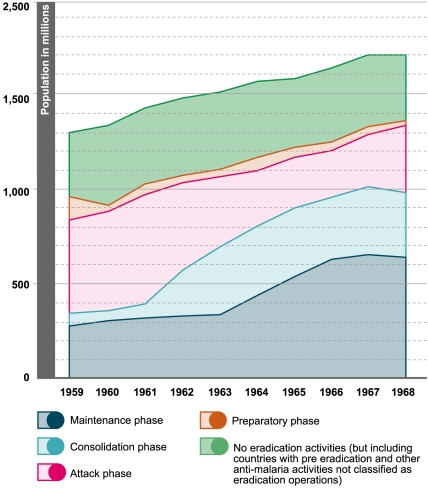
- Includes Table 1 of countries and regions certified malaria free up to 2010 and figures on campaign phases and progress.
Limitations
- The paper states it is “not a comprehensive coverage of the problems of malaria control,” indicating a deliberately limited scope.
- Evident from the text: it is a narrative historical review relying on selected documents and the authors’ experience, without a described systematic search or quantitative analysis.
- Evident from the text: the lessons are interpretive; the paper itself notes continuing disagreements among experts about integration with health services and gaps between formulating and applying lessons.
Model-written summary. Check it against the paper before relying on it.
Integrity signals
Registry
Cites
Statistics
Figures
Verification
Claims the paper makes
1 Valid · 4 Not valid · 13 Not checked · 33 Own results and interpretations
A result the paper states — it cites no source for it, so there is none to check. The quote shows it is in the paper.
In the paper
“This reduction of programme resources, aided by a strong La Niña in 1975–1976, resulted in severe epidemics in several countries, particularly in the Indian subcontinent and Turkey.”
§ Some Lessons for the Future from the Global Malaria Eradication Programme (1955–1969) > Malaria Control during the 1970s and 1980s
plainstates a cause- Asserted: passes — The authors put it forward as true.
- Checkable: passes — It can be checked against evidence.
- Load-bearing: passes — The paper’s conclusions depend on it.
- Based: passes — The paper gives a reason why it holds.
A result the paper states — it cites no source for it, so there is none to check. The quote shows it is in the paper.
In the paper
“By 1962, it was already recognised that the consolidation phase required an infrastructure capable of supporting epidemiological surveillance.”
§ Some Lessons for the Future from the Global Malaria Eradication Programme (1955–1969) > Malaria Resurgences after Interruption of Transmission
plain- Asserted: passes — The authors put it forward as true.
- Checkable: passes — It can be checked against evidence.
- Load-bearing: passes — The paper’s conclusions depend on it.
- Based: passes — The paper gives a reason why it holds.
In the paper
“its widespread application rapidly led to the first appearance of vector resistance to DDT in Greece in 1951 [4].”
§ Some Lessons for the Future from the Global Malaria Eradication Programme (1955–1969) > The Impact of DDT
What the sources say
- Not checked — no full text of the sourcecites [4] Livadas GA Georgopoulos G 1953 Development of resistance to DDT by Anopheles sacharovi in Greece. Bull World Health Organ 8 497 511 13066984 PMC2554166
plainstates a cause- Asserted: passes — The authors put it forward as true.
- Checkable: passes — It can be checked against evidence.
- Load-bearing: unclear — It is unclear whether the paper’s conclusions depend on it.
- Based: passes — The paper gives a reason why it holds.
A result the paper states — it cites no source for it, so there is none to check. The quote shows it is in the paper.
In the paper
“It was only in the mid-1960s that the existence of “problem areas” was recognised, after evidence of vector avoidance of contact with the insecticide in southern Mexico was confirmed.”
§ Some Lessons for the Future from the Global Malaria Eradication Programme (1955–1969) > Outcomes of the Campaign
plainstates a cause- Asserted: passes — The authors put it forward as true.
- Checkable: passes — It can be checked against evidence.
- Load-bearing: passes — The paper’s conclusions depend on it.
- Based: passes — The paper gives a reason why it holds.
A result the paper states — it cites no source for it, so there is none to check. The quote shows it is in the paper.
In the paper
“The lack of professional incentives as a result of the routine work imposed during the GMEP had reduced the professional cadres.”
§ Some Lessons for the Future from the Global Malaria Eradication Programme (1955–1969) > Malaria Control during the 1970s and 1980s
plainstates a cause- Asserted: passes — The authors put it forward as true.
- Checkable: passes — It can be checked against evidence.
- Load-bearing: passes — The paper’s conclusions depend on it.
- Based: passes — The paper gives a reason why it holds.
14 more claims
Create a free account to see all 51 claims and to verify the 6 references still open.
- It may state two separate claims as one. 25
- Probably not a substantial claim. 9
- The quote only partly states this claim. 1
Self-check
Percentages, sums and reported differences re-computed from the paper’s own numbers.
Each contradiction between two passages listed here was confirmed by an independent check.
Rated minor: it would not touch a result — a value no result rests on, a p-value that stays on the same side of the significance level, or a conflict that is clerical, resolved elsewhere in the paper, or outside its own findings.
In the paper
§ Some Lessons for the Future from the Global Malaria Eradication Programme (1955–1969) > After Global Eradication: A Return to Control
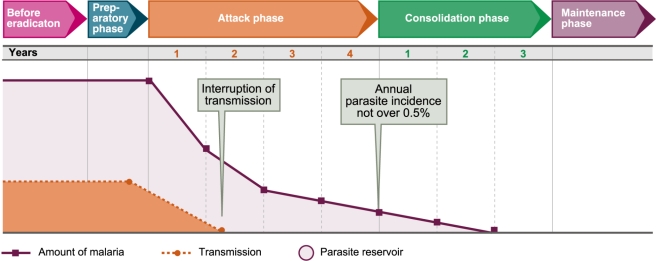
“Figure: Figure 2 Progress of the campaign, presented to the 8th WHA [16]. Image credit: Fusión Creativa.”
§ Some Lessons for the Future from the Global Malaria Eradication Programme (1955–1969) > After Global Eradication: A Return to Control
“The evaluation illustrated the slowing down of the global campaign [16], particularly after 1966 (Figure 2).”
Citations
Cites
(1988) · World Health Organization eBooks · Cited by 1,574
Elwood, J. M. (1989) · Journal of Epidemiology and Community Health · doi:10.1136/jech.43.1.92 · Cited by 1,412
The Epidemiology and Control of Malaria
(1960) · Medical Journal of Australia · doi:10.5694/j.1326-5377.1960.tb105313.x · Cited by 1,255
CONQUERING THE INTOLERABLE BURDEN OF MALARIA: WHAT’S NEW, WHAT’S NEEDED: A SUMMARY
BREMAN, J. G., ALILIO, M. S., & MILLS, A. (2004) · The American Journal of Tropical Medicine and Hygiene · doi:10.4269/ajtmh.2004.71.2_suppl.0700001 · Cited by 677 · cited 1×
“Although there are obviously great differences in the epidemiology and the response to control interventions between smallpox and malaria, these strategic considerations should now be taken into account in the malaria eradication programme where a lack of flexibility, an incapacity to adapt to changing situations, and…”
BackgroundEPIDEMIOLOGY AND CONTROL OF MALARIA
Covell, G. (1957) · BMJ · doi:10.1136/bmj.2.5059.1477 · Cited by 532
A Textbook of Malaria Eradication.
(1970) · Annals of Internal Medicine · doi:10.7326/0003-4819-73-4-674_2 · Cited by 208
Epidemiological basis of malaria control.
MacDonald, G. F. (1956) · Europe PMC (PubMed Central) · Cited by 196
(2001) · PubMed · Cited by 164
Self-citationControl to elimination: implications for malaria research
Greenwood, B. M. (2008) · Trends in Parasitology · doi:10.1016/j.pt.2008.07.002 · Cited by 155 · cited 1×
“Although there are obviously great differences in the epidemiology and the response to control interventions between smallpox and malaria, these strategic considerations should now be taken into account in the malaria eradication programme where a lack of flexibility, an incapacity to adapt to changing situations, and…”
BackgroundCold war, deadly fevers: malaria eradication in Mexico, 1955-1975
(2008) · doi:10.5860/choice.45-5021 · Cited by 118
Cited by
Items 101–200 of 397
Lessons from malaria control to help meet the rising challenge of dengue
Anders, K. L., & Hay, S. I. (2012) · The Lancet Infectious Diseases · doi:10.1016/s1473-3099(12)70246-3 · Cited by 38
Che‐Mendoza, A., Medina‐Barreiro, A., Koyoc-Cardeña, E., Uc-Puc, V., Contreras‐Perera, Y., Herrera‐Bojórquez, J., Dzul-Manzanilla, F., Morales, F. C., Ranson, H., Lenhart, A. E., et al. (2018) · PLoS neglected tropical diseases · doi:10.1371/journal.pntd.0006283 · Cited by 51
Oliva, C. F., Vreysen, M. J. B., Dupé, S., Lees, R. S., Gilles, J. R. L., Gouagna, L., & Chhem, R. K. (2013) · Acta Tropica · doi:10.1016/j.actatropica.2013.11.019 · Cited by 50
Padilha, M. A. D. O., Melo, J. D. O., Romano, G., de Lima, M. V. M., Alonso, W. J., Sallum, M. A. M., & Laporta, G. Z. (2019) · Malaria Journal · doi:10.1186/s12936-019-2938-0 · Cited by 45
Hast, M. A., Searle, K. M., Chaponda, M., Lupiya, J. S., Lubinda, J., Sikalima, J., Kobayashi, T., Shields, T., Mulenga, M., Lessler, J., et al. (2019) · International Journal of Health Geographics · doi:10.1186/s12942-019-0183-y · Cited by 38
A Research Agenda for Malaria Eradication: Cross-Cutting Issues for Eradication
The malERA Consultative Group on Integration Strategies (2011) · PLoS Medicine · doi:10.1371/journal.pmed.1000404 · Cited by 43
Urban, P., & Fernandez-Busquets, X. (2014) · Current Medicinal Chemistry · doi:10.2174/09298673113206660292 · Cited by 39
Progress in the Development of Subunit Vaccines against Malaria
Skwarczyński, M., Chandrudu, S., Rigau-Planella, B., Islam, M. T., Cheong, Y. S., Liu, G., Wang, X., Tóth, I., & Hussein, W. M. (2020) · Vaccines · doi:10.3390/vaccines8030373 · Cited by 50
Arinaitwe, E., Dorsey, G., Nankabirwa, J. I., Kigozi, S. P., Katureebe, A., Kakande, E. R., Rek, J. C., Rosenthal, P. J., DRAKELEY, C. J., Kamya, M. R., et al. (2018) · Clinical Infectious Diseases · doi:10.1093/cid/ciy478 · Cited by 26
Transition-State Inhibitors of Purine Salvage and Other Prospective Enzyme Targets in Malaria
Ducati, R. G., Namanja-Magliano, H. A., & Schramm, V. L. (2013) · Future Medicinal Chemistry · doi:10.4155/fmc.13.51 · Cited by 38
Rapid diagnostic tests for malaria
Visser, T., Daily, J., Hotte, N., Dolkart, C., Cunningham, J. A., & Yadav, P. (2015) · Bulletin of the World Health Organization · doi:10.2471/blt.14.151167 · Cited by 37
Larsen, D. A., Borrill, L., Patel, R., & Fregosi, L. (2017) · Malaria Journal · doi:10.1186/s12936-017-1893-x · Cited by 27
Breman, J. G., & Brandling-Bennett, A. D. (2011) · Vaccine · doi:10.1016/j.vaccine.2011.12.003 · Cited by 41
Udayanga, L., Ranathunge, T., Iqbal, M. C. M., Abeyewickreme, W., & Hapugoda, M. D. (2019) · PLoS ONE · doi:10.1371/journal.pone.0216140 · Cited by 40
Global Cross-Border Malaria Control Collaborative Initiatives: A Scoping Review
Fambirai, T., Chimbari, M. J., & Ndarukwa, P. (2022) · International Journal of Environmental Research and Public Health · doi:10.3390/ijerph191912216 · Cited by 42
Kamya, M. R., Kakuru, A., Muhindo, M. K., Arinaitwe, E., Nankabirwa, J. I., Rek, J. C., Bigira, V., Kapisi, J., Wanzira, H., Achan, J., et al. (2020) · American Journal of Tropical Medicine and Hygiene · doi:10.4269/ajtmh.20-0100 · Cited by 30
Kaur, H., Sehgal, R., Kumar, A., Bharti, P. K., Bansal, D., Mohapatra, P. K., Mahanta, J., & Sultan, A. A. (2020) · BMC Infectious Diseases · doi:10.1186/s12879-020-05397-6 · Cited by 15
Epidemiology of Plasmodium vivax Malaria Infection in Nepal
(2018) · doi:10.4269/ajtmh.18-0373 · Cited by 34
Identification of O-GlcNAcylated proteins in Plasmodium falciparum
Kupferschmid, M., Aquino-Gil, M. O., Shams-Eldin, H., Schmidt, J., Yamakawa, N., Krzewinski, F., Schwarz, R. Τ., & Lefebvre, T. (2017) · Malaria Journal · doi:10.1186/s12936-017-2131-2 · Cited by 38
Tchicaya, E. S. F., Nsanzabana, C., Smith, T. A., Donzé, J., Laserna, M. H., Tano, Y., Müller, P., Briët, O., Utzinger, J., & Koudou, B. G. (2014) · Malaria Journal · doi:10.1186/1475-2875-13-332 · Cited by 35
Health systems and global progress towards malaria elimination, 2000–2016
Sahu, M., Tediosi, F., Noor, A. M., Aponte, J. J., & Fink, G. (2020) · Malaria Journal · doi:10.1186/s12936-020-03208-6 · Cited by 39
Regional initiatives for malaria elimination: Building and maintaining partnerships
Lover, A. A., Harvard, K. E., Lindawson, A. E., Gueye, C. S., Shretta, R., Gosling, R. D., & Feachem, R. G. (2017) · PLoS Medicine · doi:10.1371/journal.pmed.1002401 · Cited by 31
Zoonotic and vector-borne parasites and epilepsy in low-income and middle-income countries
Singh, G., Angwafor, S. A., NJAMNSHI, A. K., Fraimow, H. S., & Sander, J. W. A. S. (2020) · Nature Reviews Neurology · doi:10.1038/s41582-020-0361-3 · Cited by 31
Samanmali, C., Udayanga, L., Ranathunge, T., Perera, S. J., Hapugoda, M. D., & Weliwitiya, C. (2018) · BioMed Research International · doi:10.1155/2018/8759459 · Cited by 31
Epidemic and Non-Epidemic Hot Spots of Malaria Transmission Occur in Indigenous Comarcas of Panama
Lainhart, W., Dutari, L. C., Rovira, J. R., Sucupira, I. M. C., Póvoa, M. M., Conn, J. E., & Loaiza, J. R. (2016) · PLoS neglected tropical diseases · doi:10.1371/journal.pntd.0004718 · Cited by 27
Malaria research challenges in low prevalence settings
Stresman, G. H., Kobayashi, T., Kamanga, A., Thuma, P. E., Mharakurwa, S., Moss, W. J., & Shiff, C. (2012) · Malaria Journal · doi:10.1186/1475-2875-11-353 · Cited by 33
Global action for training in malaria elimination
Wirth, D. F., Casamitjana, N., Tanner, M., & Reich, M. R. (2018) · Malaria Journal · doi:10.1186/s12936-018-2199-3 · Cited by 23
Makhanthisa, T. I., Braack, L., & Lutermann, H. (2021) · Parasites & Vectors · doi:10.1186/s13071-021-04846-8 · Cited by 31
Hashimoto, K., Zúñiga, C., Nakamura, J., & Hanada, K. (2015) · BMC Health Services Research · doi:10.1186/s12913-015-0785-4 · Cited by 32
Challenges in Antimalarial Drug Treatment for Vivax Malaria Control
Popovici, J., & Ménard, D. (2015) · Trends in Molecular Medicine · doi:10.1016/j.molmed.2015.10.004 · Cited by 29
Whittaker, M. A., Dean, A. J., & Chancellor, A. (2014) · Malaria Journal · doi:10.1186/1475-2875-13-221 · Cited by 28
Mazigo, H. D., Massawe, I. S., Rumisha, S. F., Kweka, E. J., & Mboera, L. E. G. (2019) · Malaria Journal · doi:10.1186/s12936-019-2697-y · Cited by 26
The Artemisinin Resistance in Southeast Asia: An Imminent Global Threat to Malaria Elimination
Phyo, A. P., & Nosten, F. H. (2018) · InTech eBooks · doi:10.5772/intechopen.76519 · Cited by 30
Rethinking integrated service delivery for malaria
Ansah, E., Moucheraud, C., Arogundade, L., & Rangel, G. W. (2022) · PLOS Global Public Health · doi:10.1371/journal.pgph.0000462 · Cited by 33
Systems biology of malaria explored with nonhuman primates
Galinski, M. R. (2022) · Malaria Journal · doi:10.1186/s12936-022-04199-2 · Cited by 30
Study of the epidemiological behavior of malaria in the Darien Region, Panama. 2015–2017
Cáceres, L., Victoria, C., Ramirez, J. L., Jackman, C., Calzada, J. E., & Torres, R. (2019) · PLoS ONE · doi:10.1371/journal.pone.0224508 · Cited by 24
Platform for Plasmodium vivax vaccine discovery and development
Valencia, S. H., Rodríguez, D. C., Acero, D. L., Ocampo, V., & Arévalo‐Herrera, M. (2011) · Memórias do Instituto Oswaldo Cruz · doi:10.1590/s0074-02762011000900023 · Cited by 26
Broen, K., Dickens, J., Trangucci, R., Ogwang, M. D., Tenge, C., Masalu, N. A., Reynolds, S. J., Kawira, E. L., Kerchan, P., Were, P. A., et al. (2023) · Proceedings of the National Academy of Sciences · doi:10.1073/pnas.2211055120 · Cited by 35
Epidemiology and Current Trends in Malaria
Patel, P. V., Bagada, A. A., & Vadia, N. (2024) · Wiley eBooks · doi:10.1002/9781394188741.ch20 · Cited by 55
Bionomics and ecology of Anopheles merus along the East and Southern Africa coast
Bartilol, B., Omedo, I., Mbogo, C. N. M., MWANGANGI, J. M., & Rono, M. K. (2021) · Parasites & Vectors · doi:10.1186/s13071-021-04582-z · Cited by 27
Rolling back malaria in Africa – challenges and opportunities to winning the elimination battle.
Maharaj, R., Kissoon, S., Lakan, V., & Kheswa, N. S. (2019) · South African Medical Journal · doi:10.7196/samj.2019.v109i11b.14250 · Cited by 23
Malaria control by commodities without practical malariology
Baird, J. K. (2017) · BMC Public Health · doi:10.1186/s12889-017-4454-x · Cited by 24
Newer Approaches for Malaria Vector Control and Challenges of Outdoor Transmission
Beier, J. C., Wilke, A. B. B., & Benelli, G. (2018) · InTech eBooks · doi:10.5772/intechopen.75513 · Cited by 30
Yan, S. L. R., Wakasuqui, F., & Wrenger, C. (2020) · Diagnostic Microbiology and Infectious Disease · doi:10.1016/j.diagmicrobio.2020.115122 · Cited by 29
Malaria elimination: surveillance and response
Bridges, D. J., Winters, A., & Hamer, D. H. (2012) · Pathogens and Global Health · doi:10.1179/2047773212y.0000000035 · Cited by 30
Kattenberg, J. H., Erhart, A., Truong, M. H., Rovira-Vallbona, E., Vu, K., Nguyen, T. H. N., Nguyen, V. H., Nguyen, V. V., Bannister-Tyrrell, M., Theisen, M., et al. (2018) · Malaria Journal · doi:10.1186/s12936-018-2326-1 · Cited by 24
Malaria in Africa Can Be Eliminated
Campbell, C. C., & Steketee, R. W. (2011) · American Journal of Tropical Medicine and Hygiene · doi:10.4269/ajtmh.2011.11-0529 · Cited by 26
Malima, R., Emidi, B., Messenger, L. A., Oxborough, R. M., Batengana, B., Sudi, W., Weston, S., Mtove, G. A., Mugasa, J. P., Mosha, F. W., et al. (2017) · Malaria Journal · doi:10.1186/s12936-017-1710-6 · Cited by 25
Burden of malaria in mobile populations in the Greater Accra region, Ghana: a cross- sectional study
Diallo, N., Akweongo, P., Maya, E. T., Aikins, M., & Sarfo, B. Y. (2017) · Malaria Journal · doi:10.1186/s12936-017-1751-x · Cited by 21
Stone, C., Kastner, R. J., Steinmann, P., Chitnis, N., Tanner, M., & Tediosi, F. (2016) · BMJ Global Health · doi:10.1136/bmjgh-2015-000021 · Cited by 27
Animal models of efficacy to accelerate drug discovery in malaria
Jiménez-Díaz, M. B., Viera, S., Fernández‐Álvaro, E., & Angulo‐Barturen, Í. (2013) · Parasitology · doi:10.1017/s0031182013000991 · Cited by 26
Mitsakakis, K., Hin, S., Müller, P., Wipf, N. C., Thomsen, E. K., Coleman, M. M., Zengerle, R., VONTAS, J. G., & Mavridis, K. (2018) · International Journal of Environmental Research and Public Health · doi:10.3390/ijerph15020259 · Cited by 22
Salawu, E. O. (2018) · Scientific Reports · doi:10.1038/s41598-018-34622-1 · Cited by 22
Urbán, P., Ranucci, E., & Fernàndez‐Busquets, X. (2015) · Nanomedicine · doi:10.2217/nnm.15.174 · Cited by 22
Bridges, D. J., Pollard, D., Winters, A., Winters, B., Sikaala, C., Renn, S., & Larsen, D. A. (2018) · Malaria Journal · doi:10.1186/s12936-018-2236-2 · Cited by 20
Larviciding for malaria control and elimination in Africa
Newby, G., Chaki, P., Latham, M. D., Marrenjo, D., Ochomo, E., Nimmo, D. D., Thomsen, E. K., Tatarsky, A., Juma, E. O., & MacDonald, M. B. (2025) · Malaria Journal · doi:10.1186/s12936-024-05236-y · Cited by 19
Ragonnet, R. R., Trauer, J. M., Denholm, J. T., Geard, N. L., Hellard, M. E., & McBryde, E. S. (2015) · Scientific Reports · doi:10.1038/srep15468 · Cited by 24
From southern swamps to cosmopolitan model: Humanity’s unfinished history with mosquitofish
Fryxell, D. C., Moffett, E. R., Kinnison, M. T., Simon, K. S., & Palkovacs, E. P. (2021) · Fish and Fisheries · doi:10.1111/faf.12604 · Cited by 21
Stelmach, R. D., Colaço, R., Lalji, S. M., McFarland, D. A., & Reithinger, R. (2018) · American Journal of Tropical Medicine and Hygiene · doi:10.4269/ajtmh.17-0537 · Cited by 20
Iboi, E., Eikenberry, S. E., Gumel, A. B., Huijben, S., & Paaijmans, K. P. (2020) · Journal of Mathematical Biology · doi:10.1007/s00285-020-01503-z · Cited by 21
Discourse on malaria elimination: where do forcibly displaced persons fit in these discussions?
Williams, H. A., Hering, H., & Spiegel, P. B. (2013) · Malaria Journal · doi:10.1186/1475-2875-12-121 · Cited by 21
Ranathunge, T., Kusumawathie, P. H. D., Abeyewickreme, W., Udayanga, L., Fernando, T., & Hapugoda, M. D. (2021) · Biological Control · doi:10.1016/j.biocontrol.2021.104638 · Cited by 24
Malaria control under unstable dynamics: Reactive vs. climate-based strategies
Baeza, A., Bouma, M. J., Dhiman, R. C., & Pascual, M. (2013) · Acta Tropica · doi:10.1016/j.actatropica.2013.04.001 · Cited by 21
Analysing human population movement data for malaria control and elimination
Tam, G., Cowling, B. J., & Maude, R. J. (2021) · Malaria Journal · doi:10.1186/s12936-021-03828-6 · Cited by 23
Patnaik, S., Pereira, V. E., Temouri, Y., Malik, A., & Roohanifar, M. (2020) · Technological Forecasting and Social Change · doi:10.1016/j.techfore.2020.120036 · Cited by 24
Mulebeke, R., Yeka, A., & Geertruyden, J. V. (2025) · Malaria Journal · doi:10.1186/s12936-025-05339-0 · Cited by 26
Kitua, A. Y., Ogundahunsi, O. A. T., Lines, J., & Cs, M. (2011) · Journal of Global Infectious Diseases · doi:10.4103/0974-777x.81694 · Cited by 17
Gravitz, L. (2012) · Nature · doi:10.1038/484s26a · Cited by 17
Tambo, E., Ngogang, J. Y., Xiao, N., & Nong, Z. X. (2018) · Eastern Mediterranean Health Journal · doi:10.26719/2018.24.6.598 · Cited by 18
Deb, R. M., Singh, R. P., Mishra, P. K., Hitchins, L., Reid, E., Barwa, A. M., Patra, D., Das, C., Sukla, I., Srivastava, A. K., et al. (2021) · PLoS neglected tropical diseases · doi:10.1371/journal.pntd.0009101 · Cited by 19
Malaria and the Millennium Development Goals
Owens, S. (2015) · Archives of Disease in Childhood · doi:10.1136/archdischild-2013-305441 · Cited by 28
Okumu, F. O. (2017) · Malaria Journal · doi:10.1186/s12936-017-1859-z · Cited by 19
Jamsen, K. M., Duffull, S. B., Tärning, J., Lindegårdh, N., White, N. J., & Simpson, J. A. (2011) · Malaria Journal · doi:10.1186/1475-2875-10-181 · Cited by 18
Migliaccio, V., Lionetti, L., Putti, R., & Scudiero, R. (2020) · International Journal of Molecular Sciences · doi:10.3390/ijms21051903 · Cited by 21
Nawa, M. (2019) · International Journal of Travel Medicine and Global Health · doi:10.15171/ijtmgh.2019.24 · Cited by 15
“2019;7(4):113–117 116 factors in rural communities.”
Njau, B., Damian, D. J., Abdullahi, L. H., Boulle, A., & Mathews, C. (2016) · Systematic Reviews · doi:10.1186/s13643-016-0230-8 · Cited by 14
Smith, R., Keogh-Brown, M. R., Chico, R. M., Bretscher, M. T., DRAKELEY, C. J., & Jensen, H. T. (2020) · American Journal of Tropical Medicine and Hygiene · doi:10.4269/ajtmh.19-0472 · Cited by 15
Fields, B. E., Bell, J. F., Moyce, S. C., & Bigbee, J. L. (2014) · The Journal of Rural Health · doi:10.1111/jrh.12077 · Cited by 15
Perspectives of vector management in the control and elimination of vector-borne zoonoses
Wong, M. L., Zulzahrin, Z., Vythilingam, I., Lau, Y. L., Sam, I., Fong, M. Y., & Lee, W.-C. (2023) · Frontiers in Microbiology · doi:10.3389/fmicb.2023.1135977 · Cited by 31
Bradley, J., Hergott, D., García, G. A., Lines, J., Cook, J. A., Slotman, M. A., Phiri, W. P., Schwabe, C., & Kleinschmidt, I. (2016) · Malaria Journal · doi:10.1186/s12936-016-1433-0 · Cited by 14
Application of loop analysis for evaluation of malaria control interventions
Yasuoka, J., Jimba, M., & Levins, R. (2014) · Malaria Journal · doi:10.1186/1475-2875-13-140 · Cited by 17
Optimal control of malaria model with drug resistance in presence of parameter uncertainty
Mwanga, G. G., Haario, H., & Nannyonga, B. (2014) · Applied Mathematical Sciences · doi:10.12988/ams.2014.43197 · Cited by 20
An ecotoxicological view on malaria vector control with ivermectin-treated cattle
Heinrich, A. P., Pooda, S. H., Porciani, A., Zéla, L., Schinzel, A., Moiroux, N., Roberge, C., Martina, M.-S., Courjaud, A.-L., Dabiré, R. K., et al. (2024) · Nature Sustainability · doi:10.1038/s41893-024-01332-8 · Cited by 15
Elliott, R. C., Smith, D. L., & Echodu, D. C. (2018) · Mathematical Biosciences · doi:10.1016/j.mbs.2018.04.005 · Cited by 13
The impact of reduced incidence of malaria and other mosquito-borne diseases on global population
Gooch, E. (2016) · Journal of Development Economics · doi:10.1016/j.jdeveco.2016.10.003 · Cited by 15
High larvicidal efficacy of yeast-encapsulated orange oil against Aedes aegypti strains from Brazil
Gomes, B., Ogélio, H., Brant, F. D. G. C., Pereira-Pinto, C. J., Workman, M. J., Costa, M. M., Lima, J. B. P., Martins, A. J., Ramalho-Ortigão, M., Durvasula, R. V., et al. (2021) · Parasites & Vectors · doi:10.1186/s13071-021-04733-2 · Cited by 15
Lubinda, J., Bi, Y., Haque, U., Lubinda, M., Hamainza, B., & Moore, A. J. (2022) · Communications Medicine · doi:10.1038/s43856-022-00144-1 · Cited by 12
Some lessons for malaria from the Global Polio Eradication Initiative
González-Silva, M., & Rabinovich, N. R. (2021) · Malaria Journal · doi:10.1186/s12936-021-03690-6 · Cited by 11
Self-citation
Metadata
- Authors
- Nájera, J. A., González-Silva, M., & Alonso, P. L.
- Affiliations
- World Health Organization (CH)
- Hospital Clínic de Barcelona (ES)
- Corresponding author
- Nájera, José A.
- ORCID
- Alonso, Pedro L.
- Venue
- PLoS Medicine
- Publisher
- Public Library of Science (PLoS)
- Published
- 2011-01-25
- Volume
- 8
- Issue
- 1
- Pages
- e1000412
- ISSN
- 1549-1277 (ISSN-L)
- 1549-1676
- PMC
- PMC3026700
- OpenAlex
- W2168653390
- Cited by
- 406
- References
- 27
- Citations by year
- 2026: 16 · 2025: 15 · 2024: 14 · 2023: 18 · 2022: 24 · 2021: 31 · 2020: 40 · 2019: 29 · 2018: 31 · 2017: 34 · 2016: 33 · 2015: 24 · 2014: 28 · 2013: 27 · 2012: 23
- FWCI
- 30.42
- Type
- journal article
- Language
- en
- Open access
- gold
- doi.org
- Locations
- PLoS Medicine (publishedVersion, cc-by)
- PubMed Central (publishedVersion, cc-by)
- PubMed (publishedVersion)
- RePEc: Research Papers in Economics (submittedVersion)
- DOAJ (DOAJ: Directory of Open Access Journals) (submittedVersion, cc-by-sa)
- Funders
- Bill and Melinda Gates Foundation
- Topics
- Health Sciences › Medicine › Public Health, Environmental and Occupational Health › Malaria Research and Control
- Social Sciences › Arts and Humanities › History › History of Medicine and Tropical Health
- Health Sciences › Medicine › Public Health, Environmental and Occupational Health › Mosquito-borne diseases and control
- Keywords
- malaria eradication, malaria elimination, DDT, malaria resurgence, malaria control, community participation, health system integration, malaria surveillance, lessons learned
- MeSH terms
- Africa, Animals, Anopheles, Asia, Community Participation, DDT, Delivery of Health Care, Forecasting, Health Policy, Humans, Insect Vectors, Insecticides, Malaria, Mosquito Control, Plasmodium, Politics, Population Surveillance, Research, South America, Global Health, World Health Organization, Program Evaluation, Endemic Diseases, Interdisciplinary Communication
About these checks
Registry, retraction, Cites and statistics results are computed, not judged, with one exception: a printed reference that no index lists is read once by a model before it counts as a citation error. Claims are extracted by a model and kept only when their quote appears verbatim in the text; each cited source is then checked, with a model’s help, for whether it says what the claim relies on. Those verdicts can be wrong — read the claim’s quote and the cited source before relying on one.
The claim verdicts this report counts are experimental: their accuracy is not yet measured.
A language model drew the claims from the paper on 2026-10-10, under version 3 of the claim definition (model deepseek-v4.1-flash, prompt extract-v3).
A second model labelled each claim on 2026-10-10 (model jev-1.13-20260917, definition revision gold-guideline-v0.2).
Statistics and arithmetic are recomputed, not judged.
Confidence bands are shown only for fields calibrated on our annotated test set. None is calibrated yet, so no band is shown.
What counts as a claim ›How we measure confidence ›How we check this ›
Are you an author, or do you see a problem with this page? Request a review
Data sources
Bibliographic data: Semantic Scholar, OpenAlex, Crossref.
Contains information from the Semantic Scholar Academic Graph Datasets, made available under the ODC Attribution License (ODC-BY 1.0).
Semantic Scholar’s data is described in: Kinney, R., et al. (2023). The Semantic Scholar Open Data Platform. arXiv:2301.10140.
