

The DOI matches its Crossref record; 50 of the 50 references it cites were found in a registry or an index.
A Randomized Controlled Trial Comparing the Effects of Counseling and Alarm Device on HAART Adherence and Virologic Outcomes
Open accessAbstract
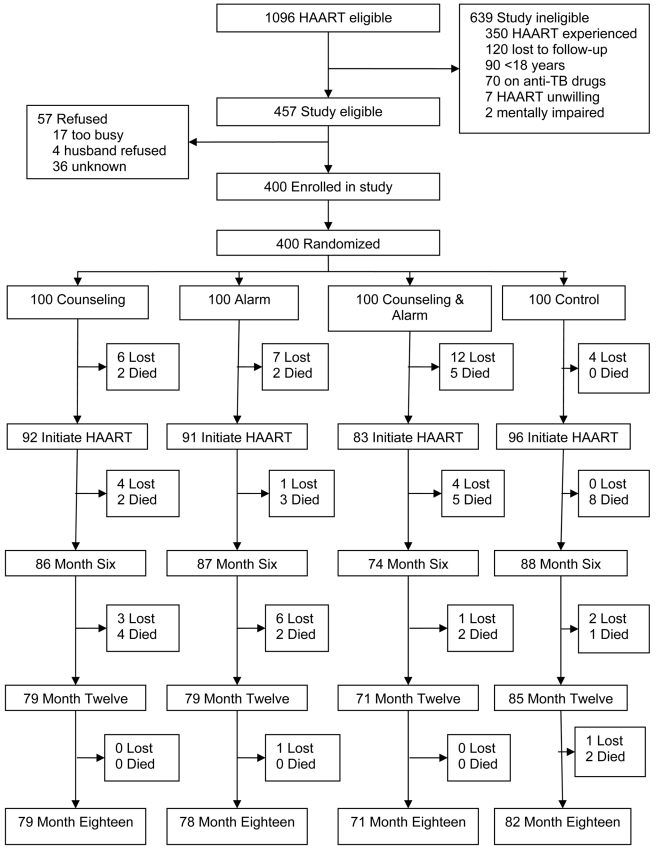
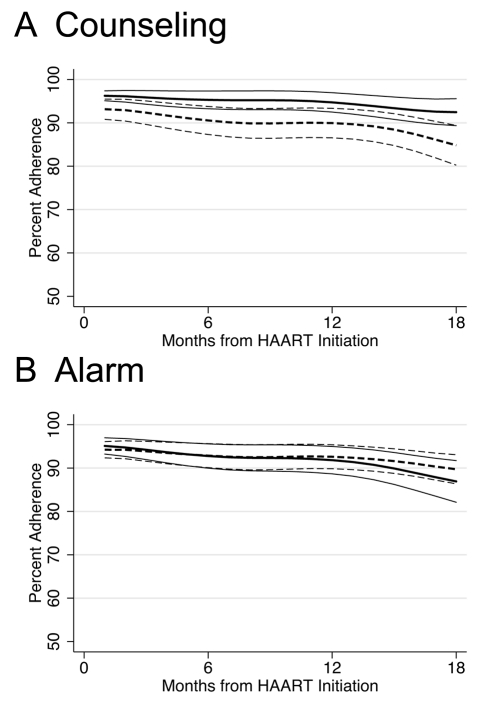
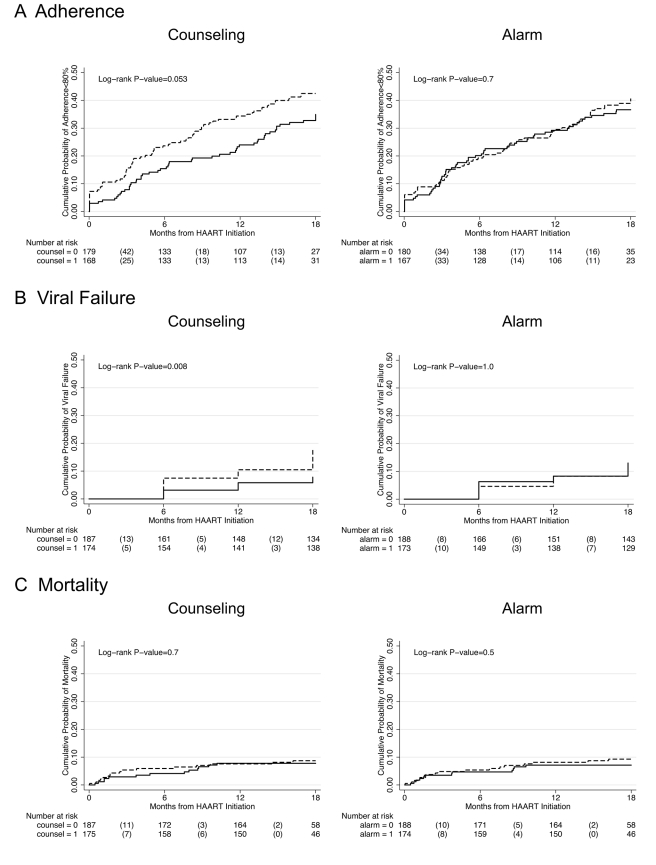
BACKGROUND: Behavioral interventions that promote adherence to antiretroviral medications may decrease HIV treatment failure. Antiretroviral treatment programs in sub-Saharan Africa confront increasing financial constraints to provide comprehensive HIV care, which include adherence interventions. This study compared the impact of counseling and use of an alarm device on adherence and biological outcomes in a resource-limited setting. METHODS AND FINDINGS: A randomized controlled, factorial designed trial was conducted in Nairobi, Kenya. Antiretroviral-naïve individuals initiating free highly active antiretroviral therapy (HAART) in the form of fixed-dose combination pills (d4T, 3TC, and nevirapine) were randomized to one of four arms: counseling (three counseling sessions around HAART initiation), alarm (pocket electronic pill reminder carried for 6 months), counseling plus alarm, and neither counseling nor alarm. Participants were followed for 18 months after HAART initiation. Primary study endpoints included plasma HIV-1 RNA and CD4 count every 6 months, mortality, and adherence measured by monthly pill count. Between May 2006 and September 2008, 400 individuals were enrolled, 362 initiated HAART, and 310 completed follow-up. Participants who received counseling were 29% less likely to have monthly adherence <80% (hazard ratio [HR] = 0.71; 95% confidence interval [CI] 0.49-1.01; p = 0.055) and 59% less likely to experience viral failure (HIV-1 RNA ≥5,000 copies/ml) (HR 0.41; 95% CI 0.21-0.81; p = 0.01) compared to those who received no counseling. There was no significant impact of using an alarm on poor adherence (HR 0.93; 95% CI 0.65-1.32; p = 0.7) or viral failure (HR 0.99; 95% CI 0.53-1.84; p = 1.0) compared to those who did not use an alarm. Neither counseling nor alarm was significantly associated with mortality or rate of immune reconstitution. CONCLUSIONS: Intensive early adherence counseling at HAART initiation resulted in sustained, significant impact on adherence and virologic treatment failure during 18-month follow-up, while use of an alarm device had no effect. As antiretroviral treatment clinics expand to meet an increasing demand for HIV care in sub-Saharan Africa, adherence counseling should be implemented to decrease the development of treatment failure and spread of resistant HIV.
Overview
The claims and statistics of this paper haven’t been checked yet.
Run the check — free, no account needed. It reads the open-access text and checks the sources it cites.
Integrity signals
Registry
Cites
Statistics
Figures
Verification
Claims the paper makes
The claims and statistics of this paper haven’t been checked yet.
Run the check — free, no account needed. It reads the open-access text and checks the sources it cites.
Claims other papers make about this one
Each is checked against this paper’s own text: does it say what the citing paper says it does?
In the citing paper
“For the seven randomised controlled trials testing effects of SMS communication on various health outcomes had reported positive effects [16, 20, 32, 33, 44–49], while the remaining trial showed no effect of mobile alarm devices on treatment adherence for HIV patients [15].”
From Assessing the feasibility of eHealth and mHealth: a systematic review and analysis of initiatives implemented in Kenya (2017) · cites this paper as [15]
Self-check
Percentages, sums and reported differences re-computed from the paper’s own numbers.
The self-check needs the paper’s full text.
Citations
Cites
Osterberg, L., & Blaschke, T. (2005) · New England Journal of Medicine · doi:10.1056/nejmra050100 · Cited by 7,974
Adherence to Protease Inhibitor Therapy and Outcomes in Patients with HIV Infection
Paterson, D. L., Swindells, S., Mohr, J. A., Brester, M., Vergis, E. N., Squier, C. L., Wagener, M. M., & Singh, N. (2000) · Annals of Internal Medicine · doi:10.7326/0003-4819-133-1-200007040-00004 · Cited by 3,289 · cited 1×
“. Adequate adherence defined as taking ≥95% of prescribed pills derives from literature examining regimens containing un-boosted protease inhibitors (PIs)”
Prognosis in HIV-1 Infection Predicted by the Quantity of Virus in Plasma
Mellors, J. W., Rinaldo, C. R., Gupta, P., White, R. M., Todd, J. A., & Kingsley, L. (1996) · Science · doi:10.1126/science.272.5265.1167 · Cited by 2,658 · cited 1×
“. Similarly, use of the alarm device was measured by self-report and was not able to be verified. It is possible that continuous use of the alarm device was overestimated and that the insignificant associations found in this study may have been due to poor participant participation in this intervention. The adherence…”
Toward a theory of motivational interviewing
Miller, W. R., & Rose, G. S. (2009) · American Psychologist · doi:10.1037/a0016830 · Cited by 1,603 · cited 1×
“The study evaluated two interventions based on models of cognitive and behavioral theory to promote adherence to antiretroviral medications: intensive adherence counseling and use of a pocket alarm device [32,33].”
Lester, R. T., Ritvo, P., Mills, E. J., Kariri, A., Karanja, S., Chung, M. H., Jack, W., Habyarimana, J., Sadatsafavi, M., Najafzadeh, M., et al. (2010) · The Lancet · doi:10.1016/s0140-6736(10)61997-6 · Cited by 1,278 · cited 1×
“may be interpreted as less a function of the cell phone as a reminder device but rather as a means to provide regular patient support [47].”
Self-citationPocock, S. J., Assmann, S. E., Enos, L. E., & Kasten, L. E. (2002) · Statistics in Medicine · doi:10.1002/sim.1296 · Cited by 1,077 · cited 2×
“Despite randomization, baseline differences between intervention arms were noted; these were adjusted for in multivariable analyses if they were related to the outcome of interest [36].”
Adherence to Antiretroviral Therapy in Sub-Saharan Africa and North America: A Meta-analysis
Mills, E. J., Nachega, J. B., Buchan, I., Orbinski, J., Attaran, A., Singh, S., Rachlis, B., Wu, P., Cooper, C., Thabane, L., et al. (2006) · JAMA · doi:10.1001/jama.296.6.679 · Cited by 899 · cited 1×
“. In a meta-analysis of 27 cohorts from 12 African countries, adequate adherence was noted in 77% of participants compared to only 55% among 31 North America cohorts”
Rapid Scale-up of Antiretroviral Therapy at Primary Care Sites in Zambia
Stringer, J. S. A., Zulu, I., Levy, J., Stringer, E. M., Mwango, A., Chi, B. H., Mtonga, V., Reid, S. E., Cantrell, R. A., Bulterys, M., et al. (2006) · JAMA · doi:10.1001/jama.296.7.782 · Cited by 664
Bangsberg, D. R. (2006) · Clinical Infectious Diseases · doi:10.1086/507526 · Cited by 536
Mannheimer, S., Friedland, G. H., Matts, J. P., Child, C. C., & Chesney, M. A. (2002) · Clinical Infectious Diseases · doi:10.1086/339074 · Cited by 512 · cited 1×
“Although poor adherence has been associated with plasma HIV-1 viral rebound and development of viral resistance [38,39], few trials have demonstrated an association between an intervention designed to improve adherence and virologic impact [37,40–42].”
Research works printed but not linked: 2
- 2007, Kenya national clinical manual for ART providers: a concise and practical guide to ART provision.2nd edition.
- J Donnelly, 2001, Prevention urged in AIDS fight; Natsios says funds should spend less on HIV treatment., Boston Globe
Cited by
Sorted by citations
Interventions for enhancing medication adherence
Nieuwlaat, R., Wilczynski, N., Navarro, T., Hobson, N., Jeffery, R., Keepanasseril, A., Agoritsas, T., Mistry, N., Iorio, A., Jack, S., et al. (2014) · Cochrane Database of Systematic Reviews · doi:10.1002/14651858.cd000011.pub4 · Cited by 2,945
Motivational Interviewing Improves Medication Adherence: a Systematic Review and Meta-analysis
Palacio, A., Garay, D., Langer, B., Taylor, J., WOOD, B. A., & Tamariz, L. J. (2016) · Journal of General Internal Medicine · doi:10.1007/s11606-016-3685-3 · Cited by 292
Mfinanga, S., Chanda, D. M., Kivuyo, S. L., Guinness, L., Bottomley, C., Simms, V. M., Chijoka, C., Masasi, A., Kimaro, G. D., Ngowi, B. J., et al. (2015) · The Lancet · doi:10.1016/s0140-6736(15)60164-7 · Cited by 250
Kanters, S., Park, J., Chan, K., Socias, M. E., Ford, N. P., Forrest, J. I., Thorlund, K., Nachega, J. B., & Mills, E. J. (2016) · The Lancet HIV · doi:10.1016/s2352-3018(16)30206-5 · Cited by 250
Interventions to improve adherence to antiretroviral therapy
Chaiyachati, K. H., Ogbuoji, O., Price, M., Suthar, A. B., Negussie, E. K., & Bärnighausen, T. (2014) · AIDS · doi:10.1097/qad.0000000000000252 · Cited by 235
Ridgeway, K., Dulli, L., Murray, K., Silverstein, H. A., Santo, L. D., Olsen, P., Mora, D. D. D., & McCarraher, D. R. (2018) · PLoS ONE · doi:10.1371/journal.pone.0189770 · Cited by 165
Chang, L. W., Serwadda, D., Quinn, T. C., Wawer, M. J., Gray, R. H., & Reynolds, S. J. (2012) · The Lancet Infectious Diseases · doi:10.1016/s1473-3099(12)70273-6 · Cited by 153
Scanlon, M. L., & Vreeman, R. (2013) · HIV/AIDS · doi:10.2147/hiv.s28912 · Cited by 159
“While electronic dose-timing alarms show positive effects in resource-rich settings,(184,185) an RCT in Kenya found that the use of an alarm device did not significantly improve adherence.(86) A small pretest–posttest intervention study reported on the delivery of a culturally sensitive educational videotape to improv…”
Rodrigues, R., Shet, A., Antony, J., Sidney, K., Arumugam, K., Krishnamurthy, S., D'Souza, G., & DeCosta, A. (2012) · PLoS ONE · doi:10.1371/journal.pone.0040723 · Cited by 132
“This study reported intensive early adherence counseling to have a sustained effect on adherence in comparison to digital reminders [36].”
Hosseinipour, M., Gupta, R. K., van Zyl, G. V., Eron, J., & Nachega, J. (2013) · Journal of Infectious Diseases · doi:10.1093/infdis/jit107 · Cited by 153
“proactively monitor adherence and, when necessary, intervene with cost-effective interventions, including adherence counseling [50], or other emerging adherence interventions, such as mobile phone technology that delivers weekly text mes-”
Interventions to promote adherence to antiretroviral therapy in Africa: a network meta-analysis
Mills, E. J., Lester, R. T., Thorlund, K., Lorenzi, M. F., Muldoon, K. A., Kanters, S., Linnemayr, S., Gross, R., Calderon, Y., Amico, K. R., et al. (2014) · The Lancet HIV · doi:10.1016/s2352-3018(14)00003-4 · Cited by 129
Self-citationIAPAC Guidelines for Optimizing the HIV Care Continuum for Adults and Adolescents
Optimization, I. A. P. O. H. C. C. (2015) · Journal of the International Association of Providers of AIDS Care (JIAPAC) · doi:10.1177/2325957415613442 · Cited by 125
Mbuagbaw, L., Sivaramalingam, B., Navarro, T., Hobson, N., Keepanasseril, A., Wilczynski, N. J., & Haynes, R. B. (2015) · AIDS Patients Care and STDs · doi:10.1089/apc.2014.0308 · Cited by 116
Maduka, O., & Tobin-West, C. (2013) · Nigerian Journal of Clinical Practice · doi:10.4103/1119-3077.113451 · Cited by 117
Nachega, J. B., Uthman, O. A., del Rı́o, C., Mugavero, M. J., Rees, H., & Mills, E. J. (2014) · Clinical Infectious Diseases · doi:10.1093/cid/ciu299 · Cited by 107
“(eg, once-daily single-tablet regimen) should also be considered [35] as well as targeted ART adherence counseling [36, 37].”
Shillington, A. C., Ganjuli, A., & Clewell, J. (2016) · Patient Preference and Adherence · doi:10.2147/ppa.s101175 · Cited by 105
Njoroge, M., Zurovac, D., Ogara, E. A. A., Chuma, J., & Kirigia, D. (2017) · BMC Research Notes · doi:10.1186/s13104-017-2416-0 · Cited by 100
“For the seven randomised controlled trials testing effects of SMS communication on various health outcomes had reported positive effects [16, 20, 32, 33, 44– 49], while the remaining trial showed no effect of mobile alarm devices on treatment adherence for HIV patients [15].”
Technology-mediated interventions for enhancing medication adherence
Mistry, N., Keepanasseril, A., Wilczynski, N. L., Nieuwlaat, R., Ravall, M., Haynes, R. B., & the Patient Adherence Review Team (2015) · Journal of the American Medical Informatics Association · doi:10.1093/jamia/ocu047 · Cited by 102
“Electronic reminders Nine studies utilized electronic reminders as the intervention, alone(17,19,27) or in combination with another intervention (Table 4).(14,20,33,40,42,46) Two studies had low risk of bias.”
InfluentialA Rapid Review of eHealth Interventions Addressing the Continuum of HIV Care (2007–2017)
Henny, K. D., Wilkes, A. L., McDonald, C. M., Denson, D. J., & Neumann, M. S. (2017) · AIDS and Behavior · doi:10.1007/s10461-017-1923-2 · Cited by 90
Siedner, M. J., Lankowski, A. J., Haberer, J. E., Kembabazi, A., Emenyonu, N. I., Tsai, A. C., Muzoora, C. K., Geng, E. H., Martin, J. N., & Bangsberg, D. R. (2012) · PLoS ONE · doi:10.1371/journal.pone.0039894 · Cited by 86
“[36].”
Tao, D., Xie, L., Wang, T., & Wang, T. (2014) · Journal of Telemedicine and Telecare · doi:10.1177/1357633x14541041 · Cited by 87
“Intervention duration varied across trials, with a shortterm duration for 14 trials and a long-term duration for eight trials.(30,32,34,35,41,43) Based on our predetermined rules of outcome measure selection, patient adherence to medication was represented by the proportion of medication taken as prescribed in 15 tria…”
InfluentialClercq, E. D. (2013) · Advances in pharmacology · doi:10.1016/b978-0-12-405880-4.00009-3 · Cited by 81
“The importance of counseling (Chung et al., 2011), HIV testing and treatment (Rosen & Fox, 2011), and loss of follow-up (LTFU) in ART programs (Wandeler et al.”
Chiang, N. Y. Z., Guo, M., Amico, K. R., Atkins, L., & Lester, R. T. (2018) · JMIR mhealth and uhealth · doi:10.2196/mhealth.9187 · Cited by 72
“This lack of effect has been shown in a randomized control trial using an alarm device for promoting ART adherence [24], in addition to a systematic review evaluating technology-based self-care strategies for improving ART adherence [25].”
Psychosocial interventions enhance HIV medication adherence: A systematic review and meta-analysis
Spaan, P., van Luenen, S., Garnefski, N., & Kraaij, V. (2018) · Journal of Health Psychology · doi:10.1177/1359105318755545 · Cited by 69
Etoori, D., Ciglenečki, I., Ndlangamandla, M., Edwards, C. G., Jobanputra, K., Pasipamire, M., Maphalala, G. P., Yang, C., Zabsonre, I., Kabore, S. M., et al. (2018) · Journal of the International AIDS Society · doi:10.1002/jia2.25194 · Cited by 56
“Patients who received EAC sessions were more likely to re-suppress, and this showed a dose–response relationship demonstrating the merits of this step in the VL cascade which corresponds with other studies’ findings [39,40].”
Micheni, M., Kombo, B. K., Secor, A., Simoni, J. M., Operario, D., van der Elst, E., Mugo, P. M., Kanungi, J., Sanders, E. J., & Graham, S. M. (2017) · AIDS Patient Care and STDs · doi:10.1089/apc.2016.0213 · Cited by 57
Self-citationGugsa, S., Potter, K., Tweya, H. M., Phiri, S., Sande, O., Sikwese, P., Chikonda, J., & O’Malley, G. (2017) · PLoS ONE · doi:10.1371/journal.pone.0179838 · Cited by 55
Cornelison, M., Jabbour, E. J., & Welch, M. A. (2012) · The Journal of Supportive Oncology · doi:10.1016/j.suponc.2011.08.001 · Cited by 49
“Counseling patients regarding the importance of adherence has been shown to have a significant and sustained positive impact on patients taking antiretroviral medications for HIV.58 A Cochrane report recently provided a synthesis of systematic reviews that evaluated the effects of various interventions to promote medi…”
de Lima, I. C. V., Galvão, M., Alexandre, H. D. O., Lima, F. E. T., & de Araújo, T. L. (2016) · International Journal of Medical Informatics · doi:10.1016/j.ijmedinf.2016.04.013 · Cited by 15
Dzansi, G., Tornu, E., & Chipps, J. (2020) · PLoS ONE · doi:10.1371/journal.pone.0230159 · Cited by 48
“The adherence counselling session empowers patients to be conscious of the relevance of the ART and the long-term obligation [12].”
Damulak, P. P., Ismail, S., Manaf, R. A., Said, S. M., & Agbaji, O. O. (2021) · International Journal of Environmental Research and Public Health · doi:10.3390/ijerph18052477 · Cited by 50
“Nevertheless, some interventions like the clinic appointment diary coupled with training adherence staff [29], alarm device [31], semi mobile clinics [34], counseling [38,43], and mobile text messages [45] did not produce any significant effect.”
InfluentialMarson, K. G., Tapia, K. A., Kohler, P. K., McGrath, C. J., John-Stewart, G. C., Richardson, B. A., Njoroge, J. W., Kiarie, J. N., Sakr, S. R., & Chung, M. H. (2013) · PLoS ONE · doi:10.1371/journal.pone.0078900 · Cited by 45
“Objectives: The purpose of this study was to analyze characteristics, reasons for transferring, and reasons for discontinuing care among patients defined as lost to follow-up (LTFU) from an antiretroviral therapy (ART) clinic in Nairobi, Kenya.”
InfluentialSelf-citationAdakun, S., Siedner, M., Muzoora, C., Haberer, J., Tsai, A., Hunt, P., Martin, J. N., & Bangsberg, D. (2013) · Journal of Acquired Immune Deficiency Syndromes · doi:10.1097/qai.0b013e3182800daf · Cited by 53
Graham, S. M., Micheni, M., Chirro, O., Nzioka, J., Secor, A., Mugo, P. M., Kombo, B. K., van der Elst, E., Operario, D., Amico, K. R., et al. (2020) · AIDS and Behavior · doi:10.1007/s10461-020-02786-5 · Cited by 44
Self-citationA Framework for Health Communication Across the HIV Treatment Continuum
Babalola, S., Lith, L. V. V., Mallalieu, E. C., Packman, Z. R., Myers, E., Ahanda, K., Harris, E., Gurman, T., & Figueroa, M. (2016) · Journal of Acquired Immune Deficiency Syndromes · doi:10.1097/qai.0000000000001206 · Cited by 32
A Cascade of Interventions to Promote Adherence to Antiretroviral Therapy in African Countries
Jopling, R., Nyamayaro, P. C., Andersen, L. S., Kagee, A., Haberer, J. E., & Abas, M. (2020) · Current HIV/AIDS Reports · doi:10.1007/s11904-020-00511-4 · Cited by 40
Hickey, M. D., Odeny, T., Petersen, M. L., Neilands, T. B., PADIAN, N. S., Ford, N. P., Matthay, Z. A., Hoos, D., Doherty, M. C., Beryer, C., et al. (2017) · Implementation Science · doi:10.1186/s13012-017-0630-8 · Cited by 40
Langwenya, N., Phillips, T. K., Brittain, K., Zerbe, A., Abrams, E. J., & Myer, L. (2018) · Journal of the International AIDS Society · doi:10.1002/jia2.25133 · Cited by 39
“In contrast, a randomized control trial in Kenya reported that adult patients who received at least 3 pre-therapy counselling sessions prior to ART initiation were 59% less likely to experience viral failure at four months post-ART initiation compared to patients who did not receive pre-therapy counselling [37].”
Soomro, N., Fitzgerald, G., Seeley, J., Schatz, E. J., Nachega, J. B., & Negin, J. (2018) · AIDS and Behavior · doi:10.1007/s10461-018-2196-0 · Cited by 41
Goggin, K., Gerkovich, M. M., Williams, K. B., Banderas, J., Catley, D., Berkley‐Patton, J., Wagner, G. J., Stanford, J., Neville, S., Kumar, V. K., et al. (2013) · AIDS and Behavior · doi:10.1007/s10461-013-0467-3 · Cited by 37
“These findings are more consistent with the notion that more intervention is associated with better adherence [11, 33–37].”
Ask, don't tell - mobile phones to improve HIV care.
Lester, R. (2013) · New England Journal of Medicine · doi:10.1056/nejmc1310509 · Cited by 21
Factors Associated with Retention to Care in an HIV Clinic in Gabon, Central Africa
Janssen, S., Wieten, R. W., Stolp, S. M., Cremers, A. L., Rossatanga, E. G., Klipstein‐Grobusch, K., Bélard, S., & Grobusch, M. P. (2015) · PLoS ONE · doi:10.1371/journal.pone.0140746 · Cited by 36
Lazarus, J. V., Safreed‐Harmon, K., Nicholson, J., & Jaffar, S. S. (2014) · Tropical Medicine & International Health · doi:10.1111/tmi.12366 · Cited by 34
“One indicated a benefit from adherence counselling, but not from the use of pocket alarm devices (Chung et al. 2011); the other did not find significant differences in outcomes for patients using treatment calendars, patients engaging with treatment assistants or patients receiving routine care (Mugusi et al.”
InfluentialBaärnighausen, T., Tanser, F., Dabis, F., & Newell, M. (2012) · Current Opinion in HIV and AIDS · doi:10.1097/coh.0b013e32834fc1df · Cited by 39
“[34] Kenya (Nairobi) Educational adherence counselling vs.”
Mata, N. L. D. L., Ly, P. S., Nguyen, K. V., Merati, T. P., Pham, T. T., Lee, M. P., Choi, J. Y., Ross, J. L., Law, M. G., & Ng, O. T. (2017) · JAIDS Journal of Acquired Immune Deficiency Syndromes · doi:10.1097/qai.0000000000001293 · Cited by 34
Dewing, S., Mathews, C., Schaay, N., Cloete, A., Louw, J., & Simbayi, L. C. (2012) · AIDS and Behavior · doi:10.1007/s10461-012-0211-4 · Cited by 34
Mendelsohn, J., Schilperoord, M., Spiegel, P., & Ross, D. (2012) · Conflict and Health · doi:10.1186/1752-1505-6-9 · Cited by 35
“What is the most effective first-line regimen for these settings [41]? When clients are displaced and have a poor knowledge of their treatment history, which HAART regimen should be used? Are HIV-positive individuals who were started on HAART prior to displacement identified quickly in the host setting, linked to care…”
Dilworth, T. J., Klein, P. W., Mercier, R.-C., Borrego, M. E., Jakeman, B., & Pinkerton, S. D. (2018) · Journal of Managed Care & Specialty Pharmacy · doi:10.18553/jmcp.2018.24.2.165 · Cited by 32
“Early adherence counseling following ART initiation within the first month, in addition to adherence counseling before ART initiation, has been shown to improve ART adherence, as well.(19) Pharmacists spent approximately 3 hours with each participant who completed the study over the course of 6 months, which is much m…”
Mbuagbaw, L., Thabane, L., Ongolo-Zogo, P., Yondo, D., Noorduyn, S., Smieja, M., & Dolovich, L. (2012) · AIDS Research and Therapy · doi:10.1186/1742-6405-9-37 · Cited by 30
“A randomized clinical trial in Kenya found alarms to have no effect on virological outcomes [43].”
Counseling for improving adherence to antiretroviral treatment: a systematic review
Musayón-Oblitas, F. Y., Cárcamo, C., & Gimbel, S. (2018) · AIDS Care · doi:10.1080/09540121.2018.1533224 · Cited by 31
“Regarding the places were studies took place, three studies were carried out in PLWH, in Kenya, Nigeria and Tanzania; five studies were carried out in community or university services of the United States, one in Seattle, two in Georgia, one in San Francisco and one in Kansas; and one study was conducted in the Academ…”
InfluentialBershteyn, A., Odeny, T., Lyamuya, R., Nakiwogga-Muwanga, A., Diero, L. O., Bwana, M., Braitstein, P. K. A., Somi, G. R., Kambugu, A. D., Bukusi, E. A., et al. (2017) · Clinical Infectious Diseases · doi:10.1093/cid/cix191 · Cited by 29
Chung, M. H., Beck, I. A., Dross, S., Tapia, K. A., Kiarie, J. N., Richardson, B. A., Overbaugh, J. M., Sakr, S. R., John-Stewart, G. C., & Frenkel, L. M. (2014) · JAIDS Journal of Acquired Immune Deficiency Syndromes · doi:10.1097/qai.0000000000000312 · Cited by 29
“The design and methods of the adherence study are described elsewhere.(8) In brief, 400 ART-naive individuals eligible to start ART at the Coptic Hope Center for Infectious Diseases were enrolled in 2006 and equally randomized to adherence counseling, alarm device, combined adherence counseling and alarm device, or a…”
Self-citationAchieng, L., Musangi, H., Billingsley, K., Onguit, S., Ombegoh, E., Bryant, L., Mwiindi, J., Smith, N., & Keiser, P. H. (2013) · PLoS ONE · doi:10.1371/journal.pone.0067259 · Cited by 28
“Because of this, adherence markers such as pill counts are often used as an outcome measure in these studies [7,8].”
Achieng, L., Musangi, H., Onguti, S. K., Ombegoh, E., Bryant, L., Mwiindi, J., Smith, N., & Keiser, P. H. (2012) · PLoS ONE · doi:10.1371/journal.pone.0032727 · Cited by 28
“‘‘Real Time’’ monitoring of pill taking by clinicians and pharmacists can also identify individuals with adherence difficulties that may require additional counseling [10,14,21].”
Locher, C., Messerli, M., Gaab, J., & Gerger, H. (2019) · AIDS Patient Care and STDs · doi:10.1089/apc.2018.0164 · Cited by 28
Integrating Prevention Interventions for People Living With HIV Into Care and Treatment Programs
Medley, A. M., Bachanas, P. J., Grillo, M., Hasen, N., & Amanyeiwe, U. (2015) · JAIDS Journal of Acquired Immune Deficiency Syndromes · doi:10.1097/qai.0000000000000520 · Cited by 31
“10,12,13,15,17 Effective interventions include provider-delivered adherence counseling, 13,15,16,24 food supplementation, 11 treatment supporters, 10 adherence support from community health workers, 12,20,21 and mobile phone text messages.”
Patel, A. R., Campbell, J. R., Sadatsafavi, M., Marra, F., Johnston, J. C., Smillie, K., & Lester, R. T. (2017) · BMJ Open · doi:10.1136/bmjopen-2016-015108 · Cited by 27
Taieb, F., Madec, Y., Cournil, A., & Delaporte, E. (2017) · PLoS ONE · doi:10.1371/journal.pone.0174767 · Cited by 25
Saragih, I. D., Tonapa, S. I., Osingada, C., Porta, C., & Lee, B.-O. (2021) · Journal of Telemedicine and Telecare · doi:10.1177/1357633x211070726 · Cited by 20
Ask, Don't Tell — Mobile Phones to Improve HIV Care
Högenauer, C., & Bhatt, A. S. (2013) · Cited by 25
Kim, H. N., Scott, J., Cent, A., Cook, L., Morrow, R. A., Richardson, B. A., Tapia, K. A., Jerome, K. R., Lule, G. N., John-Stewart, G. C., et al. (2011) · Journal of Viral Hepatitis · doi:10.1111/j.1365-2893.2011.01466.x · Cited by 24
“72 Stage 3 6 (22) 92 (25) Stage 4 1 (4) 7 (2)”
Self-citationBangsberg, D., & Mills, E. (2013) · Antiviral Therapy · doi:10.3851/imp2536 · Cited by 25
“Efforts to improve adherence using reminder devices, including cell phone text message have mixed results [18,19].”
Silverman, R., John-Stewart, G. C., Beck, I. A., Milne, R. S., Kiptinness, C., McGrath, C. J., Richardson, B. A., Chohan, B. H., Sakr, S. R., Frenkel, L. M., et al. (2019) · PLoS ONE · doi:10.1371/journal.pone.0223411 · Cited by 22
“Because the clinics were designed and managed by the Coptic Hospital to provide the same high level of services and programs [26, 27], differences by location are more likely due to regional or rural/urban disparities in underlying health and infectious disease burden [19].”
Self-citationBeck, I. A., Deng, W., Payant, R., Hall, R., Bumgarner, R. E., Mullins, J. I., & Frenkel, L. M. (2014) · Journal of Clinical Microbiology · doi:10.1128/jcm.00306-14 · Cited by 19
“Plasma specimens from 51 ART-naive Kenyans were collected in 2006 (27).”
Côté, J., Godin, G., Guéhéneuc, Y., Rouleau, G., Ramirez-Garcìa, P., Otis, J., Tremblay, C. L., & Fadel, G. (2012) · Trials · doi:10.1186/1745-6215-13-187 · Cited by 20
“Since 2003, the results of pilot studies have demonstrated the feasibility of interventions to influence adherence [9-12], and some interventions evaluated in experimental studies have shown a potential to optimize adherence [13-22].”
Semitala, F. C., Camlin, C. S., Law, J. W., Kampiire, L., Katuramu, R., Amanyire, G., Namusobya, J., Chang, W., Kahn, J. G., Charlebois, E. D., et al. (2017) · Journal of the International AIDS Society · doi:10.1002/jia2.25033 · Cited by 18
Chung, M. H., Silverman, R., Beck, I. A., Yatich, N., Dross, S., McKernan, J. L., Bii, S. K., Tapia, K. A., Stern, J., Chohan, B. H., et al. (2016) · AIDS · doi:10.1097/qad.0000000000001110 · Cited by 18
“The prevalence of PDR among ARV-naïve adults nearly tripled, rising from 3.9% to 10.9%, between 2006 and 2014 in Nairobi, Kenya, and 95% of those with resistance had at least one NNRTI mutation.”
InfluentialSelf-citationEllsworth, G. B., Burke, L. A., Wells, M. T., Mishra, S. C., Caffrey, M., Liddle, D. G., Madhava, M. L., O'Neal, C., Anderson, P. L., Bushman, L. R., et al. (2020) · JAIDS Journal of Acquired Immune Deficiency Syndromes · doi:10.1097/qai.0000000000002519 · Cited by 18
“Participants lost to follow up, n (%) 5 (17) 7 (22) 0.”
Antiretroviral Therapy for Refugees and Internally Displaced Persons: A Call for Equity
Mendelsohn, J., Spiegel, P. B., Schilperoord, M., Cornier, N., & Ross, D. A. (2014) · PLoS Medicine · doi:10.1371/journal.pmed.1001643 · Cited by 17
“Interventions that employ mobile phone text messaging, enhanced counseling and peer-support should be pilot-tested among refugees and IDPs to assess acceptability and effectiveness [42–44].”
Nachega, J. B. (2012) · Journal of AIDS & Clinical Research · doi:10.4172/2155-6113.s4-007 · Cited by 19
Mathes, T., Antoine, S.-L., & Pieper, D. (2014) · Sexual Health · doi:10.1071/sh14025 · Cited by 16
Musayón-Oblitas, F. Y., Cárcamo, C., Gimbel, S., Echevarria, J. I., & Graña, A. (2020) · Revista Latino-Americana de Enfermagem · doi:10.1590/1518-8345.3117.3228 · Cited by 14
Access to antiretroviral therapy during excess black-water flooding in central Thailand
Khawcharoenporn, T., Apisarnthanarak, A., Chunloy, K., & Mundy, L. M. (2013) · AIDS Care · doi:10.1080/09540121.2013.772284 · Cited by 15
“In addition, patient staff encounters were associated with sustained ART adherence and suggest potential benefit of effective communication in promoting ART access and adherence (Chung et al., 2011; Nachega et al., 2012).”
Chang, J. C.-W., de Sousa, A., Sabatier, J. F., Assane, M., Zhang, G., Bila, D., Vaz, P., Alfredo, C., Cossa, L., Bhatt, N., et al. (2017) · PLoS ONE · doi:10.1371/journal.pone.0181054 · Cited by 15
Adherence to antiretroviral therapy: supervision or support?
Mills, E., Lester, R., & Ford, N. (2012) · Lancet. Infectious Diseases (Print) · doi:10.1016/s1473-3099(11)70354-1 · Cited by 12
Vitalis, D. (2017) · International Journal of STD and AIDS · doi:10.1177/0956462416665989 · Cited by 13
Abuogi, L., Lewis-Kulzer, J., Akama, E., Odeny, T., Eshun‐Wilson, I., Petersen, M. L., Shade, S. B., Montoya, L., Beres, L. K., Iguna, S., et al. (2022) · Contemporary Clinical Trials · doi:10.1016/j.cct.2023.107123 · Cited by 11
- Microbicide Formulation Development: Scale-Up, Affordability, and Intellectual Property Issues
das Neves, J., & Sarmento, B. (2014) · doi:10.1201/b17559-17 · Cited by 10
Improving Ambulatory Saliva-Sampling Compliance in Pregnant Women: A Randomized Controlled Study
Moeller, J., Lieb, R., Meyer, A. H., Lötscher, K. Q., Krastel, B., & Meinlschmidt, G. (2014) · PLoS ONE · doi:10.1371/journal.pone.0086204 · Cited by 10
“In a recent randomized controlled trial, the use of pocket digital alarms had no effect on objective medication compliance, as measured by the percentage of dispensed drug doses [36].”
Armenia, D., Carlo, D. D., Cozzi‐Lepri, A., Calcagno, A., Borghi, V., Gori, C., Bertoli, A., Gennari, W., Bellagamba, R., Castagna, A., et al. (2018) · Antiviral Therapy · doi:10.3851/imp3309 · Cited by 9
[Adherence and toxicity to tyrosine kinase inhibitor therapy in chronic myeloid leukemia].
Rosa, V. G., Nicolás, F. G., MORENO, R. G., Romero, M., Carvajal, M. A. T. M., & Pérez, R. G. (2013) · PubMed · doi:10.7399/fh.2013.37.6.775 · Cited by 8
Byabène, A., Fortès-Déguenonvo, L., Niang, K., Manga, M., Bulabula, A. N., Nachega, J., & Seydi, M. (2017) · Tropical medicine & international health · doi:10.1111/tmi.12882 · Cited by 9
Patient perspectives on medication self-management in rural Kenya: a cross-sectional survey
Kim, E., Ndege, P. K., Jackson, E. A., Clauw, D. J., & Ellingrod, V. L. (2018) · International Journal for Quality in Health Care · doi:10.1093/intqhc/mzy187 · Cited by 7
Ngcobo, S., & Rossouw, T. (2020) · PLoS ONE · doi:10.1371/journal.pone.0240740 · Cited by 8
“While HIV post-test counselling is known to improve treatment adherence and virological suppression [21], WBOTs reported that many patients had not received adequate counselling in the facility.”
Implementation and Operational Research
Were, M. C., Kessler, J., Shen, C., Sidle, J. E., Macharia, S. M., Lizcano, J. A., Siika, A. M., Wools‐Kaloustian, K., & Kurth, A. (2015) · JAIDS Journal of Acquired Immune Deficiency Syndromes · doi:10.1097/qai.0000000000000666 · Cited by 7
Peterson, K., van Griensven, J., Veld, D. H. I. ‘., & Colebunders, R. (2011) · Expert Review of Anti-infective Therapy · doi:10.1586/eri.11.151 · Cited by 6
Healthcare professional perspectives on medication challenges in the post-stroke patient
Bell, S., Kelly, H., Hennessy, E., Bermingham, M., O’Flynn, J. R., & Sahm, L. J. (2023) · Frontiers in Pharmacology · doi:10.3389/fphar.2023.1266277 · Cited by 6
Mukose, A. D., Bastiaens, H., Makumbi, F. E., Buregyeya, E., Naigino, R., Musinguzi, J., Geertruyden, J. V., & Wanyenze, R. K. (2023) · PLoS ONE · doi:10.1371/journal.pone.0280893 · Cited by 5
“Adequate counselling is essential especially in preparing pregnant and breastfeeding women for lifelong ART [38].”
Graff, N. R., Hong, C., Guthrie, B. L., Micheni, M., Chirro, O., Wahome, E., van der Elst, E., Sanders, E. J., Simoni, J. M., & Graham, S. M. (2023) · AIDS and Behavior · doi:10.1007/s10461-023-04027-x · Cited by 5
“Counselors used a checklist for standard adherence counseling that has been used in previous research in Kenya [16].”
Self-citationCowden, M., Clavijo, A., Bitar, Y., Diaz, M., Merced, X., Meza, K., Iyengar, P., & Avery, A. (2025) · AIDS and Behavior · doi:10.1007/s10461-025-04630-0 · Cited by 3
Zhang, Y., Li, X., Qiao, S., Zhou, Y., & Shen, Z. (2020) · Libri · doi:10.1515/libri-2019-0144 · Cited by 3
Ganasegeran, K., Rampal, L. R. G., Martins, O. F., & Abdulrahman, S. A. (2019) · Aids Reviews · doi:10.24875/aidsrev.19000069 · Cited by 2
Suru, K. U. (2021) · Texila international journal of public health · doi:10.21522/tijph.2013.09.01.art020 · Cited by 2
FACTORS INFLUENCING ADHERENCE TO ANTIRETROVIRAL MEDICATIONS AMONG PATIENTS LIVING WITH HIV IN KENYA
Karanja, S. (2013) · Cited by 2
Clement, N. E., Akwee, P. E., Bitok, J., & Kariuki, P. (2020) · Journal of Advances in Medicine and Medical Research · doi:10.9734/jammr/2020/v32i1830651 · Cited by 1
Sharing Patient Safety Management Skills in Oncology Pharmaceutical Outpatient Service
Kawakami, K. (2023) · YAKUGAKU ZASSHI · doi:10.1248/yakushi.22-00160-2 · Cited by 1
Discussion and Recommendations
Vitalis, D. (2021) · Springer eBooks · doi:10.1007/978-981-15-3974-9_9 · Cited by 1
Male, Mobile, and Moneyed: Loss to Follow-up in an Urban African Antiretroviral Treatment Clinic
Marson, K. G. (2013) · ResearchWorks at the University of Washington (University of Washington) · Cited by 1
Villiera, J., Matanje, B., Suffrin, J. C. D., Munyaneza, F., Hosseinipour, M. C., Mwapasa, V., & Kachimanga, C. (2023) · Research Square · doi:10.21203/rs.3.rs-2758196/v1 · Cited by 1
Jean, P. C. (2015) · FIU - Digital Commons (Florida International University) · doi:10.25148/etd.fi15032139 · Cited by 1
Metadata
- Authors
- Chung, M. H., Richardson, B. A., Tapia, K., Benki-Nugent, S., Kiarie, J. N., Simoni, J. M., Overbaugh, J., Attwa, M., & John-Stewart, G. C.
- Affiliations
- University of Washington (US)
- University of Nairobi (KE)
- Fred Hutch Cancer Center (US)
- Corresponding author
- Chung, Michael H.
- ORCID
- Venue
- PLoS Medicine
- Publisher
- Public Library of Science (PLoS)
- Published
- 2011-03-01
- Volume
- 8
- Issue
- 3
- Pages
- e1000422
- ISSN
- 1549-1277 (ISSN-L)
- 1549-1676
- PMC
- PMC3046986
- OpenAlex
- W2160766775
- Cited by
- 109
- References
- 50
- Citations by year
- 2025: 1 · 2024: 2 · 2023: 5 · 2022: 1 · 2021: 5 · 2020: 8 · 2019: 3 · 2018: 11 · 2017: 12 · 2016: 9 · 2015: 8 · 2014: 13 · 2013: 14 · 2012: 13
- FWCI
- 9.54
- Type
- journal article
- Language
- en
- Open access
- gold
- doi.org
- Locations
- PLoS Medicine (publishedVersion, cc-by)
- Europe PMC (PubMed Central) (publishedVersion, cc-by)
- PubMed Central (publishedVersion, cc-by)
- PubMed (publishedVersion)
- DOAJ (DOAJ: Directory of Open Access Journals) (submittedVersion, cc-by-sa)
- Figshare (submittedVersion, cc-by)
- Greater South Information System
- Funders
- University of Washington
- U.S. President’s Emergency Plan for AIDS Relief (U62/CCU024512, U62/CCU024512-04)
- Hope Center for Neurological Disorders
- National Institutes of Health
- Centers for Disease Control and Prevention (U62/CCU024512)
- U.S. Public Health Service (U62/CCU024512-04)
- Center for AIDS Research, University of Washington (P30 AI027757)
- National Institute on Aging
- National Heart, Lung, and Blood Institute
- National Institute of Mental Health
- National Institute on Drug Abuse
- National Cancer Institute
- National Institute of Allergy and Infectious Diseases (K23AI065222, P30AI027757)
- National Center for Complementary and Alternative Medicine
- Eunice Kennedy Shriver National Institute of Child Health and Human Development (K24HD054314)
- Topics
- Health Sciences › Medicine › Infectious Diseases › HIV/AIDS Research and Interventions
- Health Sciences › Medicine › Family Practice › Medication Adherence and Compliance
- Health Sciences › Medicine › Infectious Diseases › HIV/AIDS drug development and treatment
- Keywords
- medication adherence, HIV, highly active antiretroviral therapy, adherence counseling, virological failure, HIV-1 RNA, CD4 count, immune reconstitution, antiretroviral-naive patients, fixed-dose combination antiretroviral therapy, resource-limited settings, sub-Saharan Africa, mortality
- MeSH terms
- Adult, Counseling, Drug Combinations, Female, Humans, Kenya, Male, Memory, Patient Compliance, RNA, Viral, HIV-1, HIV Infections, Proportional Hazards Models, Treatment Outcome, Reminder Systems, CD4 Lymphocyte Count, Antiretroviral Therapy, Highly Active, Anti-Retroviral Agents
About these checks
Registry, retraction, Cites and statistics results are computed, not judged, with one exception: a printed reference that no index lists is read once by a model before it counts as a citation error. Claims are extracted by a model and kept only when their quote appears verbatim in the text; each cited source is then checked, with a model’s help, for whether it says what the claim relies on. Those verdicts can be wrong — read the claim’s quote and the cited source before relying on one.
Statistics and arithmetic are recomputed, not judged.
Confidence bands are shown only for fields calibrated on our annotated test set. None is calibrated yet, so no band is shown.
What counts as a claim ›How we measure confidence ›How we check this ›
Are you an author, or do you see a problem with this page? Request a review
